A metalwork shop in Hamburg, Germany building architectural metalwork assemblies joins 1.5 m stainless tube to a cast elbow with a circumferential weld, and the joint has to disappear into the grain rather than read as a band. SurfacePolish supplies finishing machines, media and compounds across borders and runs a free sample trial on welded samples shipped to Xiamen. This brief is written for a buyer in Hamburg working on architectural metalwork; it describes equipment, media and a scoped sample review, not a local polishing service.
Will the finish be judged by a roughness number, by a physical reference panel, or by both, and who views the parts before they are accepted?
How much of the incoming mill seam, joint weld or transit scratch must be removed, and what minimum wall thickness has to remain after that removal?
Which wall thickness and section shape in the order is most likely to distort, and what fixture, cradle or support will protect it?
For architectural tube the first screening number is the ratio of wall thickness to outside diameter or to width across the flat. A 60 mm round tube at 1.5 mm wall and the same tube at 3 mm wall are not the same finishing problem: the thin one will show ovality, bow and dents long before the finish is acceptable, and the media that works on the heavy wall will mark the light one. Ask for the mill's nominal wall plus the tolerance band, confirm the actual wall at three places with an ultrasonic gauge or a sectioned offcut, and note any thinning at bends or swaged ends. Record the as-received straightness as well, because a bowed length will read as a finish fault when it is really a handling fault.
When an order repeats the same profile in volume, an arrangement that moves either the part or the working heads along the length can hold direction better than any batch chamber. A roller or belt conveyor carrying the length past fixed heads, or a carriage moving heads along a stationary length, produces a texture whose direction is set by the machine axis rather than by media motion. That is what makes the grain on adjacent lengths line up. The trade-offs are floor space, changeover when the profile or the length changes, and the need for reliable support of thin sections over the full travel. It is a line concept to be scoped against a real order book rather than a catalogue item.
| Machine route | Where it fits | What it will not do |
|---|---|---|
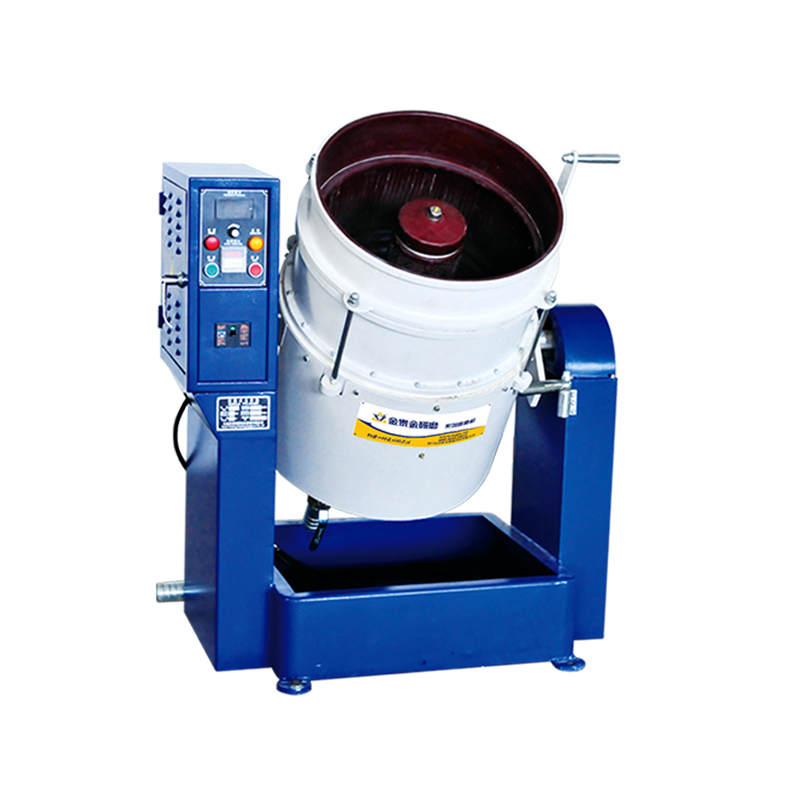
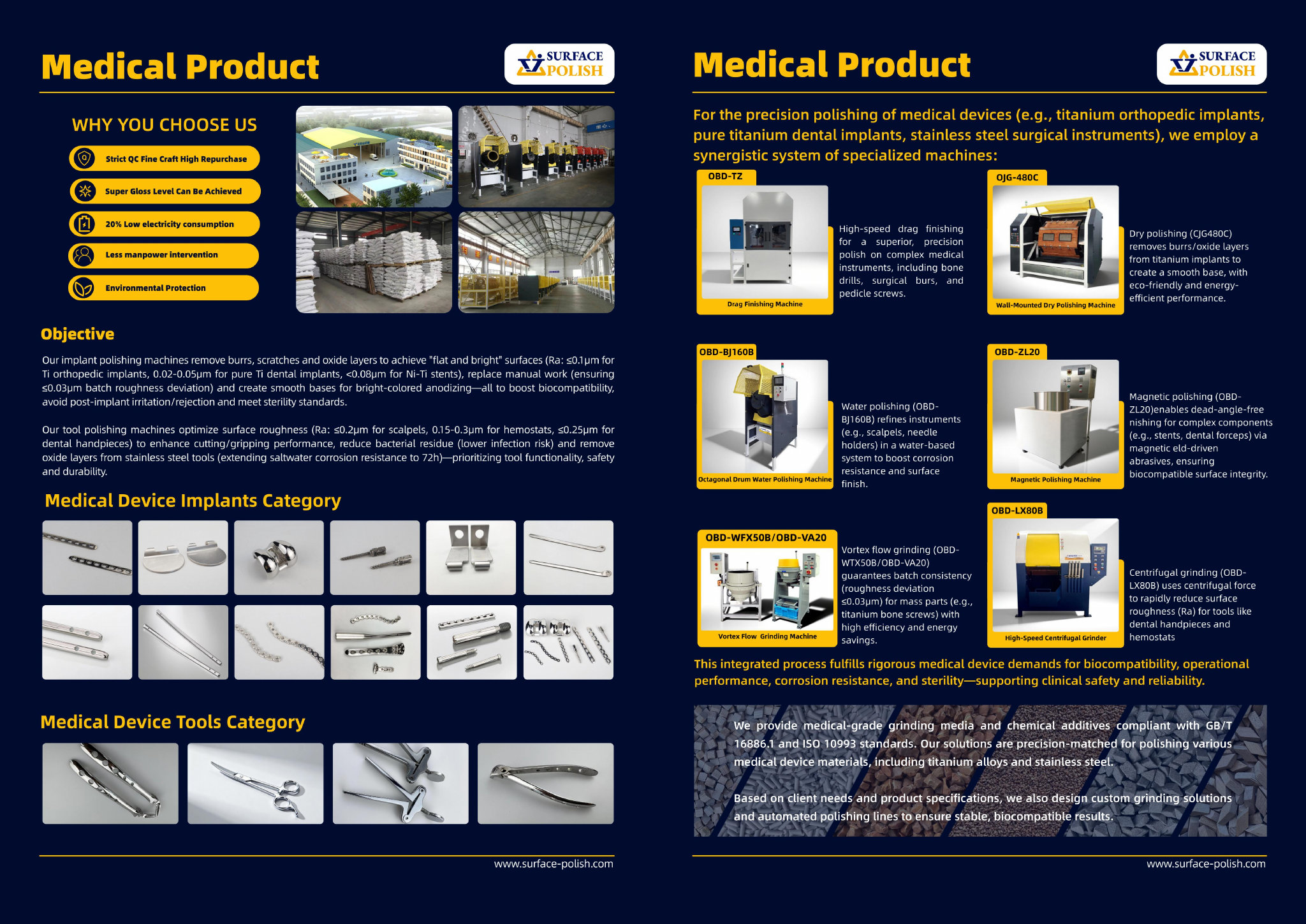
| Tub vibrator | Long and large parts such as architectural tube and profiles, where the process length has to extend along the part. | Bed depth and fixture design decide whether thin sections survive, and fluid flow has to be checked at the far end of the chamber. |
| Grinding finishing machine | Higher material removal where a mill seam, a joint weld or a deep scratch has to be cut back before surface refinement. | Removal is aggressive, so depth control and wall thickness limits have to be set before the cycle is run. |
| Barrel finishing machine, rotary barrel tumbling | Gentle, precise batch processing of small parts, finials, sleeves and short connector pieces. | Part length and part-on-part contact restrict it to short fittings rather than long architectural runs. |
| Disc finishing machine | Fast, high-energy cycles for small to medium fittings and hardware where a short cycle is the priority. | The high energy that makes it fast will distort, mark or bend thin and long parts. |
Compound concentration, flow rate and water quality need managing along the whole chamber, not just at the inlet. In a long tub the fluid front can arrive weaker at the far end, so media there cuts differently and the finish drifts from one end of a part to the other. Hard water leaves scale and spotting; very soft water may foam differently with the same compound. Foam is a real constraint in a tub because it cushions the media and reduces cut, and it overflows into the surrounding area. Set concentration by measurement rather than by appearance, check flow at both ends of the chamber, and plan drag-out and rinse-water handling before the first production run.
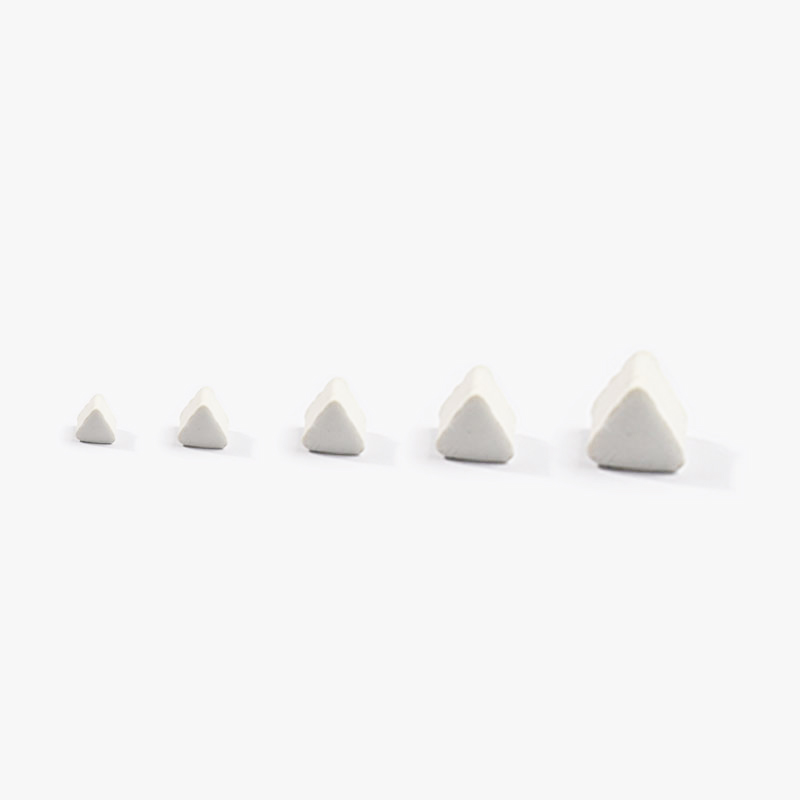
| Media | Best fit | Watch out for |
|---|---|---|
| Steel media, pins and balls | Bright, strongly linear appearance on stainless where a higher-lustre finish is wanted on accessible faces. | Heavy, needs tight compound control to stay clean and separated, and any iron-bearing debris is a contamination question the buyer has to define and verify. |
| Dry media, walnut shell and corn cob | Dry polishing and support for post-wet drying, particularly where a hollow section must not stay wet or carry residue inside. | Low cutting power, and dust generation and media separation need managing in the surrounding area. |
| Ceramic media, spheres and balls | General deburring and edge work on cut ends, brackets and small fittings in the same order as the long runs. | Produces overlapping crater-like marks that work against a linear brushed appearance and can peen a thin wall. |
| Ceramic media, cylinders and other elongated shapes | Linear, directional refinement of the visible faces of round and rectangular profiles after the seam has been cut back. | Flat sides and ends mark differently, and the length-to-diameter ratio limits how far the media reaches into a shallow cove. |
Two welds matter on architectural tube: the longitudinal mill seam left by the tube maker, and the circumferential weld a fabricator makes when a length is joined to a fitting or to another length. Dressing either one means removing metal, and the risk is always the same. Too little leaves a visible band that reads as a line down the elevation; too much thins the wall and can leave a flat spot or a heat-affected zone that later shows as a different shade. The workable approach is to establish how much of the seam crown is to be removed, check it on a sectioned sample or with a depth gauge, and confirm that the wall at the dressed area still meets the buyer's requirement. Dressing is not a polishing step; it is a controlled removal step.
| Failure mode | Likely cause | How to catch it |
|---|---|---|
| Loss of ovality or out-of-round section | A load applied across the wall during the cycle or while the part sits in a rack. | Measure the diameter across two axes at several stations along the length with a caliper or micrometer. |
| Flat spot or thinning at a dressed weld | Too much material removed in one place while chasing the weld toe, usually with too coarse a medium or too much pressure. | Measure wall thickness with an ultrasonic gauge across the dressed area, and lay a straightedge over the joint to reveal a flat. |
| Visible band or line along the mill seam | The seam crown was not cut back evenly, or the media class was too small to reach the seam root without over-working the surrounding surface. | Look along the seam line under raking light from both sides, and measure the remaining crown with a depth gauge on a sectioned sample. |
| Hazy or milky patch with a dull reflection | Uneven cut, worn media in part of the chamber, or weak compound flow at the far end of a long tub. | Compare the near end and the far end of the same length, and check compound concentration and fluid flow at both ends of the chamber. |
Hamburg's industrial identity is built on its port and on aviation: 8.3 million TEU were handled in the Port of Hamburg in 2025, growth of 7.3 percent, and HHLA operates three container terminals in the city at Altenwerder, Burchardkai and Tollerort (s1, s2). Airbus states that Hamburg is the headquarters for Airbus Commercial Aircraft in Germany, the largest Airbus site in the country and a key centre for developing and manufacturing jetliners (s3). The city presents Hamburg as the economic heart of northern Europe on the strength of its mix of economic potential and quality of life (s4), with Hamburg Invest as the central contact for companies investing, expanding or locating in the metropolitan region (s5). The Handelskammer Hamburg frames the city as a business location defined by its port, airport and critical infrastructure (s6), and a dedicated cluster agency works the renewable-energy industry of the metropolitan region (s7).
The nearest part of that base to this brief is marine: The Port of Hamburg handled 8.3 million TEU in 2025, growth of 7.3 percent (s1), and HHLA's three Hamburg container terminals at Altenwerder, Burchardkai and Tollerort underpin the port's role as a European hub between overseas trades and central and eastern Europe (s2).
Hamburg combines large-scale port and terminal engineering with aircraft component manufacture, both of which involve stainless and aluminium structures that are welded, cut and machined before assembly and then judged on edge condition, burr removal and surface preparation before painting, sealing or coating. Aviation work brings documented process control and cleanliness requirements, while the port and terminal side contributes heavy fabrication and repair work where de-scaling, edge rounding and surface preparation are routine.
A Hamburg buyer should first decide whether the process has to fit aviation-style documented process control or whether a general workshop specification is enough, and then check whether the same equipment must handle both aluminium and stainless parts, since media and compound selection differ and cross-contamination between the two is the usual failure point.
Freight context: Port of Hamburg (HHLA container terminals Altenwerder, Burchardkai and Tollerort), Hamburg Airport (HAM). The Port of Hamburg handled 8.3 million TEU in 2025 (up 7.3 percent), with HHLA operating the three city container terminals (s1, s2). The port is the natural entry point for a full finishing machine shipped from Asia, and Hamburg Airport plus the port's air-freight and courier links are the practical route for sample parts that have to reach a plant quickly.
Germany sits inside the EU customs union, so Chinese-origin industrial machinery enters against the EU's common commercial tariff rather than a German national tariff, and the duty that applies is determined by the commodity code declared on the import declaration. China is one of the EU's largest goods trading partners and the EU has long run a goods deficit with it, while the Commission characterises the relationship as simultaneously partnership, competition and systemic rivalry (c1, c2). The Commission publishes the EU's trade agreements; no agreement with China appears in that overview, so Chinese-origin goods cannot claim a preferential origin rate and are assessed under the standard tariff (c8). German customs is administered by the Zoll under the Generalzolldirektion, and the importer must hold an EORI number - valid throughout the European Union and replacing the former German customs number - before goods can be cleared (c5, c6).
DIN, the German Institute for Standardization, is the German standards body: German technical rules and standards from Germany and worldwide are distributed through DIN Media, its publishing house, and DIN adopts European and international standards at national level (c7). In practice a German buyer's surface, edge and cleanliness specifications are written against DIN/EN/ISO texts, while machinery conformity itself runs through the European CE route (CE marking plus technical file and EU declaration of conformity) rather than a separate national approval (c3, c7). In the automotive supply chain the VDA, whose members are the more than 620 companies producing for the German automotive industry, is the association through which sector supplier requirements and quality-management material are organised (c10).
SurfacePolish supplies from Xiamen, China. The buyer's own destination rules, conformity marking, tariff classification and documentation responsibilities stay with the buyer; confirm them against the authorities named above before ordering.
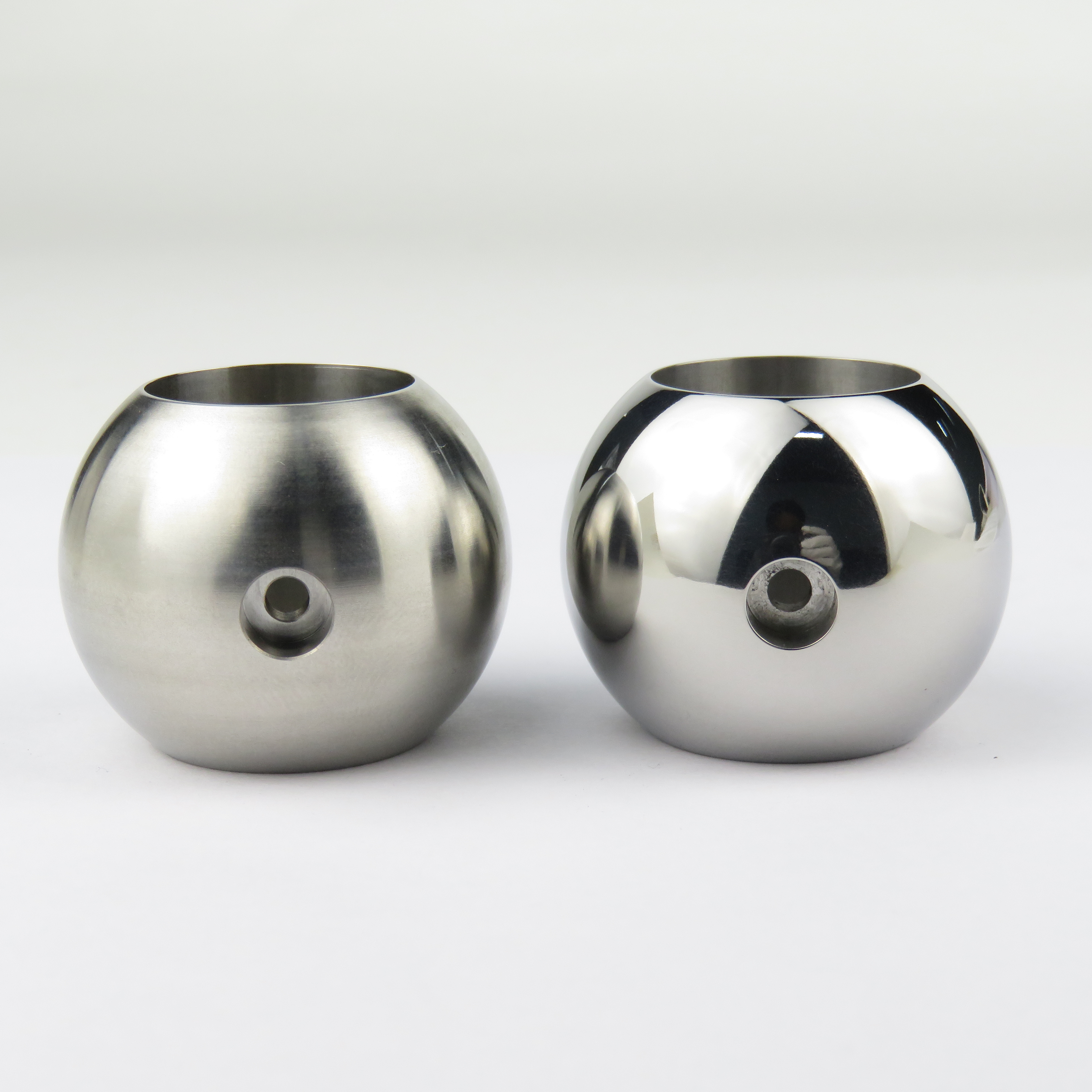
An architectural finish is graded by what an observer sees, so the acceptance standard has to name the viewing distance and the light. A panel that looks uniform from three metres can show every mark from half a metre, and a finish assessed under direct sun reads differently from one assessed under diffuse daylight or a linear light source. Agree the distance for the closest inspection the installed part will receive, the lighting condition, and the viewing angle, then write them into the finish callout. A practical arrangement is a physical reference panel accepted once by the buyer, kept in controlled storage, and used as the comparison standard. Numerical limits can sit beside it, but the panel is what a dispute is actually settled against.
Send cut sections from the actual production material, roughly 300 to 500 mm long, taken from at least three places along the delivery rather than from one offcut, and cover every wall thickness and profile in the order. Add one full-length piece where bend, twist or end effects could matter, because a short coupon does not reproduce how a long, unsupported length behaves in a bed. Include one length in the condition that most often arrives: a mill seam, a fabricator's weld, a transit scratch. If the buyer has an existing part whose appearance is acceptable, send that as a reference too, with a note on where it was viewed from. Label every piece with profile, alloy, wall, provenance and what should be observed on it.
No. SurfacePolish does not supply or carry out electropolishing. Where electrochemical treatment is part of the buyer's requirement, we treat it as a comparison point and as a reason to look at what a mechanical route can achieve on the same part, and we can discuss media, compound and machine options for that mechanical route. A mechanical finish should not be presented as equivalent to an electropolished surface, and the choice between the two, together with any specification that depends on it, belongs to the buyer's own engineering decision.
It depends on the order book rather than on the profile alone. A tub suits mixed work and shorter runs, because the set-up changes with the part and the chamber can take several profiles. A dedicated arrangement that carries the length past fixed heads, or moves heads along a stationary length, sets the texture direction by machine axis and holds it better over repeated runs, at the cost of floor space and changeover when the profile or length changes. Bring the profile mix, the typical and maximum lengths and the annual volume into the line-concept discussion; we can scope it, though the choice is yours.
No. SurfacePolish is a cross-border supplier of finishing machines, media and compounds, and runs a free sample trial on parts the buyer sends. The tube, pipe and profiles remain the buyer's own material from their own mill or stockholder, and we do not verify its grade, mill certificate or corrosion performance. Keeping those roles separate matters, because the appearance a finishing line can reach is limited by the incoming material: its alloy, its hardness, its existing grain and the condition it arrives in. Send material from the actual delivery rather than a hand-picked offcut.
Use Hamburg, Germany as the destination on the enquiry and state whether the deliverable is equipment, media and compound, a representative sample review or a line concept. A destination does not imply local stock, a local service point or a local delivery time.
Surface, edge and cleanliness requirements in Hamburg are written against DIN/EN/ISO texts, with CE marking and the EU declaration of conformity as the route for placing machinery on the German market (c3, c7). Aerospace customers apply their own qualification and documentation regimes on top of that, while the VDA framework governs automotive supplier requirements where Hamburg plants feed automotive programmes (c10).
Sources were retrieved on 2026-09-29 and describe the local industrial and trade context only. They do not evidence any SurfacePolish project, shipment, installation or service in Hamburg.
The joint weld has to disappear into the grain so the joint does not read as a dark or bright band in the finished run.
Send the material, dimensions, approximate weight, batch quantity, the incoming condition and photographs of the difficult features. Mark which features must not be contacted by media and state how the result will be inspected. This form carries source reference PSEO-0337; quote it if you prefer an additional manual reference.
Open the SurfacePolish enquiry form Email a prepared enquiry
No price, lead time, certification or result is promised here. Confirm whether a sample trial is available for the specific part and what the trial can and cannot show.
Page PSEO-0337 · revised 2026-09-29 · cross-border equipment, media and scoped sample review. City context is sourced and cited above.
Use this local checker to identify missing part and inspection information. It prepares a technical-review brief; it does not approve a machine, process recipe or production result.
Complete the part details to prepare a review brief.
Email : info@surface-polish.com


 IPv6 network supported


 +86-592-2381506