A decorative screen manufacturer in Modena, Italy supplying architectural metalwork uses 2.5 m lengths of 25 x 25 x 0.9 mm stainless tube, and the flat faces dent and the lengths twist whenever the parts are run loose in a batch. SurfacePolish supplies finishing machines, media and compounds across borders and runs a free sample trial on sections shipped to Xiamen. This brief is written for a buyer in Modena working on architectural metalwork; it describes equipment, media and a scoped sample review, not a local polishing service.
Which faces of each profile are actually seen when installed, from what distance and under what light, and which faces can be finished to a coarser standard without it showing?
Which wall thickness and section shape in the order is most likely to distort, and what fixture, cradle or support will protect it?
How much of the incoming mill seam, joint weld or transit scratch must be removed, and what minimum wall thickness has to remain after that removal?
The surface you receive already carries a direction of texture from the mill, from a prior brush line or from a fabricator's earlier pass. Finishing can change the amplitude and the scale of that texture and can impose a new direction, but erasing a deep existing grain means removing real wall thickness, which is rarely acceptable on a visible architectural profile. Note the direction of the incoming texture along the length, its pitch, and whether the tube is bright annealed, pickled or mill finish. A pickled or matte mill surface hides small process variation that a bright surface reveals immediately. Send the worst-looking incoming length rather than the best one, because the finish a line has to hold is set by the roughest material that regularly arrives, not by the sample kept aside as a reference.
The shape of the working media sets the character of the surface as much as its size does. Spheres and other rounded shapes produce overlapping craters, which read as a soft, slightly dimpled surface and work against a linear brushed appearance. Angle-cut triangles, cylinders, cones and other elongated shapes strike along their axis and leave a more linear pattern, which is what architectural tube usually needs. Where a weld seam or a deep longitudinal scratch must be cut back, the aggressiveness comes from the contact geometry and the media mass rather than from extra speed. For a run that has to show a consistent direction, choose a shape class whose marks align with the intended grain direction, and then keep that class stable as the media wears.
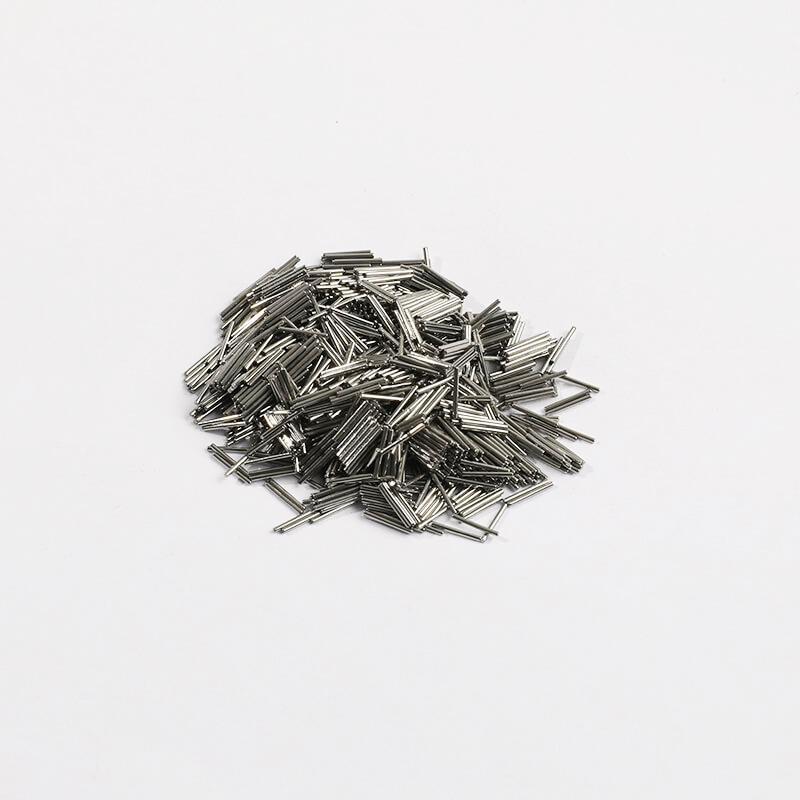
| Media | Best fit | Watch out for |
|---|---|---|
| Plastic media, cylindrical | Light surface refinement on thin rectangular sections where holding the shape matters more than cutting power. | Little cut power, and the size class changes quickly as the media wears, which shifts the texture pitch over a run. |
| Ceramic media, cylinders and other elongated shapes | Linear, directional refinement of the visible faces of round and rectangular profiles after the seam has been cut back. | Flat sides and ends mark differently, and the length-to-diameter ratio limits how far the media reaches into a shallow cove. |
| Grinding media, alumina-based | Higher material removal where a mill seam, a joint weld or a deep transit scratch has to be cut back before refining. | Aggressive on thin wall, can over-round edges and change cross-section geometry, and needs tight depth control. |
| Dry media, walnut shell and corn cob | Dry polishing and support for post-wet drying, particularly where a hollow section must not stay wet or carry residue inside. | Low cutting power, and dust generation and media separation need managing in the surrounding area. |
Inside whichever machine is chosen, the fixture or the load arrangement decides whether thin sections survive. A thin-wall rectangular profile will flatten under its own weight in a deep bed, and two loose lengths finished together will nibble each other along the contact line. Practical measures are cradles that follow the profile, dividers or compartments that keep parts apart, end caps or plugs for open tube ends, and clip-on carriers that present the visible face to the media evenly. The fixture also fixes the finish: a part that rotates freely receives an inconsistent texture, while a part held at a controlled orientation receives a directional one. Build the fixture around the longest and thinnest part in the order, not the average one.
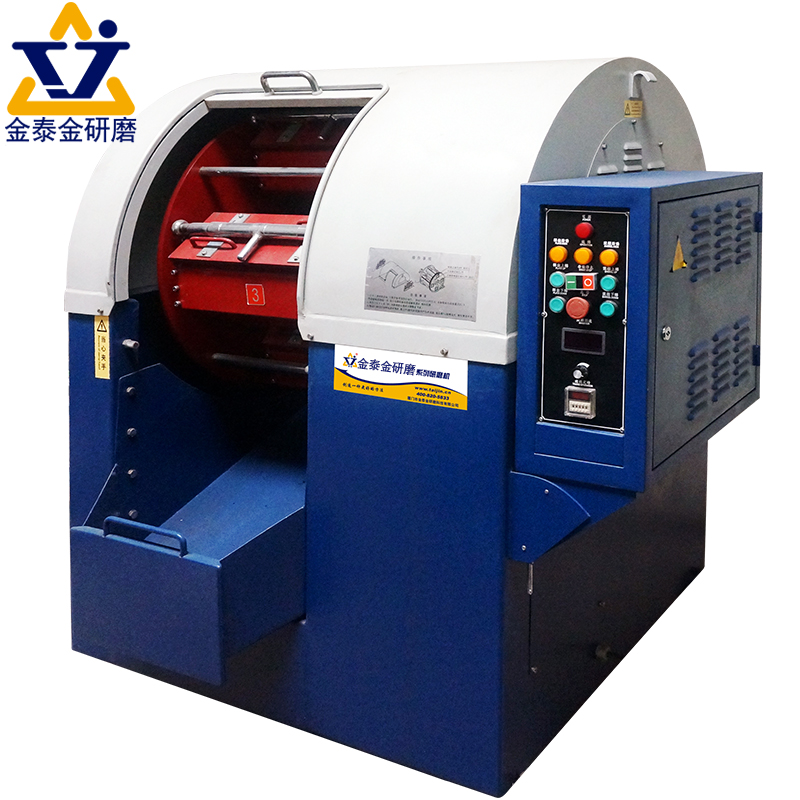
| Machine route | Where it fits | What it will not do |
|---|---|---|
| Centrifugal barrel finishing machine | High-speed finishing of small precise parts, including where a bright appearance is required on a compact geometry. | Chamber geometry and high contact forces rule it out for long, thin-wall or easily marked sections. |
| Vibratory finishing machine, bowl type | General edge blending and surface refinement on brackets, base plates, cut spindles and other small fittings. | Chamber diameter caps the part length, and a long tube cannot be worked evenly in the circular bed. |
| Barrel finishing machine, rotary barrel tumbling | Gentle, precise batch processing of small parts, finials, sleeves and short connector pieces. | Part length and part-on-part contact restrict it to short fittings rather than long architectural runs. |
| Dry polishing machine and dryer | Post-wet drying and dry luster work, particularly where a hollow section must come out clean and dry inside. | Dry routes cut less than wet media, and dust control and media separation need planning. |
Open tube ends, slotted channels and drilled fixings all collect media, swarf and compound. The failure is rarely visible at the end of the cycle; it shows up after the part is installed, when compound weeps from a bore onto a visible face or when a trapped particle works loose during handling and scratches an adjacent length. Treat removal as a designed step rather than a rinse: plug or cap what should never see media, count media in and out of each batch, and agree how the interior of a sample length will be checked, using an endoscope or an internal swab where the bore matters. Ask what the drying step after a wet process does for a closed section, because a hollow part that stays wet inside is a delayed defect.
| Failure mode | Likely cause | How to catch it |
|---|---|---|
| Twist along the length | Differential working of opposite faces, or clamping and stacking that loads the section unevenly. | Rest the length on a reference surface and compare the angular orientation of the two end sections with a square. |
| Visible band or line along the mill seam | The seam crown was not cut back evenly, or the media class was too small to reach the seam root without over-working the surrounding surface. | Look along the seam line under raking light from both sides, and measure the remaining crown with a depth gauge on a sectioned sample. |
| Compound residue weeping from a hollow section | Incomplete rinsing of the interior, or a drying step that does not reach inside a closed section. | Stand the length on end over a clean cloth for a set period, then inspect the bore interior for residue after drying. |
| Flat spot or thinning at a dressed weld | Too much material removed in one place while chasing the weld toe, usually with too coarse a medium or too much pressure. | Measure wall thickness with an ultrasonic gauge across the dressed area, and lay a straightedge over the joint to reveal a flat. |
Modena is a manufacturing-intensive province whose exports are equivalent to almost 60% of provincial value added, and the Chamber of Commerce forecasts manufacturing value added growth of up to +1.2% by 2027 (s4). In the second quarter of 2026 provincial exports reached EUR 4,978 million, the second-highest quarterly figure since 2023 (s2). The export mix is unusually concentrated: transport equipment is the largest category with more than a third of the total, machinery and mechanical appliances account for almost a quarter, and ceramic products for 14.0% (s2). Agri-food (+5.2%) and biomedical (+1.7%) exports grew while textiles, transport equipment and ceramics declined, and the Chamber of Commerce notes a steady fall in the number of manufacturing firms in textiles, ceramics and metalworking (s3). The ceramic tile district around Sassuolo, which spans the provinces of Modena and Reggio Emilia, is the centre of the Italian tile industry (s1).
For this brief the relevant part of that base is architectural: About 88% of Italian ceramic tile production takes place in Emilia-Romagna, particularly in the Sassuolo industrial district between the provinces of Modena and Reggio Emilia, and ceramic products are 14.0% of provincial exports.
Edge quality and surface condition are recurring production requirements in the metalworking part of this base: transport-equipment and mechanical-engineering plants deburr machined, cast and geared components, and the province's biomedical exporters handle stainless and polymeric parts on which burrs and residual finishing media have to be controlled. Ceramic tile production raises a different problem, because the finishing-sensitive items there are moulds, dies and tooling rather than polished surfaces. A deburring or mass-finishing specification for Modena therefore belongs to the automotive, machinery and biomedical portion of the local base, not to tile pressing.
The first thing to settle is which part of the local base the equipment is for: a metal-cutting or biomedical requirement driven by burr height and cleanliness on stainless and cast parts, or the ceramic tooling side, where the requirement is different. For the first, the process window should be established on the buyer's own part families rather than from a generic machine size.
Freight context: Aeroporto di Bologna Guglielmo Marconi (BLQ), Porto di Ravenna, Porto di La Spezia. Modena is a landlocked province, so machines and sample parts move by road and rail to Italian gateways rather than through a local port; the export flow itself is what the Chamber of Commerce documents, at EUR 4,978 million in the second quarter of 2026, with the United States, Germany and France as the three largest destination markets (s2). The airport and ports named above are the standard regional gateways and were not verified against a port or airport authority page in this session, so treat them as geographic context rather than authority data.
Italy applies the EU's common commercial policy to imports from China, so Chinese industrial machinery enters under the EU Common Customs Tariff, where the duty rate depends on the type and origin of the goods and the working tariff is TARIC. Istat's August 2026 extra-EU trade release records a 16.0% year-on-year increase in Italian purchases from China, alongside strong growth from India, OPEC and Mercosur, so China remains one of the fastest-growing sources of Italian imports. Anti-dumping and other trade-defence measures apply case by case to specific product categories rather than to finishing machinery in general, so the applicable rate must be checked against the specific commodity code before a quotation is finalised.
Business is conducted in Italian; quotations, drawings, technical dossiers and declarations of conformity are normally expected in Italian, and correspondence in English is workable but rarely sufficient for a purchase order or for a conformity file. Italian industrial buyers qualify suppliers through a documented process: a part drawing with surface-texture indications, a sample or trial batch, and written acceptance criteria are the usual gate before a machine or media is specified into production. Payment and documentation norms follow Italian/EU practice - the importing entity's VAT and EORI details, invoice data matching the customs declaration, and standard EU commercial terms - so a cross-border seller should expect the conformity documentation (declaration of conformity, technical file, material certificates) to be requested before, not after, delivery.
SurfacePolish supplies from Xiamen, China. The buyer's own destination rules, conformity marking, tariff classification and documentation responsibilities stay with the buyer; confirm them against the authorities named above before ordering.
An architectural finish is graded by what an observer sees, so the acceptance standard has to name the viewing distance and the light. A panel that looks uniform from three metres can show every mark from half a metre, and a finish assessed under direct sun reads differently from one assessed under diffuse daylight or a linear light source. Agree the distance for the closest inspection the installed part will receive, the lighting condition, and the viewing angle, then write them into the finish callout. A practical arrangement is a physical reference panel accepted once by the buyer, kept in controlled storage, and used as the comparison standard. Numerical limits can sit beside it, but the panel is what a dispute is actually settled against.
The first production batch is usually the best one, because the media charge is fresh and the fluid is at its set point. What changes over a run is media wear, which reduces cut and shifts the surface toward a finer and dimmer appearance; the build-up of swarf and fines in the fluid; and the arrival of material from a different heat or mill finish. Plan for it: a media top-up and screening routine with a defined interval, a fluid change criterion based on measurement rather than appearance, and a check length kept from each lot for comparison. Agree in advance what will be done if a later lot does not match the retained reference, so the decision is procedural rather than improvised.
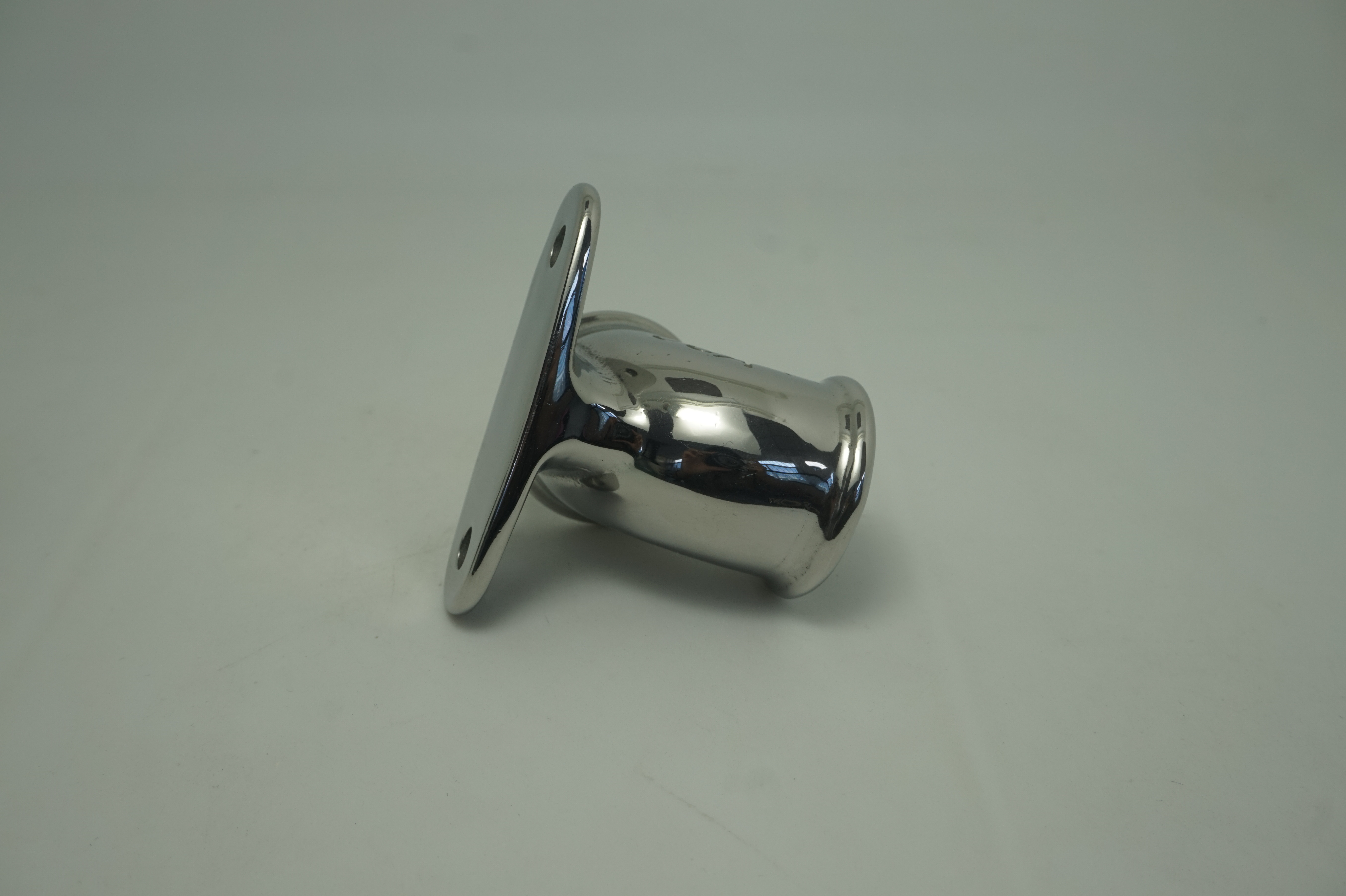
Ra is a two-dimensional amplitude average taken along one traverse, and it says nothing about the pitch of the texture, its direction, or whether the surface reflects light evenly. Two surfaces with the same Ra can look quite different: one can carry a directional brushed grain and the other a mottled, hazy appearance with a broken reflection. That is why an architectural callout normally needs both a numeric limit with its measurement conditions and a physical reference viewed at an agreed distance under agreed light. The number controls the process, and the panel settles the argument.
Start with a physical sample: if a short section can be removed without damage, send it, together with the retained reference panel from the original order if one exists. An installed surface has aged, been cleaned and possibly scratched, so a new length will not reproduce it exactly, and the visible difference is usually easier to manage by finishing a group of adjacent lengths than by matching one piece in isolation. A trial reports what the tested settings produced on the sample you sent; deciding how close is close enough remains with your own acceptance process and the people who will look at it daily.
No. SurfacePolish is a cross-border supplier of finishing machines, media and compounds, and runs a free sample trial on parts the buyer sends. The tube, pipe and profiles remain the buyer's own material from their own mill or stockholder, and we do not verify its grade, mill certificate or corrosion performance. Keeping those roles separate matters, because the appearance a finishing line can reach is limited by the incoming material: its alloy, its hardness, its existing grain and the condition it arrives in. Send material from the actual delivery rather than a hand-picked offcut.
Use Modena, Italy as the destination on the enquiry and state whether the deliverable is equipment, media and compound, a representative sample review or a line concept. A destination does not imply local stock, a local service point or a local delivery time.
A Modena buyer would write surface-finish and deburring requirements into drawings and inspection plans against ISO/UNI surface-texture standards, and suppliers into the transport-equipment chain are normally qualified to IATF 16949; biomedical manufacturers work to ISO 13485 and to the cleanliness and residue limits written into their own device specifications. Confindustria Ceramica, based in Sassuolo, maintains product standardisation and research activity for the ceramic sector, which is a product-standardisation function rather than a surface-finish one.
Sources were retrieved on 2026-09-29 and describe the local industrial and trade context only. They do not evidence any SurfacePolish project, shipment, installation or service in Modena.
The flat faces dent and the lengths twist whenever they are run loose together, and the buyer cannot accept that geometry loss.
Send the material, dimensions, approximate weight, batch quantity, the incoming condition and photographs of the difficult features. Mark which features must not be contacted by media and state how the result will be inspected. This form carries source reference PSEO-0457; quote it if you prefer an additional manual reference.
Open the SurfacePolish enquiry form Email a prepared enquiry
No price, lead time, certification or result is promised here. Confirm whether a sample trial is available for the specific part and what the trial can and cannot show.
Page PSEO-0457 · revised 2026-09-29 · cross-border equipment, media and scoped sample review. City context is sourced and cited above.
Use this local checker to identify missing part and inspection information. It prepares a technical-review brief; it does not approve a machine, process recipe or production result.
Complete the part details to prepare a review brief.
Email : info@surface-polish.com


 IPv6 network supported


 +86-592-2381506