A steelwork fabricator in Utrecht, Netherlands supplying architectural metalwork holds 4 m lengths of 88.9 mm stainless pipe at 5 mm wall with a heavy mill seam and a transit scratch, and needs the metal cut back without thinning the wall past the buyer's own limit. SurfacePolish supplies finishing machines, media and compounds across borders and runs a free sample trial on parts shipped to Xiamen. This brief is written for a buyer in Utrecht working on architectural metalwork; it describes equipment, media and a scoped sample review, not a local polishing service.
What texture direction is required, and how will that direction be preserved and compared across lengths that are finished in different lots?
Which faces of each profile are actually seen when installed, from what distance and under what light, and which faces can be finished to a coarser standard without it showing?
How much of the incoming mill seam, joint weld or transit scratch must be removed, and what minimum wall thickness has to remain after that removal?
Not every face of a profile deserves the same effort. On a wall-mounted handrail the top and the outward face are read from standing height and from an angle, while the underside and the face against the wall are largely out of view. On a cladding mullion the sun-facing plane carries the reflection and the returns do not. Build a simple exposure map: which face, viewed from where, under what light, at what distance. That map settles where the tighter finish is specified and where a coarser one is honest. It also prevents over-finishing hidden faces, which costs cycle time and raises the risk of distortion on thin sections, and it tells the finishing supplier which face must be protected in every rack and stillage.
Compound concentration, flow rate and water quality need managing along the whole chamber, not just at the inlet. In a long tub the fluid front can arrive weaker at the far end, so media there cuts differently and the finish drifts from one end of a part to the other. Hard water leaves scale and spotting; very soft water may foam differently with the same compound. Foam is a real constraint in a tub because it cushions the media and reduces cut, and it overflows into the surrounding area. Set concentration by measurement rather than by appearance, check flow at both ends of the chamber, and plan drag-out and rinse-water handling before the first production run.
| Media | Best fit | Watch out for |
|---|---|---|
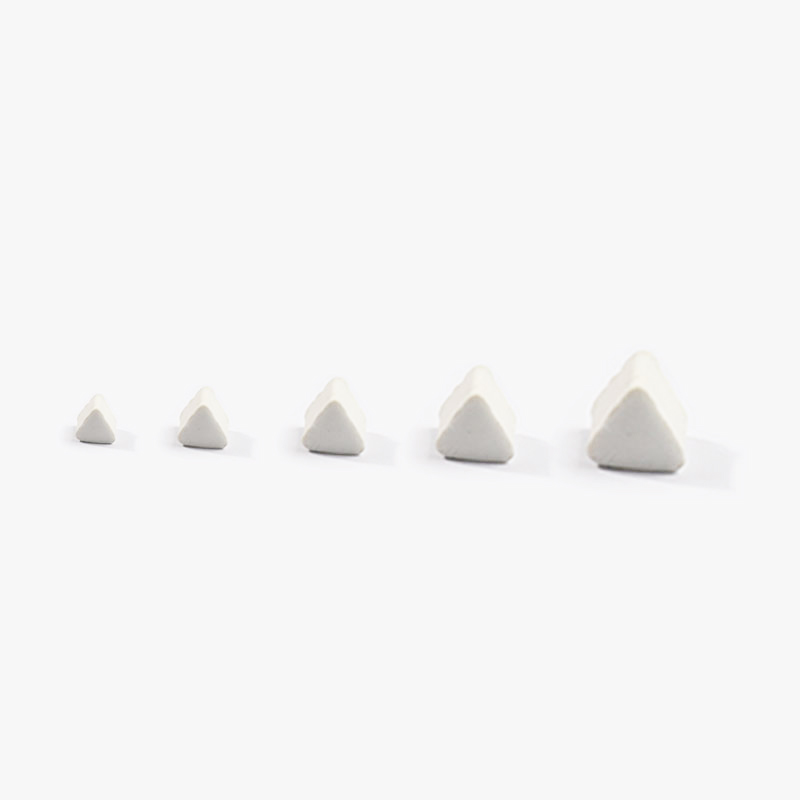
| Ceramic media, spheres and balls | General deburring and edge work on cut ends, brackets and small fittings in the same order as the long runs. | Produces overlapping crater-like marks that work against a linear brushed appearance and can peen a thin wall. |
| Dry media, walnut shell and corn cob | Dry polishing and support for post-wet drying, particularly where a hollow section must not stay wet or carry residue inside. | Low cutting power, and dust generation and media separation need managing in the surrounding area. |
| Plastic media, cones and triangles | Gentle work on thin-wall sections and softer alloys, and where marking or distortion is the main risk to be managed. | Slower cut and shorter media life, with limited effect on a deep scratch or a heavy seam. |
| Grinding media, alumina-based | Higher material removal where a mill seam, a joint weld or a deep transit scratch has to be cut back before refining. | Aggressive on thin wall, can over-round edges and change cross-section geometry, and needs tight depth control. |
A conventional vibratory bowl moves its load around a circular path in a chamber whose diameter sets the maximum part length. Extending that chamber to take a six-metre length stops being practical, because the volume grows far faster than the usable length. The deeper problem is the bed. A long tube lying in a bowl is either too large a fraction of the load, in which case the media cannot circulate around it, or it is dragged and struck by the rest of the load in a way that produces local marking rather than an even longitudinal texture. The geometry, not the power, is the limitation. This is the practical reason long architectural sections are run in a tub or on a dedicated longitudinal arrangement rather than in a general-purpose bowl.
| Machine route | Where it fits | What it will not do |
|---|---|---|
| Tub vibrator | Long and large parts such as architectural tube and profiles, where the process length has to extend along the part. | Bed depth and fixture design decide whether thin sections survive, and fluid flow has to be checked at the far end of the chamber. |
| Vibratory finishing machine, bowl type | General edge blending and surface refinement on brackets, base plates, cut spindles and other small fittings. | Chamber diameter caps the part length, and a long tube cannot be worked evenly in the circular bed. |
| Dry polishing machine and dryer | Post-wet drying and dry luster work, particularly where a hollow section must come out clean and dry inside. | Dry routes cut less than wet media, and dust control and media separation need planning. |
| Disc finishing machine | Fast, high-energy cycles for small to medium fittings and hardware where a short cycle is the priority. | The high energy that makes it fast will distort, mark or bend thin and long parts. |
Straight scratches running along the length are the signature defect of tube finishing. They come from three places: the incoming coil or straightener, media or swarf dragged along the surface during the cycle, and the handling between operations, when a finished length slides over a steel support. The first cannot be removed without cutting back real wall, so it has to be identified before the cycle is set. The second is controlled by media cleanliness, compound filtration and keeping the bed free of tramp metal. The third is controlled by padded cradles and a rule that nothing finished ever touches bare metal. Detection is by raking light along the axis at a low angle; a scratch invisible under diffuse light can be the first thing an occupier sees on a sunlit elevation.
| Failure mode | Likely cause | How to catch it |
|---|---|---|
| Compound residue weeping from a hollow section | Incomplete rinsing of the interior, or a drying step that does not reach inside a closed section. | Stand the length on end over a clean cloth for a set period, then inspect the bore interior for residue after drying. |
| Orange peel mottling on the visible face | Over-working with a coarse medium, or excessive pressure on a soft or thin section, which deforms the surface rather than cutting it. | Reflect a straight edge or a linear light source in the surface, and take a roughness reading at the same spot to show the divergence between number and appearance. |
| Visible band or line along the mill seam | The seam crown was not cut back evenly, or the media class was too small to reach the seam root without over-working the surrounding surface. | Look along the seam line under raking light from both sides, and measure the remaining crown with a depth gauge on a sectioned sample. |
| Media or swarf trapped in a bore or channel | Open ends left unplugged, a media class smaller than the opening, or no defined retrieval step at the end of the cycle. | Endoscope or internally swab every sample length, and count media into and out of the batch as a routine check. |
Utrecht's industrial identity is knowledge- and health-driven rather than heavy-manufacturing driven. Utrecht Science Park is the largest science park in the Netherlands, with over 31,000 employees and 55,000 students and the highest density of knowledge institutions in the country; it is anchored by Utrecht University, UMC Utrecht, the Princess Maxima Center, the Hubrecht and Westerdijk institutes, RIVM and TNO, and its organisation list includes Danone Nutricia and the high-tech systems developer Demcon. The municipality and Utrecht University signed a cooperation agreement for the park covering the period to 2040, targeting about 4,000 additional homes and a comparable number of new jobs.
The nearest part of that base to this brief is machinery: The high-tech systems developer Demcon is listed among the organisations at Utrecht Science Park Zeist.
Life-sciences and medical-technology manufacturing at Utrecht Science Park involves stainless and titanium instruments, implants, laboratory hardware and device housings where deburring, edge rounding, passivation and residue-free cleaning are quality-critical. Food production and high-tech systems engineering in the same ecosystem add stainless process parts and precision machined components with comparable cleanliness expectations.
A buyer should establish whether the surface requirement is a cleanliness and passivation specification (residues, iron contamination, documented process validation) or a dimensional specification (edge radius, burr height, Ra), because those two routes call for different media, compounds and evidence.
Freight context: No seaport or cargo airport in the city; freight arrives by road and rail. Utrecht is an inland node and its science park is a workplace location rather than a freight gateway, so machines and media normally arrive by road or rail from a sea or air port of entry. Imported equipment is declared to Dutch Customs at that point of entry, so the landlocked location does not change the customs or CE documentation obligations.
The Netherlands applies the EU's common commercial policy, so imports of Chinese industrial machinery enter under EU customs rules and WTO tariff treatment rather than under a bilateral EU-China free-trade agreement; the European Commission also maintains trade-defence measures on selected Chinese product categories, and China is a WTO member. EU-China trade in goods reached EUR 732 billion in 2024, and in 2025 manufactured goods were 97.3% of EU imports from China, with machinery and vehicles alone accounting for 54.4% — the single largest category. Chinese finishing machines, media and compounds therefore arrive in a very large, well-established EU import stream, and the buyer should expect MFN duty plus trade-defence measures where a specific product is covered.
Goods entering the Netherlands from outside the EU must be declared to Dutch Customs (Douane, part of the Belastingdienst); the importer needs an EORI number, import duty is calculated on the customs value (goods value plus transport and insurance to the EU external border), and import VAT is paid at the border unless an article 23 permit or a fiscal representative is used. CE marking is mandatory for most machinery placed on the EEA market: the Machinery Regulation replaced the Machinery Directive and manufacturers must comply with the new requirements by 20 January 2027. The importer must verify that the conformity assessment was carried out correctly, that CE marking is applied properly, that the technical file is present and complete, and that the user manual is supplied in the correct language; the manufacturer's EC Declaration of Conformity must be kept. Dutch companies imported over EUR 140 billion of machinery and appliances in 2024, 24% of total Dutch goods imports.
SurfacePolish supplies from Xiamen, China. The buyer's own destination rules, conformity marking, tariff classification and documentation responsibilities stay with the buyer; confirm them against the authorities named above before ordering.
A roughness reading on tube has to be taken with the same care as one on a flat coupon, and usually more. State the location by distance from a reference end, the traverse direction relative to the grain, and the cut-off and evaluation length, and keep them the same for the first article and for production checks. Along the grain and across the grain give different values on the same surface, so a reading that does not say which direction it was taken in cannot be compared with anything. Curvature limits how a skid or a shoe can sit on the surface, particularly on small-diameter tube, and a reading taken with a poorly seated pickup is not evidence. Repeat the measurement at several stations along the length, because the ends of a part often differ from the middle.
The trial result is only meaningful against a documented starting point. Photograph each sample under fixed lighting with a scale in frame, note the direction of the incoming texture, and take roughness readings at marked stations with the traverse direction recorded. Note the incoming straightness with the sample on a reference surface, the edge condition at cut ends, and any existing weld, scratch or discolouration. Keep one piece unprocessed as the baseline. When the trial parts come back, the comparison is between the returned parts and these records, not against memory. This is also how a buyer distinguishes a change made by the process from a feature that was present in the material when it arrived.
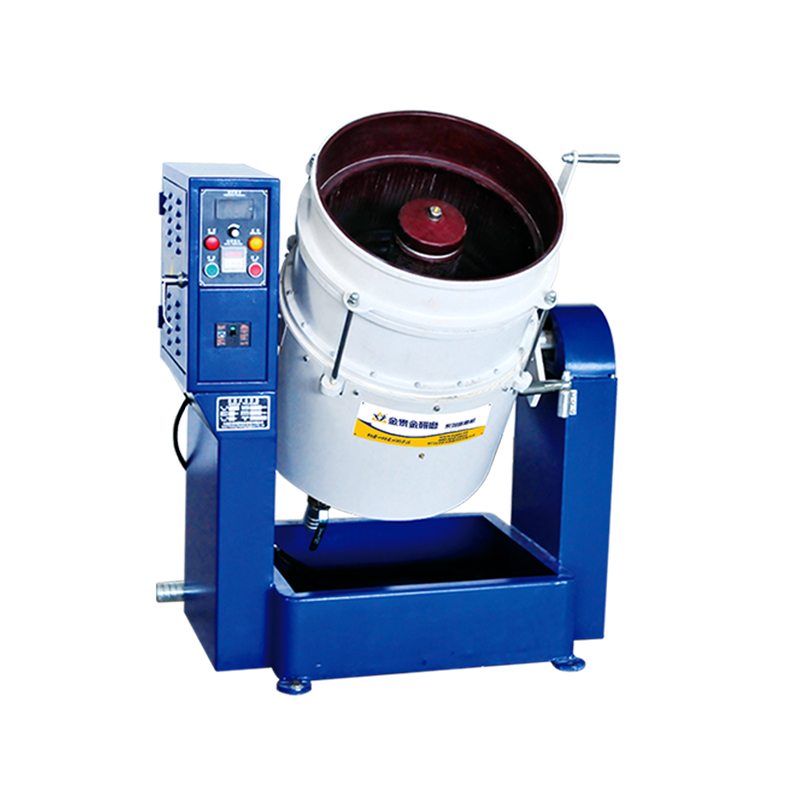
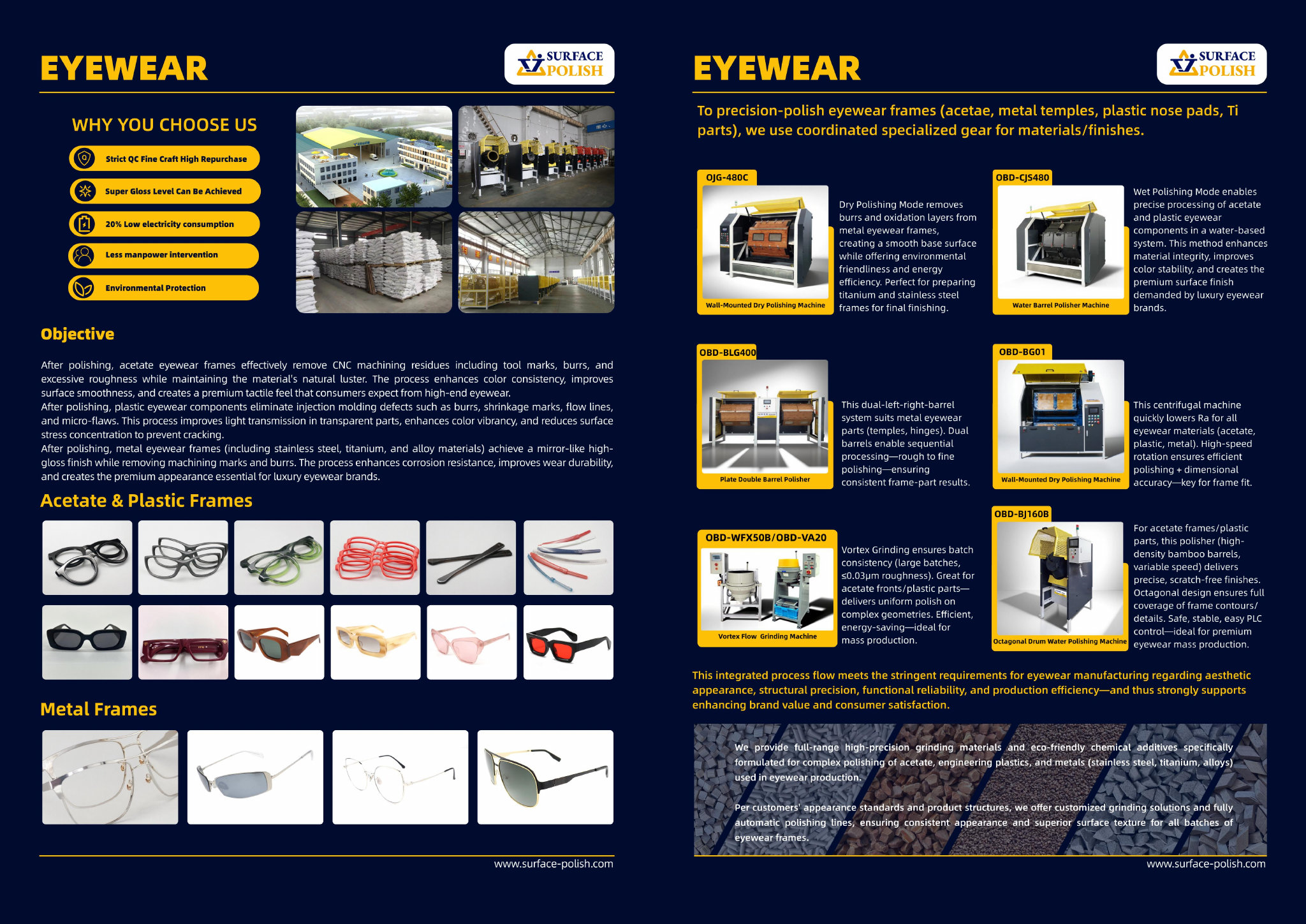
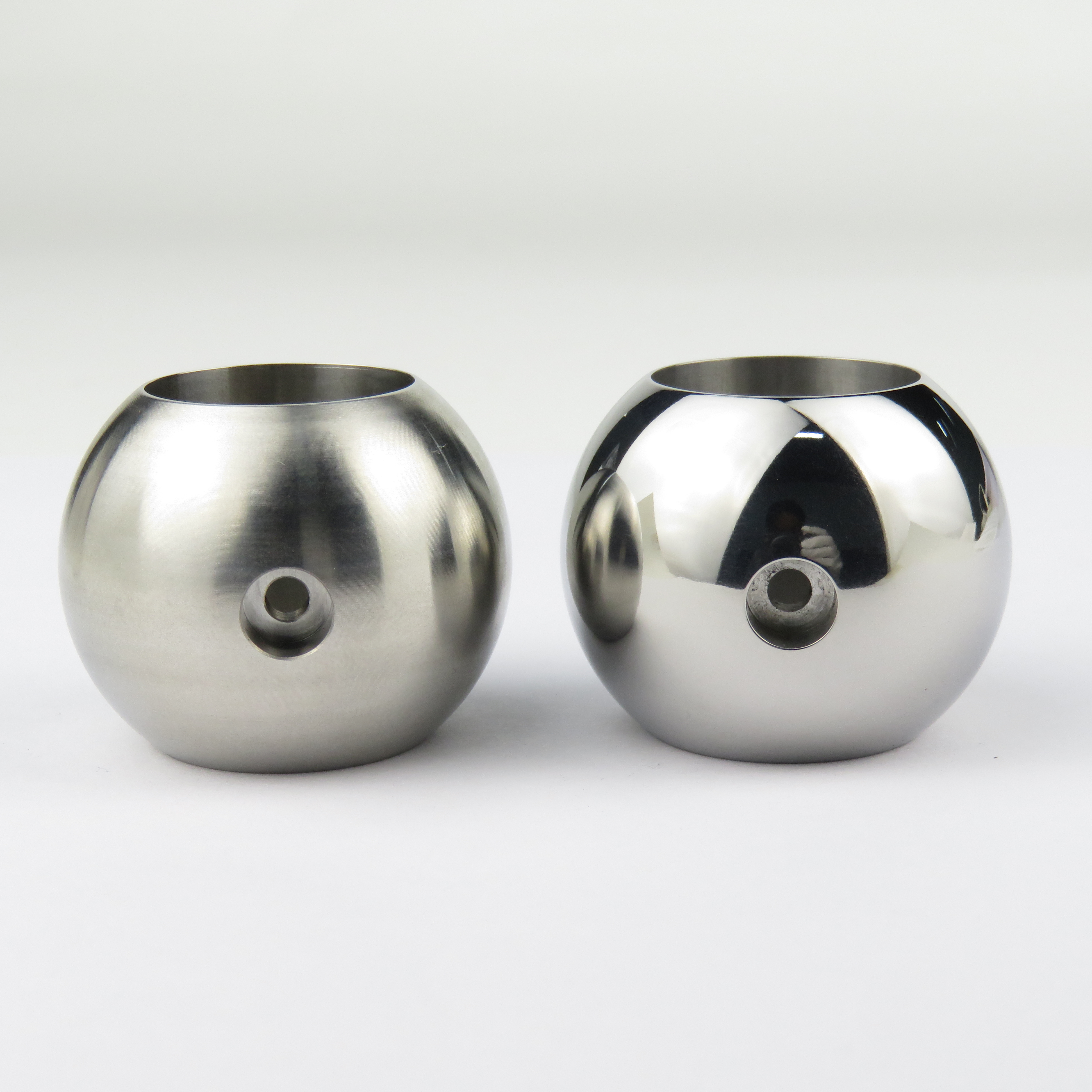
A round bowl moves its load on a circular path in a chamber whose diameter caps the part length, and extending that chamber to take a six-metre length stops being practical. The deeper issue is the bed: a long tube occupies too much of the load for the media to circulate around it, so the part is dragged and struck instead of worked evenly. Long sections are better run in a tub, where the process length can be extended along one axis, or on a dedicated arrangement that moves the part or the heads along the length.
It depends on the order book rather than on the profile alone. A tub suits mixed work and shorter runs, because the set-up changes with the part and the chamber can take several profiles. A dedicated arrangement that carries the length past fixed heads, or moves heads along a stationary length, sets the texture direction by machine axis and holds it better over repeated runs, at the cost of floor space and changeover when the profile or length changes. Bring the profile mix, the typical and maximum lengths and the annual volume into the line-concept discussion; we can scope it, though the choice is yours.
No. SurfacePolish is a cross-border supplier of finishing machines, media and compounds, and runs a free sample trial on parts the buyer sends. The tube, pipe and profiles remain the buyer's own material from their own mill or stockholder, and we do not verify its grade, mill certificate or corrosion performance. Keeping those roles separate matters, because the appearance a finishing line can reach is limited by the incoming material: its alloy, its hardness, its existing grain and the condition it arrives in. Send material from the actual delivery rather than a hand-picked offcut.
Use Utrecht, Netherlands as the destination on the enquiry and state whether the deliverable is equipment, media and compound, a representative sample review or a line concept. A destination does not imply local stock, a local service point or a local delivery time.
A local buyer would reference the CE machinery regime (Machinery Regulation from 20 January 2027) and the Dutch/EN-ISO surface-finishing standards published by NEN, such as NEN-EN-ISO 2080 for metal-finishing terminology. In the medical and life-sciences supply chains that dominate the park, cleanliness, residue limits and process validation are usually imposed through the customer's own quality system, and ISO 13485 is the customary quality-system reference for medical devices.
Sources were retrieved on 2026-09-29 and describe the local industrial and trade context only. They do not evidence any SurfacePolish project, shipment, installation or service in Utrecht.
The seam and scratch have to be cut back to an even grain without reducing the wall below the buyer's own minimum.
Send the material, dimensions, approximate weight, batch quantity, the incoming condition and photographs of the difficult features. Mark which features must not be contacted by media and state how the result will be inspected. This form carries source reference PSEO-0637; quote it if you prefer an additional manual reference.
Open the SurfacePolish enquiry form Email a prepared enquiry
No price, lead time, certification or result is promised here. Confirm whether a sample trial is available for the specific part and what the trial can and cannot show.
Page PSEO-0637 · revised 2026-09-29 · cross-border equipment, media and scoped sample review. City context is sourced and cited above.
Use this local checker to identify missing part and inspection information. It prepares a technical-review brief; it does not approve a machine, process recipe or production result.
Complete the part details to prepare a review brief.
Email : info@surface-polish.com


 IPv6 network supported


 +86-592-2381506
