Choose the selection factors relevant to the part family. The bowl and tub descriptions compare compact circulating parts with long or bulky geometry, and media cushioning with possible compartments. They also contrast integrated separation options with external or application-specific routes. These are equipment-family contexts; the tool does not prove that a particular quoted machine includes a deck, divider, fixture or automatic handling.
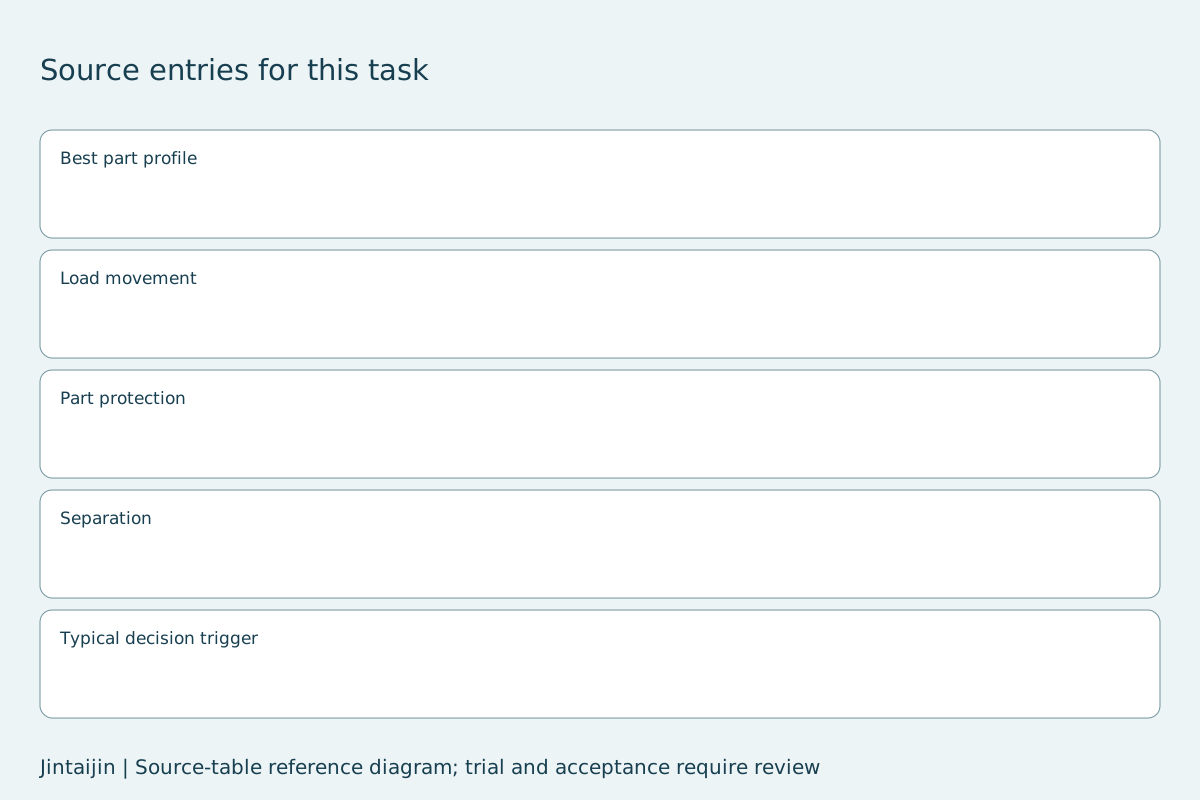
Select the entries relevant to your review.
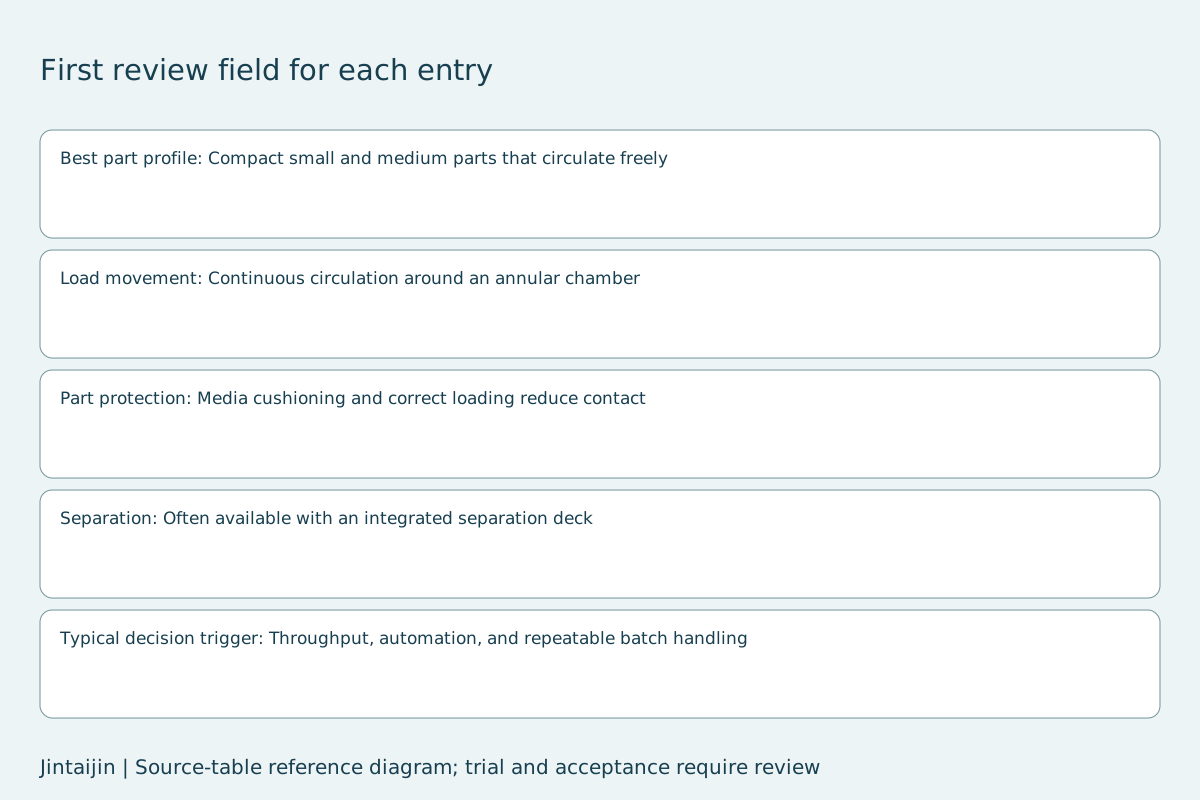
Family-level equipment features require confirmation for the quoted configuration. Keep every selected requirement with the part and the actual trial record. Selecting a row does not show that its acceptance condition has been met.
Record maximum part envelope, orientation, protected features and clearance in the intended chamber. Review loading, treatment, unloading and media separation as one sequence. Ask whether high-value parts require isolation and how they will be transferred without marks. Verify optional features with the supplier configuration and drawing. Chamber labels and gross capacity cannot establish safe part count or repeatable output.
Vibratory Bowl: Compact small and medium parts that circulate freely
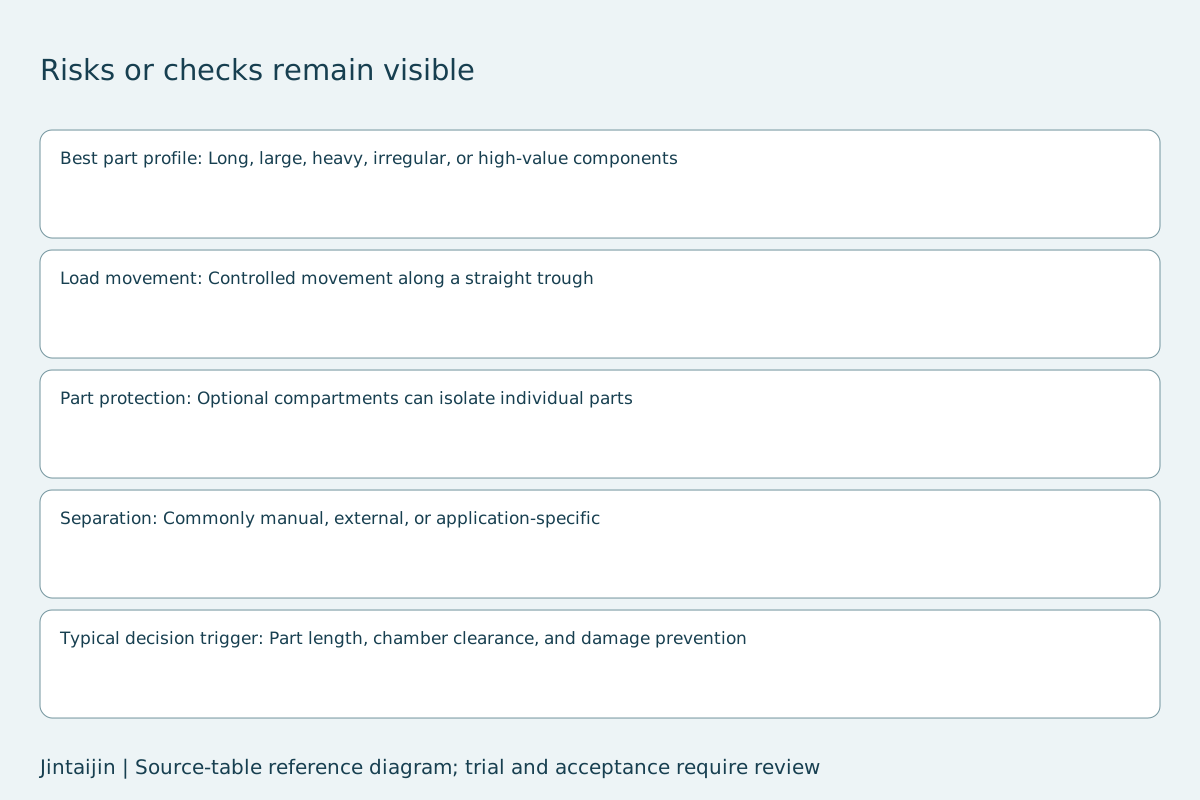
Vibratory Tub: Long, large, heavy, irregular, or high-value components
Vibratory Bowl: Continuous circulation around an annular chamber
Vibratory Tub: Controlled movement along a straight trough
Vibratory Bowl: Media cushioning and correct loading reduce contact
Vibratory Tub: Optional compartments can isolate individual parts
Vibratory Bowl: Often available with an integrated separation deck
Vibratory Tub: Commonly manual, external, or application-specific
Vibratory Bowl: Throughput, automation, and repeatable batch handling
Vibratory Tub: Part length, chamber clearance, and damage prevention
Read the Jintaijin technical article. Source table reviewed 3 October 2026. Possible causes, directions and adjustments remain conditional reference fields.
Email : info@surface-polish.com


 IPv6 network supported


 +86-592-2381506