A buyer in Amsterdam, Netherlands in semiconductor equipment needs a stainless vacuum tee cleaned up without losing its knife-edge seal geometry. SurfacePolish supplies finishing machines, media and compounds across borders and offers a free sample trial, in which representative parts are shipped to the factory in Xiamen and returned with an observed condition and a proposed media, compound and cycle direction for the buyer to assess. This brief is written for a buyer in Amsterdam working on semiconductor equipment; it describes equipment, media and a scoped sample review, not a local polishing service.
What is the smallest internal passage, slot or hole the charge must not plug, and how will a lodged medium be detected and removed?
Which cleanliness method and limit does the buyer own, and is it applied before or after the buyer's own cleaning step?
Is edge rounding tolerable on a knife edge or bore lip, and what maximum radius belongs on the drawing?
Before discussing media, establish what the burr actually is and where it sits. Milling leaves a rolled edge on a machined flange, turning leaves a feather on a bore lip, and EDM leaves a recast layer that behaves differently under impact media. Note the edge condition on seal lands and knife edges specifically, because those are the features where rounding is least tolerated and where a specification usually names a maximum radius or a required chamfer. Ask which burrs are functional rather than cosmetic: a burr inside a gas passage affects flow and can shed particles, while one on an external bracket face may not matter at all. Equally, record the cleanliness baseline the part arrives with, since oil, coolant and earlier blasting residue will load the compound and influence the outcome of a first cycle.
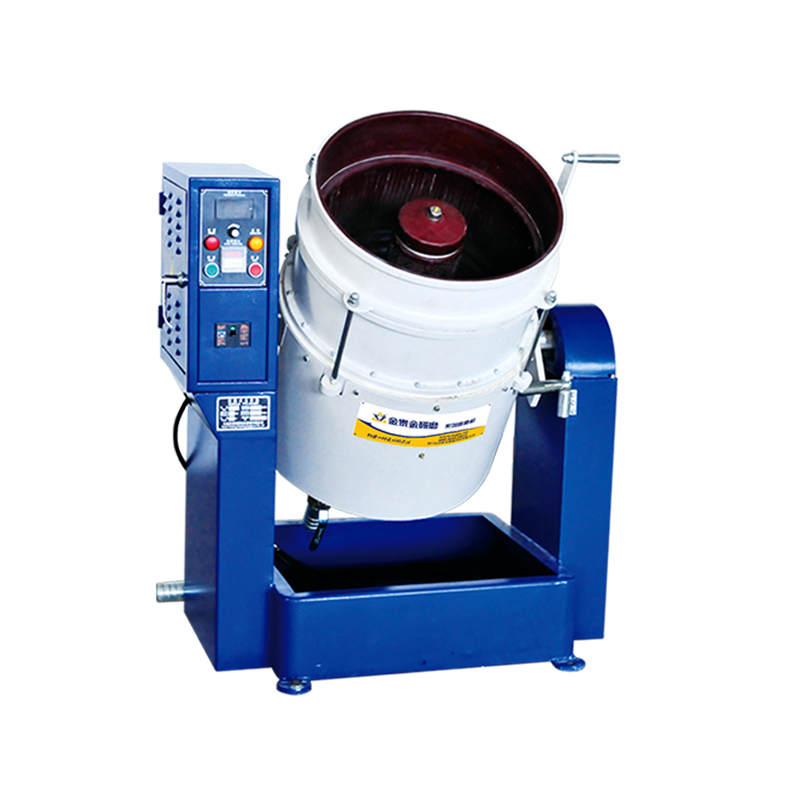
Rotary barrel finishing is the gentle end of the mechanical range: parts tumble in a closed drum, usually with plastic or light ceramic media and a generous compound flow, which limits direct impact and suits small fragile components and mixed batches of fittings. Cycles are long, the drum hides the parts while they run, and internal passages can collect media and compound, so unloading and retrieval discipline matters. On the dry side, dry polishing machines and dryers follow a wet process to remove residual moisture and reduce water spotting on aluminium and stainless surfaces. Drying is a finishing step, not a cleanliness release: a dry part can still carry a compound film, fine particulate or media dust, and the buyer's own cleanliness method is what decides whether the part may move forward.
| Machine route | Where it fits | What it will not do |
|---|---|---|
| Magnetic finishing machine | Fine deburring and light refinement of small precise features such as nozzles, orifice plates and narrow slots | Small working envelope that excludes chamber bodies and long gas lines, with pin media that can lodge in fine passages |
| Disc finishing machine | Fast, high-energy edge breaking and surface refinement on small robust parts and uniform batches of fittings | High impingement and edge-loss risk on thin or soft parts, and geometry must suit the disc working gap |
| Grinding finishing machine | Taking off a heavy machining burr or a defined stock layer before a refinement pass on robust stainless work | High removal energy cuts functional edges fast and demands a tighter geometry assessment and shorter cycles |
| Centrifugal barrel finishing machine | Small precise parts and short cycles with high contact pressure, such as inserts, small valve bodies and distribution components | Rounds edges and can distort thin unsupported sections quickly; results are sensitive to charge weight, speed and stop time |
Compound choice controls residue as much as it controls cutting. Alkaline and neutral families are common for general deburring and cleaning, acidic families may be used where a descale or brightening effect is wanted, and silicate-bearing products can leave a tenacious film that is difficult to remove from a sealing face or a gas passage. For aluminium, a compound with an effective corrosion inhibitor is usually necessary to avoid darkening and surface attack during and after the cycle. Concentration, flow rate and temperature all shift the result, so dosing should be metered rather than guessed. Water quality matters too: hardness, chloride content and suspended solids affect foaming, rinsing and the residue left behind. The question to put to a supplier is what the compound leaves on the part, how it is removed, and what evidence a buyer can collect to confirm removal.
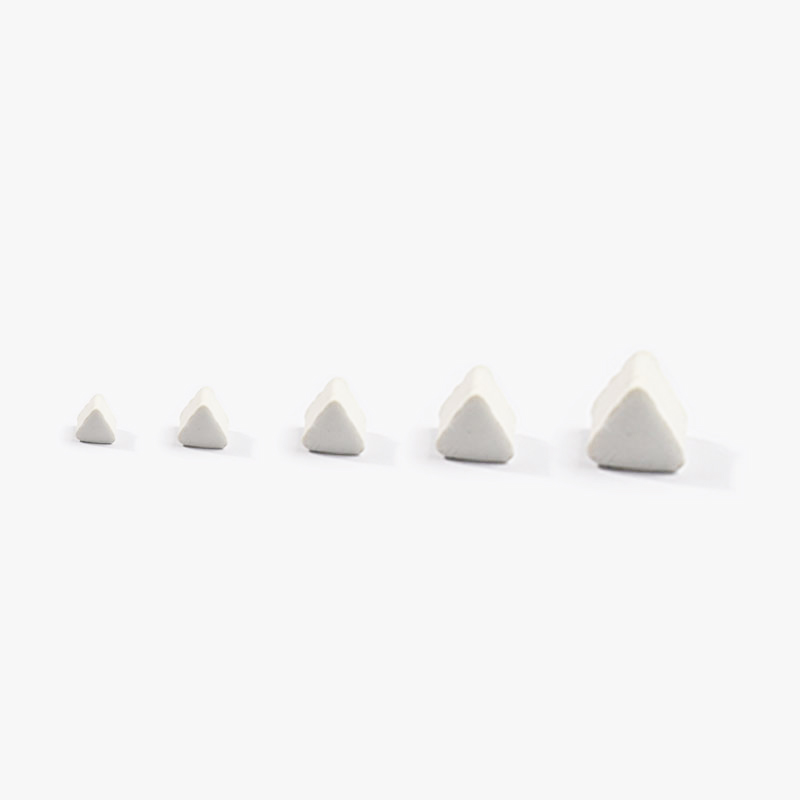
| Media | Best fit | Watch out for |
|---|---|---|
| Magnetic finishing pins and fine magnetic media | Small precise items such as nozzles, orifice plates and fine slot arrays where tumbling media cannot reach the feature | Limited working envelope, pins lodge in the same fine features they are chosen to reach, and the surface signature differs from tumbling |
| Fine ceramic or porcelain spheres in a small size class | Refinement and light edge blending after a cutting stage, and reaching tighter external geometry on chamber bodies and plates | Small sizes enter and retain in gas passages and fine slots; media wear shrinks the charge and changes the finish over its life |
| Heavy-cut ceramic, angle-cut triangles in a coarse size class | Removing a substantial machining burr from open external edges and pockets on aluminium and stainless housings before a refinement stage | Cuts edges and corners aggressively, leaves a coarse surface, and lodges in slots whose width approaches the media section |
| Plastic cylinders and cones in a harder, denser grade | Longer cycles on mixed batches of small fittings where a repeatable light edge break is wanted without ceramic impact | Can float or segregate by shape in a bowl, and cylindrical forms can wedge in slots and cross-drillings |
Compound film, media dust and embedded particles on a sealing face are the failure mode that most often forces a semiconductor equipment part back through cleaning or into scrap. The face may look acceptable under shop light while carrying a tenacious silicate film, a smear of aluminium, or fine ceramic debris forced into a soft surface. Impingement can also peen media fragments into aluminium, which is difficult to detect without magnification or a wipe test. Likely causes include too little rinse, a compound that forms a film, insufficient separation after the cycle, and drying a part before it is genuinely clean. Inspection should combine magnification of the sealing land, a solvent wipe over a defined area, and the buyer's own cleanliness method. Surface finish alone is not evidence that a face is free of residue.
| Failure mode | Likely cause | How to catch it |
|---|---|---|
| Compound film or tenacious residue left on a sealing face | A film-forming or silicate-bearing compound, insufficient rinse volume, or drying the part before it is genuinely clean | Magnify the sealing land and wipe a defined area with solvent, comparing the wipe against a clean reference; confirm with the buyer's own cleanliness method |
| Knife-edge seal face or bore lip rounded past the drawing limit | High-energy route, over-long cycle, dense or coarse media, or a soft aluminium edge run without masking or shielding | Measure a defined edge feature before and after with an optical comparator, radius gauge or moulded replica, and compare with the maximum radius on the drawing |
| A ceramic or plastic medium lodged in a blind tapped hole, slot or gas passage | Media size class too close to the opening, a worn charge that has broken down into smaller pieces, or a retention feature that was never mapped | Count the charge in and out where practical, borescope the smallest passages at an agreed angle, pin gauge every hole, and rinse through a filter for a visual residue check |
| Thin plate or liner distorted, bowed or dimensionally drifted after the cycle | Tumbling load on an unsupported thin section, part-on-part contact, or heat and pressure from a high-energy route | Measure flatness, wall thickness and critical dimensions at the same marked points as the pre-process baseline, using a CMM or surface plate and gauge |
Amsterdam's industrial base is organised around the Port of Amsterdam and the North Sea Canal rather than around large manufacturing campuses. In 2024 the port handled 62.2 million tonnes of cargo; coal fell to 6.6 million tonnes while dry bulk grew, with agribulk reaching 7.1 million tonnes (+12%), and oil products held at 29.1 million tonnes. CBS counted 4,170 industrial establishments (SBI C) in the municipality on 1 January 2026 out of 216,360 business establishments in total. The port's 2040 vision positions it as a destination port for clean shipping, circular industry and renewable energy.
The nearest part of that base to this brief is energy: Oil products throughput was 29.1 million tonnes in 2024 and coal 6.6 million tonnes, and the port's revised Vision 2040 is framed as a destination port for clean shipping, circular industry and renewable energy.
Agri-food, edible-oil and energy bulk handling in the port depends on stainless and carbon steel pumps, valves, pipework, tanks and conveyors, where burr removal, weld dressing and passivation of wetted surfaces affect both corrosion resistance and cleanability. Terminal and ship-repair work is typically low-volume and part-specific, so the practical question is usually media and process selection for mixed stainless and carbon steel parts rather than high throughput.
Before selecting equipment, a buyer here should settle whether the parts are hygienic stainless (cleanability, passivation, no media embedded in the surface) or structural carbon steel (edge radius, burr height, Ra), because that decision drives media and compound chemistry far more than machine size does.
Freight context: Port of Amsterdam (North Sea Canal), IJmuiden sea lock (Zeesluis IJmuiden). The harbour is a combined sea and inland-barge port; Port of Amsterdam reported 99 sea cruise calls and 1,880 river cruise calls in 2024. Machinery imported from outside the EU is declared to Dutch Customs at the point of entry and needs an EORI number, while goods arriving from another EU member state are not declared to customs at all.
Goods entering the Netherlands from outside the EU must be declared to Dutch Customs (Douane, part of the Belastingdienst); the importer needs an EORI number, import duty is calculated on the customs value (goods value plus transport and insurance to the EU external border), and import VAT is paid at the border unless an article 23 permit or a fiscal representative is used. CE marking is mandatory for most machinery placed on the EEA market: the Machinery Regulation replaced the Machinery Directive and manufacturers must comply with the new requirements by 20 January 2027. The importer must verify that the conformity assessment was carried out correctly, that CE marking is applied properly, that the technical file is present and complete, and that the user manual is supplied in the correct language; the manufacturer's EC Declaration of Conformity must be kept. Dutch companies imported over EUR 140 billion of machinery and appliances in 2024, 24% of total Dutch goods imports.
The Dutch standards body is NEN (Nederlands Normalisatie-instituut), which publishes and maintains the NEN and NEN-EN-ISO standards; the content of a standard is set by a NEN standards committee made up of the organisations concerned, not by NEN itself. For surface finishing NEN publishes NEN-EN-ISO 2080, which defines the terms for the general types of surface-finishing processes with emphasis on practical use in metal finishing, under the standards committee for metallic coatings and corrosion of metals and alloys. Machinery safety, EMC, low-voltage, ATEX, RoHS and ecodesign requirements reach Dutch buyers through the CE directives and regulations referenced by KVK, with the Machinery Regulation applying from 20 January 2027.
SurfacePolish supplies from Xiamen, China. The buyer's own destination rules, conformity marking, tariff classification and documentation responsibilities stay with the buyer; confirm them against the authorities named above before ordering.
Acceptance has to be written before the trial, on the drawing and in the purchase specification, not agreed verbally afterwards. Name the controlled surfaces individually, for example a seal land, a gas passage wall or a mating flange face, and state the parameter, the cut-off length, the direction of measurement and the number of readings. A single global roughness call-out on a chamber body is not enough, because the sealing face, the outer wall and the bore will not respond the same way to one media charge. Where an edge limit applies, express it as a maximum radius or a required chamfer at a named feature. Add the cleanliness requirements the part must meet and the method by which they will be judged. Settling these points early prevents the common dispute in which a supplier reports a finish and a buyer rejects on cleanliness.
Scale-up is mostly about holding the conditions that produced the trial result. In production that means a defined media charge kept at a target mass, screened on a schedule, with undersize and broken pieces removed and fresh media added to a recorded level. Compound should be metered to a concentration rather than poured by eye, and rinse water quality should be known and stable. Every lot needs an identity: part numbers, quantity, machine, settings, operator, inspection result and disposition. Where the same machine handles aluminium and stainless, define the changeover, including media purge, machine cleaning and compound replacement, and record when it happened. Cycle counting is a simple control that is often skipped: a charge that has run a known number of hours can be scheduled for replacement before wear starts producing lodged media or a drifting finish.
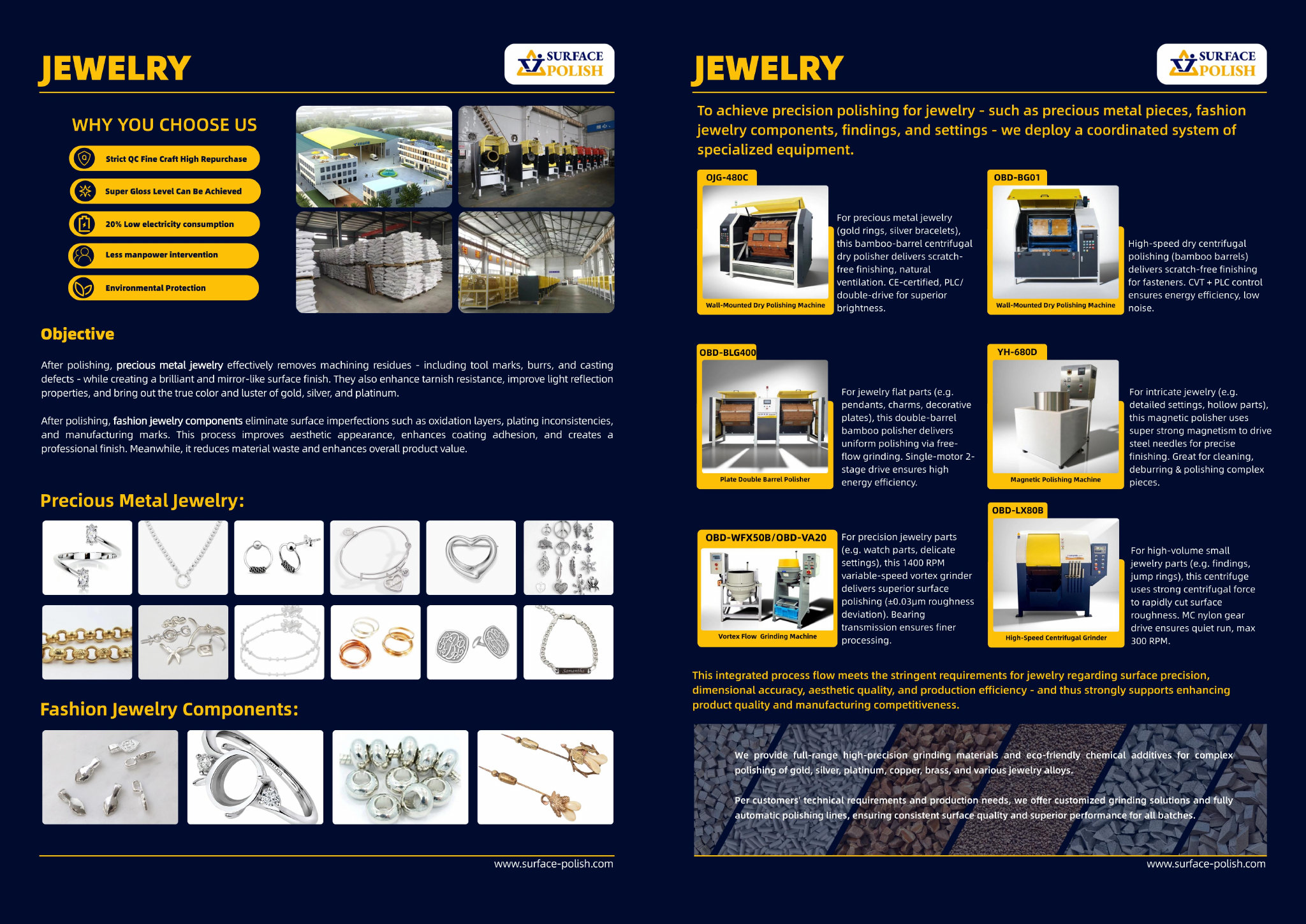
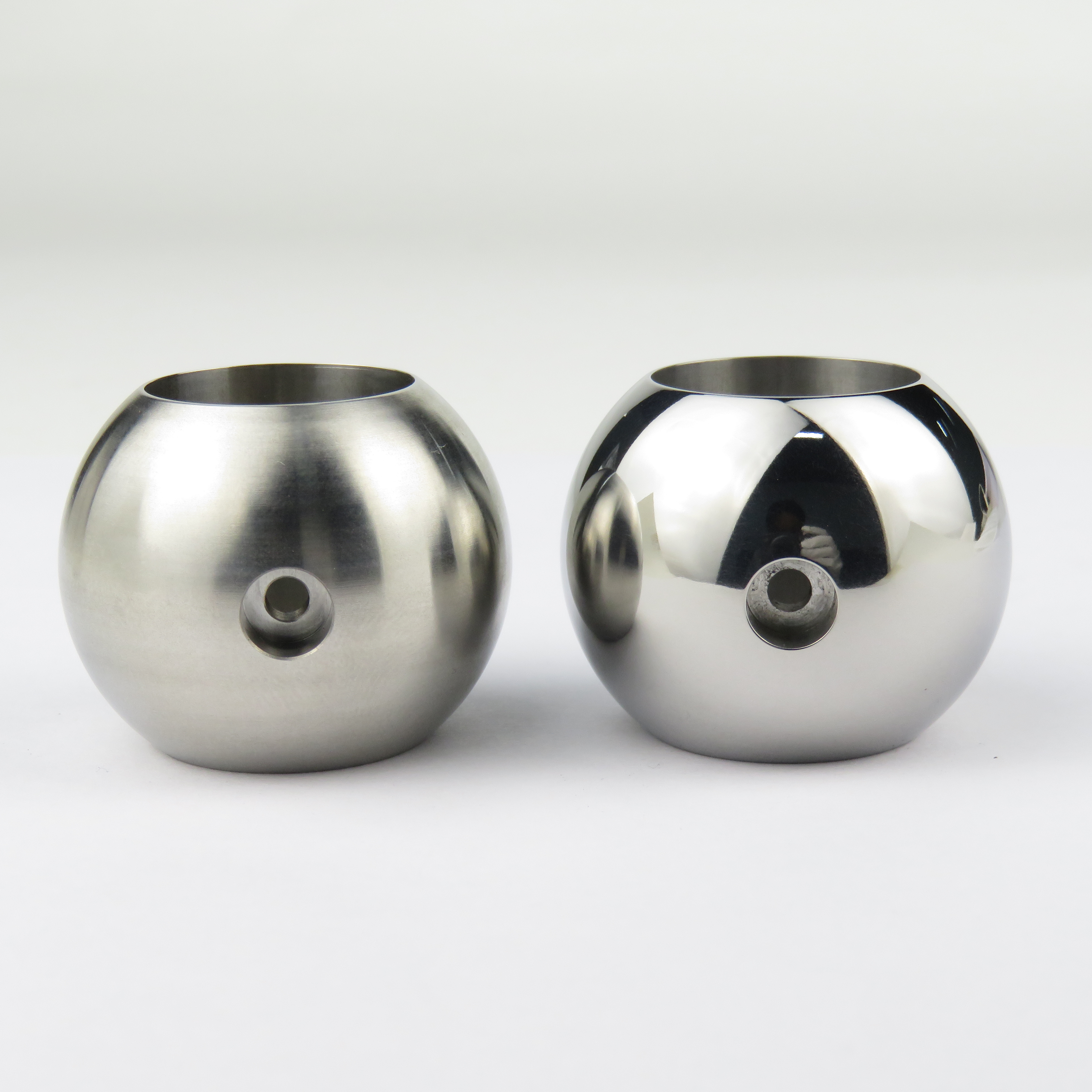
There is no single best medium, because aluminium is soft and the trade-off is between cut rate and surface damage. Plastic media is often the safer starting point where a sealing face or a thin wall must be preserved, while a fine ceramic can cut faster if edges tolerate more energy. The deciding variables are the smallest opening a medium could enter, the smallest radius that must not be rounded, and the surface condition the buyer needs. Media size class usually matters more than the broad material name. Send a marked-up aluminium part with its tightest passage and one controlled face, and let the trial compare two size classes.
A batch record should identify what was done rather than simply assert a result. Ask for part numbers and quantities, the machine used, the media type and size class, charge mass and age since the last screen, the compound and dose, the rinse water source, cycle time, inspection results and the lot disposition. Request the media and compound data sheets offered by the supplier. Where aluminium and stainless are processed on the same site, ask for the changeover note covering media purge, machine cleaning and compound replacement. This is finishing process documentation, not a certificate of compliance, and it supports your own traceability in Netherlands.
A pump housing is usually assessed on external edges, bore condition and appearance, and a slightly rounded edge is often acceptable. A chamber component is assessed on small functional surfaces: a seal land that must not round, a gas passage that must stay clear, a locating bore that sets position. That shifts the whole process toward smaller media, gentler energy, more masking and fixturing, and a defined cleanliness step. It also shifts acceptance from a visual judgement to measurements at named features. If a shop quotes both parts the same way, the finishing route is probably being chosen by part size rather than by what the surfaces actually do.
Use Amsterdam, Netherlands as the destination on the enquiry and state whether the deliverable is equipment, media and compound, a representative sample review or a line concept. A destination does not imply local stock, a local service point or a local delivery time.
A local buyer would reference the CE marking regime for machinery — with the Machinery Regulation replacing the Machinery Directive and compliance required by 20 January 2027 — and the Dutch/EN-ISO surface-finishing vocabulary published by NEN, notably NEN-EN-ISO 2080 for metal-finishing terms. Food-contact and wetted-surface work is normally specified through the customer's own hygiene and material requirements rather than through a single national finishing standard.
Sources were retrieved on 2026-09-29 and describe the local industrial and trade context only. They do not evidence any SurfacePolish project, shipment, installation or service in Amsterdam.
The buyer wants weld discolouration and machining burrs reduced on the outside while the knife edges stay within their radius limit.
Send the material, dimensions, approximate weight, batch quantity, the incoming condition and photographs of the difficult features. Mark which features must not be contacted by media and state how the result will be inspected. This form carries source reference PSEO-0605; quote it if you prefer an additional manual reference.
Open the SurfacePolish enquiry form Email a prepared enquiry
No price, lead time, certification or result is promised here. Confirm whether a sample trial is available for the specific part and what the trial can and cannot show.
Page PSEO-0605 · revised 2026-09-29 · cross-border equipment, media and scoped sample review. City context is sourced and cited above.
Use this local checker to identify missing part and inspection information. It prepares a technical-review brief; it does not approve a machine, process recipe or production result.
Complete the part details to prepare a review brief.
Email : info@surface-polish.com


 IPv6 network supported


 +86-592-2381506