A buyer in Kobe, Japan in semiconductor equipment has a long aluminium chamber weldment that will not tumble in a standard bowl and carries a sealing face that must not be touched. SurfacePolish supplies finishing machines, media and compounds across borders and offers a free sample trial, sending parts to Xiamen and returning them with observations and a proposed route for the buyer's review. This brief is written for a buyer in Kobe working on semiconductor equipment; it describes equipment, media and a scoped sample review, not a local polishing service.
Can the required finish be reached in one mechanical route, or does the part need a cut stage followed by a refinement stage?
Which surfaces on this part are functional, such as seal lands, gas passage walls and locating bores, and which are only cosmetic?
Is edge rounding tolerable on a knife edge or bore lip, and what maximum radius belongs on the drawing?
Material state decides more about the route than the drawing tolerance does. A 6061-T6 machined plate, a 5083 weldment and a 316L casting behave differently under the same media load: aluminium work-hardens and smears, cast material can open porosity, and stainless can pick up iron from tooling or from steel media. Establish whether the part has been heat treated, whether weld zones will be finished in the same pass as the parent metal, and whether an anodise, passivation or coating step follows, because that downstream step can be the real reason a surface must be smut-free and free of embedded debris. Record the starting condition honestly: machining marks, EDM recast layer, heat tint, glass-bead residue from an earlier operation and any oil or handling soil all change what one mass-finishing cycle can achieve.
Compound choice controls residue as much as it controls cutting. Alkaline and neutral families are common for general deburring and cleaning, acidic families may be used where a descale or brightening effect is wanted, and silicate-bearing products can leave a tenacious film that is difficult to remove from a sealing face or a gas passage. For aluminium, a compound with an effective corrosion inhibitor is usually necessary to avoid darkening and surface attack during and after the cycle. Concentration, flow rate and temperature all shift the result, so dosing should be metered rather than guessed. Water quality matters too: hardness, chloride content and suspended solids affect foaming, rinsing and the residue left behind. The question to put to a supplier is what the compound leaves on the part, how it is removed, and what evidence a buyer can collect to confirm removal.
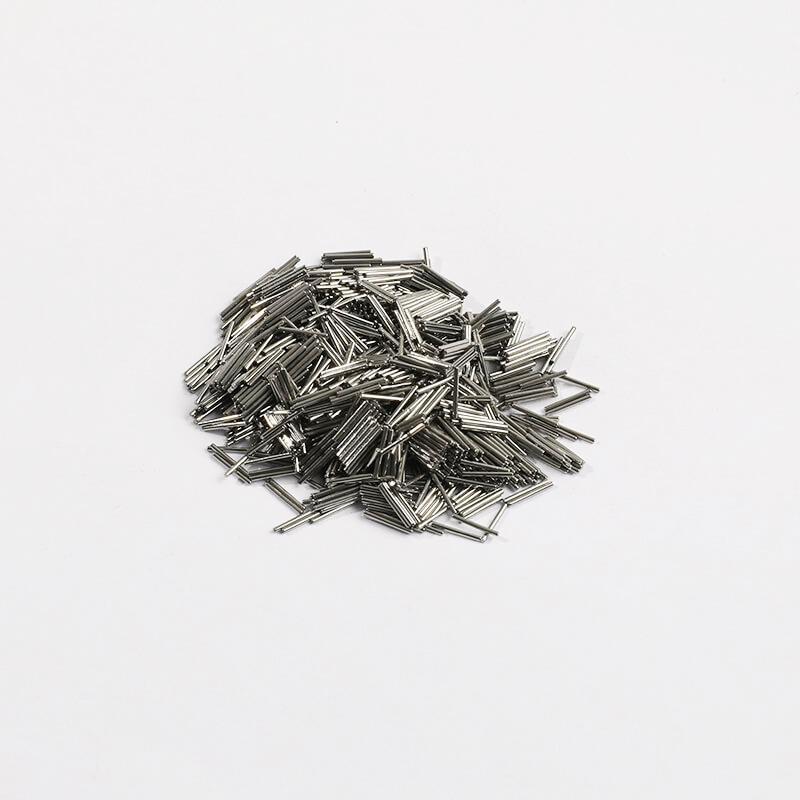
| Media | Best fit | Watch out for |
|---|---|---|
| Heavy-cut ceramic, angle-cut triangles in a coarse size class | Removing a substantial machining burr from open external edges and pockets on aluminium and stainless housings before a refinement stage | Cuts edges and corners aggressively, leaves a coarse surface, and lodges in slots whose width approaches the media section |
| Aluminium oxide grinding media in a dense ceramic bond | Where a heavier stock removal or a more consistent cut is needed on robust stainless parts with thick edges | High removal energy rounds functional edges quickly and is a poor match for thin aluminium plates or knife-edge seal lands |
| Plastic triangles and pyramids in a soft to medium grade | Deburring aluminium and other soft alloys where surface marking and edge rounding must be kept to a minimum | Slow cut rate, media deforms and wears, and a worn charge behaves noticeably differently from a fresh one |
| Dry media such as walnut shell and corn cob | Drying assistance, light surface drying polish and removal of superficial soil after a wet cycle | Does not deburr or refine metal significantly, generates dust, and must not be treated as a cleanliness step |
Rotary barrel finishing is the gentle end of the mechanical range: parts tumble in a closed drum, usually with plastic or light ceramic media and a generous compound flow, which limits direct impact and suits small fragile components and mixed batches of fittings. Cycles are long, the drum hides the parts while they run, and internal passages can collect media and compound, so unloading and retrieval discipline matters. On the dry side, dry polishing machines and dryers follow a wet process to remove residual moisture and reduce water spotting on aluminium and stainless surfaces. Drying is a finishing step, not a cleanliness release: a dry part can still carry a compound film, fine particulate or media dust, and the buyer's own cleanliness method is what decides whether the part may move forward.
| Machine route | Where it fits | What it will not do |
|---|---|---|
| Disc finishing machine | Fast, high-energy edge breaking and surface refinement on small robust parts and uniform batches of fittings | High impingement and edge-loss risk on thin or soft parts, and geometry must suit the disc working gap |
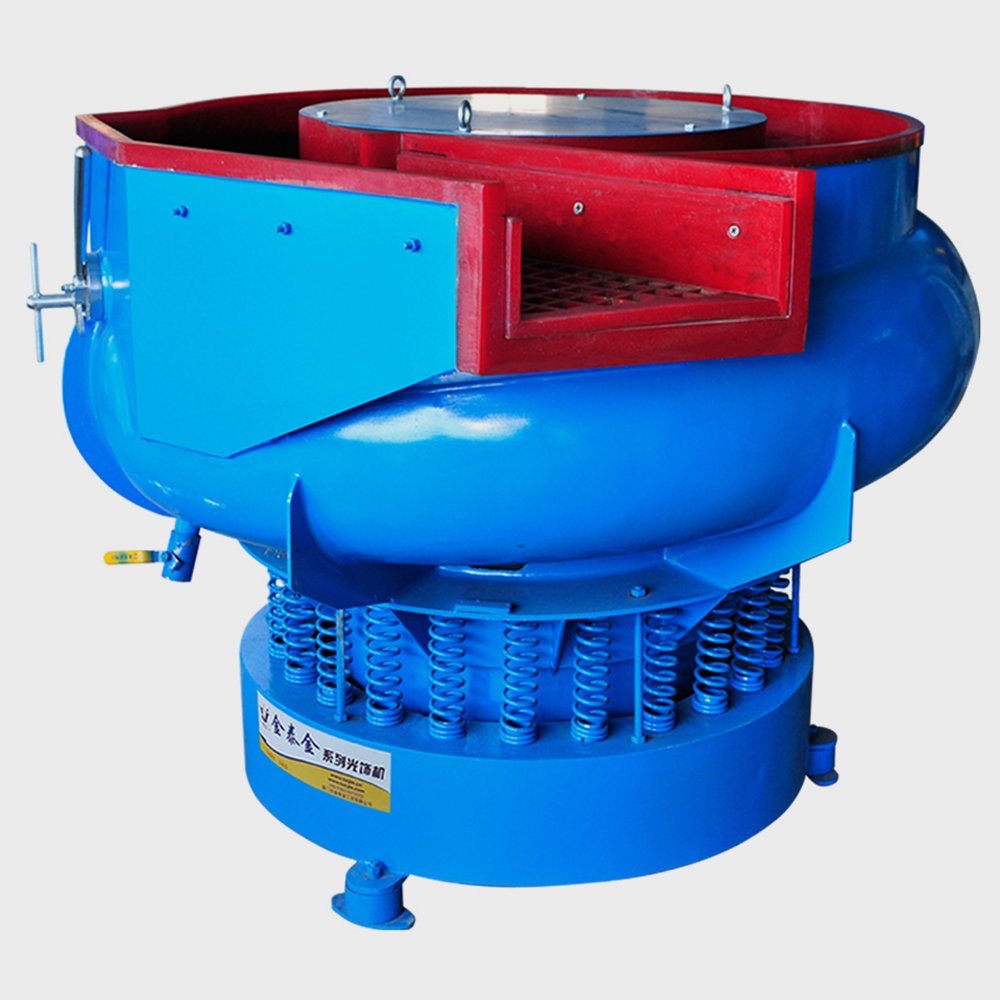
| Vibratory finishing machine (bowl) | General deburring and refinement of chamber bodies, plates and housings that fit and can tumble without racking, with easy mid-cycle inspection | Continuous part-on-part contact and no access to deep internal passages; thin plates and finished mating faces need separation |
| Rotary barrel finishing machine | Gentle deburring of small fragile components and mixed fitting batches with a generous compound flow | Long cycles, no visibility while running, and internal passages can collect media and compound that must be retrieved at unload |
| Centrifugal barrel finishing machine | Small precise parts and short cycles with high contact pressure, such as inserts, small valve bodies and distribution components | Rounds edges and can distort thin unsupported sections quickly; results are sensitive to charge weight, speed and stop time |
Compound film, media dust and embedded particles on a sealing face are the failure mode that most often forces a semiconductor equipment part back through cleaning or into scrap. The face may look acceptable under shop light while carrying a tenacious silicate film, a smear of aluminium, or fine ceramic debris forced into a soft surface. Impingement can also peen media fragments into aluminium, which is difficult to detect without magnification or a wipe test. Likely causes include too little rinse, a compound that forms a film, insufficient separation after the cycle, and drying a part before it is genuinely clean. Inspection should combine magnification of the sealing land, a solvent wipe over a defined area, and the buyer's own cleanliness method. Surface finish alone is not evidence that a face is free of residue.
| Failure mode | Likely cause | How to catch it |
|---|---|---|
| Bright impact marks, dents or flattened corners from part-on-part contact | Dense charge, high load ratio, thin or light parts left loose among heavy neighbours, or a cycle run longer than the edge condition required | Look for repeating mark patterns on exposed faces and edges, compare an unsupported part with a racked or compartmentalised one, and review the batch mix and load recorded for the lot |
| Knife-edge seal face or bore lip rounded past the drawing limit | High-energy route, over-long cycle, dense or coarse media, or a soft aluminium edge run without masking or shielding | Measure a defined edge feature before and after with an optical comparator, radius gauge or moulded replica, and compare with the maximum radius on the drawing |
| Grey aluminium smear transferred onto stainless parts in a shared batch | Aluminium fines retained in media, compound or the machine after an aluminium lot, with no purge before the stainless lot | Check stainless surfaces under angled light for a dull grey film, review the changeover record, and inspect the charge and machine sump for retained fines |
| Water spotting or mineral residue left after wet processing and drying | Hard or high-chloride rinse water, slow or uneven drying, or parts stacked wet so moisture is trapped in pockets and grooves | Inspect dried parts under angled light for rings and haze, check the rinse water source and drying method, and verify that pockets and grooves drain before the part is packed |
Kobe's manufacturing is concentrated in food, transport equipment and general machinery. The city's 2020 Census of Manufacture report counts 1,394 establishments with four or more employees, 67,951 workers and 3,421.1 billion yen of manufactured goods shipments, with value added up 3.3 per cent. It states that food manufacturing and metal products together account for about a quarter of all establishments, and that food, transport equipment and general machinery together account for just over half of employment, with Hyogo ward especially strong in transport equipment and Nishi ward in production machinery and metal products. The city also publishes an economic census and industrial statistics series, and the port has been the city's trade gateway since it opened to foreign trade in 1868.
The nearest part of that base to this brief is food: Kobe's 2020 Census of Manufacture report states that food manufacturing and metal products together account for about a quarter of all establishments, and that food manufacturing is one of the three industries making up just over half of employment.
Kobe's three largest manufacturing employers by industry are food, transport equipment and general machinery, so the surface requirement splits between hygienic, cleanable finishes for food equipment and dimensional, burr-controlled finishes for transport and general machinery parts. General machinery and metal products are concentrated in Nishi ward, where small firms supplying machined components need a finish specification that travels with the drawing rather than a verbal agreement.
A Kobe buyer should separate the two cases before choosing a process: transport and general machinery parts where edge and burr limits govern, and food-equipment parts where cleanability and surface condition govern, because the same media and compound choice will not serve both.
Freight context: Port of Kobe (神戸港), open to foreign trade since 1868, Kobe Airport (神戸空港), opened in 2006. Kobe City records that after the 1995 Hanshin-Awaji earthquake the port's facilities were restored within two years, and that the 2006 opening of Kobe Airport established a combined sea, air and land transport system. Customs clearance in the Kobe area is handled by Kobe Regional Customs, one of Japan Customs' regional offices.
The customs authority is Japan Customs, the Customs and Tariff Bureau of the Ministry of Finance, with regional customs at Tokyo, Yokohama, Nagoya, Osaka and Kobe. Any person importing goods must declare them to the Director-General of Customs and obtain an import permit after examination and payment of customs duty and consumption tax. The declaration is normally filed by the importer or by a customs broker acting as proxy, on a triplicate import (customs duty payment) declaration form (Customs form C-5020) supported by the invoice, the bill of lading or air waybill, a certificate of origin where a WTO rate applies, certificates of origin for preferential rates, packing lists and freight and insurance documents where required, plus any licence or certificate demanded by laws other than the Customs Law. More than 90 per cent of import procedures are computerised. A JIS Mark certificate is a separate, voluntary third-party scheme; foreign exporters are eligible to apply, and certification bodies must comply with ISO/IEC 17065.
Documentation and technical communication are Japanese-language in practice: JISC states that the documents submitted for JIS certification-body accreditation must be written in Japanese, and drawings, inspection sheets and purchase specifications from Japanese buyers are normally issued in Japanese. Import declarations are filed in triplicate and importers commonly use licensed customs brokers, so the commercial invoice, packing list and origin documents must be complete and consistent with the declared commodity code. As general industry practice in Japan, industrial buyers qualify a supplier on documentation, quality-management evidence and a defined inspection standard before volume orders, and expect a named Japanese-speaking contact for technical and commercial follow-up.
SurfacePolish supplies from Xiamen, China. The buyer's own destination rules, conformity marking, tariff classification and documentation responsibilities stay with the buyer; confirm them against the authorities named above before ordering.
Cleanliness acceptance belongs to the buyer, because only the buyer knows what the part will see downstream and which residue matters. A practical specification names the method, the surface or extract volume it applies to, and the limit. Common approaches include a solvent or water wipe over a defined area with a visual or gravimetric assessment, a rinse-and-filter collection on internal passages, magnification or borescope inspection of sealing faces and slot edges, and the buyer's own leak or functional test on the assembled part. State whether inspection happens on the finished part, after the buyer's own cleaning step, or both. SurfacePolish can report what was observed on tested parts and keep them separated and documented, but it cannot certify a cleanliness level or guarantee a particle result.
Send parts that represent the real range, not a single convenient sample. The set should include the part with the tightest internal passage, the thinnest unsupported section, the surface that must not be touched, and at least one part in the true as-received condition with its normal burr and soil. Add a coupon of the same material, ideally with a known starting roughness, so a measurement can be compared before and after. Supply a marked-up drawing identifying critical surfaces, edge limits and any cleanliness requirement, plus a short statement of what the part does in service. Quantity matters: several pieces allow a stop-and-look at more than one cycle time. Pack them so they arrive undamaged, label each one, and state the material and heat treatment, since an unlabelled mixed lot cannot be assessed.
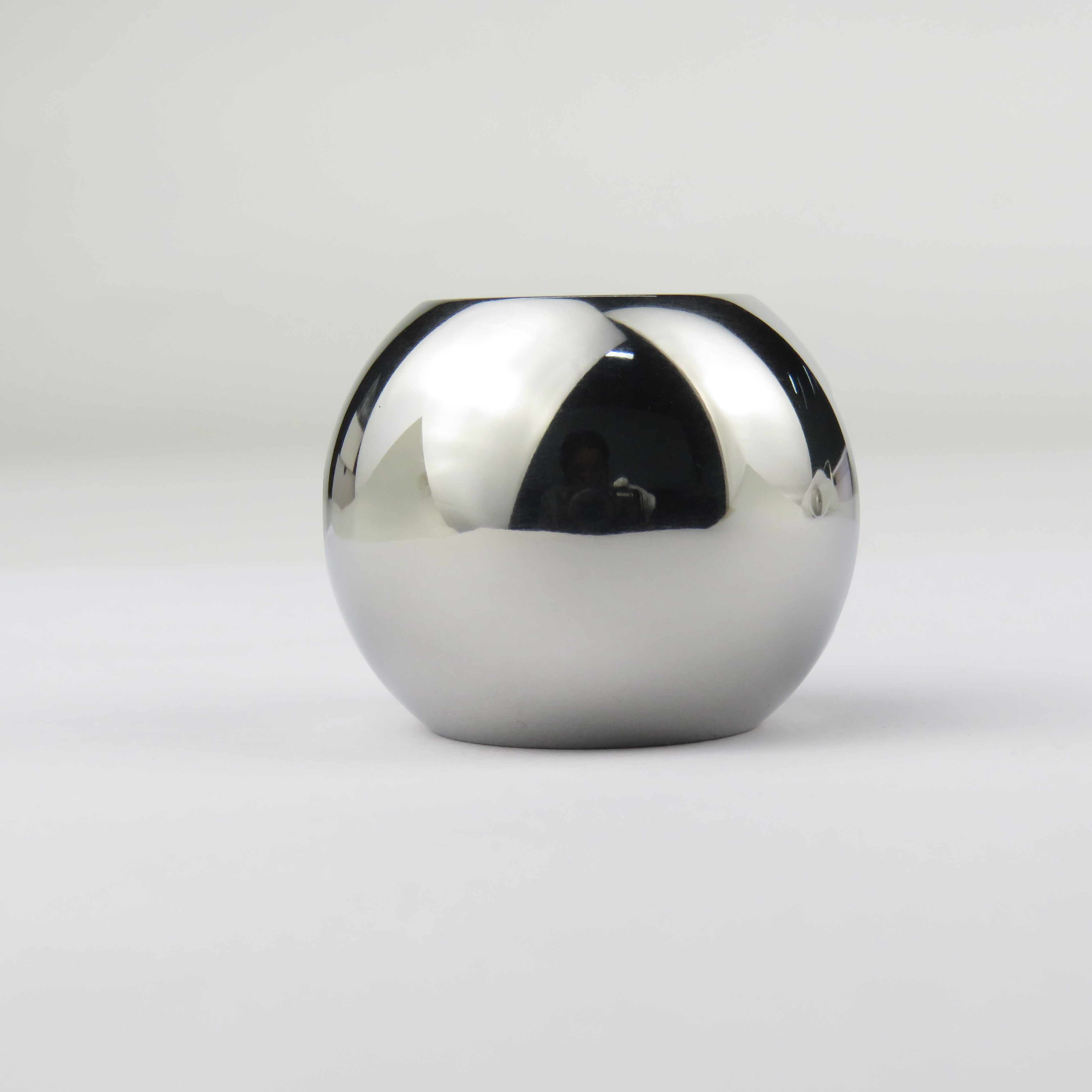
Any mechanical finishing operation can leave compound film, media dust and fine debris, particularly in blind features and soft aluminium surfaces. The practical controls are compound choice, rinse volume and quality, separation at unload, and a defined cleanliness check at a named surface. What that check should be is the buyer's specification, because only the buyer knows the downstream use. SurfacePolish cannot promise a particle count or certify a cleanliness level, and no process should be presented as cleanroom-ready on the strength of a sample trial. What a trial can show is how the parts looked and measured after the settings used, which supports the buyer's own verification in Japan.
Mechanical mass finishing and electropolishing are different processes with different effects, and SurfacePolish does not supply or perform electropolishing. A mechanical route can deburr and refine a surface, and it may reduce the reason to consider an electrochemical step, but it does not reproduce what electropolishing does to a surface. The honest comparison is to define what the gas line actually requires, then test whether a mechanical route can observe those requirements on representative parts. Where an electrochemical finish is mandatory in your specification, that requirement stays with your own supply chain. This page treats electropolishing only as a comparison point and as a reason to evaluate a mechanical alternative.
Cycle time depends on the starting burr, the material, the media size class, the compound and how much edge refinement is wanted, so no figure can be quoted in advance. A part that only needs a light edge break may run very differently from one that must shed a machining burr before refinement, and a two-stage route needs both stages counted. The useful approach is to test a defined stop point or two on representative parts and record what changed. SurfacePolish does not promise cycle times or capacity; treat the timing on returned parts as an observation from that run, not a production commitment.
Use Kobe, Japan as the destination on the enquiry and state whether the deliverable is equipment, media and compound, a representative sample review or a line concept. A destination does not imply local stock, a local service point or a local delivery time.
Kobe buyers reference JIS, maintained by the Japanese Industrial Standards Committee, whose mechanical engineering and ferrous materials divisions cover the city's machinery and transport-equipment output, with the JIS Mark scheme available for third-party product certification. For food-equipment work the additional reference is the customer's hygiene and cleanability requirement, which is specified on the drawing rather than by a general finishing standard.
Sources were retrieved on 2026-09-29 and describe the local industrial and trade context only. They do not evidence any SurfacePolish project, shipment, installation or service in Kobe.
The buyer needs the weld and machined edges dressed and the sealing face protected on a part that is too long to tumble in a bowl.
Send the material, dimensions, approximate weight, batch quantity, the incoming condition and photographs of the difficult features. Mark which features must not be contacted by media and state how the result will be inspected. This form carries source reference PSEO-0855; quote it if you prefer an additional manual reference.
Open the SurfacePolish enquiry form Email a prepared enquiry
No price, lead time, certification or result is promised here. Confirm whether a sample trial is available for the specific part and what the trial can and cannot show.
Page PSEO-0855 · revised 2026-09-29 · cross-border equipment, media and scoped sample review. City context is sourced and cited above.
Use this local checker to identify missing part and inspection information. It prepares a technical-review brief; it does not approve a machine, process recipe or production result.
Complete the part details to prepare a review brief.
Email : info@surface-polish.com


 IPv6 network supported


 +86-592-2381506