A buyer in Leipzig, Germany working on semiconductor equipment has a varied batch of stainless vacuum fittings that need a consistent edge break without media trapped in cross-drilled holes. SurfacePolish supplies finishing machines, media and compounds across borders and runs a free sample trial: a representative batch goes to Xiamen and returns with observed results and a proposed media, compound and cycle direction for the buyer to compare. This brief is written for a buyer in Leipzig working on semiconductor equipment; it describes equipment, media and a scoped sample review, not a local polishing service.
Which surfaces on this part are functional, such as seal lands, gas passage walls and locating bores, and which are only cosmetic?
What is the smallest internal passage, slot or hole the charge must not plug, and how will a lodged medium be detected and removed?
How will a production batch be identified, segregated by material family and documented so a result can be traced to its settings?
Start every assessment with a marked-up drawing, not a part family name. On a vacuum-chamber component the surfaces that matter are usually small: an O-ring groove floor, a knife-edge seal land, a gas inlet bore, a tapped hole pattern and a locating dowel bore. Each needs a decision before any medium is chosen, whether it is masked, plugged, finished to a roughness band or deliberately left untouched. A chamber lid and a roughing-line elbow can come off the same machining cell and still need different screening because one carries a knife edge and the other carries a welded flange. Ask which surface an elastomer or metal seal actually seats on, and treat that as a datum for acceptance. The feature list also drives handling rules: where parts may be stacked, which faces may touch, and how they are separated between operations.
Magnetic finishing uses a small charge of pin-shaped or fine media driven by a moving magnetic field, which lets it reach narrow gaps, small bores and fine internal radii that tumbling media cannot enter. For semiconductor equipment parts it is most relevant on small precise items: gas nozzles, orifice plates, small machined inserts and fine slot arrays where the requirement is deburring and light refinement rather than bulk stock removal. The working envelope is small, so chamber bodies and long gas lines are out of scope. The media pins themselves are a lodging risk in the same features they are chosen to reach, and they are difficult to see inside a closed passage. Magnetic finishing also leaves a different surface signature from tumbling, so a roughness figure obtained on one route cannot be assumed to transfer to another.
| Machine route | Where it fits | What it will not do |
|---|---|---|
| Dry polishing machine and dryer | Removing residual moisture after a wet cycle and reducing water spotting on aluminium and stainless surfaces | A finishing step only; a dry part can still carry compound film, fines and media dust, so it is not a cleanliness release |
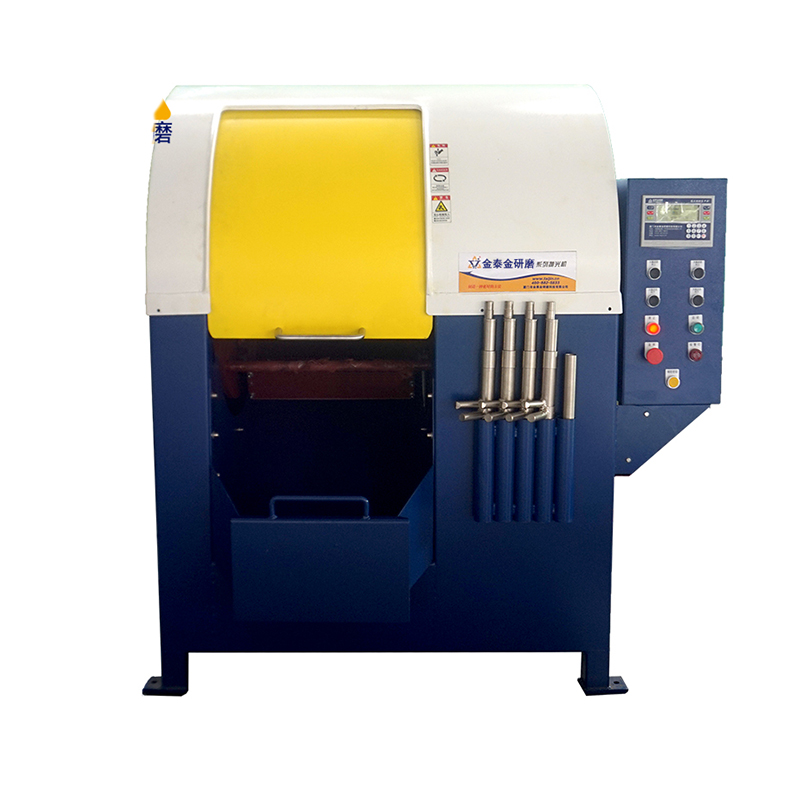
| Magnetic finishing machine | Fine deburring and light refinement of small precise features such as nozzles, orifice plates and narrow slots | Small working envelope that excludes chamber bodies and long gas lines, with pin media that can lodge in fine passages |
| Disc finishing machine | Fast, high-energy edge breaking and surface refinement on small robust parts and uniform batches of fittings | High impingement and edge-loss risk on thin or soft parts, and geometry must suit the disc working gap |
| Vibratory finishing machine (bowl) | General deburring and refinement of chamber bodies, plates and housings that fit and can tumble without racking, with easy mid-cycle inspection | Continuous part-on-part contact and no access to deep internal passages; thin plates and finished mating faces need separation |
Plastic media is chosen for aluminium and other soft materials where a ceramic charge would peen, smear or mark the surface. It is lighter, so contact pressure is lower and edges survive longer, at the cost of a slower cut and a longer cycle for the same burr. Shapes range from triangles and cones to cylinders, and the harder, denser grades remove more material than the softer ones. Because plastic media wear and deform, a charge that has run for many hours behaves differently from a fresh one, and part-to-part consistency can drift within a batch if the charge is not monitored. For a chamber component with a sealing face, plastic is often the safer starting point, and the trade-off to be tested is whether the achievable surface and the cycle time are acceptable once the burr is genuinely gone.
| Media | Best fit | Watch out for |
|---|---|---|
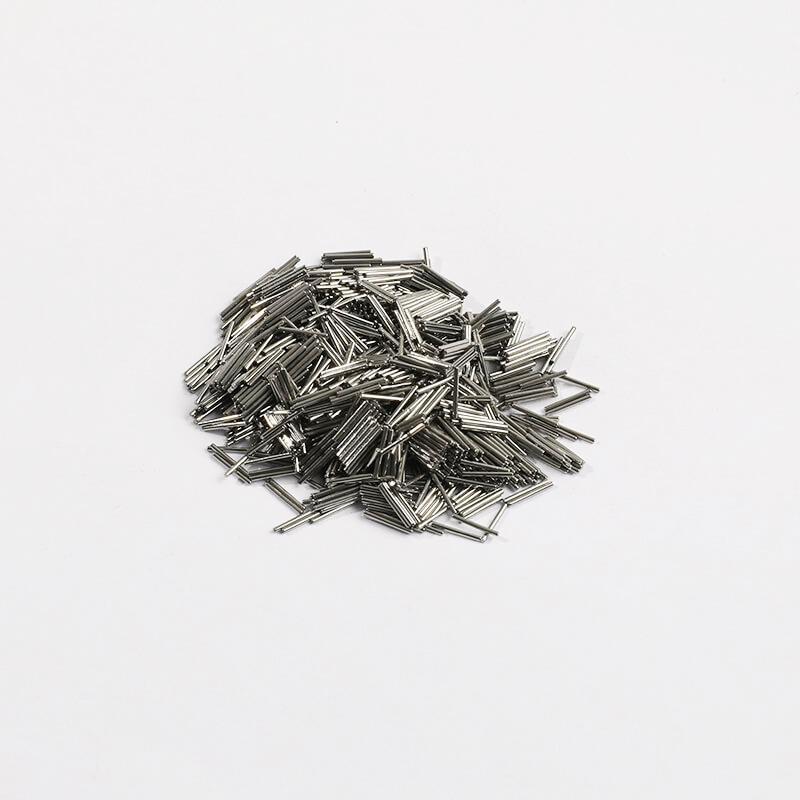
| Steel media, including balls and shaped pins | Bright finishing and edge blending on stainless components where appearance and a burnished surface matter | Transfers iron to aluminium and carbon steel, needs a corrosion-inhibiting compound, and must be separated magnetically or by screen at unload |
| Fine ceramic or porcelain spheres in a small size class | Refinement and light edge blending after a cutting stage, and reaching tighter external geometry on chamber bodies and plates | Small sizes enter and retain in gas passages and fine slots; media wear shrinks the charge and changes the finish over its life |
| Plastic triangles and pyramids in a soft to medium grade | Deburring aluminium and other soft alloys where surface marking and edge rounding must be kept to a minimum | Slow cut rate, media deforms and wears, and a worn charge behaves noticeably differently from a fresh one |
| Plastic cylinders and cones in a harder, denser grade | Longer cycles on mixed batches of small fittings where a repeatable light edge break is wanted without ceramic impact | Can float or segregate by shape in a bowl, and cylindrical forms can wedge in slots and cross-drillings |
A medium lodged in a blind hole, slot or gas passage is the classic semiconductor finishing failure, and it often escapes the finishing shop and is found at the buyer's leak or particle check. It happens when the media size class is too close to the feature opening, when the charge has worn into smaller pieces, or when a passage was never mapped as a retention risk. Slots with a width close to the media section are the worst case, followed by cross-drilled intersections and deep tapped holes. Checking relies on controlled unloading and an agreed inspection: count the media charge in and out where practical, borescope the smallest passages at a defined angle, use a pin gauge on holes, and rinse into a filter for a visual residue check. Any medium found is a reportable non-conformance, not a wipe-and-release.
| Failure mode | Likely cause | How to catch it |
|---|---|---|
| Thin plate or liner distorted, bowed or dimensionally drifted after the cycle | Tumbling load on an unsupported thin section, part-on-part contact, or heat and pressure from a high-energy route | Measure flatness, wall thickness and critical dimensions at the same marked points as the pre-process baseline, using a CMM or surface plate and gauge |
| Bright impact marks, dents or flattened corners from part-on-part contact | Dense charge, high load ratio, thin or light parts left loose among heavy neighbours, or a cycle run longer than the edge condition required | Look for repeating mark patterns on exposed faces and edges, compare an unsupported part with a racked or compartmentalised one, and review the batch mix and load recorded for the lot |
| Fine media fragments or aluminium smear embedded in a soft surface | Impingement from too much energy or charge mass, media that has fractured, or cross-contamination from a previous material family | Inspect at magnification under angled light, use a wipe or tape lift on the suspect area, and check the charge for broken media and fines |
| Knife-edge seal face or bore lip rounded past the drawing limit | High-energy route, over-long cycle, dense or coarse media, or a soft aluminium edge run without masking or shielding | Measure a defined edge feature before and after with an optical comparator, radius gauge or moulded replica, and compare with the maximum radius on the drawing |
Leipzig has rebuilt a manufacturing base around a small number of very large plants and a cluster policy documented in the city's annual economic report: the city counted 633,592 inhabitants and 297,289 socially insured jobs in 2025. Automotive is the largest industrial cluster with 750 companies and 21,743 employees, built on the BMW Group plant (259,430 BMW and MINI vehicles in 2025, a record for the 20-year-old site) and the Porsche plant, where the city reports a new SUV model will be built. Aerospace is being added at Leipzig/Halle Airport, where Deutsche Aircraft is building a factory for the D328eco regional aircraft with a planned capacity of up to 48 aircraft a year, and life sciences (54,203 employees in 2,840 companies) and green tech (15,809 employees in 1,275 companies) are the two other clusters with published employment figures.
The nearest part of that base to this brief is automotive: Leipzig's automotive cluster has 21,743 employees in 750 companies, with the BMW Group plant producing a record 259,430 BMW and MINI vehicles in 2025 and Porsche building its new SUV model in Leipzig.
The parts that matter in Leipzig are vehicle bodies and powertrains from the BMW and Porsche plants and their 750-strong supplier base, plus aircraft structures and engine components for the D328eco programme, all of which carry deburring, edge and cleanliness requirements. Aerospace and automotive both work to defined edge and surface conditions before painting, sealing or assembly, and 24/7 shift operation at the vehicle plants puts pressure on a supplier's ability to hold those conditions at volume. Life-science and medical-technology firms on the BioCity Campus add a second requirement pattern based on clean, burr-free stainless and aluminium surfaces rather than high removal rates.
Clarify first whether the part belongs to the automotive volume regime (IATF/VDA cleanliness and edge specs, three-shift supply) or to aerospace/medical (EN 9100 or ISO 13485 documentation and traceability), because that choice fixes the media, process control and documentation a Leipzig buyer has to demand from a finishing equipment supplier.
Freight context: Leipzig/Halle Airport (cargo hub, DHL and Deutsche Aircraft site), Leipzig rail freight and industrial sidings (Industriestammgleis serving the BMW plant and Logistikpark Leipzig), A9 and A14 motorway junctions / Leipzig logistics parks. Leipzig's logistics cluster employs 40,020 people in 1,219 companies with EUR 1.05 billion turnover, and the city reports the airport being used as a 24/7 hub by Deutsche Aircraft; logistics firms including Kühne + Nagel and DHL Global Forwarding operate at the location, alongside specialised pharma and biotech logistics. Machines and sample parts can arrive by air freight at Leipzig/Halle or by road/rail via the city's freight sidings and logistics parks.
Germany sits inside the EU customs union, so Chinese-origin industrial machinery enters against the EU's common commercial tariff rather than a German national tariff, and the duty that applies is determined by the commodity code declared on the import declaration. China is one of the EU's largest goods trading partners and the EU has long run a goods deficit with it, while the Commission characterises the relationship as simultaneously partnership, competition and systemic rivalry (c1, c2). The Commission publishes the EU's trade agreements; no agreement with China appears in that overview, so Chinese-origin goods cannot claim a preferential origin rate and are assessed under the standard tariff (c8). German customs is administered by the Zoll under the Generalzolldirektion, and the importer must hold an EORI number - valid throughout the European Union and replacing the former German customs number - before goods can be cleared (c5, c6).
Machinery placed on the German market must be CE marked, and the manufacturer is responsible for the conformity assessment, the technical file, the EU declaration of conformity and for affixing the mark; importers and distributors are separately obliged to ensure that only compliant, CE-marked products are placed on the EEA market (c3, c4). The customs authority is German customs (Zoll), part of the Generalzolldirektion, and the operator identification it issues, the EORI number, is a prerequisite for customs clearance in the European Union (c5, c6). In general EU practice a buyer's landed-cost plan therefore needs to cover the commodity-code classification that sets the duty rate, import VAT and the customs declaration, on top of the CE technical file and an identified EU-based economic operator who can act as importer or authorised representative; the technical documentation and the declaration of conformity must be available in the language required by the buyer's market surveillance authority.
SurfacePolish supplies from Xiamen, China. The buyer's own destination rules, conformity marking, tariff classification and documentation responsibilities stay with the buyer; confirm them against the authorities named above before ordering.
Cleanliness acceptance belongs to the buyer, because only the buyer knows what the part will see downstream and which residue matters. A practical specification names the method, the surface or extract volume it applies to, and the limit. Common approaches include a solvent or water wipe over a defined area with a visual or gravimetric assessment, a rinse-and-filter collection on internal passages, magnification or borescope inspection of sealing faces and slot edges, and the buyer's own leak or functional test on the assembled part. State whether inspection happens on the finished part, after the buyer's own cleaning step, or both. SurfacePolish can report what was observed on tested parts and keep them separated and documented, but it cannot certify a cleanliness level or guarantee a particle result.
Record the starting condition before the parts leave, because a trial can only be read against a baseline. Photograph each burr and each controlled surface at a fixed scale, measure roughness at the same marked locations with the same instrument and cut-off, note edge condition with a comparator or radius gauge, and record mass and critical dimensions. Then ask for the same measurements on the returned parts at the same marked points. Without that pairing, a result is an opinion. Ask also for the settings used: machine, media type and size class, charge mass, compound and dose, cycle time, and the number of parts in the batch. Note any behaviour observed during the run, such as part-on-part impact, media lodging or compound foaming. That record is what allows two routes to be compared rather than merely described.
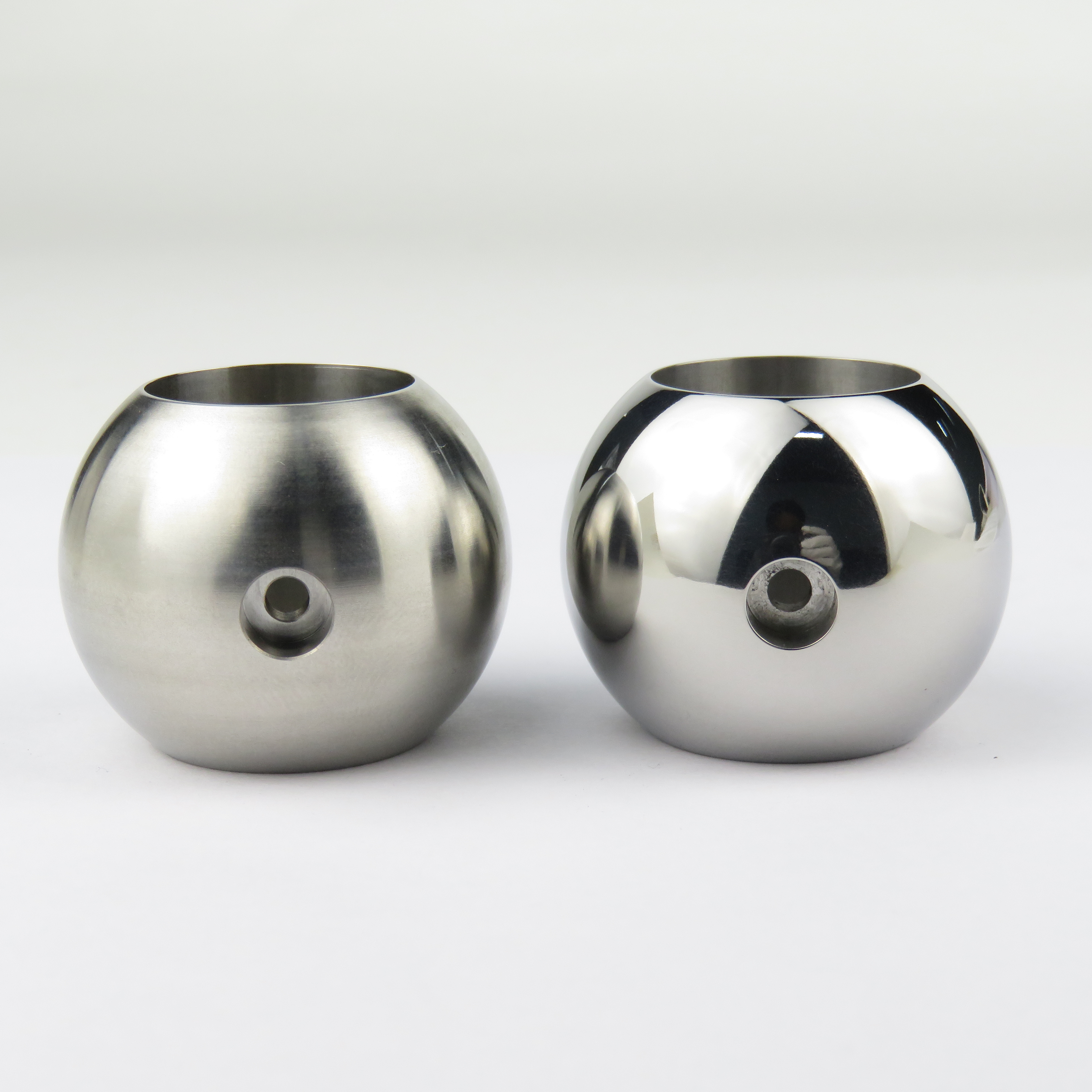
Send a set that covers the real range rather than one convenient piece. Include the part with the tightest passage or smallest hole, the thinnest unsupported section, the surface that must not be touched, and one part in its normal as-received condition with its usual burr and soil. Add a coupon of the same material with a known starting roughness, and a marked-up drawing naming the controlled surfaces, edge limits and any cleanliness requirement. Several pieces let more than one cycle time be examined. Parts are shipped to Xiamen and returned with a settings record.
There is no single best medium, because aluminium is soft and the trade-off is between cut rate and surface damage. Plastic media is often the safer starting point where a sealing face or a thin wall must be preserved, while a fine ceramic can cut faster if edges tolerate more energy. The deciding variables are the smallest opening a medium could enter, the smallest radius that must not be rounded, and the surface condition the buyer needs. Media size class usually matters more than the broad material name. Send a marked-up aluminium part with its tightest passage and one controlled face, and let the trial compare two size classes.
Cycle time depends on the starting burr, the material, the media size class, the compound and how much edge refinement is wanted, so no figure can be quoted in advance. A part that only needs a light edge break may run very differently from one that must shed a machining burr before refinement, and a two-stage route needs both stages counted. The useful approach is to test a defined stop point or two on representative parts and record what changed. SurfacePolish does not promise cycle times or capacity; treat the timing on returned parts as an observation from that run, not a production commitment.
Use Leipzig, Germany as the destination on the enquiry and state whether the deliverable is equipment, media and compound, a representative sample review or a line concept. A destination does not imply local stock, a local service point or a local delivery time.
Automotive suppliers in Leipzig work to IATF 16949 and VDA 6.3 with VDA 19.1 / ISO 16232 technical-cleanliness limits; aerospace work follows EN 9100-series quality systems with specific surface and edge requirements, and medical-technology and biotech suppliers work to ISO 13485. Surface-texture callouts are normally expressed to ISO 21920 and material conformity to EN 10204 (3.1), with CE marking required for machinery placed on the EEA market.
Sources were retrieved on 2026-09-29 and describe the local industrial and trade context only. They do not evidence any SurfacePolish project, shipment, installation or service in Leipzig.
The buyer wants a repeatable edge break and a uniform finish across a varied fitting batch without media lodging in the cross-drillings.
Send the material, dimensions, approximate weight, batch quantity, the incoming condition and photographs of the difficult features. Mark which features must not be contacted by media and state how the result will be inspected. This form carries source reference PSEO-0375; quote it if you prefer an additional manual reference.
Open the SurfacePolish enquiry form Email a prepared enquiry
No price, lead time, certification or result is promised here. Confirm whether a sample trial is available for the specific part and what the trial can and cannot show.
Page PSEO-0375 · revised 2026-09-29 · cross-border equipment, media and scoped sample review. City context is sourced and cited above.
Use this local checker to identify missing part and inspection information. It prepares a technical-review brief; it does not approve a machine, process recipe or production result.
Complete the part details to prepare a review brief.
Email : info@surface-polish.com


 IPv6 network supported


 +86-592-2381506