A buyer in Lille, France in semiconductor equipment has a long aluminium chamber weldment that will not tumble in a standard bowl and carries a sealing face that must not be touched. SurfacePolish supplies finishing machines, media and compounds across borders and offers a free sample trial, sending parts to Xiamen and returning them with observations and a proposed route for the buyer's review. This brief is written for a buyer in Lille working on semiconductor equipment; it describes equipment, media and a scoped sample review, not a local polishing service.
Which surfaces on this part are functional, such as seal lands, gas passage walls and locating bores, and which are only cosmetic?
How will a production batch be identified, segregated by material family and documented so a result can be traced to its settings?
Can the required finish be reached in one mechanical route, or does the part need a cut stage followed by a refinement stage?
Batch composition is a process variable, not a logistics detail. Mixing a 4 kg chamber lid with a handful of small stainless fittings changes media circulation, the cycle energy per part and the contact pattern between parts. Delicate electrode plates and thin-wall liners can be dented by heavier neighbours, and aluminium fines released in one batch can transfer onto stainless parts in the next unless the charge and the machine are cleaned between material families. Decide the part mix, the maximum mass per batch and whether fragile parts need racking or compartmentalisation. Decide also how batches are identified, with a traveller that carries material, media charge, compound, cycle time and operator, so a finishing result can be traced back to the settings that produced it. Batch identity is the basis for any later comparison.
Magnetic finishing uses a small charge of pin-shaped or fine media driven by a moving magnetic field, which lets it reach narrow gaps, small bores and fine internal radii that tumbling media cannot enter. For semiconductor equipment parts it is most relevant on small precise items: gas nozzles, orifice plates, small machined inserts and fine slot arrays where the requirement is deburring and light refinement rather than bulk stock removal. The working envelope is small, so chamber bodies and long gas lines are out of scope. The media pins themselves are a lodging risk in the same features they are chosen to reach, and they are difficult to see inside a closed passage. Magnetic finishing also leaves a different surface signature from tumbling, so a roughness figure obtained on one route cannot be assumed to transfer to another.
| Machine route | Where it fits | What it will not do |
|---|---|---|
| Magnetic finishing machine | Fine deburring and light refinement of small precise features such as nozzles, orifice plates and narrow slots | Small working envelope that excludes chamber bodies and long gas lines, with pin media that can lodge in fine passages |
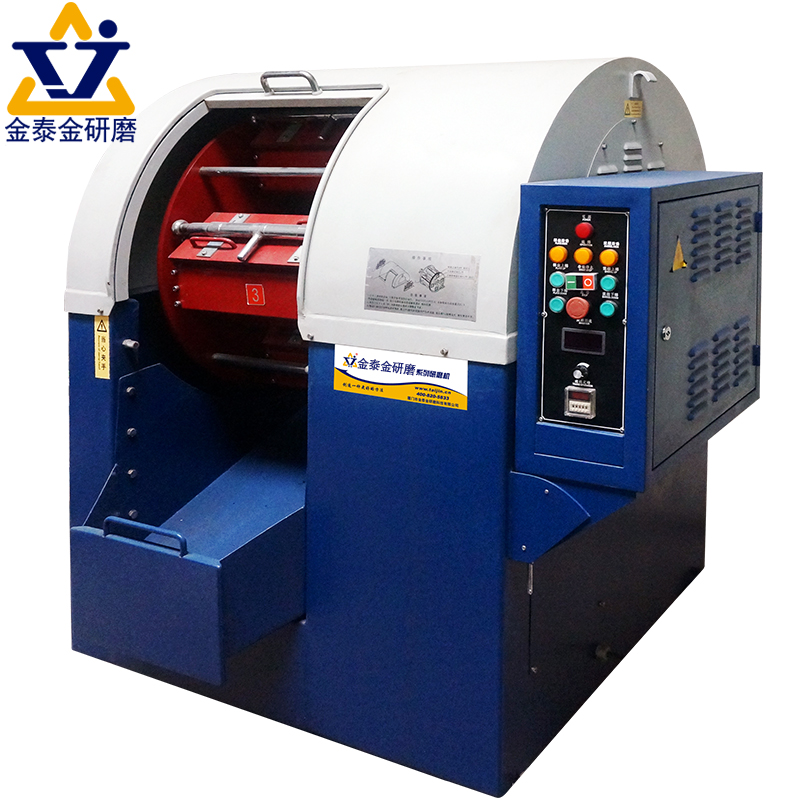
| Rotary barrel finishing machine | Gentle deburring of small fragile components and mixed fitting batches with a generous compound flow | Long cycles, no visibility while running, and internal passages can collect media and compound that must be retrieved at unload |
| Grinding finishing machine | Taking off a heavy machining burr or a defined stock layer before a refinement pass on robust stainless work | High removal energy cuts functional edges fast and demands a tighter geometry assessment and shorter cycles |
| Vibratory finishing machine (bowl) | General deburring and refinement of chamber bodies, plates and housings that fit and can tumble without racking, with easy mid-cycle inspection | Continuous part-on-part contact and no access to deep internal passages; thin plates and finished mating faces need separation |
Media wears, and worn media changes the process. Ceramic shrinks, plastic deforms and floats differently, steel can fracture into slivers, and all of them eventually reach a size or shape that lodges where a fresh charge would not. A working charge therefore needs a defined maintenance cycle: screen for undersize and debris, top up to a target mass, remove broken pieces, and record the change. Separation at unload deserves the same attention. Screens over the discharge, magnetic recovery for steel, tilting and draining stations, pin gauges and borescope checks on agreed features all reduce the chance that a medium travels with the part into the next operation. Where aluminium and stainless batches share a machine, purging media and compound between material families avoids cross-contamination that is difficult to see and easy to attribute to the wrong cause later.
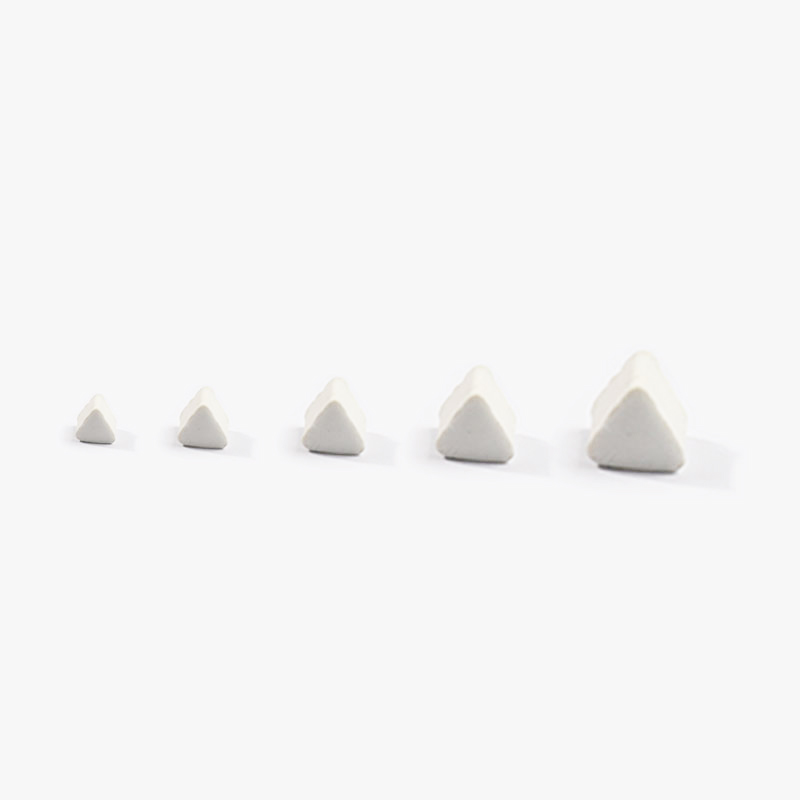
| Media | Best fit | Watch out for |
|---|---|---|
| Dry media such as walnut shell and corn cob | Drying assistance, light surface drying polish and removal of superficial soil after a wet cycle | Does not deburr or refine metal significantly, generates dust, and must not be treated as a cleanliness step |
| Plastic triangles and pyramids in a soft to medium grade | Deburring aluminium and other soft alloys where surface marking and edge rounding must be kept to a minimum | Slow cut rate, media deforms and wears, and a worn charge behaves noticeably differently from a fresh one |
| Aluminium oxide grinding media in a dense ceramic bond | Where a heavier stock removal or a more consistent cut is needed on robust stainless parts with thick edges | High removal energy rounds functional edges quickly and is a poor match for thin aluminium plates or knife-edge seal lands |
| Magnetic finishing pins and fine magnetic media | Small precise items such as nozzles, orifice plates and fine slot arrays where tumbling media cannot reach the feature | Limited working envelope, pins lodge in the same fine features they are chosen to reach, and the surface signature differs from tumbling |
Uneven results are common when part geometry or charge behaviour prevents media from reaching all surfaces equally. Deep pockets, blind recesses, internal corners and the shielded underside of a flange come out with the original machining marks intact while the exposed faces are fully refined, and the difference becomes obvious once the part is assembled against a mating surface. At the other extreme, part-on-part contact in a dense charge produces bright impact marks, dents on thin plates and flattened corners. Both outcomes trace back to the same variables: charge mass, part mix, whether fragile parts were separated, cycle time and media circulation. Checking means inspecting at defined locations rather than judging the part as a whole, photographing as-received and finished condition of the same feature, and measuring roughness at the surfaces the drawing actually controls.
| Failure mode | Likely cause | How to catch it |
|---|---|---|
| Grey aluminium smear transferred onto stainless parts in a shared batch | Aluminium fines retained in media, compound or the machine after an aluminium lot, with no purge before the stainless lot | Check stainless surfaces under angled light for a dull grey film, review the changeover record, and inspect the charge and machine sump for retained fines |
| Fine media fragments or aluminium smear embedded in a soft surface | Impingement from too much energy or charge mass, media that has fractured, or cross-contamination from a previous material family | Inspect at magnification under angled light, use a wipe or tape lift on the suspect area, and check the charge for broken media and fines |
| Rust spotting on stainless parts appearing hours or days after finishing | Ferrous transfer from steel media, a machine or tooling that has held carbon steel, or insufficient corrosion inhibition and drying | Inspect after a defined dwell time rather than immediately, look for pinpoint spots on and near edges, and trace media and machine history for the lot |
| Knife-edge seal face or bore lip rounded past the drawing limit | High-energy route, over-long cycle, dense or coarse media, or a soft aluminium edge run without masking or shielding | Measure a defined edge feature before and after with an optical comparator, radius gauge or moulded replica, and compare with the maximum radius on the drawing |
Lille is the administrative and engineering centre of the Hauts-de-France manufacturing belt; the commune itself recorded 10 645 establishments at the end of 2024, 2,6 % of them industrial, and 183 864 jobs at the place of work in 2023, while the automotive plants and logistics parks of the region sit within commuting distance in the Douai, Valenciennes and Hordain corridors. The decisive industrial fact for a finishing buyer is that the Lille hinterland is served by France's third-ranking North Sea port: Dunkerque-Port, whose Port Ouest concentrates most of the port's recent development and which publishes a 2025-2029 environmental report and an annual press conference on its traffic. Lille is also a health-industry and digital-services centre, with the Eurasanté biomedical cluster and EuraTechnologies in the metropolitan area.
The nearest part of that base to this brief is medical: The Lille metropolitan area hosts the Eurasanté biomedical and health-industry cluster (Lille Metropole health sector), and INSEE records 12,6 % of Lille establishments in public administration, education, health and social action in 2024.
The Hauts-de-France automotive and equipment-supplier chain is a high-volume, tolerance-driven environment: transmission and brake parts, stampings, fasteners and machined housings where burrs cause function and warranty problems and edge condition affects fatigue and coating adherence. Suppliers here work to customer-specific edge and cleanliness specifications, so deburring is a controlled process step with defined acceptance criteria rather than a manual clean-up. The health-industry and instrumentation side of the Lille economy adds stainless and clean-surface requirements where residue and surface roughness are functional.
A Lille buyer should settle the cleanliness specification together with the edge specification, because in this supply chain a part that passes a visual deburring check can still fail the customer's particulate or film residue limit if media, compound and rinsing are not controlled as one process.
Freight context: Grand Port Maritime de Dunkerque (Port Ouest), Lille-Lesquin Airport, Lille / Dourges combined transport terminals. Dunkerque-Port is the North Sea deep-sea entry for the Lille hinterland and its Port Ouest concentrates most recent port development, with the port publishing a 2025-2029 environmental programme; Lille also has its own airport and dense rail/road links to Belgium and the Channel ports. Containerised finishing machines and media drums typically arrive through Dunkerque or Antwerp/Rotterdam and move by road or rail, while sample parts are sent by courier.
The working language of French industrial procurement is French: tenders, drawings, inspection plans and technical dossiers are normally issued and answered in French, and quotations that omit French documentation slow down qualification. Buyers qualify a machine against a written specification and expect traceable material certificates, machine safety documentation and, where applicable, a CE declaration of conformity and a risk assessment; acceptance is often staged (documentary review, factory acceptance test, then commissioning). Payment and documentation norms are conventional EU practice: euro invoicing, SEPA or SWIFT bank transfer, Incoterms agreed in writing, and customs paperwork (commercial invoice, packing list, transport document, proof of origin where a preference is claimed) prepared for the declarant or customs representative. Because customs and tax authorisations are handled jointly through SOPRANO, non-EU sellers are normally advised to sell to an established French/EU importing entity rather than to act as importer of record themselves.
For imports from outside the EU the declarant must file a customs declaration whose form and content are fixed by the Union Customs Code and its implementing provisions; French Customs identifies classification, origin and value as the three fundamental notions and makes the common/national tariff consultable via RITA. The customs authority is the Direction generale des douanes et droits indirects (DGDDI), which also runs the Info Douane Service for formalities questions. Buyers should expect to need an EORI number and an EU VAT treatment, because customs and tax authorisations are handled together (SOPRANO). For machinery, the CE marking and the applicable EU product-safety directives are the compliance gate items to settle before shipment, and the French market surveillance authority is the DGCCRF; the tariff rate itself must be confirmed per HS code in RITA or the EU Access2Markets tariff tool, since it varies by machine type.
SurfacePolish supplies from Xiamen, China. The buyer's own destination rules, conformity marking, tariff classification and documentation responsibilities stay with the buyer; confirm them against the authorities named above before ordering.
Ask for a batch record that identifies what was actually done. A useful record lists the part numbers and quantities in the lot, the machine used, the media type and size class, the media charge mass and its age since the last screen or top-up, the compound product and dose, the water source used for rinse, the cycle time and any in-process interruptions, plus inspection results and disposition. For material traceability, request the media and compound data sheets offered by the supplier, including safety data, and keep them with the lot. Segregation evidence matters where aluminium and stainless run on the same site: a note of the purge or changeover between material families supports the buyer's own contamination control. This is process documentation from a finishing operation, not a certificate of compliance with any regulated standard.
Compare one variable at a time. If the question is media shape, hold the compound, the cycle time, the machine and the load constant and change only the medium; if the question is cycle time, hold the charge constant and stop at two or three defined intervals. Running two changes at once produces a result that cannot be attributed. Where a trial includes a refinement stage after a cutting stage, evaluate the stages separately, since a final figure can hide a coarse first stage or an unremoved burr. Blind evaluation helps when several people judge appearance: label the returned parts with codes and have the buyer's inspectors score edge condition, coverage and cleanliness without knowing the settings. Keep the parts and the record. A trial showing both routes failing on one controlled feature is as useful as one showing a difference.
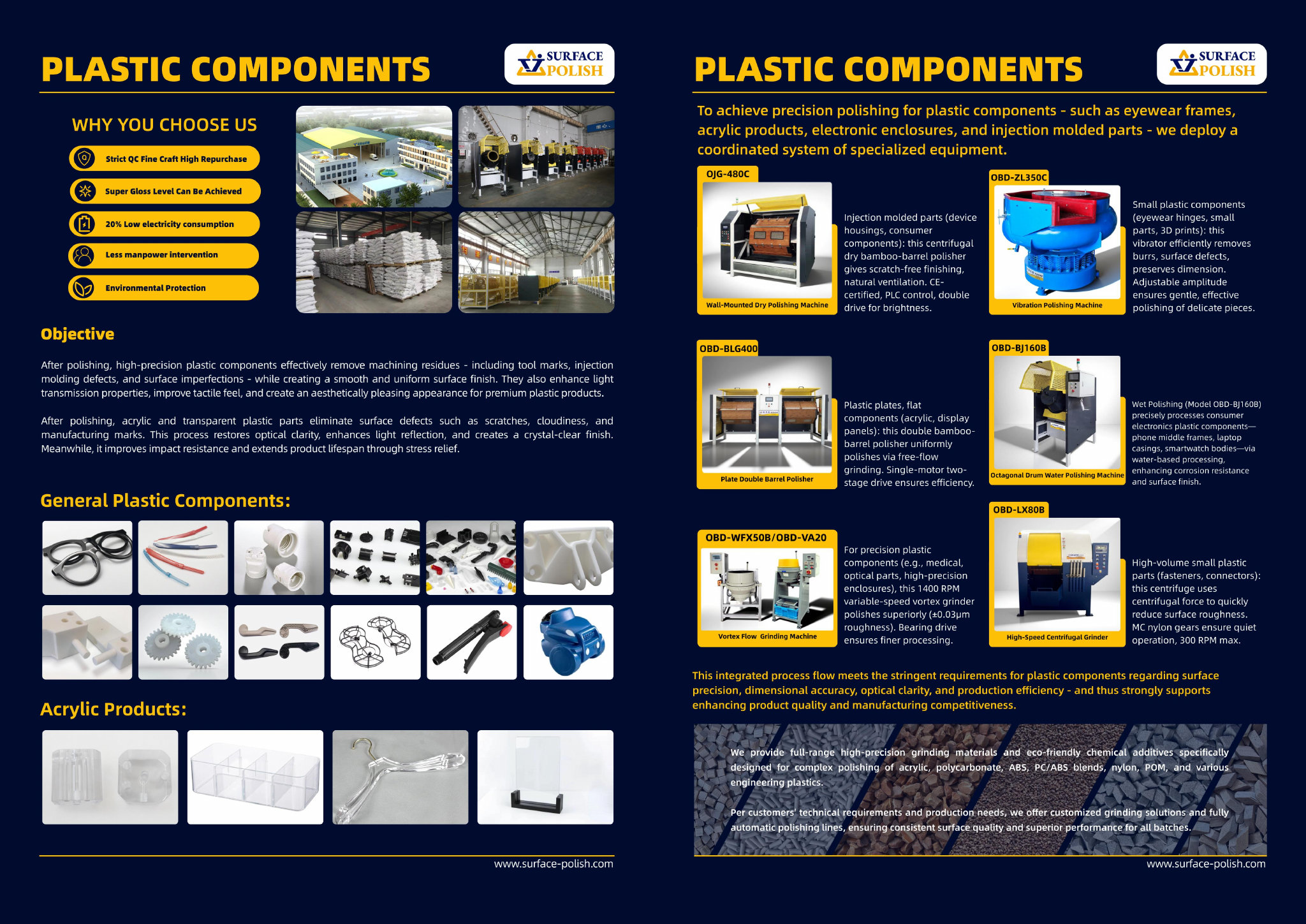
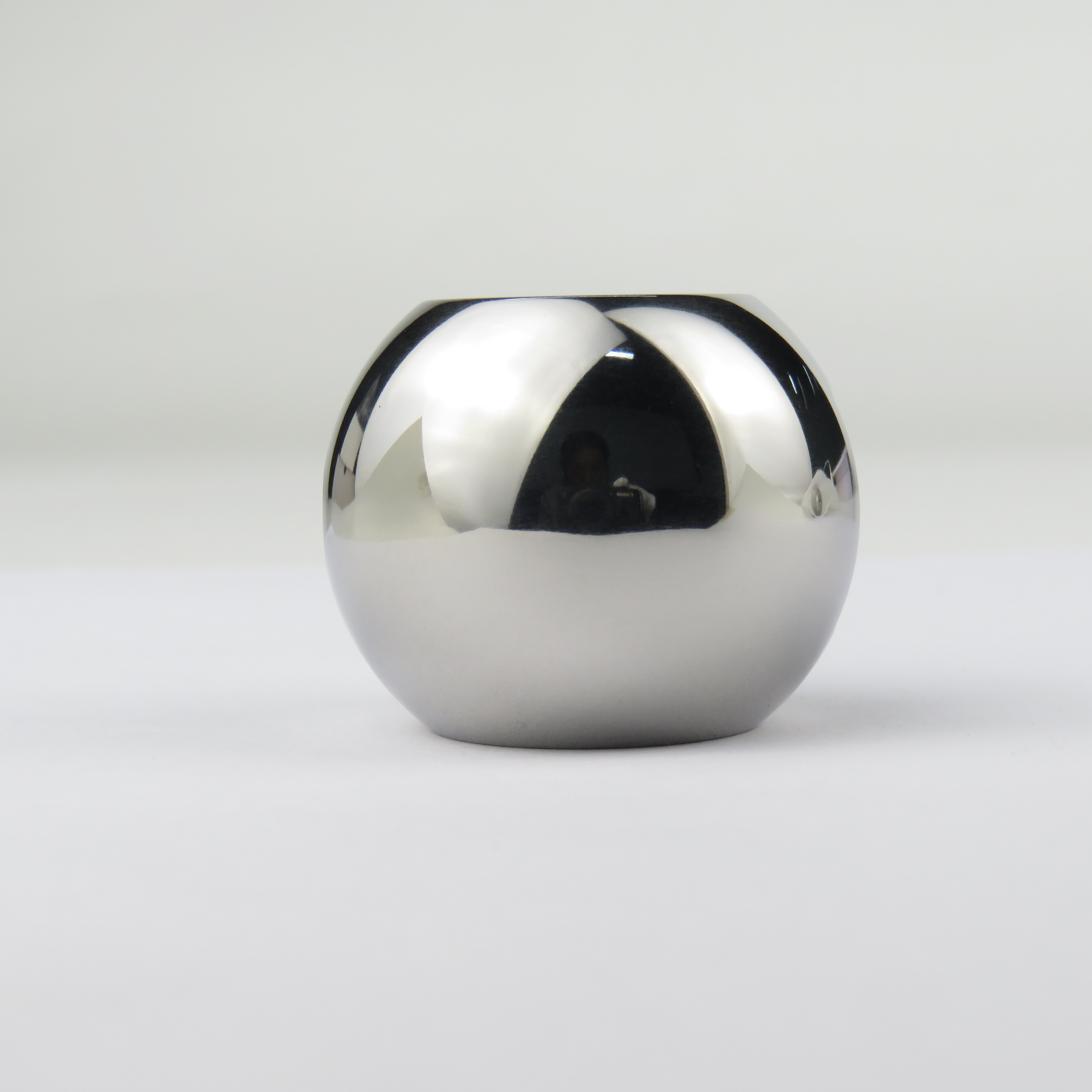
It can change a surface, but whether it lands inside a specified band is something to measure rather than assume. The parameter, the cut-off length, the measurement direction and the reading locations all have to be fixed first, because a seal land, a bore and an outer wall respond differently to the same charge. A trial result applies to the geometry and settings tested, not to every part in the family. SurfacePolish does not guarantee a roughness value. Send parts with a marked measurement plan, ask for readings at those points, and set your own acceptance band from data you can verify in Lille.
There is no single best medium, because aluminium is soft and the trade-off is between cut rate and surface damage. Plastic media is often the safer starting point where a sealing face or a thin wall must be preserved, while a fine ceramic can cut faster if edges tolerate more energy. The deciding variables are the smallest opening a medium could enter, the smallest radius that must not be rounded, and the surface condition the buyer needs. Media size class usually matters more than the broad material name. Send a marked-up aluminium part with its tightest passage and one controlled face, and let the trial compare two size classes.
Size the medium well below the smallest opening the charge could enter, and treat every passage as a retrieval point rather than assuming it stays clear. Map the tightest hole, slot or cross-drilling first, then choose a size class against that geometry instead of an average part. Add a defined check such as a borescope at an agreed angle, a pin gauge on holes, and a rinse collected through a filter. For France buyers preparing a trial, send the part with the smallest passage so the media choice is tested on the real feature. SurfacePolish reports what was observed on tested parts; the cleanliness release remains the buyer's decision.
Use Lille, France as the destination on the enquiry and state whether the deliverable is equipment, media and compound, a representative sample review or a line concept. A destination does not imply local stock, a local service point or a local delivery time.
A Lille automotive supplier would work to IATF 16949 with customer-specific requirements layered on top, and would specify surface texture using ISO/NF EN surface-texture standards and cleanliness (residual particle and film limits) per the vehicle-maker's specification; ISO 9001 applies to the non-automotive machinery and health-sector suppliers. AFNOR publishes the NF/NF EN versions of the relevant ISO standards that appear on drawings here.
Sources were retrieved on 2026-09-29 and describe the local industrial and trade context only. They do not evidence any SurfacePolish project, shipment, installation or service in Lille.
The buyer needs the weld and machined edges dressed and the sealing face protected on a part that is too long to tumble in a bowl.
Send the material, dimensions, approximate weight, batch quantity, the incoming condition and photographs of the difficult features. Mark which features must not be contacted by media and state how the result will be inspected. This form carries source reference PSEO-0545; quote it if you prefer an additional manual reference.
Open the SurfacePolish enquiry form Email a prepared enquiry
No price, lead time, certification or result is promised here. Confirm whether a sample trial is available for the specific part and what the trial can and cannot show.
Page PSEO-0545 · revised 2026-09-29 · cross-border equipment, media and scoped sample review. City context is sourced and cited above.
Use this local checker to identify missing part and inspection information. It prepares a technical-review brief; it does not approve a machine, process recipe or production result.
Complete the part details to prepare a review brief.
Email : info@surface-polish.com


 IPv6 network supported


 +86-592-2381506
