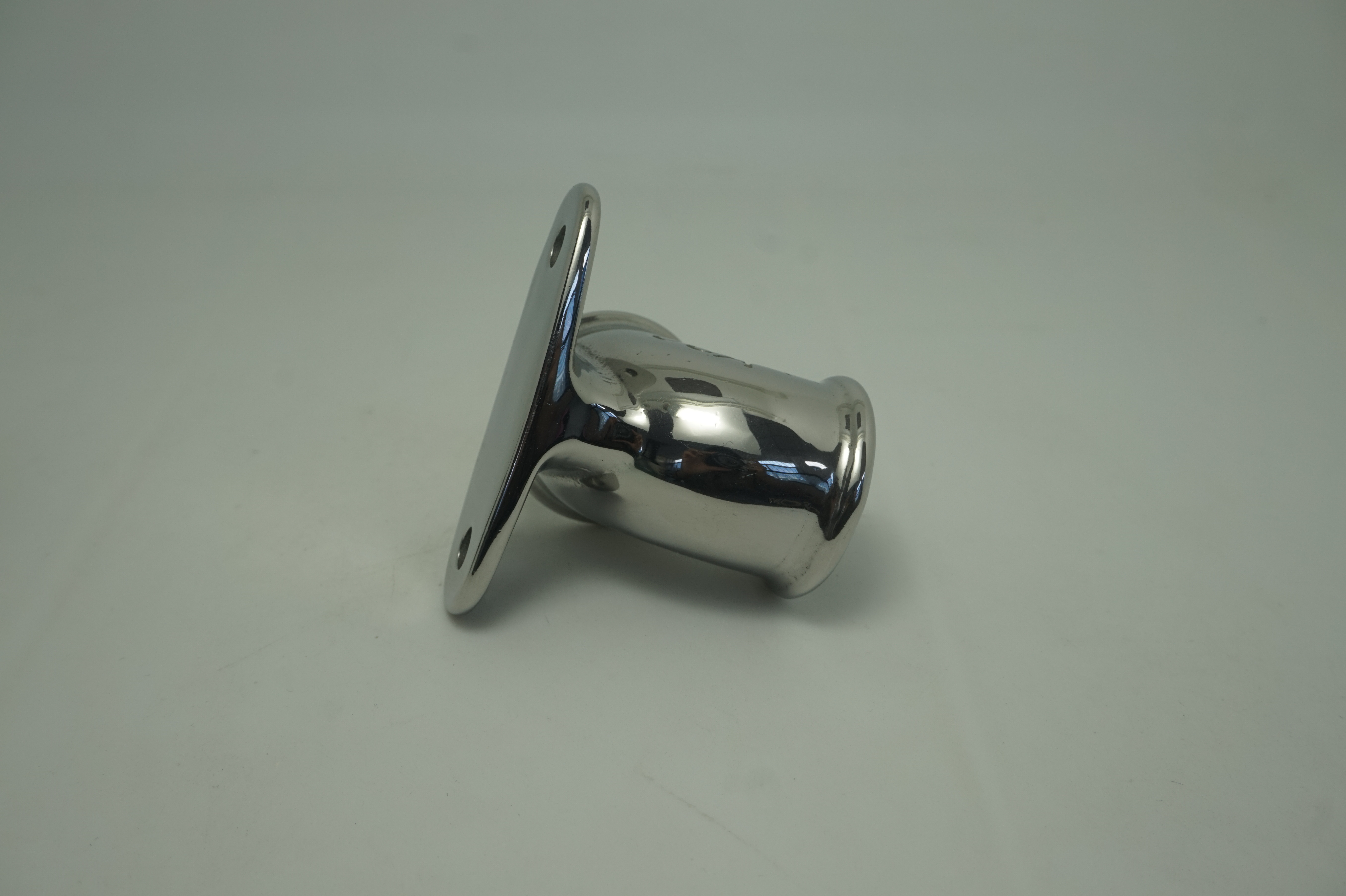
A buyer in Maastricht, Netherlands in semiconductor equipment needs a stainless vacuum tee cleaned up without losing its knife-edge seal geometry. SurfacePolish supplies finishing machines, media and compounds across borders and offers a free sample trial, in which representative parts are shipped to the factory in Xiamen and returned with an observed condition and a proposed media, compound and cycle direction for the buyer to assess. This brief is written for a buyer in Maastricht working on semiconductor equipment; it describes equipment, media and a scoped sample review, not a local polishing service.
How will a production batch be identified, segregated by material family and documented so a result can be traced to its settings?
Is edge rounding tolerable on a knife edge or bore lip, and what maximum radius belongs on the drawing?
Can the required finish be reached in one mechanical route, or does the part need a cut stage followed by a refinement stage?
Treat every internal feature as a potential media trap and map it before selecting a media size class. Slot widths, blind tapped holes, cross-drilled intersections, tapered gas passages, O-ring groove corners and the annular gap behind a flange are the usual retention points. A useful first pass is to measure the narrowest opening a medium could enter and the depth behind it, then compare that with the smallest medium in the proposed charge. Sharp internal corners and stepped bores hold media differently from through-hole patterns that drain freely. Where a passage cannot be avoided, the process needs a defined retrieval step such as a controlled rinse, an ultrasonic bath, a borescope inspection at an agreed angle or a pin gauge, rather than an assumption that parts come out clean. The exit of the smallest gas passage is often the hardest place to inspect.
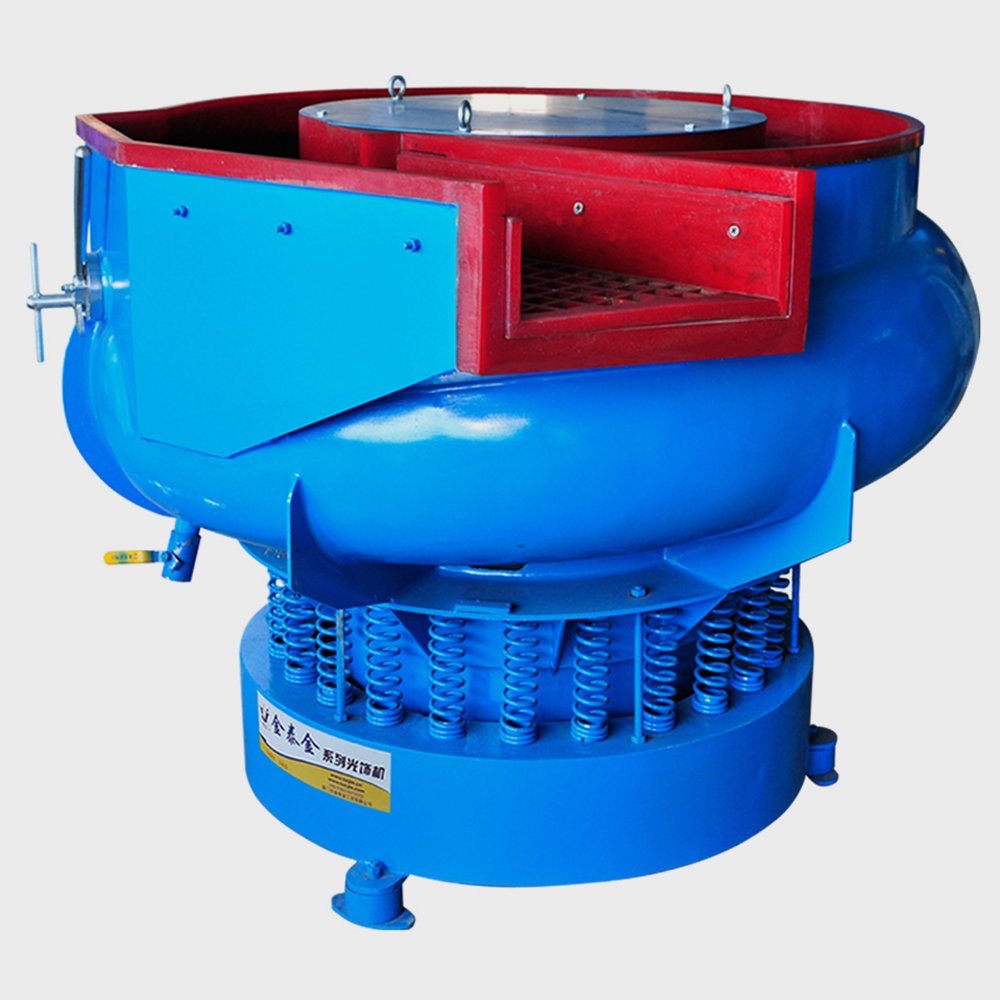
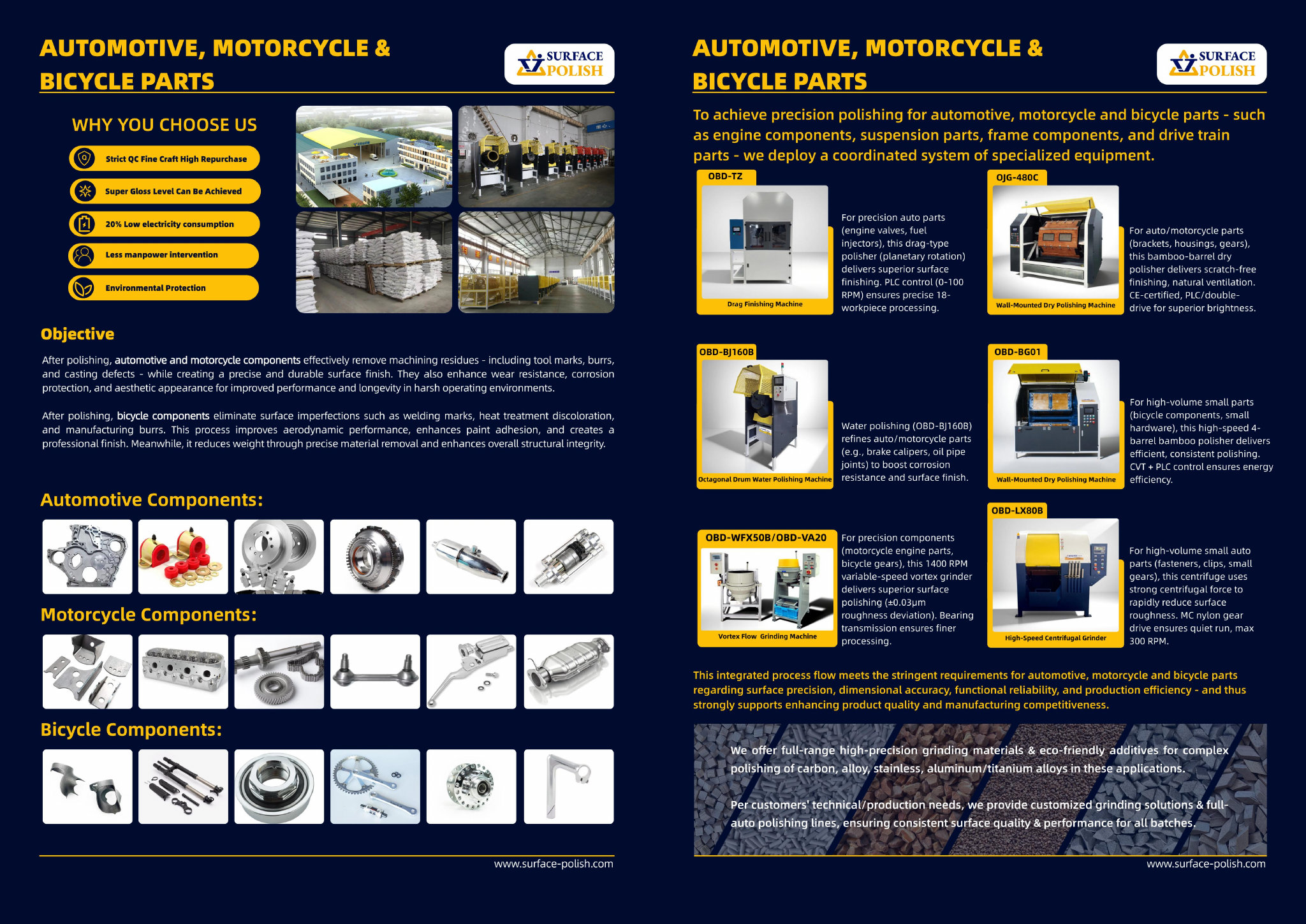
A vibratory bowl is the general-purpose starting point for chamber bodies, plates and housings that fit comfortably and can tumble without racking. Media circulates in a toroidal path and reaches external faces, edges and open pockets at moderate energy, and the open bowl allows an operator to pull a part mid-cycle for a look, which matters when a feature is sensitive. Part-on-part contact is continuous, so thin plates and finished mating faces need separation or protection within the charge. Where a heavy machining burr has to come off before refinement, a grinding finishing machine with higher removal energy can take the bulk of it, but it cuts edges faster as well and needs a tighter geometry assessment. A bowl will not reach deep internal passages on its own; those depend on media size, compound flow and how the part sits in the charge.
| Machine route | Where it fits | What it will not do |
|---|---|---|
| Rotary barrel finishing machine | Gentle deburring of small fragile components and mixed fitting batches with a generous compound flow | Long cycles, no visibility while running, and internal passages can collect media and compound that must be retrieved at unload |
| Grinding finishing machine | Taking off a heavy machining burr or a defined stock layer before a refinement pass on robust stainless work | High removal energy cuts functional edges fast and demands a tighter geometry assessment and shorter cycles |
| Vibratory finishing machine (bowl) | General deburring and refinement of chamber bodies, plates and housings that fit and can tumble without racking, with easy mid-cycle inspection | Continuous part-on-part contact and no access to deep internal passages; thin plates and finished mating faces need separation |
| Disc finishing machine | Fast, high-energy edge breaking and surface refinement on small robust parts and uniform batches of fittings | High impingement and edge-loss risk on thin or soft parts, and geometry must suit the disc working gap |
Media wears, and worn media changes the process. Ceramic shrinks, plastic deforms and floats differently, steel can fracture into slivers, and all of them eventually reach a size or shape that lodges where a fresh charge would not. A working charge therefore needs a defined maintenance cycle: screen for undersize and debris, top up to a target mass, remove broken pieces, and record the change. Separation at unload deserves the same attention. Screens over the discharge, magnetic recovery for steel, tilting and draining stations, pin gauges and borescope checks on agreed features all reduce the chance that a medium travels with the part into the next operation. Where aluminium and stainless batches share a machine, purging media and compound between material families avoids cross-contamination that is difficult to see and easy to attribute to the wrong cause later.
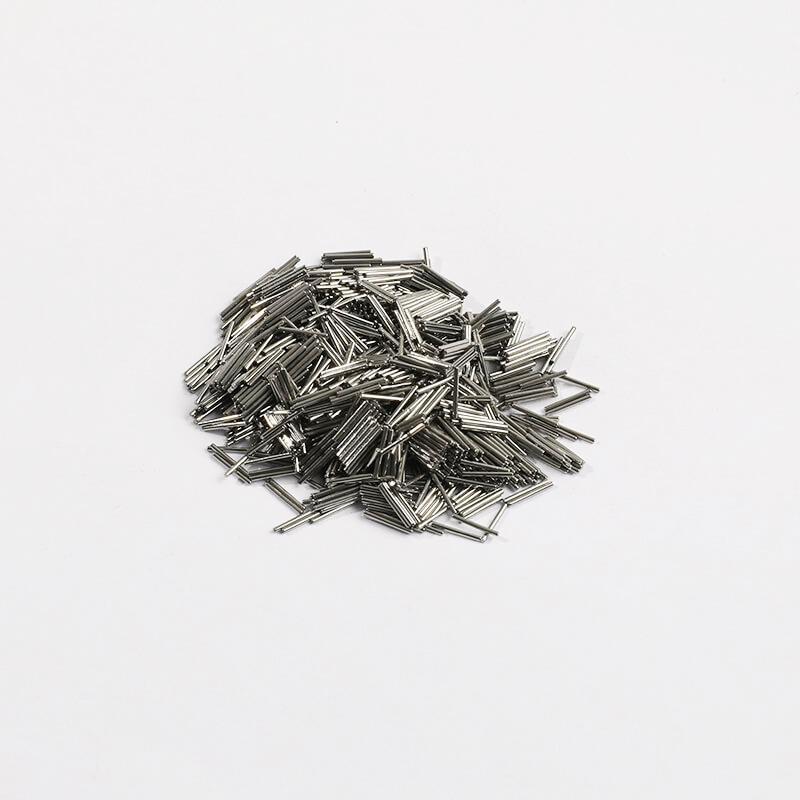
| Media | Best fit | Watch out for |
|---|---|---|
| Dry media such as walnut shell and corn cob | Drying assistance, light surface drying polish and removal of superficial soil after a wet cycle | Does not deburr or refine metal significantly, generates dust, and must not be treated as a cleanliness step |
| Plastic cylinders and cones in a harder, denser grade | Longer cycles on mixed batches of small fittings where a repeatable light edge break is wanted without ceramic impact | Can float or segregate by shape in a bowl, and cylindrical forms can wedge in slots and cross-drillings |
| Heavy-cut ceramic, angle-cut triangles in a coarse size class | Removing a substantial machining burr from open external edges and pockets on aluminium and stainless housings before a refinement stage | Cuts edges and corners aggressively, leaves a coarse surface, and lodges in slots whose width approaches the media section |
| Aluminium oxide grinding media in a dense ceramic bond | Where a heavier stock removal or a more consistent cut is needed on robust stainless parts with thick edges | High removal energy rounds functional edges quickly and is a poor match for thin aluminium plates or knife-edge seal lands |
Cross-contamination and staining are quiet failures. Aluminium worked in a charge previously used on stainless can leave a grey smear; stainless run with steel media, or in a machine that has held carbon steel, can show rust spots that appear days later; hard water and slow drying leave mineral spotting; and a compound that is too aggressive darkens aluminium. Dimensional drift is the other quiet failure, where thin plates, long tubes and unsupported walls relax or distort under tumbling loads, so a part that passed the edge check fails a flatness or position check afterwards. Both categories are caught by discipline rather than by looking harder at the finish: segregate material families and dedicate or purge media, control rinse water and drying, measure defined dimensions and flatness at the same points before and after, and keep that data with the batch record.
| Failure mode | Likely cause | How to catch it |
|---|---|---|
| Bright impact marks, dents or flattened corners from part-on-part contact | Dense charge, high load ratio, thin or light parts left loose among heavy neighbours, or a cycle run longer than the edge condition required | Look for repeating mark patterns on exposed faces and edges, compare an unsupported part with a racked or compartmentalised one, and review the batch mix and load recorded for the lot |
| Rust spotting on stainless parts appearing hours or days after finishing | Ferrous transfer from steel media, a machine or tooling that has held carbon steel, or insufficient corrosion inhibition and drying | Inspect after a defined dwell time rather than immediately, look for pinpoint spots on and near edges, and trace media and machine history for the lot |
| Compound film or tenacious residue left on a sealing face | A film-forming or silicate-bearing compound, insufficient rinse volume, or drying the part before it is genuinely clean | Magnify the sealing land and wipe a defined area with solvent, comparing the wipe against a clean reference; confirm with the buyer's own cleanliness method |
| Uneven finish with unrefined pockets, corners or the shielded side of a flange | Media cannot reach the feature at the chosen size or orientation, charge flow is blocked, or the part was not repositioned during the cycle | Inspect at defined locations rather than judging the whole part, photograph the same feature before and after, and measure roughness only at the surfaces the drawing controls |
Maastricht's economy combines a life-sciences campus with an established production base in the city and its surrounding region. The Brightlands Maastricht Health Campus is part of the Brightlands open-innovation community in Limburg, which reports over 32,000 innovative entrepreneurs, researchers and students working on sustainability, health and digitisation, and the campus concentrates researchers, entrepreneurs and students on healthcare, medicine and life sciences with imaging and analytical facilities used by medical start-ups. Alongside that, the Maastricht Maakt industry platform represents 16 production companies in the city, with employers including Tata Steel, Sappi, the Regout Group, SteelSolutions, Mosa, FENZI AGT and SunChemical, and says its operators, technicians and logistics staff work in sectors such as chemistry, food and production. Sappi's Maastricht mill employs nearly 500 people and produces around 260,000 tons of coated woodfree paper and paperboard a year. Maastricht Aachen Airport is part of the national aviation infrastructure and, after Schiphol, the only Dutch airport with a cargo function; the province of Limburg is a shareholder and funds the airport.
The nearest part of that base to this brief is machinery: Sappi's Maastricht mill employs nearly 500 people and produces around 260,000 tons of coated woodfree paper and paperboard per year, running continuous process machinery that the company has modernised with online fibre measurement and control technology.
Maastricht and the surrounding Limburg region combine medical-technology work, steel and metal processing, paper production and glass and food manufacturing. Medical-technology and life-sciences activity on the Brightlands Maastricht Health Campus involves stainless and titanium instruments, implants, device housings and precision components, where deburring, edge rounding, passivation and residue-free cleaning are quality requirements, while the city's steel, metal and equipment producers need burr and edge control on machined and cut parts before assembly, coating or further processing. Limburg's wider Brightlands network also includes the Chemelot chemical campus, which adds stainless process and laboratory equipment with comparable cleanliness and corrosion expectations.
A buyer here should settle the documentation and cleanliness standard first, because medical and life-sciences supply chains normally require validated, repeatable processes with defined residue limits, whereas general metal parts usually need no more than a specified burr height and Ra.
Freight context: Maastricht Aachen Airport (cargo function). Maastricht Aachen Airport is the only Dutch airport other than Schiphol with a cargo function and is part of the national aviation infrastructure, which gives the region an air-freight option for urgent parts or samples; the province of Limburg is a shareholder and has funded infrastructure and route development. Machinery arriving by sea is declared to Dutch Customs at its EU point of entry, and the importer needs an EORI number.
Goods entering the Netherlands from outside the EU must be declared to Dutch Customs (Douane, part of the Belastingdienst); the importer needs an EORI number, import duty is calculated on the customs value (goods value plus transport and insurance to the EU external border), and import VAT is paid at the border unless an article 23 permit or a fiscal representative is used. CE marking is mandatory for most machinery placed on the EEA market: the Machinery Regulation replaced the Machinery Directive and manufacturers must comply with the new requirements by 20 January 2027. The importer must verify that the conformity assessment was carried out correctly, that CE marking is applied properly, that the technical file is present and complete, and that the user manual is supplied in the correct language; the manufacturer's EC Declaration of Conformity must be kept. Dutch companies imported over EUR 140 billion of machinery and appliances in 2024, 24% of total Dutch goods imports.
The Dutch standards body is NEN (Nederlands Normalisatie-instituut), which publishes and maintains the NEN and NEN-EN-ISO standards; the content of a standard is set by a NEN standards committee made up of the organisations concerned, not by NEN itself. For surface finishing NEN publishes NEN-EN-ISO 2080, which defines the terms for the general types of surface-finishing processes with emphasis on practical use in metal finishing, under the standards committee for metallic coatings and corrosion of metals and alloys. Machinery safety, EMC, low-voltage, ATEX, RoHS and ecodesign requirements reach Dutch buyers through the CE directives and regulations referenced by KVK, with the Machinery Regulation applying from 20 January 2027.
SurfacePolish supplies from Xiamen, China. The buyer's own destination rules, conformity marking, tariff classification and documentation responsibilities stay with the buyer; confirm them against the authorities named above before ordering.
Cleanliness acceptance belongs to the buyer, because only the buyer knows what the part will see downstream and which residue matters. A practical specification names the method, the surface or extract volume it applies to, and the limit. Common approaches include a solvent or water wipe over a defined area with a visual or gravimetric assessment, a rinse-and-filter collection on internal passages, magnification or borescope inspection of sealing faces and slot edges, and the buyer's own leak or functional test on the assembled part. State whether inspection happens on the finished part, after the buyer's own cleaning step, or both. SurfacePolish can report what was observed on tested parts and keep them separated and documented, but it cannot certify a cleanliness level or guarantee a particle result.
Record the starting condition before the parts leave, because a trial can only be read against a baseline. Photograph each burr and each controlled surface at a fixed scale, measure roughness at the same marked locations with the same instrument and cut-off, note edge condition with a comparator or radius gauge, and record mass and critical dimensions. Then ask for the same measurements on the returned parts at the same marked points. Without that pairing, a result is an opinion. Ask also for the settings used: machine, media type and size class, charge mass, compound and dose, cycle time, and the number of parts in the batch. Note any behaviour observed during the run, such as part-on-part impact, media lodging or compound foaming. That record is what allows two routes to be compared rather than merely described.
Change one variable at a time. Hold the machine, load, compound, cycle time and part mix constant, and change only the medium; if the question is cycle time, hold the charge constant and stop at two or three defined intervals. Evaluate the returned parts at the same marked measurement points, and if several people judge appearance, use coded labels so the assessment is blind. Where a cut stage is followed by a refinement stage, score the stages separately, because a good final figure can hide a coarse first stage. A clear comparison needs the returned parts, the record and your own inspectors.
There is no single best medium, because aluminium is soft and the trade-off is between cut rate and surface damage. Plastic media is often the safer starting point where a sealing face or a thin wall must be preserved, while a fine ceramic can cut faster if edges tolerate more energy. The deciding variables are the smallest opening a medium could enter, the smallest radius that must not be rounded, and the surface condition the buyer needs. Media size class usually matters more than the broad material name. Send a marked-up aluminium part with its tightest passage and one controlled face, and let the trial compare two size classes.
Any mechanical finishing operation can leave compound film, media dust and fine debris, particularly in blind features and soft aluminium surfaces. The practical controls are compound choice, rinse volume and quality, separation at unload, and a defined cleanliness check at a named surface. What that check should be is the buyer's specification, because only the buyer knows the downstream use. SurfacePolish cannot promise a particle count or certify a cleanliness level, and no process should be presented as cleanroom-ready on the strength of a sample trial. What a trial can show is how the parts looked and measured after the settings used, which supports the buyer's own verification in Netherlands.
Use Maastricht, Netherlands as the destination on the enquiry and state whether the deliverable is equipment, media and compound, a representative sample review or a line concept. A destination does not imply local stock, a local service point or a local delivery time.
Buyers here would reference the CE machinery regime (Machinery Regulation from 20 January 2027) and the Dutch/EN-ISO surface-finishing standards published by NEN, such as NEN-EN-ISO 2080. For medical and life-sciences customers the binding requirements are normally the customer's own cleanliness and validation specification, with ISO 13485 as the customary quality-system reference for medical devices.
Sources were retrieved on 2026-09-29 and describe the local industrial and trade context only. They do not evidence any SurfacePolish project, shipment, installation or service in Maastricht.
The buyer wants weld discolouration and machining burrs reduced on the outside while the knife edges stay within their radius limit.
Send the material, dimensions, approximate weight, batch quantity, the incoming condition and photographs of the difficult features. Mark which features must not be contacted by media and state how the result will be inspected. This form carries source reference PSEO-0695; quote it if you prefer an additional manual reference.
Open the SurfacePolish enquiry form Email a prepared enquiry
No price, lead time, certification or result is promised here. Confirm whether a sample trial is available for the specific part and what the trial can and cannot show.
Page PSEO-0695 · revised 2026-09-29 · cross-border equipment, media and scoped sample review. City context is sourced and cited above.
Use this local checker to identify missing part and inspection information. It prepares a technical-review brief; it does not approve a machine, process recipe or production result.
Complete the part details to prepare a review brief.
Email : info@surface-polish.com


 IPv6 network supported


 +86-592-2381506