A buyer in New York, United States in semiconductor equipment has a long aluminium chamber weldment that will not tumble in a standard bowl and carries a sealing face that must not be touched. SurfacePolish supplies finishing machines, media and compounds across borders and offers a free sample trial, sending parts to Xiamen and returning them with observations and a proposed route for the buyer's review. This brief is written for a buyer in New York working on semiconductor equipment; it describes equipment, media and a scoped sample review, not a local polishing service.
How will a production batch be identified, segregated by material family and documented so a result can be traced to its settings?
Which cleanliness method and limit does the buyer own, and is it applied before or after the buyer's own cleaning step?
Can the required finish be reached in one mechanical route, or does the part need a cut stage followed by a refinement stage?
Material state decides more about the route than the drawing tolerance does. A 6061-T6 machined plate, a 5083 weldment and a 316L casting behave differently under the same media load: aluminium work-hardens and smears, cast material can open porosity, and stainless can pick up iron from tooling or from steel media. Establish whether the part has been heat treated, whether weld zones will be finished in the same pass as the parent metal, and whether an anodise, passivation or coating step follows, because that downstream step can be the real reason a surface must be smut-free and free of embedded debris. Record the starting condition honestly: machining marks, EDM recast layer, heat tint, glass-bead residue from an earlier operation and any oil or handling soil all change what one mass-finishing cycle can achieve.
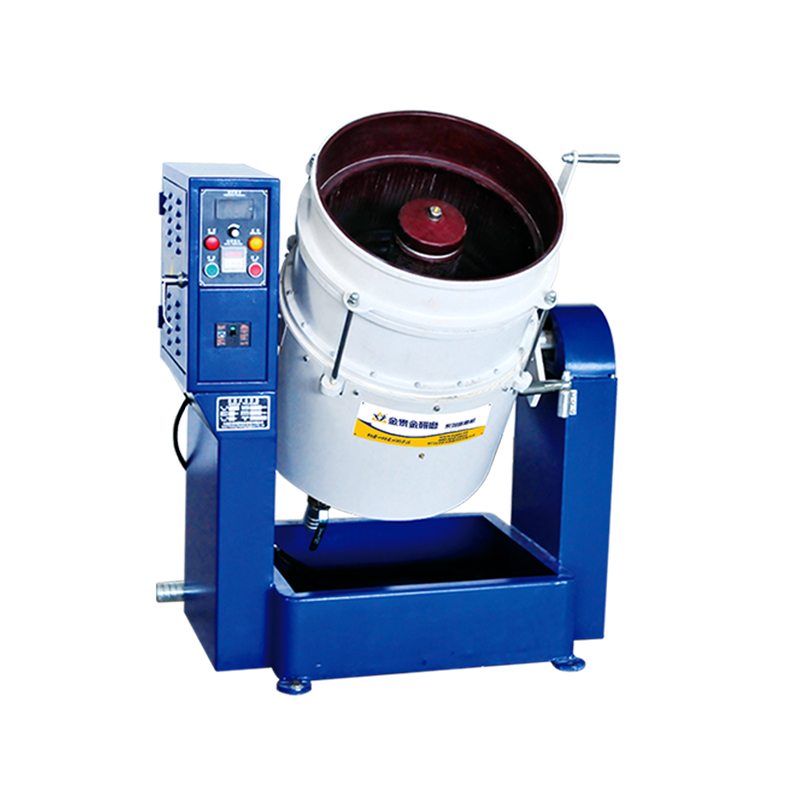
A tub vibrator suits long parts that cannot rotate in a bowl: gas rails, tubular manifolds, long weldments and linear electrode assemblies. The part is immersed or clamped rather than tumbled end over end, so bending risk from a bowl divider is removed, but the energy delivered per unit area is lower and heavy burrs take longer. Disc finishing machines work in the opposite direction: high energy, short cycles, effective on small robust parts and on producing a consistent edge across a batch of similar fittings, with more risk of edge loss and impingement on thin sections. Neither route is automatically gentler or faster on a sealing face. The deciding factors are part length, mass, how the part can be supported, and whether the critical surface can be presented to the media stream at all.
| Machine route | Where it fits | What it will not do |
|---|---|---|
| Magnetic finishing machine | Fine deburring and light refinement of small precise features such as nozzles, orifice plates and narrow slots | Small working envelope that excludes chamber bodies and long gas lines, with pin media that can lodge in fine passages |
| Disc finishing machine | Fast, high-energy edge breaking and surface refinement on small robust parts and uniform batches of fittings | High impingement and edge-loss risk on thin or soft parts, and geometry must suit the disc working gap |
| Centrifugal barrel finishing machine | Small precise parts and short cycles with high contact pressure, such as inserts, small valve bodies and distribution components | Rounds edges and can distort thin unsupported sections quickly; results are sensitive to charge weight, speed and stop time |
| Dry polishing machine and dryer | Removing residual moisture after a wet cycle and reducing water spotting on aluminium and stainless surfaces | A finishing step only; a dry part can still carry compound film, fines and media dust, so it is not a cleanliness release |
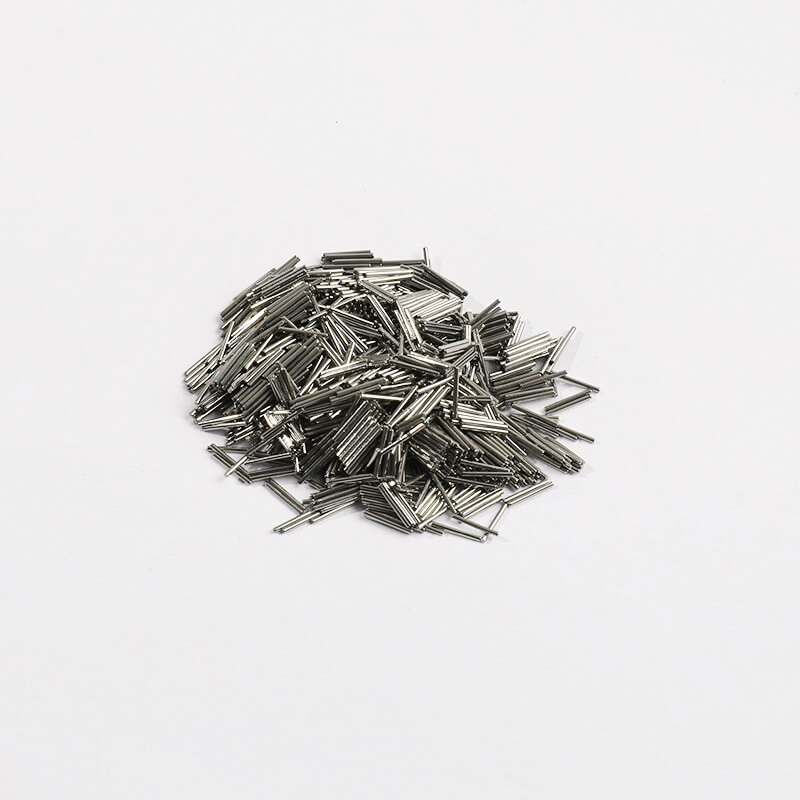
Steel media produces a bright, burnished appearance and high contact pressure, and it is usually paired with a corrosion-inhibiting compound. On semiconductor equipment parts it belongs mainly on stainless items where appearance and edge blending matter, and it should be treated with caution on aluminium, where steel can transfer iron and leave rust spotting or embedded fragments that later appear as particles or staining. Separation at unload is critical: steel media is dense, is easily retained in blind holes and slots, and can be recovered magnetically only if the equipment is set up for that. Steel charges also need their own containment and cleaning discipline to keep ferrous contamination out of aluminium work. A bright result from a steel charge is an observation about a surface, not evidence about cleanliness or suitability for a process environment.
| Media | Best fit | Watch out for |
|---|---|---|
| Steel media, including balls and shaped pins | Bright finishing and edge blending on stainless components where appearance and a burnished surface matter | Transfers iron to aluminium and carbon steel, needs a corrosion-inhibiting compound, and must be separated magnetically or by screen at unload |
| Magnetic finishing pins and fine magnetic media | Small precise items such as nozzles, orifice plates and fine slot arrays where tumbling media cannot reach the feature | Limited working envelope, pins lodge in the same fine features they are chosen to reach, and the surface signature differs from tumbling |
| Aluminium oxide grinding media in a dense ceramic bond | Where a heavier stock removal or a more consistent cut is needed on robust stainless parts with thick edges | High removal energy rounds functional edges quickly and is a poor match for thin aluminium plates or knife-edge seal lands |
| Plastic triangles and pyramids in a soft to medium grade | Deburring aluminium and other soft alloys where surface marking and edge rounding must be kept to a minimum | Slow cut rate, media deforms and wears, and a worn charge behaves noticeably differently from a fresh one |
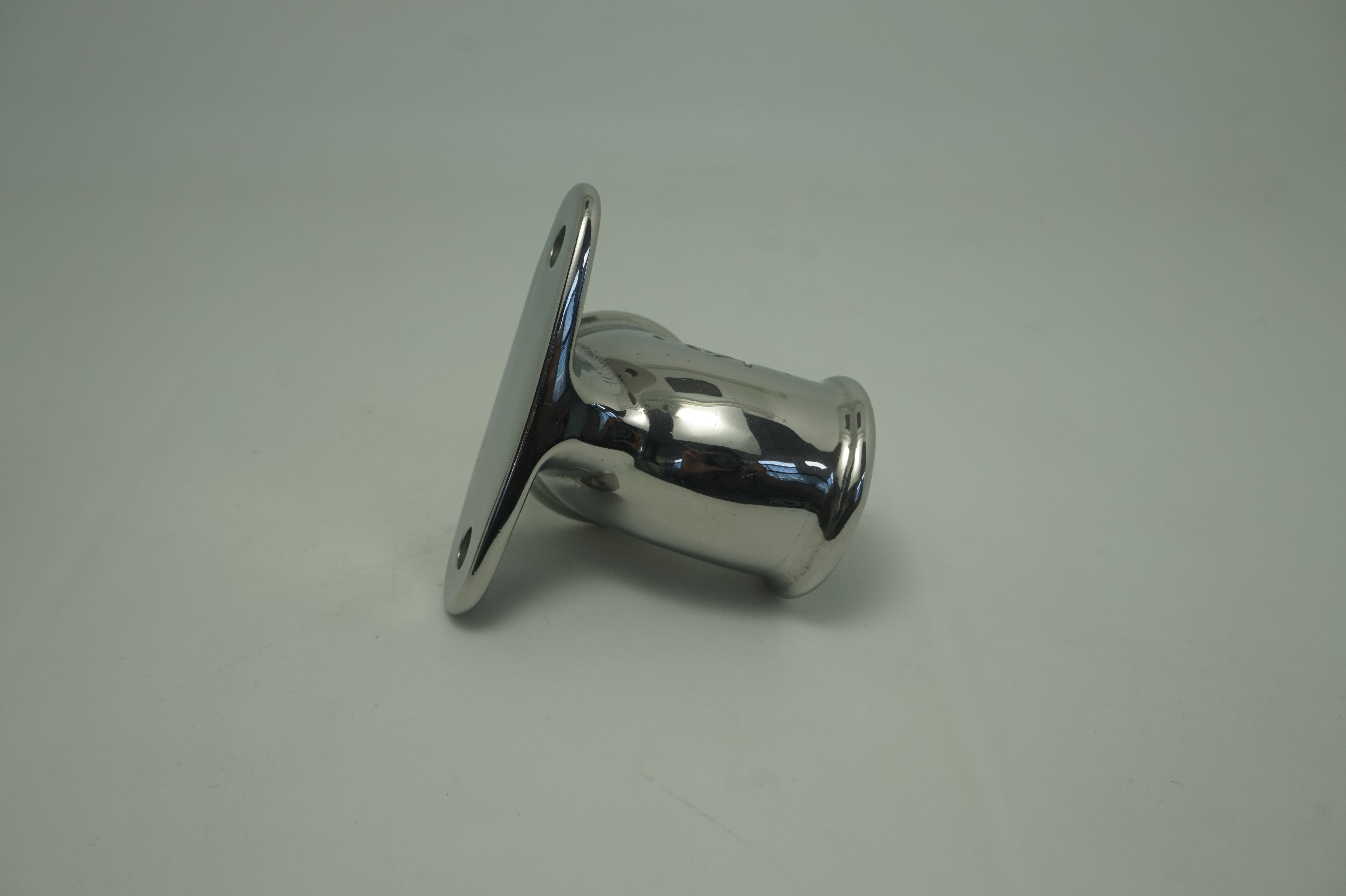
Edge rounding beyond limit shows up first on knife-edge seal faces, sharp bore lips and fine slot edges, where a fractionally generous radius can change how a gasket seats or how a flow path behaves. High-energy routes, long cycles, dense media and coarse ceramic all accelerate it, and aluminium rounds faster than stainless under the same conditions. The damage is easy to miss on a finished part because the edge looks uniform and polished. Checking means measuring a defined edge feature before and after, using an optical comparator, a radius gauge or a moulded replica of the corner, and comparing against the limit the buyer placed on the drawing. Where a knife edge cannot be protected, masking, a fixture that shields the face, or a gentler medium and shorter cycle are the usual mitigations to test.
| Failure mode | Likely cause | How to catch it |
|---|---|---|
| Tapped threads rounded, galled or opened out by edge finishing | Media working the thread crest during a long or high-energy cycle, with no plugging or masking on the hole | Run a go and no-go thread gauge on every sampled hole, inspect crest condition at magnification, and confirm that plugs or masks were used and removed |
| Fine media fragments or aluminium smear embedded in a soft surface | Impingement from too much energy or charge mass, media that has fractured, or cross-contamination from a previous material family | Inspect at magnification under angled light, use a wipe or tape lift on the suspect area, and check the charge for broken media and fines |
| Thin plate or liner distorted, bowed or dimensionally drifted after the cycle | Tumbling load on an unsupported thin section, part-on-part contact, or heat and pressure from a high-energy route | Measure flatness, wall thickness and critical dimensions at the same marked points as the pre-process baseline, using a CMM or surface plate and gauge |
| Grey aluminium smear transferred onto stainless parts in a shared batch | Aluminium fines retained in media, compound or the machine after an aluminium lot, with no purge before the stainless lot | Check stainless surfaces under angled light for a dull grey film, review the changeover record, and inspect the charge and machine sump for retained fines |
New York City's industrial base sits in planned industrial parks and industrial business areas rather than heavy plant. The Brooklyn Navy Yard is a 300-acre, city-owned industrial park managed by the Brooklyn Navy Yard Development Corporation, home to more than 550 businesses and approximately 13,000 workers, and the Corporation describes it as one of the City's most important industrial waterfront assets and leases space across industries from the arts to startups and advanced manufacturers. Made in NYC, an initiative of the Pratt Center for Community Development, counts a community of 1,900 New York City makers and manufacturers whose member directory is organised by product and service categories including advanced and specialty manufacturing, metal and jewellery, digital fabrication, wood and furniture, and food and beverage. The region's freight gateway is the Port of New York and New Jersey, which the Port Authority describes as the largest port on the East Coast and the second largest in the nation, and the New York Fed publishes regional economic indicators and monthly surveys covering 22 local areas of the Second District, which includes New York City.
The nearest part of that base to this brief is marine: The Port Authority describes the Port of New York and New Jersey as the largest port on the East Coast and the second largest in the nation.
New York's finishing demand is dominated by small and mid-size metalworking, fabrication and machining shops rather than one large plant, so the work is typically high-mix and low-volume: architectural and construction metalwork, food-equipment and food-service stainless, and machined or laser-cut components where deburring and edge control are the difference between a part that passes inspection and one that does not. Space, noise and effluent constraints in a dense city also push shops toward barrel, vibratory and disc finishing over processes with heavy waste streams.
The question to settle first is whether the shop is finishing architectural and construction metalwork, food-service stainless, or precision machined parts, because each needs a different balance of edge radius, burr removal and cleanliness - and in a dense city the choice is also constrained by floor space, noise and effluent limits.
Freight context: Port of New York and New Jersey (Port Newark, Elizabeth, Bayonne, Howland Hook, Red Hook), John F. Kennedy International Airport (JFK), Newark Liberty International Airport (EWR), ExpressRail intermodal terminals. The Port Authority of New York and New Jersey describes its port as the largest on the East Coast and the second largest in the nation, and the port's ExpressRail system provides dedicated on-dock rail for each major container terminal, aimed at inland markets including Chicago, the Ohio Valley and Eastern Canada. Imported machinery and sample parts would be entered through CBP at the seaport or at JFK/EWR, with country-of-origin marking and HTSUS classification as part of the entry file.
The United States has no single mandatory national finishing standard. The national standards system is voluntary and consensus-based, coordinated at national level by the American National Standards Institute (ANSI): ANSI published the United States Standards Strategy (USSS) 2025 on 6 January 2026, a strategy that 'guides how the U.S. develops standards and participates in international standardization', while the National Institute of Standards and Technology (NIST) is the federal measurement and standards agency and states that 'Technical standards keep us safe, enable technology to advance, and help businesses succeed.' In practice a buyer specifies surface finish, deburring, cleaning and coating requirements on the drawing or in the purchase order using the voluntary consensus standards maintained by bodies such as ASME and ASTM International and their ISO equivalents, and the acceptance criterion is the buyer's own specification rather than a government-issued finishing standard. Where a part is destined for a regulated product - pressure equipment, food-contact equipment, aerospace or medical devices - the relevant industry code or the customer's qualification requirement governs instead.
Business is conducted in US English. Units matter: US drawings and purchase orders frequently use inches, microinch Ra and US gallons, and a supplier that quotes only metric can be asked to reissue documentation. Buyers are US legal entities with an EIN and expect an identifiable contracting entity, a correct HTSUS classification, a commercial invoice, packing list and bill of lading, country-of-origin marking, and an importer of record for customs. Procurement is normally evidence-driven: process selection is expected to be justified by a trial run on the buyer's own sample parts with measured results (burr height, edge radius, Ra, cleanliness) and by media and compound data sheets, rather than by a capability claim. Payment terms in general US industrial practice are open account with net-30 to net-60 terms for established buyers, with letters of credit or advance payment more common for a first order from a new overseas supplier; no US buyer assumes Incoterms, warranty terms or spare-parts lead times unless they are stated in the quotation.
SurfacePolish supplies from Xiamen, China. The buyer's own destination rules, conformity marking, tariff classification and documentation responsibilities stay with the buyer; confirm them against the authorities named above before ordering.
Functional checks catch the failures that visual inspection and roughness measurement miss. On a vacuum part that means the buyer's own leak test on the assembled component, which is the only way to see a seal land that has been rounded or a residue film that opens a virtual leak path. On a gas line it means a flow check against a reference part, since an internal burr or a lodged medium changes conductance. Dimensional verification belongs on a CMM or with hand gauges at the features that can move: slot widths, bore diameters, flange flatness, position of dowel holes and wall thickness on thin parts. Thread gauges confirm that a tapped hole was not rounded out by edge finishing. These checks are performed by the buyer's quality function against the buyer's limits; a finishing report is supporting evidence, not a qualification.
Compare one variable at a time. If the question is media shape, hold the compound, the cycle time, the machine and the load constant and change only the medium; if the question is cycle time, hold the charge constant and stop at two or three defined intervals. Running two changes at once produces a result that cannot be attributed. Where a trial includes a refinement stage after a cutting stage, evaluate the stages separately, since a final figure can hide a coarse first stage or an unremoved burr. Blind evaluation helps when several people judge appearance: label the returned parts with codes and have the buyer's inspectors score edge condition, coverage and cleanliness without knowing the settings. Keep the parts and the record. A trial showing both routes failing on one controlled feature is as useful as one showing a difference.

A batch record should identify what was done rather than simply assert a result. Ask for part numbers and quantities, the machine used, the media type and size class, charge mass and age since the last screen, the compound and dose, the rinse water source, cycle time, inspection results and the lot disposition. Request the media and compound data sheets offered by the supplier. Where aluminium and stainless are processed on the same site, ask for the changeover note covering media purge, machine cleaning and compound replacement. This is finishing process documentation, not a certificate of compliance, and it supports your own traceability in United States.
Mechanical mass finishing and electropolishing are different processes with different effects, and SurfacePolish does not supply or perform electropolishing. A mechanical route can deburr and refine a surface, and it may reduce the reason to consider an electrochemical step, but it does not reproduce what electropolishing does to a surface. The honest comparison is to define what the gas line actually requires, then test whether a mechanical route can observe those requirements on representative parts. Where an electrochemical finish is mandatory in your specification, that requirement stays with your own supply chain. This page treats electropolishing only as a comparison point and as a reason to evaluate a mechanical alternative.
Any mechanical finishing operation can leave compound film, media dust and fine debris, particularly in blind features and soft aluminium surfaces. The practical controls are compound choice, rinse volume and quality, separation at unload, and a defined cleanliness check at a named surface. What that check should be is the buyer's specification, because only the buyer knows the downstream use. SurfacePolish cannot promise a particle count or certify a cleanliness level, and no process should be presented as cleanroom-ready on the strength of a sample trial. What a trial can show is how the parts looked and measured after the settings used, which supports the buyer's own verification in United States.
Use New York, United States as the destination on the enquiry and state whether the deliverable is equipment, media and compound, a representative sample review or a line concept. A destination does not imply local stock, a local service point or a local delivery time.
A New York buyer works in the US voluntary-consensus system coordinated by ANSI, with surface-finish, cleaning and coating requirements written into the drawing, purchase order or the building/food-service specification. New York City construction and food-service work adds local code and health-department requirements, and food-contact or medical work adds the customer's own material-conformity and cleanliness requirements on top.
Sources were retrieved on 2026-09-29 and describe the local industrial and trade context only. They do not evidence any SurfacePolish project, shipment, installation or service in New York.
The buyer needs the weld and machined edges dressed and the sealing face protected on a part that is too long to tumble in a bowl.
Send the material, dimensions, approximate weight, batch quantity, the incoming condition and photographs of the difficult features. Mark which features must not be contacted by media and state how the result will be inspected. This form carries source reference PSEO-0045; quote it if you prefer an additional manual reference.
Open the SurfacePolish enquiry form Email a prepared enquiry
No price, lead time, certification or result is promised here. Confirm whether a sample trial is available for the specific part and what the trial can and cannot show.
Page PSEO-0045 · revised 2026-09-29 · cross-border equipment, media and scoped sample review. City context is sourced and cited above.
Use this local checker to identify missing part and inspection information. It prepares a technical-review brief; it does not approve a machine, process recipe or production result.
Complete the part details to prepare a review brief.
Email : info@surface-polish.com


 IPv6 network supported


 +86-592-2381506
