A buyer in Tilburg, Netherlands working on semiconductor equipment has a thin perforated electrode plate where every hole exit carries a burr and the plate cannot tolerate distortion. SurfacePolish supplies vibratory and related finishing equipment, media and compounds across borders, and runs a free sample trial: parts go to Xiamen and come back with observed results and a proposed processing direction for the buyer's engineering team. This brief is written for a buyer in Tilburg working on semiconductor equipment; it describes equipment, media and a scoped sample review, not a local polishing service.
Which surfaces on this part are functional, such as seal lands, gas passage walls and locating bores, and which are only cosmetic?
Which cleanliness method and limit does the buyer own, and is it applied before or after the buyer's own cleaning step?
What is the smallest internal passage, slot or hole the charge must not plug, and how will a lodged medium be detected and removed?
Material state decides more about the route than the drawing tolerance does. A 6061-T6 machined plate, a 5083 weldment and a 316L casting behave differently under the same media load: aluminium work-hardens and smears, cast material can open porosity, and stainless can pick up iron from tooling or from steel media. Establish whether the part has been heat treated, whether weld zones will be finished in the same pass as the parent metal, and whether an anodise, passivation or coating step follows, because that downstream step can be the real reason a surface must be smut-free and free of embedded debris. Record the starting condition honestly: machining marks, EDM recast layer, heat tint, glass-bead residue from an earlier operation and any oil or handling soil all change what one mass-finishing cycle can achieve.
Steel media produces a bright, burnished appearance and high contact pressure, and it is usually paired with a corrosion-inhibiting compound. On semiconductor equipment parts it belongs mainly on stainless items where appearance and edge blending matter, and it should be treated with caution on aluminium, where steel can transfer iron and leave rust spotting or embedded fragments that later appear as particles or staining. Separation at unload is critical: steel media is dense, is easily retained in blind holes and slots, and can be recovered magnetically only if the equipment is set up for that. Steel charges also need their own containment and cleaning discipline to keep ferrous contamination out of aluminium work. A bright result from a steel charge is an observation about a surface, not evidence about cleanliness or suitability for a process environment.
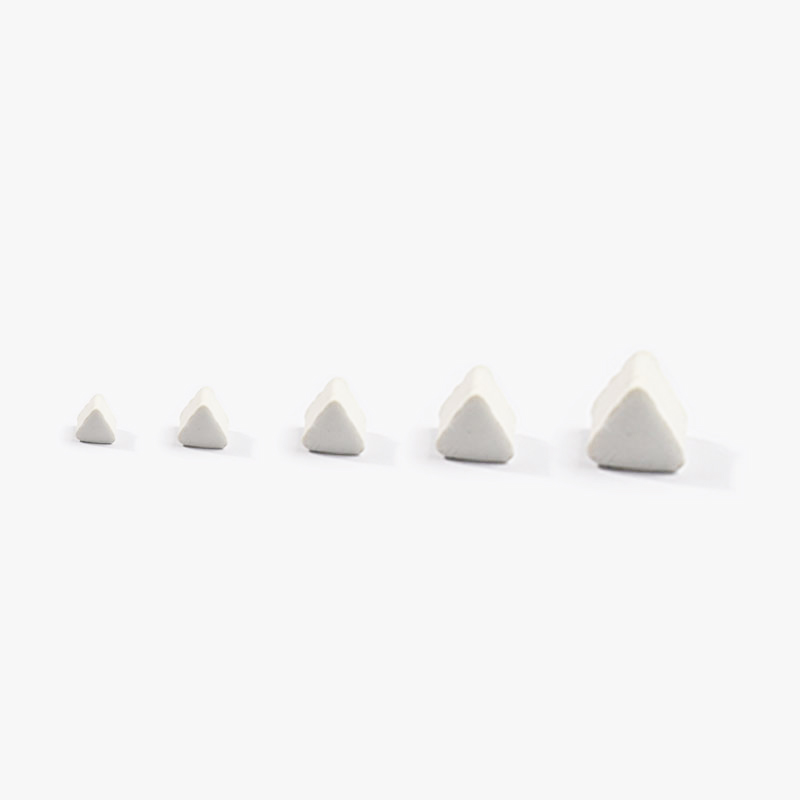
| Media | Best fit | Watch out for |
|---|---|---|
| Heavy-cut ceramic, angle-cut triangles in a coarse size class | Removing a substantial machining burr from open external edges and pockets on aluminium and stainless housings before a refinement stage | Cuts edges and corners aggressively, leaves a coarse surface, and lodges in slots whose width approaches the media section |
| Steel media, including balls and shaped pins | Bright finishing and edge blending on stainless components where appearance and a burnished surface matter | Transfers iron to aluminium and carbon steel, needs a corrosion-inhibiting compound, and must be separated magnetically or by screen at unload |
| Plastic cylinders and cones in a harder, denser grade | Longer cycles on mixed batches of small fittings where a repeatable light edge break is wanted without ceramic impact | Can float or segregate by shape in a bowl, and cylindrical forms can wedge in slots and cross-drillings |
| Plastic triangles and pyramids in a soft to medium grade | Deburring aluminium and other soft alloys where surface marking and edge rounding must be kept to a minimum | Slow cut rate, media deforms and wears, and a worn charge behaves noticeably differently from a fresh one |
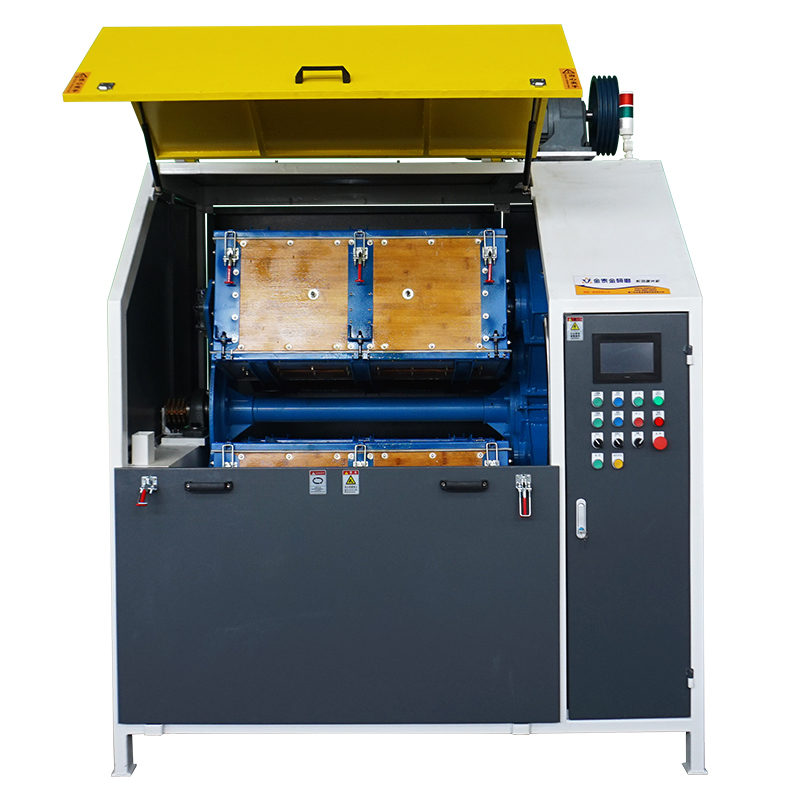
A vibratory bowl is the general-purpose starting point for chamber bodies, plates and housings that fit comfortably and can tumble without racking. Media circulates in a toroidal path and reaches external faces, edges and open pockets at moderate energy, and the open bowl allows an operator to pull a part mid-cycle for a look, which matters when a feature is sensitive. Part-on-part contact is continuous, so thin plates and finished mating faces need separation or protection within the charge. Where a heavy machining burr has to come off before refinement, a grinding finishing machine with higher removal energy can take the bulk of it, but it cuts edges faster as well and needs a tighter geometry assessment. A bowl will not reach deep internal passages on its own; those depend on media size, compound flow and how the part sits in the charge.
| Machine route | Where it fits | What it will not do |
|---|---|---|
| Dry polishing machine and dryer | Removing residual moisture after a wet cycle and reducing water spotting on aluminium and stainless surfaces | A finishing step only; a dry part can still carry compound film, fines and media dust, so it is not a cleanliness release |
| Tub vibrator | Long gas rails, tubular manifolds, weldments and linear electrode assemblies that cannot rotate in a bowl | Lower energy per unit area so heavy burrs take longer, and large tubs need floor space and a suitable part support method |
| Rotary barrel finishing machine | Gentle deburring of small fragile components and mixed fitting batches with a generous compound flow | Long cycles, no visibility while running, and internal passages can collect media and compound that must be retrieved at unload |
| Grinding finishing machine | Taking off a heavy machining burr or a defined stock layer before a refinement pass on robust stainless work | High removal energy cuts functional edges fast and demands a tighter geometry assessment and shorter cycles |
Compound film, media dust and embedded particles on a sealing face are the failure mode that most often forces a semiconductor equipment part back through cleaning or into scrap. The face may look acceptable under shop light while carrying a tenacious silicate film, a smear of aluminium, or fine ceramic debris forced into a soft surface. Impingement can also peen media fragments into aluminium, which is difficult to detect without magnification or a wipe test. Likely causes include too little rinse, a compound that forms a film, insufficient separation after the cycle, and drying a part before it is genuinely clean. Inspection should combine magnification of the sealing land, a solvent wipe over a defined area, and the buyer's own cleanliness method. Surface finish alone is not evidence that a face is free of residue.
| Failure mode | Likely cause | How to catch it |
|---|---|---|
| Thin plate or liner distorted, bowed or dimensionally drifted after the cycle | Tumbling load on an unsupported thin section, part-on-part contact, or heat and pressure from a high-energy route | Measure flatness, wall thickness and critical dimensions at the same marked points as the pre-process baseline, using a CMM or surface plate and gauge |
| Rust spotting on stainless parts appearing hours or days after finishing | Ferrous transfer from steel media, a machine or tooling that has held carbon steel, or insufficient corrosion inhibition and drying | Inspect after a defined dwell time rather than immediately, look for pinpoint spots on and near edges, and trace media and machine history for the lot |
| Water spotting or mineral residue left after wet processing and drying | Hard or high-chloride rinse water, slow or uneven drying, or parts stacked wet so moisture is trapped in pockets and grooves | Inspect dried parts under angled light for rings and haze, check the rinse water source and drying method, and verify that pockets and grooves drain before the part is packed |
| Knife-edge seal face or bore lip rounded past the drawing limit | High-energy route, over-long cycle, dense or coarse media, or a soft aluminium edge run without masking or shielding | Measure a defined edge feature before and after with an optical comparator, radius gauge or moulded replica, and compare with the maximum radius on the drawing |
Tilburg sits at the centre of Hart van Brabant, the Tilburg-Waalwijk region that has taken the title of Dutch logistics hotspot six times in seven years in the Logistiek.nl election, with a business community that co-funds the regional programme. Alongside that distribution base the region has an SME manufacturing sector of metalworking and machine-building firms, described by Midpoint Brabant as built on craftsmanship, flexibility and family-owned companies, which the regional programme supports on process optimisation, automation and productivity. Regional firms report direct rail freight connections with China and Poland.
The nearest part of that base to this brief is automation: Regional logistics and production processes in the Tilburg-Waalwijk area are described as largely automated and robotised, with the sector characterised as technology and AI rather than manual handling.
The SME manufacturing base in Hart van Brabant is dominated by metalworking and machine-building suppliers producing sheet-metal parts, frames, machined components and welded assemblies, where deburring and edge rounding are routine steps before coating, assembly or shipment. Automation-driven logistics equipment in the region adds wear parts and handling components where edge condition and surface roughness affect function.
A buyer in this region should settle the part mix before choosing a machine or media: what share is sheet metal and welded (needing edge and weld dressing), what share is machined (needing burr height and Ra control) and what share is simply pre-treatment before powder coating or galvanising.
Freight context: Tilburg-Waalwijk logistics region (Hart van Brabant), Direct rail freight connections to China and Poland. The region is a national logistics hotspot and local firms report direct rail freight links to China, which is relevant both for inbound machines and for returning sample parts. Equipment imported from outside the EU is declared to Dutch Customs at its point of entry and requires an EORI number.
The Netherlands applies the EU's common commercial policy, so imports of Chinese industrial machinery enter under EU customs rules and WTO tariff treatment rather than under a bilateral EU-China free-trade agreement; the European Commission also maintains trade-defence measures on selected Chinese product categories, and China is a WTO member. EU-China trade in goods reached EUR 732 billion in 2024, and in 2025 manufactured goods were 97.3% of EU imports from China, with machinery and vehicles alone accounting for 54.4% — the single largest category. Chinese finishing machines, media and compounds therefore arrive in a very large, well-established EU import stream, and the buyer should expect MFN duty plus trade-defence measures where a specific product is covered.
Goods entering the Netherlands from outside the EU must be declared to Dutch Customs (Douane, part of the Belastingdienst); the importer needs an EORI number, import duty is calculated on the customs value (goods value plus transport and insurance to the EU external border), and import VAT is paid at the border unless an article 23 permit or a fiscal representative is used. CE marking is mandatory for most machinery placed on the EEA market: the Machinery Regulation replaced the Machinery Directive and manufacturers must comply with the new requirements by 20 January 2027. The importer must verify that the conformity assessment was carried out correctly, that CE marking is applied properly, that the technical file is present and complete, and that the user manual is supplied in the correct language; the manufacturer's EC Declaration of Conformity must be kept. Dutch companies imported over EUR 140 billion of machinery and appliances in 2024, 24% of total Dutch goods imports.
SurfacePolish supplies from Xiamen, China. The buyer's own destination rules, conformity marking, tariff classification and documentation responsibilities stay with the buyer; confirm them against the authorities named above before ordering.
Ask for a batch record that identifies what was actually done. A useful record lists the part numbers and quantities in the lot, the machine used, the media type and size class, the media charge mass and its age since the last screen or top-up, the compound product and dose, the water source used for rinse, the cycle time and any in-process interruptions, plus inspection results and disposition. For material traceability, request the media and compound data sheets offered by the supplier, including safety data, and keep them with the lot. Segregation evidence matters where aluminium and stainless run on the same site: a note of the purge or changeover between material families supports the buyer's own contamination control. This is process documentation from a finishing operation, not a certificate of compliance with any regulated standard.
A sample trial answers a narrow question: what happened to these parts under these settings on this equipment. It does not prove that a production lot will be uniform, because bowl size, load ratio, media age and operator practice all shift the outcome. It does not establish a particle count, a cleanliness level or fitness for a cleanroom or any regulated process environment, and it does not transfer a roughness value from a coupon to a complex geometry. It cannot guarantee a cycle time, a cost per part, a capacity or a delivery schedule, and it does not qualify a machine, medium or compound for a semiconductor application. Treat the returned parts and the settings record as evidence for the buyer's own engineering decision, and plan the production route with its own first-article and sampling discipline.
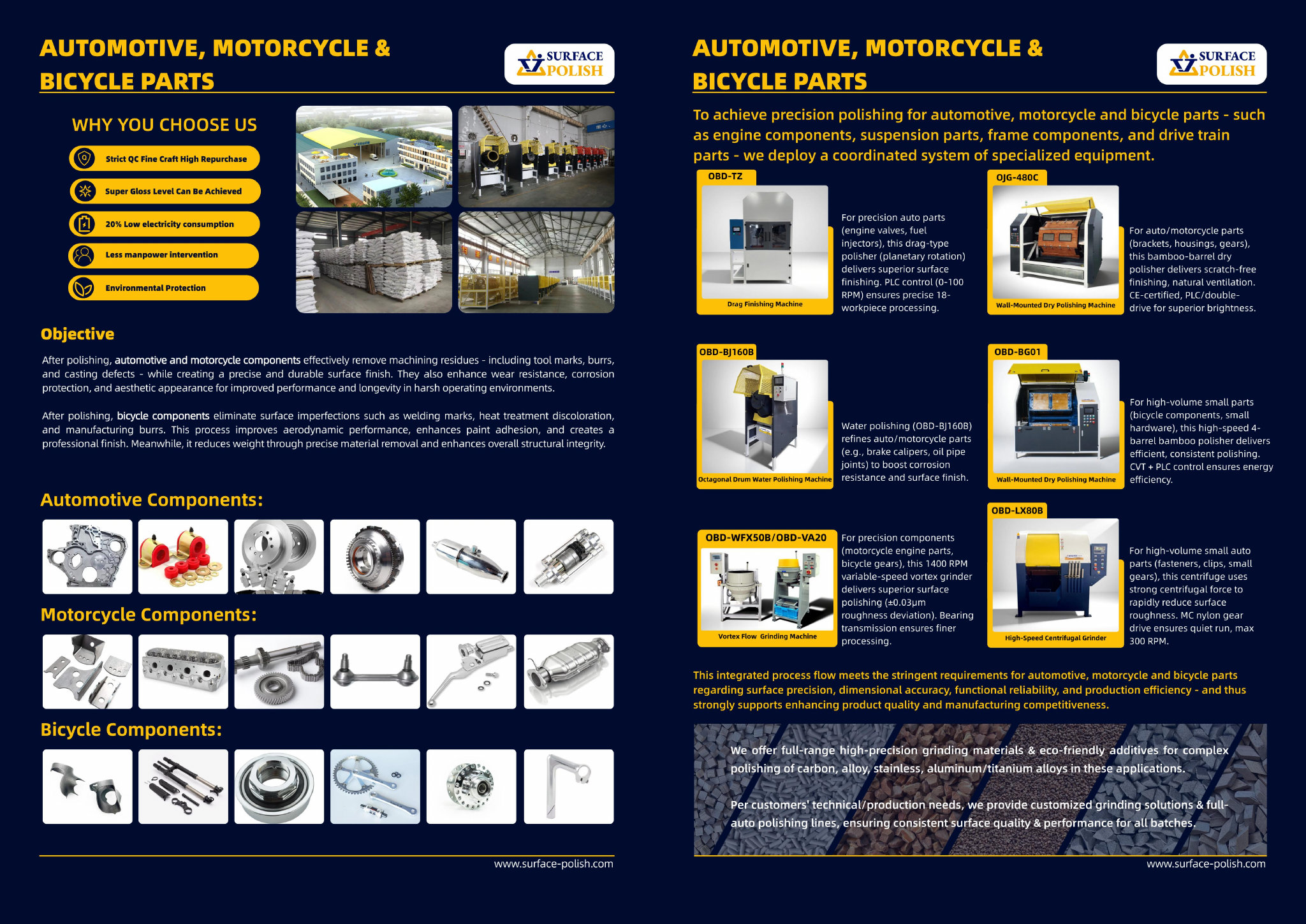
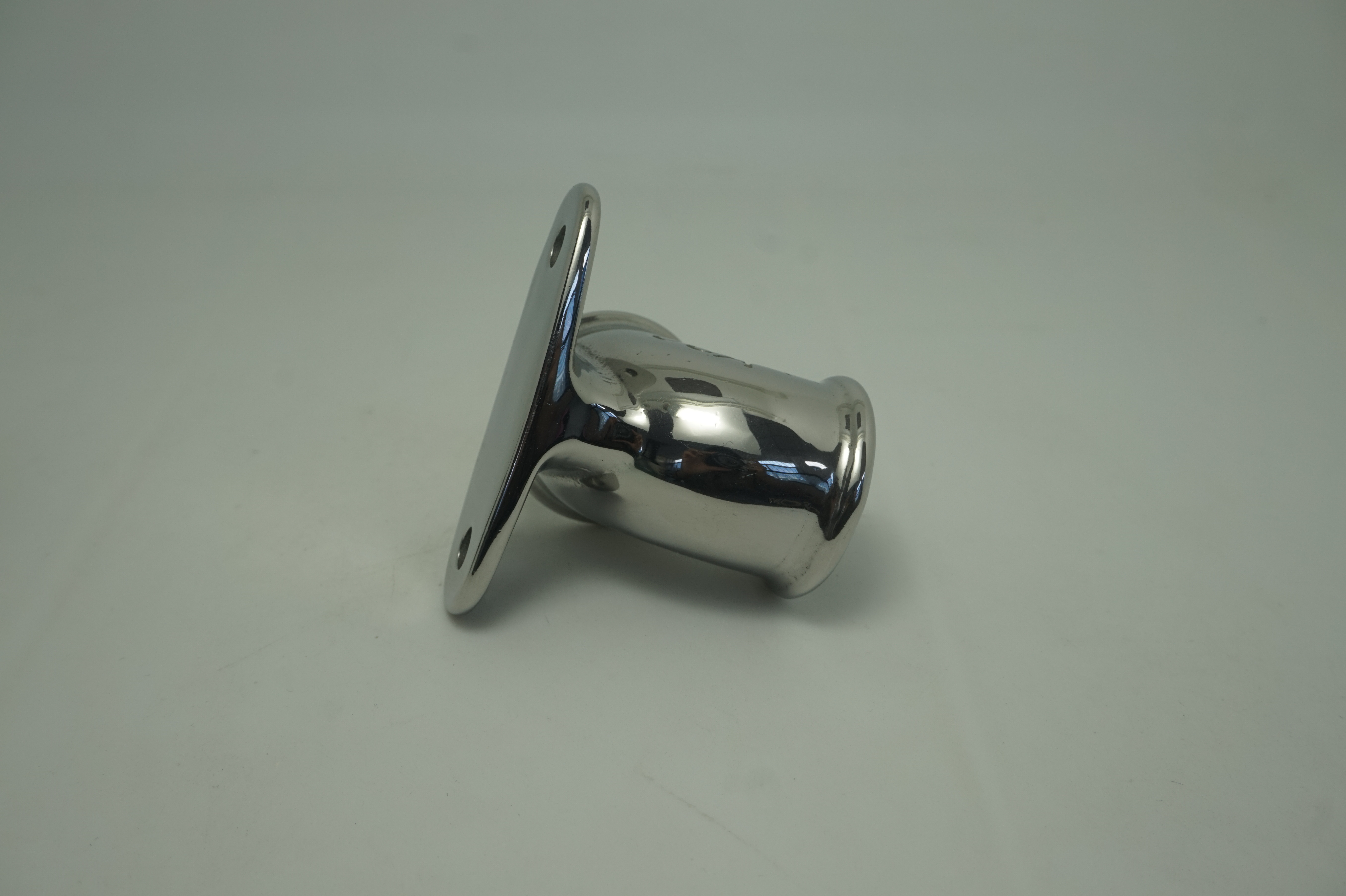
No cleanliness level or cleanroom readiness is certified or guaranteed here. The offer is cross-border supply of finishing machines, media and compounds, plus a sample trial that reports what was observed on the parts tested under the settings used. Cleanroom and process-environment requirements are defined by the buyer and verified by the buyer's own methods, which may include wipes, rinse collection, magnification, leak testing and functional checks. SurfacePolish can keep tested parts separated, documented and returned with a settings record, and that record can support your verification work in Tilburg, but the acceptance decision and any compliance statement remain with your quality function.
Thin plates are governed by distortion and media lodging as much as by finish, so plastic media is often the conservative first choice because it is lighter and imposes less impact. A fine ceramic may cut the hole exits faster, but it also increases edge rounding and part-on-part damage unless the plates are separated. Either way, the plate needs support and separation in the charge, and the hole exits need an inspection that can see inside them. Send several plates so more than one cycle time can be examined, and state the flatness requirement you will verify afterwards.
Change one variable at a time. Hold the machine, load, compound, cycle time and part mix constant, and change only the medium; if the question is cycle time, hold the charge constant and stop at two or three defined intervals. Evaluate the returned parts at the same marked measurement points, and if several people judge appearance, use coded labels so the assessment is blind. Where a cut stage is followed by a refinement stage, score the stages separately, because a good final figure can hide a coarse first stage. A clear comparison needs the returned parts, the record and your own inspectors.
Use Tilburg, Netherlands as the destination on the enquiry and state whether the deliverable is equipment, media and compound, a representative sample review or a line concept. A destination does not imply local stock, a local service point or a local delivery time.
Buyers here would reference the CE machinery regime (Machinery Regulation from 20 January 2027) and the Dutch/EN-ISO surface-finishing standards published by NEN, such as NEN-EN-ISO 2080. For parts moving into automotive or medical customers, the customer's own supplier standard and quality-system requirements are the binding specification.
Sources were retrieved on 2026-09-29 and describe the local industrial and trade context only. They do not evidence any SurfacePolish project, shipment, installation or service in Tilburg.
The buyer must deburr hundreds of hole exits on a thin plate without warping it or driving media fragments into the holes.
Send the material, dimensions, approximate weight, batch quantity, the incoming condition and photographs of the difficult features. Mark which features must not be contacted by media and state how the result will be inspected. This form carries source reference PSEO-0645; quote it if you prefer an additional manual reference.
Open the SurfacePolish enquiry form Email a prepared enquiry
No price, lead time, certification or result is promised here. Confirm whether a sample trial is available for the specific part and what the trial can and cannot show.
Page PSEO-0645 · revised 2026-09-29 · cross-border equipment, media and scoped sample review. City context is sourced and cited above.
Use this local checker to identify missing part and inspection information. It prepares a technical-review brief; it does not approve a machine, process recipe or production result.
Complete the part details to prepare a review brief.
Email : info@surface-polish.com


 IPv6 network supported


 +86-592-2381506