A buyer in Toulouse, France in semiconductor equipment has a cast aluminium pump housing that must be deburred without exposing porosity or marking the machined flange. SurfacePolish supplies vibratory finishing machines, media and compounds across borders and runs a free sample trial: representative housings travel to Xiamen and return with observed results and a proposed media, compound and cycle direction for the buyer's own evaluation. This brief is written for a buyer in Toulouse working on semiconductor equipment; it describes equipment, media and a scoped sample review, not a local polishing service.
Which surfaces on this part are functional, such as seal lands, gas passage walls and locating bores, and which are only cosmetic?
How will a production batch be identified, segregated by material family and documented so a result can be traced to its settings?
What is the smallest internal passage, slot or hole the charge must not plug, and how will a lodged medium be detected and removed?
Batch composition is a process variable, not a logistics detail. Mixing a 4 kg chamber lid with a handful of small stainless fittings changes media circulation, the cycle energy per part and the contact pattern between parts. Delicate electrode plates and thin-wall liners can be dented by heavier neighbours, and aluminium fines released in one batch can transfer onto stainless parts in the next unless the charge and the machine are cleaned between material families. Decide the part mix, the maximum mass per batch and whether fragile parts need racking or compartmentalisation. Decide also how batches are identified, with a traveller that carries material, media charge, compound, cycle time and operator, so a finishing result can be traced back to the settings that produced it. Batch identity is the basis for any later comparison.
Media wears, and worn media changes the process. Ceramic shrinks, plastic deforms and floats differently, steel can fracture into slivers, and all of them eventually reach a size or shape that lodges where a fresh charge would not. A working charge therefore needs a defined maintenance cycle: screen for undersize and debris, top up to a target mass, remove broken pieces, and record the change. Separation at unload deserves the same attention. Screens over the discharge, magnetic recovery for steel, tilting and draining stations, pin gauges and borescope checks on agreed features all reduce the chance that a medium travels with the part into the next operation. Where aluminium and stainless batches share a machine, purging media and compound between material families avoids cross-contamination that is difficult to see and easy to attribute to the wrong cause later.
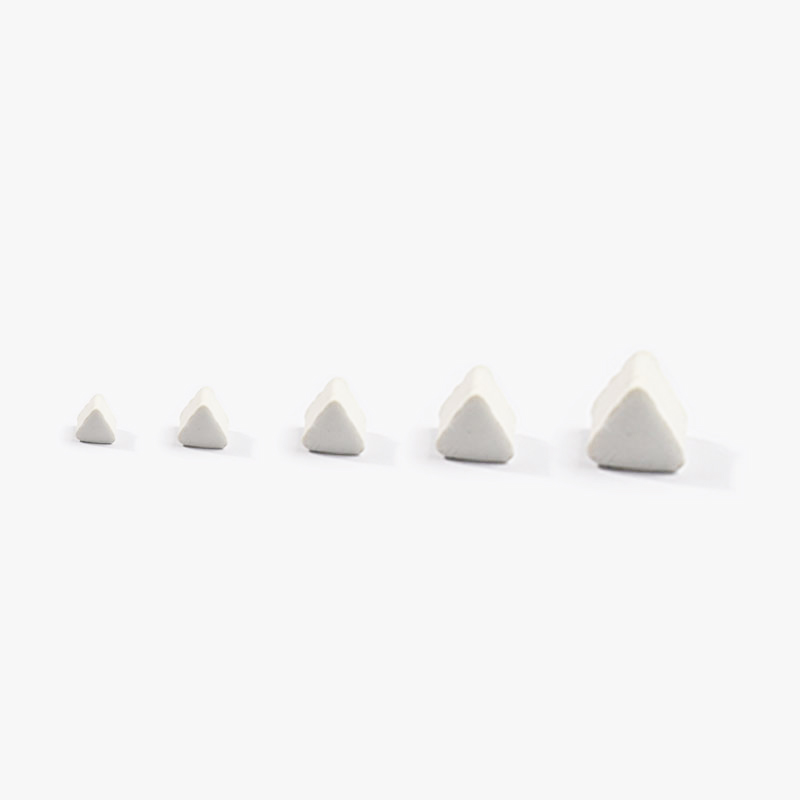
| Media | Best fit | Watch out for |
|---|---|---|
| Fine ceramic or porcelain spheres in a small size class | Refinement and light edge blending after a cutting stage, and reaching tighter external geometry on chamber bodies and plates | Small sizes enter and retain in gas passages and fine slots; media wear shrinks the charge and changes the finish over its life |
| Steel media, including balls and shaped pins | Bright finishing and edge blending on stainless components where appearance and a burnished surface matter | Transfers iron to aluminium and carbon steel, needs a corrosion-inhibiting compound, and must be separated magnetically or by screen at unload |
| Magnetic finishing pins and fine magnetic media | Small precise items such as nozzles, orifice plates and fine slot arrays where tumbling media cannot reach the feature | Limited working envelope, pins lodge in the same fine features they are chosen to reach, and the surface signature differs from tumbling |
| Dry media such as walnut shell and corn cob | Drying assistance, light surface drying polish and removal of superficial soil after a wet cycle | Does not deburr or refine metal significantly, generates dust, and must not be treated as a cleanliness step |
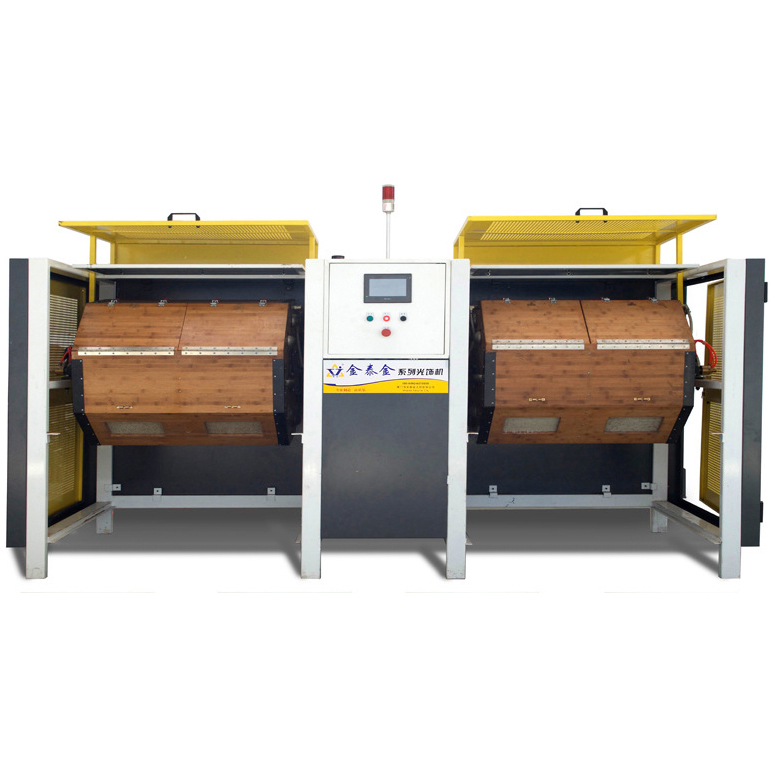
A tub vibrator suits long parts that cannot rotate in a bowl: gas rails, tubular manifolds, long weldments and linear electrode assemblies. The part is immersed or clamped rather than tumbled end over end, so bending risk from a bowl divider is removed, but the energy delivered per unit area is lower and heavy burrs take longer. Disc finishing machines work in the opposite direction: high energy, short cycles, effective on small robust parts and on producing a consistent edge across a batch of similar fittings, with more risk of edge loss and impingement on thin sections. Neither route is automatically gentler or faster on a sealing face. The deciding factors are part length, mass, how the part can be supported, and whether the critical surface can be presented to the media stream at all.
| Machine route | Where it fits | What it will not do |
|---|---|---|
| Dry polishing machine and dryer | Removing residual moisture after a wet cycle and reducing water spotting on aluminium and stainless surfaces | A finishing step only; a dry part can still carry compound film, fines and media dust, so it is not a cleanliness release |
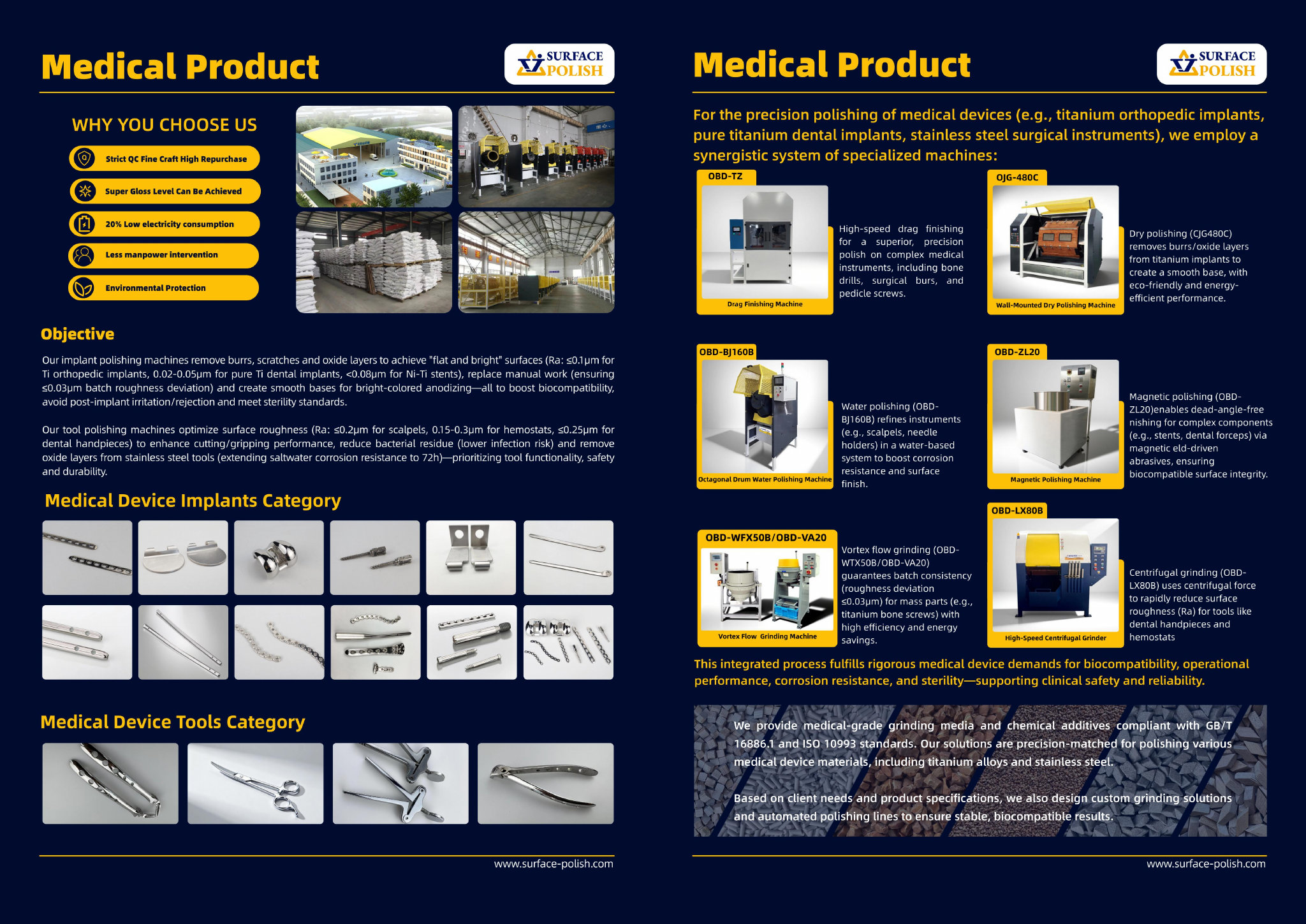
| Magnetic finishing machine | Fine deburring and light refinement of small precise features such as nozzles, orifice plates and narrow slots | Small working envelope that excludes chamber bodies and long gas lines, with pin media that can lodge in fine passages |
| Vibratory finishing machine (bowl) | General deburring and refinement of chamber bodies, plates and housings that fit and can tumble without racking, with easy mid-cycle inspection | Continuous part-on-part contact and no access to deep internal passages; thin plates and finished mating faces need separation |
| Disc finishing machine | Fast, high-energy edge breaking and surface refinement on small robust parts and uniform batches of fittings | High impingement and edge-loss risk on thin or soft parts, and geometry must suit the disc working gap |
Cross-contamination and staining are quiet failures. Aluminium worked in a charge previously used on stainless can leave a grey smear; stainless run with steel media, or in a machine that has held carbon steel, can show rust spots that appear days later; hard water and slow drying leave mineral spotting; and a compound that is too aggressive darkens aluminium. Dimensional drift is the other quiet failure, where thin plates, long tubes and unsupported walls relax or distort under tumbling loads, so a part that passed the edge check fails a flatness or position check afterwards. Both categories are caught by discipline rather than by looking harder at the finish: segregate material families and dedicate or purge media, control rinse water and drying, measure defined dimensions and flatness at the same points before and after, and keep that data with the batch record.
| Failure mode | Likely cause | How to catch it |
|---|---|---|
| Thin plate or liner distorted, bowed or dimensionally drifted after the cycle | Tumbling load on an unsupported thin section, part-on-part contact, or heat and pressure from a high-energy route | Measure flatness, wall thickness and critical dimensions at the same marked points as the pre-process baseline, using a CMM or surface plate and gauge |
| Rust spotting on stainless parts appearing hours or days after finishing | Ferrous transfer from steel media, a machine or tooling that has held carbon steel, or insufficient corrosion inhibition and drying | Inspect after a defined dwell time rather than immediately, look for pinpoint spots on and near edges, and trace media and machine history for the lot |
| Knife-edge seal face or bore lip rounded past the drawing limit | High-energy route, over-long cycle, dense or coarse media, or a soft aluminium edge run without masking or shielding | Measure a defined edge feature before and after with an optical comparator, radius gauge or moulded replica, and compare with the maximum radius on the drawing |
| Compound film or tenacious residue left on a sealing face | A film-forming or silicate-bearing compound, insufficient rinse volume, or drying the part before it is genuinely clean | Magnify the sealing land and wipe a defined area with solvent, comparing the wipe against a clean reference; confirm with the buyer's own cleanliness method |
Toulouse is the centre of the European aerospace industry: Aerospace Valley describes itself as the leading European aerospace competitiveness cluster, serving three sectors across the Occitanie/Pyrenees-Mediterranee and Nouvelle-Aquitaine regions, and it runs its aeronautics, space and drones programmes and its annual InnoDay innovation event in Toulouse. INSEE counted 19 612 establishments in the commune at the end of 2024 with a 4,1 % industry share, the highest of the large French cities sampled here, and 358 827 jobs at the place of work in 2023. Around the aircraft and space primes sits a deep supplier base of machining, sheet-metal, composites, surface-treatment and assembly shops, plus electronics and equipment manufacturing; the city's second historical industrial pillar is agri-food and agricultural equipment for the surrounding Midi-Pyrenees farming economy.
The nearest part of that base to this brief is machinery: INSEE records 19 612 establishments in Toulouse at end-2024 with 4,1 % in industry, the highest industry share among the ten French cities in this study; Aerospace Valley covers the industrial and equipment supply chain around the primes.
Aerospace parts made in and around Toulouse are surface-critical: deburring and edge radiusing on machined brackets, engine and landing-gear components, burr-free fluid lines, and controlled surface texture on sealing and bearing faces. Fatigue life and fatigue scatter are directly sensitive to edge condition and residual surface damage, so the burr and edge specification is usually an engineering requirement rather than a shop-floor preference. Because the primes audit the tier, the finishing operation normally has to be qualified and documented per part number, which puts the process window and media control under scrutiny.
A Toulouse buyer should settle how the edge and surface requirement is expressed - a drawing callout, a fatigue-driven internal rule, or a visual workmanship standard - because only a numerically defined requirement can be validated on sample parts and then held in series production.
Freight context: Toulouse-Blagnac Airport, Grand Port Maritime de Bordeaux / Bassens for sea freight, Toulouse rail-road combined terminals. Toulouse has no seaport; the official airport site presents Toulouse-Blagnac with more than 70 destinations in direct flight, which is the normal route for urgent tooling, media and sample parts, while machines and heavy equipment come in by road or rail from Atlantic or Mediterranean ports. Aerospace suppliers here routinely send sample parts by express air and schedule machine deliveries around production shutdowns.
France applies the EU common commercial policy, so industrial machinery arriving from China enters under the Union Customs Code and the Common Customs Tariff rather than under any bilateral French regime; the EU has no free-trade agreement with China, so no preferential duty rate applies and normal third-country duties are due on the customs value. Importers classify the machine in the tariff nomenclature and lodge a customs declaration; French Customs publishes the common and national tariff through its RITA online service and states that three notions are fundamental: the tariff classification of the product, its origin or destination, and the value of the goods.
The working language of French industrial procurement is French: tenders, drawings, inspection plans and technical dossiers are normally issued and answered in French, and quotations that omit French documentation slow down qualification. Buyers qualify a machine against a written specification and expect traceable material certificates, machine safety documentation and, where applicable, a CE declaration of conformity and a risk assessment; acceptance is often staged (documentary review, factory acceptance test, then commissioning). Payment and documentation norms are conventional EU practice: euro invoicing, SEPA or SWIFT bank transfer, Incoterms agreed in writing, and customs paperwork (commercial invoice, packing list, transport document, proof of origin where a preference is claimed) prepared for the declarant or customs representative. Because customs and tax authorisations are handled jointly through SOPRANO, non-EU sellers are normally advised to sell to an established French/EU importing entity rather than to act as importer of record themselves.
SurfacePolish supplies from Xiamen, China. The buyer's own destination rules, conformity marking, tariff classification and documentation responsibilities stay with the buyer; confirm them against the authorities named above before ordering.
Ask for a batch record that identifies what was actually done. A useful record lists the part numbers and quantities in the lot, the machine used, the media type and size class, the media charge mass and its age since the last screen or top-up, the compound product and dose, the water source used for rinse, the cycle time and any in-process interruptions, plus inspection results and disposition. For material traceability, request the media and compound data sheets offered by the supplier, including safety data, and keep them with the lot. Segregation evidence matters where aluminium and stainless run on the same site: a note of the purge or changeover between material families supports the buyer's own contamination control. This is process documentation from a finishing operation, not a certificate of compliance with any regulated standard.
Record the starting condition before the parts leave, because a trial can only be read against a baseline. Photograph each burr and each controlled surface at a fixed scale, measure roughness at the same marked locations with the same instrument and cut-off, note edge condition with a comparator or radius gauge, and record mass and critical dimensions. Then ask for the same measurements on the returned parts at the same marked points. Without that pairing, a result is an opinion. Ask also for the settings used: machine, media type and size class, charge mass, compound and dose, cycle time, and the number of parts in the batch. Note any behaviour observed during the run, such as part-on-part impact, media lodging or compound foaming. That record is what allows two routes to be compared rather than merely described.
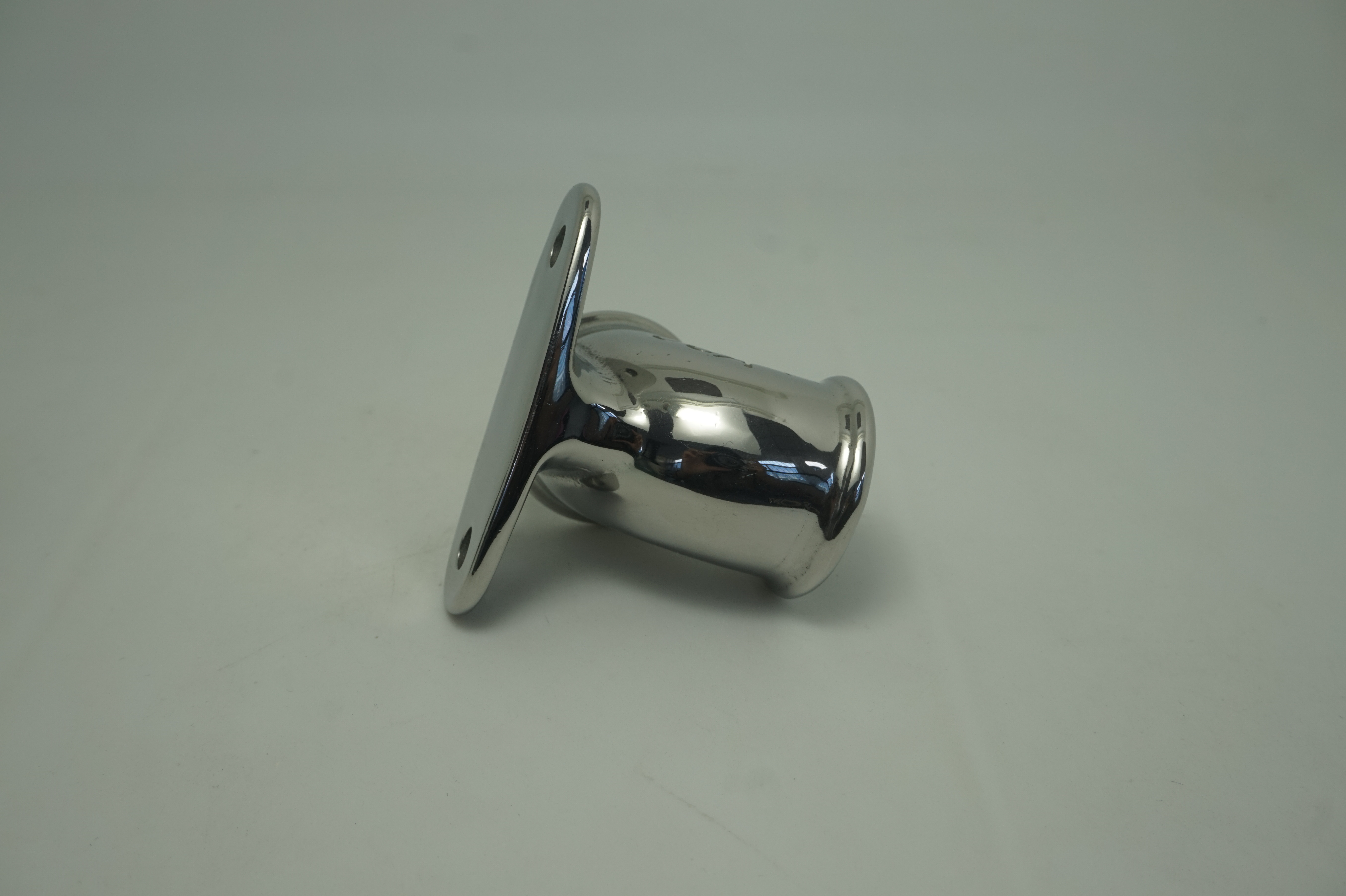
Send a set that covers the real range rather than one convenient piece. Include the part with the tightest passage or smallest hole, the thinnest unsupported section, the surface that must not be touched, and one part in its normal as-received condition with its usual burr and soil. Add a coupon of the same material with a known starting roughness, and a marked-up drawing naming the controlled surfaces, edge limits and any cleanliness requirement. Several pieces let more than one cycle time be examined. Parts are shipped to Xiamen and returned with a settings record.
There is no single best medium, because aluminium is soft and the trade-off is between cut rate and surface damage. Plastic media is often the safer starting point where a sealing face or a thin wall must be preserved, while a fine ceramic can cut faster if edges tolerate more energy. The deciding variables are the smallest opening a medium could enter, the smallest radius that must not be rounded, and the surface condition the buyer needs. Media size class usually matters more than the broad material name. Send a marked-up aluminium part with its tightest passage and one controlled face, and let the trial compare two size classes.
Thin plates are governed by distortion and media lodging as much as by finish, so plastic media is often the conservative first choice because it is lighter and imposes less impact. A fine ceramic may cut the hole exits faster, but it also increases edge rounding and part-on-part damage unless the plates are separated. Either way, the plate needs support and separation in the charge, and the hole exits need an inspection that can see inside them. Send several plates so more than one cycle time can be examined, and state the flatness requirement you will verify afterwards.
Use Toulouse, France as the destination on the enquiry and state whether the deliverable is equipment, media and compound, a representative sample review or a line concept. A destination does not imply local stock, a local service point or a local delivery time.
A Toulouse aerospace buyer qualifies finishing suppliers against EN 9100 and the specific prime requirements that sit under it, and specifies surface texture with ISO/NF EN surface-texture standards plus programme cleanliness and edge-condition requirements (NADCAP-style special-process approval is commonly the gate for surface treatment and finishing). Where the supplier also serves the automotive or general machinery chain, IATF 16949 or ISO 9001 applies.
Sources were retrieved on 2026-09-29 and describe the local industrial and trade context only. They do not evidence any SurfacePolish project, shipment, installation or service in Toulouse.
The buyer needs the machined faces and hole edges deburred without opening casting porosity or peening the soft alloy.
Send the material, dimensions, approximate weight, batch quantity, the incoming condition and photographs of the difficult features. Mark which features must not be contacted by media and state how the result will be inspected. This form carries source reference PSEO-0525; quote it if you prefer an additional manual reference.
Open the SurfacePolish enquiry form Email a prepared enquiry
No price, lead time, certification or result is promised here. Confirm whether a sample trial is available for the specific part and what the trial can and cannot show.
Page PSEO-0525 · revised 2026-09-29 · cross-border equipment, media and scoped sample review. City context is sourced and cited above.
Use this local checker to identify missing part and inspection information. It prepares a technical-review brief; it does not approve a machine, process recipe or production result.
Complete the part details to prepare a review brief.
Email : info@surface-polish.com


 IPv6 network supported


 +86-592-2381506