A buyer in Wollongong, Australia working on semiconductor equipment has a varied batch of stainless vacuum fittings that need a consistent edge break without media trapped in cross-drilled holes. SurfacePolish supplies finishing machines, media and compounds across borders and runs a free sample trial: a representative batch goes to Xiamen and returns with observed results and a proposed media, compound and cycle direction for the buyer to compare. This brief is written for a buyer in Wollongong working on semiconductor equipment; it describes equipment, media and a scoped sample review, not a local polishing service.
What is the smallest internal passage, slot or hole the charge must not plug, and how will a lodged medium be detected and removed?
Can the required finish be reached in one mechanical route, or does the part need a cut stage followed by a refinement stage?
Which surfaces on this part are functional, such as seal lands, gas passage walls and locating bores, and which are only cosmetic?
Start every assessment with a marked-up drawing, not a part family name. On a vacuum-chamber component the surfaces that matter are usually small: an O-ring groove floor, a knife-edge seal land, a gas inlet bore, a tapped hole pattern and a locating dowel bore. Each needs a decision before any medium is chosen, whether it is masked, plugged, finished to a roughness band or deliberately left untouched. A chamber lid and a roughing-line elbow can come off the same machining cell and still need different screening because one carries a knife edge and the other carries a welded flange. Ask which surface an elastomer or metal seal actually seats on, and treat that as a datum for acceptance. The feature list also drives handling rules: where parts may be stacked, which faces may touch, and how they are separated between operations.
Plastic media is chosen for aluminium and other soft materials where a ceramic charge would peen, smear or mark the surface. It is lighter, so contact pressure is lower and edges survive longer, at the cost of a slower cut and a longer cycle for the same burr. Shapes range from triangles and cones to cylinders, and the harder, denser grades remove more material than the softer ones. Because plastic media wear and deform, a charge that has run for many hours behaves differently from a fresh one, and part-to-part consistency can drift within a batch if the charge is not monitored. For a chamber component with a sealing face, plastic is often the safer starting point, and the trade-off to be tested is whether the achievable surface and the cycle time are acceptable once the burr is genuinely gone.
| Media | Best fit | Watch out for |
|---|---|---|
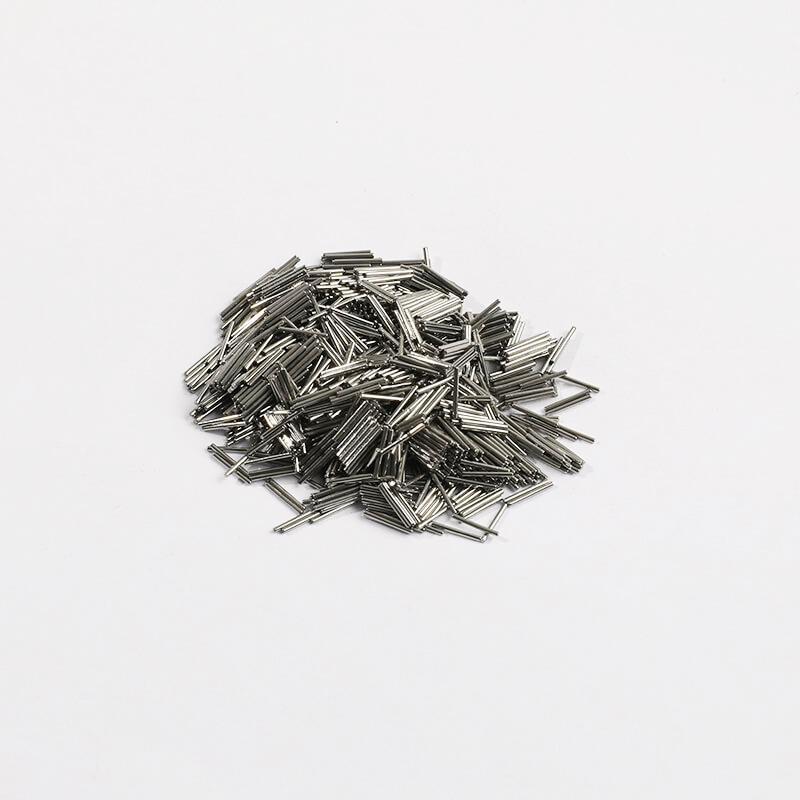
| Magnetic finishing pins and fine magnetic media | Small precise items such as nozzles, orifice plates and fine slot arrays where tumbling media cannot reach the feature | Limited working envelope, pins lodge in the same fine features they are chosen to reach, and the surface signature differs from tumbling |
| Dry media such as walnut shell and corn cob | Drying assistance, light surface drying polish and removal of superficial soil after a wet cycle | Does not deburr or refine metal significantly, generates dust, and must not be treated as a cleanliness step |
| Aluminium oxide grinding media in a dense ceramic bond | Where a heavier stock removal or a more consistent cut is needed on robust stainless parts with thick edges | High removal energy rounds functional edges quickly and is a poor match for thin aluminium plates or knife-edge seal lands |
| Steel media, including balls and shaped pins | Bright finishing and edge blending on stainless components where appearance and a burnished surface matter | Transfers iron to aluminium and carbon steel, needs a corrosion-inhibiting compound, and must be separated magnetically or by screen at unload |
A vibratory bowl is the general-purpose starting point for chamber bodies, plates and housings that fit comfortably and can tumble without racking. Media circulates in a toroidal path and reaches external faces, edges and open pockets at moderate energy, and the open bowl allows an operator to pull a part mid-cycle for a look, which matters when a feature is sensitive. Part-on-part contact is continuous, so thin plates and finished mating faces need separation or protection within the charge. Where a heavy machining burr has to come off before refinement, a grinding finishing machine with higher removal energy can take the bulk of it, but it cuts edges faster as well and needs a tighter geometry assessment. A bowl will not reach deep internal passages on its own; those depend on media size, compound flow and how the part sits in the charge.
| Machine route | Where it fits | What it will not do |
|---|---|---|
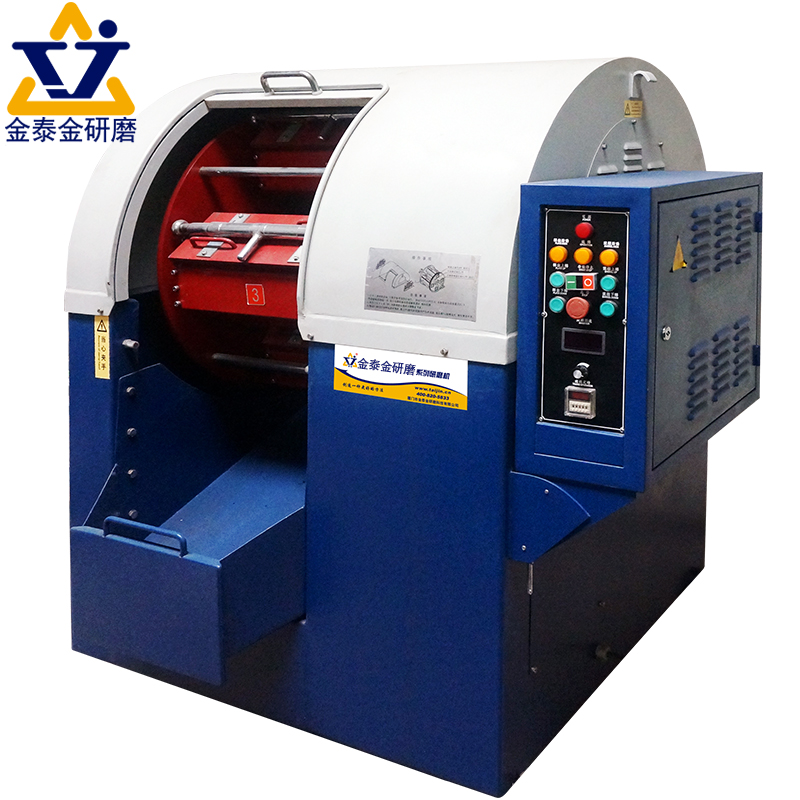
| Grinding finishing machine | Taking off a heavy machining burr or a defined stock layer before a refinement pass on robust stainless work | High removal energy cuts functional edges fast and demands a tighter geometry assessment and shorter cycles |
| Centrifugal barrel finishing machine | Small precise parts and short cycles with high contact pressure, such as inserts, small valve bodies and distribution components | Rounds edges and can distort thin unsupported sections quickly; results are sensitive to charge weight, speed and stop time |
| Disc finishing machine | Fast, high-energy edge breaking and surface refinement on small robust parts and uniform batches of fittings | High impingement and edge-loss risk on thin or soft parts, and geometry must suit the disc working gap |
| Vibratory finishing machine (bowl) | General deburring and refinement of chamber bodies, plates and housings that fit and can tumble without racking, with easy mid-cycle inspection | Continuous part-on-part contact and no access to deep internal passages; thin plates and finished mating faces need separation |
Cross-contamination and staining are quiet failures. Aluminium worked in a charge previously used on stainless can leave a grey smear; stainless run with steel media, or in a machine that has held carbon steel, can show rust spots that appear days later; hard water and slow drying leave mineral spotting; and a compound that is too aggressive darkens aluminium. Dimensional drift is the other quiet failure, where thin plates, long tubes and unsupported walls relax or distort under tumbling loads, so a part that passed the edge check fails a flatness or position check afterwards. Both categories are caught by discipline rather than by looking harder at the finish: segregate material families and dedicate or purge media, control rinse water and drying, measure defined dimensions and flatness at the same points before and after, and keep that data with the batch record.
| Failure mode | Likely cause | How to catch it |
|---|---|---|
| Fine media fragments or aluminium smear embedded in a soft surface | Impingement from too much energy or charge mass, media that has fractured, or cross-contamination from a previous material family | Inspect at magnification under angled light, use a wipe or tape lift on the suspect area, and check the charge for broken media and fines |
| Grey aluminium smear transferred onto stainless parts in a shared batch | Aluminium fines retained in media, compound or the machine after an aluminium lot, with no purge before the stainless lot | Check stainless surfaces under angled light for a dull grey film, review the changeover record, and inspect the charge and machine sump for retained fines |
| A ceramic or plastic medium lodged in a blind tapped hole, slot or gas passage | Media size class too close to the opening, a worn charge that has broken down into smaller pieces, or a retention feature that was never mapped | Count the charge in and out where practical, borescope the smallest passages at an agreed angle, pin gauge every hole, and rinse through a filter for a visual residue check |
| Water spotting or mineral residue left after wet processing and drying | Hard or high-chloride rinse water, slow or uneven drying, or parts stacked wet so moisture is trapped in pockets and grooves | Inspect dried parts under angled light for rings and haze, check the rinse water source and drying method, and verify that pockets and grooves drain before the part is packed |
Wollongong is described by the NSW Government as Australia's 10th-largest city and the urban centre of the Illawarra and Shoalhaven region, which has a population of 422,558 and a large existing advanced manufacturing and engineering workforce. The region was traditionally known for steelmaking and coal mining, and that base still shows in the port's cargo: Port Kembla, NSW's third-largest port, facilitates the region's significant steel and mining industries and is the largest motor vehicle importation terminal in NSW. The NSW Government names defence, ICT, advanced manufacturing and professional services as the region's key industries, and the Australian Navy's Fleet Air Arm base at HMAS Albatross together with the Albatross Aviation Technology Park has made the Illawarra the home of naval aviation in Australia. Growth precincts are the Illawarra Renewable Energy Zone and the Port Kembla Hydrogen Hub, with an ambition to create Australia's first 5GW+ scale green hydrogen hub; the University of Wollongong produces 1,000 ICT and 600 engineering graduates a year with research in ICT, engineering, cyber and advanced materials.
The nearest part of that base to this brief is marine: Port Kembla is NSW's third-largest port with over 800 commercial vessels calling each year, and the region hosts the Royal Australian Navy's Fleet Air Arm base at HMAS Albatross, establishing a substantial naval and maritime presence in the Illawarra.
The Illawarra's steel and heavy engineering base means large volumes of flame-cut, laser-cut and machined steel plate and structural components that require edge deburring, slag and oxide removal and radius control before welding, painting or galvanising. Port Kembla's role as a vehicle import terminal and the region's naval aviation and defence work add stainless, aluminium and higher-value machined components where surface finish and cleanliness affect coating adhesion, corrosion performance and fit. Fabricators and maintainers in the region also handle refurbishment work where removing corrosion and old coatings without changing base dimensions is the constraint.
A Wollongong buyer should determine whether the finishing operation is part of weld preparation on structural steel, part of a corrosion-protection system where surface profile and cleanliness govern coating adhesion, or a final cosmetic requirement on visible work — and should confirm whether the specification demands a measurable anchor profile or edge radius rather than an unquantified 'clean' surface.
Freight context: Port Kembla (NSW's third-largest port, operated landside by NSW Ports), Shellharbour Airport, Illawarra rail and road corridor into Sydney, including the M1 Princes Motorway. Port Authority NSW records that over 800 commercial vessels call into Port Kembla each year, connecting the Illawarra's industries with the world; the port is the principal grain export port for southern and south-western NSW as well as the largest motor vehicle import terminal in NSW. The NSW Government notes the region is well connected to domestic and international markets with road and rail services into Sydney and other east coast hubs, plus Shellharbour Airport. Sea freight through Port Kembla is the natural route for incoming finishing machines, and the vehicle-import trade means regular scheduled roll-on/roll-off and container services into the port.
The Australian Border Force (ABF) is the customs authority and clears imported goods through customs; all goods arriving in Australia must be declared unless an exception applies, goods valued at up to A$1,000 can be imported without a formal import declaration, and entry is made through the Integrated Cargo System (Form B650 for sea or air cargo). Generally all goods imported into Australia are liable for duties and taxes unless an exemption or concession applies, and most imports are subject to 10% GST, so classification, customs valuation and any preferential tariff claim drive the landed cost; a licensed customs broker is the normal route for a first-time importer. Electrical equipment can fall under the Electrical Equipment Safety System, under which the first Australian supplier registers as a Responsible Supplier, holds an ABN, makes a Responsible Supplier Declaration and marks the equipment with the Regulatory Compliance Mark (RCM) in accordance with AS/NZS 4417.1 and AS/NZS 4417.2. Imported goods may also require a trade description naming the country of manufacture, and machinery that is not in-scope electrical equipment still has to meet state work health and safety duties covering plant.
Australia and China are parties to the China-Australia Free Trade Agreement (ChAFTA), signed on 17 June 2015 and in force since 20 December 2015; the Australian Border Force maintains a dedicated ChAFTA page and working tariff schedule, and FTAs give importers a route to preferential rates of duty where the rules of origin are met. China was Australia's largest source of imports in 2025 at $130.2b, up 12.5% on 2024, and 56% (69,567) of Australian business importers traded at least once with China in 2020-21. A Chinese supplier of finishing machines, media or compounds is therefore shipping into Australia's single largest import stream, and preferential duty depends on origin documentation rather than on a blanket zero-tariff guarantee for every product line.
SurfacePolish supplies from Xiamen, China. The buyer's own destination rules, conformity marking, tariff classification and documentation responsibilities stay with the buyer; confirm them against the authorities named above before ordering.
Functional checks catch the failures that visual inspection and roughness measurement miss. On a vacuum part that means the buyer's own leak test on the assembled component, which is the only way to see a seal land that has been rounded or a residue film that opens a virtual leak path. On a gas line it means a flow check against a reference part, since an internal burr or a lodged medium changes conductance. Dimensional verification belongs on a CMM or with hand gauges at the features that can move: slot widths, bore diameters, flange flatness, position of dowel holes and wall thickness on thin parts. Thread gauges confirm that a tapped hole was not rounded out by edge finishing. These checks are performed by the buyer's quality function against the buyer's limits; a finishing report is supporting evidence, not a qualification.
A sample trial answers a narrow question: what happened to these parts under these settings on this equipment. It does not prove that a production lot will be uniform, because bowl size, load ratio, media age and operator practice all shift the outcome. It does not establish a particle count, a cleanliness level or fitness for a cleanroom or any regulated process environment, and it does not transfer a roughness value from a coupon to a complex geometry. It cannot guarantee a cycle time, a cost per part, a capacity or a delivery schedule, and it does not qualify a machine, medium or compound for a semiconductor application. Treat the returned parts and the settings record as evidence for the buyer's own engineering decision, and plan the production route with its own first-article and sampling discipline.
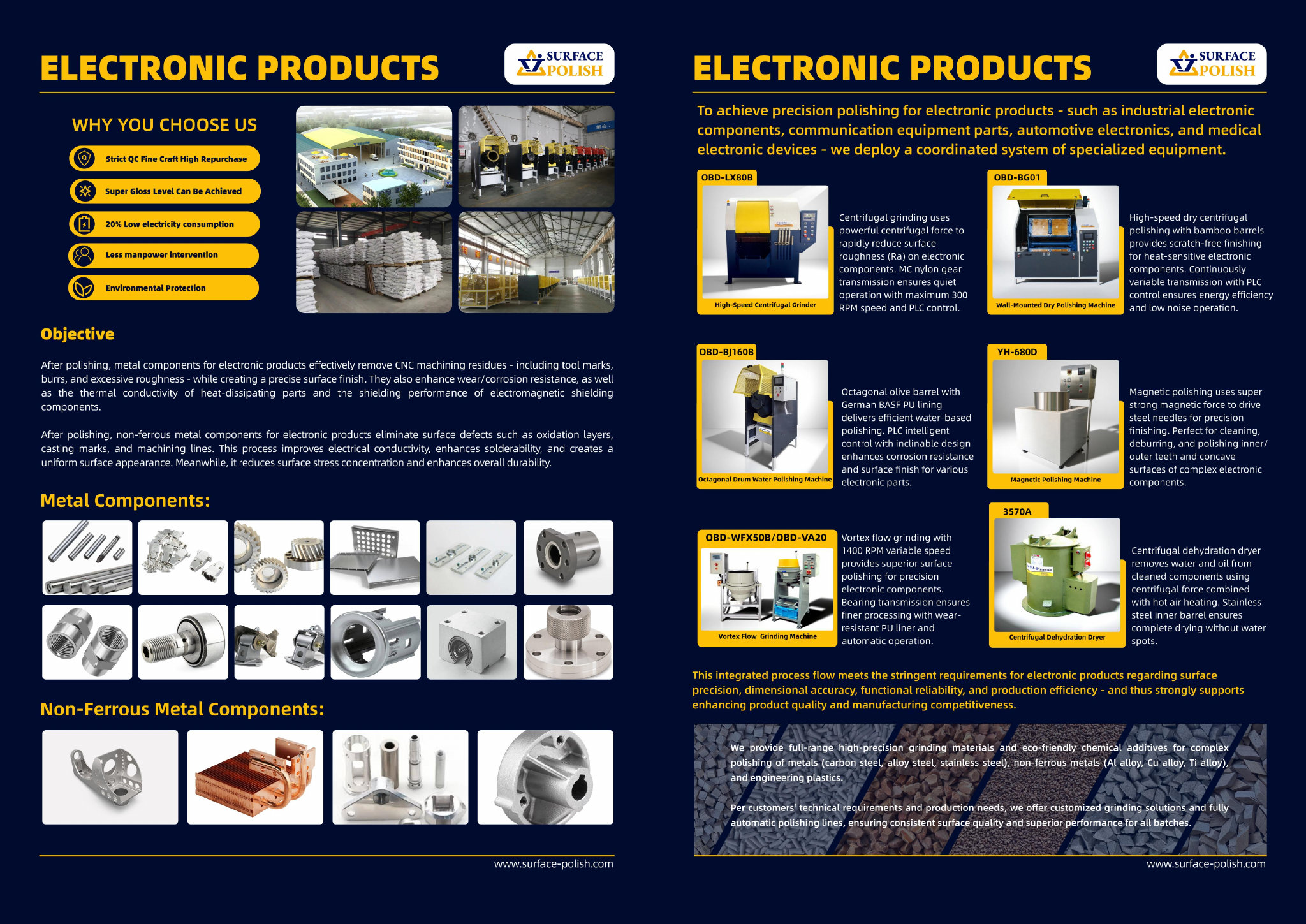
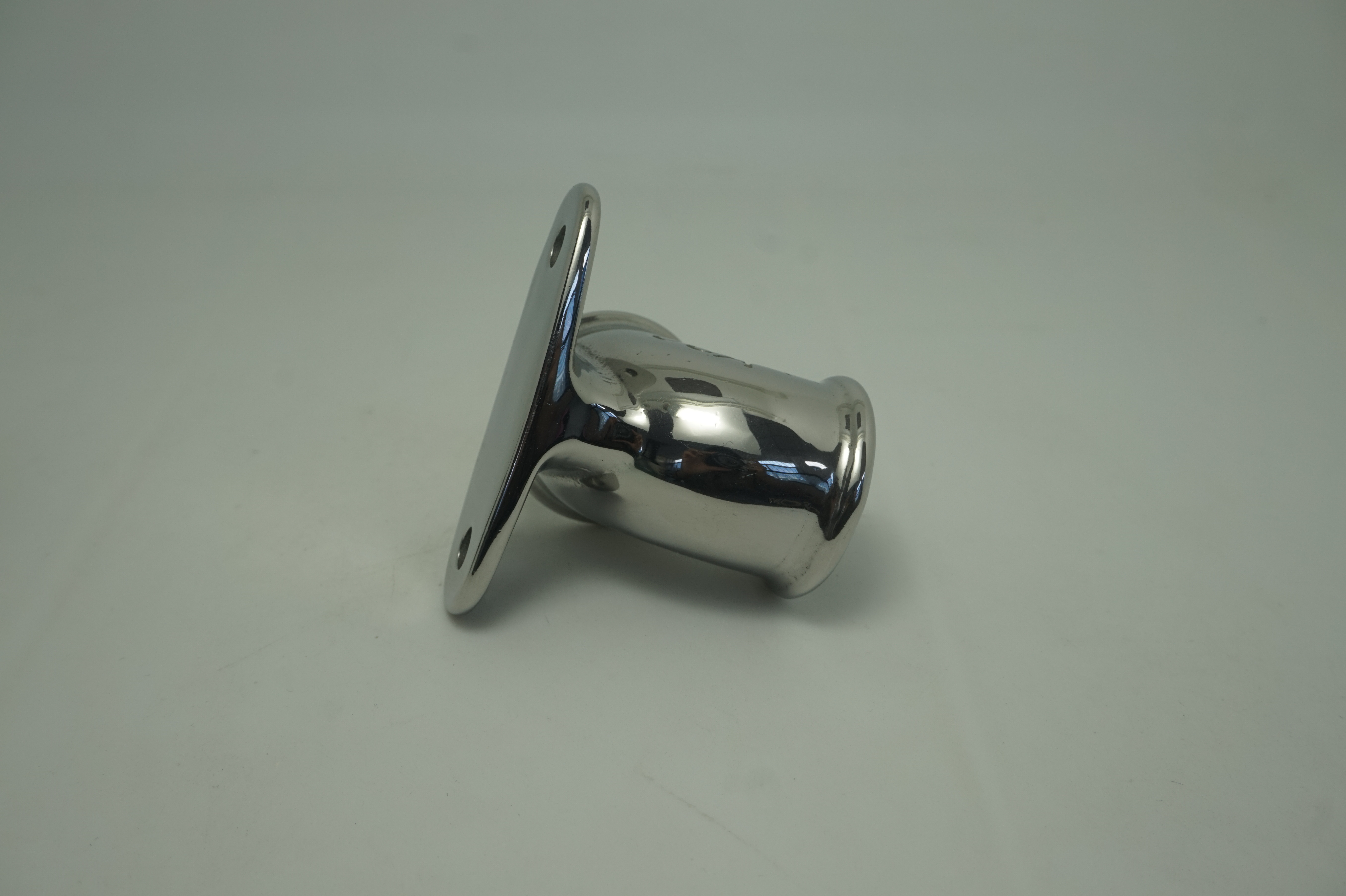
Mechanical mass finishing and electropolishing are different processes with different effects, and SurfacePolish does not supply or perform electropolishing. A mechanical route can deburr and refine a surface, and it may reduce the reason to consider an electrochemical step, but it does not reproduce what electropolishing does to a surface. The honest comparison is to define what the gas line actually requires, then test whether a mechanical route can observe those requirements on representative parts. Where an electrochemical finish is mandatory in your specification, that requirement stays with your own supply chain. This page treats electropolishing only as a comparison point and as a reason to evaluate a mechanical alternative.
Cycle time depends on the starting burr, the material, the media size class, the compound and how much edge refinement is wanted, so no figure can be quoted in advance. A part that only needs a light edge break may run very differently from one that must shed a machining burr before refinement, and a two-stage route needs both stages counted. The useful approach is to test a defined stop point or two on representative parts and record what changed. SurfacePolish does not promise cycle times or capacity; treat the timing on returned parts as an observation from that run, not a production commitment.
Size the medium well below the smallest opening the charge could enter, and treat every passage as a retrieval point rather than assuming it stays clear. Map the tightest hole, slot or cross-drilling first, then choose a size class against that geometry instead of an average part. Add a defined check such as a borescope at an agreed angle, a pin gauge on holes, and a rinse collected through a filter. For Australia buyers preparing a trial, send the part with the smallest passage so the media choice is tested on the real feature. SurfacePolish reports what was observed on tested parts; the cleanliness release remains the buyer's decision.
Use Wollongong, Australia as the destination on the enquiry and state whether the deliverable is equipment, media and compound, a representative sample review or a line concept. A destination does not imply local stock, a local service point or a local delivery time.
Illawarra buyers reference Australian Standards maintained by Standards Australia for material conformity and surface condition, and steel suppliers and fabricators commonly work to Australian steel and welding standards together with client specification. Electrically powered equipment placed on the market must comply with the EESS and carry the Regulatory Compliance Mark under AS/NZS 4417.1 and AS/NZS 4417.2.
Sources were retrieved on 2026-09-29 and describe the local industrial and trade context only. They do not evidence any SurfacePolish project, shipment, installation or service in Wollongong.
The buyer wants a repeatable edge break and a uniform finish across a varied fitting batch without media lodging in the cross-drillings.
Send the material, dimensions, approximate weight, batch quantity, the incoming condition and photographs of the difficult features. Mark which features must not be contacted by media and state how the result will be inspected. This form carries source reference PSEO-0775; quote it if you prefer an additional manual reference.
Open the SurfacePolish enquiry form Email a prepared enquiry
No price, lead time, certification or result is promised here. Confirm whether a sample trial is available for the specific part and what the trial can and cannot show.
Page PSEO-0775 · revised 2026-09-29 · cross-border equipment, media and scoped sample review. City context is sourced and cited above.
Use this local checker to identify missing part and inspection information. It prepares a technical-review brief; it does not approve a machine, process recipe or production result.
Complete the part details to prepare a review brief.
Email : info@surface-polish.com


 IPv6 network supported


 +86-592-2381506