A watch case is not one surface. It is usually two or three — a brushed flank, a polished bevel, and often a plated or coated area — and the value of the part depends on the boundary between them staying sharp. Mass finishing removes material everywhere the media touches, so the decision that matters most is not "which media", but "how do I keep the process away from the surfaces I must not change".
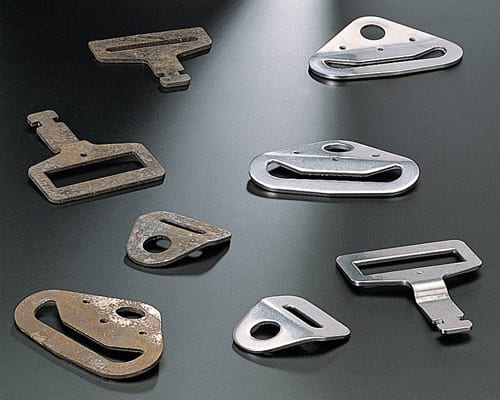
This page covers the directions to test and the checks that catch problems before a batch is ruined.
The finish is a contrast, and the contrast is a boundary. A brushed-and-polished case reads as high quality because the line between the two finishes is clean. A process that rounds that line makes the part look worn even if every individual surface is technically correct.
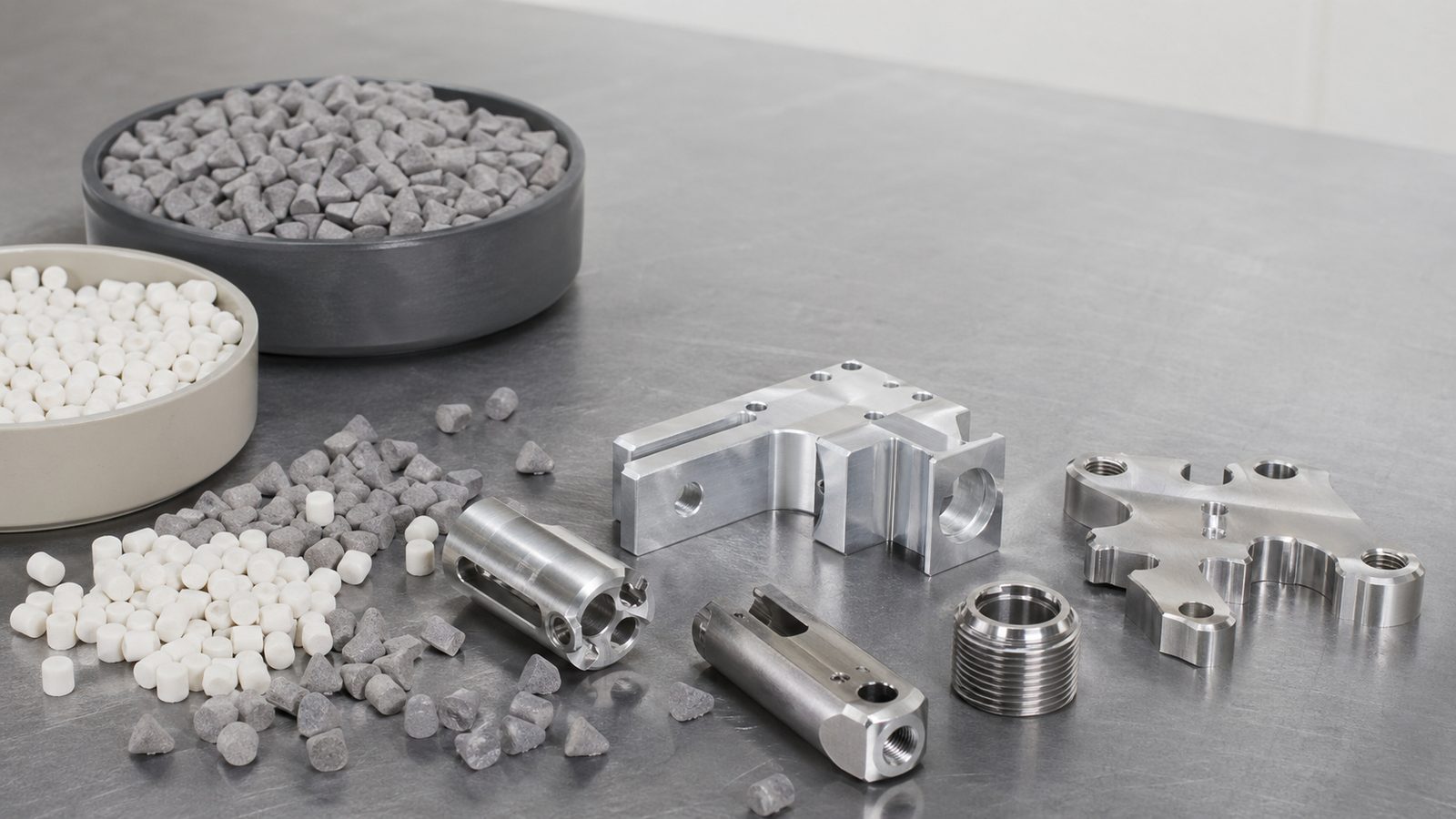
They are small, thin, and light. Thin bezels and link plates deform under mechanical load rather than cutting. Part-on-part contact at high energy marks them immediately.
Materials are mixed within one assembly. A bracelet may combine stainless links, plated brass end pieces and a ceramic insert. Each behaves differently in the same barrel.
Features are tiny. Spring-bar holes, link pins, screw threads, crown tubes and clasp detents are exactly the features where media lodges and where a rounded edge changes function.
| Defect | Likely cause | What to check | Recommended adjustment |
|---|---|---|---|
| Brushed/polished boundary has softened | Media reached the boundary, or cycle too long at too high energy | Boundary condition before and after, media size, cycle time | Protect the boundary mechanically, or reduce energy and media size so the process stays off it |
| Surface comes out dull rather than bright | Wrong media grade for the target surface, or contaminated media | Media grade, media cleanliness, compound | Confirm the media grade against the target finish and replace loaded media |
| Thin bezel or link plate deformed | Mechanical load rather than cutting action; too high a load in the barrel | Part geometry, loading density, media weight | Reduce load, use lighter media, and consider a lower-energy process |
| Plating lifted, discoloured or rubbed through | Abrasive action on a plated layer that is thinner than the cut | Plating type, edge condition, media grade | Reduce cutting action; if the layer is thin, the part may not be suitable for this route |
| Marks from part-on-part contact | Parts touching at high energy | Loading density, part shape, whether parts nest | Lower the load and add media separation between parts |
| Media or compound lodged in pin holes or threads | Feature size close to media size, and rinsing that does not reach | Smallest feature, media size, rinse sequence | Size media below the critical feature and separate rinsing from drying |
| Mixed batch finishes unevenly | Different materials or sizes in one load | Batch composition | Run consistent material and size together |
> These are directions to test. Confirm on representative parts and with the supplier before production.
The choice usually comes down to how much material removal is acceptable, not how much is possible.
| Situation | Direction |
|---|---|
| Deburring only, with a brushed surface to preserve | Low-energy process, light-cutting or polishing media, short cycle |
| Bright finish on small, detailed parts (crowns, pushers, movement plates) | Magnetic finishing — no part-on-part contact and it reaches small features |
| Mixed small parts where separation matters | A process with integrated separation, so parts are not handled manually at the end |
| Dry finishing on wood, acetate or coated parts | Dry media (walnut shell or corn cob) with the appropriate barrel type |
Can I deburr watch cases without changing the brushed surface?
The goal is to change as little as possible while removing the burr. That means the smallest media and the shortest effective cycle, and it has to be confirmed on the actual part.
What media suits small stainless watch parts?
Pick the media from the smallest feature first — pin holes, link holes, threads — then choose the grade from the surface you are allowed to change.
Why do some parts come out with marks even at low load?
Low load with the wrong media can still cause contact marks. Check whether parts nest, and whether the media actually separates them.
Is magnetic finishing suitable for all watch parts?
It suits small, hard-to-hold metal parts with fine detail. It is not a universal replacement for barrel or vibratory processes on larger components.
What should be recorded from a trial?
Starting condition, material, media, compound, cycle parameters, loading, and the observations on the tested parts. A written record is what makes the result repeatable.
Email : info@surface-polish.com


 IPv6 network supported


 +86-592-2381506