
Media Separator: The Screen Is Bought Against the Worn Charge, Not the New One
A media separator decides whether you own a process or a manual sorting job. It is also the cheapest component to get wrong, because it is bought once against the media you start with and then has to keep working against a charge that gets smaller every hour it runs.
The buying decision is narrower than a catalogue makes it look: one aperture against one size window, plus enough deck area to clear a batch before the next is ready. Everything else — deck, drive, chute, spray bar — makes that aperture behave. We publish no screen table, because the correct aperture is a property of your part and your charge rather than of the machine; the media sizes, cycle bands and media life the choice is drawn from are below.
Product: media separator / separating unit for a mass-finishing machine
Category: vibratory finishing machines → barrel finishing machines → separation and discharge
Used for: recovering the charge at the end of a cycle, so parts leave without media and media returns without parts
Not used for: sorting parts by size, deburring, cleaning, or replacing a size rule that does not exist — see the limits section
Order basis: part drawing + the size range of the media you actually run + batch weight per cycle
MOQ: 1 · Lead time: inside a standard machine's 25 to 35 day build; a retrofit to an existing configuration is 45 to 60 days
What the separator is actually asked to do
Three jobs, and they are separable in the quotation: open the size window (pass one thing, retain the other — which one is retained decides the design), clear the batch faster than the next one finishes, and return the charge clean enough to run again. A separator that does the first and not the second is the failure buyers report most often, and it does not show up in a trial — it shows up in week two, when the operator separates by hand "just to keep up". Size the deck against a production day, not a demonstration batch.
The size window, and why it is two-sided
There are two arrangements, mirror images of each other: parts retained, media through (the deck holds the parts and lets the charge fall away, used when the part is comfortably larger than the media), and parts through, media retained (the deck holds the charge and lets the parts drop into a basket, used when the parts are small).
Only one can be right on a given part family, and the arithmetic is unforgiving. For the retained-parts arrangement the aperture has to sit above the largest media and below the smallest part; for the parts-through arrangement, above the largest part and below the smallest media. In both cases the window is bounded on two sides by two different things, and each side moves for its own reason: the parts move when the drawing changes, the media moves every hour it runs.
Which is why the aperture cannot be answered from a part drawing alone: it needs the drawing and the size spread of the charge you actually buy.
The two numbers that come from us, and are safe to start from. The working band we run is 3 to 10 mm for ceramic and 10 to 25 mm for plastic, and the rule that governs whether the media reaches the feature at all is that media should not exceed about one third of the smallest feature on the part — a 3 mm blind hole needs media below 3 mm. Both are starting points, not specifications: the grade for your part is settled by a trial on your part, because a published cycle assumes a material and a removal that may not be yours.
The aperture has to be tested with worn media
This decides whether a separator still works in month two, and it is where the cheapest mistake is made.
Media wears. It loses size and it loses edge, and the usable life we publish is 20 to 200 hours depending on the material being cut and how hard the cycle is — a factor of ten, which means the size spread at end of life is not a rounding error. Ceramic in a hard cycle sits at the bottom of that band; a gentle cycle on aluminium at the top. Either way, the charge that runs in week six is not the charge that ran in week one.
Two things follow, and they point in opposite directions:
- In the parts-through arrangement, worn media becomes small enough to fall through an aperture that was set against new media. The screen keeps passing parts and starts passing charge with them: a part bin with media in it, then a scratched batch, then a complaint about the "wrong" media. Nothing in the machine is broken.
- In the retained-parts arrangement, the risk is fines. Worn media produces fine material that packs into the apertures, and a blinded deck separates more slowly every week — a step that used to take a few minutes now takes the tea break.
The check that settles it, before you order: take actual worn media, not new media — a few kilograms out of a charge at the end of its life, or the oldest charge in the plant — and try it against the candidate deck. A screen opening that retains a fresh charge may pass a worn one. Run the same test with the parts, at the batch count you intend to run.
That is also why separation complaints appear weeks after commissioning rather than on day one: in week one the charge is new and the window is wide. Our troubleshooting notes put this one test ahead of most separation calls; the small-parts separation guide covers the screen design.
Matching it to the machine and the batch
The separator sits downstream of a cycle, so it is sized by the cycle, not the machine's litres:
| What you are running | Reference cycle | What the separator must clear |
|---|---|---|
| Deburring, light burr | 10 to 20 minutes per batch | The full batch inside the cycle, or you need two machines or a buffer |
| Brightening / fine polish | 2 to 8 hours per batch | Large slack — a modest deck is usually enough |
| Small-part work | 15 minutes to a few hours | The hardest case: many small parts, small media, the tightest size window |
The arithmetic: batches per shift × the time a batch takes to leave the chamber, against the minutes available. If the cycle is 20 minutes and separation takes 8, you have not lost the batch — but you have lost the ability to run unattended, which was probably why you bought it.
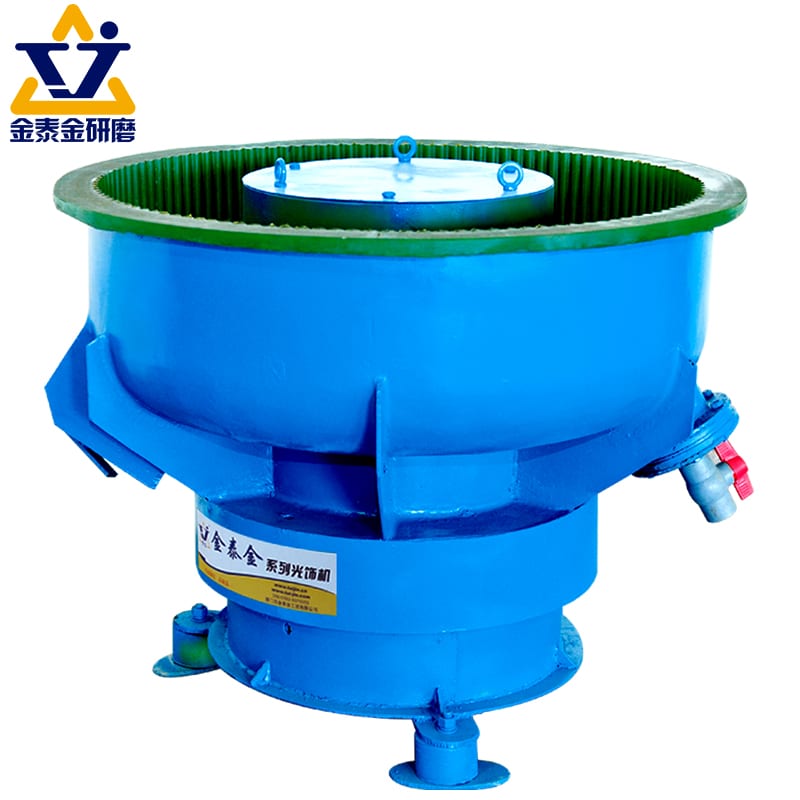
On our machines. Separation is built in where it belongs rather than sold as a separate idea: the 300 L OBD-ZL300C and 600 L OBD-ZL600C are catalogued with a separator, the 200 L unit with a separating unit, and the centrifugal barrel LX60B with auto separating — its published 60 L barrel, 3.0 + 0.75 kW drive, 0–170 rpm range and 15 × 4 kg load fixing the batch. Those pages are where to look at the machines; this one is where to look at the decision. Separation inside a continuous line is a different sizing question — that is the vibratory separator page.
A retrofit is a different project: the discharge path, deck mounting and spray or dust arrangement all have to be designed around a chamber that already exists. It is done, and worth doing — but it is a 45 to 60 day build rather than 25 to 35, and the worn-charge test should come first either way.
Failure symptoms, and what each one is telling you
| What you see | The usual cause | What to check | What to change |
|---|---|---|---|
| Media in the parts bin | Aperture above the worn smallest media | Sieve the current charge; compare with the grade ordered | A finer deck, or two-stage separation, or a smaller media grade |
| Fines carrying over with the parts and scratching them | Blinded deck; fines packed into the apertures | Deck surface under the flow, not at the edges; rinse arrangement | Spray water on the deck, clean the deck between batches, add a rinse screen |
| Parts sitting on the deck instead of leaving | Aperture below the smallest part, or the part is bridging the deck | Smallest dimension of the smallest part in the family, not the nominal size | Deck matched to the smallest part, or run that family with the retained-parts arrangement |
| Separation is slower every week | Worn charge plus a blinded deck plus a stretched aperture | Torn or stretched screen sections; deck tension | Replace the deck; record the hours on the charge |
| Long parts or thin parts tangle on the deck | Geometry, not size — a screen cannot untangle | Whether the parts nest before they reach the deck | Separate during unloading, or use a basket and a different arrangement |
| Parts come out wet and the charge comes out with compound | Retention and drainage are two different jobs | Chute slope, drainage path, spray | Drainage geometry; a dryer downstream rather than a wetter deck |
| Loud rattle that started after a rebuild | Deck tension, mounting, or a loose gate | Tension, fasteners, gate latch | Re-tension and re-torque; the machine running at 75 to 85 dB(A) at one metre gives you a baseline to judge against |
When the deck, the gate and the drive should be replaced
The separator is a wear part assembly, not a fitting. Four signals:
- Aperture growth. A woven deck stretches. The window you bought narrows on the media side while it still looks fine — measured, not seen, so record the aperture when new.
- Torn or slack sections. One torn section passes everything. A visual check at every charge change is enough.
- Reduced throw. A deck that moves less separates less, and the cause is usually mounting or drive rather than the deck.
- Gate and seal wear. A gate that does not close fully leaks charge into the parts path, which reads as a screening fault and is not one.
The liner, the deck and the gate are consumables in the same sense the media is. Our published polyurethane liner runs 20–35 mm on the tub series: buy the wear part to the thickness the work needs, and replace it when it stops doing its job.
Where a media separator will not fix the problem
Check this list before the quotation, because in each case a separator is the wrong purchase:
- No size gap between part and media. If the part's smallest dimension and the media's largest dimension are within a millimetre or two, no aperture separates them reliably. The answer is a different media size or a different process.
- Parts that nest or tangle. A screen separates by size. If the parts hold each other in a bundle, or a wire form hooks into its neighbours, the deck cannot untangle them.
- Media that lodges in the part. A hole, slot or thread that traps media carries it out whatever the deck does — a media-size rule, not a separator fault, solved on the drawing.
- Very small parts with very small media. Parts lighter than the charge float and leave with the media; separation becomes a rinse-and-settle problem.
- Wet processes with heavy foam. Foam blinds a deck and carries parts over it — a compound and water-chemistry fix, not a bigger screen.
- Magnetic parts on a steel deck. They stick, and no vibration setting shakes them off.
- One part family, low volume, fast operator. If hand separation takes ten minutes a day, a separator is capital spent on a problem you do not have.
What we need before quoting one
A separator is quoted against the charge, so the enquiry carries more than a machine model:
- The part drawing, with the smallest feature and the smallest overall dimension marked — the two numbers the window is built from.
- The media grade and size range you run now, and how old the charge is. If you are changing media, say so; the window moves.
- Batch weight per cycle and parts per batch — that sets the deck area, not the machine's litres.
- The cycle time, so the deck is sized against the production day rather than the demonstration.
- Wet or dry, and whether a rinse or a dryer follows. A wet deck and a dry deck are different machines.
- New machine or retrofit, because that decides the build slot and the price structure.
- The site services: three-phase 380 V or 415 V at 50 Hz, floor space for the deck and discharge, and a noise baseline of 75 to 85 dB(A) at one metre so a new fault is obvious.
We manufacture the machines and the media that run in them, and we do not offer a job-shop finishing service — so the trial is on your parts and the specification comes out of it, the same basis on which a sample test is prepared. Send a few representative parts including the worst one, the material, the target finish and the finish you would accept; what comes back is a finish, a cycle time and a measured media consumption. Every machine we ship has been run under a media load before it leaves.
Frequently asked questions
What size screen do I need for my media? There is no universal number, and any supplier who gives you one from a catalogue has not seen your media. The aperture has to sit between the worn charge and the part, on whichever side your arrangement needs. Test a sample of end-of-life charge before the order.
Should the separation be automatic or manual? Automatic separation pays for itself when the cycle is short and the machine is meant to run unattended — a 10 to 20 minute deburring cycle leaves no room for an operator to arrive on time. On a 2 to 8 hour brightening cycle there is slack, and a manual arrangement is often the right purchase.
Why did separation work for the first month and then stop? Because the charge was new in the first month. Media wears from 20 to 200 hours depending on the work, and both failure modes — worn media passing through, and fines blinding the deck — appear after the charge has changed size. It is the most common separator complaint we hear, and a specification issue rather than a breakdown.
Max Xu, Sales — Xiamen Jin Tai Jin Grinding Technology Co.,Ltd.
No. 31, Xinchang Road, Xinyang Industrial Zone, Haicang District, Xiamen
info@surface-polish.com
Screen aperture, deck area and separation throughput are not published figures — they are set by the trial on your part and your charge. A finishing process is set by the material, the stock to be removed and the finish required, so the configuration for a specific part is confirmed against a trial on that part. We manufacture finishing equipment and the media and compounds that run in it; we do not offer a job-shop finishing service.
 +86-592-2381506


 IPv6 network supported
