Mass Finishing Sample Trial Record Builder
This page reproduces the trial record published for small precision parts. It gives you the record fields the source asks you to fill in, the interval columns to measure the same way each time, and the observed-pattern reference that turns what you see into the next controlled question. The published tables leave the value cells empty on purpose, and so does this page: every value on it is one you recorded, and none is a recommendation.
Build the record from what you actually used
Record the part, the settings you used, and what you saw at each interval.
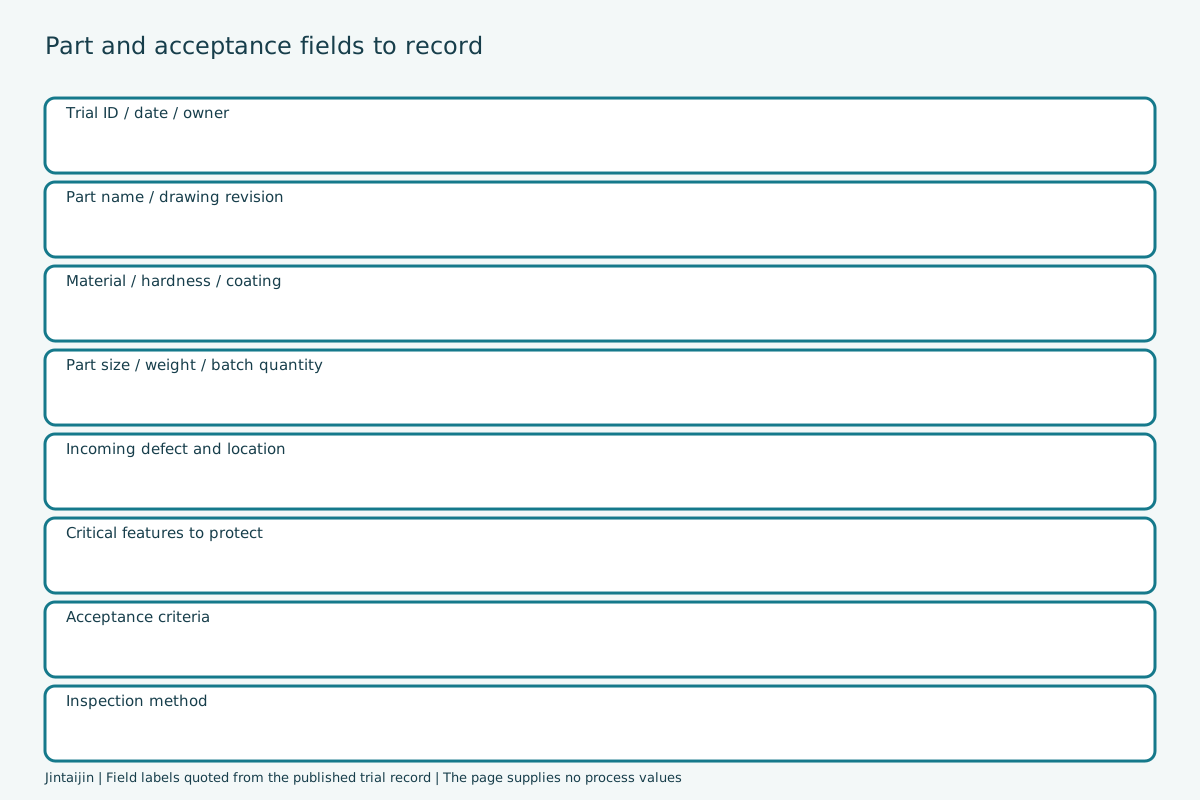
Part and acceptance fields to record
| Field | Record |
|---|---|
| Trial ID / date / owner | |
| Part name / drawing revision | |
| Material / hardness / coating | |
| Part size / weight / batch quantity | |
| Incoming defect and location | |
| Critical features to protect | Threads / holes / slots / sealing face / sharp edge / cosmetic face / other: |
| Acceptance criteria | Burr limit, edge condition, dimensions, surface appearance, cleanliness and any approved reference sample: |
| Inspection method | Visual standard / magnification / gauge / surface measurement / functional test: |
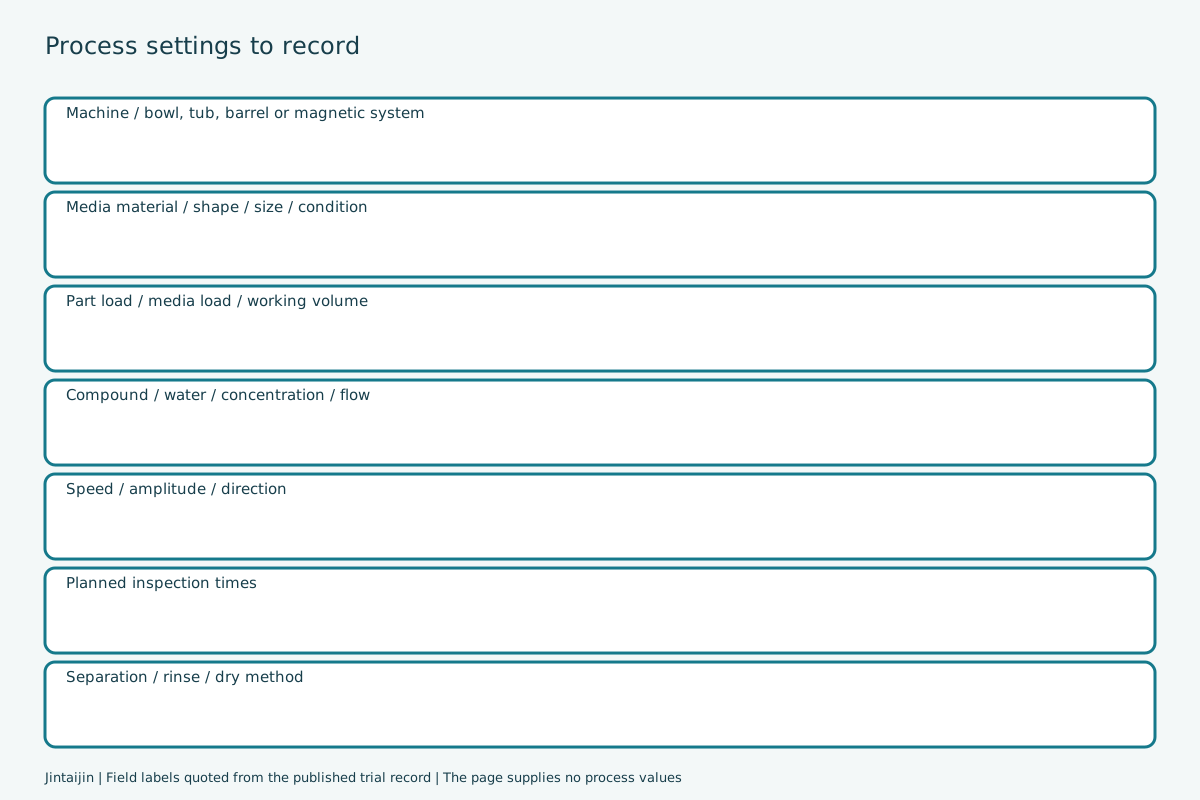
Process settings to record
| Process field | Setting or measured value | Why selected |
|---|---|---|
| Machine / bowl, tub, barrel or magnetic system | ||
| Media material / shape / size / condition | ||
| Part load / media load / working volume | ||
| Compound / water / concentration / flow | ||
| Speed / amplitude / direction | ||
| Planned inspection times | ||
| Separation / rinse / dry method |
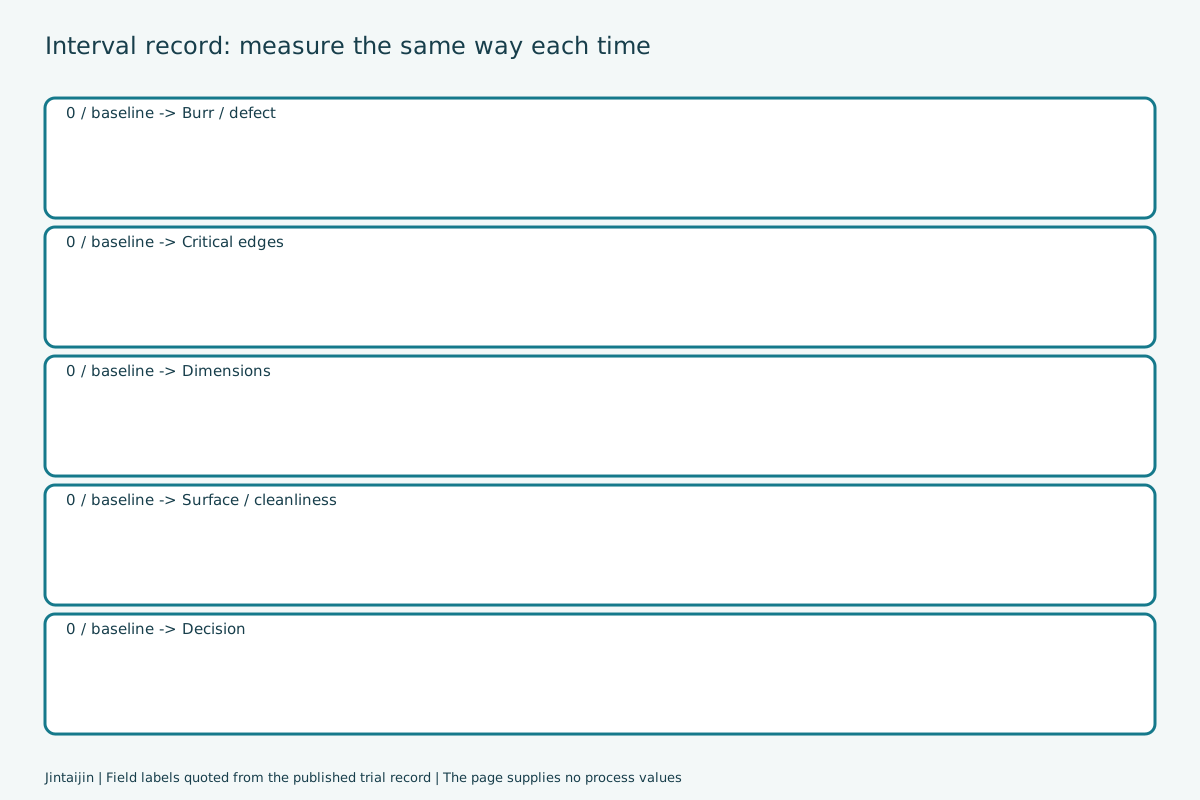
Interval record
| Time | Burr / defect | Critical edges | Dimensions | Surface / cleanliness | Decision |
|---|---|---|---|---|---|
| 0 / baseline | |||||
| Interval 1 | |||||
| Interval 2 | |||||
| Final |
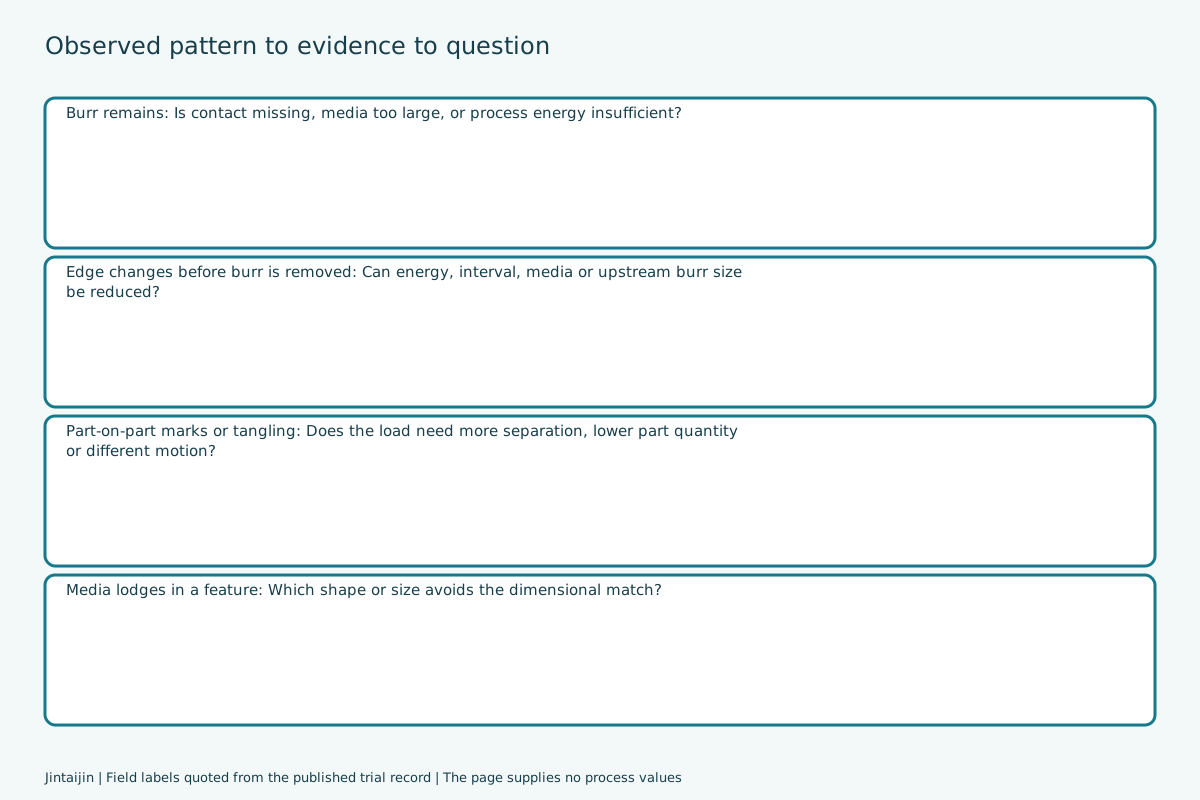
Observed pattern reference
| Observed pattern | Evidence to record | Next controlled question |
|---|---|---|
| Burr remains | Location, direction, size range and affected sample count | Is contact missing, media too large, or process energy insufficient? |
| Edge changes before burr is removed | Critical edge measurement and comparison photo | Can energy, interval, media or upstream burr size be reduced? |
| Part-on-part marks or tangling | Part orientation, load composition and affected surfaces | Does the load need more separation, lower part quantity or different motion? |
| Media lodges in a feature | Feature opening, media dimensions, frequency and removal method | Which shape or size avoids the dimensional match? |
Source and its limits
Published sample trial record article; captured 5 October 2026. SHA256: b36b2a73186504580b0d773d2c164553ba18778aab2187429613ece88abedff6.
The published tables leave the Record, Setting or measured value, and interval measurement cells empty by design: they are for the buyer to complete during a trial. This page reproduces the field labels and the populated pattern reference exactly; it supplies no values of its own.
- No cycle time, speed, amplitude, load ratio, concentration, temperature or removal result is stated, implied or supplied.
- A recorded value is what the buyer measured. This page neither recommends nor validates a process.
- An observed pattern is a starting hypothesis; the source presents it as a question to answer, not a confirmed cause.
Table headers as published
- Field / Record
- Process field / Setting or measured value / Why selected
- Time / Burr / defect / Critical edges / Dimensions / Surface / cleanliness / Decision
- Observed pattern / Evidence to record / Next controlled question
Frequently asked questions
Does this page tell me what cycle time or load ratio to use?
No. No cycle time, speed, amplitude, load ratio, concentration, temperature or removal result is stated, implied or supplied anywhere on this page or in its download.
Why are the value cells empty?
Because the published tables leave them empty for the buyer to complete during a trial. This page reproduces that structure and supplies no values of its own.
Does completing the fields approve a process?
No. A recorded value is what you measured. Nothing here validates a recipe or selects a machine.
What is the observed pattern table for?
It turns what you see into the next controlled question: each row gives the evidence to record and the question to ask next. It is a starting hypothesis, not a confirmed cause.
Can I use the same record for a different part family?
You can reuse the structure, but every value must come from your own part, material, media and machine. Acceptance criteria and inspection method in particular are buyer-defined.
 +86-592-2381506

 IPv6 network supported