


Glassware Polishing for Transmittance: Published Parameters and Symptoms
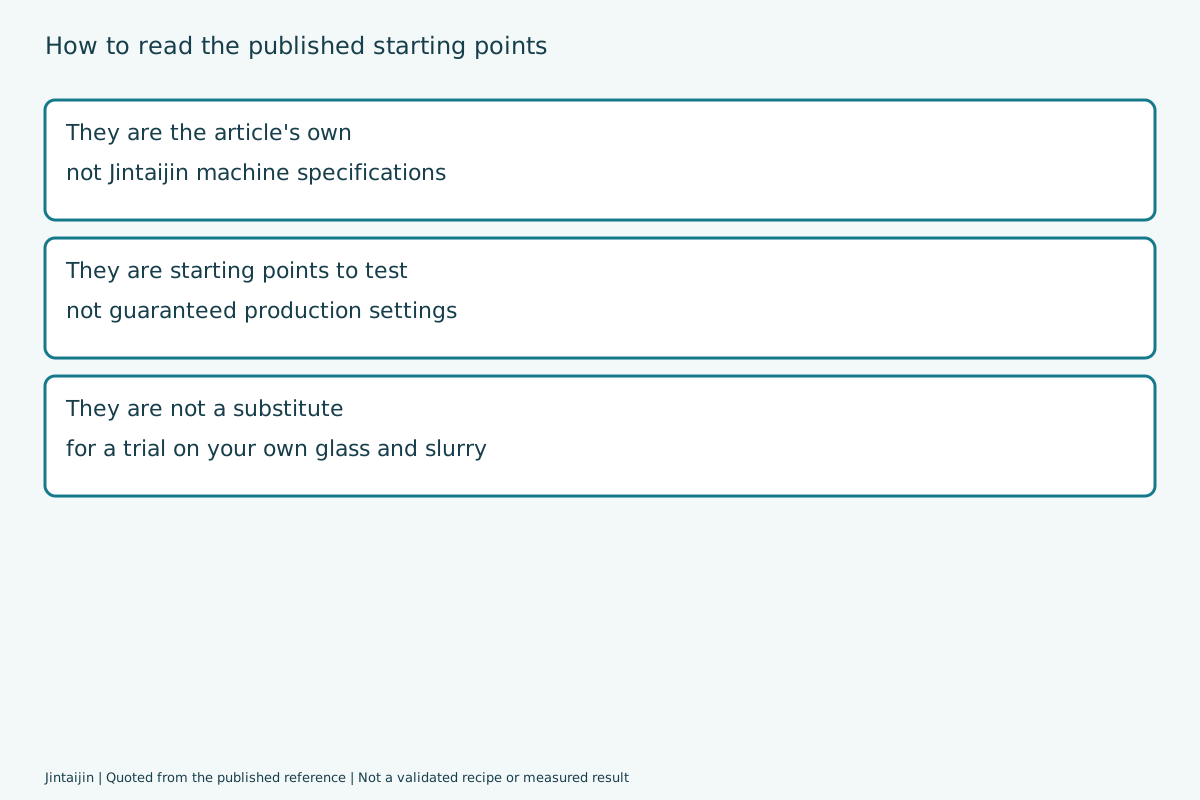
This page reproduces the reference table published for polishing glassware to raise transmittance: the parameters the article gives a starting point for, and the symptom table listing likely causes and the immediate fix to test. The numeric values are the article's own published starting points reproduced verbatim; they are not Jintaijin machine specifications, not guaranteed results, and not a substitute for a trial on your own glass and slurry.
Look up what the source gives for this case
Select what you are seeing, then read the published reference.
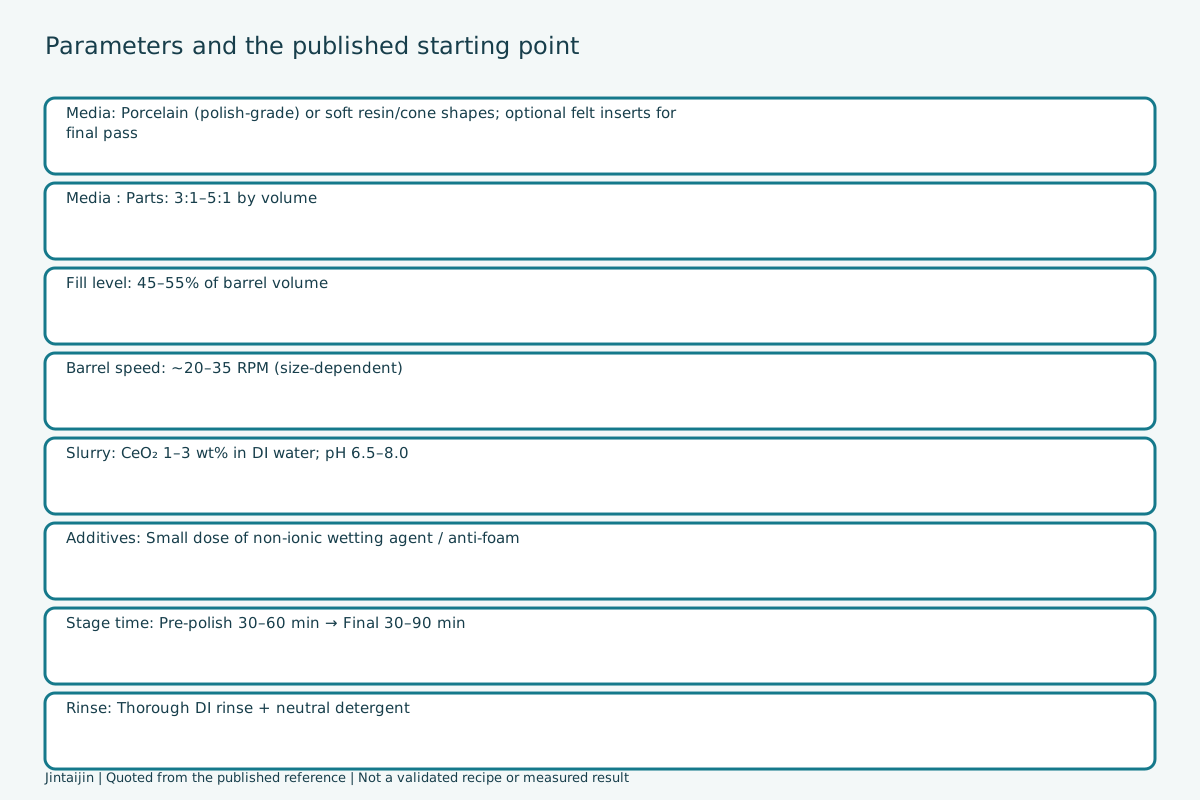
Parameters and the published starting point
| parameter | published starting point | why it matters |
|---|---|---|
| Media | Porcelain (polish-grade) or soft resin/cone shapes; optional felt inserts for final pass | Minimizes scratching; carries slurry evenly |
| Media : Parts | 3:1–5:1 by volume | Prevents part-to-part collisions; stabilizes flow |
| Fill level | 45–55% of barrel volume | Stable “avalanche” without dead zones |
| Barrel speed | ~20–35 RPM (size-dependent) | Lower speeds = smoother action; too fast can bruise edges |
| Slurry | CeO₂ 1–3 wt% in DI water; pH 6.5–8.0 | Balances chemical assist with low scratching; neutral pH for glass safety |
| Additives | Small dose of non-ionic wetting agent / anti-foam | Improves coverage; prevents air entrapment |
| Stage time | Pre-polish 30–60 min → Final 30–90 min | Tune by Ra/Rq drop and haze measurements |
| Rinse | Thorough DI rinse + neutral detergent | Removes fines to prevent “drag” marks |
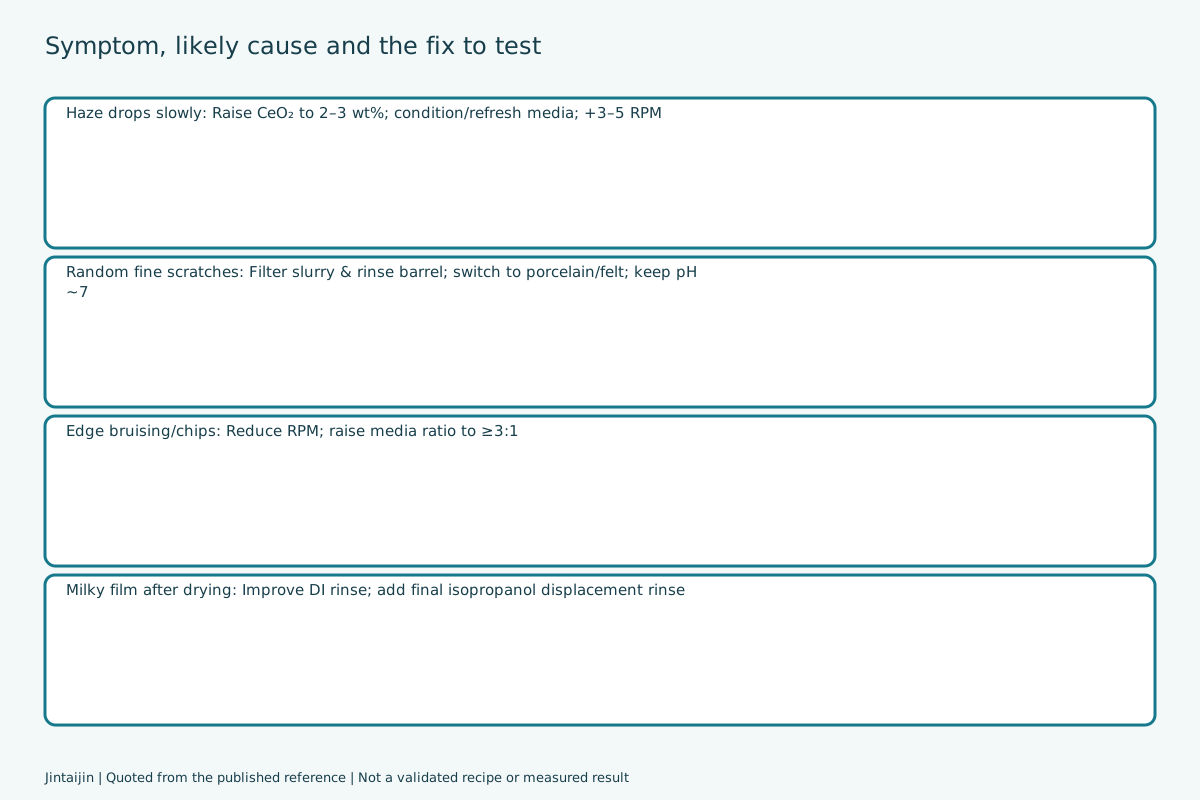
Symptom, likely cause and the fix to test
| symptom | likely cause | immediate fix to test |
|---|---|---|
| Haze drops slowly | CeO₂ too dilute; media glazed; speed too low | Raise CeO₂ to 2–3 wt%; condition/refresh media; +3–5 RPM |
| Random fine scratches | Contaminants; angular media; pH drift | Filter slurry & rinse barrel; switch to porcelain/felt; keep pH ~7 |
| Edge bruising/chips | Barrel over-speed; media-to-part ratio too low | Reduce RPM; raise media ratio to ≥3:1 |
| Milky film after drying | Leftover fines or hard water salts | Improve DI rinse; add final isopropanol displacement rinse |
Note from the source: The numeric values (for example 3:1 to 5:1 by volume, 2 to 3 wt% CeO2, +3 to 5 RPM) are the published article's own recommended starting points, reproduced verbatim. They are not Jintaijin machine specifications, not guaranteed results, and not a substitute for a sample trial on the buyer's own glass and slurry.
Source and its limits
Published reference article; captured 5 October 2026. SHA256: ffdcb193ce97478c86fd2e4d1034c2dffb16d5f17ecfafdaef5ef78064132418.
- No transmittance, time, yield or result is stated or implied.
- These are the article's starting points to test, not validated production settings for your part.
- A symptom lists likely causes and an immediate fix to try, not a confirmed diagnosis.
Table headers as published
- Parameter / Recommended starting point / Why it matters
- Symptom / Likely cause / Immediate fix
Frequently asked questions
Does this page tell me what cycle time or speed to use?
No. No cycle time, speed, amplitude, load ratio, concentration, temperature or removal result is stated, implied or supplied anywhere on this page or in its download.
Are the numeric starting points your machine specifications?
No. They are the published article's own recommended starting points reproduced verbatim. They are not Jintaijin machine specifications, not guaranteed results, and not a substitute for a sample trial on your own part. Confirm every value with the supplier.
Does this page select media or a machine for me?
No. It reproduces published reference tables. Media selection, machine compatibility, loading and cycle time remain decisions for a sample trial with the supplier, confirmed against your part and material.
Does this diagnose my part?
No. A defect or symptom origin is a typical source, not a confirmed cause, and a named fix is a direction to test on a sample. The same visible mark can have more than one cause.
Are the table cells quoted exactly?
Yes. Every cell is taken from a single source table cell and verified against the captured page, including the original wording and separators.
Can I use this for a different material?
This reproduces guidance written for the published article's material. Media selection, chemistry and acceptance differ by material, so confirm values with the supplier for your part.
 +86-592-2381506

 IPv6 network supported