


Part-Media Separation Readiness Checklist
Use this checklist before a finishing recipe is treated as production-ready. It reproduces the published separation guidance: the dimensions the source says to record, and the validation sequence it gives for proving that parts and media separate reliably. It does not validate a screen, a mesh opening or a media ratio, and it reports no separation result.
Record what you have, and mark each validation step
Choose the process stage, record what you measured, then mark each validation step.
What the source says to record
| Record group | Quoted source text | Source paragraphs |
|---|---|---|
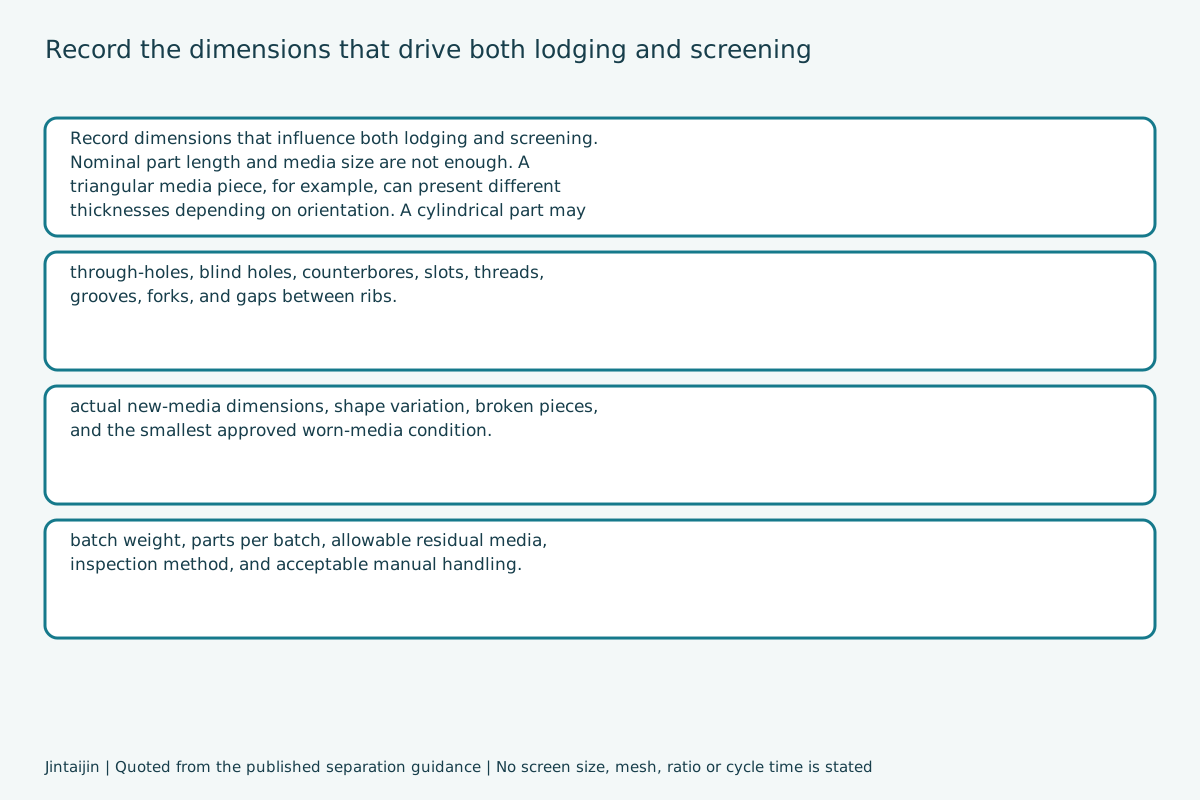
| part and feature dimensions (lead) | Record dimensions that influence both lodging and screening. Nominal part length and media size are not enough. A triangular media piece, for example, can present different thicknesses depending on orientation. A cylindrical part may roll lengthwise across a screen but stand or bridge when it approaches at another angle. | 11 |
| part and feature dimensions (features that matter) | through-holes, blind holes, counterbores, slots, threads, grooves, forks, and gaps between ribs. | 12 |
| media condition | actual new-media dimensions, shape variation, broken pieces, and the smallest approved worn-media condition. | 13 |
| batch and acceptance | batch weight, parts per batch, allowable residual media, inspection method, and acceptable manual handling. | 14 |
Each quoted text is one source paragraph. Nothing here is reworded.
The validation sequence, as published
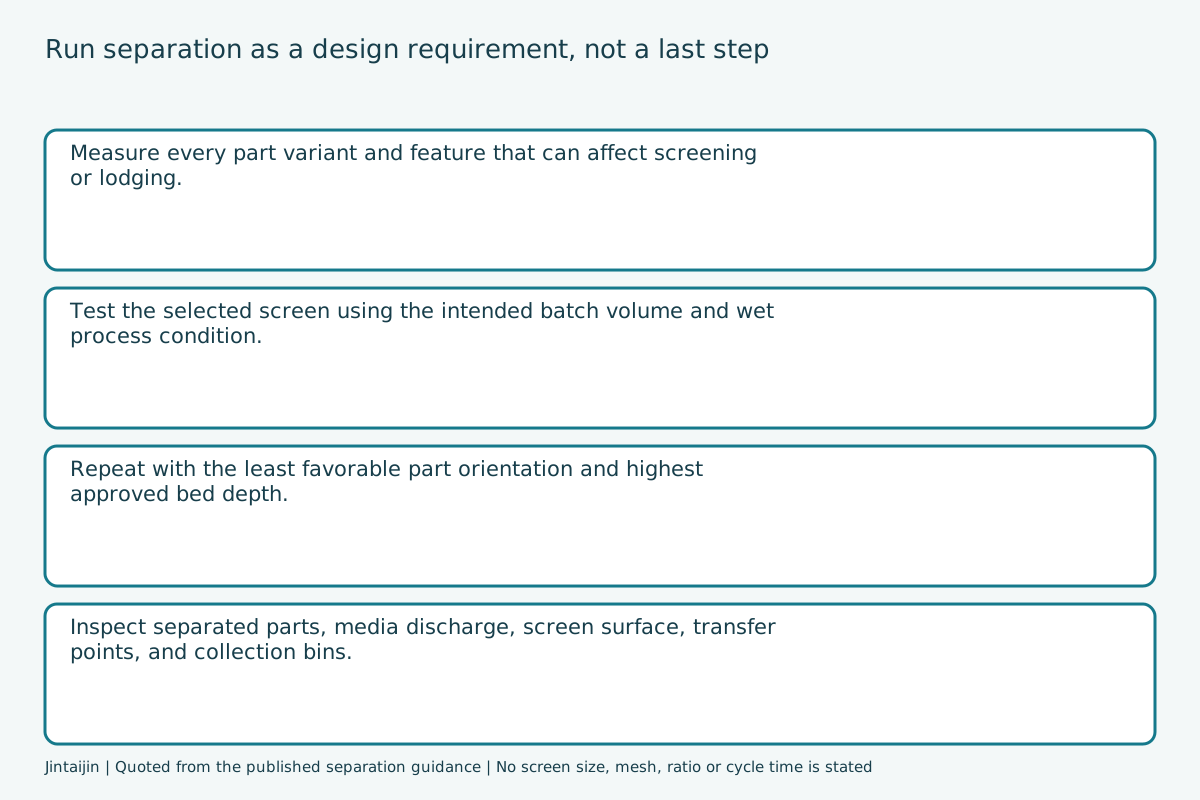
- Measure every part variant and feature that can affect screening or lodging.
- Test the selected screen using the intended batch volume and wet process condition.
- Repeat with the least favorable part orientation and highest approved bed depth.
- Inspect separated parts, media discharge, screen surface, transfer points, and collection bins.
What the source says about screening
Opening
Test the complete range of new and worn media against every part feature, then validate separation with the real batch load. Use a screen opening and motion that allow one material to pass while the other travels to a separate discharge. When dimensions overlap, add orientation control or a different physical separation method instead of relying on manual picking as the normal production process.
No Universal Ratio
Do not assume a universal media-to-feature ratio guarantees separation. The usable margin depends on shape, orientation, wear, machine motion, and manufacturing variation. Test the worst-case combination instead of relying only on catalog dimensions.
Screen Window
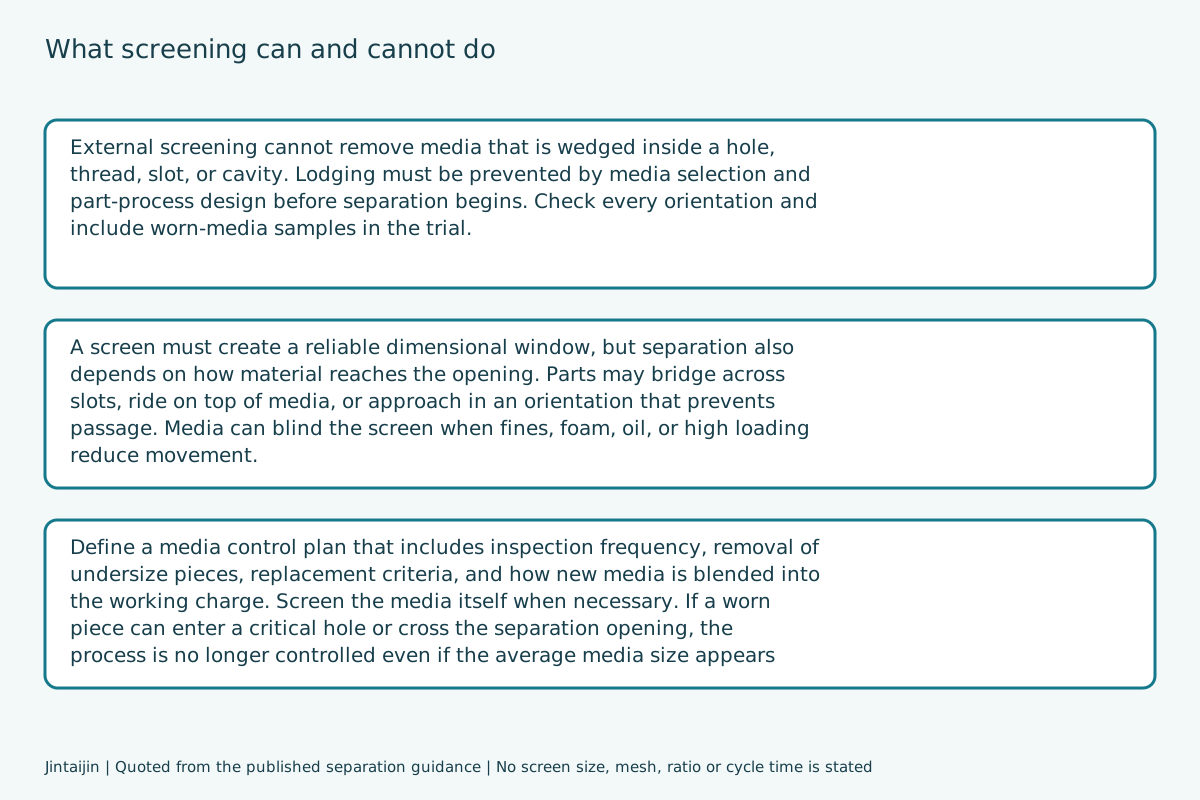
A screen must create a reliable dimensional window, but separation also depends on how material reaches the opening. Parts may bridge across slots, ride on top of media, or approach in an orientation that prevents passage. Media can blind the screen when fines, foam, oil, or high loading reduce movement.
Production Mixture
Run the screen with the intended production mixture, not a few clean parts placed by hand. Record parts per minute, residual media, incorrectly separated parts, rework, and operator intervention. A screen that works for a demonstration may not remain reliable at production bed depth.
Media Changes In Service
Media dimensions change throughout service. Cutting media gradually becomes smaller and more rounded; broken fragments may be much smaller than the approved nominal size. This affects cutting performance, access to part features, lodging risk, and screen separation at the same time.
Media Control Plan
Define a media control plan that includes inspection frequency, removal of undersize pieces, replacement criteria, and how new media is blended into the working charge. Screen the media itself when necessary. If a worn piece can enter a critical hole or cross the separation opening, the process is no longer controlled even if the average media size appears acceptable.
External Screening Limit
External screening cannot remove media that is wedged inside a hole, thread, slot, or cavity. Lodging must be prevented by media selection and part-process design before separation begins. Check every orientation and include worn-media samples in the trial.
Source and its limits
Published separation article; captured 5 October 2026. SHA256: bf0022c3109501ea79de3c57499212760acf0d4b2a8f8f7f0af91858719cfbf6.
- No screen opening, mesh count, media-to-parts ratio, cycle time or throughput is stated or implied.
- A checklist item is not a validated separation result. Run the sequence against the real batch and record the outcome.
- External screening cannot remove media wedged inside a feature; the source states lodging must be prevented by media selection and part design first.
Every string in the table above and in the validation sequence is quoted from a single source paragraph. Where the source splits a list across paragraphs, each paragraph is stored separately rather than joined into a new sentence.
Frequently asked questions
Does this page tell me which screen to use?
No. No screen opening, mesh count, media-to-parts ratio, cycle time or throughput is stated or implied anywhere on this page or in its download. Those are decisions from your own validation.
What does the completeness percentage mean?
It reflects only whether you supplied a note for each source record group and marked each validation step. It measures your record, not a validated process or a separation result.
Are the record items and validation steps quoted exactly?
Yes. Every stored string is quoted from a single source paragraph and verified against the captured page. The article is the first-party separation guidance.
Why does the source say screening cannot remove lodged media?
Because media wedged inside a hole, thread, slot or cavity is not reachable by an external screen. The source states lodging has to be prevented by media selection and part-process design before separation is validated.
Can I use this to approve a screen size?
No. It reproduces the published guidance so you can record your own measurements and run the published validation sequence against a real batch. Approving a screen or a recipe remains a process decision with your supplier.
 +86-592-2381506

 IPv6 network supported