


Titanium Finishing Symptom-to-Check Reference
This page reproduces the reference tables published for finishing titanium parts: the production goals that must be defined, the machine directions the source compares, and a symptom table giving a likely direction, what to check, and an adjustment to test. The source names a likely direction rather than a confirmed cause, and an adjustment to test is an experiment to run on a sample. No cycle time, speed, load ratio, compound dosage, temperature, roughness value or finishing result is stated or implied.
Look up a symptom and read what to check
Select a visible symptom, then read the likely direction, the checks and the adjustment to test.
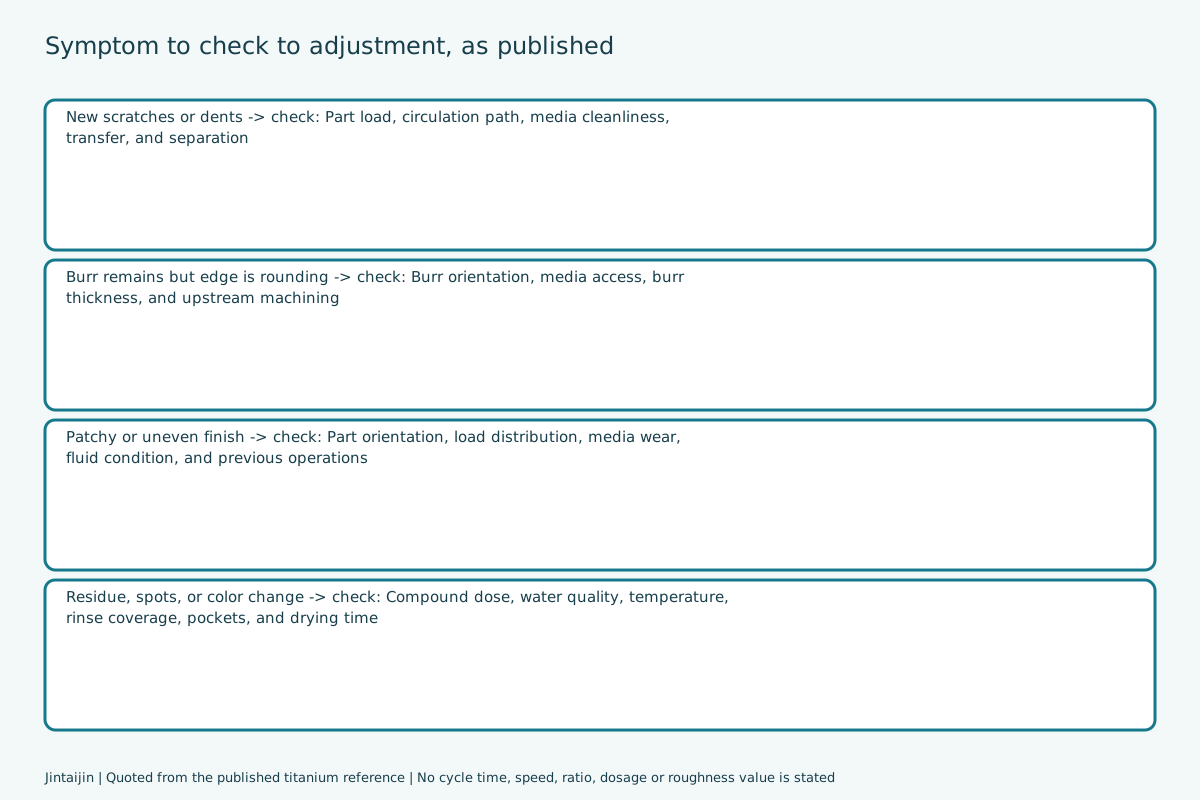
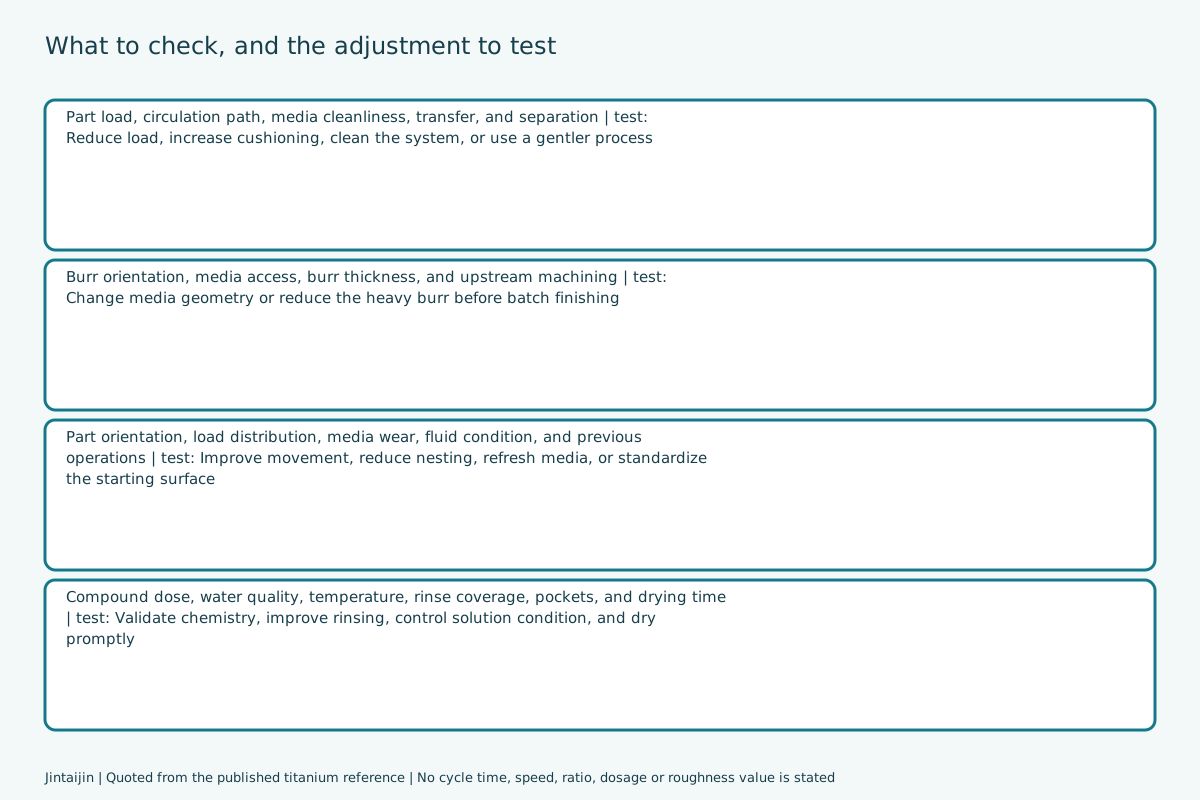
Symptom, direction, check and adjustment
| Symptom | Likely Direction | What to Check | Adjustment to Test |
|---|---|---|---|
| New scratches or dents | Part collisions, trapped debris, aggressive action, or poor cushioning | Part load, circulation path, media cleanliness, transfer, and separation | Reduce load, increase cushioning, clean the system, or use a gentler process |
| Burr remains but edge is rounding | Media contacts the surrounding edge more effectively than the burr root | Burr orientation, media access, burr thickness, and upstream machining | Change media geometry or reduce the heavy burr before batch finishing |
| Patchy or uneven finish | Poor circulation, nesting, masked surfaces, inconsistent starting condition, or dirty media | Part orientation, load distribution, media wear, fluid condition, and previous operations | Improve movement, reduce nesting, refresh media, or standardize the starting surface |
| Residue, spots, or color change | Incompatible chemistry, dirty solution, incomplete rinsing, or delayed drying | Compound dose, water quality, temperature, rinse coverage, pockets, and drying time | Validate chemistry, improve rinsing, control solution condition, and dry promptly |
Every cell is quoted from the source table.
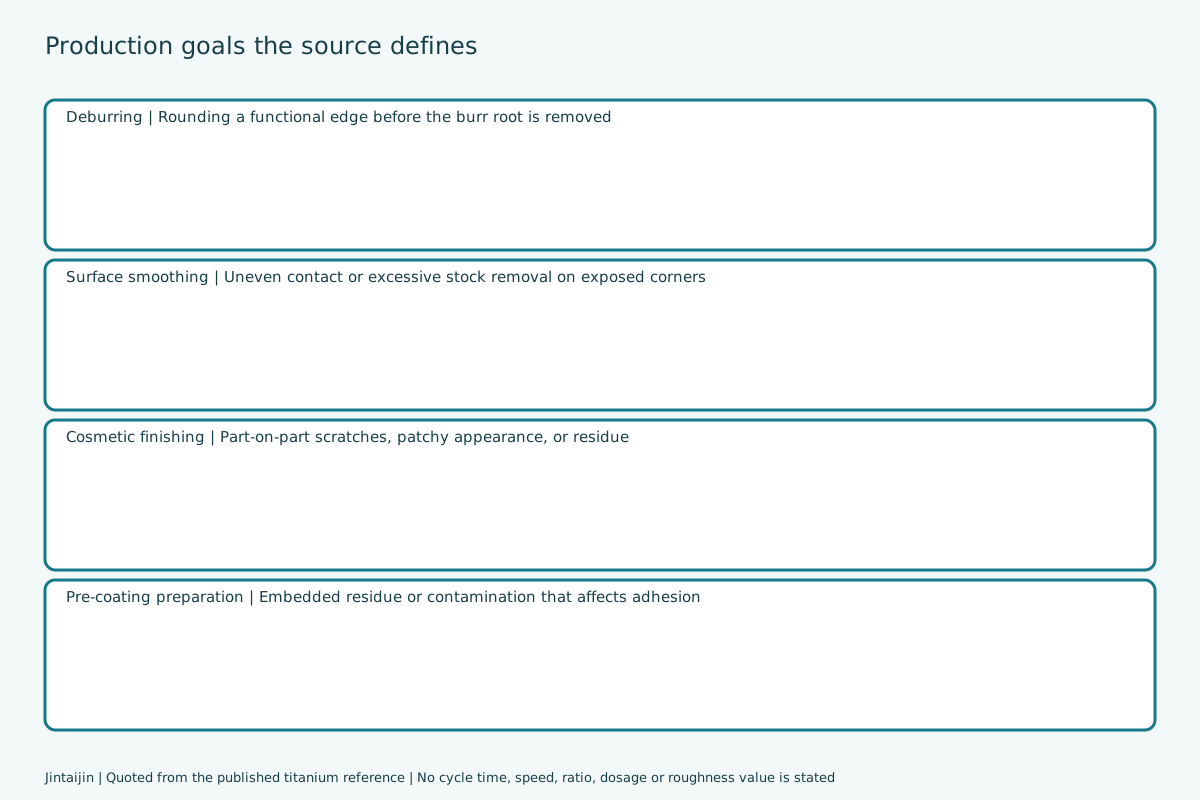
Production goals the source defines
| Production Goal | What Must Be Defined | Main Risk |
|---|---|---|
| Deburring | Burr location, height, root thickness, orientation, and permitted edge radius | Rounding a functional edge before the burr root is removed |
| Surface smoothing | Starting and target roughness, directional marks, and areas excluded from treatment | Uneven contact or excessive stock removal on exposed corners |
| Cosmetic finishing | Gloss, texture, color consistency, viewing conditions, and acceptable witness marks | Part-on-part scratches, patchy appearance, or residue |
| Pre-coating preparation | Required cleanliness, surface profile, chemistry limits, and the next coating step | Embedded residue or contamination that affects adhesion |
Every cell is quoted from the source table.
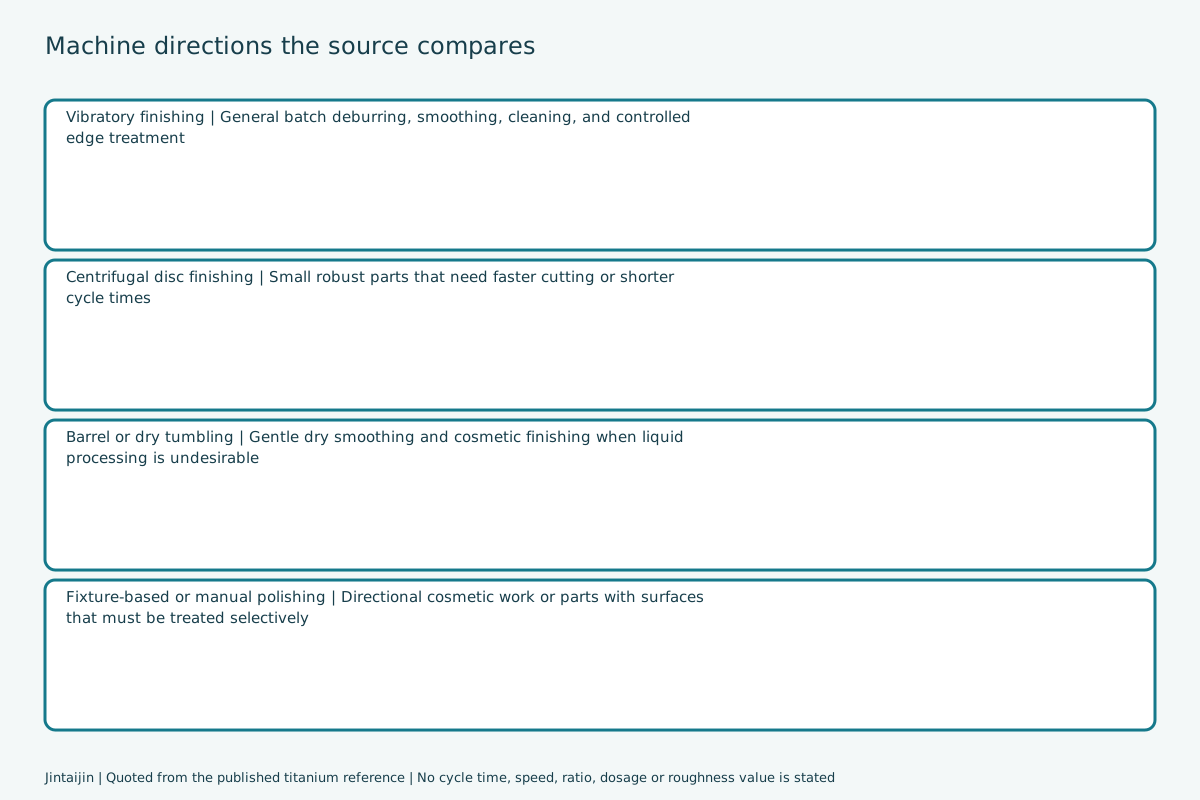
Machine directions the source compares
| Machine Direction | Where It Fits | What to Validate |
|---|---|---|
| Vibratory finishing | General batch deburring, smoothing, cleaning, and controlled edge treatment | Circulation, part contact, media access, lodging, separation, and total cycle time |
| Centrifugal disc finishing | Small robust parts that need faster cutting or shorter cycle times | Rapid edge change, impingement, nesting, temperature, foam, and a narrower safe process window |
| Barrel or dry tumbling | Gentle dry smoothing and cosmetic finishing when liquid processing is undesirable | Longer cycles, dust control, media condition, heat, residue, and part separation |
| Fixture-based or manual polishing | Directional cosmetic work or parts with surfaces that must be treated selectively | Operator variation, local overheating, geometry change, and repeatability |
Every cell is quoted from the source table.
Source table headers as published
- Production Goal / What Must Be Defined / Main Risk
- Machine Direction / Where It Fits / What to Validate
- Symptom / Likely Direction / What to Check / Adjustment to Test
Source and its limits
Published titanium finishing article; captured 5 October 2026. SHA256: dd45104b685c9f5273cdc6895d5b5ea8171adf33d6ed75fee9357761228edf6f.
- No cycle time, speed, load ratio, compound dosage, temperature, roughness value or finishing result is stated or implied.
- The source names a likely direction, not a confirmed cause. The same symptom can have more than one cause.
- An adjustment to test is a controlled experiment to run on a sample, not an approved recipe.
Tables used: 1, 2, 3. Cells are quoted exactly; nothing is reworded, merged or converted.
Frequently asked questions
Does this page diagnose my titanium part?
No. The source gives a likely direction for each symptom, not a confirmed cause, and states that the same symptom can have more than one cause. Confirm on a representative sample.
Does it tell me what cycle time or speed to use?
No. No cycle time, rotational speed, load ratio, compound dosage, temperature limit or roughness value is stated or implied anywhere on this page or in its download.
What does "adjustment to test" mean?
It is an experiment to run on a small sample while holding other variables constant, not an approved recipe and not a finished process.
Are the tables quoted exactly?
Yes. Every cell is taken from a single source table cell and verified against the captured page. The table headers are shown as published, including their original wording.
Can I use this for a material other than titanium?
This page reproduces guidance written for titanium parts. Media selection, chemistry and acceptance criteria differ by material, so confirm the values with the supplier for your part.
 +86-592-2381506

 IPv6 network supported