A buyer in Liverpool, United Kingdom finishing thin-walled waveguide hardware for aerospace components needs an outer surface improvement without distorting 0.9 mm walls and needs evidence that nothing remains inside a closed volume. SurfacePolish supplies finishing equipment and consumables across borders and offers a free sample trial; trial output describes the parts tested and the settings used, and the buyer's own inspection remains the acceptance route. This brief is written for a buyer in Liverpool working on aerospace components; it describes equipment, media and a scoped sample review, not a local polishing service.
Which datum and mating surfaces carry assembly geometry, and is a flatness or fit check required on them after finishing?
At what batch size, load pattern and media wear state does the trial result still describe what production will produce?
How will media be kept out of drilled passages, tapped holes and closed volumes, and what retrieval and verification step proves it?
Datum and mating surfaces constrain the whole finishing decision because they establish assembly geometry. Media contact on a datum face can shift hole position, introduce local flatness variation or change a press-fit condition, and none of that is visible in ordinary shop inspection. Identify on the drawing which surfaces are datums and which mate with another part, then treat the finish callout on those surfaces separately from cosmetic areas. A part may tolerate a brighter appearance on an outboard face while its bolted flange must simply remain flat within its stated requirement. Protection strategy follows the same logic: a datum is often masked, fixtured against a support or finished with a lighter medium rather than with the same blend as the rest of the part. Discuss finish location with the designer before promising a blanket surface condition.
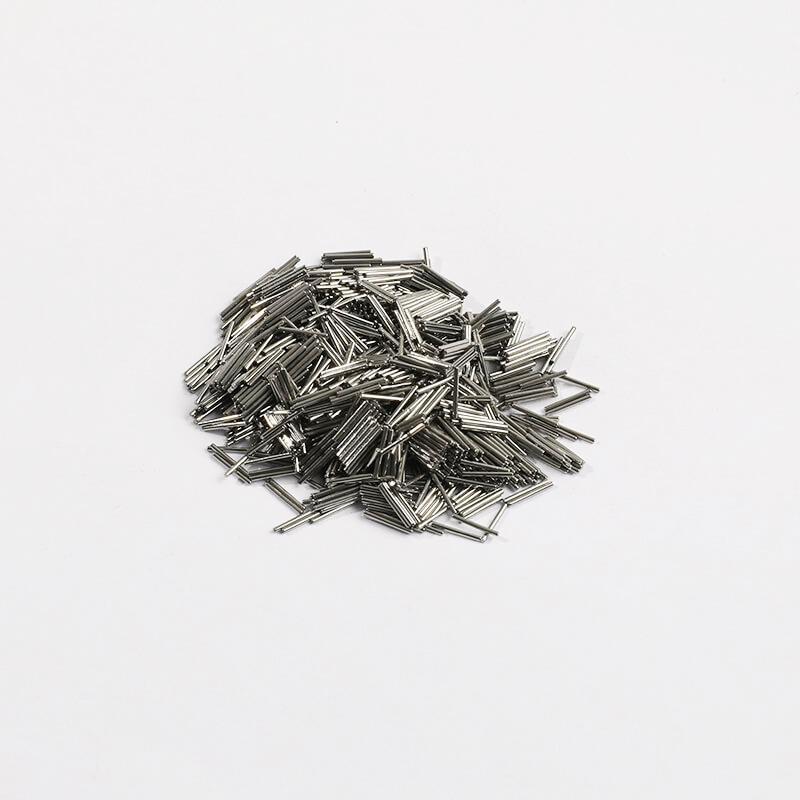
Magnetic finishing uses small pins or needles driven by a moving magnetic field to reach edges and recesses that loose media cannot enter, which suits small precise parts such as fuel system components, sensor bodies and thin stamped hardware where internal edges matter more than overall brightness. The honest limits are part size and mass, whether the workpiece material attracts the pins, and the retrieval job afterwards, because residual pins in blind holes are a genuine escape route for contamination. Dry polishing and drying are a separate decision: blind holes, narrow passages and surfaces that must not carry moisture usually need forced-air drying or a dry medium such as walnut shell or corn cob, and dry media cut more slowly and require dust extraction and medium condition control. Choose the dry route when cleanliness and carryover, not removal rate, are the governing requirement.
| Machine route | Where it fits | What it will not do |
|---|---|---|
| Disc finishing machine | Fast cycles on flat plates, brackets and robust turned parts with simple geometry. | High energy risks edge roll, distortion of thin sections and part-on-part marking; part size is bounded by the working gap. |
| Rotary barrel tumbling machine | Gentle, uniform processing of small robust parts in large quantities, such as bushings, spacers and fasteners. | Slow cycles, per-barrel weight limits, and limited access for inspecting or repositioning parts during the run. |
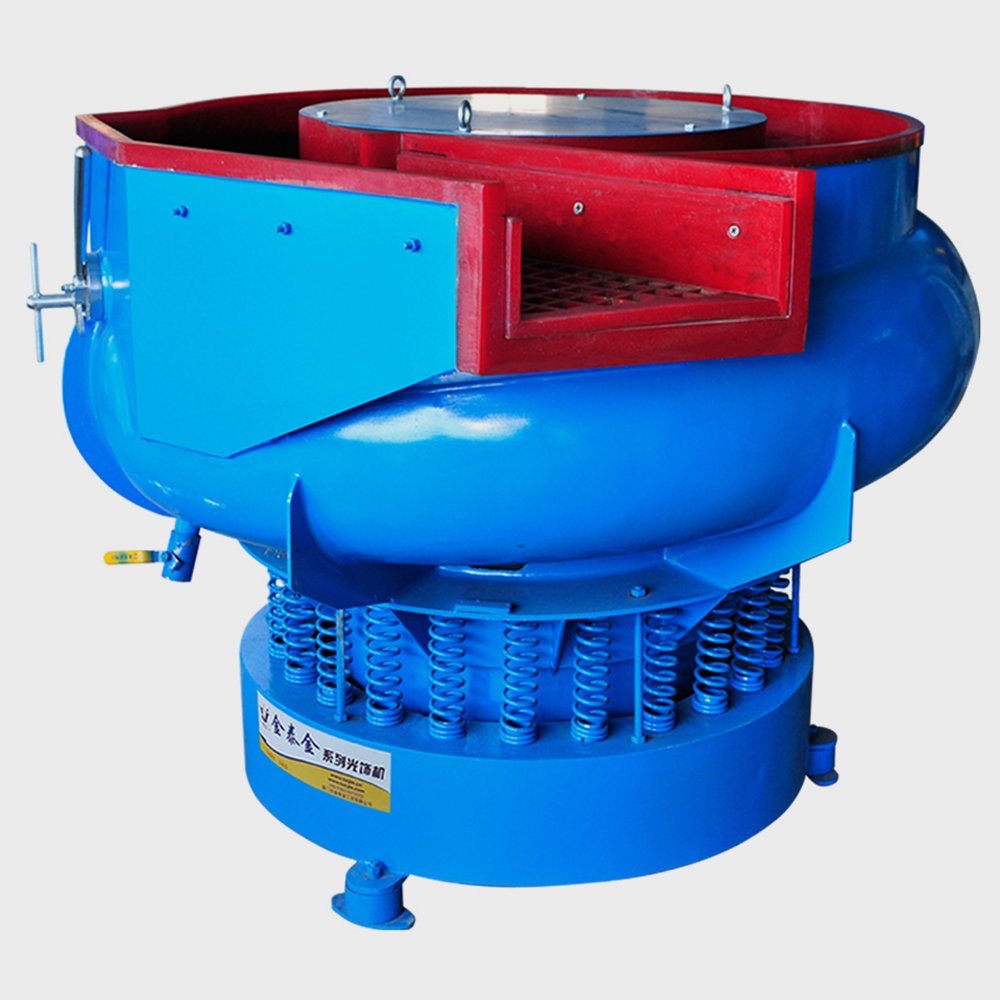
| Dry polishing machine and dryer | Post-wet drying and light dry finishing of parts with blind holes and passages where moisture carryover matters. | Dry media cut slowly, require dust extraction and medium condition control, and forced-air drying must be matched to internal geometry. |
| Vibratory tub or long-channel machine | Long shafts, tubes, housings and large parts that will not turn or circulate in a bowl. | Media circulation is less uniform along a long chamber, and bridging can leave sections of a long bore unprocessed. |
Steel media works by burnishing: it displaces surface metal and compresses it rather than cutting it away, which produces a bright, uniform appearance and can improve surface texture without the dimensional change that a cutting medium causes. That property makes it attractive where features must keep their geometry and only the surface appearance needs to change. The conditions are strict. Burnishing needs a clean load, correct compound chemistry and controlled water, because any debris, iron contamination or hard water deposit is pressed into the surface rather than flushed away. Steel media is heavy and concentrates energy, so thin walls and unsupported sections need lower energy or fixturing. It also carries a cross-contamination risk: stainless and aluminum parts can pick up iron from carbon steel media, so keep baths and media dedicated. Select it after the removal requirement has been met, not as a substitute for deburring.
| Media | Best fit | Watch out for |
|---|---|---|
| Ceramic media, angle-cut and triangular shapes | Heavier deburring and edge blending on steel, stainless and titanium parts with accessible corners and recesses. | Wears down and changes effective size class, generates sludge, and can chip or over-round thin sections and soft alloys. |
| Mildly acidic or chelated brightening compound | Brightening certain stainless grades where the buyer's specification permits that chemistry family. | Not appropriate where hydrogen uptake is a concern on high-strength steel, and requires close pH control and good rinse water quality. |
| Steel media for burnishing | Bright, uniform appearance with minimal dimensional change on parts whose geometry must stay as machined. | Presses debris and hard-water deposits into the surface, concentrates energy on thin sections, and carries iron cross-contamination risk. |
| Ceramic media, small size class for tight features | Reaching small holes, slots and fillets where a standard size class cannot enter, at reduced removal rate. | Screens differently from larger media, lodges more easily in drilled passages and must be kept below the smallest hole to stay clear. |
Discolouration and residue usually arrive together and point at chemistry rather than mechanics. A lean compound lets metal fines and heat build up, producing a dark or heat-tinted patch that follows the media flow pattern. Rich, hard or contaminated water leaves dried salts and films, especially in blind holes where rinse water does not circulate. Uneven finish across one part or across a batch typically has a loading cause: parts blocking each other, too large a load, unmixed sizes, inconsistent fixturing or a chamber run below its proper load volume. Check by comparing appearance against an agreed physical master under fixed lighting, by reading rinse-water conductivity or chloride level, and by measuring surface texture at multiple recorded locations instead of one convenient spot. Then separate the two problems, because chemistry fixes do not solve loading variation and loading changes will not remove a residue film.
| Failure mode | Likely cause | How to catch it |
|---|---|---|
| Iron contamination pickup on stainless or aluminium parts | Shared media, bath or chamber with carbon steel work, or recycled compound carrying steel fines. | Inspect for rust bloom, discoloured spots or magnetic particles after drying, and check which media and bath last ran in the machine. |
| Embedded media fragments or metal smeared into the surface | Dirty or overloaded compound, media hardness mismatched to the alloy, or high-pressure burnishing that presses debris into the surface. | Borescope internal features, examine agreed locations at low magnification, and use dye penetrant only where the buyer's own procedure requires it. |
| Thread entry chamfer rounded away or thread crests burnished | Unmasked threaded features run in a burnishing or high-energy cutting load. | Gauge the thread with the buyer's own gauge and inspect the entry chamfer under magnification against the recorded pre-finish condition. |
| Local flatness or geometry change on a datum face | Media contact on a surface where appearance was treated as the only requirement and flatness was not protected. | Confirm the datum condition with the buyer's own method, such as a CMM or a surface plate check against the stated requirement, on parts from the first and last part of the load. |
Liverpool's industrial base is port-led: the Port of Liverpool operates two container terminals, the Royal Seaforth Container Terminal and the £400m Liverpool2 deep-water terminal, on both banks of the River Mersey. Peel Ports describes the port as the flagship handling hub of its 'Heart of Britain' steel and metals network and as a vital gateway for UK steel imports and distribution, and reports a record of over 702,000 tonnes of bulk steel and metals handled. Make UK classes the North West as the UK region with the highest total manufacturing output, and the Liverpool City Region Combined Authority is the area's statutory economic body.
The nearest part of that base to this brief is marine: Peel Ports describes the Port of Liverpool as one of the world's leading ports with deep-water berths, RoRo services, project cargo handling and multi-user warehousing, part of the Irish Sea Hub serving Glasgow, Dublin and Manchester.
Steel and metals handling at scale - the port reports a record of more than 702,000 tonnes of bulk steel and metals - supports a local base of stockholders, fabricators and processing firms whose plate, bar and sections need edge and surface conditioning before fabrication or dispatch. Media, machines and sample parts for that work can be landed at Liverpool2 or on the Manchester Ship Canal and moved inland on the same rail and road links that already carry the steel.
A Liverpool buyer should confirm the landed-cost and inland-movement plan at the same time as the machine specification, because equipment and media can clear through Liverpool2 or the Manchester Ship Canal, and the finishing acceptance criterion for steel work is normally defined by the customer's order rather than by a generic 'deburred' note.
Freight context: Port of Liverpool: Royal Seaforth Container Terminal and Liverpool2 (deep water), Port of Garston, Liverpool (ABP) - dry bulks and steel products, Liverpool Airport (11.5 miles from the port, per Peel Ports). Peel Ports states that the Port of Liverpool has direct deep-sea and short-sea connections including a niche Far East service, with a purpose-built rail terminal for onward movement, and lists road distances of 105 miles to Birmingham and 217 miles to London. ABP's Port of Garston, Liverpool handles around 500,000 tonnes of cargo a year including steel products, and ABP's Hams Hall terminal links the North West to Midlands distribution.
Importers need a GB-prefixed Economic Operators Registration and Identification (EORI) number, an import declaration carrying the correct commodity code, and retained commercial invoices plus the Import VAT Certificate (C79) so import VAT can be reclaimed. Machinery placed on the Great Britain market must be marked UKCA or CE: the manufacturer must draw up and retain technical documentation including a Declaration of Conformity, apply the correct marking with identification details, and cooperate with market surveillance; an authorised representative must be established in the UK. Under the Product Safety and Metrology (Amendment) Regulations 2024 the UK continues to recognise CE marking alongside or in place of UKCA for the Great Britain market, so either route can be used for most product types. Duty and import VAT are calculated from the customs value declared, and the commodity code also determines whether an import licence is needed.
China does not appear in the alphabetical list of trade agreements in effect published by the Department for Business and Trade, so Chinese-origin machinery imported into the UK cannot claim a preferential agreement rate. Duty is instead determined by the commodity code declared on the import declaration, and the UK's customs authority is HM Revenue and Customs (HMRC), which ONS also names as the largest single data source behind UK trade-in-goods statistics. Because a GB-prefixed EORI number is a precondition for importing into England, Scotland or Wales, a Chinese seller's UK buyer must already hold that registration before any machine ships.
SurfacePolish supplies from Xiamen, China. The buyer's own destination rules, conformity marking, tariff classification and documentation responsibilities stay with the buyer; confirm them against the authorities named above before ordering.
Acceptance begins with a written decision about how many parts are examined and which one is the reference. A workable plan names the sample size per batch, the inspection frequency, the measurement locations and the person responsible for accepting or rejecting. A first article should be fully inspected against the drawing and the agreed requirements, then retained as the physical reference for later comparison, because appearance memory is unreliable across shifts. For lower-volume aerospace work, the sensible pattern is to inspect the first part of each batch completely, examine a defined sample through the run and inspect critical features on every part when the feature is safety-relevant or the process is not yet stable. Fix these rules before the first production batch, when there is still room to argue about the requirement rather than about the parts.
Comparative trials lose their value when several things change together. Fix the machine, load volume, part count, compound concentration and cycle time, then change one variable: media material first, then size class, then compound, then time or energy setting. Ask for the same recorded locations to be measured with the same instrument and the same setting across all variants, and for photographs taken under identical lighting, so the comparison is between processes rather than between photographers. Retain all tested parts, including the ones that went wrong, because a rejected variant often explains which mechanism caused a defect and therefore which limit must be respected in production. A comparison of two media blends run with different cycle times and different operators tells you nothing about the media, which is the most common reason a trial result fails to transfer into a line.


No. A part can look bright and uniform while carrying embedded media fragments, a smeared surface layer, dried compound residue in a recess or an edge that has rolled past its limit. Acceptance needs measurement at defined locations, edge checks where edges are specified, and cleanliness checks of internal features, all recorded against the drawing requirement. Define appearance with a physical master or a calibrated image set under fixed lighting and magnification, since adjectives are not criteria. For a buyer in United Kingdom, the practical rule is that appearance is one input among several, and no appearance result on its own establishes fitness for a regulated application.
Size the media well below the smallest hole to keep clear, and treat every drilled passage as a retrieval point rather than hoping it stays empty. Mask or plug features that were never meant to see media, count media into and out of the batch, and add a defined check such as a borescope at an agreed angle plus a pin gauge. For United Kingdom buyers shipping parts for a trial, send the part with the tightest hole so the media class is chosen against real geometry rather than an average. SurfacePolish reports what was found on the parts tested; your own cleanliness inspection remains the acceptance decision.
Send parts in the production condition, including the case with the thinnest wall, tightest internal feature and most difficult edge, not a convenient spare. Include material and heat treatment data, the drawing requirements you can share, and a marked-up photograph showing features that must not change. Add one part in the incoming condition and, if available, one finished the way you want the result to look. State the batch size and how you separate parts in your own shop. International shipments should be declared for temporary processing with a parts list, and buyers in United Kingdom can ask us for a packing list format before dispatch.
Use Liverpool, United Kingdom as the destination on the enquiry and state whether the deliverable is equipment, media and compound, a representative sample review or a line concept. A destination does not imply local stock, a local service point or a local delivery time.
Equipment placed on the Great Britain market needs UKCA or CE marking with a Declaration of Conformity, and HSE's work equipment and machinery and COSHH regimes cover operation and the media, compounds and dust involved. Steel and metals buyers additionally work to the material, inspection and certification requirements written into their own order specification for the finished component.
Sources were retrieved on 2026-09-29 and describe the local industrial and trade context only. They do not evidence any SurfacePolish project, shipment, installation or service in Liverpool.
The buyer needs the outer surface improved without distortion, and proof that no media remains inside a closed volume.
Send the material, dimensions, approximate weight, batch quantity, the incoming condition and photographs of the difficult features. Mark which features must not be contacted by media and state how the result will be inspected. This form carries source reference PSEO-0251; quote it if you prefer an additional manual reference.
Open the SurfacePolish enquiry form Email a prepared enquiry
No price, lead time, certification or result is promised here. Confirm whether a sample trial is available for the specific part and what the trial can and cannot show.
Page PSEO-0251 · revised 2026-09-29 · cross-border equipment, media and scoped sample review. City context is sourced and cited above.
Use this local checker to identify missing part and inspection information. It prepares a technical-review brief; it does not approve a machine, process recipe or production result.
Complete the part details to prepare a review brief.
Email : info@surface-polish.com


 IPv6 network supported


 +86-592-2381506