A buyer in Toulouse, France working with nickel-alloy combustor hardware for aerospace components needs heat tint and drilling burr removed from 0.6 mm cooling holes without changing hole geometry. SurfacePolish is a cross-border equipment and media supplier rather than a local shop; its free sample trial can test finer media and lower-energy routes on the parts sent, and the findings are reported as observations to be verified by the buyer. This brief is written for a buyer in Toulouse working on aerospace components; it describes equipment, media and a scoped sample review, not a local polishing service.
How will media be kept out of drilled passages, tapped holes and closed volumes, and what retrieval and verification step proves it?
Does the compound chemistry family create a hydrogen, staining or residue risk for this alloy and heat treatment, and who verifies that?
Which datum and mating surfaces carry assembly geometry, and is a flatness or fit check required on them after finishing?
Alloy and temper decide which media and compound families are realistic before any machine is discussed. Unaged aluminum alloys are soft and galling-prone, precipitation-hardening stainless steels are harder and respond to cutting media, and titanium has low thermal conductivity and a tendency to smear rather than cut cleanly. High-strength steels also bring a documented concern about hydrogen picked up from acidic chemistry. Heat treatment matters twice, because the same alloy in a solution-treated and an aged condition finishes differently and a part that has already been aged cannot be straightened after processing. Record alloy, temper, hardness range, prior manufacturing operations such as welding or grinding, and any stress-relief history. Then match media hardness and compound pH to the material instead of reusing a successful recipe from an unrelated part, because the same blend that brightens one alloy can stain another.
Media wear is a slow process change that eventually shows up as an unexplained shift in finish. As media break down and round off, the blend loses cutting power, screens differently and settles at a different bulk density, so the same timer setting no longer produces the same surface. Track size class, weight of make-up media per cycle and the interval between full replacements, and keep a record so a change in results can be traced to the blend. Separation is a matching problem: media must be retained in the machine and cleared from the parts, and the method used depends on the media shape and the features it can enter. Screens, magnetic separators and bar-end magnets all have limits. For parts with drilled passages, add a retrieval step to the routing and reconcile media counts per batch so a lodged piece is found before it leaves the shop as contamination.
| Media | Best fit | Watch out for |
|---|---|---|
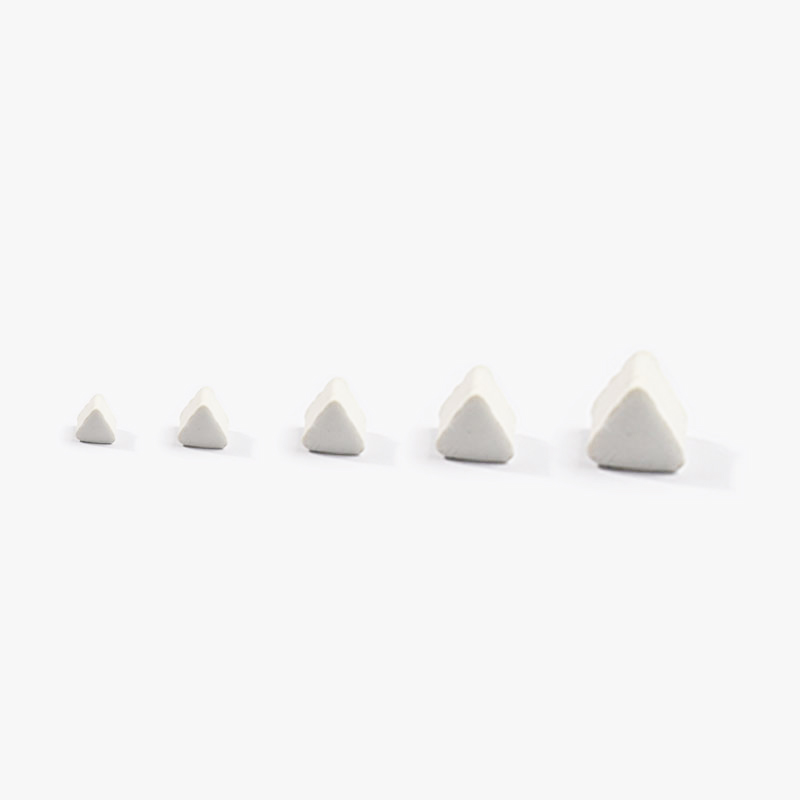
| Steel media for burnishing | Bright, uniform appearance with minimal dimensional change on parts whose geometry must stay as machined. | Presses debris and hard-water deposits into the surface, concentrates energy on thin sections, and carries iron cross-contamination risk. |
| Ceramic media, small size class for tight features | Reaching small holes, slots and fillets where a standard size class cannot enter, at reduced removal rate. | Screens differently from larger media, lodges more easily in drilled passages and must be kept below the smallest hole to stay clear. |
| Alkaline detergent compound | General cleaning and suspension of removed material on steel, stainless and aluminium where neutral to alkaline chemistry suits the alloy. | Running lean causes loading, heat and discoloration; running rich causes foam and residue that lodges in blind features. |
| Dry media: walnut shell and corn cob | Light deburring, drying support and residue removal on parts where moisture carryover is the governing concern. | Slower cutting, generates dust requiring extraction, and its condition and moisture content must be controlled to stay repeatable. |
Aerospace polishing work often needs more than one stage because a single machine and medium rarely satisfies both a defined edge requirement and a defined surface requirement on a complex part. A common shape is a heavier cutting stage to remove machining burrs and establish an edge radius, followed by a lighter refinement stage with finer media and a cleaner compound, then a rinse and dry stage sized for the part's internal features. Treat the transfer points as engineering decisions: parts sitting wet between stages can stain, media carried on the part can scratch the next face, and handling between operations produces more damage than the finishing itself on thin parts. Describe the line as a sequence with defined in-between cleanliness and handling, then check that each machine's chamber, media separation and drying capability matches its position in that sequence before any purchase discussion.
| Machine route | Where it fits | What it will not do |
|---|---|---|
| Grinding finishing machine | Applications needing higher material removal before a refinement stage, such as heavy burrs or a defined stock removal. | Higher removal raises the risk of edge over-rounding and dimensional change on close-tolerance features. |
| Dry polishing machine and dryer | Post-wet drying and light dry finishing of parts with blind holes and passages where moisture carryover matters. | Dry media cut slowly, require dust extraction and medium condition control, and forced-air drying must be matched to internal geometry. |
| Vibratory tub or long-channel machine | Long shafts, tubes, housings and large parts that will not turn or circulate in a bowl. | Media circulation is less uniform along a long chamber, and bridging can leave sections of a long bore unprocessed. |
| Disc finishing machine | Fast cycles on flat plates, brackets and robust turned parts with simple geometry. | High energy risks edge roll, distortion of thin sections and part-on-part marking; part size is bounded by the working gap. |
Vibratory, barrel and centrifugal processes remove material at edges far faster than on adjacent faces, so an edge will keep rolling after the face has stopped changing. The defect is not visible damage but a dimension: a radius that has grown past the specified limit, a chamfer that has become a round, or a break edge that has disappeared. Fatigue-critical holes, seal grooves, thread entry chamfers and fastener bearing faces are where the consequence is greatest, because an over-rounded edge reduces bearing area and alters the stress path. Check by establishing the pre-finish edge state and measuring the finished state with radius gauges, an optical comparator or a cast impression, ideally at the same clock positions on several parts. Control it with media size class, cycle time, energy setting and, where limits are tight, a distinct edge operation instead of the bulk cycle.
| Failure mode | Likely cause | How to catch it |
|---|---|---|
| Iron contamination pickup on stainless or aluminium parts | Shared media, bath or chamber with carbon steel work, or recycled compound carrying steel fines. | Inspect for rust bloom, discoloured spots or magnetic particles after drying, and check which media and bath last ran in the machine. |
| Dark or heat-tinted patch following the media flow | Lean compound concentration or restricted flow, letting metal fines and heat build up in the working mass. | Compare against the agreed appearance master under fixed lighting and check the measured compound concentration and flow rate recorded for the batch. |
| Dried compound residue or water spotting in recesses | Rich compound, hard or chloride-bearing rinse water, or a drying method that does not move air through blind features. | Inspect recesses with a borescope, read rinse-water conductivity or hardness, and verify the drying method against the part's internal geometry. |
| Media lodged in a blind tapped hole or counterbore | Media size class too close to the hole diameter, soft or worn media that wedge, or an unmasked hole not intended to see media. | Check with a known pin gauge and a borescope at an agreed angle, and reconcile a counted media batch before and after the cycle. |
Toulouse is the centre of the European aerospace industry: Aerospace Valley describes itself as the leading European aerospace competitiveness cluster, serving three sectors across the Occitanie/Pyrenees-Mediterranee and Nouvelle-Aquitaine regions, and it runs its aeronautics, space and drones programmes and its annual InnoDay innovation event in Toulouse. INSEE counted 19 612 establishments in the commune at the end of 2024 with a 4,1 % industry share, the highest of the large French cities sampled here, and 358 827 jobs at the place of work in 2023. Around the aircraft and space primes sits a deep supplier base of machining, sheet-metal, composites, surface-treatment and assembly shops, plus electronics and equipment manufacturing; the city's second historical industrial pillar is agri-food and agricultural equipment for the surrounding Midi-Pyrenees farming economy.
For this brief the relevant part of that base is aerospace: Aerospace Valley states it is the leading European aerospace competitiveness cluster serving three sectors (aeronautics, space, drones) in Occitanie/Pyrenees-Mediterranee and Nouvelle-Aquitaine, and holds its InnoDay and general assembly events in Toulouse.
Aerospace parts made in and around Toulouse are surface-critical: deburring and edge radiusing on machined brackets, engine and landing-gear components, burr-free fluid lines, and controlled surface texture on sealing and bearing faces. Fatigue life and fatigue scatter are directly sensitive to edge condition and residual surface damage, so the burr and edge specification is usually an engineering requirement rather than a shop-floor preference. Because the primes audit the tier, the finishing operation normally has to be qualified and documented per part number, which puts the process window and media control under scrutiny.
A Toulouse buyer should settle how the edge and surface requirement is expressed - a drawing callout, a fatigue-driven internal rule, or a visual workmanship standard - because only a numerically defined requirement can be validated on sample parts and then held in series production.
Freight context: Toulouse-Blagnac Airport, Grand Port Maritime de Bordeaux / Bassens for sea freight, Toulouse rail-road combined terminals. Toulouse has no seaport; the official airport site presents Toulouse-Blagnac with more than 70 destinations in direct flight, which is the normal route for urgent tooling, media and sample parts, while machines and heavy equipment come in by road or rail from Atlantic or Mediterranean ports. Aerospace suppliers here routinely send sample parts by express air and schedule machine deliveries around production shutdowns.
France applies the EU common commercial policy, so industrial machinery arriving from China enters under the Union Customs Code and the Common Customs Tariff rather than under any bilateral French regime; the EU has no free-trade agreement with China, so no preferential duty rate applies and normal third-country duties are due on the customs value. Importers classify the machine in the tariff nomenclature and lodge a customs declaration; French Customs publishes the common and national tariff through its RITA online service and states that three notions are fundamental: the tariff classification of the product, its origin or destination, and the value of the goods.
The working language of French industrial procurement is French: tenders, drawings, inspection plans and technical dossiers are normally issued and answered in French, and quotations that omit French documentation slow down qualification. Buyers qualify a machine against a written specification and expect traceable material certificates, machine safety documentation and, where applicable, a CE declaration of conformity and a risk assessment; acceptance is often staged (documentary review, factory acceptance test, then commissioning). Payment and documentation norms are conventional EU practice: euro invoicing, SEPA or SWIFT bank transfer, Incoterms agreed in writing, and customs paperwork (commercial invoice, packing list, transport document, proof of origin where a preference is claimed) prepared for the declarant or customs representative. Because customs and tax authorisations are handled jointly through SOPRANO, non-EU sellers are normally advised to sell to an established French/EU importing entity rather than to act as importer of record themselves.
SurfacePolish supplies from Xiamen, China. The buyer's own destination rules, conformity marking, tariff classification and documentation responsibilities stay with the buyer; confirm them against the authorities named above before ordering.
Parts can meet every roughness and appearance requirement and still be unusable because of what remains on them. Define the cleanliness check explicitly: which features are examined, with what instrument, at what magnification, and what counts as a reject. Borescope inspection of blind holes and passage intersections, flushing with a measured volume, examining the flush medium, and a defined particulate or residue check are all practical options, but the method must be fixed in advance. Three further checks are commonly omitted. Include media carryover, iron contamination pickup on stainless and aluminum, and residual compound film in recesses, and confirm that rinse water quality is controlled, since hard or chloride-bearing water can leave deposits that later read as corrosion. Keep the cleaning and drying method in the acceptance record, because it is part of the result, not workshop housekeeping.
Before parts are packed, record the starting state so a result can be attributed to something. Take surface texture readings at agreed locations, photographs under consistent lighting and magnification, a note on edge condition measured or described, and a description of burrs with their location and approximate size. Write down what the trial must answer, in priority order: whether a specified edge requirement can be met without masking a named hole, whether a finish can be reached on a sealed face while a mating surface stays flat, whether a specific residue can be avoided in a blind passage, or whether a defined family can run in one load without marking the small parts. A trial with a written question list produces usable data; a trial sent as a general request tends to produce a general answer that cannot be scaled or repeated.
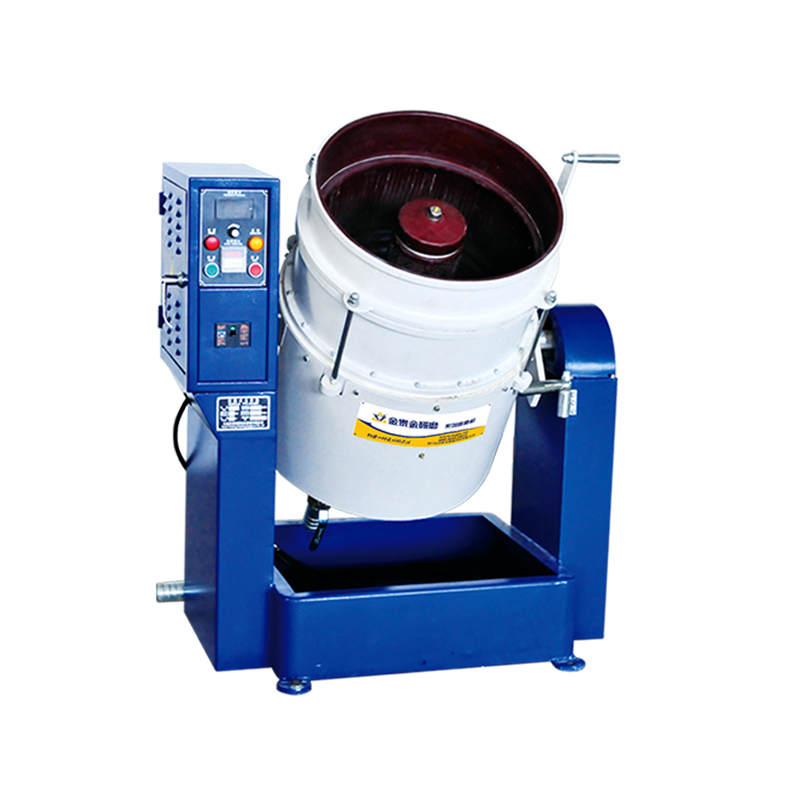
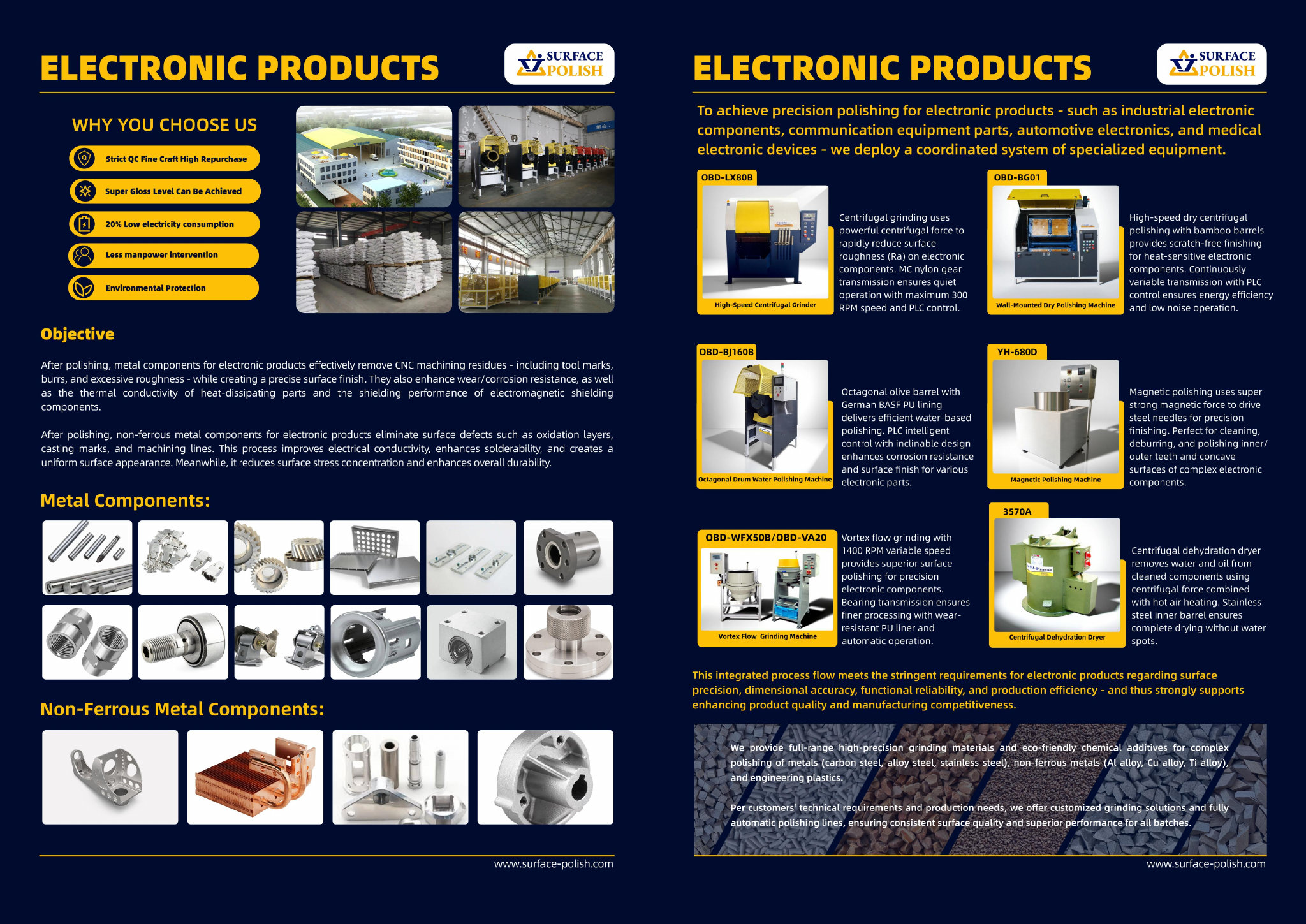
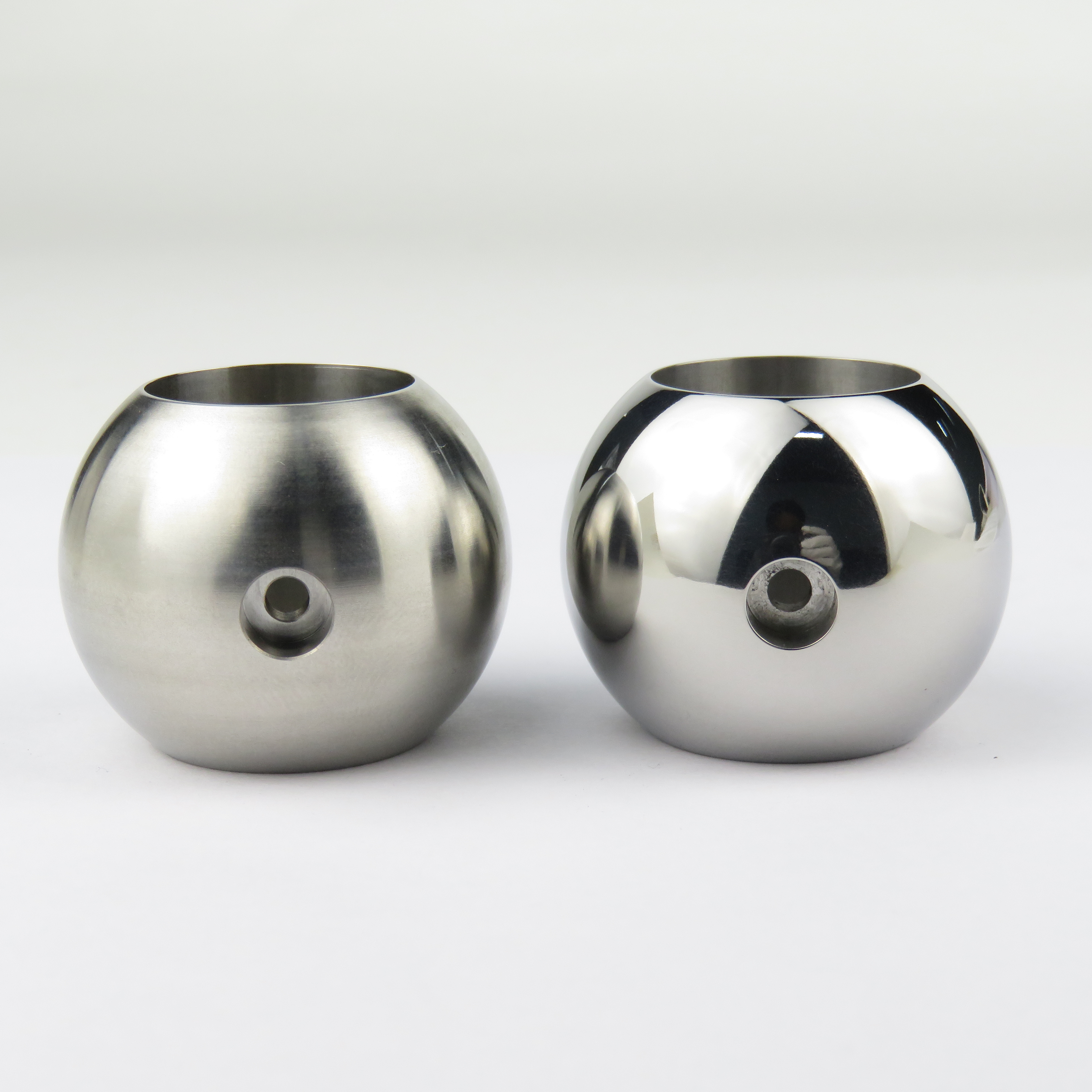
Small robust fittings often suit rotary or centrifugal barrel finishing, which process many pieces per load at low unit cost, while delicate parts may need a gentler vibratory route or magnetic finishing with small pins for internal edges. The deciding factors are the smallest feature to keep clear, the thinnest section, the edge limit and the batch size, not overall part size. Send the extreme cases from the family for a trial rather than a typical part, and ask for a comparison across two media classes with everything else held constant. SurfacePolish supplies all of these machine types across borders and can describe how each behaves on tested parts.
Mechanical finishing can improve surface texture, blend edges and remove burrs, and in some cases it reduces the need for an electrochemical step. It does not reproduce the specific surface chemistry or the material removal mechanism of electropolishing, so the two are not interchangeable without engineering review. SurfacePolish supplies mechanical finishing machines and consumables and does not perform or supply electropolishing. A sensible route for a buyer in Toulouse is to define the requirement first, then compare what mechanical methods can observe on the actual part, and treat any substitution decision as the buyer's engineering call rather than a supplier claim.
Specify the location, the evaluation length and cutoff, the filter, and whether the requirement is a maximum or an average, then keep that setup unchanged for every batch and comparison. Readings taken with different cutoffs on the same surface will not agree, and readings on interrupted or curved surfaces such as fillets or cast skins need a setup designed for them. Record the instrument and its calibration status with the results. When you compare a trial part from Xiamen with your production parts, France and China, use one instrument and one setup so the difference you are reading is the process, not the measurement.
Use Toulouse, France as the destination on the enquiry and state whether the deliverable is equipment, media and compound, a representative sample review or a line concept. A destination does not imply local stock, a local service point or a local delivery time.
A Toulouse aerospace buyer qualifies finishing suppliers against EN 9100 and the specific prime requirements that sit under it, and specifies surface texture with ISO/NF EN surface-texture standards plus programme cleanliness and edge-condition requirements (NADCAP-style special-process approval is commonly the gate for surface treatment and finishing). Where the supplier also serves the automotive or general machinery chain, IATF 16949 or ISO 9001 applies.
Sources were retrieved on 2026-09-29 and describe the local industrial and trade context only. They do not evidence any SurfacePolish project, shipment, installation or service in Toulouse.
The buyer must remove heat tint and light burr from 0.6 mm holes without enlarging the holes or embedding media.
Send the material, dimensions, approximate weight, batch quantity, the incoming condition and photographs of the difficult features. Mark which features must not be contacted by media and state how the result will be inspected. This form carries source reference PSEO-0521; quote it if you prefer an additional manual reference.
Open the SurfacePolish enquiry form Email a prepared enquiry
No price, lead time, certification or result is promised here. Confirm whether a sample trial is available for the specific part and what the trial can and cannot show.
Page PSEO-0521 · revised 2026-09-29 · cross-border equipment, media and scoped sample review. City context is sourced and cited above.
Use this local checker to identify missing part and inspection information. It prepares a technical-review brief; it does not approve a machine, process recipe or production result.
Complete the part details to prepare a review brief.
Email : info@surface-polish.com


 IPv6 network supported


 +86-592-2381506