In Birmingham, United Kingdom, an industrial machinery buyer needs a hardened die insert brought to a bright cavity finish without rounding the parting-line edges or disturbing the shut-off face. SurfacePolish is a cross-border supplier of finishing machines, media and compounds, and its free sample trial returns the tested parts with observations and a proposed media, compound and cycle direction for the buyer's own evaluation. This brief is written for a buyer in Birmingham working on industrial machinery; it describes equipment, media and a scoped sample review, not a local polishing service.
What batch size, part mix and media maintenance routine will production really run, and does the trial describe that condition?
How will the finish be measured or viewed, with which instrument, angle, cutoff and master, and who holds that master?
What is the substrate condition - cast, welded, forged or machined - and which defects already in it will become visible once the metal is smooth?
Every mirror sequence removes metal, and the removal is rarely uniform across a large face. Datum pads, dowel registers, bearing seats and seal lands carry assembly geometry, so measure them before finishing and agree a dimensional and flatness allowance. Where an allowance is tight, mask the feature, finish around it by hand, or plan a light final lapping pass that keeps the face flat. A part that looks correct but has lost flatness on a mounting face will not assemble squarely, and a curved cover panel shows a distorted reflection after only a few hundredths of a millimetre of uneven stock removal. Record incoming values with the same instruments that will accept the finished part, at the same marked locations.
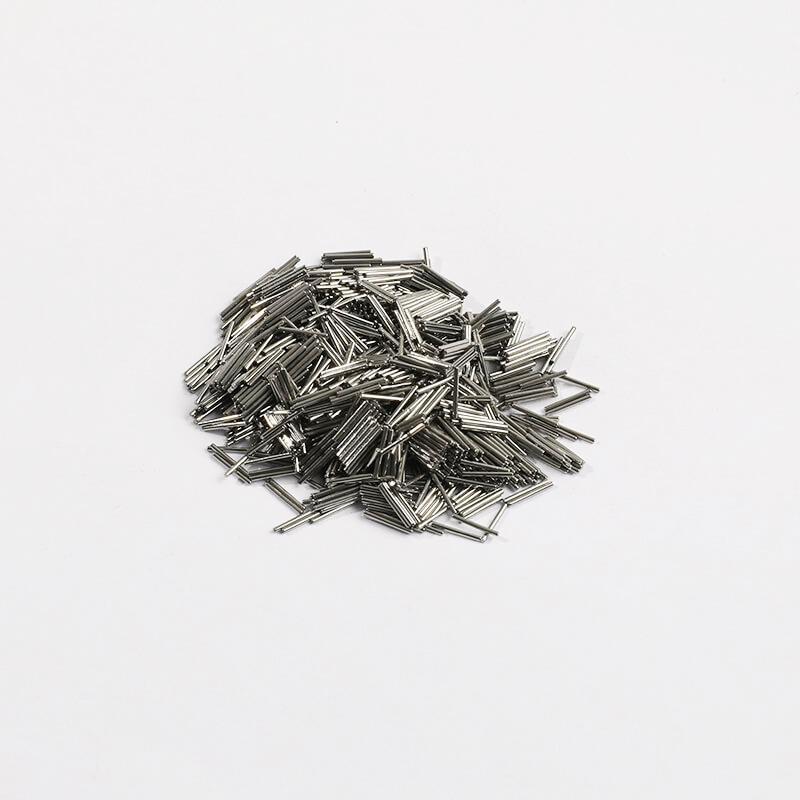
Magnetic finishing drives small pins or needles with a moving magnetic field, so the abrasive follows internal edges, cross holes, slots and fine detail that no tumbling medium of usable size can enter. It is the practical route for small precise parts such as valve spools, small gears, nozzle bodies and instrument components where a bright edge or a cleaned intersection matters. It removes very little material, so it is a refinement and edge-conditioning step rather than a way to erase coarse grinding marks. Working envelope and part mass are the main limits: large faces and heavy parts do not fit, and the effect falls off where the field cannot drive the pins. Check coverage on a sample with magnification and a borescope.
| Machine route | Where it fits | What it will not do |
|---|---|---|
| Barrel finishing machine / rotary barrel tumbler | Dense, uniform colour on small hardware that tolerates sliding contact, especially with steel media for a burnished appearance. | Nothing longer than the barrel diagonal can be processed, and slender parts can bend or nick against neighbours in the load. |
| Dry polishing machine and dryer | Final lustre, dry colour and post-wet drying where the last reflected image cannot be produced by a wet mass-finishing stage. | Works on accessible faces only, generates dust and heat that need control, and offers no way to correct a defect left by an earlier stage. |
| Disc finishing machine | Fast, high-energy cut down on small to medium parts with simple geometry where cycle time matters and edge rounding is tolerable. | Part-on-part contact and wall pressure can chip or deform parts, and the difference between sufficient and excessive removal is narrow. |
| Centrifugal barrel finishing machine | High-speed cut down and refinement on small to medium parts where a short, energetic cycle is needed before colour stages. | Aggressive on edges and thin sections, requires tight cycle control, and does not replace a finer refinement stage. |
Ceramic media cuts well and holds shape, which keeps the working geometry predictable, but dense ceramic can chip thin edges and its wear debris becomes fine abrasive that carries into later stages. Plastic media is light and gentle, which suits aluminium and brass, though lower density means less contact force and a longer cut stage. Steel media burnishes rather than cuts and gives the brightest wet result on stainless and hardened steel, but it can transfer iron and rust if compound and rinse do not protect the load. Dry media such as walnut shell or corn cob is used for lubricity and drying rather than stock removal. Every medium wears, so measure size loss and replace on a schedule: a worn charge finishes differently and no longer describes an earlier trial result.
| Media | Best fit | Watch out for |
|---|---|---|
| Small high-density ceramic spheres or ovals | Colour and pre-lustre stages where a uniform, soft-looking finish matters more than stock removal, including curved and contoured faces. | Very slow cut, easily lost through screens sized for larger media, and ineffective in deep recesses because it cannot reach or press against the surface. |
| Magnetic finishing pins and needles | Small precise parts with internal edges, cross holes, slots and fine detail that no tumbling medium of usable size can reach. | Limited by working envelope and part mass, removes very little material, and pins can embed in soft metals or remain in cavities if retrieval is not checked. |
| Medium ceramic triangles or angle-cut shapes | Blending, edge conditioning and the refinement step that removes the coarse cut pattern on housings, brackets, covers and frames. | Media that cannot enter a slot or recess leaves those areas at a different finish, so those faces need a separate operation or a stated lower standard. |
| Dry media - walnut shell | Dry polishing, light deburring and lubricity on parts where a residual oil film is acceptable, and drying or lustre steps after wet processing. | Not a stock-removal medium, generates dust that needs extraction, and can leave an oily film that interferes with a later cleaning or coating requirement. |
A bright face can carry a ghost of every earlier stage. When a coarse grinding or cut pattern is not fully removed, the finer stages polish the crests and leave the valleys, producing visible lines or a woven crosshatch that reappears as the viewing angle changes. The causes are a stage that removed too little, a refinement step that reused a contaminated charge, or a crosshatch direction that was never rotated between steps. Each successive stage should run across the previous direction at a clear angle, so an operator can see when the earlier pattern is gone. Inspect by reflecting a light source at a shallow angle and rotating the part: a mark that vanishes at one angle and returns at another is still in the surface.
| Failure mode | Likely cause | How to catch it |
|---|---|---|
| Media lodged in blind holes, slots, undercuts or threaded features | Media size too close to the opening, a slot or cavity that traps the charge, or no defined retrieval step before rinsing and drying. | Reconcile a counted media charge before and after the cycle, borescope each cavity at an agreed angle, and pin or thread gauge the features the charge could enter. |
| Iron pickup or rust bloom on a stainless surface | Carbon steel particles or steel media sharing a machine or charge, contaminated rinse water, or a damp surface left in contact with packaging after drying. | Wipe or swab the surface and look for a brown trace, check the charge and machine for ferrous pieces, and inspect parts after a short dwell in the packaging they will ship in. |
| Heat tint or discolouration concentrated near edges and thin sections | Friction at a dry or high-speed stage raising local temperature, poor cooling or compound flow, or a load that packs parts against each other with no media between them. | Compare colour against a master in consistent lighting, look for a gradient from edge inward, and check whether the tint follows load contact points or the whole face. |
| Ghost pattern of an earlier coarse stage showing through the final finish | A cut or refinement stage removed too little material, a later stage reused a contaminated charge, or the crosshatch direction was not changed between steps. | Reflect a light source at a shallow angle and rotate the part; a mark that disappears at one angle and returns at another is still in the surface rather than on it. |
Birmingham sits inside the West Midlands production region whose robotics and autonomous systems adoption Make UK studied jointly with the West Midlands Combined Authority and the West Midlands RAS Cluster, based on survey responses from over 100 manufacturers of all sizes. The West Midlands Combined Authority is the region's statutory economic body, and the city is the base of the Greater Birmingham Chambers of Commerce. Freight is anchored by ABP's Hams Hall Rail Freight Terminal, 13 km from Birmingham, which handles deep-sea and short-sea traffic to and from Southampton, Tilbury and Felixstowe as well as Channel Tunnel traffic. Make UK's regional outlook records that all English regions have now exceeded their 2019 manufacturing output levels, with aerospace and defence investment fuelling growth in the strongest-performing areas.
For this brief the relevant part of that base is machinery: Make UK's West Midlands study addresses the region's production industry and its RAS adoption, drawing on a literature review and survey responses from over 100 manufacturers of all sizes.
Deburring and edge control sit between machining and assembly in a production base that is being pushed towards automation: Make UK and WMCA commissioned the West Midlands RAS study specifically because adoption is uneven across the region's manufacturers. Because incoming machines and media move through an inland rail terminal rather than a local seaport, the practical issues for a Birmingham plant are inland container booking, offloading and media handling rather than port-side clearance.
Before choosing a machine or media, the Birmingham buyer should define which edge or surface condition is actually acceptance-critical on the part, and confirm who will hold the UKCA/CE technical file and Declaration of Conformity once the equipment is installed in the West Midlands.
Freight context: Hams Hall Rail Freight Terminal (ABP-owned, Edison Road, Coleshill, Birmingham; operated by Maritime Transport), Birmingham Airport. ABP describes Hams Hall as 'one of the country's busiest inland rail freight terminal' and states that the 11ha site handles deep-sea and short-sea traffic to and from ports such as Southampton, Tilbury and Felixstowe, plus traffic via the Channel Tunnel and domestic traffic from Scotland. Machines or sample parts consigned to Birmingham can therefore be cleared through a southern container port and moved inland by rail.
China does not appear in the alphabetical list of trade agreements in effect published by the Department for Business and Trade, so Chinese-origin machinery imported into the UK cannot claim a preferential agreement rate. Duty is instead determined by the commodity code declared on the import declaration, and the UK's customs authority is HM Revenue and Customs (HMRC), which ONS also names as the largest single data source behind UK trade-in-goods statistics. Because a GB-prefixed EORI number is a precondition for importing into England, Scotland or Wales, a Chinese seller's UK buyer must already hold that registration before any machine ships.
Importers need a GB-prefixed Economic Operators Registration and Identification (EORI) number, an import declaration carrying the correct commodity code, and retained commercial invoices plus the Import VAT Certificate (C79) so import VAT can be reclaimed. Machinery placed on the Great Britain market must be marked UKCA or CE: the manufacturer must draw up and retain technical documentation including a Declaration of Conformity, apply the correct marking with identification details, and cooperate with market surveillance; an authorised representative must be established in the UK. Under the Product Safety and Metrology (Amendment) Regulations 2024 the UK continues to recognise CE marking alongside or in place of UKCA for the Great Britain market, so either route can be used for most product types. Duty and import VAT are calculated from the customs value declared, and the commodity code also determines whether an import licence is needed.
SurfacePolish supplies from Xiamen, China. The buyer's own destination rules, conformity marking, tariff classification and documentation responsibilities stay with the buyer; confirm them against the authorities named above before ordering.
A mirror surface changes with the observer, so viewing conditions belong in the specification. Agree the light source type, the distance and angle, the viewing direction, and whether inspection happens in a booth or in the machine environment. A physical master approved by both parties, kept clean and stored protected, is more reliable than a photograph; photographs of reflective parts mostly record the light source. Define what is acceptable, such as a limited number of fine marks, a haze limit inside a stated area, and no visible peel, and state where the standard does not apply, for instance inside a recess that will be painted or covered. Re-confirm the master whenever the sequence or media family changes.
A useful trial changes one variable at a time. If two media classes are being compared, hold the machine, load ratio, compound dose and cycle time constant, and identify which returned parts came from which set. Measure the same marked points before and after, with the same instrument and settings, and judge appearance against the same master and lighting. Where two sequences are compared, record each stage separately so any difference can be attributed rather than read only from the final image. Blind the evaluation if two people will judge, and ask for the raw settings and photographs to come back with the parts. A comparison where several variables moved at once produces a direction that cannot be defended later.

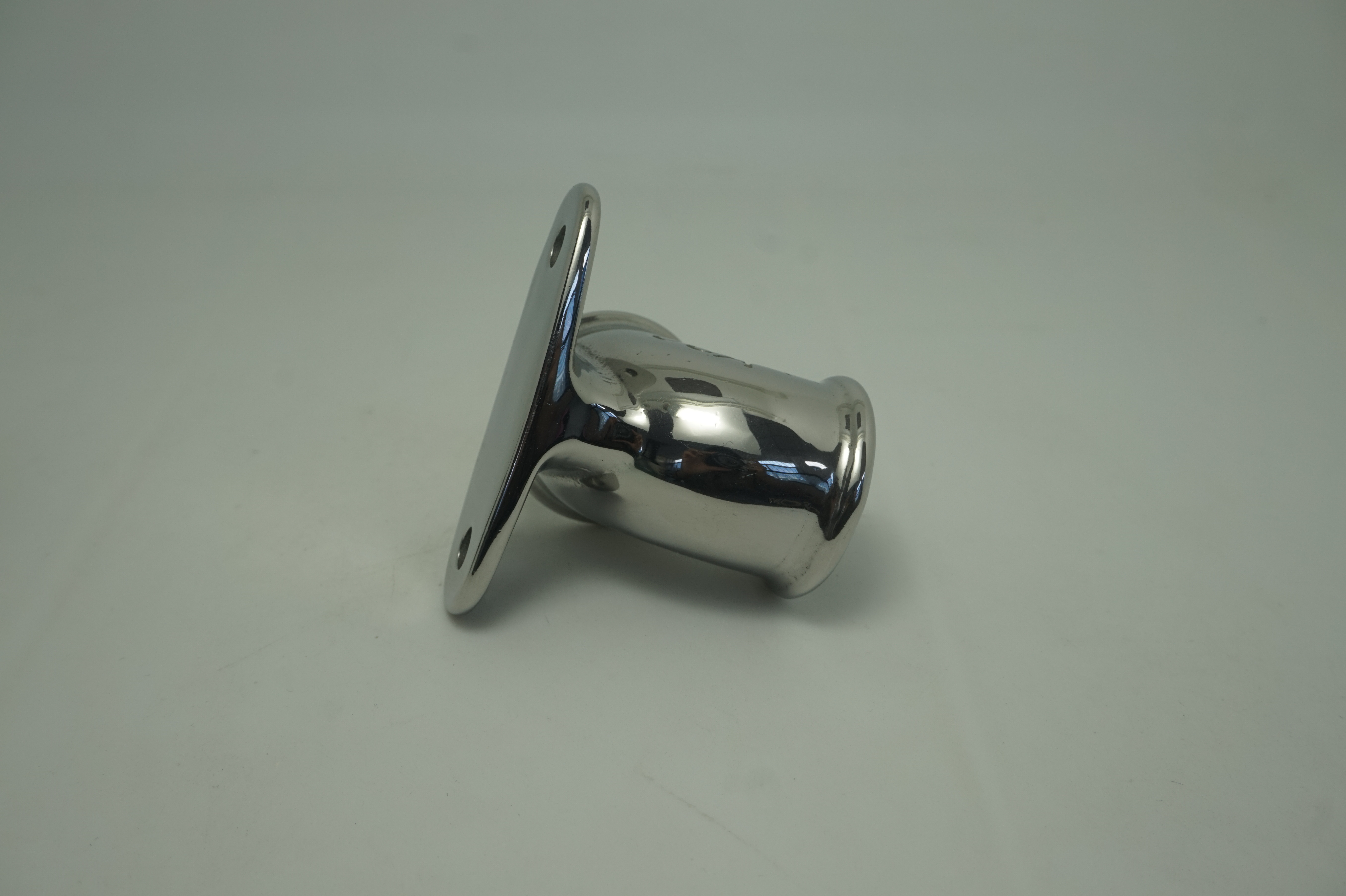
Rounding depends on the energy and duration of the sequence and on how exposed the edge is. A light refinement pass may barely touch it, while a long cut stage on a soft alloy can visibly round it. Mark the edges that must stay crisp, state a maximum radius or a no-touch zone before media is selected, and measure with a radius gauge, an optical comparator or a cast impression against the incoming form. Where a bright face and a crisp edge conflict, the practical order is to finish the face and then restore or protect the edge rather than to keep polishing.
A mirror surface is damaged by contact, so handling begins before the parts leave the machine. Rinse and dry thoroughly to remove compound and fines, because residue trapped in a cavity bleeds out later and a damp surface can stain stainless. Then protect: interleave or sleeve faces that will touch, keep parts separated in trays, avoid sliding them across each other, and use gloves or a clean cloth when they are picked up. Agree packaging with the buyer, including whether parts travel individually wrapped, and inspect on arrival for marks that occurred in transit.
No, and any supplier offering one before seeing the parts is guessing. A trial produces observations on the specific parts tested, under the settings used, and those observations are described rather than warranted. Achievable reflectivity depends on the substrate, the geometry, the edge allowance and the incoming damage, and it can vary across a single face and between parts in one batch. Define how you will measure or view the finish, agree a physical master, and treat the trial result plus your own verification as the basis for a decision.
Use Birmingham, United Kingdom as the destination on the enquiry and state whether the deliverable is equipment, media and compound, a representative sample review or a line concept. A destination does not imply local stock, a local service point or a local delivery time.
Equipment placed on the Great Britain market must carry UKCA or CE marking with a Declaration of Conformity held by the manufacturer or a UK-established authorised representative, and HSE's work equipment and machinery regime governs guarding and safe operation on site. COSHH applies to ceramic, plastic or steel media, to finishing compounds and to the dust and effluent the process produces.
Sources were retrieved on 2026-09-29 and describe the local industrial and trade context only. They do not evidence any SurfacePolish project, shipment, installation or service in Birmingham.
The buyer wants a mirror-like cavity wall for release behaviour but cannot lose the sharp parting-line edges or the shut-off face height.
Send the material, dimensions, approximate weight, batch quantity, the incoming condition and photographs of the difficult features. Mark which features must not be contacted by media and state how the result will be inspected. This form carries source reference PSEO-0209; quote it if you prefer an additional manual reference.
Open the SurfacePolish enquiry form Email a prepared enquiry
No price, lead time, certification or result is promised here. Confirm whether a sample trial is available for the specific part and what the trial can and cannot show.
Page PSEO-0209 · revised 2026-09-29 · cross-border equipment, media and scoped sample review. City context is sourced and cited above.
Use this local checker to identify missing part and inspection information. It prepares a technical-review brief; it does not approve a machine, process recipe or production result.
Complete the part details to prepare a review brief.
Email : info@surface-polish.com


 IPv6 network supported


 +86-592-2381506