In Breda, Netherlands, an industrial machinery buyer needs a hardened die insert brought to a bright cavity finish without rounding the parting-line edges or disturbing the shut-off face. SurfacePolish is a cross-border supplier of finishing machines, media and compounds, and its free sample trial returns the tested parts with observations and a proposed media, compound and cycle direction for the buyer's own evaluation. This brief is written for a buyer in Breda working on industrial machinery; it describes equipment, media and a scoped sample review, not a local polishing service.
Can available media actually reach the geometry, and what finish is realistic in the recesses and internal features it cannot reach?
What is the substrate condition - cast, welded, forged or machined - and which defects already in it will become visible once the metal is smooth?
How much stock may the sequence remove before datums, seal faces, flatness or edge form fall outside their allowance?
Two parts with the same alloy name can behave differently under the same media. Hardened tool steel resists cutting and holds a polish longer, while annealed low-carbon steel cuts quickly and can smear under high contact pressure. Austenitic stainless work hardens, so a heavy first pass can leave a skin harder than the bulk, after which fine media stop removing material and only burnish it. Aluminium and brass are soft enough that media pressure rolls metal instead of cutting it, producing a wave rather than a cut. Ask for the actual condition - hardness range, heat treatment, cold work, and whether the part was cast, forged or machined from bar - then confirm it on a sample rather than trusting a datasheet to describe the surface the media will meet.
Rotary barrels work by sliding contact and suit parts that tolerate tumbling, giving a dense, uniform colour on small hardware. They cannot process anything longer than the barrel diagonal, so long shafts, extrusions and frame members belong in a tub vibrator, where a part can pass through the mass without being folded. Slender parts need support or careful load balancing, because the same energy that brightens a shaft can bow it or nick it against a neighbour. Barrel and tub routes reach some external areas a bowl cannot, such as a long groove, but they are poor at bores running parallel to the long axis. Verify straightness and roundness after the cycle, not only appearance.
| Machine route | Where it fits | What it will not do |
|---|---|---|
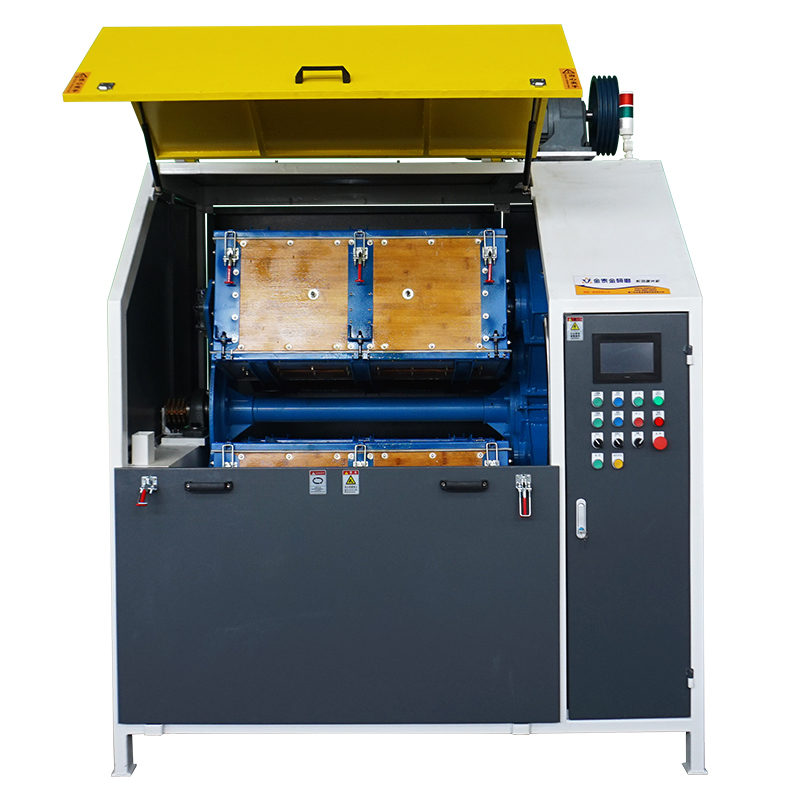
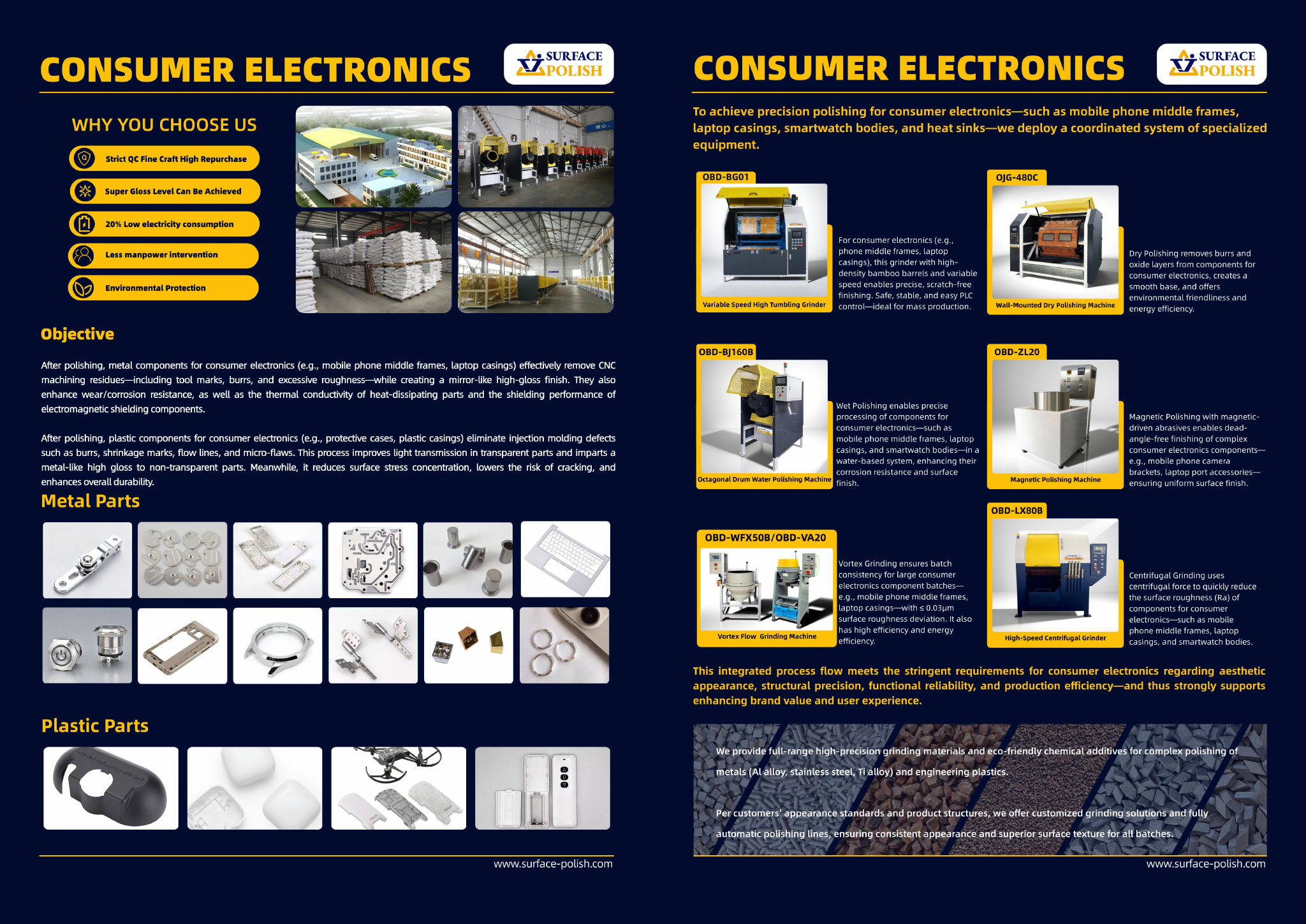
| Dry polishing machine and dryer | Final lustre, dry colour and post-wet drying where the last reflected image cannot be produced by a wet mass-finishing stage. | Works on accessible faces only, generates dust and heat that need control, and offers no way to correct a defect left by an earlier stage. |
| Vibratory finishing machine (bowl or tub) | Cut-to-colour sequences on rigid, mostly open parts such as housings, covers, brackets and frames, with adjustable energy and no fixturing. | Cannot present media uniformly into pockets with narrow mouths or deep internal bores, and broad flat faces finish more slowly than edges. |
| Grinding finishing machine | The heavier stock-removal stage before a mirror sequence, cutting back grinding damage, scale and recast layers on robust parts. | High removal also rounds edges and can work harden or distort thin sections, so it needs a defined depth target and a sample check. |
| Barrel finishing machine / rotary barrel tumbler | Dense, uniform colour on small hardware that tolerates sliding contact, especially with steel media for a burnished appearance. | Nothing longer than the barrel diagonal can be processed, and slender parts can bend or nick against neighbours in the load. |
Ceramic media cuts well and holds shape, which keeps the working geometry predictable, but dense ceramic can chip thin edges and its wear debris becomes fine abrasive that carries into later stages. Plastic media is light and gentle, which suits aluminium and brass, though lower density means less contact force and a longer cut stage. Steel media burnishes rather than cuts and gives the brightest wet result on stainless and hardened steel, but it can transfer iron and rust if compound and rinse do not protect the load. Dry media such as walnut shell or corn cob is used for lubricity and drying rather than stock removal. Every medium wears, so measure size loss and replace on a schedule: a worn charge finishes differently and no longer describes an earlier trial result.
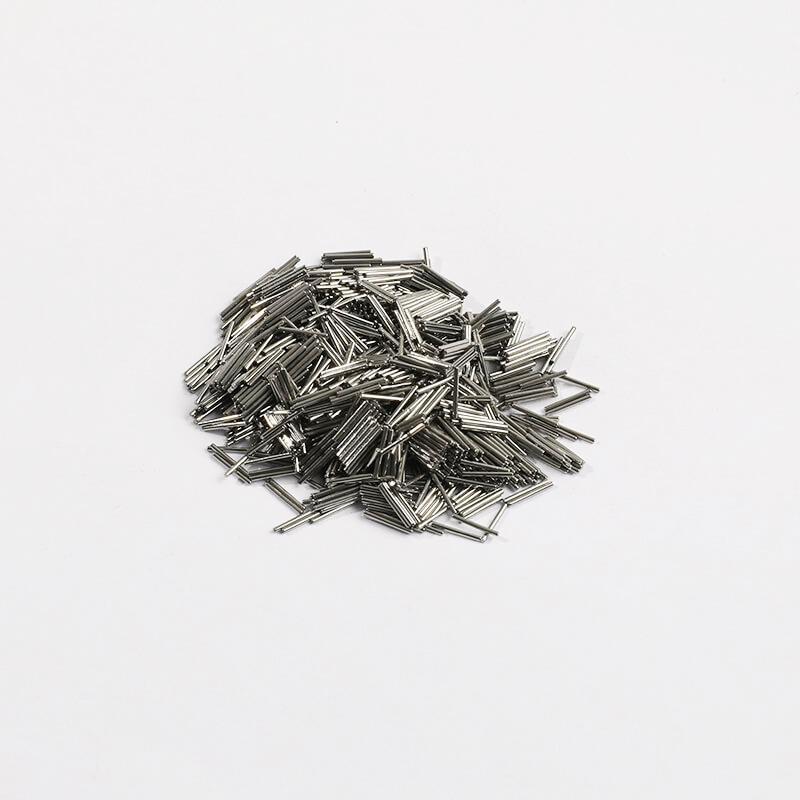
| Media | Best fit | Watch out for |
|---|---|---|
| Medium ceramic triangles or angle-cut shapes | Blending, edge conditioning and the refinement step that removes the coarse cut pattern on housings, brackets, covers and frames. | Media that cannot enter a slot or recess leaves those areas at a different finish, so those faces need a separate operation or a stated lower standard. |
| Small high-density ceramic spheres or ovals | Colour and pre-lustre stages where a uniform, soft-looking finish matters more than stock removal, including curved and contoured faces. | Very slow cut, easily lost through screens sized for larger media, and ineffective in deep recesses because it cannot reach or press against the surface. |
| Dry media - corn cob | Softer dry lustre and drying steps, absorbent polishing of small parts, and light work on brass, aluminium and plated-look surfaces. | Breaks down faster than walnut shell and must be replaced regularly; it removes almost no material and cannot correct a surface defect. |
| Hardened steel media, balls and shaped shot | Bright burnishing of stainless and hardened steel, and the final wet lustre stage where a dense medium can peen a surface smooth. | Can transfer iron and rust to stainless, dents soft or thin parts, and must be kept in a dedicated charge away from ceramic media. |
Two of the most expensive defects are invisible in a reflected image. Media lodges in blind holes, slots, undercuts and threaded features, and it can survive rinsing, drying and even assembly, while the small pins used in magnetic finishing can embed in soft surfaces. At the same time, long cycles quietly round edges past their limit and remove material from datums, seals and bearing seats, so a part passes a visual check and fails a fit check. Control both with geometry rather than appearance: reconcile a counted charge, borescope or pin gauge every cavity, measure edge radii and critical dimensions against incoming values, and set a maximum cycle time that the edge and dimensional allowances actually support.
| Failure mode | Likely cause | How to catch it |
|---|---|---|
| Orange peel, a slow wave that distorts the reflected image | Soft or work-hardened surface deformed rather than cut, a heavy cut stage followed by too little refinement, or a dry or buffing stage at high speed with excess pressure. | Reflect a straight edge or fluorescent tube in the face at a shallow angle, compare the shape of the image against a physical master in the same lighting, and repeat at several viewing angles. |
| Smearing or a rolled surface with abrasive and debris buried in it | Excessive cycle time or contact pressure, insufficient compound lubricity, or a final stage run at energy the material cannot absorb without deforming. | Wipe a defined area with a clean white cloth and look for streaks or dulling, then examine at magnification and compare microhardness or etch response against an unmachined reference. |
| Embedded media particles or finishing pins in a soft surface | High contact pressure on aluminium, brass or copper, worn media with sharp fractured edges, or magnetic-finishing pins driven into a surface that cannot resist them. | Examine at magnification under raking light, wipe with a clean cloth and check for pulled particles, and consider a dye penetrant or etching check on a sample part. |
| Edge radius beyond the allowed limit | A cut stage longer or more energetic than the edge allowance supports, insufficient masking or fixturing, or a sequence repeated to remove a defect and run past the edge allowance. | Measure with a radius gauge, a cast impression or an optical comparator at the marked edges, and compare against the edge form and dimensions recorded before finishing. |
Breda combines logistics and distribution with an applied-technology and creative-technology base. The municipality is developing Innovatiedistrict Breda around two clusters, Robotics & AI and Games & Creative Technology, across the Slingerweg area, 't Zoet, the harbour area, the Chassekwartier and the Avans, BUas and Curio campuses. The Slingerweg area is being positioned as a hotspot for innovative makers with an emphasis on robotisation, where the Breda Robotics cluster and the Triple O Campus are located and more than 100 companies in the technology and creativity sector work. The city also operates the B'WISE startup incubator and provides business locations such as Rithmeesterpark, and its own business portal notes that local firms operate internationally in logistics.
For this brief the relevant part of that base is machinery: The Slingerweg area is designated as a hotspot for innovative makers with an emphasis on robotisation, offering space for experimentation, research and prototyping, and housing more than 100 companies in the technology and creativity sector including the Triple O Campus.
Breda's maker and robotics base, together with its logistics and business parks, generates demand for deburring and edge finishing of machined metal and plastic parts, sheet-metal enclosures, robot and machine frames and prototypes. Prototyping and small-series production place a premium on fast changeover and on processes that cope with mixed materials rather than on raw throughput.
A buyer should settle the batch profile first — prototype and small series versus repeat production — together with the material mix of aluminium, stainless, steel and plastics, because that determines whether a barrel, vibratory or disc process is the right starting point.
Freight context: Havengebied (harbour area within Innovatiedistrict Breda), Rithmeesterpark business park. Breda is a West-Brabant distribution location with business parks and a harbour area inside the innovation district, and local firms operate internationally in logistics. Machinery imported from outside the EU is declared to Dutch Customs at its point of entry, which for sea freight to this region will normally mean Rotterdam or Moerdijk.
Goods entering the Netherlands from outside the EU must be declared to Dutch Customs (Douane, part of the Belastingdienst); the importer needs an EORI number, import duty is calculated on the customs value (goods value plus transport and insurance to the EU external border), and import VAT is paid at the border unless an article 23 permit or a fiscal representative is used. CE marking is mandatory for most machinery placed on the EEA market: the Machinery Regulation replaced the Machinery Directive and manufacturers must comply with the new requirements by 20 January 2027. The importer must verify that the conformity assessment was carried out correctly, that CE marking is applied properly, that the technical file is present and complete, and that the user manual is supplied in the correct language; the manufacturer's EC Declaration of Conformity must be kept. Dutch companies imported over EUR 140 billion of machinery and appliances in 2024, 24% of total Dutch goods imports.
The Dutch standards body is NEN (Nederlands Normalisatie-instituut), which publishes and maintains the NEN and NEN-EN-ISO standards; the content of a standard is set by a NEN standards committee made up of the organisations concerned, not by NEN itself. For surface finishing NEN publishes NEN-EN-ISO 2080, which defines the terms for the general types of surface-finishing processes with emphasis on practical use in metal finishing, under the standards committee for metallic coatings and corrosion of metals and alloys. Machinery safety, EMC, low-voltage, ATEX, RoHS and ecodesign requirements reach Dutch buyers through the CE directives and regulations referenced by KVK, with the Machinery Regulation applying from 20 January 2027.
SurfacePolish supplies from Xiamen, China. The buyer's own destination rules, conformity marking, tariff classification and documentation responsibilities stay with the buyer; confirm them against the authorities named above before ordering.
A roughness number without its setup is not a specification. Decide the cutoff length, filter, evaluation length, number of traces and their direction relative to the preceding polish direction, then keep every one of those settings unchanged between the incoming survey and the final inspection. Curved and narrow faces need a fixture or a witness coupon processed in the same charge, because a stylus cannot follow a small radius reliably and a hand-held trace on a curved surface is not comparable. Where a face is critical, mark the exact measurement positions on the drawing or with a permanent label and record them. Optical instruments avoid stylus damage on soft polished surfaces but see a different frequency band than a contact profilometer, so do not mix instrument types within one comparison.
Send parts that represent the real production spread, not the one clean sample on the desk. Include the thinnest wall, the tightest internal feature that must stay clear, the worst edge, and one as-received reject if you have one. Add a witness coupon of the same material and condition for texture measurement, and label every piece so a returned part can be matched to its settings. Supply the material and heat treatment, the drawing extract covering the finished faces, and the acceptance requirement you intend to apply. Photograph the incoming condition at fixed scale before packing, protect edges and bright faces in transit, and state what the trial must answer. Unlabelled, unrepresentative parts produce observations that cannot be used.
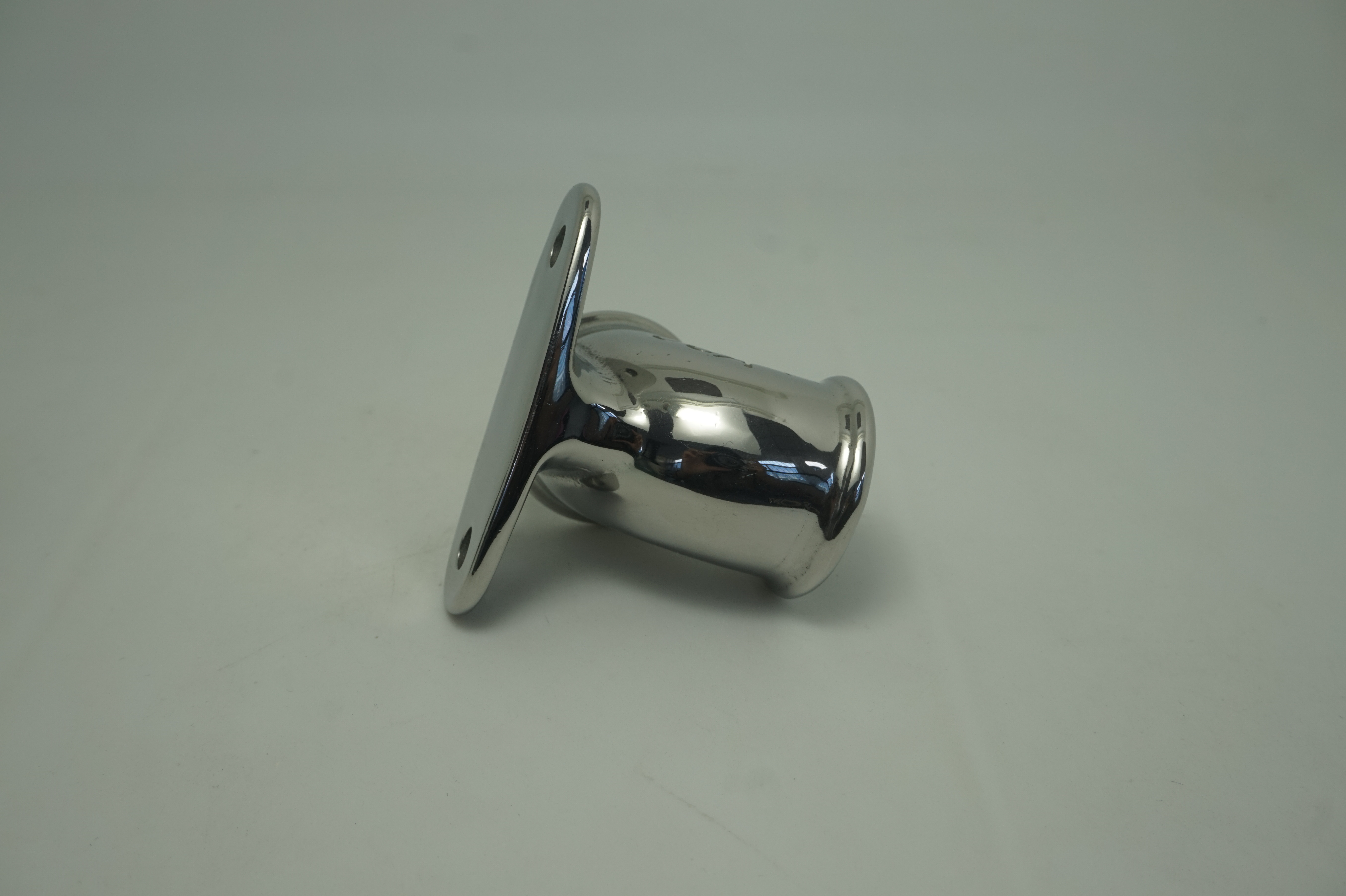
Ra alone is not enough. It is an average over a defined cutoff length, so a surface with a low Ra can still show waviness, orange peel or directional marks that dominate what a viewer sees, while a slightly rougher surface can look brighter if it scatters light evenly. Specify the measurement setup as well as the value, and where appearance is what matters, add a reflectance or gloss reading at a stated angle together with a physical master and viewing conditions. For Breda buyers working to a functional surface requirement, specify the profile and the appearance requirement separately.
Design the charge around the smallest opening rather than the average part. Use media clearly smaller than the hole, or mask and plug the features before the cycle, count the media into and out of the load as a reconciliation, and add a retrieval step with a defined check such as a borescope or pin gauge. For Netherlands buyers sending parts for a trial, include the part with the tightest feature so the media class is chosen against real geometry. The small pins used in magnetic finishing embed easily in soft metal, so those features need extra inspection.
Each stage removes the pattern left by the one before it. A coarse cut removes grinding or machining damage, a refinement stage erases the cut pattern, a colour stage removes the refinement marks, and a lustre stage produces the final reflected image. Skipping or shortening a stage leaves a ghost of it in the surface that finer work only polishes around. Because the steps use different media, compounds and often different machines, a line is planned as a route with a defined finish at each stage, including the rinses and drying between them.
Use Breda, Netherlands as the destination on the enquiry and state whether the deliverable is equipment, media and compound, a representative sample review or a line concept. A destination does not imply local stock, a local service point or a local delivery time.
Buyers here would reference the CE machinery regime (Machinery Regulation from 20 January 2027) and the Dutch/EN-ISO surface-finishing standards published by NEN, such as NEN-EN-ISO 2080. Where parts feed logistics-equipment or robotics customers, the customer's own supplier specification for edges, roughness and cleanliness is normally the binding requirement.
Sources were retrieved on 2026-09-29 and describe the local industrial and trade context only. They do not evidence any SurfacePolish project, shipment, installation or service in Breda.
The buyer wants a mirror-like cavity wall for release behaviour but cannot lose the sharp parting-line edges or the shut-off face height.
Send the material, dimensions, approximate weight, batch quantity, the incoming condition and photographs of the difficult features. Mark which features must not be contacted by media and state how the result will be inspected. This form carries source reference PSEO-0689; quote it if you prefer an additional manual reference.
Open the SurfacePolish enquiry form Email a prepared enquiry
No price, lead time, certification or result is promised here. Confirm whether a sample trial is available for the specific part and what the trial can and cannot show.
Page PSEO-0689 · revised 2026-09-29 · cross-border equipment, media and scoped sample review. City context is sourced and cited above.
Use this local checker to identify missing part and inspection information. It prepares a technical-review brief; it does not approve a machine, process recipe or production result.
Complete the part details to prepare a review brief.
Email : info@surface-polish.com


 IPv6 network supported


 +86-592-2381506