A buyer in Brisbane, Australia in industrial machinery needs a 2.5 m stainless guard extrusion finished to a uniform bright band while a narrow slot along its face stays clear of media and keeps its edges. SurfacePolish supplies finishing machines, media and compounds across borders and offers a free sample trial, returning tested sections with observations and a proposed direction. This brief is written for a buyer in Brisbane working on industrial machinery; it describes equipment, media and a scoped sample review, not a local polishing service.
Which faces must reach a mirror and which only need to be clean and uniform, and how is each one judged?
How will the finish be measured or viewed, with which instrument, angle, cutoff and master, and who holds that master?
Can available media actually reach the geometry, and what finish is realistic in the recesses and internal features it cannot reach?
Every mirror sequence removes metal, and the removal is rarely uniform across a large face. Datum pads, dowel registers, bearing seats and seal lands carry assembly geometry, so measure them before finishing and agree a dimensional and flatness allowance. Where an allowance is tight, mask the feature, finish around it by hand, or plan a light final lapping pass that keeps the face flat. A part that looks correct but has lost flatness on a mounting face will not assemble squarely, and a curved cover panel shows a distorted reflection after only a few hundredths of a millimetre of uneven stock removal. Record incoming values with the same instruments that will accept the finished part, at the same marked locations.
Ceramic media cuts well and holds shape, which keeps the working geometry predictable, but dense ceramic can chip thin edges and its wear debris becomes fine abrasive that carries into later stages. Plastic media is light and gentle, which suits aluminium and brass, though lower density means less contact force and a longer cut stage. Steel media burnishes rather than cuts and gives the brightest wet result on stainless and hardened steel, but it can transfer iron and rust if compound and rinse do not protect the load. Dry media such as walnut shell or corn cob is used for lubricity and drying rather than stock removal. Every medium wears, so measure size loss and replace on a schedule: a worn charge finishes differently and no longer describes an earlier trial result.
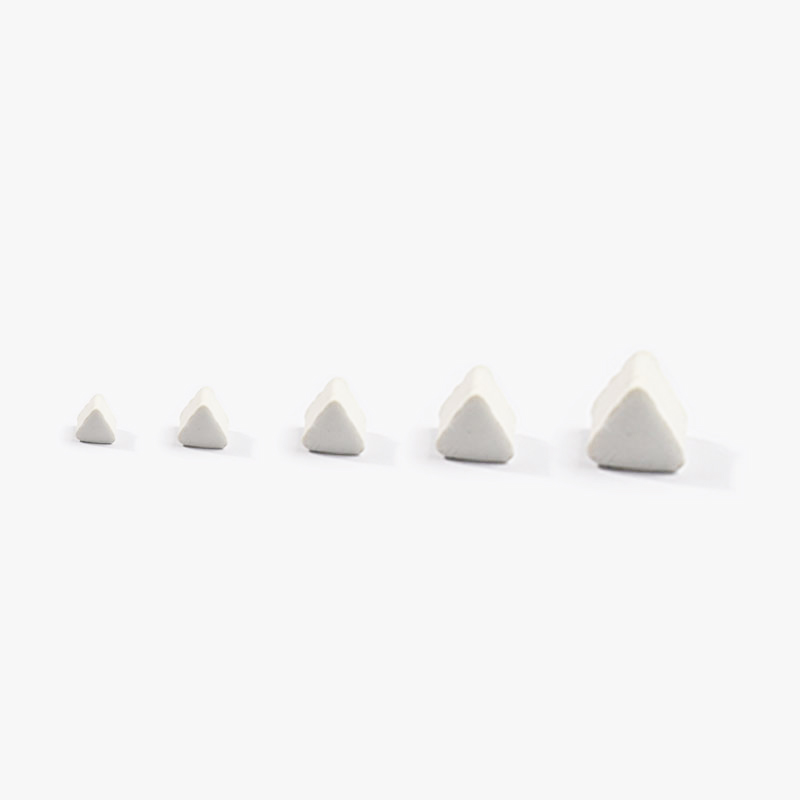
| Media | Best fit | Watch out for |
|---|---|---|
| Dry media - corn cob | Softer dry lustre and drying steps, absorbent polishing of small parts, and light work on brass, aluminium and plated-look surfaces. | Breaks down faster than walnut shell and must be replaced regularly; it removes almost no material and cannot correct a surface defect. |
| Magnetic finishing pins and needles | Small precise parts with internal edges, cross holes, slots and fine detail that no tumbling medium of usable size can reach. | Limited by working envelope and part mass, removes very little material, and pins can embed in soft metals or remain in cavities if retrieval is not checked. |
| Plastic or polyester media | Gentle processing of aluminium, brass, copper and thin panels where metal smearing, nicks and distortion must be avoided. | Low density gives little contact force, so cycles run long and heavy grinding marks may survive; plastic also wears quickly and can float above the working mass. |
| Dry media - walnut shell | Dry polishing, light deburring and lubricity on parts where a residual oil film is acceptable, and drying or lustre steps after wet processing. | Not a stock-removal medium, generates dust that needs extraction, and can leave an oily film that interferes with a later cleaning or coating requirement. |
Rotary barrels work by sliding contact and suit parts that tolerate tumbling, giving a dense, uniform colour on small hardware. They cannot process anything longer than the barrel diagonal, so long shafts, extrusions and frame members belong in a tub vibrator, where a part can pass through the mass without being folded. Slender parts need support or careful load balancing, because the same energy that brightens a shaft can bow it or nick it against a neighbour. Barrel and tub routes reach some external areas a bowl cannot, such as a long groove, but they are poor at bores running parallel to the long axis. Verify straightness and roundness after the cycle, not only appearance.
| Machine route | Where it fits | What it will not do |
|---|---|---|
| Dry polishing machine and dryer | Final lustre, dry colour and post-wet drying where the last reflected image cannot be produced by a wet mass-finishing stage. | Works on accessible faces only, generates dust and heat that need control, and offers no way to correct a defect left by an earlier stage. |
| Disc finishing machine | Fast, high-energy cut down on small to medium parts with simple geometry where cycle time matters and edge rounding is tolerable. | Part-on-part contact and wall pressure can chip or deform parts, and the difference between sufficient and excessive removal is narrow. |
| Barrel finishing machine / rotary barrel tumbler | Dense, uniform colour on small hardware that tolerates sliding contact, especially with steel media for a burnished appearance. | Nothing longer than the barrel diagonal can be processed, and slender parts can bend or nick against neighbours in the load. |
| Centrifugal barrel finishing machine | High-speed cut down and refinement on small to medium parts where a short, energetic cycle is needed before colour stages. | Aggressive on edges and thin sections, requires tight cycle control, and does not replace a finer refinement stage. |
Orange peel is a slow wave in the surface, visible as a distorted reflected line, and it usually comes from the finishing process rather than the substrate. It develops when a soft or work-hardened layer is deformed rather than cut, when a heavy cut stage is followed by too little refinement, or when a buffing or dry stage runs at high speed with excess pressure and little cooling. Aluminium, copper and annealed stainless are the most prone. Detection belongs in the acceptance routine: reflect a straight edge or a fluorescent tube in the face, look at the shape of the image, and compare against a physical master in the same lighting. Extra fine polishing will not remove peel that sits below the surface; the sequence has to return to a cutting stage.
| Failure mode | Likely cause | How to catch it |
|---|---|---|
| Compound residue film, water spots or a dull bloom after drying | Incomplete rinsing, hard or contaminated rinse water, a dose above target, or drying that leaves a cavity to bleed residue onto the finished face. | Wipe a defined area with a clean white cloth after drying, inspect cavities for bleed-out, and check rinse water hardness or conductivity at the point of use. |
| Media lodged in blind holes, slots, undercuts or threaded features | Media size too close to the opening, a slot or cavity that traps the charge, or no defined retrieval step before rinsing and drying. | Reconcile a counted media charge before and after the cycle, borescope each cavity at an agreed angle, and pin or thread gauge the features the charge could enter. |
| Dimensional drift or lost flatness on datums, seals and bearing seats | Uneven stock removal across a large or asymmetric face, over-long cycles, or unprotected functional features exposed to the full charge energy. | Measure flatness and critical dimensions with a CMM or surface plate at the same marked points used for the incoming survey, and compare the change against the allowance. |
| Edge radius beyond the allowed limit | A cut stage longer or more energetic than the edge allowance supports, insufficient masking or fixturing, or a sequence repeated to remove a defect and run past the edge allowance. | Measure with a radius gauge, a cast impression or an optical comparator at the marked edges, and compare against the edge form and dimensions recorded before finishing. |
Brisbane's industrial base is spread across a network of industrial precincts that Brisbane City Council treats as a distinct category of city land, alongside central and retail precincts. The Queensland Government's manufacturing information for the state covers food and beverage, agricultural products and the aviation industry, and CSIRO operates Queensland sites inside the metro area, including the Queensland Centre for Advanced Technologies at Pullenvale and the Australian eHealth Research Centre at Herston. Council projects that by 2041 industry will contribute more than $22 billion to Brisbane's gross regional product and account for 13% of the workforce.
The nearest part of that base to this brief is food: The Queensland Government's manufacturing information covers food and beverage production.
Brisbane's industrial precincts mix food and beverage plant, aviation component and maintenance work, and fabrication for the resources and construction supply chains, and each brings a different surface requirement: hygienic, residue-free surfaces on food-contact equipment, edge and burr control on machined aviation and precision parts, and consistent finish on welded or laser-cut fabrications. Because much of the work is contract fabrication with varying batch sizes, media and cycle-time consistency across changes of part is a practical production issue rather than a theoretical one.
A Brisbane buyer should establish the part families and batch sizes the finishing process must cover before selecting equipment, because a cell sized for one high-volume part will not necessarily handle the mixed fabrication work typical of precinct-based contract manufacturers - and for food or aviation work the cleanliness and edge criteria need to be written down first.
Freight context: Port of Brisbane, Brisbane Airport. Brisbane is served by the Port of Brisbane for container and bulk sea freight and by Brisbane Airport for air freight, with rail-linked container handling at the port precinct. Inbound finishing machines and process samples normally enter by sea cargo through the port and clear customs under the ABF regime, with air freight used where a sample or spare part is time-critical.
Australia and China are parties to the China-Australia Free Trade Agreement (ChAFTA), signed on 17 June 2015 and in force since 20 December 2015; the Australian Border Force maintains a dedicated ChAFTA page and working tariff schedule, and FTAs give importers a route to preferential rates of duty where the rules of origin are met. China was Australia's largest source of imports in 2025 at $130.2b, up 12.5% on 2024, and 56% (69,567) of Australian business importers traded at least once with China in 2020-21. A Chinese supplier of finishing machines, media or compounds is therefore shipping into Australia's single largest import stream, and preferential duty depends on origin documentation rather than on a blanket zero-tariff guarantee for every product line.
Business is conducted in English and Australian industrial buyers are normally registered companies with an ABN that contract through a local importer or a licensed customs broker rather than directly with an overseas manufacturer. Because the first Australian supplier of in-scope electrical equipment becomes the legally responsible supplier, Chinese manufacturers are typically asked to provide test evidence, a compliance folder and a declaration so that their Australian importer can register and mark the product. Quotation and contracting expectations centre on a clear commercial entity, correct HS/tariff classification, documented country of origin for preferential duty, and an explicit statement of what is included in the delivered price and what is not.
SurfacePolish supplies from Xiamen, China. The buyer's own destination rules, conformity marking, tariff classification and documentation responsibilities stay with the buyer; confirm them against the authorities named above before ordering.
Ask for a settings record with every batch: machine and stage, media type and size class, charge mass and age, compound product and measured dose, load ratio, cycle time and rinse conditions. Retain a fully inspected first article as the physical reference, together with its measurement data and photographs at fixed scale and lighting. Write the disposition rule in advance, covering what passes, what is reworked and what is scrapped, and name who decides. The record should state plainly that the reported condition applies to the parts tested, at the locations measured, with the settings used; it is a description, not a guarantee of future output or of fitness for any regulated application. Certificate and approval requests belong with the buyer's own quality function.
A trial reports what was observed on the parts it received, under the settings used. It cannot prove that every casting in a lot will respond the same way, that a worn media charge will behave identically over months, or that the finish satisfies a regulated or safety-critical requirement; those are questions for the buyer's own engineering and quality functions, using their own verification. It also cannot promise a reflectance value, an Ra value, a cycle time, a price or a capacity. Before shipping parts, decide whether a mirror finish is plausible at all: check the substrate for porosity and inclusions, confirm that available media can reach the geometry, and define the acceptance method first. If the requirement cannot be measured or viewed consistently, no trial result will settle it.

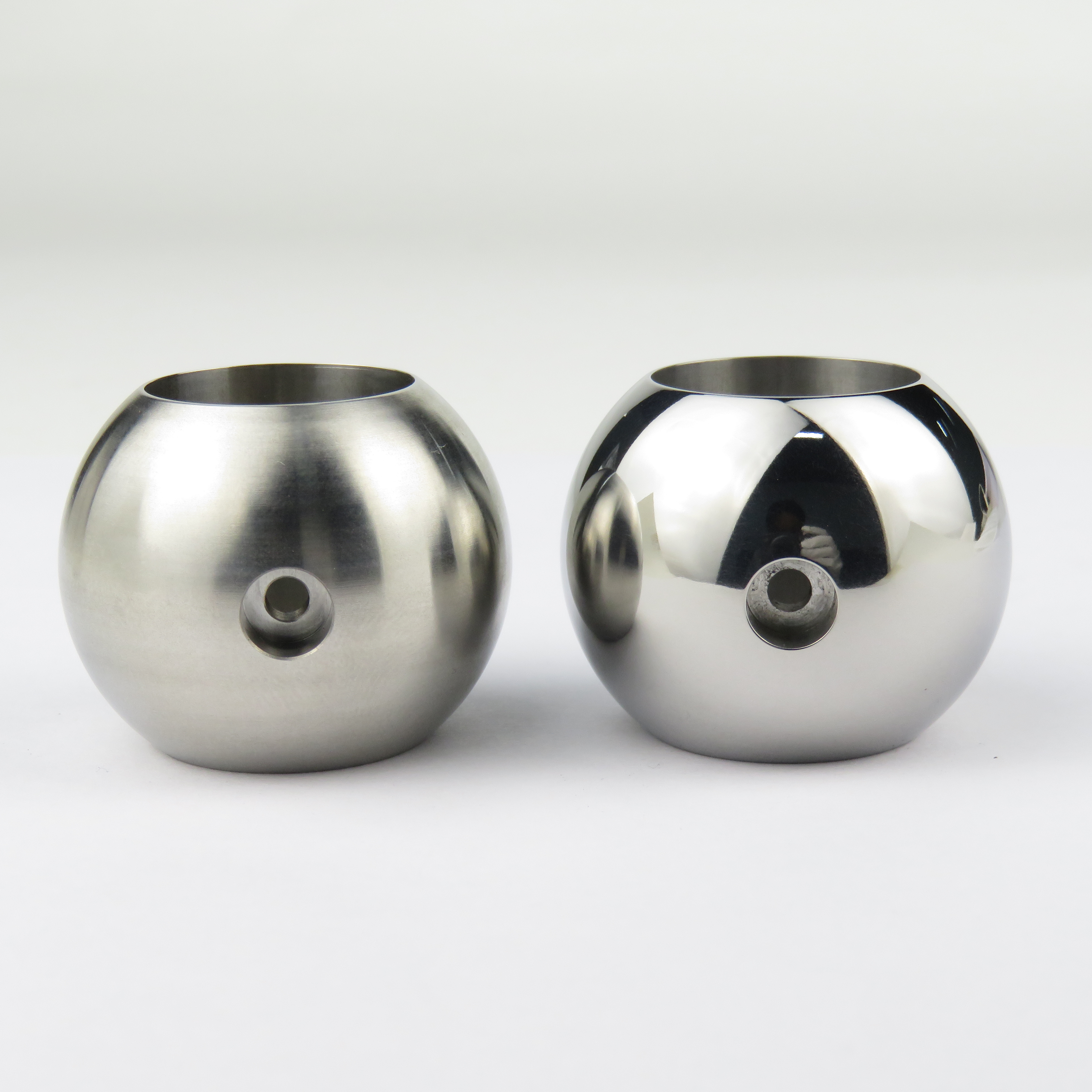
Send representative production parts including the thinnest wall, the tightest feature that must stay clear and the worst edge, plus a witness coupon of the same material and condition, a drawing extract covering the finished faces and the acceptance requirement you intend to apply. Label every piece and note its incoming condition with photographs, readings and measurements. The return is the tested parts with observations and a proposed media, compound and cycle direction for the buyer's own evaluation. A trial on parts shipped from Australia is a comparison, not a qualification, and it establishes no capacity or delivered surface value.
Ra alone is not enough. It is an average over a defined cutoff length, so a surface with a low Ra can still show waviness, orange peel or directional marks that dominate what a viewer sees, while a slightly rougher surface can look brighter if it scatters light evenly. Specify the measurement setup as well as the value, and where appearance is what matters, add a reflectance or gloss reading at a stated angle together with a physical master and viewing conditions. For Brisbane buyers working to a functional surface requirement, specify the profile and the appearance requirement separately.
Rounding depends on the energy and duration of the sequence and on how exposed the edge is. A light refinement pass may barely touch it, while a long cut stage on a soft alloy can visibly round it. Mark the edges that must stay crisp, state a maximum radius or a no-touch zone before media is selected, and measure with a radius gauge, an optical comparator or a cast impression against the incoming form. Where a bright face and a crisp edge conflict, the practical order is to finish the face and then restore or protect the edge rather than to keep polishing.
Use Brisbane, Australia as the destination on the enquiry and state whether the deliverable is equipment, media and compound, a representative sample review or a line concept. A destination does not imply local stock, a local service point or a local delivery time.
Queensland buyers work to Australian Standards (AS) and joint AS/NZS standards referenced in their contracts, drawings and safety systems; these standards are voluntary in themselves but are commonly cited in state and Commonwealth legislation, where they can become mandatory. In-scope electrical equipment must be registered under the EESS and marked with the Regulatory Compliance Mark to AS/NZS 4417.1 and AS/NZS 4417.2, and plant in Queensland workplaces is covered by work health and safety duties.
Sources were retrieved on 2026-09-29 and describe the local industrial and trade context only. They do not evidence any SurfacePolish project, shipment, installation or service in Brisbane.
The buyer needs the long bright band finished uniformly while keeping the narrow slot clear of media and preserving its edges.
Send the material, dimensions, approximate weight, batch quantity, the incoming condition and photographs of the difficult features. Mark which features must not be contacted by media and state how the result will be inspected. This form carries source reference PSEO-0729; quote it if you prefer an additional manual reference.
Open the SurfacePolish enquiry form Email a prepared enquiry
No price, lead time, certification or result is promised here. Confirm whether a sample trial is available for the specific part and what the trial can and cannot show.
Page PSEO-0729 · revised 2026-09-29 · cross-border equipment, media and scoped sample review. City context is sourced and cited above.
Use this local checker to identify missing part and inspection information. It prepares a technical-review brief; it does not approve a machine, process recipe or production result.
Complete the part details to prepare a review brief.
Email : info@surface-polish.com


 IPv6 network supported


 +86-592-2381506