A buyer producing industrial machinery in Melbourne, Australia has a long stainless pump shaft that must be brightened without bowing, losing roundness at the bearing seat or rounding the keyway edges. SurfacePolish supplies finishing machines, media and compounds internationally and runs a free sample trial on parts shipped to Xiamen, returning observations and a proposed direction rather than a promised result. This brief is written for a buyer in Melbourne working on industrial machinery; it describes equipment, media and a scoped sample review, not a local polishing service.
How will the finish be measured or viewed, with which instrument, angle, cutoff and master, and who holds that master?
What is the substrate condition - cast, welded, forged or machined - and which defects already in it will become visible once the metal is smooth?
What batch size, part mix and media maintenance routine will production really run, and does the trial describe that condition?
The as-received surface records what earlier operations did, and its deepest damage sets the stock-removal budget. A face ground with a coarse wheel carries scratches far deeper than the visible line, an EDM surface carries a recast layer that must be cut back, and a part previously plated, painted or repaired by welding hides interfaces that respond differently to the same media. Assess scratch depth on a witness coupon or a sacrificial area, then compare it with the total removal the sequence can afford before dimensions or edge form are lost. A part that was brightened once and then re-machined can also carry a ghost pattern of the earlier finish. Reading this before quoting avoids a disappointing trial result that is really a substrate problem.
Compound does more than lubricate: it carries abrasive, controls pH, keeps fines in suspension, prevents rust and determines how cleanly a part leaves the machine. Cutting stages usually run a more aggressive abrasive-bearing compound, while colour and lustre stages run a cleaner, higher-lubricity product with little or no abrasive so the surface is refined rather than scratched. pH matters by material family, since strongly alkaline compounds attack aluminium and acidic conditions can stain some steels, so match the family to the alloy and rinse promptly. Foam control matters too, because a foaming charge cushions contact and slows cutting unpredictably. Treat the compound specification and dose as part of the process recipe rather than as a consumable line item.
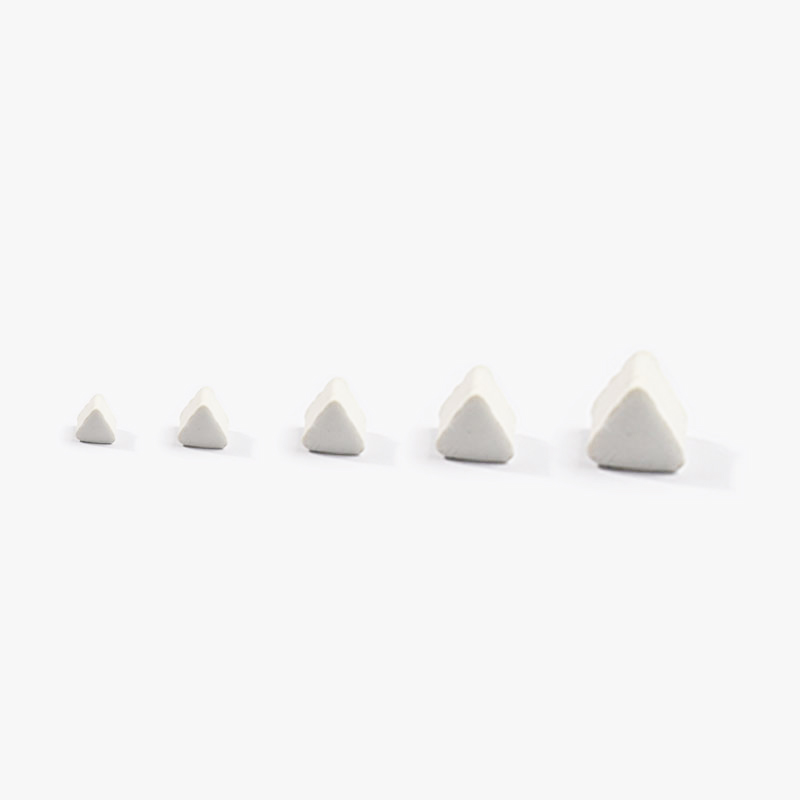
| Media | Best fit | Watch out for |
|---|---|---|
| Coarse ceramic angle-cut cylinders or triangles | First cut stage on rigid parts with open faces, removing grinding or machining damage on cast iron, steel and stainless before refinement. | Leaves a deep pattern the next stage must fully erase, chips thin edges, and its wear debris carries fine abrasive into later stages if the charge is not screened. |
| Dry media - walnut shell | Dry polishing, light deburring and lubricity on parts where a residual oil film is acceptable, and drying or lustre steps after wet processing. | Not a stock-removal medium, generates dust that needs extraction, and can leave an oily film that interferes with a later cleaning or coating requirement. |
| Medium ceramic triangles or angle-cut shapes | Blending, edge conditioning and the refinement step that removes the coarse cut pattern on housings, brackets, covers and frames. | Media that cannot enter a slot or recess leaves those areas at a different finish, so those faces need a separate operation or a stated lower standard. |
| Hardened steel media, balls and shaped shot | Bright burnishing of stainless and hardened steel, and the final wet lustre stage where a dense medium can peen a surface smooth. | Can transfer iron and rust to stainless, dents soft or thin parts, and must be kept in a dedicated charge away from ceramic media. |
A mirror finish is a sequence of progressively finer steps, each removing the pattern left by the one before it, and no single machine substitutes for the whole sequence. A typical line separates cut down, refinement, colour and final lustre, with rinse, inspection and drying between stages so coarse particles and dried residue do not travel forward. Running one vibrator longer at one media specification tends to plateau: the surface reaches the limit of that media and stops improving while edges keep rounding and dimensions keep shrinking. Plan the line as a route with a defined finish at each stage, decide which stages share a machine and which need their own equipment, and treat transfer, rinsing and drying as process steps with their own controls.
| Machine route | Where it fits | What it will not do |
|---|---|---|
| Barrel finishing machine / rotary barrel tumbler | Dense, uniform colour on small hardware that tolerates sliding contact, especially with steel media for a burnished appearance. | Nothing longer than the barrel diagonal can be processed, and slender parts can bend or nick against neighbours in the load. |
| Dry polishing machine and dryer | Final lustre, dry colour and post-wet drying where the last reflected image cannot be produced by a wet mass-finishing stage. | Works on accessible faces only, generates dust and heat that need control, and offers no way to correct a defect left by an earlier stage. |
| Disc finishing machine | Fast, high-energy cut down on small to medium parts with simple geometry where cycle time matters and edge rounding is tolerable. | Part-on-part contact and wall pressure can chip or deform parts, and the difference between sufficient and excessive removal is narrow. |
| Vibratory finishing machine (bowl or tub) | Cut-to-colour sequences on rigid, mostly open parts such as housings, covers, brackets and frames, with adjustable energy and no fixturing. | Cannot present media uniformly into pockets with narrow mouths or deep internal bores, and broad flat faces finish more slowly than edges. |
A bright face can carry a ghost of every earlier stage. When a coarse grinding or cut pattern is not fully removed, the finer stages polish the crests and leave the valleys, producing visible lines or a woven crosshatch that reappears as the viewing angle changes. The causes are a stage that removed too little, a refinement step that reused a contaminated charge, or a crosshatch direction that was never rotated between steps. Each successive stage should run across the previous direction at a clear angle, so an operator can see when the earlier pattern is gone. Inspect by reflecting a light source at a shallow angle and rotating the part: a mark that vanishes at one angle and returns at another is still in the surface.
| Failure mode | Likely cause | How to catch it |
|---|---|---|
| Compound residue film, water spots or a dull bloom after drying | Incomplete rinsing, hard or contaminated rinse water, a dose above target, or drying that leaves a cavity to bleed residue onto the finished face. | Wipe a defined area with a clean white cloth after drying, inspect cavities for bleed-out, and check rinse water hardness or conductivity at the point of use. |
| Media lodged in blind holes, slots, undercuts or threaded features | Media size too close to the opening, a slot or cavity that traps the charge, or no defined retrieval step before rinsing and drying. | Reconcile a counted media charge before and after the cycle, borescope each cavity at an agreed angle, and pin or thread gauge the features the charge could enter. |
| Edge radius beyond the allowed limit | A cut stage longer or more energetic than the edge allowance supports, insufficient masking or fixturing, or a sequence repeated to remove a defect and run past the edge allowance. | Measure with a radius gauge, a cast impression or an optical comparator at the marked edges, and compare against the edge form and dimensions recorded before finishing. |
| Ghost pattern of an earlier coarse stage showing through the final finish | A cut or refinement stage removed too little material, a later stage reused a contaminated charge, or the crosshatch direction was not changed between steps. | Reflect a light source at a shallow angle and rotate the part; a mark that disappears at one angle and returns at another is still in the surface rather than on it. |
Greater Melbourne's manufacturing base spans automotive and caravan manufacturing, engineering and metal work, food and beverage product manufacturing, and medical technology and pharmaceuticals manufacturing, all of which fall within the remit of the Victorian Government's manufacturing industry advisory group. Public research capacity sits inside the metro area: CSIRO operates Victorian sites including Clayton, Parkville and a Food Innovation Centre at Werribee, and BioMelbourne Network is the state's membership association for biotechnology, medical technology and health innovation. Freight moves between the metropolitan intermodal terminals at Dynon, South Dynon, Spotswood, Laverton, Somerton and the Swanson Dock terminals, which connect road and rail movements to the Port of Melbourne.
For this brief the relevant part of that base is machinery: Engineering and metal are listed among the industries and sectors covered by the Victorian manufacturing industry advisory group.
Melbourne's mix of metal fabrication, food and beverage plant, and medical device manufacturing puts surface condition on the critical path in several ways: deburring and edge rounding affect fit, fatigue life and the safety of parts handled in automated lines, while cleanliness and residue control matter where components go into food-contact equipment or medical products. Batch finishing choices also interact with the mix of low-volume fabrication and higher-volume repetitive parts typical of the metro area, because the same workshop often needs both.
A Melbourne buyer should decide whether the requirement is a functional edge and burr condition on specific features or a blanket surface specification, because that determines media selection and cycle time - and for food-contact or medical parts it should also settle the cleaning and residue acceptance criteria before any equipment is chosen.
Freight context: Port of Melbourne, Dynon and South Dynon intermodal terminals, Somerton intermodal terminal, Laverton intermodal terminal, Melbourne Airport. Victoria's freight system is coordinated by Freight Victoria, and the state publishes the metropolitan intermodal terminal list that feeds the Port of Melbourne, including terminals operated by Qube, Pacific National, SCT Logistics, Sadleirs, ACFS and Austrak. Containerised imports of finishing equipment normally arrive through the Port of Melbourne and are unpacked at or railed from one of those metropolitan terminals; intermodal terminals are defined by the state as locations for transferring freight between transport modes.
Australia and China are parties to the China-Australia Free Trade Agreement (ChAFTA), signed on 17 June 2015 and in force since 20 December 2015; the Australian Border Force maintains a dedicated ChAFTA page and working tariff schedule, and FTAs give importers a route to preferential rates of duty where the rules of origin are met. China was Australia's largest source of imports in 2025 at $130.2b, up 12.5% on 2024, and 56% (69,567) of Australian business importers traded at least once with China in 2020-21. A Chinese supplier of finishing machines, media or compounds is therefore shipping into Australia's single largest import stream, and preferential duty depends on origin documentation rather than on a blanket zero-tariff guarantee for every product line.
The Australian Border Force (ABF) is the customs authority and clears imported goods through customs; all goods arriving in Australia must be declared unless an exception applies, goods valued at up to A$1,000 can be imported without a formal import declaration, and entry is made through the Integrated Cargo System (Form B650 for sea or air cargo). Generally all goods imported into Australia are liable for duties and taxes unless an exemption or concession applies, and most imports are subject to 10% GST, so classification, customs valuation and any preferential tariff claim drive the landed cost; a licensed customs broker is the normal route for a first-time importer. Electrical equipment can fall under the Electrical Equipment Safety System, under which the first Australian supplier registers as a Responsible Supplier, holds an ABN, makes a Responsible Supplier Declaration and marks the equipment with the Regulatory Compliance Mark (RCM) in accordance with AS/NZS 4417.1 and AS/NZS 4417.2. Imported goods may also require a trade description naming the country of manufacture, and machinery that is not in-scope electrical equipment still has to meet state work health and safety duties covering plant.
SurfacePolish supplies from Xiamen, China. The buyer's own destination rules, conformity marking, tariff classification and documentation responsibilities stay with the buyer; confirm them against the authorities named above before ordering.
A roughness number without its setup is not a specification. Decide the cutoff length, filter, evaluation length, number of traces and their direction relative to the preceding polish direction, then keep every one of those settings unchanged between the incoming survey and the final inspection. Curved and narrow faces need a fixture or a witness coupon processed in the same charge, because a stylus cannot follow a small radius reliably and a hand-held trace on a curved surface is not comparable. Where a face is critical, mark the exact measurement positions on the drawing or with a permanent label and record them. Optical instruments avoid stylus damage on soft polished surfaces but see a different frequency band than a contact profilometer, so do not mix instrument types within one comparison.
Send parts that represent the real production spread, not the one clean sample on the desk. Include the thinnest wall, the tightest internal feature that must stay clear, the worst edge, and one as-received reject if you have one. Add a witness coupon of the same material and condition for texture measurement, and label every piece so a returned part can be matched to its settings. Supply the material and heat treatment, the drawing extract covering the finished faces, and the acceptance requirement you intend to apply. Photograph the incoming condition at fixed scale before packing, protect edges and bright faces in transit, and state what the trial must answer. Unlabelled, unrepresentative parts produce observations that cannot be used.
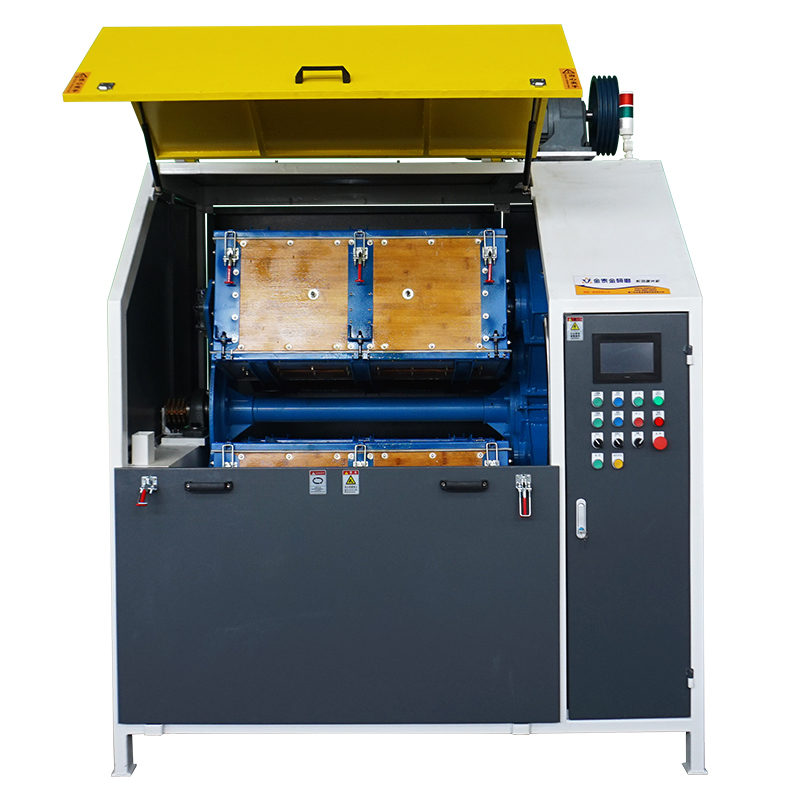
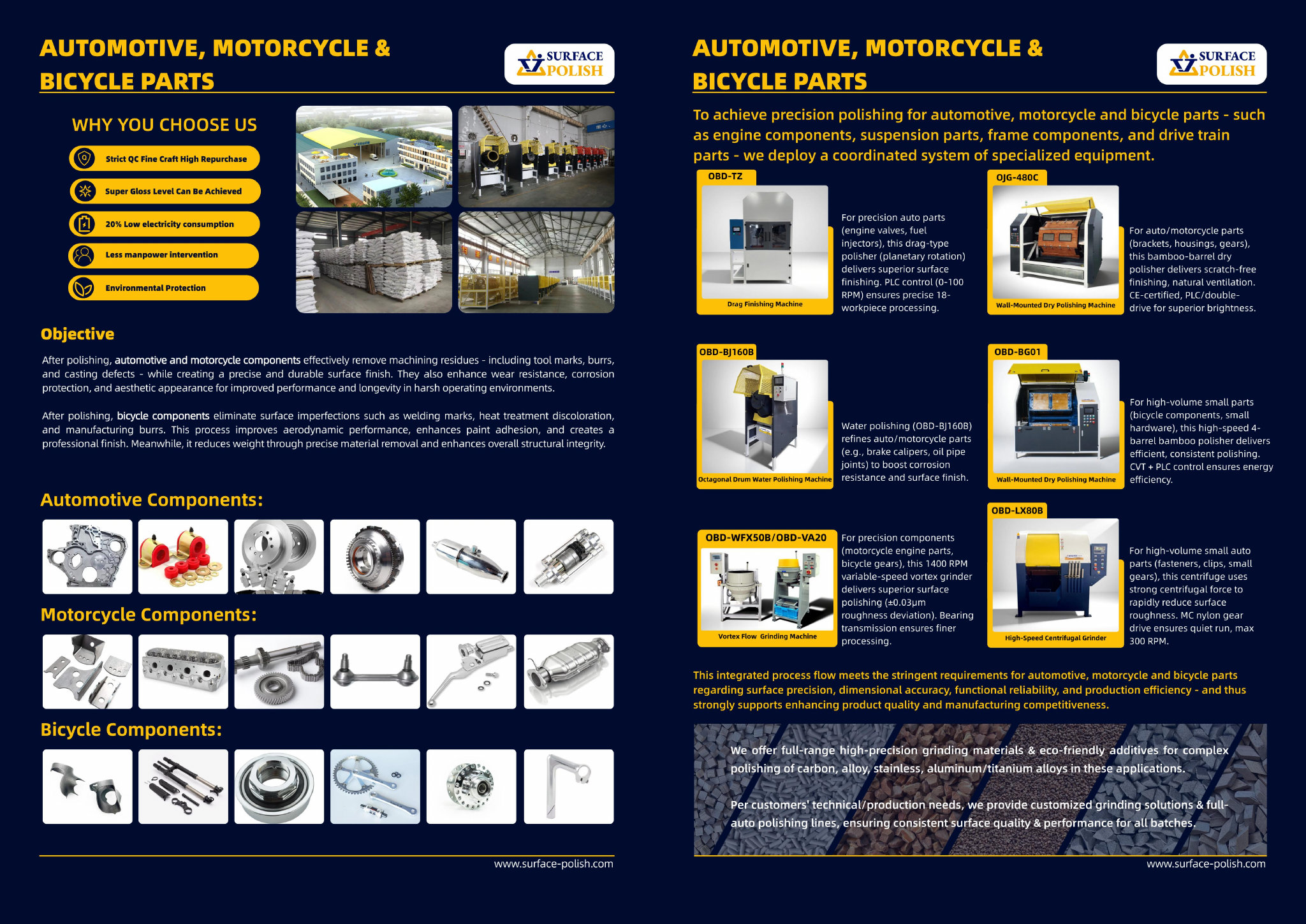
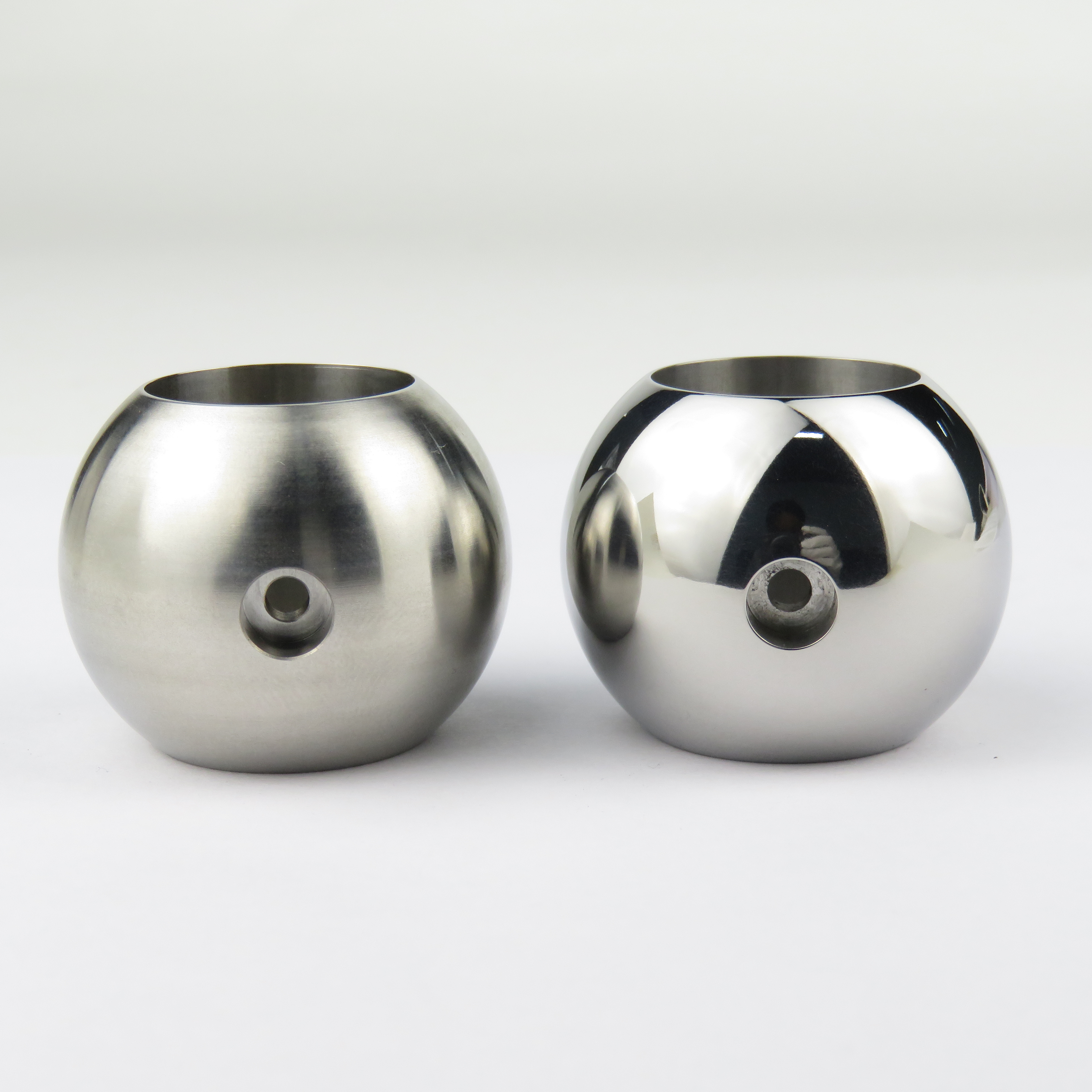
No to both. SurfacePolish is a cross-border supplier of finishing machines, media and compounds, and it does not supply or perform electropolishing or operate a plant, branch, dealer or technician service in Australia or any other market. What is offered is equipment and consumables, a scoped discussion of a finishing line concept, and a free sample trial in which representative parts are shipped to Xiamen and returned with observations and a proposed process direction. Where an electrochemical finish is under consideration, the discussion stays a comparison with a mechanical route.
Haze and sleeks usually come from contamination rather than from a wrong final medium. Worn media shed an oversized fine fraction, abrasive can agglomerate in the compound line, screens and machine walls carry grit from an earlier coarse stage, and a shared or under-controlled rinse moves particles forward. Inspect under raking light against a master and trace the pattern: defects that appear in one machine point to the charge, while those spread across machines point to rinsing or handling. Clean the charge, screen the media and re-establish the rinse before changing the compound.
Ra alone is not enough. It is an average over a defined cutoff length, so a surface with a low Ra can still show waviness, orange peel or directional marks that dominate what a viewer sees, while a slightly rougher surface can look brighter if it scatters light evenly. Specify the measurement setup as well as the value, and where appearance is what matters, add a reflectance or gloss reading at a stated angle together with a physical master and viewing conditions. For Melbourne buyers working to a functional surface requirement, specify the profile and the appearance requirement separately.
Use Melbourne, Australia as the destination on the enquiry and state whether the deliverable is equipment, media and compound, a representative sample review or a line concept. A destination does not imply local stock, a local service point or a local delivery time.
Victorian buyers reference Australian Standards (AS) and joint AS/NZS standards named in their own specifications, purchase orders or safety systems; these standards are voluntary on their own but become effectively mandatory when state or Commonwealth legislation refers to them. Electrical equipment in scope for the EESS must carry the Regulatory Compliance Mark in accordance with AS/NZS 4417.1 and AS/NZS 4417.2, and machinery used in Victorian workplaces sits under the state's work health and safety duties for plant.
Sources were retrieved on 2026-09-29 and describe the local industrial and trade context only. They do not evidence any SurfacePolish project, shipment, installation or service in Melbourne.
The buyer needs a bright shaft without bowing it in the charge and without losing roundness or the bearing seat fit.
Send the material, dimensions, approximate weight, batch quantity, the incoming condition and photographs of the difficult features. Mark which features must not be contacted by media and state how the result will be inspected. This form carries source reference PSEO-0719; quote it if you prefer an additional manual reference.
Open the SurfacePolish enquiry form Email a prepared enquiry
No price, lead time, certification or result is promised here. Confirm whether a sample trial is available for the specific part and what the trial can and cannot show.
Page PSEO-0719 · revised 2026-09-29 · cross-border equipment, media and scoped sample review. City context is sourced and cited above.
Use this local checker to identify missing part and inspection information. It prepares a technical-review brief; it does not approve a machine, process recipe or production result.
Complete the part details to prepare a review brief.
Email : info@surface-polish.com


 IPv6 network supported


 +86-592-2381506