A buyer producing industrial machinery in Rotterdam, Netherlands has a long stainless pump shaft that must be brightened without bowing, losing roundness at the bearing seat or rounding the keyway edges. SurfacePolish supplies finishing machines, media and compounds internationally and runs a free sample trial on parts shipped to Xiamen, returning observations and a proposed direction rather than a promised result. This brief is written for a buyer in Rotterdam working on industrial machinery; it describes equipment, media and a scoped sample review, not a local polishing service.
How will the finish be measured or viewed, with which instrument, angle, cutoff and master, and who holds that master?
Which faces must reach a mirror and which only need to be clean and uniform, and how is each one judged?
Can available media actually reach the geometry, and what finish is realistic in the recesses and internal features it cannot reach?
Bright finishing does not fill a defect, it magnifies it. A reflection compresses the whole surface into a narrow viewing angle, so a gas pore in a casting, a slag inclusion at a weld toe or a non-metallic stringer in free-machining bar becomes a visible comet trail once the surrounding metal is smooth. Screen the incoming substrate before any media is chosen: examine under glancing light, wipe the surface clean of oil, and where the drawing allows, run a dye penetrant check across weld toes and machined transitions. If the defect density is high, no sequence of cut, colour and lustre stages will produce a uniform image, and the honest answer is that the casting, the weld or the requirement itself has to change.
For housings, cover plates, brackets and frames that are rigid and mostly open, a vibratory bowl or tub gives the most forgiving cut-to-colour sequence. The charge moves as a mass, so there is no fixturing to design and no clamping marks, and cycle energy can be tuned through amplitude, media density and load ratio. The limit is reach: media cannot present abrasive uniformly into a pocket whose mouth is narrower than its base, and broad flat faces finish more slowly than edges because contact pressure there is lower. Part-on-part contact also leaves nicks on thin or sharply detailed features, so small, slender or intricate parts usually belong in a gentler route even when their surface requirement is identical.
| Machine route | Where it fits | What it will not do |
|---|---|---|
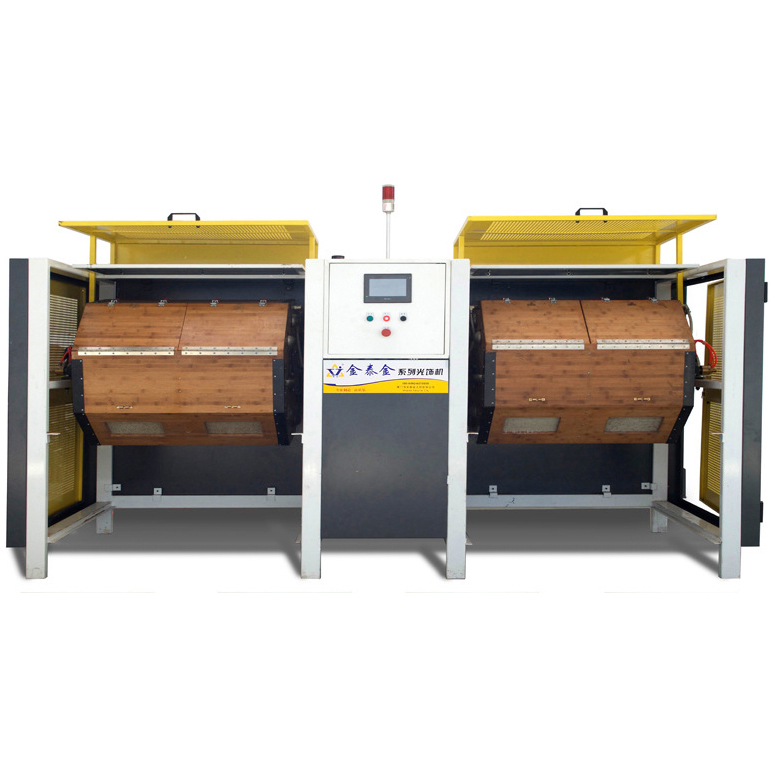
| Dry polishing machine and dryer | Final lustre, dry colour and post-wet drying where the last reflected image cannot be produced by a wet mass-finishing stage. | Works on accessible faces only, generates dust and heat that need control, and offers no way to correct a defect left by an earlier stage. |
| Centrifugal barrel finishing machine | High-speed cut down and refinement on small to medium parts where a short, energetic cycle is needed before colour stages. | Aggressive on edges and thin sections, requires tight cycle control, and does not replace a finer refinement stage. |
| Vibratory finishing machine (bowl or tub) | Cut-to-colour sequences on rigid, mostly open parts such as housings, covers, brackets and frames, with adjustable energy and no fixturing. | Cannot present media uniformly into pockets with narrow mouths or deep internal bores, and broad flat faces finish more slowly than edges. |
| Magnetic finishing machine | Refinement and edge conditioning of small precise parts with internal edges, cross holes and fine detail that media cannot enter. | Working envelope and part mass restrict size, removal is very small, and coverage falls off wherever the field cannot drive the pins. |
Media handling is where good sequences are quietly spoiled. Parts must be separated from the charge completely, using screens or a separation deck matched to the smallest media in use, with a counted charge so losses stay visible. Screen out worn media on a schedule and top the charge up, because a blend of very small and original-size media finishes unevenly. Keep steel and ceramic media in dedicated machines or dedicated charges: a few steel pieces in a ceramic load leave bright speckle and iron pickup on stainless, while ceramic fines in a steel charge cause sleeks. Store dry media sealed against moisture, and clean the machine between material families when switching from ferrous to stainless work.
| Media | Best fit | Watch out for |
|---|---|---|
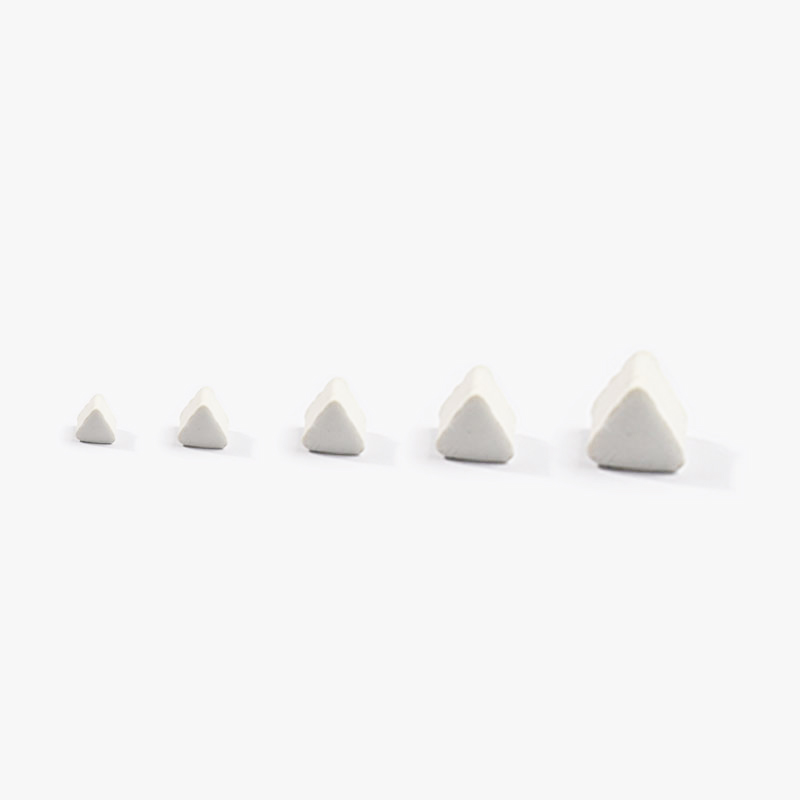
| Plastic or polyester media | Gentle processing of aluminium, brass, copper and thin panels where metal smearing, nicks and distortion must be avoided. | Low density gives little contact force, so cycles run long and heavy grinding marks may survive; plastic also wears quickly and can float above the working mass. |
| Small high-density ceramic spheres or ovals | Colour and pre-lustre stages where a uniform, soft-looking finish matters more than stock removal, including curved and contoured faces. | Very slow cut, easily lost through screens sized for larger media, and ineffective in deep recesses because it cannot reach or press against the surface. |
| Magnetic finishing pins and needles | Small precise parts with internal edges, cross holes, slots and fine detail that no tumbling medium of usable size can reach. | Limited by working envelope and part mass, removes very little material, and pins can embed in soft metals or remain in cavities if retrieval is not checked. |
| Dry media - corn cob | Softer dry lustre and drying steps, absorbent polishing of small parts, and light work on brass, aluminium and plated-look surfaces. | Breaks down faster than walnut shell and must be replaced regularly; it removes almost no material and cannot correct a surface defect. |
A bright face can carry a ghost of every earlier stage. When a coarse grinding or cut pattern is not fully removed, the finer stages polish the crests and leave the valleys, producing visible lines or a woven crosshatch that reappears as the viewing angle changes. The causes are a stage that removed too little, a refinement step that reused a contaminated charge, or a crosshatch direction that was never rotated between steps. Each successive stage should run across the previous direction at a clear angle, so an operator can see when the earlier pattern is gone. Inspect by reflecting a light source at a shallow angle and rotating the part: a mark that vanishes at one angle and returns at another is still in the surface.
| Failure mode | Likely cause | How to catch it |
|---|---|---|
| Media lodged in blind holes, slots, undercuts or threaded features | Media size too close to the opening, a slot or cavity that traps the charge, or no defined retrieval step before rinsing and drying. | Reconcile a counted media charge before and after the cycle, borescope each cavity at an agreed angle, and pin or thread gauge the features the charge could enter. |
| Haze, a general loss of image clarity with no directional pattern | Worn media shedding an oversized fine fraction, agglomerated abrasive in the compound line, or fine grit carried into a late stage from screens, machine walls or a shared rinse. | View under raking light at low magnification against a master, then trace the pattern by machine and by rinse line to separate a charge problem from a rinse or transfer problem. |
| Ghost pattern of an earlier coarse stage showing through the final finish | A cut or refinement stage removed too little material, a later stage reused a contaminated charge, or the crosshatch direction was not changed between steps. | Reflect a light source at a shallow angle and rotate the part; a mark that disappears at one angle and returns at another is still in the surface rather than on it. |
| Sleeks, fine unidirectional lines across a bright face | Contaminated charge or rinse, a metal particle trapped between media and part, or a polishing direction that was never rotated between successive stages. | Orient the light along and then across the lines, note where each family appears on the part, and inspect the charge and rinse screens for embedded foreign particles. |
Rotterdam is the Dutch mainport and the centre of Europe's largest maritime, port and industrial complex, with refining, chemicals, bulk and container handling concentrated in the port and industrial area. Deltalinqs represents over 95% of the logistics, port and industrial enterprises in the mainport, with more than 700 member companies drawn from fourteen sectors; the mainport accounts for 2.9% of Dutch GDP and roughly 192,000 jobs in Rotterdam-Rijnmond, while the port as a whole supports over 500,000 jobs and more than EUR 60 billion of added value nationally. Municipal and provincial policy documents describe the cluster as the largest industry and energy cluster in Europe.
For this brief the relevant part of that base is machinery: Deltalinqs represents over 700 companies from fourteen different sectors, covering logistics, port and industrial enterprises in the mainport.
Refining, chemical, bulk and maritime maintenance in the port generates a steady flow of valves, pump and heat-exchanger components, flanges and machined spares, where burrs, sharp edges and surface condition affect sealing, flow and coating adhesion. This is mostly repair and overhaul work rather than high-volume series production, so batch flexibility and cross-contamination control between carbon steel, stainless and higher-alloy parts matter more than cycle time.
A Rotterdam-area buyer should first settle which material families one finishing line must handle — carbon steel, stainless, duplex or nickel alloy — and whether the parts are pre-coating (needing a defined Ra and cleanliness) or in-service spares (needing edge and burr control only), because that fixes the media and compound choice.
Freight context: Port of Rotterdam (Europoort and Botlek industrial areas, Waalhaven). The port combines deep-sea, short-sea, inland barge and rail freight, and 192,000 jobs in Rotterdam-Rijnmond are linked to the harbour. Machines and sample parts arriving from outside the EU are declared to Dutch Customs at the point of entry; the Deltalinqs membership base is dominated by logistics, port and industrial enterprises.
The Netherlands applies the EU's common commercial policy, so imports of Chinese industrial machinery enter under EU customs rules and WTO tariff treatment rather than under a bilateral EU-China free-trade agreement; the European Commission also maintains trade-defence measures on selected Chinese product categories, and China is a WTO member. EU-China trade in goods reached EUR 732 billion in 2024, and in 2025 manufactured goods were 97.3% of EU imports from China, with machinery and vehicles alone accounting for 54.4% — the single largest category. Chinese finishing machines, media and compounds therefore arrive in a very large, well-established EU import stream, and the buyer should expect MFN duty plus trade-defence measures where a specific product is covered.
Business is conducted in Dutch, but engineering and procurement communication in these sectors is routinely handled in English. Buyers are KVK-registered legal entities and expect a clear commercial entity to contract with, an EORI number for customs, correct HS/TARIC classification, and a full CE technical file including the EC Declaration of Conformity and a manual in the correct language; a technical construction file held by the manufacturer is normally part of the qualification pack. For EU-internal supply the invoice carries 0% VAT with the customer's VAT identification number and the customer accounts for 21% Dutch VAT in its own return, so a Chinese seller shipping directly from outside the EU must be clear about who is importer of record and who carries the duty and import VAT. Trade and investment support is organised through bodies such as KVK, RVO, the regional development agencies and the Trade and Innovate NL network, and the Dutch technology industry is represented by FME.
SurfacePolish supplies from Xiamen, China. The buyer's own destination rules, conformity marking, tariff classification and documentation responsibilities stay with the buyer; confirm them against the authorities named above before ordering.
Cosmetic acceptance is only half a disposition. Measure the dimensions and flatness that assembly depends on, gauge or thread-check features that media could enter or round, and run the functional check the part actually needs, whether that is seal condition, bearing fit, sliding contact, flow or leak. Cleanliness needs its own verification rather than an assumption: flush blind holes and passage intersections, borescope them at an agreed angle, and examine what the flush carries out. Wipe a defined area with a clean white cloth and record what appears, since compound residue and iron pickup often show only after drying. Confirm cleanliness after drying, not before, and record the method so the next batch is judged on the same basis.
Send parts that represent the real production spread, not the one clean sample on the desk. Include the thinnest wall, the tightest internal feature that must stay clear, the worst edge, and one as-received reject if you have one. Add a witness coupon of the same material and condition for texture measurement, and label every piece so a returned part can be matched to its settings. Supply the material and heat treatment, the drawing extract covering the finished faces, and the acceptance requirement you intend to apply. Photograph the incoming condition at fixed scale before packing, protect edges and bright faces in transit, and state what the trial must answer. Unlabelled, unrepresentative parts produce observations that cannot be used.
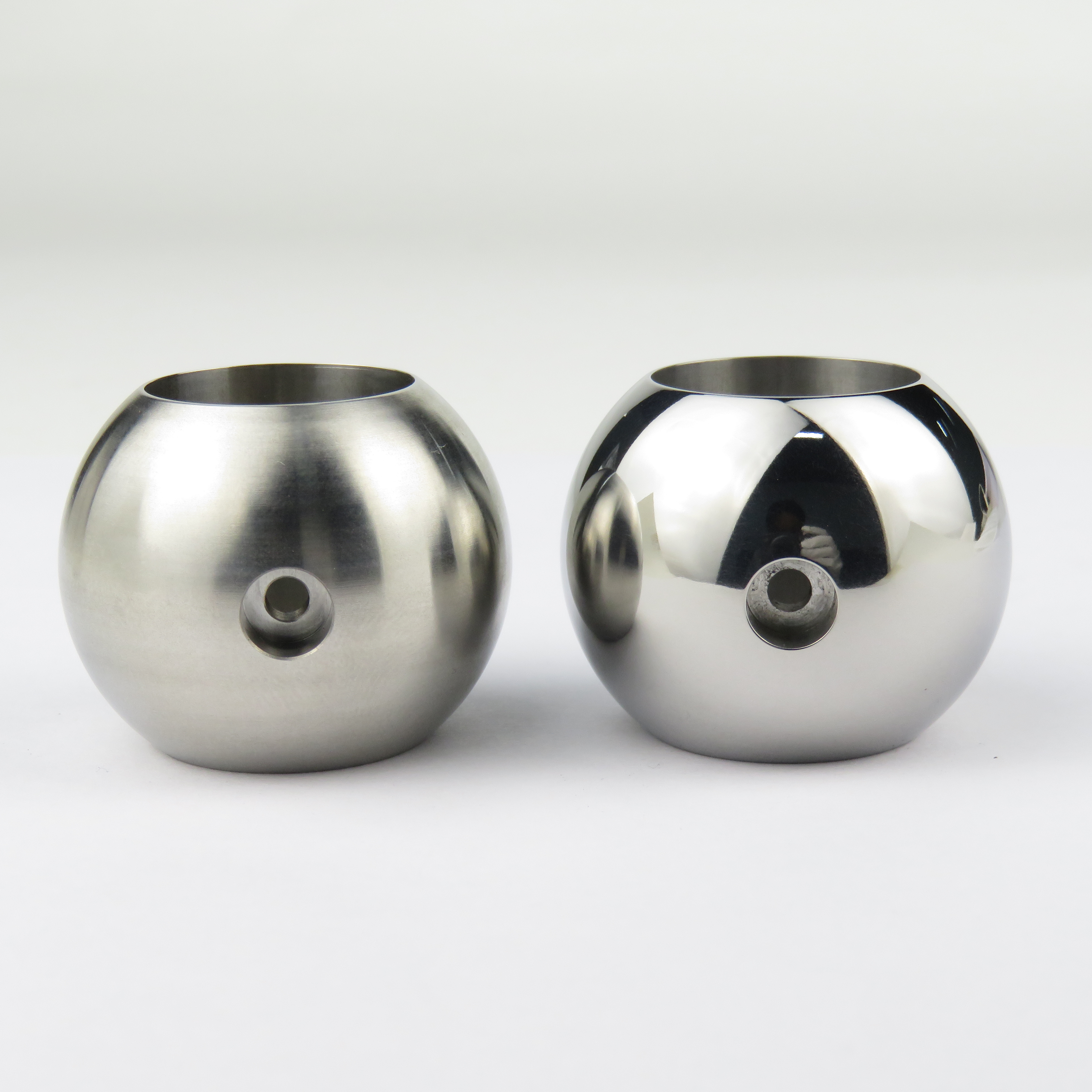
A mirror surface is damaged by contact, so handling begins before the parts leave the machine. Rinse and dry thoroughly to remove compound and fines, because residue trapped in a cavity bleeds out later and a damp surface can stain stainless. Then protect: interleave or sleeve faces that will touch, keep parts separated in trays, avoid sliding them across each other, and use gloves or a clean cloth when they are picked up. Agree packaging with the buyer, including whether parts travel individually wrapped, and inspect on arrival for marks that occurred in transit.
No, and any supplier offering one before seeing the parts is guessing. A trial produces observations on the specific parts tested, under the settings used, and those observations are described rather than warranted. Achievable reflectivity depends on the substrate, the geometry, the edge allowance and the incoming damage, and it can vary across a single face and between parts in one batch. Define how you will measure or view the finish, agree a physical master, and treat the trial result plus your own verification as the basis for a decision.
Design the charge around the smallest opening rather than the average part. Use media clearly smaller than the hole, or mask and plug the features before the cycle, count the media into and out of the load as a reconciliation, and add a retrieval step with a defined check such as a borescope or pin gauge. For Netherlands buyers sending parts for a trial, include the part with the tightest feature so the media class is chosen against real geometry. The small pins used in magnetic finishing embed easily in soft metal, so those features need extra inspection.
Use Rotterdam, Netherlands as the destination on the enquiry and state whether the deliverable is equipment, media and compound, a representative sample review or a line concept. A destination does not imply local stock, a local service point or a local delivery time.
Buyers here work to the CE machinery regime (Machinery Regulation replacing the Machinery Directive, compliance by 20 January 2027) and to the Dutch/EN-ISO surface-finishing standards published by NEN, such as NEN-EN-ISO 2080 for metal-finishing terminology. In the port and process industries, client specifications for coating preparation, cleanliness and material conformity usually sit on top of those base standards.
Sources were retrieved on 2026-09-29 and describe the local industrial and trade context only. They do not evidence any SurfacePolish project, shipment, installation or service in Rotterdam.
The buyer needs a bright shaft without bowing it in the charge and without losing roundness or the bearing seat fit.
Send the material, dimensions, approximate weight, batch quantity, the incoming condition and photographs of the difficult features. Mark which features must not be contacted by media and state how the result will be inspected. This form carries source reference PSEO-0619; quote it if you prefer an additional manual reference.
Open the SurfacePolish enquiry form Email a prepared enquiry
No price, lead time, certification or result is promised here. Confirm whether a sample trial is available for the specific part and what the trial can and cannot show.
Page PSEO-0619 · revised 2026-09-29 · cross-border equipment, media and scoped sample review. City context is sourced and cited above.
Use this local checker to identify missing part and inspection information. It prepares a technical-review brief; it does not approve a machine, process recipe or production result.
Complete the part details to prepare a review brief.
Email : info@surface-polish.com


 IPv6 network supported


 +86-592-2381506