An industrial machinery buyer in Vadodara, India has a cast aluminium gearbox end cover whose machined o-ring groove must hold tolerance while the visible face is brightened. The offer here is cross-border equipment, media and compounds plus a free sample trial: representative parts ship to Xiamen and come back with observations and a proposed process direction, not a guarantee. This brief is written for a buyer in Vadodara working on industrial machinery; it describes equipment, media and a scoped sample review, not a local polishing service.
Which faces must reach a mirror and which only need to be clean and uniform, and how is each one judged?
What batch size, part mix and media maintenance routine will production really run, and does the trial describe that condition?
Can available media actually reach the geometry, and what finish is realistic in the recesses and internal features it cannot reach?
Bright polishing rounds edges, and the more energy and time the sequence needs, the more rounding appears. Some edges are cosmetic and rounding is welcome; others define function, such as a scraper edge on a machine-tool slideway, a knife edge on a metering blade, a thread start, or the lapped lip of a valve seat. Mark those features on the drawing and state a maximum edge radius or a no-touch zone before media is selected. Inspection can use radius gauges, a cast impression or an optical comparator against the incoming edge form. Where a crisp edge and a bright face conflict, the practical order is to finish the face first and restore the edge with a controlled hand operation, or to accept a slightly duller face that preserves the edge.
Rotary barrels work by sliding contact and suit parts that tolerate tumbling, giving a dense, uniform colour on small hardware. They cannot process anything longer than the barrel diagonal, so long shafts, extrusions and frame members belong in a tub vibrator, where a part can pass through the mass without being folded. Slender parts need support or careful load balancing, because the same energy that brightens a shaft can bow it or nick it against a neighbour. Barrel and tub routes reach some external areas a bowl cannot, such as a long groove, but they are poor at bores running parallel to the long axis. Verify straightness and roundness after the cycle, not only appearance.
| Machine route | Where it fits | What it will not do |
|---|---|---|
| Tub vibrator | Long and large parts such as shafts, extrusions and frame members that cannot be folded into a barrel, including external grooves. | Poor at bores running parallel to the long axis, and slender parts still need support or balanced loading to hold straightness. |
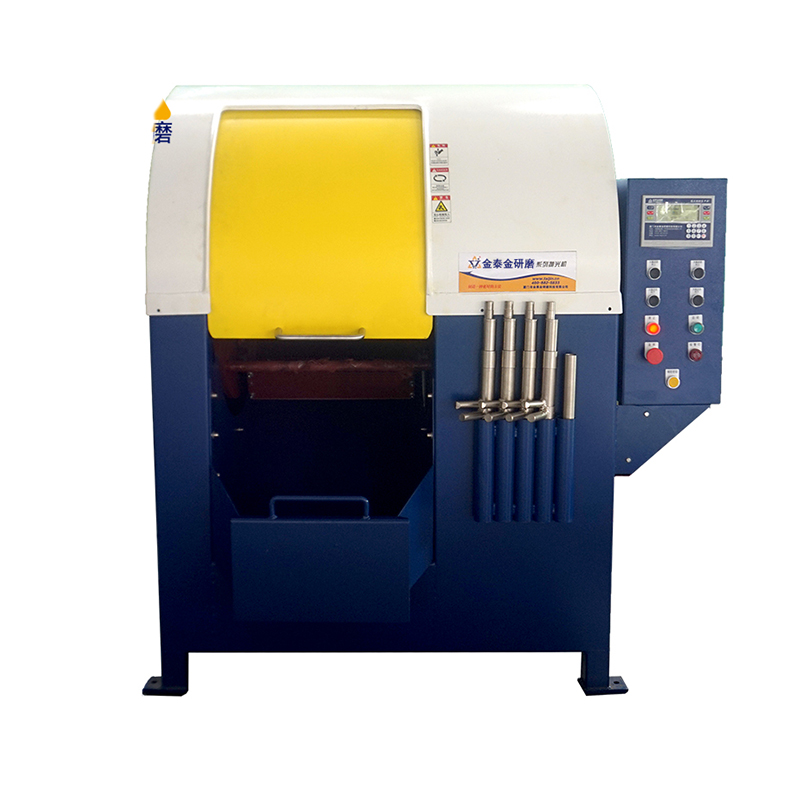
| Dry polishing machine and dryer | Final lustre, dry colour and post-wet drying where the last reflected image cannot be produced by a wet mass-finishing stage. | Works on accessible faces only, generates dust and heat that need control, and offers no way to correct a defect left by an earlier stage. |
| Vibratory finishing machine (bowl or tub) | Cut-to-colour sequences on rigid, mostly open parts such as housings, covers, brackets and frames, with adjustable energy and no fixturing. | Cannot present media uniformly into pockets with narrow mouths or deep internal bores, and broad flat faces finish more slowly than edges. |
| Barrel finishing machine / rotary barrel tumbler | Dense, uniform colour on small hardware that tolerates sliding contact, especially with steel media for a burnished appearance. | Nothing longer than the barrel diagonal can be processed, and slender parts can bend or nick against neighbours in the load. |
Media handling is where good sequences are quietly spoiled. Parts must be separated from the charge completely, using screens or a separation deck matched to the smallest media in use, with a counted charge so losses stay visible. Screen out worn media on a schedule and top the charge up, because a blend of very small and original-size media finishes unevenly. Keep steel and ceramic media in dedicated machines or dedicated charges: a few steel pieces in a ceramic load leave bright speckle and iron pickup on stainless, while ceramic fines in a steel charge cause sleeks. Store dry media sealed against moisture, and clean the machine between material families when switching from ferrous to stainless work.
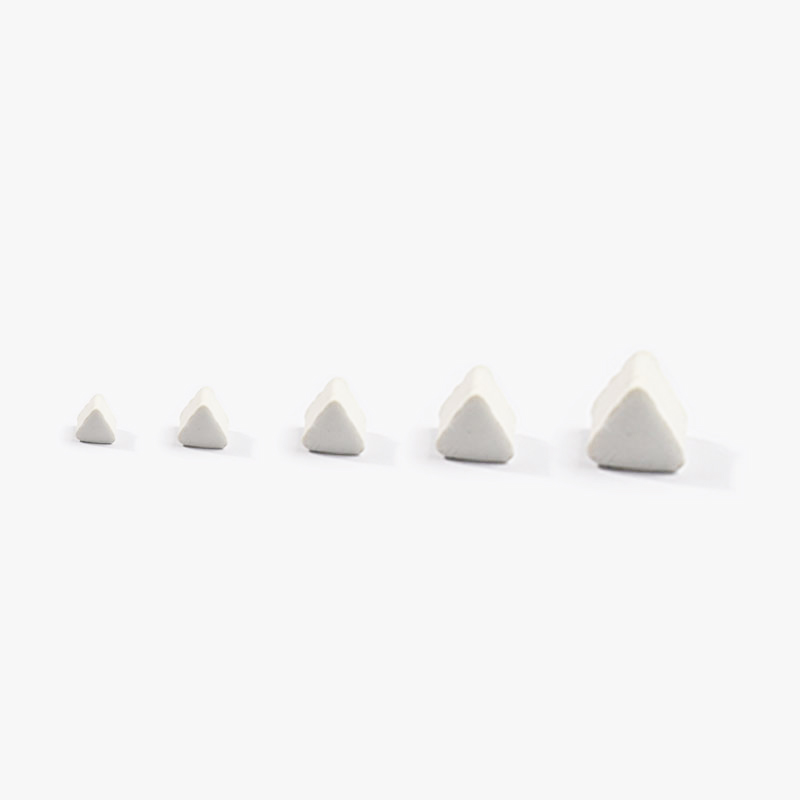
| Media | Best fit | Watch out for |
|---|---|---|
| Magnetic finishing pins and needles | Small precise parts with internal edges, cross holes, slots and fine detail that no tumbling medium of usable size can reach. | Limited by working envelope and part mass, removes very little material, and pins can embed in soft metals or remain in cavities if retrieval is not checked. |
| Hardened steel media, balls and shaped shot | Bright burnishing of stainless and hardened steel, and the final wet lustre stage where a dense medium can peen a surface smooth. | Can transfer iron and rust to stainless, dents soft or thin parts, and must be kept in a dedicated charge away from ceramic media. |
| Plastic or polyester media | Gentle processing of aluminium, brass, copper and thin panels where metal smearing, nicks and distortion must be avoided. | Low density gives little contact force, so cycles run long and heavy grinding marks may survive; plastic also wears quickly and can float above the working mass. |
| Medium ceramic triangles or angle-cut shapes | Blending, edge conditioning and the refinement step that removes the coarse cut pattern on housings, brackets, covers and frames. | Media that cannot enter a slot or recess leaves those areas at a different finish, so those faces need a separate operation or a stated lower standard. |
Orange peel is a slow wave in the surface, visible as a distorted reflected line, and it usually comes from the finishing process rather than the substrate. It develops when a soft or work-hardened layer is deformed rather than cut, when a heavy cut stage is followed by too little refinement, or when a buffing or dry stage runs at high speed with excess pressure and little cooling. Aluminium, copper and annealed stainless are the most prone. Detection belongs in the acceptance routine: reflect a straight edge or a fluorescent tube in the face, look at the shape of the image, and compare against a physical master in the same lighting. Extra fine polishing will not remove peel that sits below the surface; the sequence has to return to a cutting stage.
| Failure mode | Likely cause | How to catch it |
|---|---|---|
| Compound residue film, water spots or a dull bloom after drying | Incomplete rinsing, hard or contaminated rinse water, a dose above target, or drying that leaves a cavity to bleed residue onto the finished face. | Wipe a defined area with a clean white cloth after drying, inspect cavities for bleed-out, and check rinse water hardness or conductivity at the point of use. |
| Heat tint or discolouration concentrated near edges and thin sections | Friction at a dry or high-speed stage raising local temperature, poor cooling or compound flow, or a load that packs parts against each other with no media between them. | Compare colour against a master in consistent lighting, look for a gradient from edge inward, and check whether the tint follows load contact points or the whole face. |
| Edge radius beyond the allowed limit | A cut stage longer or more energetic than the edge allowance supports, insufficient masking or fixturing, or a sequence repeated to remove a defect and run past the edge allowance. | Measure with a radius gauge, a cast impression or an optical comparator at the marked edges, and compare against the edge form and dimensions recorded before finishing. |
| Sleeks, fine unidirectional lines across a bright face | Contaminated charge or rinse, a metal particle trapped between media and part, or a polishing direction that was never rotated between successive stages. | Orient the light along and then across the lines, note where each family appears on the part, and inspect the charge and rinse screens for embedded foreign particles. |
Vadodara's economy is described by its district administration as based mainly on fertilisers, cotton textiles, machine tools, pharmaceuticals, chemicals, biotechnology, engineering, glass and dairy, and the same page states that over 35% of India's power transmission and distribution equipment manufacturers plus an estimated 800 ancillaries supporting power-sector manufacturing and engineering are located in Vadodara. Gujarat Alkalies and Chemicals Limited (GACL), established in 1973 in Vadodara, lists Vadodara and Coelho complexes with an address at Ranoli in the district, and Alembic Pharmaceuticals records starting tincture and alcohol manufacturing at Vadodara in 1907. The city therefore combines a chemical and petrochemical base with power-equipment, machine-tool and pharmaceutical manufacturing.
For this brief the relevant part of that base is machinery: Vadodara's district page records an estimated 800 ancillaries supporting power-sector manufacturing and engineering in the city, and lists machine tools among its main economic sectors.
Vadodara's combination of power-transmission equipment, machine tools, chemicals and pharmaceuticals produces machined and cast metal parts — gears, housings, enclosures, switchgear components — where burrs and edge condition matter for assembly, electrical clearances and coating or plating adhesion. Surface finish on sealing and mating faces is a standard inspection point for power-equipment ancillaries, and hygienic parts in the pharmaceutical supply chain add a cleanliness requirement. Process choice therefore depends on whether the part is a casting, a machined steel component or a stainless hygienic part, and on whether the buyer needs edge control alone or a defined finish value.
A Vadodara buyer should settle whether acceptance is edge condition on a machined component or a specified finish on a sealing or mating face, and confirm on sample parts that the chosen media and compound will not damage coatings, plating or machined tolerances.
Freight context: Vadodara Airport (Harni Airport), Airports Authority of India. AAI maintains the Vadodara (Harni) airport page, which includes a cargo entry. For sea freight the Gujarat industrial belt is served by the state's port network and inland container depots to the west; imported machines and sample parts are cleared under the standard Indian customs procedure at the port or airport of entry, with BIS compliance checked where the product is notified.
India's foreign-trade, customs and standards machinery works in English: the Foreign Trade Policy, DGFT's IEC and scheme material, the BIS standards catalogue and Invest India's investor guide are all published in English, and the mandatory import documents are the internationally conventional bill of lading, commercial invoice cum packing list and bill of entry (c1, c3, c6, c10). Payment in the import channel is bank-intermediated; the Foreign Trade Policy treats the irrevocable commercial letter of credit as the instrument that fixes an importer's commitment when import policy changes (c4), so a supplier should expect LC or advance terms rather than open-account credit on a first order. Indian industry associations are explicit about import substitution: the Bombay Chamber of Commerce and Industry states that one of its major focuses today is how to expand manufacturing setups and substitute imported products (c13), so a cross-border equipment seller should expect questions about local support, spares, training and total cost of ownership rather than price alone, and should hold the IEC, GST registration, bill of entry documentation and any BIS obligation as part of the commercial discussion.
India classifies every imported item in the ITC(HS) schedule, a compilation of codes for all merchandise for export and import whose Schedule I lays down the import policy regime for each item, maintained at 8-digit level under the First Schedule of the Customs Tariff Act, 1975 and aligned at 6 digits with the WCO Harmonized System (c1, c3). Importability is judged by the policy in force on the date of import, and when a policy moves from free to restricted, goods already committed through an irrevocable commercial letter of credit opened before the change can still be imported up to the balance quantity, value and period in that ICLC (c4). Preferential customs treatment is available only through the preferential trade agreements, free trade agreements, CECAs and CEPAs that India notifies and that are in operation (c5), so Chinese-origin industrial machinery is assessed at the applicable rate of the customs tariff rather than under any India-China preferential rate; India's commerce leadership has separately pointed to exports under free trade pacts growing faster than imports (c12). For capital goods specifically, DGFT operates the Export Promotion Capital Goods (EPCG) scheme, whose stated objective is to facilitate import of capital goods for producing quality goods and services (c7), which Indian firms use when they want duty relief on imported plant against an export obligation.
SurfacePolish supplies from Xiamen, China. The buyer's own destination rules, conformity marking, tariff classification and documentation responsibilities stay with the buyer; confirm them against the authorities named above before ordering.
A mirror surface changes with the observer, so viewing conditions belong in the specification. Agree the light source type, the distance and angle, the viewing direction, and whether inspection happens in a booth or in the machine environment. A physical master approved by both parties, kept clean and stored protected, is more reliable than a photograph; photographs of reflective parts mostly record the light source. Define what is acceptable, such as a limited number of fine marks, a haze limit inside a stated area, and no visible peel, and state where the standard does not apply, for instance inside a recess that will be painted or covered. Re-confirm the master whenever the sequence or media family changes.
Send parts that represent the real production spread, not the one clean sample on the desk. Include the thinnest wall, the tightest internal feature that must stay clear, the worst edge, and one as-received reject if you have one. Add a witness coupon of the same material and condition for texture measurement, and label every piece so a returned part can be matched to its settings. Supply the material and heat treatment, the drawing extract covering the finished faces, and the acceptance requirement you intend to apply. Photograph the incoming condition at fixed scale before packing, protect edges and bright faces in transit, and state what the trial must answer. Unlabelled, unrepresentative parts produce observations that cannot be used.
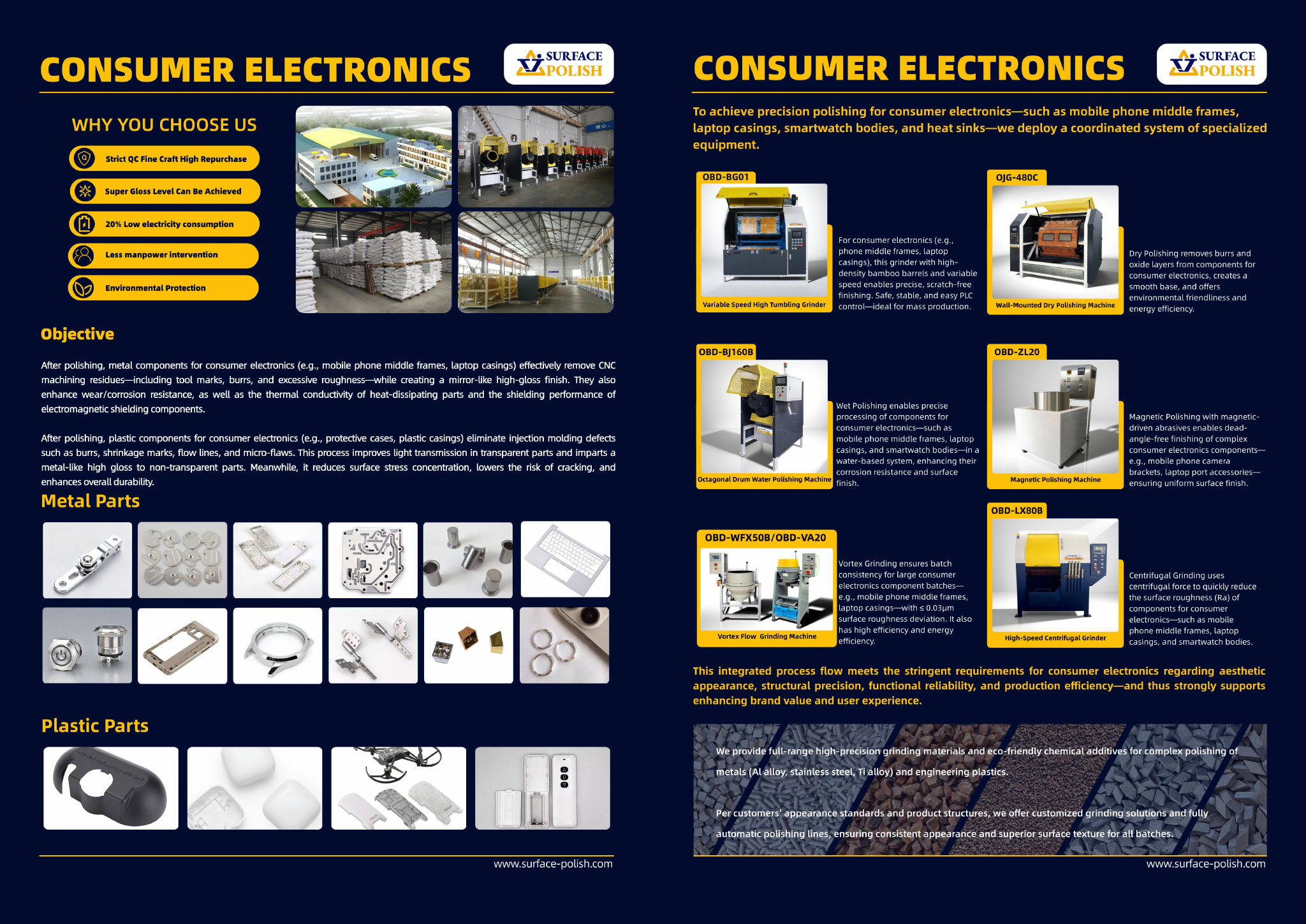
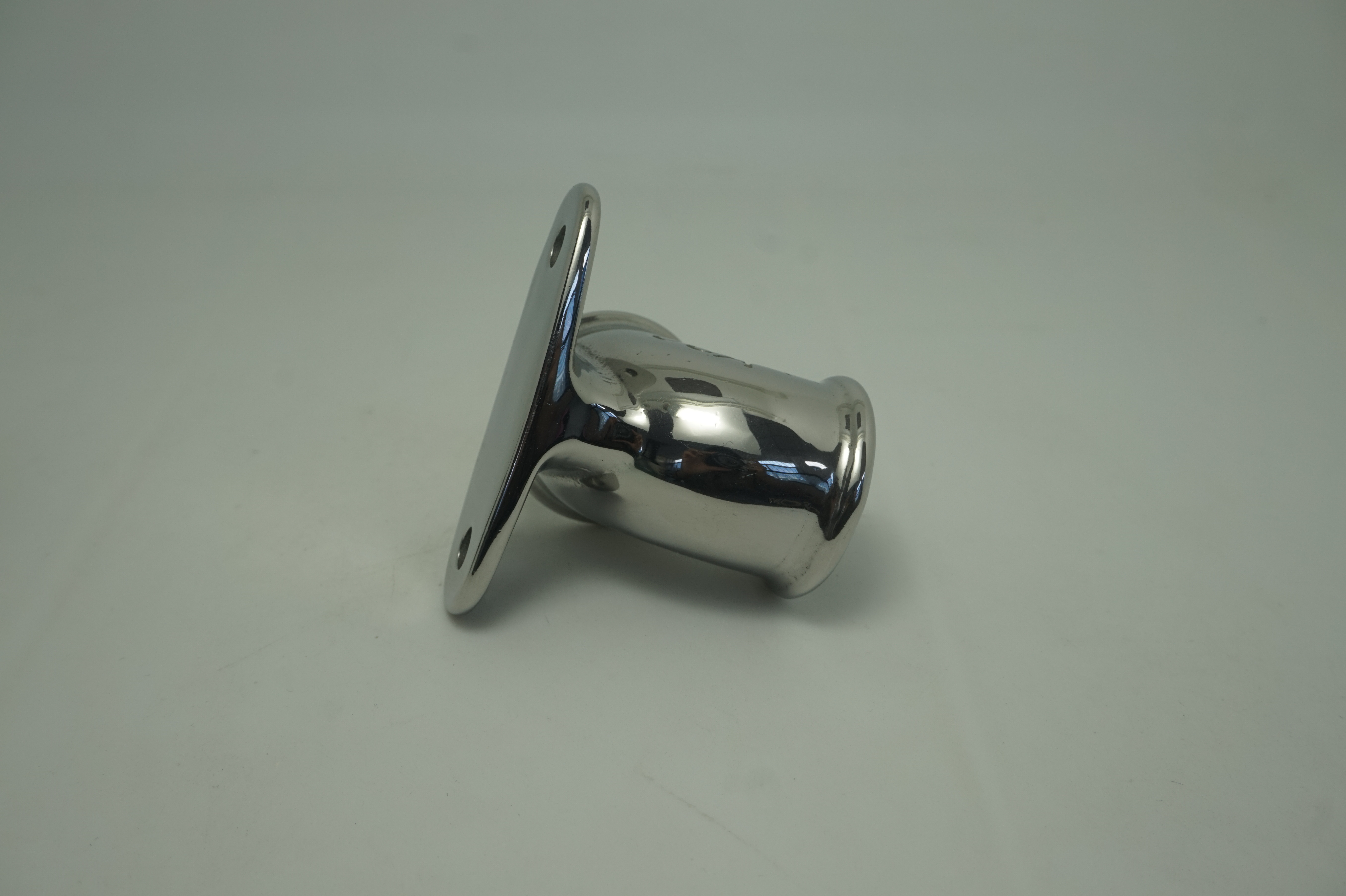
A mirror surface is damaged by contact, so handling begins before the parts leave the machine. Rinse and dry thoroughly to remove compound and fines, because residue trapped in a cavity bleeds out later and a damp surface can stain stainless. Then protect: interleave or sleeve faces that will touch, keep parts separated in trays, avoid sliding them across each other, and use gloves or a clean cloth when they are picked up. Agree packaging with the buyer, including whether parts travel individually wrapped, and inspect on arrival for marks that occurred in transit.
Orange peel is a wave in the surface, produced when metal is deformed rather than cut, usually on softer alloys, on work-hardened layers, or when a heavy cut stage is followed by too little refinement. It shows as a distorted reflected line when you view a straight edge in the face. Polishing with finer media does not remove it, because the wave extends below the depth a fine stage can reach; the sequence has to return to a cutting stage and then refine properly. If the wave comes from the incoming material or a forming operation, it may not be removable at all.
Sometimes, but geometry decides. Media has to sit against the surface and move along it, so recesses with narrow mouths, deep bores, broad flat faces and internal corners may finish unevenly or not at all. A mass-finishing route can still deliver an excellent result on open faces while internal detail reaches a lower, more uniform standard, and it is often sensible to define the requirement per face. Where a small internal edge is the visible feature, a magnetic finishing step or a controlled hand operation may be the only practical route; where a part is too heavy or too long for the envelope, none of it applies.
Use Vadodara, India as the destination on the enquiry and state whether the deliverable is equipment, media and compound, a representative sample review or a line concept. A destination does not imply local stock, a local service point or a local delivery time.
BIS is India's national standards body, and BIS describes its certification scheme as basically voluntary in nature, with compliance made compulsory for a number of products by the Central Government. Power-equipment and chemical buyers in Vadodara additionally work to their own inspection and material specifications and, in the power sector, commonly align requirements with Indian Standards and IEC publications as general industry practice.
Sources were retrieved on 2026-09-29 and describe the local industrial and trade context only. They do not evidence any SurfacePolish project, shipment, installation or service in Vadodara.
The buyer needs the outer face brightened for appearance while the sealing groove holds its tolerance and the porosity stops telegraphing through the finish.
Send the material, dimensions, approximate weight, batch quantity, the incoming condition and photographs of the difficult features. Mark which features must not be contacted by media and state how the result will be inspected. This form carries source reference PSEO-0999; quote it if you prefer an additional manual reference.
Open the SurfacePolish enquiry form Email a prepared enquiry
No price, lead time, certification or result is promised here. Confirm whether a sample trial is available for the specific part and what the trial can and cannot show.
Page PSEO-0999 · revised 2026-09-29 · cross-border equipment, media and scoped sample review. City context is sourced and cited above.
Use this local checker to identify missing part and inspection information. It prepares a technical-review brief; it does not approve a machine, process recipe or production result.
Complete the part details to prepare a review brief.
Email : info@surface-polish.com


 IPv6 network supported


 +86-592-2381506