An industrial machinery buyer in Winnipeg, Canada is dressing a welded stainless frame and wants the weld toes blended into a bright tube face without a visible shadow line. SurfacePolish supplies finishing machines, media and compounds across borders and offers a free sample trial: parts are shipped to Xiamen and returned with observations on the tested welds plus a proposed media, compound and cycle direction. This brief is written for a buyer in Winnipeg working on industrial machinery; it describes equipment, media and a scoped sample review, not a local polishing service.
Which faces must reach a mirror and which only need to be clean and uniform, and how is each one judged?
How will the finish be measured or viewed, with which instrument, angle, cutoff and master, and who holds that master?
What batch size, part mix and media maintenance routine will production really run, and does the trial describe that condition?
Bright finishing does not fill a defect, it magnifies it. A reflection compresses the whole surface into a narrow viewing angle, so a gas pore in a casting, a slag inclusion at a weld toe or a non-metallic stringer in free-machining bar becomes a visible comet trail once the surrounding metal is smooth. Screen the incoming substrate before any media is chosen: examine under glancing light, wipe the surface clean of oil, and where the drawing allows, run a dye penetrant check across weld toes and machined transitions. If the defect density is high, no sequence of cut, colour and lustre stages will produce a uniform image, and the honest answer is that the casting, the weld or the requirement itself has to change.
Media geometry decides what the charge can reach and how hard it works a surface. Large angle-cut cylinders and triangles cut quickly on open faces, but they cannot enter a slot narrower than their section and they leave a deeper pattern for later stages to erase. Small spheres or ovals reach detail and produce a softer, more uniform colour, at the cost of much slower stock removal. As a working rule, keep media below the smallest opening the charge must clear, and confirm that a medium can sit against the surface being finished instead of bridging across it. Media that is too small for the load can also float above the working mass and waste the cycle.
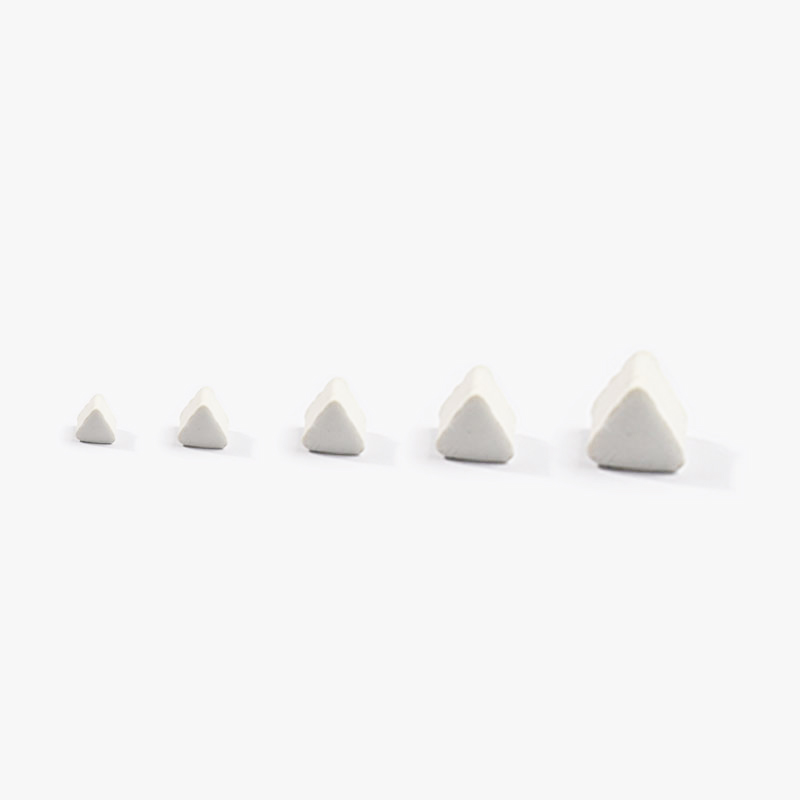
| Media | Best fit | Watch out for |
|---|---|---|
| Hardened steel media, balls and shaped shot | Bright burnishing of stainless and hardened steel, and the final wet lustre stage where a dense medium can peen a surface smooth. | Can transfer iron and rust to stainless, dents soft or thin parts, and must be kept in a dedicated charge away from ceramic media. |
| Coarse ceramic angle-cut cylinders or triangles | First cut stage on rigid parts with open faces, removing grinding or machining damage on cast iron, steel and stainless before refinement. | Leaves a deep pattern the next stage must fully erase, chips thin edges, and its wear debris carries fine abrasive into later stages if the charge is not screened. |
| Small high-density ceramic spheres or ovals | Colour and pre-lustre stages where a uniform, soft-looking finish matters more than stock removal, including curved and contoured faces. | Very slow cut, easily lost through screens sized for larger media, and ineffective in deep recesses because it cannot reach or press against the surface. |
| Magnetic finishing pins and needles | Small precise parts with internal edges, cross holes, slots and fine detail that no tumbling medium of usable size can reach. | Limited by working envelope and part mass, removes very little material, and pins can embed in soft metals or remain in cavities if retrieval is not checked. |
For housings, cover plates, brackets and frames that are rigid and mostly open, a vibratory bowl or tub gives the most forgiving cut-to-colour sequence. The charge moves as a mass, so there is no fixturing to design and no clamping marks, and cycle energy can be tuned through amplitude, media density and load ratio. The limit is reach: media cannot present abrasive uniformly into a pocket whose mouth is narrower than its base, and broad flat faces finish more slowly than edges because contact pressure there is lower. Part-on-part contact also leaves nicks on thin or sharply detailed features, so small, slender or intricate parts usually belong in a gentler route even when their surface requirement is identical.
| Machine route | Where it fits | What it will not do |
|---|---|---|
| Tub vibrator | Long and large parts such as shafts, extrusions and frame members that cannot be folded into a barrel, including external grooves. | Poor at bores running parallel to the long axis, and slender parts still need support or balanced loading to hold straightness. |
| Vibratory finishing machine (bowl or tub) | Cut-to-colour sequences on rigid, mostly open parts such as housings, covers, brackets and frames, with adjustable energy and no fixturing. | Cannot present media uniformly into pockets with narrow mouths or deep internal bores, and broad flat faces finish more slowly than edges. |
| Barrel finishing machine / rotary barrel tumbler | Dense, uniform colour on small hardware that tolerates sliding contact, especially with steel media for a burnished appearance. | Nothing longer than the barrel diagonal can be processed, and slender parts can bend or nick against neighbours in the load. |
| Disc finishing machine | Fast, high-energy cut down on small to medium parts with simple geometry where cycle time matters and edge rounding is tolerable. | Part-on-part contact and wall pressure can chip or deform parts, and the difference between sufficient and excessive removal is narrow. |
Beyond a certain point, more polishing makes a surface worse. Excess cycle time or contact pressure rolls metal over instead of cutting it, burying abrasive and debris under a smeared skin that looks bright until it is disturbed. On dry or high-speed operations, friction raises local temperature enough to tint the surface and soften a hardened layer, and thin sections can distort from the heat. High-energy routes add part-on-part impingement, leaving nicks and small dents that polishing cannot remove. Watch for a bright surface that dulls or streaks when wiped with a clean cloth, for colour variation near edges where contact is highest, and for dimensional or flatness change. The remedy is a shorter or gentler cycle, better cooling and a real end point instead of a longer run.
| Failure mode | Likely cause | How to catch it |
|---|---|---|
| Dimensional drift or lost flatness on datums, seals and bearing seats | Uneven stock removal across a large or asymmetric face, over-long cycles, or unprotected functional features exposed to the full charge energy. | Measure flatness and critical dimensions with a CMM or surface plate at the same marked points used for the incoming survey, and compare the change against the allowance. |
| Ghost pattern of an earlier coarse stage showing through the final finish | A cut or refinement stage removed too little material, a later stage reused a contaminated charge, or the crosshatch direction was not changed between steps. | Reflect a light source at a shallow angle and rotate the part; a mark that disappears at one angle and returns at another is still in the surface rather than on it. |
| Media lodged in blind holes, slots, undercuts or threaded features | Media size too close to the opening, a slot or cavity that traps the charge, or no defined retrieval step before rinsing and drying. | Reconcile a counted media charge before and after the cycle, borescope each cavity at an agreed angle, and pin or thread gauge the features the charge could enter. |
| Edge radius beyond the allowed limit | A cut stage longer or more energetic than the edge allowance supports, insufficient masking or fixturing, or a sequence repeated to remove a defect and run past the edge allowance. | Measure with a radius gauge, a cast impression or an optical comparator at the marked edges, and compare against the edge form and dimensions recorded before finishing. |
Winnipeg's manufacturing base is aerospace and defence plus food processing and packaging, and federal investment is actively expanding it. Prairies Economic Development Canada announced CAD 19.5 million through the Regional Defence Investment Initiative for three Winnipeg-based projects: Magellan Aerospace's establishment of an advanced machining centre in Winnipeg for aircraft components used in military aircraft, StandardAero's expansion of its Winnipeg campus for dual-use aerospace maintenance, repair and overhaul capacity including new equipment and advanced digital technologies, and Win-Shield Devices' establishment of a manufacturing facility for personal protective equipment. The city is also a defence geography in its own right: it is home to the operational headquarters of the Royal Canadian Air Force and the Canadian NORAD region, and Manitoba hosts CFB Winnipeg (17 Wing) and CFB Shilo. Investment in the airside industrial base continues, with CAD 10 million federal and CAD 5 million provincial funding announced in February 2026 toward the Winnipeg Airports Authority's development of 127 acres of direct-access runway lands at Winnipeg Richardson International Airport, intended to support growth in aerospace, defence and advanced manufacturing including aircraft maintenance and repair operations.
For this brief the relevant part of that base is machinery: The federal programme frames the funded projects as strengthening Manitoba's aerospace and manufacturing sectors and growing industrial capacity in Winnipeg, with StandardAero's expansion described as a 70,000 sq. ft. addition to its Winnipeg facility.
Winnipeg's aerospace machining and MRO base is the dominant finishing driver: engine components and aircraft structures produced or repaired in the city carry edge-condition, surface-integrity and cleanliness requirements that trace back to airworthiness, and MRO work on in-service hardware often requires re-finishing parts whose original surface condition has degraded. Magellan's new advanced machining centre and StandardAero's expanded engine MRO campus both increase the volume of machined and reworked parts flowing through the city, and both sit inside quality systems that require the finishing process to be specified, controlled and recorded. Personal protective equipment manufacturing at Win-Shield adds a different requirement set, where moulded and formed components need clean, burr-free edges that will not damage the sealing surfaces of respirators.
A Winnipeg buyer should settle whether the finishing operation is inside a quality system that requires approved process specifications and records, because in aerospace MRO and component manufacturing it usually is, and a machine that cannot be tied to a controlled specification will not be usable on flight hardware. The second question is how reworked and in-service parts differ from new parts in their finishing requirement, since MRO work brings in parts with unknown prior surface history that may need inspection and re-finishing rather than a standard pass through the same process.
Freight context: Winnipeg Richardson International Airport (YWG), CentrePort Canada inland port, CN and CPKC rail corridors, Arctic Gateway Group trade alliance routes. Winnipeg is a rail and air hub rather than a seaport. The federal and provincial governments are funding preparation of 127 acres of direct-access runway lands at YWG to create space for businesses that need immediate runway access, in support of aerospace, defence and advanced manufacturing including aircraft maintenance and repair operations. Separately, the Winnipeg Airports Authority, CentrePort Canada and Arctic Gateway Group announced a trade alliance in January 2026 to diversify trade routes and improve access to global markets, which matters for a manufacturer importing equipment and exporting finished parts.
China is one of Canada's ten principal merchandise trading partners and the second-largest single-country source of Canadian imports after the United States: Statistics Canada reported CAD 5,369 million of balance-of-payments imports from China in January 2025, against a CAD 2,299 million bilateral merchandise deficit that month. Canada has no free trade agreement with China, so Chinese-origin industrial machinery enters under the Most-Favoured-Nation (MFN) tariff column of the Canadian Customs Tariff; the preferential treatments listed in the tariff (CUSMA/UST and MXT, CETA/CEUT, CPTPP/CPTPT, UKT, KRT and others) do not include China, and preferential rates require proof of origin plus the applicable shipping rules, so a China-origin machine cannot claim them. Tariff classification is mandatory work, not a formality: vibratory, barrel, centrifugal and disc finishing machines are classified in Chapter 84 ("Nuclear reactors, boilers, machinery and mechanical appliances; parts thereof") according to the function of the machine, and the ten-digit Canadian tariff item drives both the duty rate and the statistics. A further landed-cost risk sits outside the tariff schedule: under the Special Import Measures Act (SIMA), the CBSA and the Canadian International Trade Tribunal may apply anti-dumping and countervailing duties to named goods, so a buyer should check the measures-in-force list for the specific product before assuming the MFN rate is the final duty.
The customs authority is the Canada Border Services Agency (CBSA), and importers of commercial goods must work through the CBSA Assessment and Revenue Management (CARM) system, which is where registration, the duties-and-taxes calculator, advance rulings and national customs rulings, and the commercial accounting declaration (CAD) are handled. Documentation expectations are explicit: "You must provide proof of country of origin when you import goods into Canada and, in some cases, your goods must also be clearly marked", the invoice or sales receipt must carry "a complete description of the goods", "the selling price" and "any conditions and terms of the sale", and the value for duty must be declared in Canadian currency only. Duties and taxes are layered rather than single: customs duty on the tariff item, the Goods and Services Tax calculated on the duty-paid value, and potentially excise duty, excise tax, surtax or safeguard measures. Importers must also clear non-tariff gates: goods must be admissible, some goods need permits, certificates or inspections from other federal departments that the CBSA applies on their behalf, controlled goods under the Defence Production Act require consultation with the CBSA and Global Affairs Canada before import, and "Goods manufactured or produced wholly or in part by forced or prison labour are prohibited from entering Canada", with due diligence resting on the importer. For electrical machinery, the practical conformity route in Canada is certification of the product to Canadian electrical safety standards by an accredited certification body rather than a self-declared CE-style mark; buyers should confirm the specific certification body and mark required before shipment. For a first shipment of a finishing machine or a media/compound sample lot, the fastest way to remove classification and valuation uncertainty is to use the CARM portal to request an advance ruling for tariff classification and origin.
SurfacePolish supplies from Xiamen, China. The buyer's own destination rules, conformity marking, tariff classification and documentation responsibilities stay with the buyer; confirm them against the authorities named above before ordering.
A roughness number without its setup is not a specification. Decide the cutoff length, filter, evaluation length, number of traces and their direction relative to the preceding polish direction, then keep every one of those settings unchanged between the incoming survey and the final inspection. Curved and narrow faces need a fixture or a witness coupon processed in the same charge, because a stylus cannot follow a small radius reliably and a hand-held trace on a curved surface is not comparable. Where a face is critical, mark the exact measurement positions on the drawing or with a permanent label and record them. Optical instruments avoid stylus damage on soft polished surfaces but see a different frequency band than a contact profilometer, so do not mix instrument types within one comparison.
Scaling up changes the charge faster than it changes the machine. Media wears, so the working size distribution drifts and a charge that cut well in a trial may burnish instead after a few hundred hours; screen and top up on a schedule, and record charge age with each batch. Compound dose should be metered against flow and checked, not assumed. Keep the load ratio inside the range the trial established, weigh or count parts rather than eyeballing the load, and separate material families so stainless does not pick up iron from carbon steel. Verify the rinse and dry stages as carefully as the finishing stage, because residue tolerated in small trial batches often becomes a visible film at production volume.


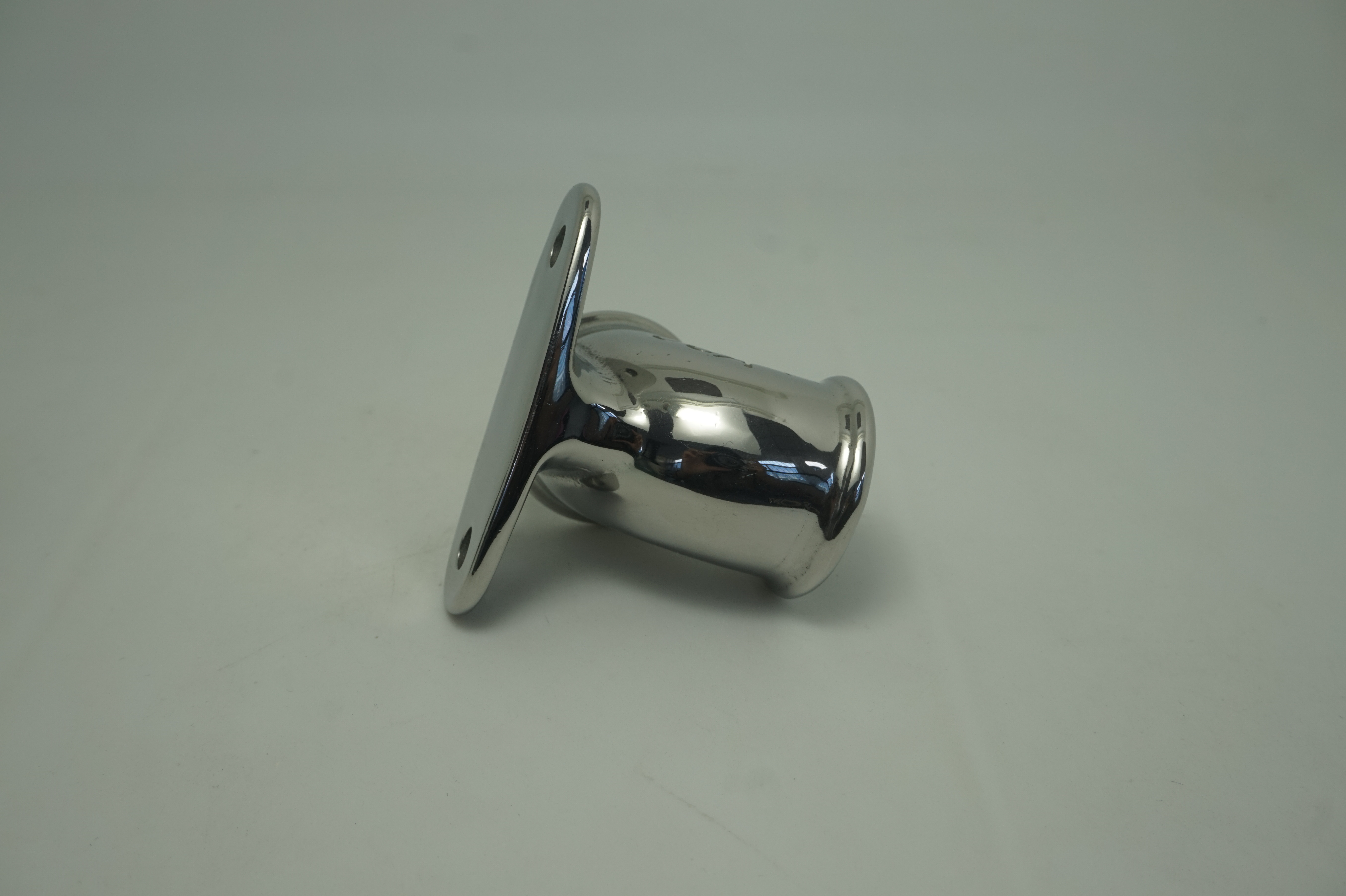
Design the charge around the smallest opening rather than the average part. Use media clearly smaller than the hole, or mask and plug the features before the cycle, count the media into and out of the load as a reconciliation, and add a retrieval step with a defined check such as a borescope or pin gauge. For Canada buyers sending parts for a trial, include the part with the tightest feature so the media class is chosen against real geometry. The small pins used in magnetic finishing embed easily in soft metal, so those features need extra inspection.
Rounding depends on the energy and duration of the sequence and on how exposed the edge is. A light refinement pass may barely touch it, while a long cut stage on a soft alloy can visibly round it. Mark the edges that must stay crisp, state a maximum radius or a no-touch zone before media is selected, and measure with a radius gauge, an optical comparator or a cast impression against the incoming form. Where a bright face and a crisp edge conflict, the practical order is to finish the face and then restore or protect the edge rather than to keep polishing.
Sometimes, but geometry decides. Media has to sit against the surface and move along it, so recesses with narrow mouths, deep bores, broad flat faces and internal corners may finish unevenly or not at all. A mass-finishing route can still deliver an excellent result on open faces while internal detail reaches a lower, more uniform standard, and it is often sensible to define the requirement per face. Where a small internal edge is the visible feature, a magnetic finishing step or a controlled hand operation may be the only practical route; where a part is too heavy or too long for the envelope, none of it applies.
Use Winnipeg, Canada as the destination on the enquiry and state whether the deliverable is equipment, media and compound, a representative sample review or a line concept. A destination does not imply local stock, a local service point or a local delivery time.
A Winnipeg buyer in aerospace works to the applicable transport-aircraft maintenance and manufacturing requirements and the customer's approved process specifications, with the finished part's edge condition and cleanliness treated as part of airworthiness rather than appearance. On the plant side, Manitoba occupational health and safety regulation and Canadian electrical certification of the equipment apply. Where the product is protective equipment, the relevant product standard and certification regime for that device governs.
Sources were retrieved on 2026-09-29 and describe the local industrial and trade context only. They do not evidence any SurfacePolish project, shipment, installation or service in Winnipeg.
The buyer wants the frame dressed and brightened so the weld toes blend into the tube face without leaving a shadow line.
Send the material, dimensions, approximate weight, batch quantity, the incoming condition and photographs of the difficult features. Mark which features must not be contacted by media and state how the result will be inspected. This form carries source reference PSEO-0189; quote it if you prefer an additional manual reference.
Open the SurfacePolish enquiry form Email a prepared enquiry
No price, lead time, certification or result is promised here. Confirm whether a sample trial is available for the specific part and what the trial can and cannot show.
Page PSEO-0189 · revised 2026-09-29 · cross-border equipment, media and scoped sample review. City context is sourced and cited above.
Use this local checker to identify missing part and inspection information. It prepares a technical-review brief; it does not approve a machine, process recipe or production result.
Complete the part details to prepare a review brief.
Email : info@surface-polish.com


 IPv6 network supported


 +86-592-2381506