Select bowl, tub, barrel or disc directions to keep their application contexts and checks visible together. The bowl context retains circulation and separation concerns; long or flat parts retain orientation and contact checks in a tub. Barrel processing introduces loading and exposure questions. A higher-energy disc context requires inspection of impact, heat and entanglement. These are qualitative source descriptions, with no measured performance comparison for your part.
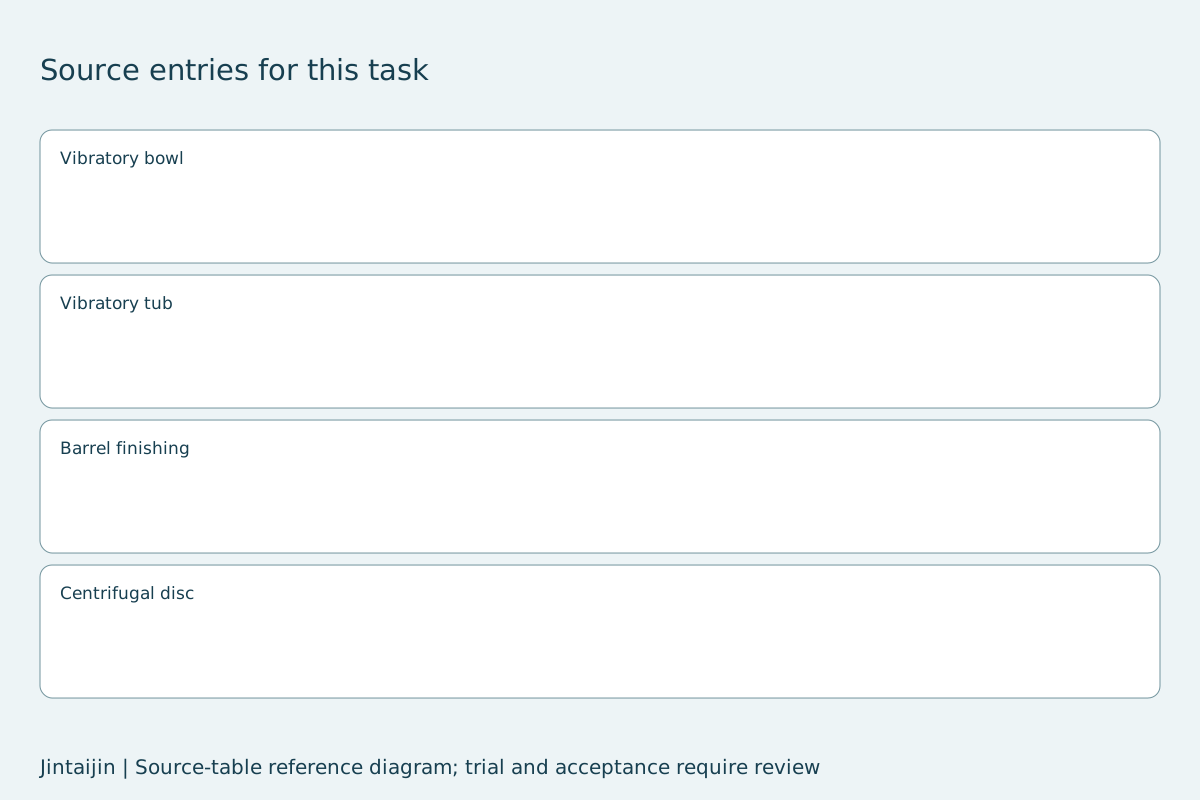
Select the entries relevant to your review.
No machine selection or faster-cycle claim established for the actual polymer part. Keep every selected requirement with the part and the actual trial record. Selecting a row does not show that its acceptance condition has been met.
Use the same incoming defect, protected features and inspection criteria for every candidate direction. Record part nesting, wall change, contact marks and temperature trend, together with the complete separation and cleaning route. Confirm material compatibility with the proposed media and compound. A route label cannot prove cycle time, safe batch quantity or allowable surface change; those need part-specific evidence.
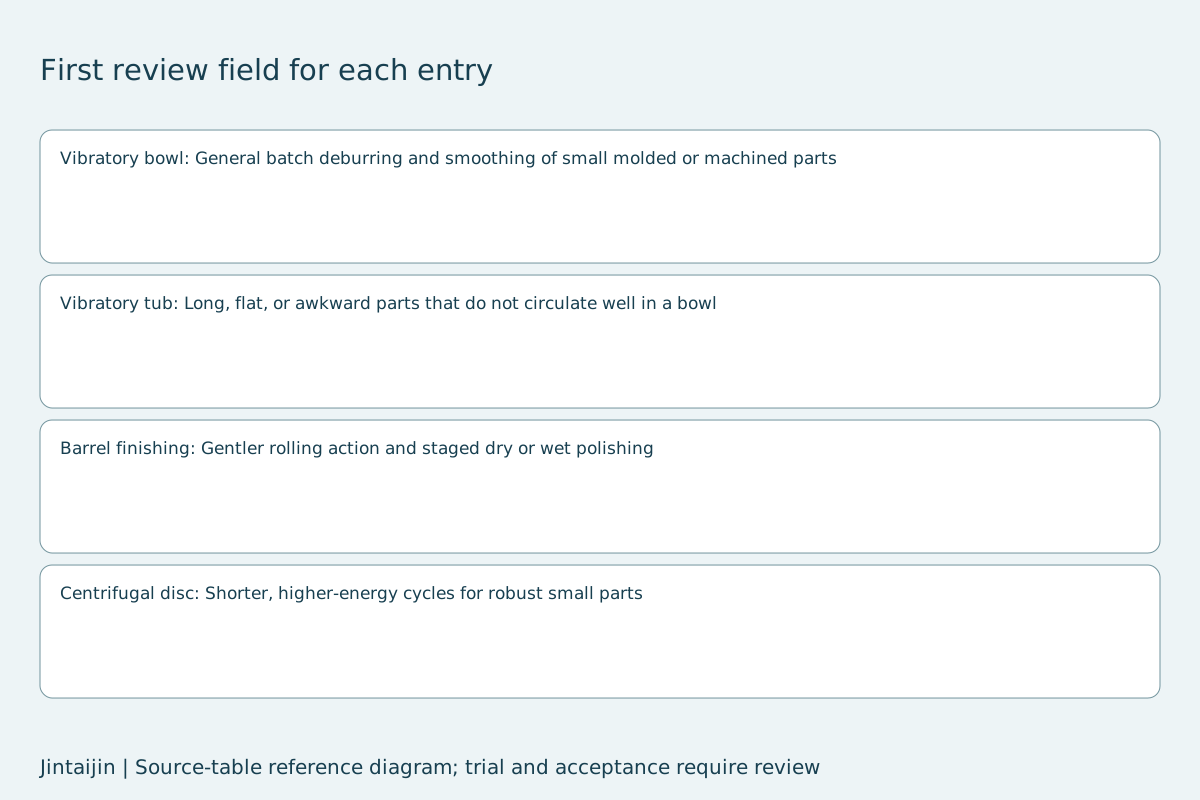
Useful For: General batch deburring and smoothing of small molded or machined parts
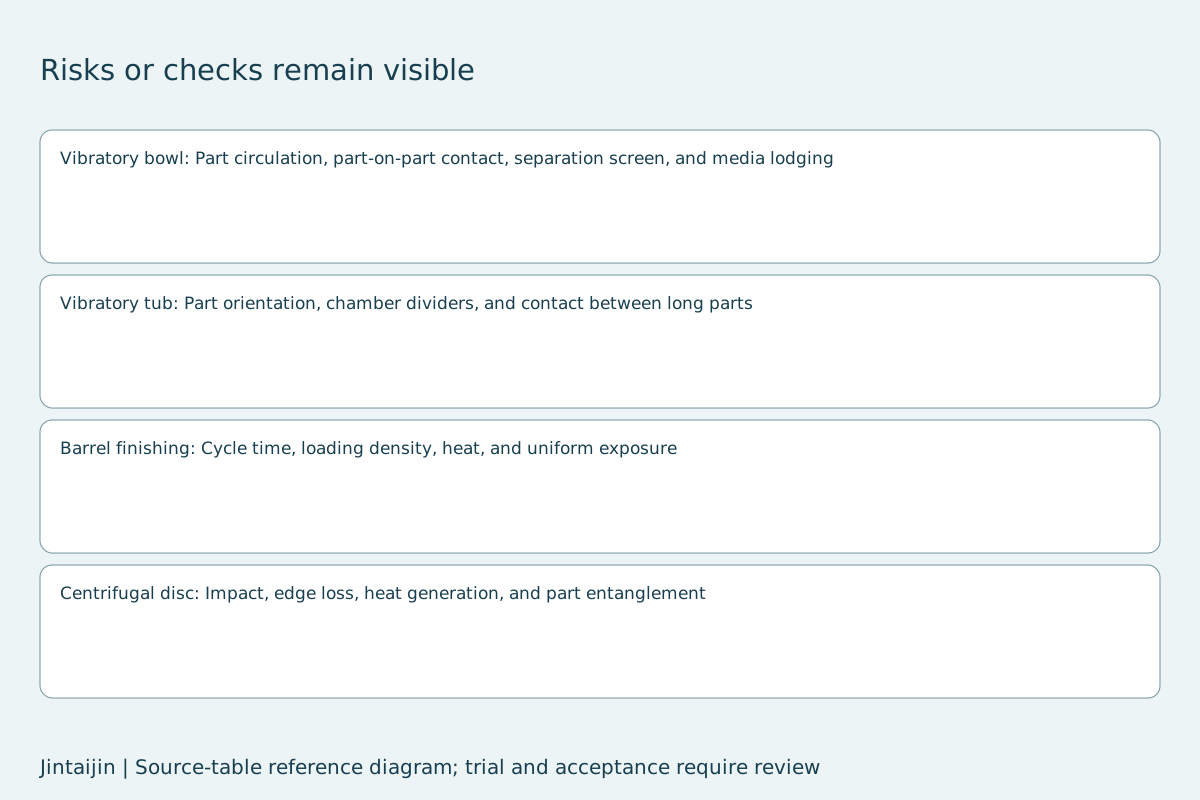
What to Validate: Part circulation, part-on-part contact, separation screen, and media lodging
Useful For: Long, flat, or awkward parts that do not circulate well in a bowl
What to Validate: Part orientation, chamber dividers, and contact between long parts
Useful For: Gentler rolling action and staged dry or wet polishing
What to Validate: Cycle time, loading density, heat, and uniform exposure
Useful For: Shorter, higher-energy cycles for robust small parts
What to Validate: Impact, edge loss, heat generation, and part entanglement
Read the Jintaijin technical article. Source table reviewed 3 October 2026. Possible causes, directions and adjustments remain conditional reference fields.
Email : info@surface-polish.com


 IPv6 network supported


 +86-592-2381506