Choose parting flash, gate vestige, machining burr, support marks or rubber flash. The source contrasts defects that might break away with defects needing primary removal first. Flexible flash can fold, a remaining gate can outlast the surrounding edge, and fine printed details can soften. Selecting the row does not approve a polymer or elastomer for tumbling. It keeps the limit and main risk in the trial discussion.
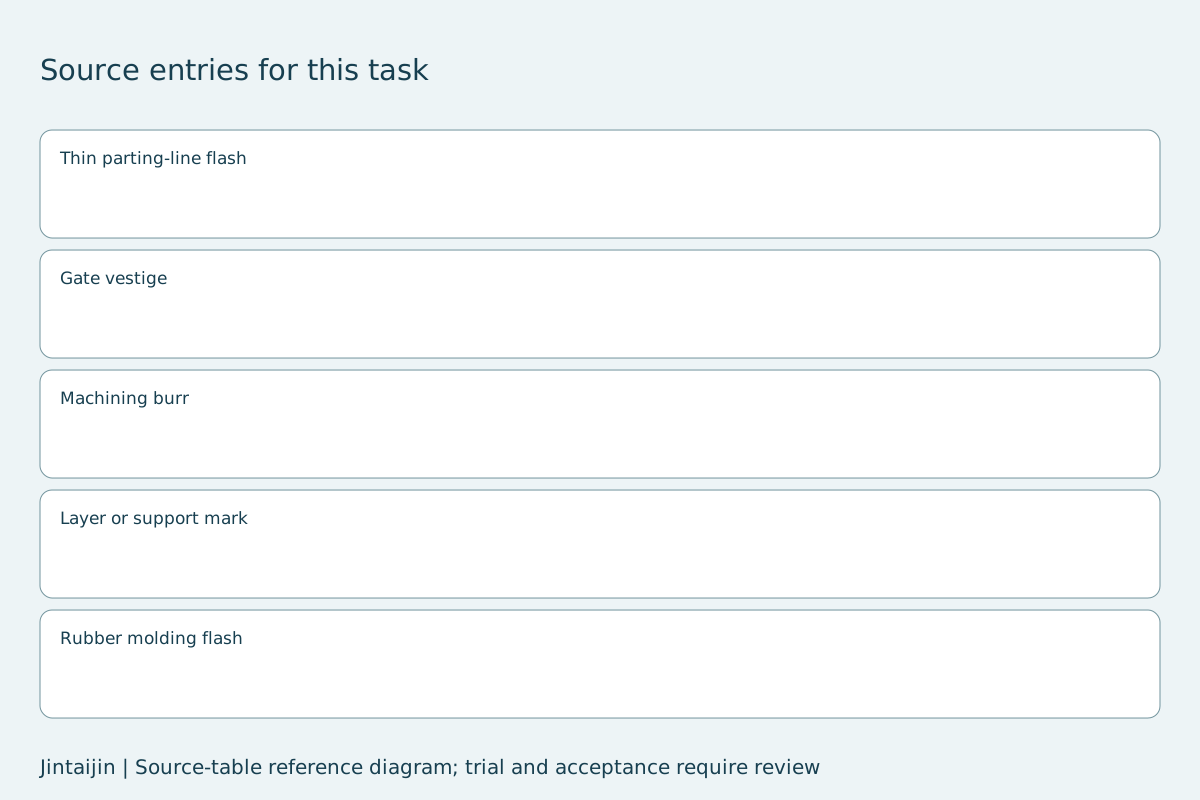
Select the entries relevant to your review.
Conditional potential only; polymer grade and functional features govern the trial. Keep every selected requirement with the part and the actual trial record. Selecting a row does not show that its acceptance condition has been met.
Record the exact polymer grade, coating or additive process, incoming defect and sensitive walls, lips, holes or sealing edges. Inspect access to the defect and dimensional changes after the agreed sample interval. A brittle-flash or cryogenic route requires specialist equipment and process review; this tool supplies no temperature or operating instruction. Establish acceptance from the drawing and assembly function, not from a generic material family.
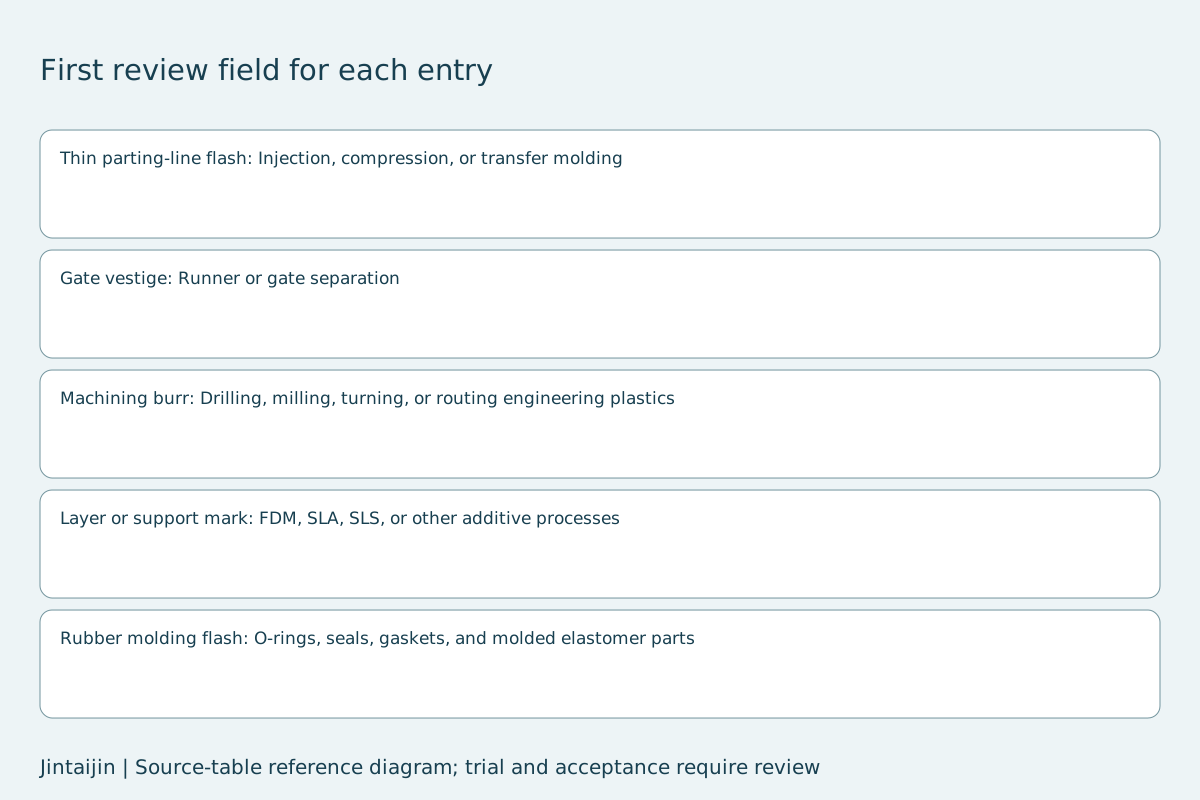
Typical Origin: Injection, compression, or transfer molding
Mass Finishing Potential: Often suitable when the flash is thin enough to break away
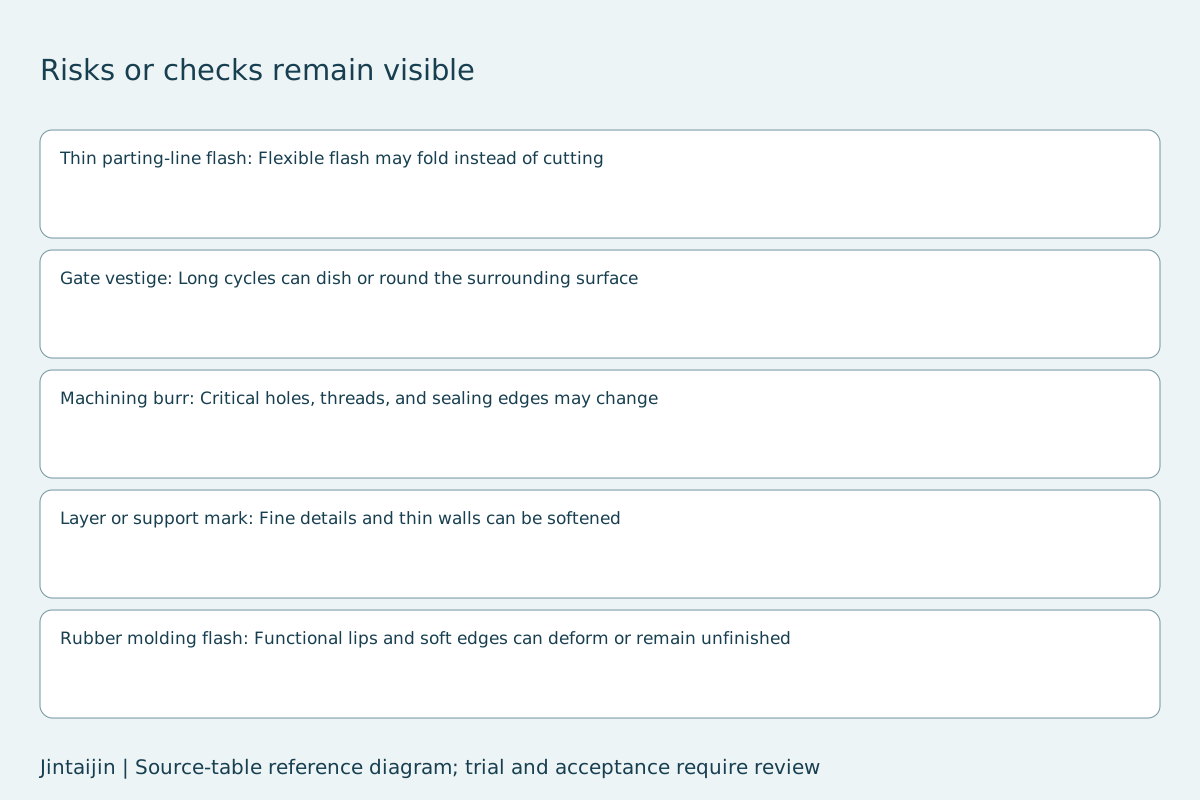
Main Risk: Flexible flash may fold instead of cutting
Typical Origin: Runner or gate separation
Mass Finishing Potential: Suitable only for small residual marks after primary gate removal
Main Risk: Long cycles can dish or round the surrounding surface
Typical Origin: Drilling, milling, turning, or routing engineering plastics
Mass Finishing Potential: Good candidate when edges are accessible to media
Main Risk: Critical holes, threads, and sealing edges may change
Typical Origin: FDM, SLA, SLS, or other additive processes
Mass Finishing Potential: Useful for controlled smoothing after supports are removed
Main Risk: Fine details and thin walls can be softened
Typical Origin: O-rings, seals, gaskets, and molded elastomer parts
Mass Finishing Potential: Possible when the flash becomes brittle or can be mechanically separated
Main Risk: Functional lips and soft edges can deform or remain unfinished
Read the Jintaijin technical article. Source table reviewed 3 October 2026. Possible causes, directions and adjustments remain conditional reference fields.
Email : info@surface-polish.com


 IPv6 network supported


 +86-592-2381506