


Plastic and Rubber Deburring: Defect, Origin, Potential and Risk
This page reproduces the reference table published for deburring plastic and rubber parts: for each defect, the typical origin, whether mass finishing is suitable, and the main risk. It also reproduces the process comparison and the observed-result guidance. A defect origin is a typical source rather than a diagnosis of your part, and a named adjustment is a direction to test on a sample.
Look up what the source gives for this case
Select what you are seeing, then read the published reference.
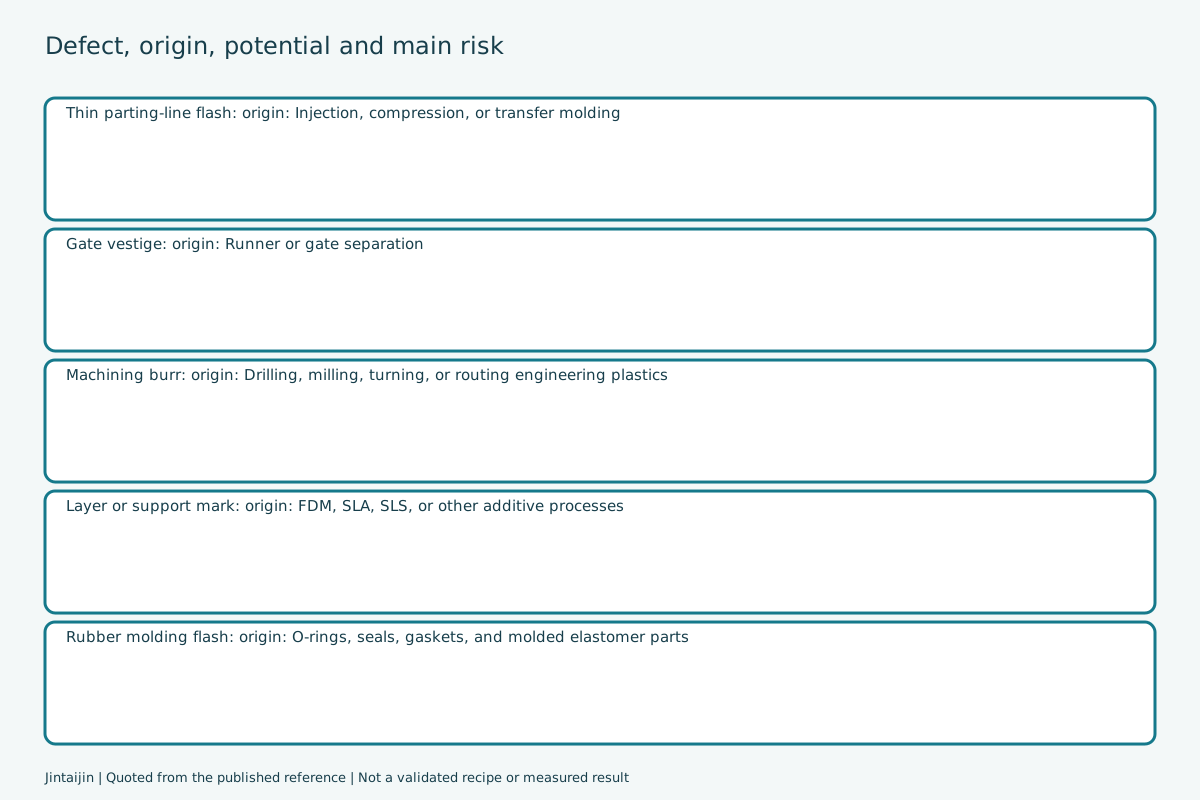
Defect, origin, potential and main risk
| defect | typical origin | mass finishing potential | main risk |
|---|---|---|---|
| Thin parting-line flash | Injection, compression, or transfer molding | Often suitable when the flash is thin enough to break away | Flexible flash may fold instead of cutting |
| Gate vestige | Runner or gate separation | Suitable only for small residual marks after primary gate removal | Long cycles can dish or round the surrounding surface |
| Machining burr | Drilling, milling, turning, or routing engineering plastics | Good candidate when edges are accessible to media | Critical holes, threads, and sealing edges may change |
| Layer or support mark | FDM, SLA, SLS, or other additive processes | Useful for controlled smoothing after supports are removed | Fine details and thin walls can be softened |
| Rubber molding flash | O-rings, seals, gaskets, and molded elastomer parts | Possible when the flash becomes brittle or can be mechanically separated | Functional lips and soft edges can deform or remain unfinished |
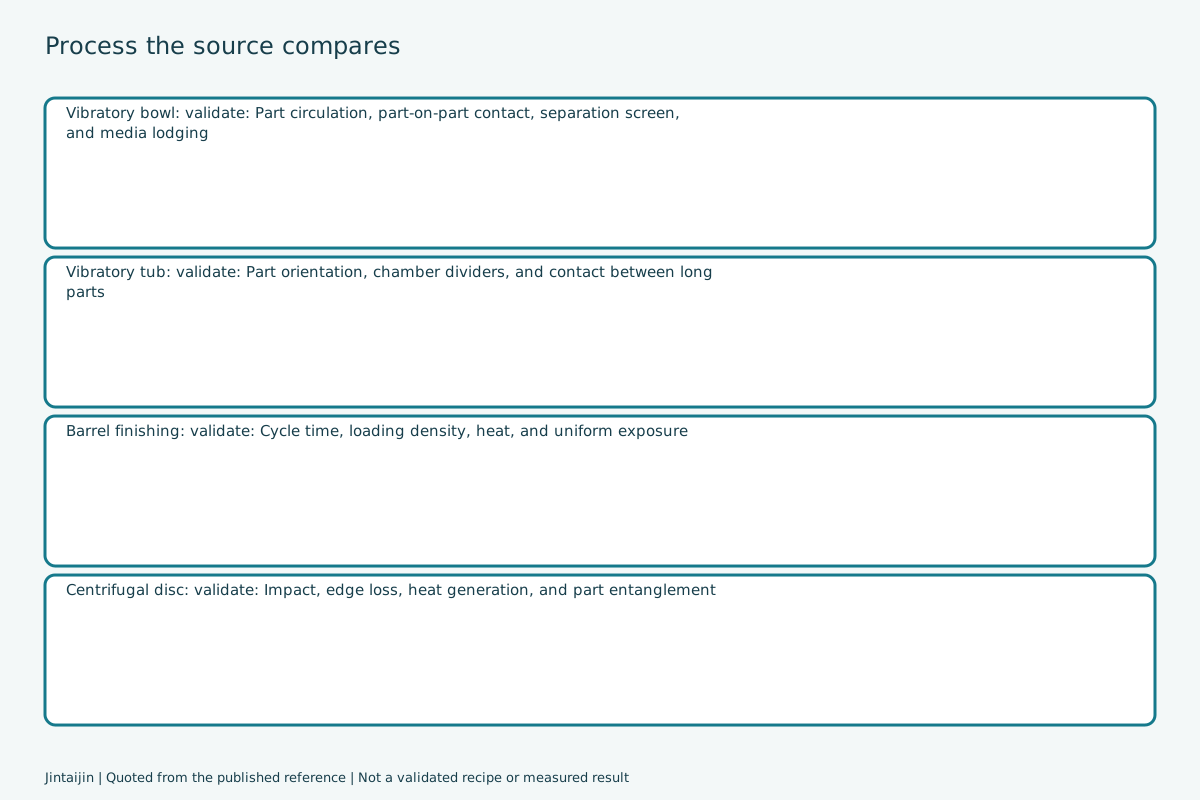
Process the source compares
| process | useful for | what to validate |
|---|---|---|
| Vibratory bowl | General batch deburring and smoothing of small molded or machined parts | Part circulation, part-on-part contact, separation screen, and media lodging |
| Vibratory tub | Long, flat, or awkward parts that do not circulate well in a bowl | Part orientation, chamber dividers, and contact between long parts |
| Barrel finishing | Gentler rolling action and staged dry or wet polishing | Cycle time, loading density, heat, and uniform exposure |
| Centrifugal disc | Shorter, higher-energy cycles for robust small parts | Impact, edge loss, heat generation, and part entanglement |
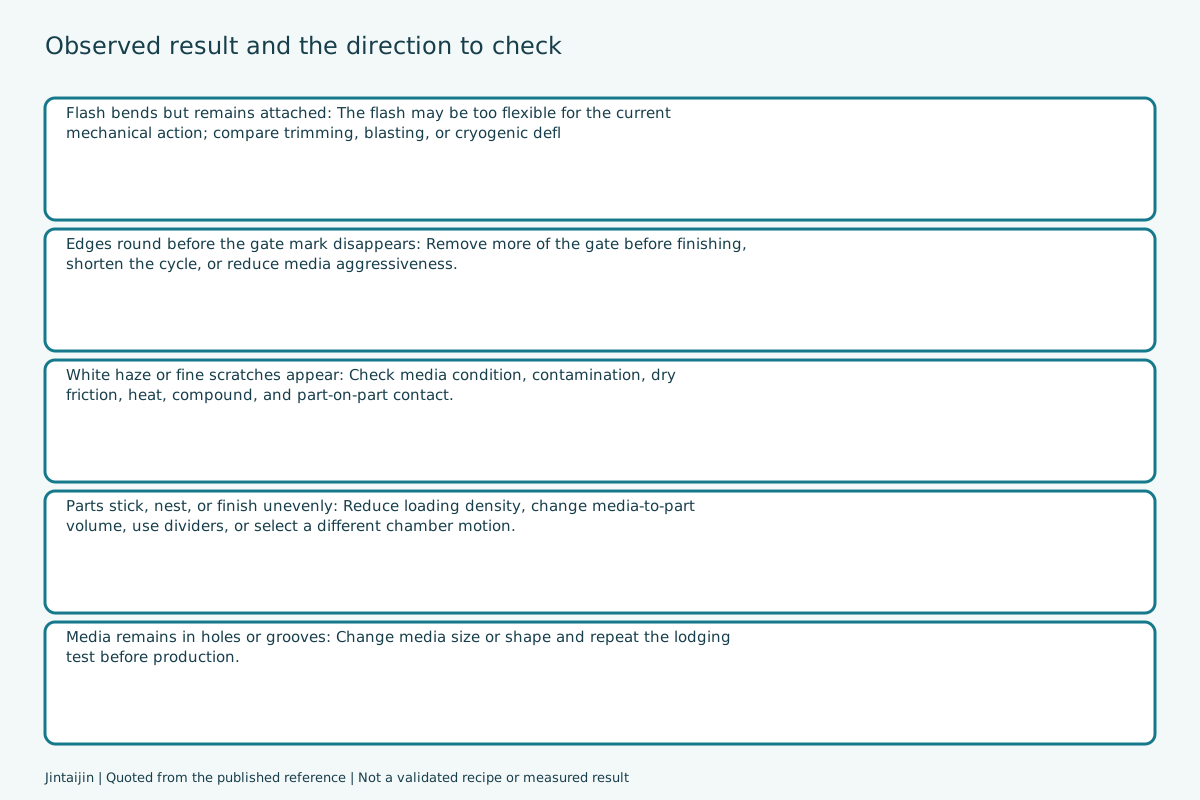
Observed result and the direction to check
| observed result | direction to check |
|---|---|
| Flash bends but remains attached | The flash may be too flexible for the current mechanical action; compare trimming, blasting, or cryogenic deflashing. |
| Edges round before the gate mark disappears | Remove more of the gate before finishing, shorten the cycle, or reduce media aggressiveness. |
| White haze or fine scratches appear | Check media condition, contamination, dry friction, heat, compound, and part-on-part contact. |
| Parts stick, nest, or finish unevenly | Reduce loading density, change media-to-part volume, use dividers, or select a different chamber motion. |
| Media remains in holes or grooves | Change media size or shape and repeat the lodging test before production. |
Source and its limits
Published reference article; captured 5 October 2026. SHA256: d1ad78c8b74a371095f90f422cec46944f9a304b79659b22ebf5938e0633ed50.
- No cycle time, speed, media ratio, temperature or removal rate is stated, implied or supplied.
- A defect origin is a typical source, not a diagnosis of your part. The same visual mark can have more than one cause.
- An adjustment named in an observed result is a direction to test on a sample, not an approved recipe.
Table headers as published
- Defect / Typical Origin / Mass Finishing Potential / Main Risk
- Process / Useful For / What to Validate
- Observed Result / Likely Direction to Check
Frequently asked questions
Does this page tell me what cycle time or speed to use?
No. No cycle time, speed, amplitude, load ratio, concentration, temperature or removal result is stated, implied or supplied anywhere on this page or in its download.
Does this page select media or a machine for me?
No. It reproduces published reference tables. Media selection, machine compatibility, loading and cycle time remain decisions for a sample trial with the supplier, confirmed against your part and material.
Does this diagnose my part?
No. A defect or symptom origin is a typical source, not a confirmed cause, and a named fix is a direction to test on a sample. The same visible mark can have more than one cause.
Are the table cells quoted exactly?
Yes. Every cell is taken from a single source table cell and verified against the captured page, including the original wording and separators.
Can I use this for a different material?
This reproduces guidance written for the published article's material. Media selection, chemistry and acceptance differ by material, so confirm values with the supplier for your part.
 +86-592-2381506

 IPv6 network supported