A buyer in Florence, Italy working on energy equipment has a small hardened 17-4PH valve spool whose radial metering hole intersections need a controlled edge without touching the metering lands. SurfacePolish supplies finishing machines, media and compounds across borders and runs a free sample trial that returns representative parts from Xiamen with an observation record and a proposed media, compound and cycle direction. This brief is written for a buyer in Florence working on energy equipment; it describes equipment, media and a scoped sample review, not a local polishing service.
What is the smallest internal passage, cross-drilling or tapped hole the charge must never plug, and how would a lodged medium be found and removed?
Is deburring done before or after heat treatment, and in what metallurgical and surface condition does the part arrive at the finishing step?
Which edges on this part are functional, such as gasket lands, seat bands, stem guides, metering lands and thread entries, and which only need to be free of a sharp edge?
Deburring specifications fail more often on the incoming condition than on the finishing parameters. Two machining suppliers can deliver the same part number with visibly different burr height, edge sharpness, tool marks and trapped chips, because feed, tool wear and coolant strategy differ. A cycle that clears one supplier's burr may leave the other's root attached. Before writing any requirement, record what arrives: where the burrs sit, how tall they are, how sharp the edges are, the roughness at named points and the mass of the part. Keep one as-received reject in the sample set so the route is tested against the worst credible input rather than an average one. When the requirement is written, state the starting condition it assumes.
Every mass-finishing route is also a contact problem. Parts touch each other, the machine wall and any fixture, and each contact is a chance to mark, peen or bend a finished face. Compartmenting a charge, racking parts individually or running a smaller load with more media between parts changes the contact pattern, and it changes throughput in the same move. Where a machined gasket land, a ground spigot or a lapped sealing face must arrive unmarked, decide which faces are allowed to bear contact and design the load around that. A fixture can hold a part out of the mass, but it also shields the area behind it, so the shielded zone has to be finished another way or left as-machined. Record the contact plan with the load.
| Machine route | Where it fits | What it will not do |
|---|---|---|
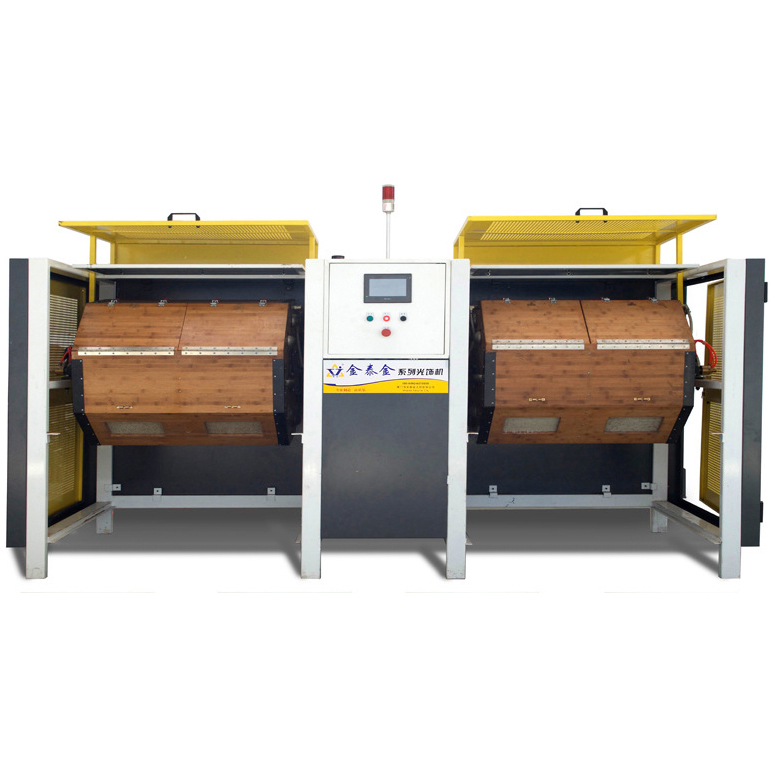
| Magnetic finishing machine | Small precision parts with internal intersections, radial holes and thread entries that a bulk charge cannot reach | Limited by part size and material, pins must be retrieved and checked, and it does not level or refine large flat surfaces |
| Vibratory finishing machine (bowl) | General deburring and refinement of valve bodies, flange plates, pump components and fittings that fit the bowl and can move freely in the charge | No access to deep internal passages, constant part-on-part contact, and finished faces need separation or fixture protection |
| Dry polishing machine and dryer | Drying after a wet cycle and dry light polishing or deburring of small parts, including features where residual moisture is a problem | Removes little or no material, needs dust extraction when dry media is used, and does not replace a cutting stage for a substantial burr |
| Centrifugal barrel finishing machine | Short high-pressure cycles on small precision parts such as spools, sleeves, small valve bodies and drilled fittings | Rounds edges and can distort thin unsupported sections quickly, and needs balanced barrel loading, controlled stop time and careful fixturing |
Compound delivered at the wrong concentration or flow makes the same media behave like a different charge. Too little and the abrasive cut becomes dry and marking increases; too much and cutting slows while foam and carry-over rise. Flow rate matters as much as dose, because it is the flow that carries fines away from the part and keeps the working zone consistent across a long cycle. Water quality belongs in the same discussion: hardness, pH and dissolved solids in the make-up water shift the compound's behaviour, and a plant that changes its water source can change its results without touching a machine setting. Where the fluid is recirculated, filtration and turnover decide how much swarf and broken media stay in suspension and how often the bath is dumped.
| Media | Best fit | Watch out for |
|---|---|---|
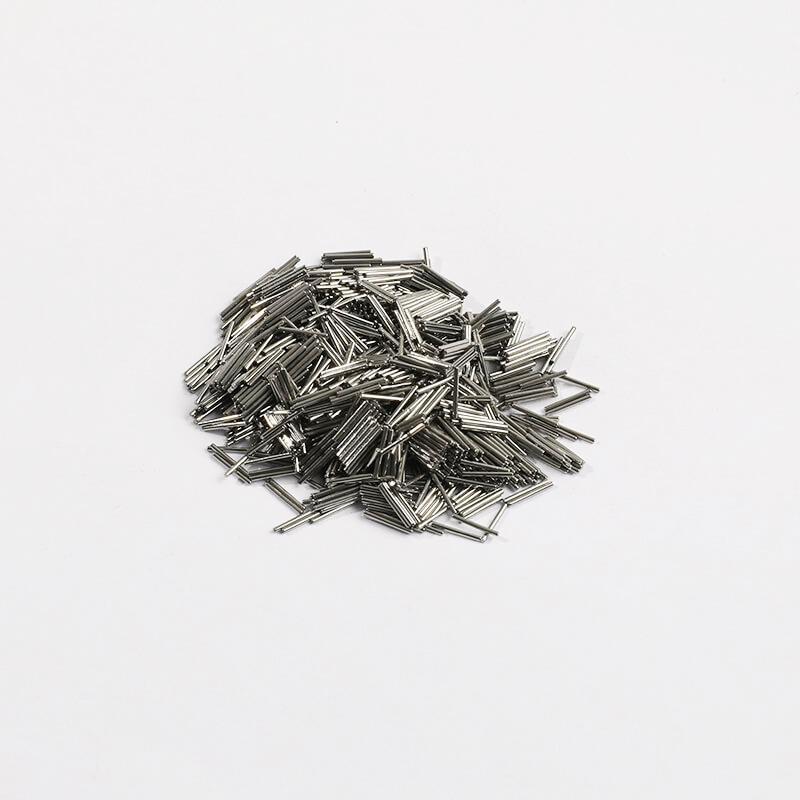
| Magnetic pin or needle charge | Reaching small internal intersections, radial holes and thread entries on small precision parts such as spools, sleeves and drilled fittings | Limited by part size and shape, pins must be retrieved and inspected for breakage, and the result depends heavily on fixture and field design |
| Fine ceramic spheres or small porcelain shapes in a light size class | Refinement and edge blending after a cutting stage, and light deburring of small fittings, thread entries and tighter external geometry | Small sizes enter and retain in fine passages and cross-drillings, and the charge changes size and cut rate as it wears |
| Dry media, walnut shell with an abrasive or polishing compound | Light dry deburring, deflashing, drying and low-residue finishing of small parts and of features where a wet bath is difficult to remove | Low cutting energy so it cannot remove a substantial burr root, produces dust needing extraction, and consumption is high |
| Hardened steel media, balls and pins | Burnishing and bright finishing of stainless and hardened parts, and light edge consolidation where a cutting action is not wanted | Changes the surface by deformation rather than cutting, can work-harden or smear a soft surface, and needs corrosion protection and separation from acidic compounds |
Edge rounding past the drawing limit is the quietest failure in this process, because the part usually looks better, not worse. A blended edge photographs cleanly, passes a visual check and still fails the function it was specified for: a seat land that no longer seals across its designed contact band, a thread entry that loses its lead, a knife edge on a heat-exchanger plate that no longer crimps or seals. The change is cumulative, so a cycle that rounds an edge by an acceptable amount on the first part may take it past the limit on the twentieth. Catch it by measuring a defined edge feature before and after with a radius gauge, an optical comparator or a moulded replica, and by writing a maximum radius at each controlled edge.
| Failure mode | Likely cause | How to catch it |
|---|---|---|
| Uneven result across a batch, with over-finished edges in one zone and untouched areas in another | Part position in the charge, shielding by fixtures or other parts, a worn charge that cuts differently from a fresh one, or masking that leaked | Mark fixed measurement and inspection points on several parts, compare parts from the top, middle and bottom of the load, and record charge age against the result |
| Part-on-part or fixture witness marks and peening on a finished face | Insufficient separation in the load, too high a load ratio for the part mass, sharp or worn fixture contact points, or the same faces bearing contact throughout the cycle | Inspect at magnification under angled light against a retained reference, map the mark positions against the load arrangement, and check fixtures and compartments for burrs and wear |
| Burr lip folded flat over the edge with the root still attached | Too light a cut for the burr thickness, a refinement-only pass used as the only stage, or a soft ductile material that rolls instead of fracturing | Draw a probe or lint-free wipe along the edge, examine at magnification under angled light, and take a sectioned or moulded replica sample where the feature is critical |
| Thread entry deformation, a damaged lead thread or a burr folded into the first threads | Aggressive media at an unprotected thread entry, media lodging in the thread and working against it, or handling damage at load and unload | Run a go and no-go thread gauge on every tapped feature in the sample, inspect the first threads under magnification, and check the entry chamfer against the drawing |
Florence's provincial economy is dominated on the export side by pharmaceuticals: the Chamber of Commerce reports that intra-group logistics and processing traffic in the pharmaceutical sector now weighs more than half of total provincial exports (s1), and that sector turnover grew +5.4% in the first quarter of 2026 and +8.5% in the second (s2). Manufacturing production rose +1.6% year on year at the start of 2026 and moderated to +0.4% at mid-year, with the pharmaceutical component carrying the aggregate (s2). Provincial exports reached EUR 16.4 billion in the first half of 2026, +3.3% year on year, and EUR 35.1 billion on a rolling-year basis, after 2025 growth of +41.4% and more than EUR 34 billion that the chamber attributes partly to pharmaceutical flows and to US-bound frontloading (s1, s3). Away from pharmaceuticals the chamber describes traditional manufacturing sectors as showing weaker dynamics and the fashion system as being in reorganisation (s1). The Florence metropolitan area also carries a documented electronics, radar, optronics and space-navigation manufacturing base, and the local Confindustria association is promoting a Tuscan aerospace district (s4). The Chianti Classico wine zone has its two capital cities in Florence and Siena (s5).
The nearest part of that base to this brief is aerospace: Confindustria Toscana Centro e Costa states that the Florence metropolitan area has manufacturing competence in electronic security, radar, optronic sensors and space navigation systems, and that a Tuscan aerospace district is being constituted.
For the pharmaceutical-side base the finishing question is cleaning and residue control rather than cosmetic finish: burr-free stainless and alloy parts, media that will not leave contamination, and a documented cleanliness result per part number. For the electronics, radar and optronics manufacturing that the local Confindustria association describes, edge quality and surface condition on machined housings, waveguide and antenna components affect both assembly fit and electrical performance. Because pharmaceutical output here is export-driven and audit-heavy, surface and cleanliness results normally have to be recorded against a specification the customer already holds, not demonstrated on a sample alone.
The first question is whether the part is destined for the pharmaceutical or electronics base, because that decides whether the controlling requirement is a cleanliness and residue limit or an edge and surface-texture tolerance. For the pharmaceutical side it is worth establishing up front which cleanliness specification and which sampling method will be used for acceptance, since that choice constrains both the process and the media.
Freight context: Porto di Livorno, Aeroporto di Firenze-Peretola (FLR). The freight evidence available for Florence in this session is trade value rather than hub throughput: EUR 16.4 billion of exports in the first half of 2026 and EUR 35.1 billion on a rolling-year basis, with the pharmaceutical component distorting the provincial averages (s3). The Tuscan port and airport gateways named above are regional geography and were not verified against an authority page here, because the Livorno port authority site served a JavaScript challenge and the Toscana Aeroporti site returned HTTP 403 to every request made from this session.
The national standards body is UNI - Ente Italiano di Normazione, a private non-profit association founded over a century ago, which develops, publishes and disseminates voluntary technical standards and adopts the European and international standards as Italian editions. For finishing work the operative references are the surface-texture series UNI EN ISO 21920-1:2022, which fixes how the surface state (roughness, waviness, primary profile) is indicated on technical product documentation, and UNI EN ISO 21920-2:2022, which defines the terms, definitions and parameters used with profile methods. Machinery safety requirements come from the EU machinery legislation rather than from UNI alone: Machinery Directive 2006/42/EC applies to machinery placed on the EU market before 20 January 2027, after which Machinery Regulation (EU) 2023/1230 takes over.
Business is conducted in Italian; quotations, drawings, technical dossiers and declarations of conformity are normally expected in Italian, and correspondence in English is workable but rarely sufficient for a purchase order or for a conformity file. Italian industrial buyers qualify suppliers through a documented process: a part drawing with surface-texture indications, a sample or trial batch, and written acceptance criteria are the usual gate before a machine or media is specified into production. Payment and documentation norms follow Italian/EU practice - the importing entity's VAT and EORI details, invoice data matching the customs declaration, and standard EU commercial terms - so a cross-border seller should expect the conformity documentation (declaration of conformity, technical file, material certificates) to be requested before, not after, delivery.
SurfacePolish supplies from Xiamen, China. The buyer's own destination rules, conformity marking, tariff classification and documentation responsibilities stay with the buyer; confirm them against the authorities named above before ordering.
Edge acceptance needs a reference object, because words like lightly broken or slightly rounded mean different things to different inspectors. Build a physical or photographic master at a stated magnification: a part or coupon showing the acceptable edge, the borderline case and the reject. For each controlled edge, express the requirement as either an edge break, meaning the sharp corner is removed to a small defined size, or an edge round, meaning a controlled radius band the edge must sit inside. Give a maximum where over-rounding is the risk, and a minimum where the edge must not stay sharp. State how the edge will be checked, whether by radius gauge, optical comparator, moulded replica or tactile comparison against the master, and at what frequency.
Consistency in production comes from a maintenance schedule for the consumables, not from locking the machine settings. Compound concentration drifts as it is carried out on parts and as the bath is topped up with water; media wears and breaks; fines accumulate in the bath and in the rinse; screens clog. Each of those changes the process gradually, so the first sign is usually a slow trend in edge condition or surface result rather than a sudden failure. Set the schedule before production starts: how often concentration and pH are checked and corrected, when the charge is screened, when media is measured against the specified size class and topped up or replaced, when the bath is dumped and the machine purged, and when the rinse water is changed.

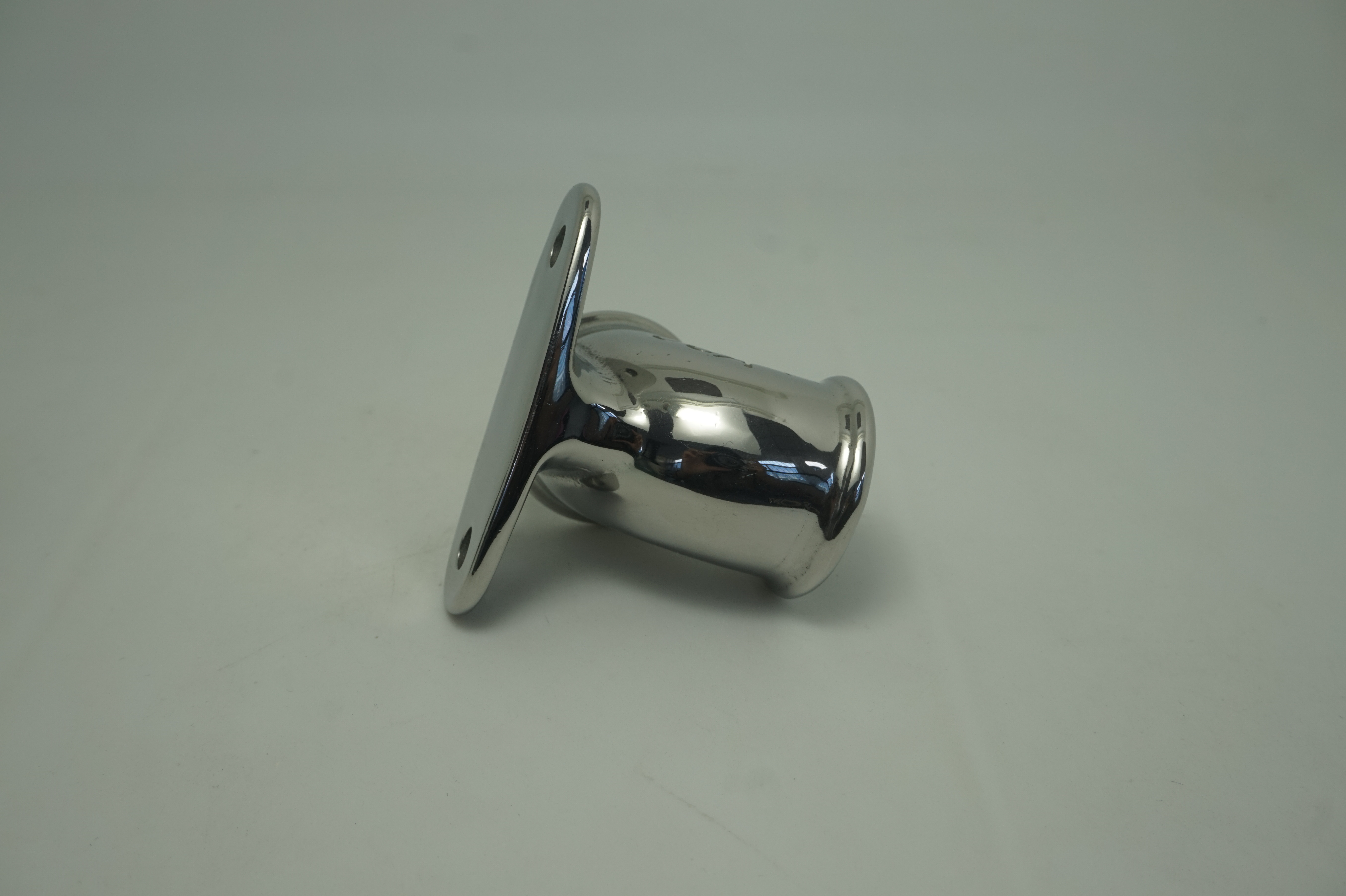
Protect it deliberately rather than relying on a gentle setting. Options include masking or plugging the face, fixturing the part so the land is held out of the mass, orienting the part so the land sees less contact, or choosing a media shape and size that blends rather than digs. Each has a cost: a masked face keeps its as-machined condition and can show a boundary line, a fixture shields the area behind it, and fixturing reduces how many parts fit in a load. Mark the land on the drawing, give it a maximum edge radius, and agree how it will be checked. Test the arrangement on the real part.
No. A trial reports what was observed on the parts that were sent, under the settings that were used on the machine that ran them. It does not establish what will happen across other heats, casting lots, machining sources or a full production charge, and it does not demonstrate how the process behaves once the media has worn. Treat the returned parts and the observation record as a direction to test at production scale. The next step is a production-representative batch on the machine the buyer will use, with the buyer's own first-article discipline, agreed sampling and the features that matter measured against the recorded baseline.
An edge break means the sharp corner is removed, usually to a small defined size, and the intent is that no sharp edge or wire edge remains. An edge round means the edge is held inside a controlled radius band, often with both a minimum and a maximum, because the function depends on the contour, for example where a seal seats or a coating must cover the edge uniformly. Specifying only the word deburr leaves the size open, and mass finishing rounds every edge in proportion to the energy used. For each controlled edge, state which of the two applies, the size or band, and how it will be measured.
Use Florence, Italy as the destination on the enquiry and state whether the deliverable is equipment, media and compound, a representative sample review or a line concept. A destination does not imply local stock, a local service point or a local delivery time.
A Florence buyer would set surface and edge requirements against ISO/UNI surface-texture standards and, for the pharmaceutical-side base, against the cleanliness and residue limits held in the customer's own device or plant specification rather than in a finishing-specific standard. Finishing operations are normally qualified as a process step inside the customer's quality system, and the Tuscan manufacturing associations run technical and standardisation desks for members.
Sources were retrieved on 2026-09-29 and describe the local industrial and trade context only. They do not evidence any SurfacePolish project, shipment, installation or service in Florence.
The buyer needs the radial hole intersections deburred to a controlled edge on a small precision part without touching the metering land diameters.
Send the material, dimensions, approximate weight, batch quantity, the incoming condition and photographs of the difficult features. Mark which features must not be contacted by media and state how the result will be inspected. This form carries source reference PSEO-0478; quote it if you prefer an additional manual reference.
Open the SurfacePolish enquiry form Email a prepared enquiry
No price, lead time, certification or result is promised here. Confirm whether a sample trial is available for the specific part and what the trial can and cannot show.
Page PSEO-0478 · revised 2026-09-29 · cross-border equipment, media and scoped sample review. City context is sourced and cited above.
Use this local checker to identify missing part and inspection information. It prepares a technical-review brief; it does not approve a machine, process recipe or production result.
Complete the part details to prepare a review brief.
Email : info@surface-polish.com


 IPv6 network supported


 +86-592-2381506