A buyer in Houston, United States in energy equipment has a 316L manifold block whose cross-drilling intersections and blind tapped holes must be deburred while staying clear of media. SurfacePolish supplies finishing machines, media and compounds across borders, and its free sample trial returns representative parts from Xiamen with an observation record and a proposed media, compound and cycle direction to evaluate. This brief is written for a buyer in Houston working on energy equipment; it describes equipment, media and a scoped sample review, not a local polishing service.
Which edges on this part are functional, such as gasket lands, seat bands, stem guides, metering lands and thread entries, and which only need to be free of a sharp edge?
What must the part be clean of, and what method and limit does the buyer use to verify cleanliness before assembly, welding, coating or a leak test?
Is deburring done before or after heat treatment, and in what metallurgical and surface condition does the part arrive at the finishing step?
Deburring sits in a sequence, and its position relative to heat treatment changes the job. Material in the soft, as-machined state tears and smears, so a burr on a low-carbon flange or an austenitic body tends to roll rather than fracture. The same feature in a hardened or precipitation-hardened condition behaves differently: edges chip, and the burr root can be brittle enough to flake rather than peel. Heat treatment also brings scale, a decarburised skin or a changed surface that has to be removed before any finish is meaningful. Decide whether the part is deburred before hardening and receives a light edge blend afterwards, or whether all edge work happens after the final thermal step. That decision belongs with the buyer's process engineer, because it moves the operation between departments and can change which features are accessible.
Every mass-finishing route is also a contact problem. Parts touch each other, the machine wall and any fixture, and each contact is a chance to mark, peen or bend a finished face. Compartmenting a charge, racking parts individually or running a smaller load with more media between parts changes the contact pattern, and it changes throughput in the same move. Where a machined gasket land, a ground spigot or a lapped sealing face must arrive unmarked, decide which faces are allowed to bear contact and design the load around that. A fixture can hold a part out of the mass, but it also shields the area behind it, so the shielded zone has to be finished another way or left as-machined. Record the contact plan with the load.
| Machine route | Where it fits | What it will not do |
|---|---|---|
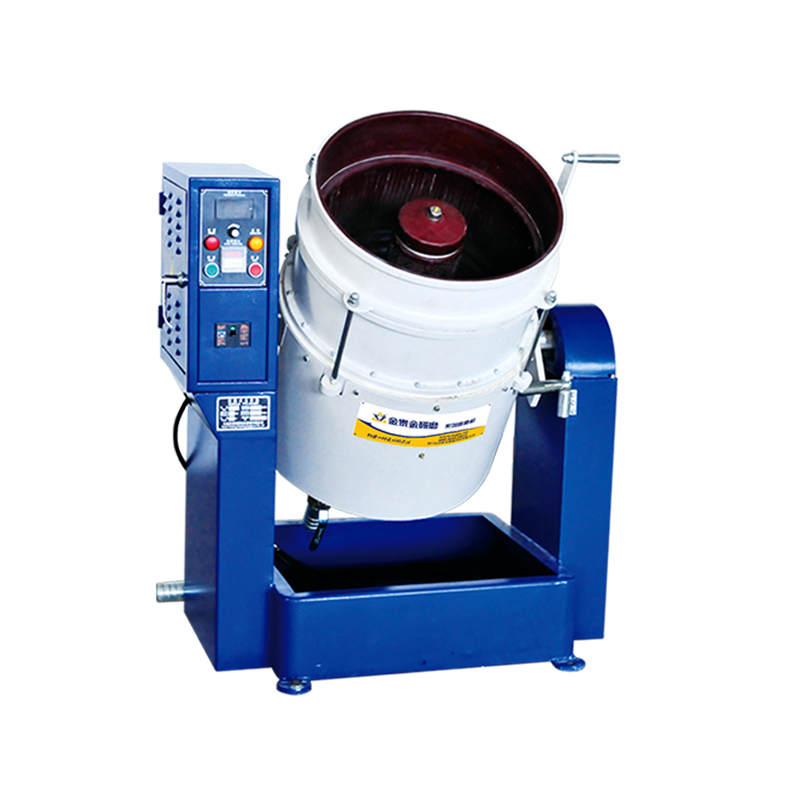
| Disc finishing machine | Fast, high-energy cycles on small to medium robust parts, including batches of fittings and small housings that need a quick cut | High contact pressure rounds edges quickly and can mark or deform thin and soft parts, with results sensitive to load and disc condition |
| Barrel finishing machine and rotary barrel tumbler | Gentle, low-impingement deburring of small, fragile or precision parts and mixed fitting batches where edge protection matters more than speed | Long cycles, no visibility while the barrel runs, and internal features can collect media and compound that must be retrieved at unload |
| Tub vibrator | Long parts such as manifold rails, shafts, long housings and stacked plate sets that cannot tumble in a bowl, with support or rotation along their length | Lower energy per unit area so heavy burrs take longer, and the tub needs floor space plus a defined part support method |
| Magnetic finishing machine | Small precision parts with internal intersections, radial holes and thread entries that a bulk charge cannot reach | Limited by part size and material, pins must be retrieved and checked, and it does not level or refine large flat surfaces |
The compound is a chemistry decision that outlives the finishing cycle. It controls cutting behaviour, keeps the media and the part clean, suspends fines, and determines what film remains on the part when it leaves the machine. Acidic families clean and brighten some stainless grades but leave a surface that must be rinsed and neutralised carefully, and they are the wrong choice where a hardened, high-strength steel later sees a plating or coating step. Alkaline and neutral cleaning families are gentler on mixed loads but may not hold the same cutting performance. Silicate-bearing or film-forming compounds can leave a tenacious residue in a gasket groove or a blind hole. Check compatibility in both directions: the material being finished, and the residue against the buyer's next operation.
| Media | Best fit | Watch out for |
|---|---|---|
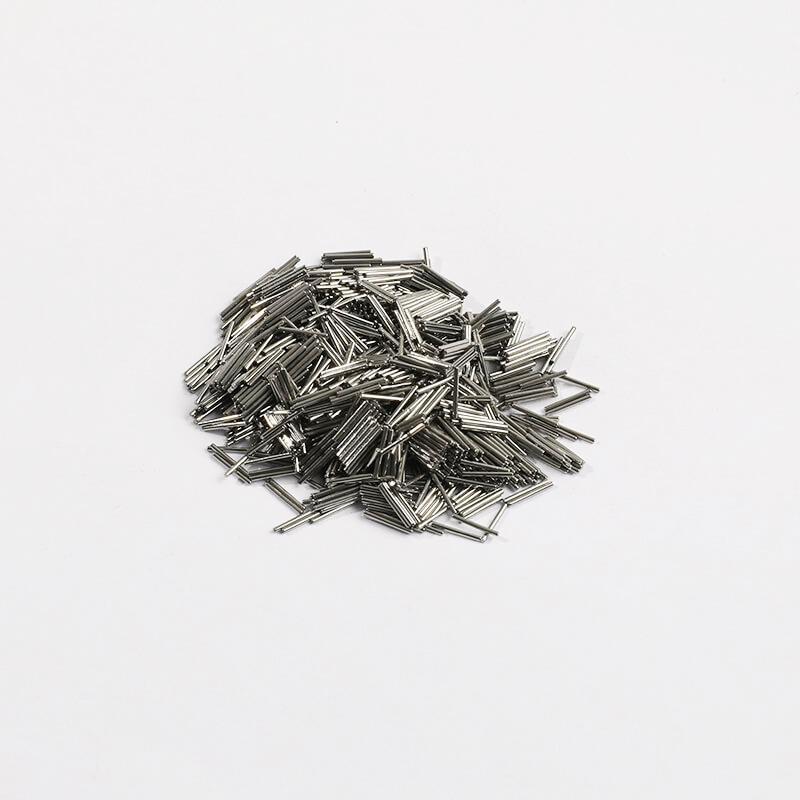
| Hardened steel media, balls and pins | Burnishing and bright finishing of stainless and hardened parts, and light edge consolidation where a cutting action is not wanted | Changes the surface by deformation rather than cutting, can work-harden or smear a soft surface, and needs corrosion protection and separation from acidic compounds |
| Alumina-bearing grinding media in a dense ceramic bond | Heavy stock removal and consistent cutting on hard or work-hardened parts with generous edge limits, such as robust flanges and heavy fittings | High removal energy rounds functional edges quickly and is a poor match for thin plates, thin-wall castings and lapped sealing faces |
| Fine ceramic spheres or small porcelain shapes in a light size class | Refinement and edge blending after a cutting stage, and light deburring of small fittings, thread entries and tighter external geometry | Small sizes enter and retain in fine passages and cross-drillings, and the charge changes size and cut rate as it wears |
| Plastic media triangles and pyramids in a soft to medium grade | Deburring aluminium, brass and other soft or thin-walled parts where surface marking and edge rounding must stay minimal | Slow cut rate, media deforms and wears out of shape, and a worn charge behaves noticeably differently from a fresh one |
A burr can be bent flat instead of removed, and a bent burr is more dangerous than an obvious one. Light contact rolls a thin lip over the edge and blends it into the surface; under a bench light the edge looks finished, while the root is still attached and now forms a thin flag that can fatigue or break off in service. This is a particular risk on ductile materials, on thread entries, and on edges that were only lightly touched by a refinement pass. Visual inspection alone will not reliably separate a removed burr from a folded one. Use a tactile check with a probe or a lint-free wipe drawn along the edge, look at the edge at magnification under angled light, and take a sectioned or replica sample where the feature is critical.
| Failure mode | Likely cause | How to catch it |
|---|---|---|
| Tenacious compound film or reaction residue left in a gasket groove, thread or blind hole | A film-forming or silicate-bearing compound, insufficient rinse volume or temperature, or drying the part before it is genuinely clean | Wipe a defined area with solvent against a clean reference, check for a continuous water film on a rinsed sample, and inspect recessed features at magnification before packing |
| Burr lip folded flat over the edge with the root still attached | Too light a cut for the burr thickness, a refinement-only pass used as the only stage, or a soft ductile material that rolls instead of fracturing | Draw a probe or lint-free wipe along the edge, examine at magnification under angled light, and take a sectioned or moulded replica sample where the feature is critical |
| Media lodged in a cross-drilling, blind tapped hole, keyway, groove or internal passage | Size class chosen against an average feature rather than the smallest one, media fractured into smaller pieces during the cycle, or a secondary burr that closed part of the opening | Borescope agreed passages at a fixed angle, pin gauge every tapped hole, count the charge in and out where practical, flush through a filter and inspect the residue, and compare part mass before and after |
| Thread entry deformation, a damaged lead thread or a burr folded into the first threads | Aggressive media at an unprotected thread entry, media lodging in the thread and working against it, or handling damage at load and unload | Run a go and no-go thread gauge on every tapped feature in the sample, inspect the first threads under magnification, and check the entry chamfer against the drawing |
Greater Houston's manufacturing base is concentrated in fabricated metal, machinery and chemical manufacturing, which the Greater Houston Partnership describes as areas of unparalleled regional leadership and expertise, with medical devices and therapeutics named as an emerging strength alongside a globally leading healthcare industry. The Partnership also positions Houston as the beating heart of the global energy industry and the epicenter of the energy evolution across oil and gas, renewables, hydrogen, carbon capture and biofuels. Aerospace is anchored by NASA's Johnson Space Center in Houston, which the Partnership credits with mission control and astronaut training and which NASA describes as the centre for America's astronaut corps, the Mission Control Center and the human spaceflight programmes for Moon Base, Low Earth Orbit and Orion. Freight and trade infrastructure is substantial: Houston Airports handled 598,139 metric tons of cargo in fiscal year 2026, and the Partnership cites a top-ranking port, two international airports and 86 consulates as the basis of the city's global-commerce position.
For this brief the relevant part of that base is energy: The Greater Houston Partnership describes Houston as the epicenter of the energy evolution, shaping renewables, hydrogen, carbon capture and biofuels alongside oil and gas.
The finishing burden sits in three places: oil-and-gas and petrochemical hardware such as valves, flanges, pump and compressor parts and heat-exchanger components, where weld dressing, burr removal and surface finish affect sealing, flow and corrosion resistance; fabricated-metal and machinery work where edge quality and Ra are specified on machined, laser-cut and formed parts; and medical-device and energy-equipment stainless parts where cleanliness and passivation matter. Much of this is alloy-specific - duplex and super-duplex stainless, nickel alloys and carbon steel behave very differently in the same finishing process - so media and compound selection rather than machine size usually decides whether the surface passes.
The question to settle first is what the surface has to do - seal, flow, resist corrosion, or present a cleanable hygienic face - because for Houston's mix of oil-and-gas, chemical, fabricated-metal and medical parts that answer decides whether the priority is edge radius and Ra, weld dressing, or media and compound chemistry that will not embed contamination in stainless.
Freight context: George Bush Intercontinental Airport (IAH), William P. Hobby Airport (HOU), Ellington Airport / Houston Spaceport (EFD), Port of Houston / Houston Ship Channel (the region's top-ranking port). Houston Airports set a fiscal-year cargo record in FY2026 with 598,139 metric tons through IAH and HOU, of which IAH accounted for 588,002 metric tons and more than 98% of system cargo. The Greater Houston Partnership describes Houston as having 86 consulates, two international airports and a top-ranking port, making it a hub for global commerce; machinery and sample parts arriving from China would be entered through CBP at the seaport or airport of arrival.
The customs authority is U.S. Customs and Border Protection (CBP), part of the Department of Homeland Security. The importer of record files an entry and then an entry summary (CBP Form 7501): '"Entry Summary" refers to the documentation necessary to enable U.S. Customs and Border Protection to assess duties, collect statistics, and determine whether other requirements of law have been met.' Classification is made in the Harmonized Tariff Schedule of the United States, and an importer may request a written CBP ruling on the correct HTSUS classification and rate of duty, which is the practical way to confirm the treatment of a finishing machine before shipment. Every article of foreign origin must be marked with the English name of its country of origin 'in a conspicuous place as legibly, indelibly, and permanently as the nature of the article (or container) will permit' under 19 U.S.C. 1304 and 19 CFR 134.11. The $800 de minimis (Section 321) exemption is no longer available for ordinary freight: CBP suspended it indefinitely for all modes other than the international postal network effective 24 June 2026, so even low-value sample parts and media must go through formal or informal entry and pay applicable duty. General US industry practice is that there is no single machinery conformity mark comparable to the EU's CE marking; buyers instead verify electrical components and control panels, machine guarding against workplace-safety requirements, and any customer-specific qualification.
Business is conducted in US English. Units matter: US drawings and purchase orders frequently use inches, microinch Ra and US gallons, and a supplier that quotes only metric can be asked to reissue documentation. Buyers are US legal entities with an EIN and expect an identifiable contracting entity, a correct HTSUS classification, a commercial invoice, packing list and bill of lading, country-of-origin marking, and an importer of record for customs. Procurement is normally evidence-driven: process selection is expected to be justified by a trial run on the buyer's own sample parts with measured results (burr height, edge radius, Ra, cleanliness) and by media and compound data sheets, rather than by a capability claim. Payment terms in general US industrial practice are open account with net-30 to net-60 terms for established buyers, with letters of credit or advance payment more common for a first order from a new overseas supplier; no US buyer assumes Incoterms, warranty terms or spare-parts lead times unless they are stated in the quotation.
SurfacePolish supplies from Xiamen, China. The buyer's own destination rules, conformity marking, tariff classification and documentation responsibilities stay with the buyer; confirm them against the authorities named above before ordering.
Edge acceptance needs a reference object, because words like lightly broken or slightly rounded mean different things to different inspectors. Build a physical or photographic master at a stated magnification: a part or coupon showing the acceptable edge, the borderline case and the reject. For each controlled edge, express the requirement as either an edge break, meaning the sharp corner is removed to a small defined size, or an edge round, meaning a controlled radius band the edge must sit inside. Give a maximum where over-rounding is the risk, and a minimum where the edge must not stay sharp. State how the edge will be checked, whether by radius gauge, optical comparator, moulded replica or tactile comparison against the master, and at what frequency.
A comparison between two media or two settings is only readable if one variable changes. Changing media size class and cycle length together produces a result that cannot be attributed to either, and the next trial starts from an unknown position. Fix the machine, the load ratio, the compound and the cycle, change one thing, and repeat with at least two or three parts per setting so a single outlier does not decide the direction. Measure at the same named positions with the same instrument and cut-off as the baseline, and keep the inspection sequence identical. Record not only what improved but what got worse or stayed unchanged; the rejected direction is often the most useful part of the record.

Both positions are used, and the choice follows the burr and the edge requirement. Deburring before hardening removes the machining burr while the material is still soft and the charge cuts predictably, but hardening can then introduce scale and slight distortion, and edges may need a light blend afterwards. Deburring only after the final thermal step keeps every edge operation in one place and works on the finished metallurgical state, at the cost of a harder material that cuts more slowly and a risk of brittle edge chipping. Discuss the sequence with the heat treater and the process engineer, and record the condition the part arrives in for finishing.
An edge break means the sharp corner is removed, usually to a small defined size, and the intent is that no sharp edge or wire edge remains. An edge round means the edge is held inside a controlled radius band, often with both a minimum and a maximum, because the function depends on the contour, for example where a seal seats or a coating must cover the edge uniformly. Specifying only the word deburr leaves the size open, and mass finishing rounds every edge in proportion to the energy used. For each controlled edge, state which of the two applies, the size or band, and how it will be measured.
They can be run in the same equipment, but not safely in the same charge without a cleaning discipline. Carbon steel and cast iron leave fines and graphite that transfer to stainless parts, show up as rust staining or embedded particles, and are difficult to see at the machine. The practical approach is a dedicated charge per material family where volume allows, or a purge between families: run the machine with media and clean compound, flush the rinse tank, change or clean the drying medium and cloths, and inspect the media for embedded ferrous fines. Tell the finishing route which families will alternate, because changeover time is a real cost.
Use Houston, United States as the destination on the enquiry and state whether the deliverable is equipment, media and compound, a representative sample review or a line concept. A destination does not imply local stock, a local service point or a local delivery time.
A Houston buyer starts from the US voluntary-consensus system coordinated by ANSI and then layers on sector requirements: pressure-containing and rotating equipment for oil, gas and petrochemical service is specified against the relevant ASME and API codes and the buyer's corrosion and materials requirements for wet or sour service, while medical and energy-equipment stainless parts carry customer cleanliness specifications. Surface-finish and deburring acceptance is normally fixed on the drawing or in the purchase order rather than by a single national finishing standard.
Sources were retrieved on 2026-09-29 and describe the local industrial and trade context only. They do not evidence any SurfacePolish project, shipment, installation or service in Houston.
The buyer needs the machined burrs removed from the intersection edges and thread entries while keeping every passage clear and the face seal groove undamaged.
Send the material, dimensions, approximate weight, batch quantity, the incoming condition and photographs of the difficult features. Mark which features must not be contacted by media and state how the result will be inspected. This form carries source reference PSEO-0028; quote it if you prefer an additional manual reference.
Open the SurfacePolish enquiry form Email a prepared enquiry
No price, lead time, certification or result is promised here. Confirm whether a sample trial is available for the specific part and what the trial can and cannot show.
Page PSEO-0028 · revised 2026-09-29 · cross-border equipment, media and scoped sample review. City context is sourced and cited above.
Use this local checker to identify missing part and inspection information. It prepares a technical-review brief; it does not approve a machine, process recipe or production result.
Complete the part details to prepare a review brief.
Email : info@surface-polish.com


 IPv6 network supported


 +86-592-2381506