A buyer in Pune, India working on energy equipment has a hardened 4140 gate valve wedge whose sharp edges must be broken while the lapped sealing faces stay untouched. SurfacePolish supplies finishing machines, media and compounds across borders, and its free sample trial returns representative parts from Xiamen with an observation record and a proposed media, compound and cycle direction that the buyer's engineers can assess. This brief is written for a buyer in Pune working on energy equipment; it describes equipment, media and a scoped sample review, not a local polishing service.
Which material families and heat-treatment states share the equipment, and what separation is needed to avoid ferrous or graphite carry-over onto stainless parts?
What must the part be clean of, and what method and limit does the buyer use to verify cleanliness before assembly, welding, coating or a leak test?
Does the drawing state an edge break or an edge round at each controlled edge, and what maximum radius applies where over-rounding is the risk?
Treat the batch, not the individual part, as the unit that gets controlled. A charge holds a defined mass of parts sharing a material family, a burr condition and an edge requirement. Mix a thin heat-exchanger plate with a heavy valve body and the light part absorbs energy it did not need while the heavy part shields its own critical edges. Batch definition also fixes traceability. If two heats of duplex stainless or two casting lots run together, a defect found later cannot be tied back to a charge, a media age or a compound batch. Keep part numbers, material grades and heat-treatment states in separate runs, label the charge, and record how many parts were loaded and in what orientation.
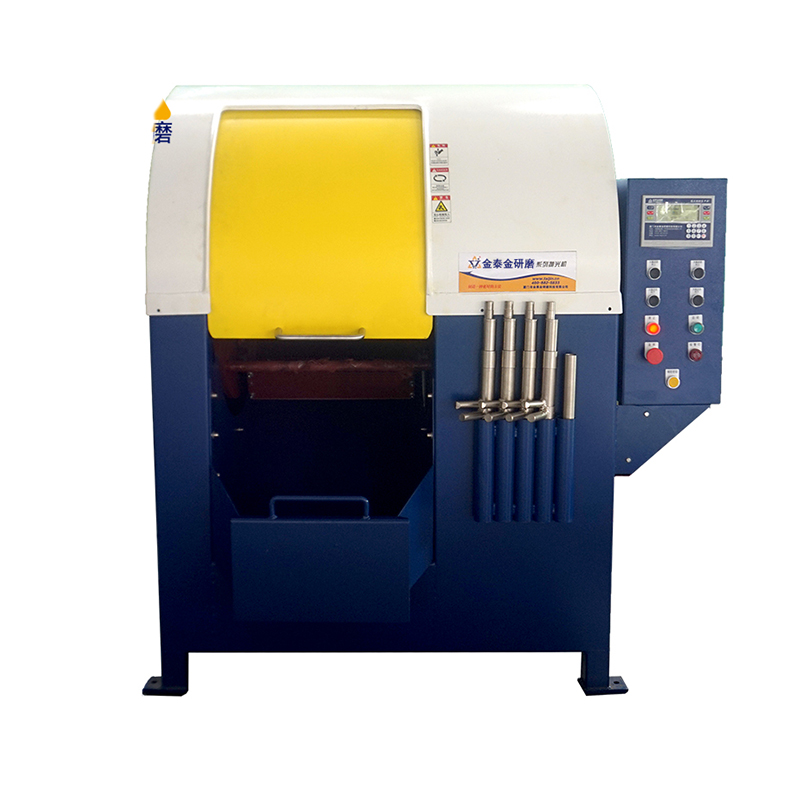
High-pressure routes, disc machines, grinding finishing machines and centrifugal barrels, earn their place when a heavy burr or a large batch makes the gentle options impractical. The trade is paid in three currencies. Edge rounding accelerates, so controlled edges need masking, orientation control or a shorter cycle. Distortion risk rises on thin walls, thin plates and unsupported sections, because the same pressure that cuts a burr can also move material. And the charge has to be balanced: centrifugal barrels in particular need an even barrel weight and a planned stop time, or the load shifts and results vary between barrels. Ask whether the part family has enough edge tolerance and section stiffness to absorb that energy. If it does not, the gentler route usually costs less overall.
| Machine route | Where it fits | What it will not do |
|---|---|---|
| Magnetic finishing machine | Small precision parts with internal intersections, radial holes and thread entries that a bulk charge cannot reach | Limited by part size and material, pins must be retrieved and checked, and it does not level or refine large flat surfaces |
| Grinding finishing machine | Heavier stock removal and thick burr roots on robust parts where clearing material in a shorter cycle matters more than the surface result | Aggressive edge rounding and a coarser surface, so it fits lapped seats, thin sections and tight edge bands poorly |
| Tub vibrator | Long parts such as manifold rails, shafts, long housings and stacked plate sets that cannot tumble in a bowl, with support or rotation along their length | Lower energy per unit area so heavy burrs take longer, and the tub needs floor space plus a defined part support method |
| Vibratory finishing machine (bowl) | General deburring and refinement of valve bodies, flange plates, pump components and fittings that fit the bowl and can move freely in the charge | No access to deep internal passages, constant part-on-part contact, and finished faces need separation or fixture protection |
Match media hardness and density to the workpiece, not to the finish someone wants to see. A heavy-cut ceramic cuts carbon and stainless steel edges and also cuts them quickly, which is useful for a thick Poisson burr on a flange and risky on a soft aluminium housing where the same charge peens and smears the surface. Plastic media gives up cut rate to stay gentle on soft alloys and thin sections, and steel media changes the mechanism: instead of cutting, it burnishes and can work-harden a surface. Alumina-bearing or grinding media sit at the aggressive end and suit robust, hard parts with generous edge limits. The decision is a three-way match between part hardness, burr root thickness and the tightest edge allowance. Where a hard body carries a delicate machined land, two stages beat one harder charge.
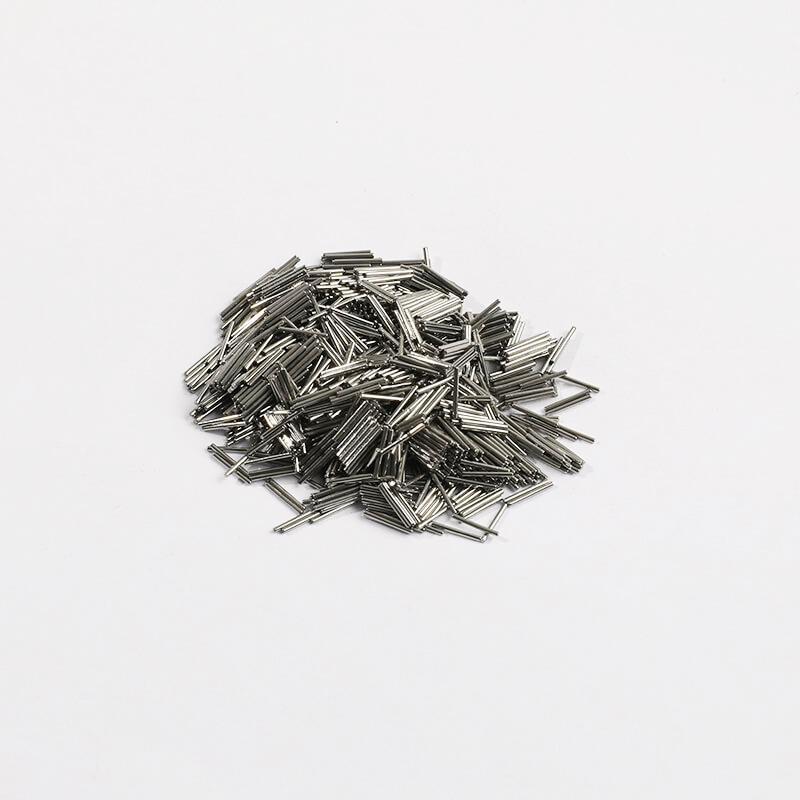
| Media | Best fit | Watch out for |
|---|---|---|
| Heavy-cut ceramic, angle-cut triangles in a coarse size class | Removing a substantial or thick burr root from open external edges, flange corners, cast bosses and large tapped entries on steel and stainless parts | Cuts controlled edges and gasket lands as readily as burrs, leaves a coarse surface, and lodges in slots whose width approaches the media section |
| Fine ceramic spheres or small porcelain shapes in a light size class | Refinement and edge blending after a cutting stage, and light deburring of small fittings, thread entries and tighter external geometry | Small sizes enter and retain in fine passages and cross-drillings, and the charge changes size and cut rate as it wears |
| Dry media, corn cob granules with a polishing compound | Final dry polish, light edge blending and drying after a wet stage on small parts and fittings | Almost no cutting action, absorbs compound and contaminates quickly, and must be kept separate per material family to avoid carry-over |
| Plastic media triangles and pyramids in a soft to medium grade | Deburring aluminium, brass and other soft or thin-walled parts where surface marking and edge rounding must stay minimal | Slow cut rate, media deforms and wears out of shape, and a worn charge behaves noticeably differently from a fresh one |
Media lodging is a geometry and media-condition problem, and it concentrates at intersections. A cross-drilling breaking into a bore, a blind tapped hole, a keyway, a snap-ring groove and a slot whose width approaches the medium section are all traps. The usual causes are a size class chosen against an average feature rather than the smallest one, a charge that has fractured into smaller pieces, and a secondary burr or fold that closes part of the opening while the part is running. Retrieval often costs more than the deburring itself, especially where the trap is inside a body that cannot be opened. Plan detection before the run: which passages are borescoped at an agreed angle, which holes are pin gauged, how a flush through a filter is collected, and how the part mass is compared.
| Failure mode | Likely cause | How to catch it |
|---|---|---|
| Controlled edge rounded past the drawing limit, or an edge left sharper than the specified break | Cycle too long or energy too high for the edge allowance, dense or coarse media, an unmasked functional edge, or a drawing requirement that never stated a maximum radius | Measure a defined edge feature before and after with a radius gauge, optical comparator or moulded replica, compare against the maximum on the drawing, and check the same feature on parts from different positions in the load |
| Part-on-part or fixture witness marks and peening on a finished face | Insufficient separation in the load, too high a load ratio for the part mass, sharp or worn fixture contact points, or the same faces bearing contact throughout the cycle | Inspect at magnification under angled light against a retained reference, map the mark positions against the load arrangement, and check fixtures and compartments for burrs and wear |
| Thread entry deformation, a damaged lead thread or a burr folded into the first threads | Aggressive media at an unprotected thread entry, media lodging in the thread and working against it, or handling damage at load and unload | Run a go and no-go thread gauge on every tapped feature in the sample, inspect the first threads under magnification, and check the entry chamfer against the drawing |
| Burr lip folded flat over the edge with the root still attached | Too light a cut for the burr thickness, a refinement-only pass used as the only stage, or a soft ductile material that rolls instead of fracturing | Draw a probe or lint-free wipe along the edge, examine at magnification under angled light, and take a sectioned or moulded replica sample where the feature is critical |
Pune is one of the industrial and commercial centres that Invest India names, alongside Mumbai and Chhatrapati Sambhajinagar, on Maharashtra's road network of more than 6.7 lakh km (s1). The district carries a major concentration of the state's approved private industrial parks - 669 private IT parks statewide, concentrated in Pune, Mumbai City & Suburban and Thane - on top of the 289-292 industrial areas developed statewide by the Maharashtra Industrial Development Corporation (s1). The city's industry association is the Mahratta Chamber of Commerce, Industries and Agriculture, which presents itself as Maharashtra's Largest Industry Network and runs sector committees including food processing and defence from its Senapati Bapat Road office in Pune (s2). The Delhi-Mumbai Industrial Corridor, spanning about 1,504 km across six states, is the wider industrial-growth driver for this belt (s1).
The nearest part of that base to this brief is food: The Mahratta Chamber of Commerce, Industries and Agriculture, Pune's industry association, lists Food Processing among its standing industry committees (s2).
Pune's component and machinery manufacturing base produces machined castings, forgings, gears, shafts and sheet-metal parts whose edges, burrs and surface condition are inspected by the receiving OEM or tier-one customer, so deburring and controlled surface finish are routine process steps rather than cosmetic extras. Food-processing equipment adds a cleanliness and passivation dimension where product-contact surfaces must be free of burrs, scale and residue after fabrication.
A Pune buyer should decide whether the acceptance criterion is a measured surface roughness and burr-free edge on a defined alloy, or a visual finish, and whether the part family is high-mix/low-volume job work or a single high-volume line - that choice, not machine size alone, determines whether batch barrel/vibratory finishing or a more controlled process is the right answer.
Freight context: Jawaharlal Nehru Port (JNPT) / Nhava Sheva, Delhi-Mumbai Industrial Corridor (DMIC) road corridor, Mumbai-Pune expressway and national highway corridor. Pune is connected to Mumbai and Chhatrapati Sambhajinagar by one of India's largest road networks and sits on the Delhi-Mumbai Industrial Corridor (s1). Containerised imports are normally cleared through the JNPT/Vadhvan port complex and trucked down the Mumbai-Pune corridor, so inland transit and unloading access at the plant should be planned together with the bill of entry timeline (s1).
India classifies every imported item in the ITC(HS) schedule, a compilation of codes for all merchandise for export and import whose Schedule I lays down the import policy regime for each item, maintained at 8-digit level under the First Schedule of the Customs Tariff Act, 1975 and aligned at 6 digits with the WCO Harmonized System (c1, c3). Importability is judged by the policy in force on the date of import, and when a policy moves from free to restricted, goods already committed through an irrevocable commercial letter of credit opened before the change can still be imported up to the balance quantity, value and period in that ICLC (c4). Preferential customs treatment is available only through the preferential trade agreements, free trade agreements, CECAs and CEPAs that India notifies and that are in operation (c5), so Chinese-origin industrial machinery is assessed at the applicable rate of the customs tariff rather than under any India-China preferential rate; India's commerce leadership has separately pointed to exports under free trade pacts growing faster than imports (c12). For capital goods specifically, DGFT operates the Export Promotion Capital Goods (EPCG) scheme, whose stated objective is to facilitate import of capital goods for producing quality goods and services (c7), which Indian firms use when they want duty relief on imported plant against an export obligation.
An Importer-Exporter Code (IEC) issued by DGFT is a key business identification number which is mandatory for exports or imports, and since the introduction of GST the IEC number is the same as the PAN of the firm (c6). The post-incorporation clearance list published by Invest India includes the IEC, a Customs- Special Valuation Branch reference and the grant of a Bureau of Indian Standards (BIS) licence, and it names the Central Board of Excise and Customs among the agencies in the framework (c10). The Foreign Trade Policy fixes the mandatory import documents as a bill of lading / airway bill / lorry receipt / railway receipt, a commercial invoice cum packing list and a bill of entry, with additional documents or NOCs possible for goods subject to product-specific compliance (c3); it also states that domestic laws, rules, orders, technical specifications and environmental, safety and health norms applicable to domestically produced goods apply mutatis mutandis to imports unless specifically exempted (c2), which is the basis on which a BIS quality-control order can bite on imported machinery. A landed-cost plan therefore needs the correct ITC(HS) classification and the basic customs duty and IGST that follow from it, plus the IEC, the bill of entry documentation and any BIS licence or registration obligation, and a related-party import can additionally be pulled into special customs valuation.
SurfacePolish supplies from Xiamen, China. The buyer's own destination rules, conformity marking, tariff classification and documentation responsibilities stay with the buyer; confirm them against the authorities named above before ordering.
Edge acceptance needs a reference object, because words like lightly broken or slightly rounded mean different things to different inspectors. Build a physical or photographic master at a stated magnification: a part or coupon showing the acceptable edge, the borderline case and the reject. For each controlled edge, express the requirement as either an edge break, meaning the sharp corner is removed to a small defined size, or an edge round, meaning a controlled radius band the edge must sit inside. Give a maximum where over-rounding is the risk, and a minimum where the edge must not stay sharp. State how the edge will be checked, whether by radius gauge, optical comparator, moulded replica or tactile comparison against the master, and at what frequency.
Consistency in production comes from a maintenance schedule for the consumables, not from locking the machine settings. Compound concentration drifts as it is carried out on parts and as the bath is topped up with water; media wears and breaks; fines accumulate in the bath and in the rinse; screens clog. Each of those changes the process gradually, so the first sign is usually a slow trend in edge condition or surface result rather than a sudden failure. Set the schedule before production starts: how often concentration and pH are checked and corrected, when the charge is screened, when media is measured against the specified size class and topped up or replaced, when the bath is dumped and the machine purged, and when the rinse water is changed.

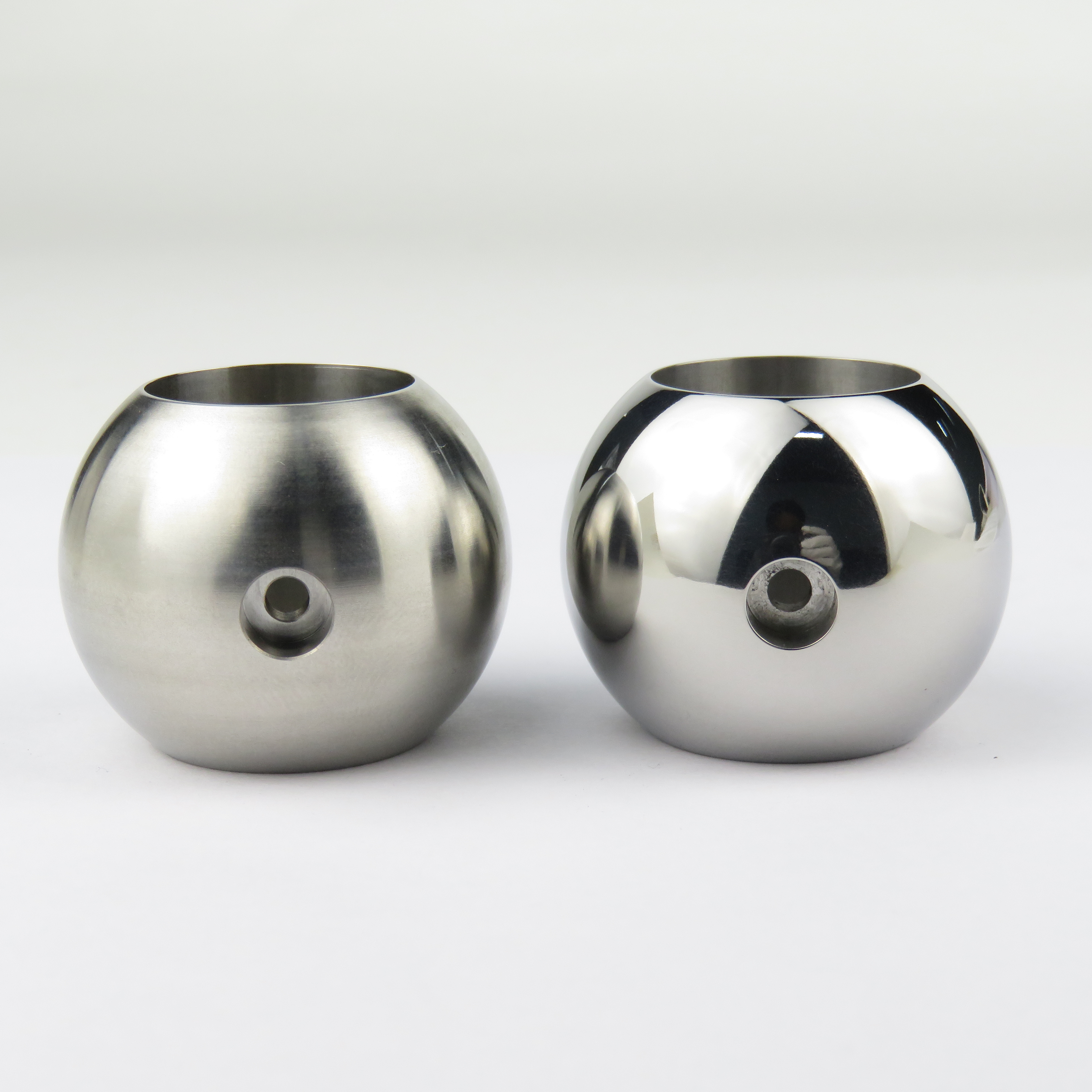
The finishing step is part of the route, and what it leaves behind matters to the next operation. Compound residue in a gasket groove or thread can interfere with welding, passivation or a coating bond, and a surface finished with an acid-bearing compound may need a defined rinse and neutralisation first. Mechanical work also changes the edge geometry a coating must cover, so an edge deliberately broken or rounded takes a coating differently from a sharp one. Tell the finishing route what comes next and agree the rinse, dry and handling between them. Where a hardened, high-strength steel is later plated, raise the embrittlement question with whoever owns that specification.
Protect it deliberately rather than relying on a gentle setting. Options include masking or plugging the face, fixturing the part so the land is held out of the mass, orienting the part so the land sees less contact, or choosing a media shape and size that blends rather than digs. Each has a cost: a masked face keeps its as-machined condition and can show a boundary line, a fixture shields the area behind it, and fixturing reduces how many parts fit in a load. Mark the land on the drawing, give it a maximum edge radius, and agree how it will be checked. Test the arrangement on the real part.
They solve different access problems. Thermal deburring oxidises thin burrs in a chamber and reaches internal intersections that no media can touch, but it acts on a whole part at once, needs a sealed chamber, and does not produce a controlled edge radius. Abrasive flow pushes a viscous abrasive medium through a passage and targets specific internal features, with dedicated fixturing per part. Mechanical mass finishing removes the burr root and blends the edge, and its limit is access. Many energy-equipment parts use more than one route: mechanical for external and reachable edges, another method for enclosed intersections. SurfacePolish supplies mechanical equipment and discusses the comparison only.
Use Pune, India as the destination on the enquiry and state whether the deliverable is equipment, media and compound, a representative sample review or a line concept. A destination does not imply local stock, a local service point or a local delivery time.
Finish, edge and material conformity requirements for a Pune buyer are specified against Indian Standards (IS) issued by the Bureau of Indian Standards, the National Standards Body of India (s3). Where a finished part or the finishing consumable falls under a BIS quality-control order, the licence or registration requirement applies to the product on the Indian market, so the applicable IS reference should be agreed with the customer's quality function up front (s3).
Sources were retrieved on 2026-09-29 and describe the local industrial and trade context only. They do not evidence any SurfacePolish project, shipment, installation or service in Pune.
The buyer needs the sharp edges broken without altering the lapped sealing faces, and wants to understand how a wet process interacts with the hardened surface before any plating step.
Send the material, dimensions, approximate weight, batch quantity, the incoming condition and photographs of the difficult features. Mark which features must not be contacted by media and state how the result will be inspected. This form carries source reference PSEO-0948; quote it if you prefer an additional manual reference.
Open the SurfacePolish enquiry form Email a prepared enquiry
No price, lead time, certification or result is promised here. Confirm whether a sample trial is available for the specific part and what the trial can and cannot show.
Page PSEO-0948 · revised 2026-09-29 · cross-border equipment, media and scoped sample review. City context is sourced and cited above.
Use this local checker to identify missing part and inspection information. It prepares a technical-review brief; it does not approve a machine, process recipe or production result.
Complete the part details to prepare a review brief.
Email : info@surface-polish.com


 IPv6 network supported


 +86-592-2381506