A buyer in Rennes, France working on energy equipment has a small hardened 17-4PH valve spool whose radial metering hole intersections need a controlled edge without touching the metering lands. SurfacePolish supplies finishing machines, media and compounds across borders and runs a free sample trial that returns representative parts from Xiamen with an observation record and a proposed media, compound and cycle direction. This brief is written for a buyer in Rennes working on energy equipment; it describes equipment, media and a scoped sample review, not a local polishing service.
What must the part be clean of, and what method and limit does the buyer use to verify cleanliness before assembly, welding, coating or a leak test?
Which material families and heat-treatment states share the equipment, and what separation is needed to avoid ferrous or graphite carry-over onto stainless parts?
What is the smallest internal passage, cross-drilling or tapped hole the charge must never plug, and how would a lodged medium be found and removed?
Name the burr before choosing a cut energy. A Poisson burr pushed sideways by tool pressure sits along a machined edge; a rollover caps the edge where the tool exits; a tear leaves a ragged fragment on a ductile material; and a secondary burr forms on the far side of a drilled or tapped feature. They do not respond to the same charge. A thin rollover on stainless can be blended away by a light refinement pass, while a thick tear on a casting may need a heavier cutting stage before any edge blending begins. What matters is the burr root, the material still attached below the visible lip. An edge that looks clean can still carry a root that later releases a particle into a hydraulic or gas circuit. Record how that judgement was made.
A working charge is a consumable with a life curve, and most batch inconsistency is a media condition problem rather than a machine problem. Media wears down, changes size and shape, loses its cutting edge, and eventually fractures into smaller pieces and fines. As it wears, the cut rate falls and the finish improves, so a setting that was correct on a fresh charge drifts over a few hundred cycles. The charge mass also falls as media breaks, which changes the load ratio and the energy per part. Screen out broken pieces and fines, measure a sample against the size class originally specified, top up to a defined mass, and replace on a wear trigger rather than on appearance. Keep the media history with the batch record.
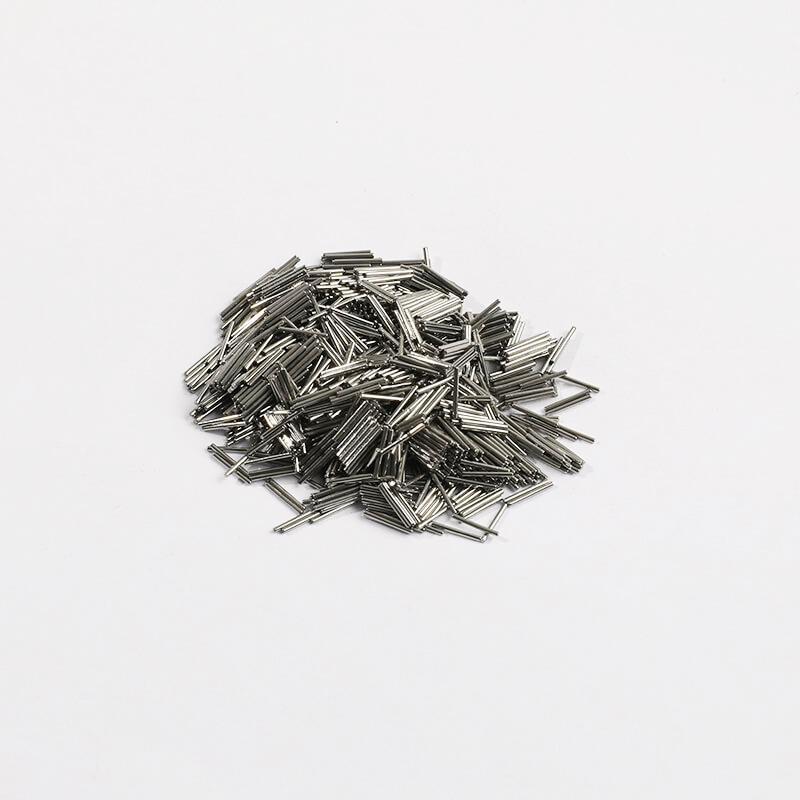
| Media | Best fit | Watch out for |
|---|---|---|
| Fine ceramic spheres or small porcelain shapes in a light size class | Refinement and edge blending after a cutting stage, and light deburring of small fittings, thread entries and tighter external geometry | Small sizes enter and retain in fine passages and cross-drillings, and the charge changes size and cut rate as it wears |
| Dry media, walnut shell with an abrasive or polishing compound | Light dry deburring, deflashing, drying and low-residue finishing of small parts and of features where a wet bath is difficult to remove | Low cutting energy so it cannot remove a substantial burr root, produces dust needing extraction, and consumption is high |
| Heavy-cut ceramic, angle-cut triangles in a coarse size class | Removing a substantial or thick burr root from open external edges, flange corners, cast bosses and large tapped entries on steel and stainless parts | Cuts controlled edges and gasket lands as readily as burrs, leaves a coarse surface, and lodges in slots whose width approaches the media section |
| Dry media, corn cob granules with a polishing compound | Final dry polish, light edge blending and drying after a wet stage on small parts and fittings | Almost no cutting action, absorbs compound and contaminates quickly, and must be kept separate per material family to avoid carry-over |
Internal intersections are a different problem from external surface refinement, and no amount of extra energy in a bowl fixes them. A cross-drilling meeting a main bore creates a burr on the inside wall that external media rarely reaches. Access routes include a small media size class that can enter the passage, magnetic finishing where a pin or needle charge is driven into the feature on small parts, or a targeted mechanical method outside mass finishing. Each has a boundary: a size class small enough to enter a passage is also small enough to lodge in it, magnetic pins are limited by part size and by retrieval, and blind features with no exit cannot be flushed clean. Decide per feature which access route is credible, and how the result will be seen.
| Machine route | Where it fits | What it will not do |
|---|---|---|
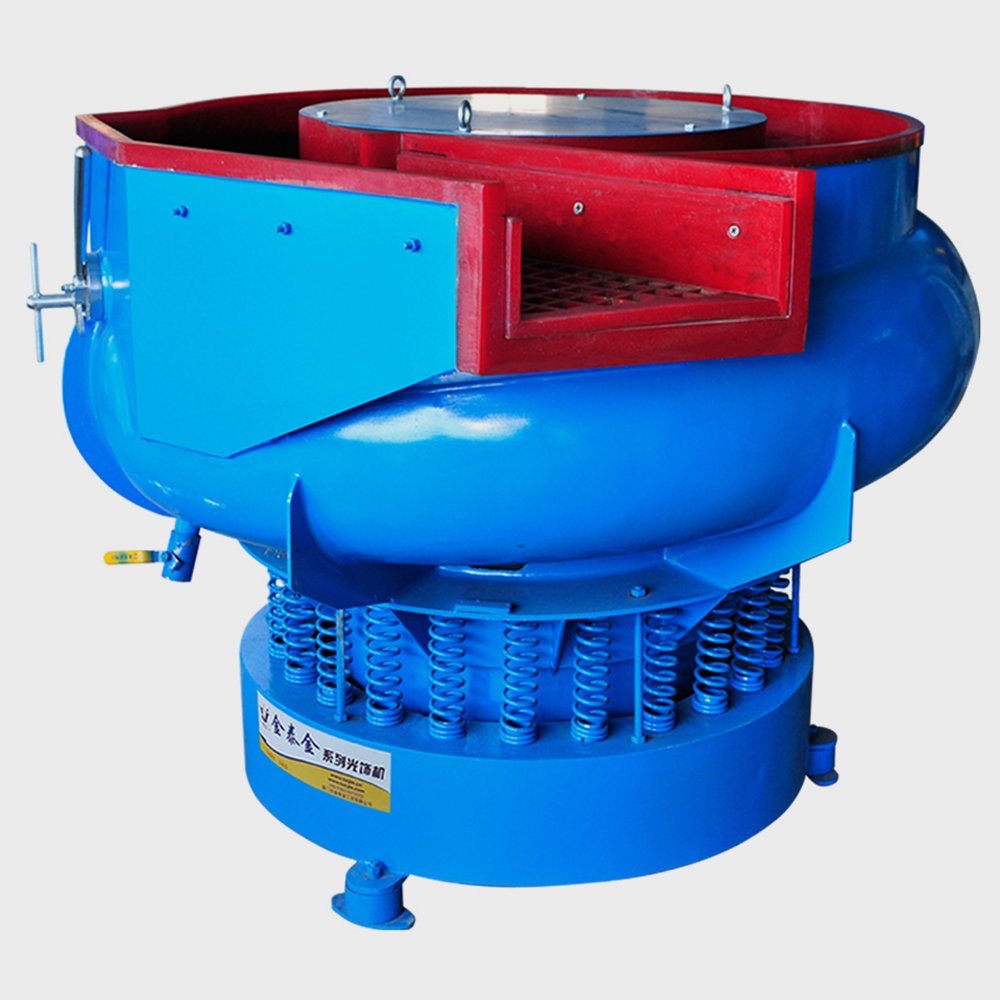
| Disc finishing machine | Fast, high-energy cycles on small to medium robust parts, including batches of fittings and small housings that need a quick cut | High contact pressure rounds edges quickly and can mark or deform thin and soft parts, with results sensitive to load and disc condition |
| Barrel finishing machine and rotary barrel tumbler | Gentle, low-impingement deburring of small, fragile or precision parts and mixed fitting batches where edge protection matters more than speed | Long cycles, no visibility while the barrel runs, and internal features can collect media and compound that must be retrieved at unload |
| Grinding finishing machine | Heavier stock removal and thick burr roots on robust parts where clearing material in a shorter cycle matters more than the surface result | Aggressive edge rounding and a coarser surface, so it fits lapped seats, thin sections and tight edge bands poorly |
| Dry polishing machine and dryer | Drying after a wet cycle and dry light polishing or deburring of small parts, including features where residual moisture is a problem | Removes little or no material, needs dust extraction when dry media is used, and does not replace a cutting stage for a substantial burr |
Media lodging is a geometry and media-condition problem, and it concentrates at intersections. A cross-drilling breaking into a bore, a blind tapped hole, a keyway, a snap-ring groove and a slot whose width approaches the medium section are all traps. The usual causes are a size class chosen against an average feature rather than the smallest one, a charge that has fractured into smaller pieces, and a secondary burr or fold that closes part of the opening while the part is running. Retrieval often costs more than the deburring itself, especially where the trap is inside a body that cannot be opened. Plan detection before the run: which passages are borescoped at an agreed angle, which holes are pin gauged, how a flush through a filter is collected, and how the part mass is compared.
| Failure mode | Likely cause | How to catch it |
|---|---|---|
| Tenacious compound film or reaction residue left in a gasket groove, thread or blind hole | A film-forming or silicate-bearing compound, insufficient rinse volume or temperature, or drying the part before it is genuinely clean | Wipe a defined area with solvent against a clean reference, check for a continuous water film on a rinsed sample, and inspect recessed features at magnification before packing |
| Part-on-part or fixture witness marks and peening on a finished face | Insufficient separation in the load, too high a load ratio for the part mass, sharp or worn fixture contact points, or the same faces bearing contact throughout the cycle | Inspect at magnification under angled light against a retained reference, map the mark positions against the load arrangement, and check fixtures and compartments for burrs and wear |
| Loss of flatness or a dimensional shift on thin plates, thin walls and long unsupported sections | Part-on-part impacts and fixture pressure in a high-energy route, too high a load ratio, or insufficient support along a slender part | Check flatness on a surface plate or a coordinate measuring machine at marked points before and after finishing, and check the same points across parts from different load positions |
| Controlled edge rounded past the drawing limit, or an edge left sharper than the specified break | Cycle too long or energy too high for the edge allowance, dense or coarse media, an unmasked functional edge, or a drawing requirement that never stated a maximum radius | Measure a defined edge feature before and after with a radius gauge, optical comparator or moulded replica, compare against the maximum on the drawing, and check the same feature on parts from different positions in the load |
Rennes is the Breton capital of digital technology, health and agri-food, with an industrial renewal story attached to its former car plant: Rennes Metropole states that La Janais, historically linked to the automobile industry with the presence of Stellantis (formerly PSA), is being developed into a low-carbon industrial excellence hub, with the Bâtiment 78 offering 25 000 m2 of industrial premises, incubator, nursery and business hotel space for young industrial companies. INSEE counted 8 482 establishments in the commune at the end of 2024 with a 2,8 % industry share and 156 532 jobs at the place of work in 2023. The metropolitan strategy names digital, sustainable agriculture and food, health and biotech, creative industries, cybersecurity, circular economy and mobility as its strategic sectors, and Bretagne Developpement Innovation is the regional agency for those transitions.
The nearest part of that base to this brief is machinery: Bretagne Développement Innovation, the regional economic development agency for Brittany based at Cesson-Sevigne in the Rennes metropolitan area, works on the region's industrial and energy transitions with and for Breton companies.
The Rennes industrial base mixes automotive-supplier work at and around La Janais with mechanical and electrical equipment manufacture, agri-food equipment and medical technology. In the automotive-supplier part, deburring and edge control on machined and pressed parts is a specified, audited operation with cleanliness limits; in agri-food and medical equipment, stainless fabrication needs controlled surface roughness for cleanability and residue-free rinsing. The industrial-renewal programme at La Janais is explicitly aimed at low-carbon industry, so suppliers setting up there will be specifying new process equipment rather than adapting old lines.
A Rennes buyer should settle whether the finishing process will be installed in an existing plant with limited space and services, or specified as part of a new industrial building such as those on the La Janais hub, because footprint, drainage and ventilation constraints decide which machine types are realistically installable.
Freight context: Rennes Bretagne Airport, Port of Saint-Malo (regional cross-Channel and freight), Rennes rail-road combined terminal. Rennes has no major seaport of its own and relies on Saint-Malo and the Loire estuary ports for sea freight, with Rennes Bretagne Airport for urgent air movements; the metropolitan area's economic programme notes that industrial land is being densified rather than expanded (65 ha of need between 2025 and 2035, 60 % of it from renewal of existing business zones). That makes delivery access, floor loading and installation space at existing plants the practical planning constraint.
France applies the EU common commercial policy, so industrial machinery arriving from China enters under the Union Customs Code and the Common Customs Tariff rather than under any bilateral French regime; the EU has no free-trade agreement with China, so no preferential duty rate applies and normal third-country duties are due on the customs value. Importers classify the machine in the tariff nomenclature and lodge a customs declaration; French Customs publishes the common and national tariff through its RITA online service and states that three notions are fundamental: the tariff classification of the product, its origin or destination, and the value of the goods.
The working language of French industrial procurement is French: tenders, drawings, inspection plans and technical dossiers are normally issued and answered in French, and quotations that omit French documentation slow down qualification. Buyers qualify a machine against a written specification and expect traceable material certificates, machine safety documentation and, where applicable, a CE declaration of conformity and a risk assessment; acceptance is often staged (documentary review, factory acceptance test, then commissioning). Payment and documentation norms are conventional EU practice: euro invoicing, SEPA or SWIFT bank transfer, Incoterms agreed in writing, and customs paperwork (commercial invoice, packing list, transport document, proof of origin where a preference is claimed) prepared for the declarant or customs representative. Because customs and tax authorisations are handled jointly through SOPRANO, non-EU sellers are normally advised to sell to an established French/EU importing entity rather than to act as importer of record themselves.
SurfacePolish supplies from Xiamen, China. The buyer's own destination rules, conformity marking, tariff classification and documentation responsibilities stay with the buyer; confirm them against the authorities named above before ordering.
Edge acceptance needs a reference object, because words like lightly broken or slightly rounded mean different things to different inspectors. Build a physical or photographic master at a stated magnification: a part or coupon showing the acceptable edge, the borderline case and the reject. For each controlled edge, express the requirement as either an edge break, meaning the sharp corner is removed to a small defined size, or an edge round, meaning a controlled radius band the edge must sit inside. Give a maximum where over-rounding is the risk, and a minimum where the edge must not stay sharp. State how the edge will be checked, whether by radius gauge, optical comparator, moulded replica or tactile comparison against the master, and at what frequency.
Results from a small trial machine do not transfer linearly to a production machine. A larger bowl, a longer tub or a bigger barrel changes the energy per part, the path a part travels and the ratio of media to part mass. Cycle time is not a simple scale factor: doubling the load does not double the time, and running the same time in a larger machine usually removes more material from the edges than expected. The load ratio, the media-to-part volume, the compound flow per unit of charge and the unloading method all shift. Treat scale-up as its own first-article exercise on the production machine, stepping up in load while checking the same features. A trial result is a direction to test at scale.

No. A trial reports what was observed on the parts that were sent, under the settings that were used on the machine that ran them. It does not establish what will happen across other heats, casting lots, machining sources or a full production charge, and it does not demonstrate how the process behaves once the media has worn. Treat the returned parts and the observation record as a direction to test at production scale. The next step is a production-representative batch on the machine the buyer will use, with the buyer's own first-article discipline, agreed sampling and the features that matter measured against the recorded baseline.
An edge break means the sharp corner is removed, usually to a small defined size, and the intent is that no sharp edge or wire edge remains. An edge round means the edge is held inside a controlled radius band, often with both a minimum and a maximum, because the function depends on the contour, for example where a seal seats or a coating must cover the edge uniformly. Specifying only the word deburr leaves the size open, and mass finishing rounds every edge in proportion to the energy used. For each controlled edge, state which of the two applies, the size or band, and how it will be measured.
Use more than one method, because each misses something. Visual inspection under angled light at magnification catches obvious sharp edges, wire edges and remaining burr fragments. A tactile check with a probe, a fine needle or a lint-free wipe drawn along the edge catches lips that have been folded flat. A radius gauge, optical comparator or moulded replica gives an edge size, and a profilometer or surface roughness tester with a suitable cut-off and traversing direction gives a profile across the edge when the geometry allows it. Microscopy helps on small features and when documenting a dispute. Compare against a master agreed before the batch.
Use Rennes, France as the destination on the enquiry and state whether the deliverable is equipment, media and compound, a representative sample review or a line concept. A destination does not imply local stock, a local service point or a local delivery time.
A Rennes buyer would reference ISO/NF EN surface-texture standards for finish and the automotive IATF 16949 regime with customer-specific edge and cleanliness requirements where vehicle work is involved, and hygiene-related surface requirements for food equipment; ISO 9001 is the general baseline and ISO 13485 applies to medical devices. AFNOR publishes the NF/NF EN versions of the ISO standards used on local drawings.
Sources were retrieved on 2026-09-29 and describe the local industrial and trade context only. They do not evidence any SurfacePolish project, shipment, installation or service in Rennes.
The buyer needs the radial hole intersections deburred to a controlled edge on a small precision part without touching the metering land diameters.
Send the material, dimensions, approximate weight, batch quantity, the incoming condition and photographs of the difficult features. Mark which features must not be contacted by media and state how the result will be inspected. This form carries source reference PSEO-0598; quote it if you prefer an additional manual reference.
Open the SurfacePolish enquiry form Email a prepared enquiry
No price, lead time, certification or result is promised here. Confirm whether a sample trial is available for the specific part and what the trial can and cannot show.
Page PSEO-0598 · revised 2026-09-29 · cross-border equipment, media and scoped sample review. City context is sourced and cited above.
Use this local checker to identify missing part and inspection information. It prepares a technical-review brief; it does not approve a machine, process recipe or production result.
Complete the part details to prepare a review brief.
Email : info@surface-polish.com


 IPv6 network supported


 +86-592-2381506