A buyer in The Hague, Netherlands in energy equipment has an aluminium actuator housing whose thin fin edges and thread entries need deburring without peening the alloy, rounding the O-ring bore lip or bending the fins. SurfacePolish supplies finishing machines, media and compounds across borders and runs a free sample trial, returning the parts from Xiamen with an observation record and a proposed media, compound and cycle direction. This brief is written for a buyer in The Hague working on energy equipment; it describes equipment, media and a scoped sample review, not a local polishing service.
Which material families and heat-treatment states share the equipment, and what separation is needed to avoid ferrous or graphite carry-over onto stainless parts?
What must the part be clean of, and what method and limit does the buyer use to verify cleanliness before assembly, welding, coating or a leak test?
Is deburring done before or after heat treatment, and in what metallurgical and surface condition does the part arrive at the finishing step?
Name the burr before choosing a cut energy. A Poisson burr pushed sideways by tool pressure sits along a machined edge; a rollover caps the edge where the tool exits; a tear leaves a ragged fragment on a ductile material; and a secondary burr forms on the far side of a drilled or tapped feature. They do not respond to the same charge. A thin rollover on stainless can be blended away by a light refinement pass, while a thick tear on a casting may need a heavier cutting stage before any edge blending begins. What matters is the burr root, the material still attached below the visible lip. An edge that looks clean can still carry a root that later releases a particle into a hydraulic or gas circuit. Record how that judgement was made.
Compound delivered at the wrong concentration or flow makes the same media behave like a different charge. Too little and the abrasive cut becomes dry and marking increases; too much and cutting slows while foam and carry-over rise. Flow rate matters as much as dose, because it is the flow that carries fines away from the part and keeps the working zone consistent across a long cycle. Water quality belongs in the same discussion: hardness, pH and dissolved solids in the make-up water shift the compound's behaviour, and a plant that changes its water source can change its results without touching a machine setting. Where the fluid is recirculated, filtration and turnover decide how much swarf and broken media stay in suspension and how often the bath is dumped.
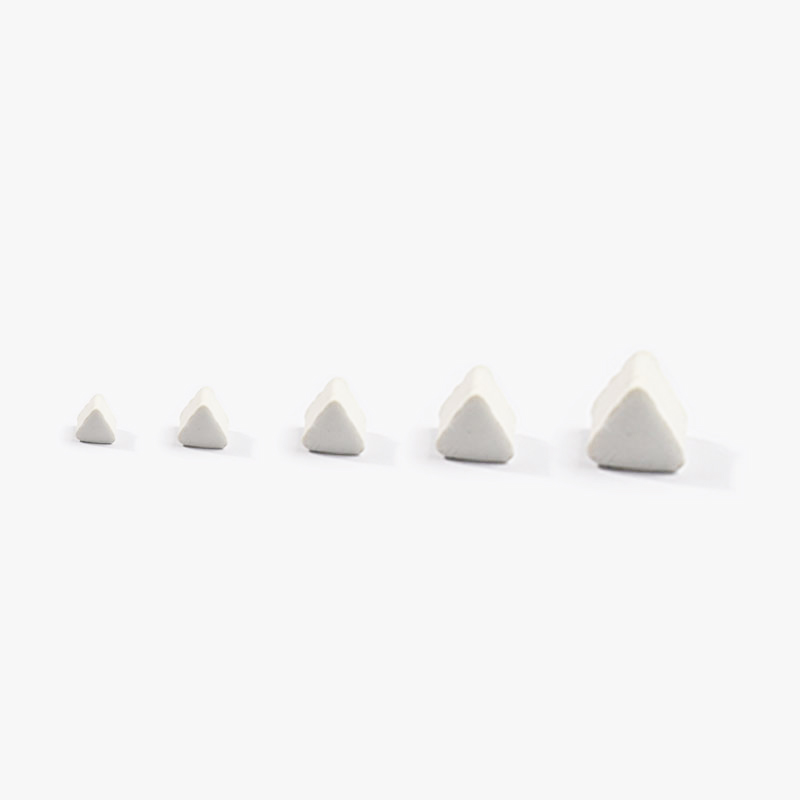
| Media | Best fit | Watch out for |
|---|---|---|
| Magnetic pin or needle charge | Reaching small internal intersections, radial holes and thread entries on small precision parts such as spools, sleeves and drilled fittings | Limited by part size and shape, pins must be retrieved and inspected for breakage, and the result depends heavily on fixture and field design |
| Dry media, corn cob granules with a polishing compound | Final dry polish, light edge blending and drying after a wet stage on small parts and fittings | Almost no cutting action, absorbs compound and contaminates quickly, and must be kept separate per material family to avoid carry-over |
| Fine ceramic spheres or small porcelain shapes in a light size class | Refinement and edge blending after a cutting stage, and light deburring of small fittings, thread entries and tighter external geometry | Small sizes enter and retain in fine passages and cross-drillings, and the charge changes size and cut rate as it wears |
| Hardened steel media, balls and pins | Burnishing and bright finishing of stainless and hardened parts, and light edge consolidation where a cutting action is not wanted | Changes the surface by deformation rather than cutting, can work-harden or smear a soft surface, and needs corrosion protection and separation from acidic compounds |
Route selection starts from the tightest edge limit on the drawing, then works backwards to the least energetic machine that can still remove the burr root in a workable cycle. Energy in mass finishing comes from relative motion and contact pressure, so a disc machine or a high-amplitude bowl cuts faster and rounds every edge in proportion. That is efficient where the edge requirement is generous and wasteful where a seat land or a thread entry must keep a defined break. A gentler barrel or tub route spends more time to buy back edge control. Ask what the drawing allows at each controlled edge, how much of the burr is root rather than lip, and whether the part can tolerate the longer cycle the gentler route needs.
| Machine route | Where it fits | What it will not do |
|---|---|---|
| Magnetic finishing machine | Small precision parts with internal intersections, radial holes and thread entries that a bulk charge cannot reach | Limited by part size and material, pins must be retrieved and checked, and it does not level or refine large flat surfaces |
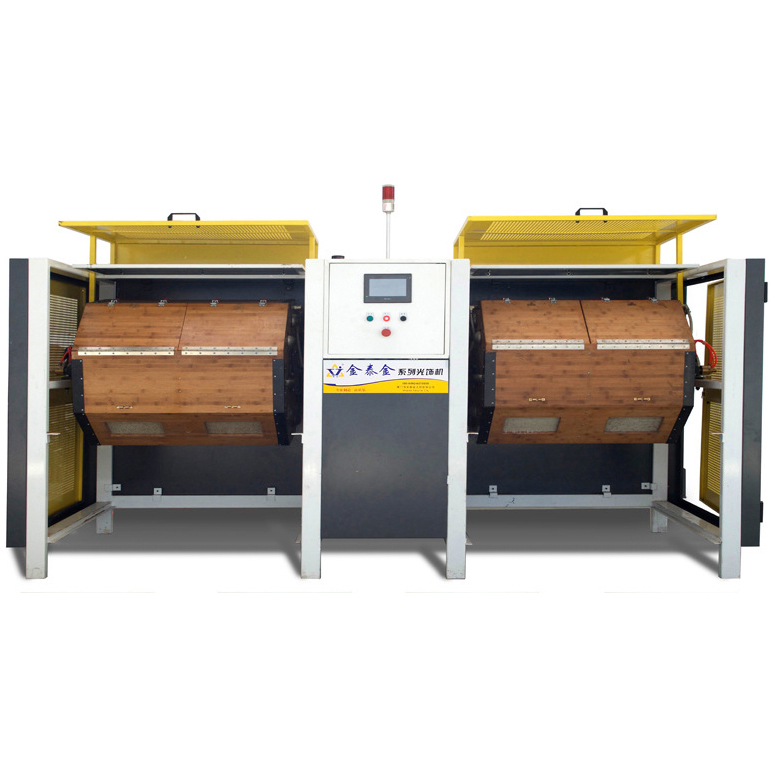
| Disc finishing machine | Fast, high-energy cycles on small to medium robust parts, including batches of fittings and small housings that need a quick cut | High contact pressure rounds edges quickly and can mark or deform thin and soft parts, with results sensitive to load and disc condition |
| Grinding finishing machine | Heavier stock removal and thick burr roots on robust parts where clearing material in a shorter cycle matters more than the surface result | Aggressive edge rounding and a coarser surface, so it fits lapped seats, thin sections and tight edge bands poorly |
| Barrel finishing machine and rotary barrel tumbler | Gentle, low-impingement deburring of small, fragile or precision parts and mixed fitting batches where edge protection matters more than speed | Long cycles, no visibility while the barrel runs, and internal features can collect media and compound that must be retrieved at unload |
Contamination in this process is mostly invisible at the machine and is discovered downstream. Three forms matter on energy-equipment parts. Media fragments and abrasive fines can embed in soft surfaces or in a machined groove and later appear as particles in a fluid system. Material carryover happens when carbon steel fines or cast-iron graphite from an earlier batch stay in the charge, the machine, the rinse tank or the drying cloth and transfer to stainless parts. Compound residue and its reaction products can sit in a gasket groove, a thread or a blind hole and interfere with welding, passivation or a coating step. Control is separation and cleaning discipline, verified with a wipe or tape lift, magnification, and a flush residue check.
| Failure mode | Likely cause | How to catch it |
|---|---|---|
| Ferrous specking, rust staining or graphite smearing on stainless parts after a shared run | Carbon steel or cast iron fines carried over in the charge, machine, rinse tank or drying cloth, or a purge that was too short between material families | Compare against a retained reference part, inspect suspect areas at magnification, examine the charge and rinse for embedded ferrous fines, and review the changeover record against the batch history |
| Uneven result across a batch, with over-finished edges in one zone and untouched areas in another | Part position in the charge, shielding by fixtures or other parts, a worn charge that cuts differently from a fresh one, or masking that leaked | Mark fixed measurement and inspection points on several parts, compare parts from the top, middle and bottom of the load, and record charge age against the result |
| Media lodged in a cross-drilling, blind tapped hole, keyway, groove or internal passage | Size class chosen against an average feature rather than the smallest one, media fractured into smaller pieces during the cycle, or a secondary burr that closed part of the opening | Borescope agreed passages at a fixed angle, pin gauge every tapped hole, count the charge in and out where practical, flush through a filter and inspect the residue, and compare part mass before and after |
| Burr still present on an internal cross-drilling intersection after finishing | No credible access route for the charge, a medium too large to enter the passage, or a cycle too short for the intersection to see enough contact | Borescope the intersection at the agreed angle on sample parts, section one representative part to expose the wall, and compare against the recorded as-received condition |
The Hague is the seat of the Dutch government and the international city of peace and justice, so its economic base is services, international organisations and technology rather than heavy manufacturing. The city supports Stichting The Hague Security Delta, which brings government, knowledge institutions and companies together on innovation, talent development and digital resilience, and it hosts the National Cyber Security Centre, Europol, Eurojust, NATO bodies and the HSD Campus. The Hague & Partners lists cybersecurity, IT and tech, impact, humanity, legal and policy, rule of law and new energy as the city's key sectors, and notes that many energy companies, including Shell, Orsted and Total, have located there. Scheveningen harbour is the city's port, for which the municipality maintains a harbour vision through 2050.
For this brief the relevant part of that base is energy: The Hague & Partners states that in the Netherlands The Hague is known as the centre of energy generation, that companies such as Shell, Orsted and Total and the International Geothermal Association chose to locate in the city, and that organisations including TNO, Shell and Siemens Gamesa work on offshore wind and hydrogen in the city.
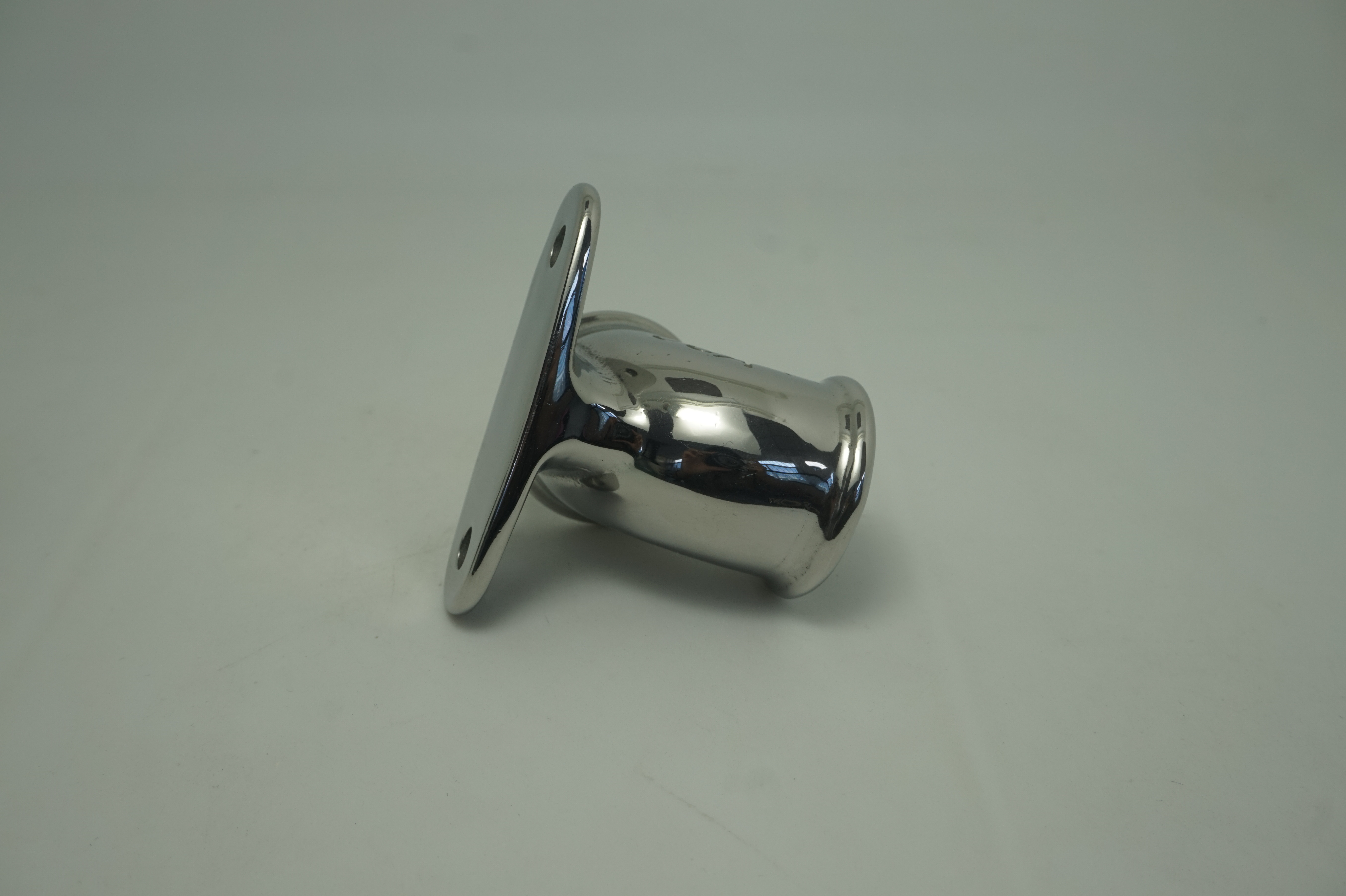
The Hague has little heavy manufacturing, so finishing demand is concentrated in maintenance of building-services, port and marine equipment around Scheveningen and in technical hardware used by the city's energy, IT and security organisations. For those users the typical requirement is small-batch edge control, cleaning and surface preparation of stainless, aluminium and steel components rather than production-scale deburring.
A buyer here should first decide whether the need is a small in-house finishing capability for maintenance and prototyping or an outsourced batch process, and then fix the material mix and the required edge and roughness specification, because a maintenance workload and a production workload point to different machine types.
Freight context: Scheveningen harbour, Rotterdam The Hague Airport. Scheveningen is the city's harbour and is covered by a municipal harbour vision through 2050; the city also has Rotterdam The Hague Airport and is roughly 30 minutes from Schiphol. Machines imported from outside the EU are declared to Dutch Customs at their point of entry, and machine tools arriving by sea will normally clear customs at Rotterdam before road transport to The Hague.
The Netherlands applies the EU's common commercial policy, so imports of Chinese industrial machinery enter under EU customs rules and WTO tariff treatment rather than under a bilateral EU-China free-trade agreement; the European Commission also maintains trade-defence measures on selected Chinese product categories, and China is a WTO member. EU-China trade in goods reached EUR 732 billion in 2024, and in 2025 manufactured goods were 97.3% of EU imports from China, with machinery and vehicles alone accounting for 54.4% — the single largest category. Chinese finishing machines, media and compounds therefore arrive in a very large, well-established EU import stream, and the buyer should expect MFN duty plus trade-defence measures where a specific product is covered.
Goods entering the Netherlands from outside the EU must be declared to Dutch Customs (Douane, part of the Belastingdienst); the importer needs an EORI number, import duty is calculated on the customs value (goods value plus transport and insurance to the EU external border), and import VAT is paid at the border unless an article 23 permit or a fiscal representative is used. CE marking is mandatory for most machinery placed on the EEA market: the Machinery Regulation replaced the Machinery Directive and manufacturers must comply with the new requirements by 20 January 2027. The importer must verify that the conformity assessment was carried out correctly, that CE marking is applied properly, that the technical file is present and complete, and that the user manual is supplied in the correct language; the manufacturer's EC Declaration of Conformity must be kept. Dutch companies imported over EUR 140 billion of machinery and appliances in 2024, 24% of total Dutch goods imports.
SurfacePolish supplies from Xiamen, China. The buyer's own destination rules, conformity marking, tariff classification and documentation responsibilities stay with the buyer; confirm them against the authorities named above before ordering.
Dimensional and visual checks do not prove a part functions, so acceptance should include the functional checks that matter to the assembly. Depending on the part, that may be a fit check of a mating component, a passage-clearance check, a seal or leak test, a torque check on a tapped feature, or a check that a coating or weld will take on the finished surface. Cleanliness is a separate acceptance axis with its own method: a borescope or mirror check of internal passages, a flush through a filter with the residue inspected against a limit, or a wipe test on a defined area. Define those limits on the buyer's side, because they depend on the service environment. Establish whether the process leaves a condition that traps penetrant.
The value of a sample trial comes from the range of parts sent, not from the quantity. A box of identical nominal parts tests one geometry and one burr condition; it cannot show how the proposed route behaves on the tightest passage, the thinnest wall or the hardest material in the family. Send a small set chosen to cover the extremes: the part with the smallest internal opening, the part with the longest unsupported section, the part with the most protected edge, one part in the hardest heat-treatment state the family sees, and one as-received reject that already fails. Label every part so its identity survives the trip, and send enough pieces that some can be sectioned or measured destructively.
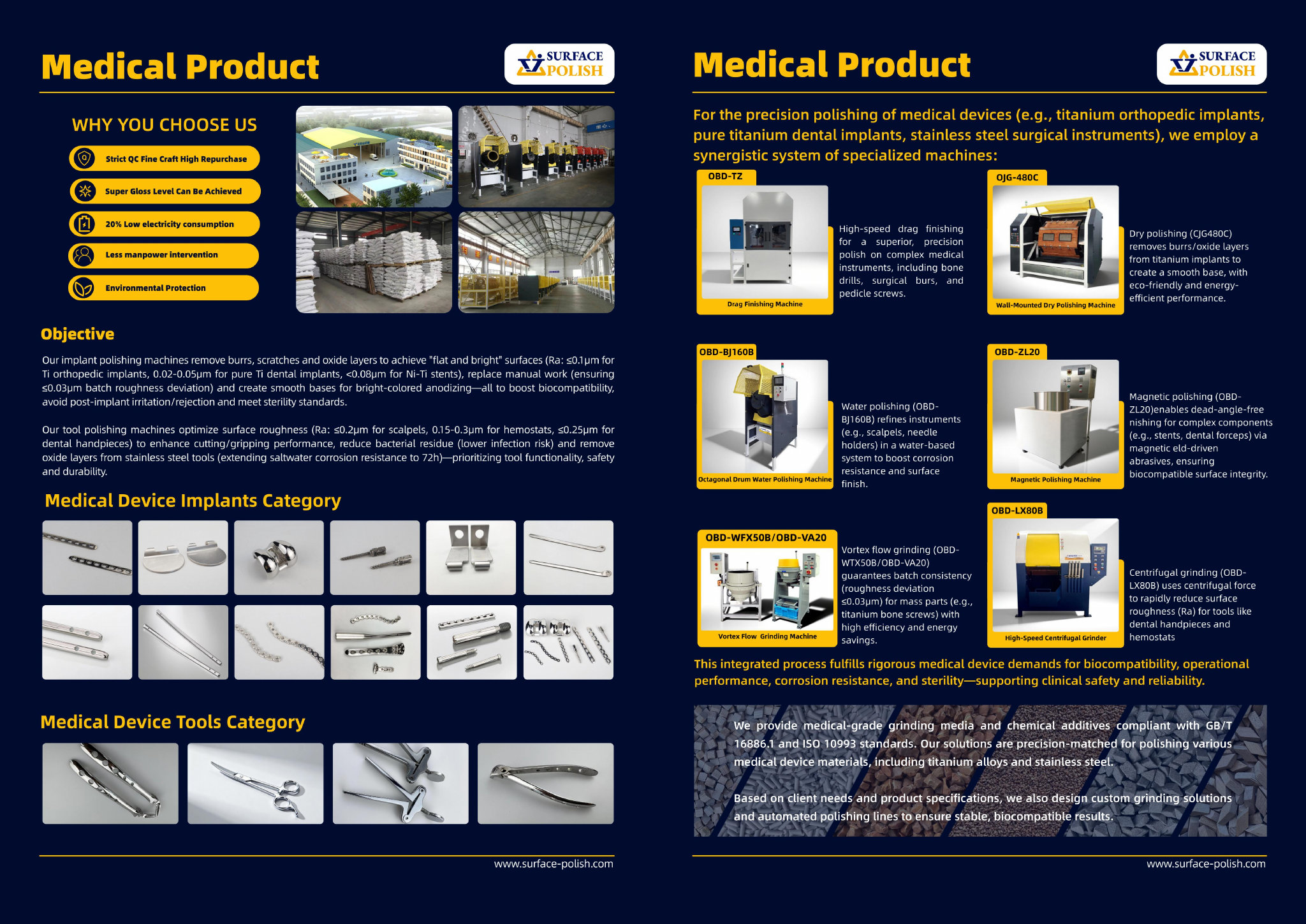
Sometimes, and only through a defined access route. A burr on the inside wall of a cross-drilling can be reached by a small media size class that enters the passage, by a magnetic pin charge on parts small enough for that machine, or by a targeted mechanical method rather than bulk mass finishing. What decides it is the smallest opening, whether the passage has an exit, and how the result will be inspected. For a Netherlands buyer, send the part with its tightest intersection and agree how the internal edge will be borescoped or gauged. SurfacePolish reports observations on the parts tested; the requirement stays the buyer's to define.
Size the charge well below the smallest opening it could enter, and treat every passage as a retrieval point rather than assuming it stays clear. List the tightest hole, slot, thread and cross-drilling first, then choose a size class against that geometry instead of the average part. Screen the working charge, because fractured media produces smaller pieces that defeat the original sizing. Plan detection: a borescope at an agreed angle, a pin gauge in every tapped hole, a count of the charge in and out where practical, a flush collected through a filter, and a part mass check. For The Hague buyers preparing a trial, include the smallest passage.
Mass finishing removes material mainly at edges and corners, so a critical dimension across a flat face usually moves very little, but thin and slender parts can distort. Part-on-part impacts, fixture pressure and long cycles in a high-energy machine can dish a heat-exchanger plate, bend a thin diaphragm or spring a long unsupported section. The effect depends on section stiffness, load ratio, media mass and support method, and it can be small enough to be missed until assembly. If flatness matters, say so before the trial, nominate the measurement points, and check the same points after finishing rather than judging the plate by eye.
Use The Hague, Netherlands as the destination on the enquiry and state whether the deliverable is equipment, media and compound, a representative sample review or a line concept. A destination does not imply local stock, a local service point or a local delivery time.
Buyers here would reference the CE machinery regime (Machinery Regulation from 20 January 2027) and the Dutch/EN-ISO surface-finishing standards published by NEN, such as NEN-EN-ISO 2080. Where equipment is used in marine or coastal conditions, corrosion-protection and coating-preparation specifications are normally added by the asset owner on top of those base standards.
Sources were retrieved on 2026-09-29 and describe the local industrial and trade context only. They do not evidence any SurfacePolish project, shipment, installation or service in The Hague.
The buyer wants the fin edges and thread entries deburred without peening the soft aluminium, rounding the O-ring bore lip or bending the fins.
Send the material, dimensions, approximate weight, batch quantity, the incoming condition and photographs of the difficult features. Mark which features must not be contacted by media and state how the result will be inspected. This form carries source reference PSEO-0658; quote it if you prefer an additional manual reference.
Open the SurfacePolish enquiry form Email a prepared enquiry
No price, lead time, certification or result is promised here. Confirm whether a sample trial is available for the specific part and what the trial can and cannot show.
Page PSEO-0658 · revised 2026-09-29 · cross-border equipment, media and scoped sample review. City context is sourced and cited above.
Use this local checker to identify missing part and inspection information. It prepares a technical-review brief; it does not approve a machine, process recipe or production result.
Complete the part details to prepare a review brief.
Email : info@surface-polish.com


 IPv6 network supported


 +86-592-2381506