Illustrative planning scenario, not a documented customer case. The following buyer situation is an example for defining a trial brief.
A machine control panel maker in Adelaide, Australia supplying robotics and automation has a thin aluminium panel plate where the cut edges need deburring and the visible face needs an even finish without distortion. SurfacePolish supplies finishing machines, media and compounds across borders and runs a free sample trial: the plate is shipped to Xiamen and returned with observations plus a proposed media, compound and cycle direction for the buyer's own checks. This brief is written for a buyer in Adelaide working on robotics and automation; it describes equipment, media and a scoped sample review, not a local polishing service.
What is the smallest hole, slot, keyway or cross-drilling the charge must not enter or plug, and how will a lodged medium be detected and removed?
How much of the incoming contamination, cutting oil, machining chip and handling damage is expected to be removed by finishing rather than by an earlier operation?
What is the size and mass spread inside one part family, and does one machine have to cover both a heavy casting and a small gripper jaw?
Begin with a marked-up drawing rather than a part family name. On a robot joint housing, an actuator body or a gripper base plate, the surfaces that carry function form a short and severe list: bearing bores and their shoulders, dowel and pin holes that set position, seal grooves, ground mounting lands, clamp faces and threaded holes. Every one of those needs a decision before a medium is chosen, whether it is masked, plugged, finished to a stated limit or deliberately left as machined. The cosmetic list is usually longer, covering external webs, covers, ribs and visible faces that only have to look even. Separating the two lists prevents the most common error in this work, which is selecting a charge by part size and then discovering that it has been working a bearing seat that had to stay round.
The material family of the media sets how much energy reaches the part. Plastic media is lighter and is the conservative choice for aluminium housings, thin cover plates and machined faces that must not be peened, at the cost of a slower cut and a shorter media life. Ceramic cuts harder and holds its shape longer, which suits removing a machining burr from steel and stainless parts and blending edges, but it marks soft aluminium and rounds functional edges faster. Steel media burnishes to a bright appearance and works well on stainless, and it is the wrong starting point for aluminium because it transfers iron and can leave spotting that appears later. Wear behaviour differs across all three: ceramic shrinks and generates sludge, plastic deforms and floats differently, and steel can fracture into slivers.
| Media | Best fit | Watch out for |
|---|---|---|
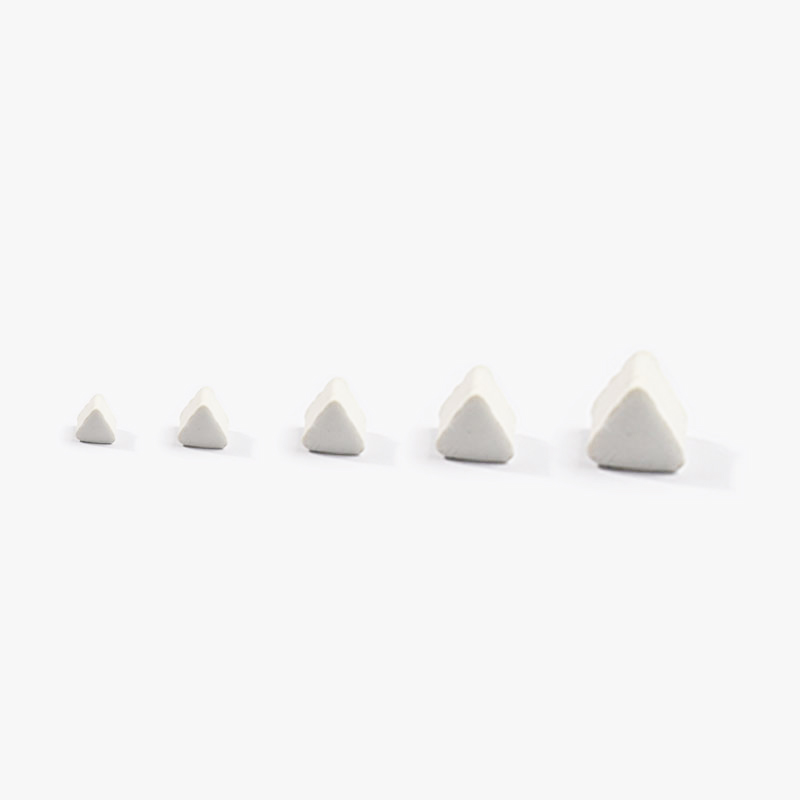
| Fine ceramic or porcelain shapes in a small size class | Edge blending and surface refinement after a cutting stage, and reaching tighter external geometry on machined housings and brackets | Small sizes enter and retain in tapped holes and fine slots, and media wear shrinks the charge so the finish drifts over its life |
| Heavy-cut ceramic, angle-cut triangles in a coarse size class | Removing a substantial milled or turned burr from open external edges and pockets on steel and stainless automation parts before a refinement stage | Cuts functional edges and corners aggressively, leaves a coarse surface on aluminium, and lodges in slots whose width approaches the media section |
| Steel media, including balls and shaped pins | Bright finishing and edge blending on stainless automation components where appearance and a burnished surface matter | Transfers iron to aluminium and carbon steel, needs a corrosion-inhibiting compound, and must be separated magnetically or by screen at unload |
| Aluminium oxide grinding media in a dense ceramic bond | Heavier stock removal or a more consistent cut on robust steel and stainless parts with thick edges and a defined layer to remove | High removal energy rounds functional edges quickly and is a poor match for thin aluminium plates, cast housings and bore lips |
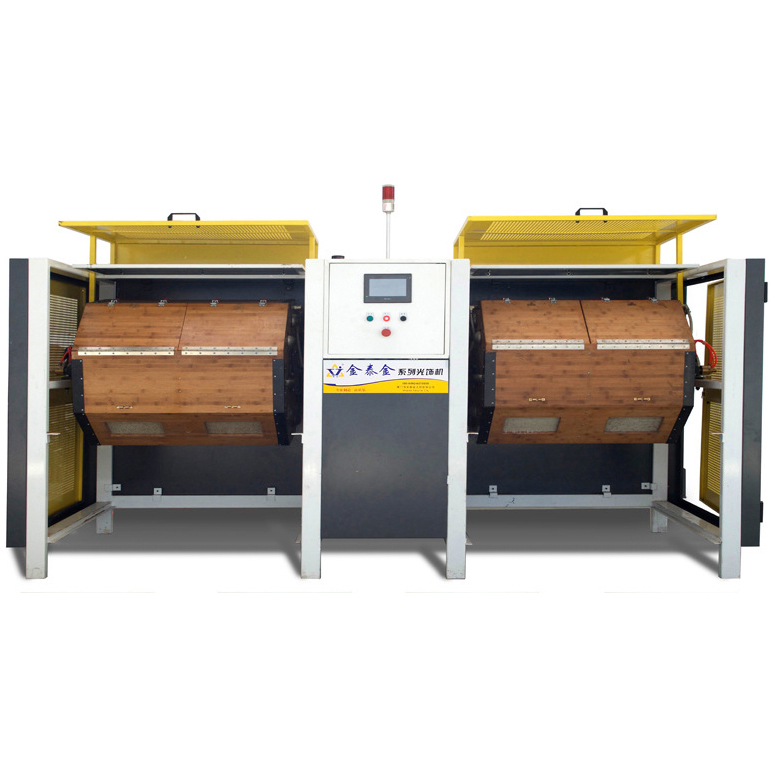
Long parts and heavy parts both fall outside a round bowl. A tub vibrator uses a rectangular chamber, so the working length extends along one axis while the bed stays shallow, which suits linear-axis beams, long manifolds and welded frames that cannot tumble end over end. The part is immersed or supported rather than turned, which removes bending risk from a divider, but energy per unit area is lower and a heavy burr takes longer. A grinding finishing machine works the other way, using higher removal energy to take off a defined layer or a heavy machining burr before refinement. That route cuts functional edges quickly and needs a tighter assessment of what may be removed. The deciding questions are part length, mass, how the part can be supported, and whether the critical face can be presented to the media at all.
| Machine route | Where it fits | What it will not do |
|---|---|---|
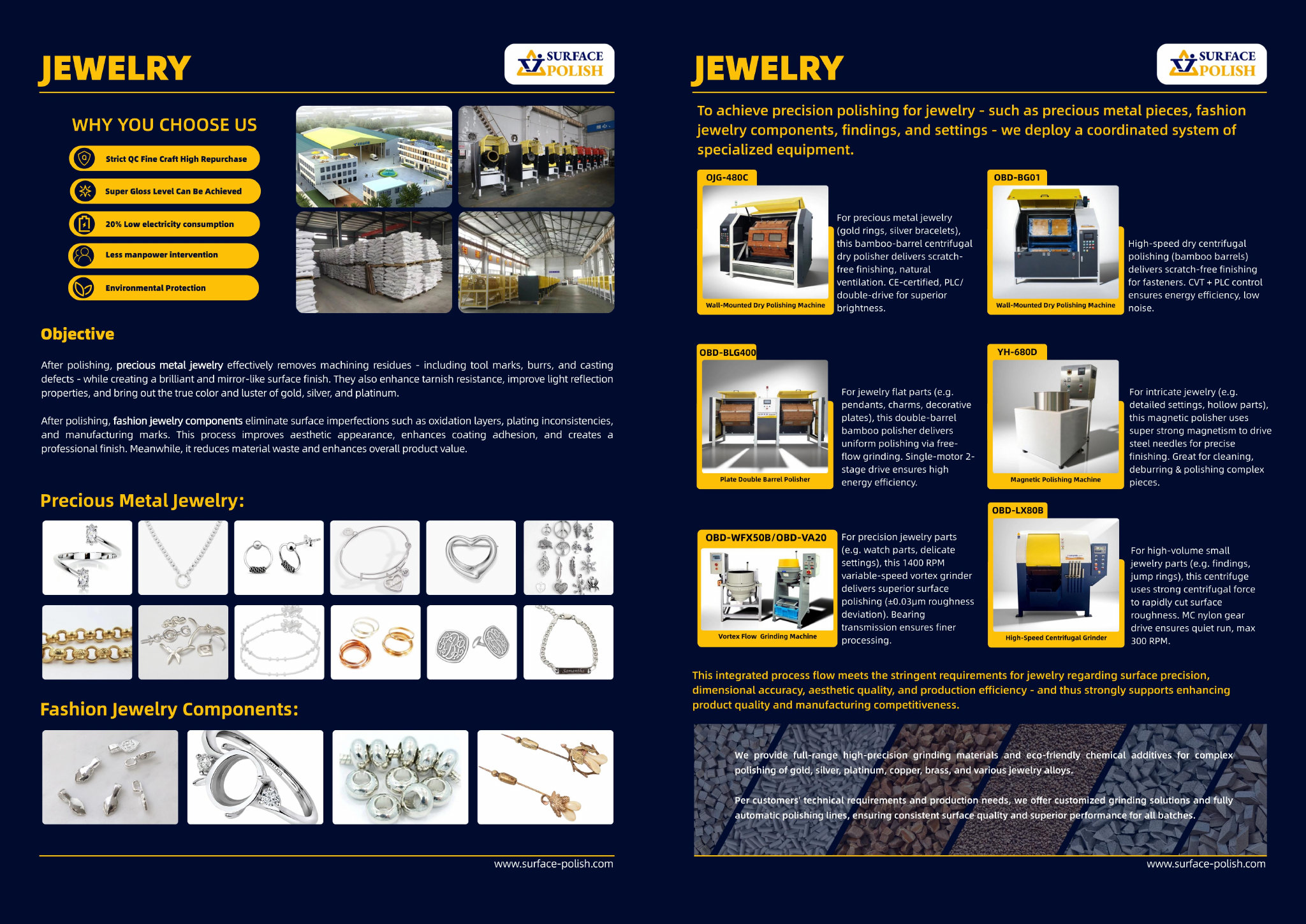
| Barrel finishing machine, rotary barrel tumbling | Gentle deburring of small fragile parts and mixed batches of screw-machine components with a generous compound flow | Long cycles, no visibility while running, and internal features can collect media and compound that must be retrieved at unload |
| Dry polishing machine and dryer | Removing residual moisture after a wet cycle and reducing water spotting on aluminium and stainless surfaces with pockets and threads | A finishing step only; a dry part can still carry compound film, fines and media dust, so it is not a cleanliness release |
| Centrifugal barrel finishing machine | Small precise parts and short cycles with high contact pressure, such as spools, small inserts and compact machined components | Rounds edges and can distort thin unsupported sections quickly; results are sensitive to charge weight, speed and stop time |
| Grinding finishing machine | Taking off a heavy machining burr, dross or a defined stock layer before a refinement pass on robust steel and stainless work | High removal energy cuts functional edges fast and demands a tighter assessment of what may be removed and how much |
A medium left in a tapped hole or a cross-drilled passage usually escapes the finishing area and is found later at assembly or at a functional test. It happens when the size class is too close to the opening, when a charge has worn or fractured into smaller pieces, or when a passage was never mapped as a retention risk. Tapped holes, keyways, seal grooves, cross-drillings and slots whose width approaches the media section are the usual places. Retrieval has to be designed rather than assumed: count the charge in and out where practical, use a pin or thread gauge on sampled holes, borescope the smallest passages at an agreed angle, and rinse through a filter for a visual check. Any medium found is a non-conformance to record, not something to wipe away and release.
| Failure mode | Likely cause | How to catch it |
|---|---|---|
| Water spotting, mineral rings or haze left after wet processing and drying | Hard or high-chloride rinse water, slow or uneven drying, or parts stacked wet so moisture is trapped in pockets and threads | Inspect dried parts under angled light for rings and haze, check the rinse water source and the drying method, and confirm that pockets and tapped holes drain before packing |
| Bearing bore, bore lip or dowel hole edge rounded past the drawing limit | High-energy route, over-long cycle, dense or coarse media, or a functional edge run without masking or a shielding fixture | Measure the defined edge feature before and after with an optical comparator, radius gauge or moulded replica, and compare it with the maximum radius on the drawing |
| Uneven finish with unrefined pockets, internal corners or the shielded side of a flange | Media cannot reach the feature at the chosen size or orientation, charge circulation is blocked, or the part was never repositioned during the cycle | Inspect at defined locations rather than judging the whole part, photograph the same feature before and after, and measure roughness only at the surfaces the drawing controls |
| Grey aluminium smear transferred onto stainless parts in a shared batch | Aluminium fines retained in media, compound or the machine sump after an aluminium lot, with no purge before the stainless lot | Check stainless surfaces under angled light for a dull grey film, review the changeover record, and inspect the charge and sump for retained fines |
Adelaide's industrial base is being reshaped around a small number of named precincts. Tonsley Innovation District occupies the 61-hectare site formerly used by Chrysler and Mitsubishi Motors and is focused on automation, software and simulation; mining and energy services; health, medical devices and assistive technologies; and cleantech and renewable energy. Renewal SA, the state's urban renewal authority, also names Lot Fourteen, Adelaide BioMed City, Osborne Naval Shipyard and the Edinburgh Defence Precinct among the strategic precincts it coordinates, and it delivered the $200 million Deep Maintenance and Modification Facility near RAAF Edinburgh for Boeing 737-variant military aircraft. The Defence Teaming Centre provides the defence industry association layer for this base.
For this brief the relevant part of that base is automation: Tonsley Innovation District is strategically focused on automation, software and simulation.
Adelaide's precincts concentrate work where surface condition is inspected rather than assumed: defence aircraft maintenance and modification, naval and defence supply chain fabrication, medical device and assistive technology production, and mining and energy service equipment. Deburring and edge control on machined and sheet-metal parts affect fit-up and fatigue performance in these applications, and cleanliness and residue control matter where components are assembled into medical devices or into equipment that will be inspected against a defence or medical quality system.
An Adelaide buyer should identify whether the part is governed by a defence, medical or general engineering acceptance specification before choosing a finishing process, because that determines the evidence required - edge and surface condition, residue limits, batch traceability - and it is much cheaper to settle before media and equipment are selected than afterwards.
Freight context: Port Adelaide, Adelaide Airport. Adelaide's international sea freight moves through Port Adelaide and air freight through Adelaide Airport. Machines and sample parts consigned to Adelaide clear customs under the ABF regime, and buyers commonly route delivery through a local importer or customs broker who can manage the RCM and declaration steps for in-scope electrical equipment.
The Australian Border Force (ABF) is the customs authority and clears imported goods through customs; all goods arriving in Australia must be declared unless an exception applies, goods valued at up to A$1,000 can be imported without a formal import declaration, and entry is made through the Integrated Cargo System (Form B650 for sea or air cargo). Generally all goods imported into Australia are liable for duties and taxes unless an exemption or concession applies, and most imports are subject to 10% GST, so classification, customs valuation and any preferential tariff claim drive the landed cost; a licensed customs broker is the normal route for a first-time importer. Electrical equipment can fall under the Electrical Equipment Safety System, under which the first Australian supplier registers as a Responsible Supplier, holds an ABN, makes a Responsible Supplier Declaration and marks the equipment with the Regulatory Compliance Mark (RCM) in accordance with AS/NZS 4417.1 and AS/NZS 4417.2. Imported goods may also require a trade description naming the country of manufacture, and machinery that is not in-scope electrical equipment still has to meet state work health and safety duties covering plant.
Business is conducted in English and Australian industrial buyers are normally registered companies with an ABN that contract through a local importer or a licensed customs broker rather than directly with an overseas manufacturer. Because the first Australian supplier of in-scope electrical equipment becomes the legally responsible supplier, Chinese manufacturers are typically asked to provide test evidence, a compliance folder and a declaration so that their Australian importer can register and mark the product. Quotation and contracting expectations centre on a clear commercial entity, correct HS/tariff classification, documented country of origin for preferential duty, and an explicit statement of what is included in the delivered price and what is not.
SurfacePolish supplies from Xiamen, China. The buyer's own destination rules, conformity marking, tariff classification and documentation responsibilities stay with the buyer; confirm them against the authorities named above before ordering.
Roughness is only comparable when the measurement conditions are fixed. State the location by distance from a reference feature, the traverse direction relative to the machining or media marks, the cut-off and the evaluation length, then use the same conditions for the first article and for production checks. A reading taken along a bore axis and one taken around its circumference describe different surfaces. Curvature limits how a skid or shoe sits on the work, particularly in a small bore or on a narrow land, and a poorly seated pickup is not evidence. Take readings at several stations, because the ends of a part and the middle of a part often differ. Where visual appearance is what the customer sees, pair the number with a physical reference viewed at an agreed distance, since a surface can measure inside a band and still look wrong.
Scale-up is mostly about holding what produced the trial result. In production that means a media charge kept at a target mass, screened on a schedule with undersize and broken pieces removed and fresh media added to a recorded level. Compound should be metered to a concentration rather than poured by eye, and rinse water quality should be known and stable. Every lot needs an identity: part numbers, quantity, machine, media charge, compound, cycle time, operator, inspection result and disposition. Where the same machine handles aluminium and stainless, define the changeover, including media purge, machine cleaning and compound replacement, and record when it happened. Cycle counting is a simple control that is often skipped: a charge that has run a known number of hours can be scheduled for replacement before wear starts producing lodged media or a drifting finish.
Ask for a record that identifies what was done rather than one that asserts a result. A useful record lists the part numbers and quantities in the lot, the machine used, the media type and size class, the charge mass and its age since the last screen or top-up, the compound and dose, the rinse water source, the cycle time, any interruption, the inspection results and the lot disposition. Request the media and compound data sheets. Where aluminium and stainless are processed on the same site, ask for the changeover note covering media purge, machine cleaning and compound replacement. This is finishing process documentation, not a certificate of compliance.
A bore cannot be protected by the cycle alone; it is protected by what is decided before the cycle. Masking or plugging the bore, keeping the part out of contact with heavy neighbours, choosing a lighter route and shortening the cycle all reduce the load the bore sees, but none of them guarantees a dimension. That is why the bore must be measured before and after at the same points, with a bore gauge or CMM, and compared with the drawing limit. SurfacePolish does not promise a tolerance or a result; the trial reports what was observed on the parts tested, and the dimensional acceptance decision stays with your own metrology and quality functions.
A trial shows what a given machine, charge and setting did to the parts tested, which is useful evidence but not a sizing study. Machine size depends on the largest envelope and mass in the family, the smallest part that must meet the same appearance, the load ratio you intend to run, and how many stages the part needs. Those are planning questions that belong in a line-concept discussion alongside the trial result. A part tested on a small machine may behave differently in a larger chamber, and a part run in a full production load may come out differently from one run in a light trial batch. Record both the settings and the load.
Use Adelaide, Australia as the destination on the enquiry and state whether the deliverable is equipment, media and compound, a representative sample review or a line concept. A destination does not imply local stock, a local service point or a local delivery time.
Adelaide buyers reference Australian Standards (AS) and joint AS/NZS standards through their own quality and safety systems, and these standards are voluntary unless state or Commonwealth legislation refers to them. Defence and medical work adds customer-specified quality and traceability requirements on top of that, while in-scope electrical equipment must be registered under the EESS and marked with the Regulatory Compliance Mark to AS/NZS 4417.1 and AS/NZS 4417.2.
Sources were retrieved on 2026-09-29 and describe the local industrial and trade context only. They do not evidence any SurfacePolish project, shipment, installation or service in Adelaide.
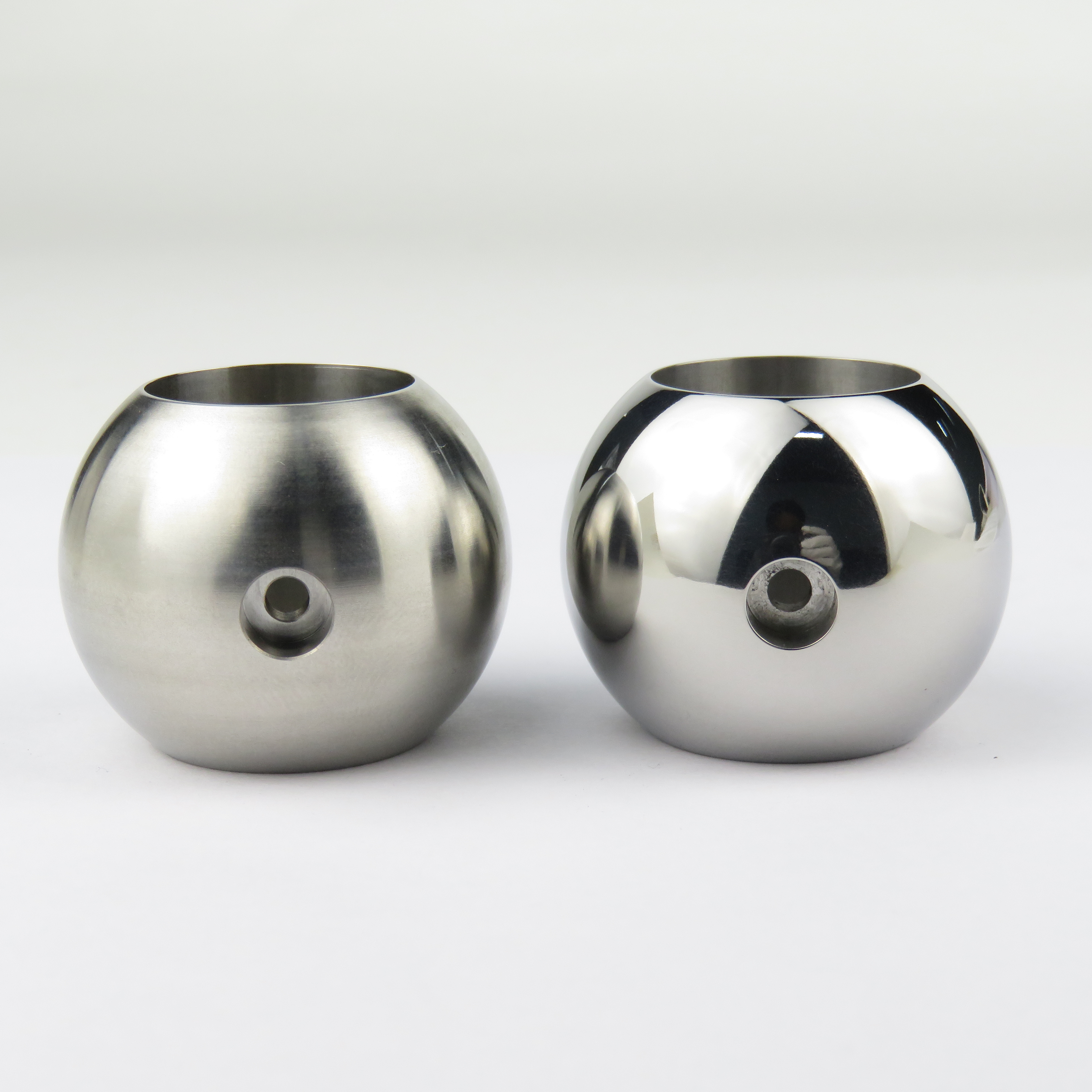
The buyer needs the cut edges deburred and the visible face given an even appearance without warping the thin plate or marking the countersinks.
Send the material, dimensions, approximate weight, batch quantity, the incoming condition and photographs of the difficult features. Mark which features must not be contacted by media and state how the result will be inspected. This form carries source reference PSEO-0750; quote it if you prefer an additional manual reference.
Open the SurfacePolish enquiry form Email a prepared enquiry
No price, lead time, certification or result is promised here. Confirm whether a sample trial is available for the specific part and what the trial can and cannot show.
Page PSEO-0750 · revised 2026-09-29 · cross-border equipment, media and scoped sample review. City context is sourced and cited above.
Record flatness and face-contact marks alongside edge observations. The source table does not establish that a thin panel can be processed without distortion; protect the face and test handling on a representative panel.
This source bridge supplements the planning page. Earlier technical prose has not been certified by this addition.
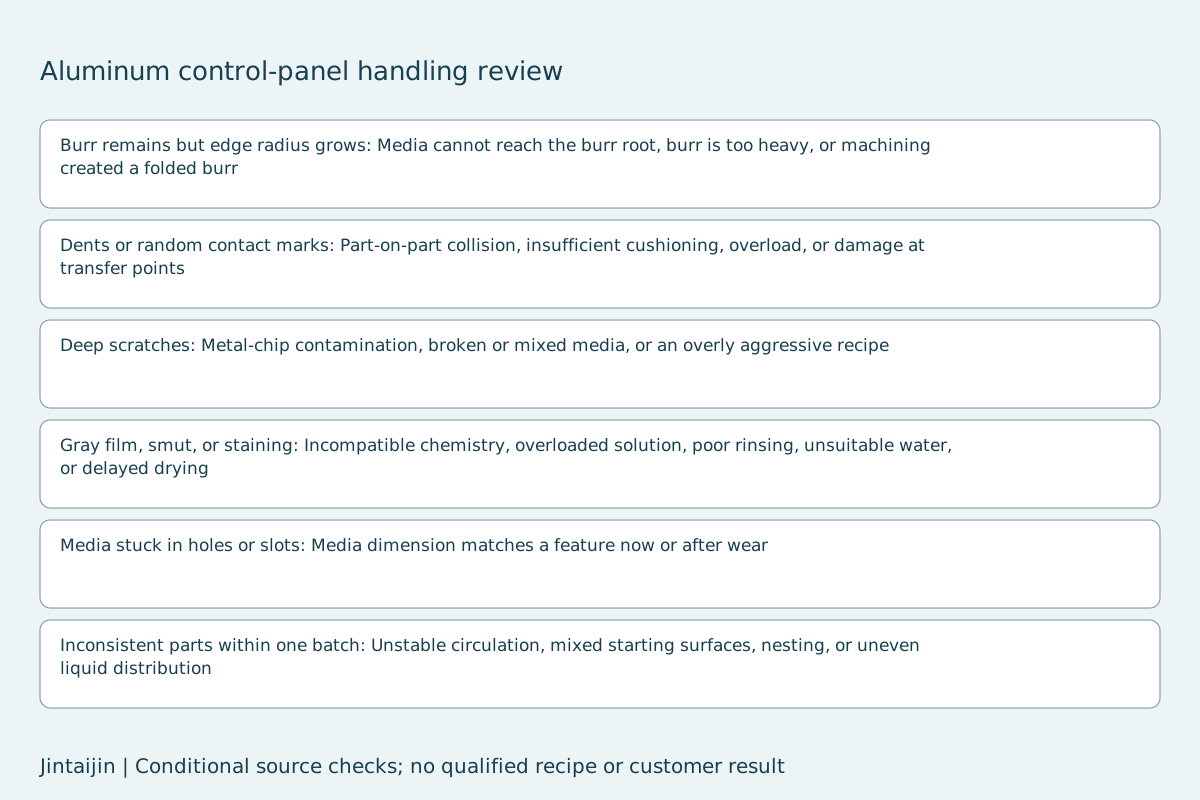
Select the entries relevant to your review.
Likely Cause: Media cannot reach the burr root, burr is too heavy, or machining created a folded burr
Controlled Test: Review upstream machining and test a shape that reaches the burr without matching nearby openings
Likely Cause: Part-on-part collision, insufficient cushioning, overload, or damage at transfer points
Controlled Test: Reduce the part count and increase media coverage while keeping other settings unchanged
Likely Cause: Metal-chip contamination, broken or mixed media, or an overly aggressive recipe
Controlled Test: Clean the full system and run a known reference part with clean media
Likely Cause: Incompatible chemistry, overloaded solution, poor rinsing, unsuitable water, or delayed drying
Controlled Test: Prepare fresh solution at the recommended concentration, add a clean rinse, and dry immediately
Likely Cause: Media dimension matches a feature now or after wear
Controlled Test: Test a non-lodging shape or size and verify the complete separation route
Likely Cause: Unstable circulation, mixed starting surfaces, nesting, or uneven liquid distribution
Controlled Test: Run a smaller sorted batch and observe movement in every area of the chamber
Read the Jintaijin source article and open the dedicated source review tool. Table rechecked 3 October 2026. Possible causes remain hypotheses and proposed adjustments require representative-part testing.
Use this local checker to identify missing part and inspection information. It prepares a technical-review brief; it does not approve a machine, process recipe or production result.
Complete the part details to prepare a review brief.
Email : info@surface-polish.com


 IPv6 network supported


 +86-592-2381506