A motor and drive manufacturer in Bologna, Italy supplying robotics and automation has a cast aluminium housing that must be deburred without exposing porosity or marking the machined pilot and flange. SurfacePolish supplies finishing machines, media and compounds across borders and runs a free sample trial, with representative housings shipped to Xiamen and returned with observed results and a proposed processing direction for the buyer's review. This brief is written for a buyer in Bologna working on robotics and automation; it describes equipment, media and a scoped sample review, not a local polishing service.
What does the finishing step actually have to deliver before the next operation, whether that is assembly, anodising, painting or a functional test, and who defines that requirement?
How much of the incoming contamination, cutting oil, machining chip and handling damage is expected to be removed by finishing rather than by an earlier operation?
Which alloys and tempers run through the shop, and how will media, machines and compounds be purged between aluminium, stainless and steel work?
The mechanism that raised the burr matters more than its size. Milling a pocket leaves a rolled edge that folds over the top of a wall; turning leaves a fine feather on a bore lip; EDM leaves a recast layer that is hard, brittle and behaves differently under impact media; cross-drilling leaves a burr inside the intersection of two passages that no external media stream reaches; laser cutting leaves dross on a bracket edge; a weld leaves spatter and a heat-affected zone. Each of those responds to a different combination of energy, media shape and time. Ask for the routing that produced the part and not only the drawing, because a cycle written for a milled edge will under-work a recast layer while rounding a turned bore lip long before the recast layer has gone.
Shape decides what the marks look like, often more than the material label does. Spheres and rounded shapes leave overlapping craters, which suits a general deburred or satin appearance but reads as a peened, dimpled surface. Angle-cut triangles, cylinders and cones strike along their axis and leave a linear pattern, which suits visible covers, panels and brackets where a direction is wanted. The mass of the media then sets the cutting power, so a heavy ceramic charge removes a milled burr faster and also reaches edges sooner. On aluminium, a coarse angular charge can fold or smear the surface instead of cutting it cleanly. Choose the shape against the appearance the part must carry and the edges that must keep their radius, then keep the shape class stable, because a charge that has worn into rounded forms behaves differently from a fresh one.
| Media | Best fit | Watch out for |
|---|---|---|
| Plastic triangles, cones and pyramids in a soft to medium grade | Deburring aluminium housings, gripper plates and other soft alloy parts where surface marking and edge rounding must be kept to a minimum | Slow cut rate, media deforms and wears, and a worn charge behaves noticeably differently from a fresh one |
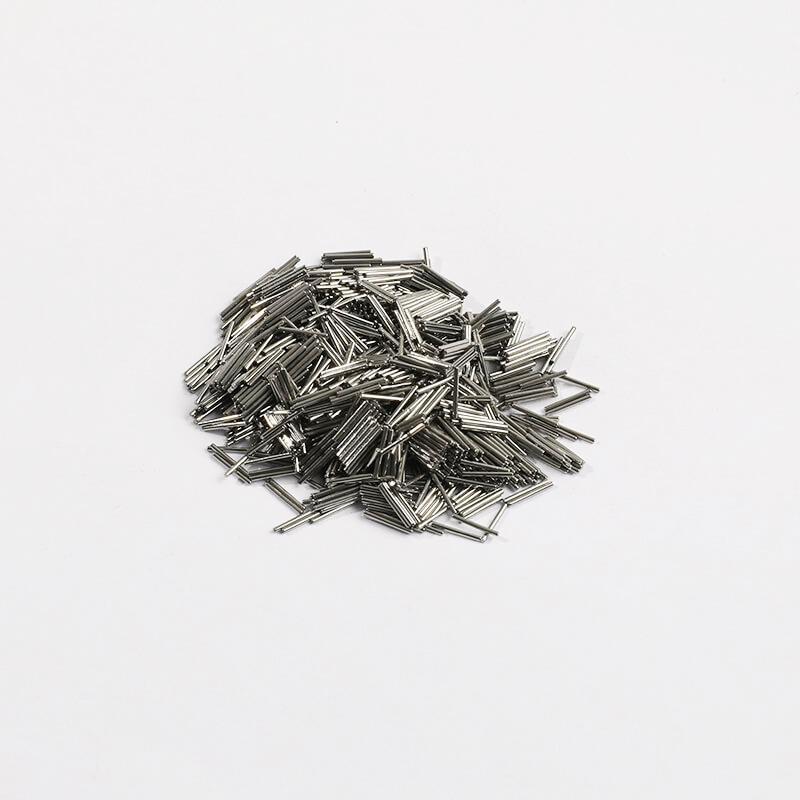
| Steel media, including balls and shaped pins | Bright finishing and edge blending on stainless automation components where appearance and a burnished surface matter | Transfers iron to aluminium and carbon steel, needs a corrosion-inhibiting compound, and must be separated magnetically or by screen at unload |
| Heavy-cut ceramic, angle-cut triangles in a coarse size class | Removing a substantial milled or turned burr from open external edges and pockets on steel and stainless automation parts before a refinement stage | Cuts functional edges and corners aggressively, leaves a coarse surface on aluminium, and lodges in slots whose width approaches the media section |
| Dry media such as walnut shell and corn cob | Drying assistance and light surface polish after a wet cycle, particularly on parts with pockets and threads that must not stay wet | Does not deburr or refine metal significantly, generates dust, and must not be treated as a cleanliness step |
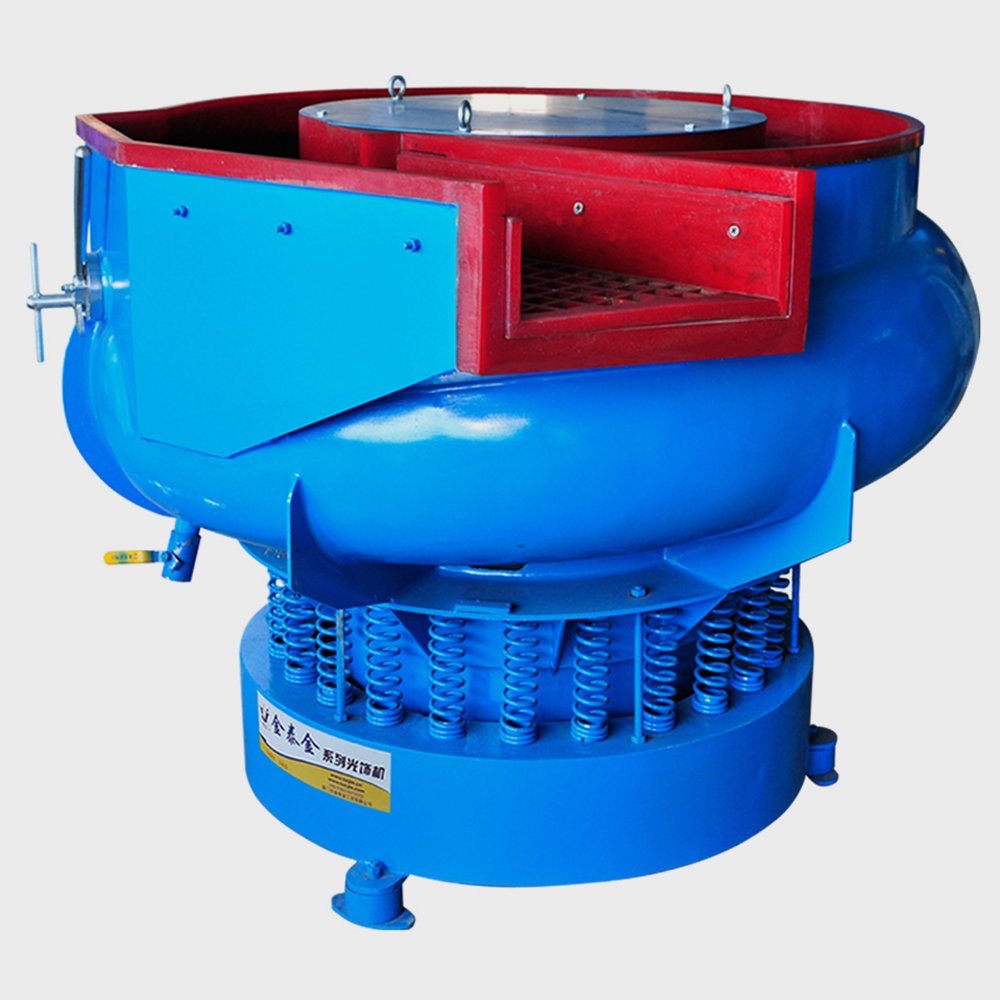
Disc finishing machines and centrifugal barrel machines deliver far more energy per unit of time than a bowl. A disc machine works the gap between rotating discs, which suits batches of small robust parts such as gripper jaws, mounting blocks and machined brackets where a consistent edge break is wanted quickly. Centrifugal barrel finishing multiplies the effective gravity acting on the charge, so cycles shorten and contact pressure rises sharply, which suits small precise parts and can round a thin section or deform a soft aluminium wall within a short over-run. Both routes depend on charge weight, speed, fill level and stop time being held to a record. They are a poor match for thin-walled housings, long beams and any part whose functional edge or bore lip must keep a tight radius.
| Machine route | Where it fits | What it will not do |
|---|---|---|
| Centrifugal barrel finishing machine | Small precise parts and short cycles with high contact pressure, such as spools, small inserts and compact machined components | Rounds edges and can distort thin unsupported sections quickly; results are sensitive to charge weight, speed and stop time |
| Tub vibrator | Long parts such as linear-axis beams, manifolds and welded frames that cannot rotate in a bowl | Lower energy per unit area so heavy burrs take longer, and large tubs need floor space and a reliable part support method |
| Barrel finishing machine, rotary barrel tumbling | Gentle deburring of small fragile parts and mixed batches of screw-machine components with a generous compound flow | Long cycles, no visibility while running, and internal features can collect media and compound that must be retrieved at unload |
| Magnetic finishing machine | Fine deburring and light refinement of small precise features such as small bores, narrow slots and fine internal radii | Small working envelope that excludes housings and long parts, with pin media that can lodge in the fine features it reaches |
Contamination failures are quiet and are often attributed to the wrong operation. Aluminium fines left in a machine, a charge or a sump transfer onto stainless parts as a grey smear in the next batch. Iron from steel media, from a machine that has held carbon steel or from a tool used on both transfers to stainless and shows as pinpoint rust spots that appear hours or days later. Hard or high-chloride rinse water and slow drying leave mineral rings and haze on aluminium. A compound that is too aggressive darkens aluminium or attacks a freshly cut edge. The controls are procedural: segregate or dedicate media by material family, define and record the changeover, control rinse water and drying, and inspect after a defined dwell time rather than immediately. Left unchecked, these defects surface after the parts have moved on.
| Failure mode | Likely cause | How to catch it |
|---|---|---|
| Water spotting, mineral rings or haze left after wet processing and drying | Hard or high-chloride rinse water, slow or uneven drying, or parts stacked wet so moisture is trapped in pockets and threads | Inspect dried parts under angled light for rings and haze, check the rinse water source and the drying method, and confirm that pockets and tapped holes drain before packing |
| Uneven finish with unrefined pockets, internal corners or the shielded side of a flange | Media cannot reach the feature at the chosen size or orientation, charge circulation is blocked, or the part was never repositioned during the cycle | Inspect at defined locations rather than judging the whole part, photograph the same feature before and after, and measure roughness only at the surfaces the drawing controls |
| Impact marks, dents or a peened, rippled appearance on a visible aluminium face | Charge mass or load ratio too high, light parts left loose among heavy neighbours, or a soft alloy run on a route chosen for steel parts | Look for repeating mark patterns under angled light, compare a part run loose with the same part compartmentalised, and review the batch mix and load recorded for the lot |
| Colour change or darkening on an aluminium face after the cycle | Compound chemistry unsuitable for aluminium, no effective corrosion inhibitor, or a delay between finishing and drying | Compare the finished face with an unprocessed coupon of the same alloy under the agreed light, and review the compound product, dose and rinse sequence for the lot |
Bologna's economy is services-heavy but keeps a solid industrial core. The Camera di Commercio di Bologna counted 90,392 firms registered with headquarters in Bologna at the end of 2025, 80,830 of them active; 64% operate in services and 24% in industry, of which 15% in construction and 9% in manufacturing, and the municipality alone holds 40% of the active firms. Confindustria Emilia, the local industry association, organises its members into sector supply chains that include Packaging, Metalli e materiali compositi, Elettronica e Meccatronica and Agroalimentare. The territory is best known for automatic packaging machinery and industrial automation, and its metals and composite-materials supply chain explicitly lists metallurgy, steel, metal treatment, painting, laser cutting, fabrication and stamping among its scopes.
For this brief the relevant part of that base is automation: Confindustria Emilia's Elettronica e Meccatronica supply chain covers industrial robots, industrial electronics, numerically controlled machines, industrial automation, sensors and laser systems.
Bologna's packaging-machine and mechatronics builders work in stainless steel and aluminium: machine frames, filling and wrapping mechanisms and precision components must be burr-free, edge-controlled and hygienically clean before assembly and before any food-contact qualification. The local Metalli e materiali compositi supply chain names metallurgy, steel, metal-object manufacture, metal treatment, painting, laser cutting, fabrication and stamping as its scope, which is exactly the upstream work whose edges and surfaces determine whether a component can go straight to assembly or coating.
The question to settle first is whether the specification is cosmetic (visible stainless panels and frames) or functional and hygiene-related (burrs, crevices, retained polishing media, cleanability on food-contact parts), because the two answers lead to different media, compounds and - in the packaging-machinery business - different validation evidence for the customer's own acceptance.
Freight context: Interporto di Bologna (rail-road intermodal terminal), Aeroporto di Bologna Guglielmo Marconi. Interporto Bologna integrates rail, road and logistics infrastructure for freight, offers direct connections to the national rail network, warehouses and intermodal terminals, and hosts more than 100 companies on site, which makes it the natural inland receiving point for machinery or heavy media consignments. Incoming non-EU goods clear customs at their EU point of entry before moving on to Bologna by road or rail.
The customs authority is the Agenzia delle Dogane e dei Monopoli (ADM), which is the regulatory, supervisory and control authority for customs and collects the duties. Goods arriving from China are cleared by customs before they can enter the single market and are released into free circulation by means of a customs declaration; the date of acceptance of that declaration is the date used to calculate and apply the import duty and any VAT or excise duty. Importers should settle in advance who lodges the declaration and under which VAT and EORI arrangements, and must ensure the machine carries CE marking and is supported by the EU declaration of conformity and technical file. Because the CE mark is compulsory for machinery covered by the EU machinery legislation and forbidden for products outside it, the conformity route must be settled before shipment rather than at the border.
Italy applies the EU's common commercial policy to imports from China, so Chinese industrial machinery enters under the EU Common Customs Tariff, where the duty rate depends on the type and origin of the goods and the working tariff is TARIC. Istat's August 2026 extra-EU trade release records a 16.0% year-on-year increase in Italian purchases from China, alongside strong growth from India, OPEC and Mercosur, so China remains one of the fastest-growing sources of Italian imports. Anti-dumping and other trade-defence measures apply case by case to specific product categories rather than to finishing machinery in general, so the applicable rate must be checked against the specific commodity code before a quotation is finalised.
SurfacePolish supplies from Xiamen, China. The buyer's own destination rules, conformity marking, tariff classification and documentation responsibilities stay with the buyer; confirm them against the authorities named above before ordering.
Acceptance has to exist before a trial, in the drawing and the purchase specification, not as a verbal understanding afterwards. Name each controlled surface separately, because a bearing bore, a mounting land and an external cover will not respond to one media charge in the same way. State the parameter, the cut-off length, the measurement direction and the number of readings at each location. Where an edge limit applies, express it as a maximum radius or a required chamfer at a named feature rather than as a word such as deburred. Add the cleanliness requirement the part must meet and the method by which it will be judged, and say which faces are exempt. Settling those points early avoids the common dispute in which a supplier reports a surface and a buyer rejects on a feature that was never written down.
Send parts that represent the real range rather than one convenient sample. Include the part with the tightest hole, slot or cross-drilling, the thinnest unsupported section, the functional surface that must not be touched, and at least one part in its normal as-received condition with the usual burr, chips and cutting oil. Cover every alloy and temper in the family, because aluminium and stainless behave differently under the same charge. Add a coupon of the same material with a known starting roughness so a measurement can be compared before and after. Supply a marked-up drawing naming the controlled surfaces, edge limits and any cleanliness requirement, and a short note on what the part does in service. Several pieces let more than one stop point be examined; one part answers one question.
Cycle time depends on the starting burr, the alloy and temper, the media size class, the compound and how much edge refinement is wanted, so no figure can be quoted in advance. A part that needs only a light edge break runs very differently from one that must shed a milled burr or a recast layer before refinement, and a two-stage route has to count both stages. The useful approach is to test one or two defined stop points on representative parts and record what changed at each. SurfacePolish does not promise cycle times or capacity; treat any timing on returned parts as an observation from that run rather than a production commitment.
A trial shows what a given machine, charge and setting did to the parts tested, which is useful evidence but not a sizing study. Machine size depends on the largest envelope and mass in the family, the smallest part that must meet the same appearance, the load ratio you intend to run, and how many stages the part needs. Those are planning questions that belong in a line-concept discussion alongside the trial result. A part tested on a small machine may behave differently in a larger chamber, and a part run in a full production load may come out differently from one run in a light trial batch. Record both the settings and the load.
Change one variable at a time. Hold the machine, load, compound, cycle time and part mix constant and change only the medium. Use parts from the same production lot so the only difference is the variable under test. Label the pieces before they run and have the returned parts judged in one session, under the same light and at the same marked measurement points, rather than one at a time. Where several people judge appearance, ask each to rank the pieces before discussion. Where a cut stage is followed by a refinement stage, score the stages separately, because a good final result can hide an unremoved burr or an over-coarse first stage.
Use Bologna, Italy as the destination on the enquiry and state whether the deliverable is equipment, media and compound, a representative sample review or a line concept. A destination does not imply local stock, a local service point or a local delivery time.
Bologna buyers reference UNI, the Italian standards body, for the EN/ISO surface-texture standards, and the EU machinery legislation now dominates machine procurement: Regulation (EU) 2023/1230 replaces Directive 2006/42/EC for machinery placed on the EU market from 20 January 2027. Food-contact and hygiene requirements on packaging machinery are specified separately from surface roughness and have to be evidenced in the machine's own conformity file.
Sources were retrieved on 2026-09-29 and describe the local industrial and trade context only. They do not evidence any SurfacePolish project, shipment, installation or service in Bologna.
The buyer wants the fin edges and machined hole edges deburred without opening casting porosity or marking the machined flange face.
Send the material, dimensions, approximate weight, batch quantity, the incoming condition and photographs of the difficult features. Mark which features must not be contacted by media and state how the result will be inspected. This form carries source reference PSEO-0430; quote it if you prefer an additional manual reference.
Open the SurfacePolish enquiry form Email a prepared enquiry
No price, lead time, certification or result is promised here. Confirm whether a sample trial is available for the specific part and what the trial can and cannot show.
Page PSEO-0430 · revised 2026-09-29 · cross-border equipment, media and scoped sample review. City context is sourced and cited above.
Use this local checker to identify missing part and inspection information. It prepares a technical-review brief; it does not approve a machine, process recipe or production result.
Complete the part details to prepare a review brief.
Email : info@surface-polish.com


 IPv6 network supported


 +86-592-2381506