A gripper and tooling maker in Dusseldorf, Germany working in robotics and automation has a recurring batch of small machined jaws where the edge break has to be consistent without losing the pivot hole or the serrated face. SurfacePolish supplies finishing machines, media and compounds across borders and runs a free sample trial, returning a representative batch with observations and a proposed media, compound and cycle direction for the buyer to compare. This brief is written for a buyer in Dusseldorf working on robotics and automation; it describes equipment, media and a scoped sample review, not a local polishing service.
What is the smallest hole, slot, keyway or cross-drilling the charge must not enter or plug, and how will a lodged medium be detected and removed?
Which surfaces on the part are functional, such as bearing bores, dowel holes, seal lands, ground mounting faces and threads, and which are only cosmetic?
How much of the incoming contamination, cutting oil, machining chip and handling damage is expected to be removed by finishing rather than by an earlier operation?
The mechanism that raised the burr matters more than its size. Milling a pocket leaves a rolled edge that folds over the top of a wall; turning leaves a fine feather on a bore lip; EDM leaves a recast layer that is hard, brittle and behaves differently under impact media; cross-drilling leaves a burr inside the intersection of two passages that no external media stream reaches; laser cutting leaves dross on a bracket edge; a weld leaves spatter and a heat-affected zone. Each of those responds to a different combination of energy, media shape and time. Ask for the routing that produced the part and not only the drawing, because a cycle written for a milled edge will under-work a recast layer while rounding a turned bore lip long before the recast layer has gone.
A round vibratory bowl is the usual starting point for machined automation parts that fit comfortably and can tumble without a fixture. Media circulates in a toroidal path and reaches external faces, open pockets and edges at moderate energy, and the open chamber lets an operator pull a part mid-cycle to look at a sensitive feature. Contact between parts is continuous, so finished mounting faces, thin cover plates and bright cosmetic panels need separation or compartmentalising within the charge. A bowl reaches external geometry only: internal passages, deep pockets and the underside of a flange depend on media size, compound flow and how the part sits in the load. Where a heavy milled burr has to come off first, a machine with higher removal energy may take the bulk of it, at the cost of faster edge loss.
| Machine route | Where it fits | What it will not do |
|---|---|---|
| Dry polishing machine and dryer | Removing residual moisture after a wet cycle and reducing water spotting on aluminium and stainless surfaces with pockets and threads | A finishing step only; a dry part can still carry compound film, fines and media dust, so it is not a cleanliness release |
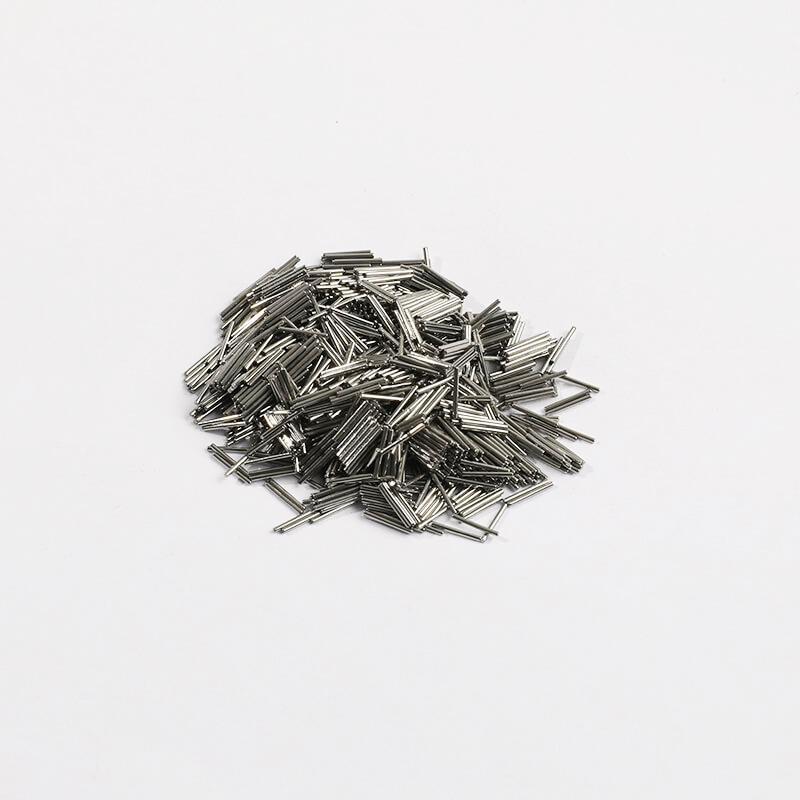
| Magnetic finishing machine | Fine deburring and light refinement of small precise features such as small bores, narrow slots and fine internal radii | Small working envelope that excludes housings and long parts, with pin media that can lodge in the fine features it reaches |
| Grinding finishing machine | Taking off a heavy machining burr, dross or a defined stock layer before a refinement pass on robust steel and stainless work | High removal energy cuts functional edges fast and demands a tighter assessment of what may be removed and how much |
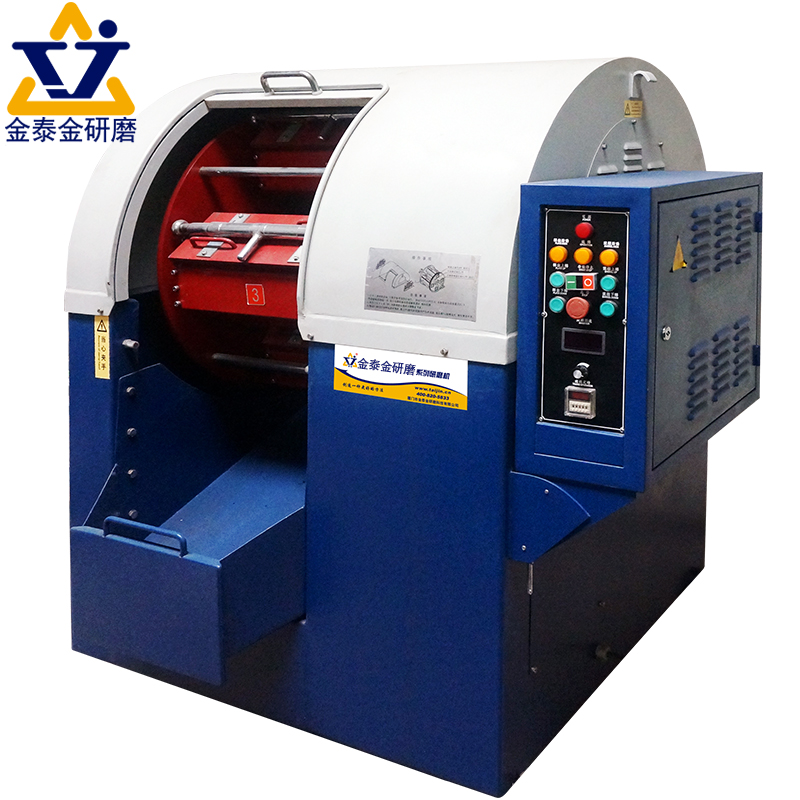
| Centrifugal barrel finishing machine | Small precise parts and short cycles with high contact pressure, such as spools, small inserts and compact machined components | Rounds edges and can distort thin unsupported sections quickly; results are sensitive to charge weight, speed and stop time |
Shape decides what the marks look like, often more than the material label does. Spheres and rounded shapes leave overlapping craters, which suits a general deburred or satin appearance but reads as a peened, dimpled surface. Angle-cut triangles, cylinders and cones strike along their axis and leave a linear pattern, which suits visible covers, panels and brackets where a direction is wanted. The mass of the media then sets the cutting power, so a heavy ceramic charge removes a milled burr faster and also reaches edges sooner. On aluminium, a coarse angular charge can fold or smear the surface instead of cutting it cleanly. Choose the shape against the appearance the part must carry and the edges that must keep their radius, then keep the shape class stable, because a charge that has worn into rounded forms behaves differently from a fresh one.
| Media | Best fit | Watch out for |
|---|---|---|
| Magnetic finishing pins and fine magnetic media | Small precise items such as spools, orifice plates, small valve parts and fine slot arrays where tumbling media cannot reach the feature | Limited working envelope, pins lodge in the same fine features they are chosen to reach, and the surface signature differs from tumbling |
| Heavy-cut ceramic, angle-cut triangles in a coarse size class | Removing a substantial milled or turned burr from open external edges and pockets on steel and stainless automation parts before a refinement stage | Cuts functional edges and corners aggressively, leaves a coarse surface on aluminium, and lodges in slots whose width approaches the media section |
| Dry media such as walnut shell and corn cob | Drying assistance and light surface polish after a wet cycle, particularly on parts with pockets and threads that must not stay wet | Does not deburr or refine metal significantly, generates dust, and must not be treated as a cleanliness step |
| Plastic cylinders and cones in a harder, denser grade | Longer cycles on mixed batches of small fittings and screw-machine parts where a repeatable light edge break is wanted without ceramic impact | Can float or segregate by shape in a bowl, and cylindrical forms can wedge in slots, keyways and cross-drillings |
Too much energy does not leave a smooth surface; it deforms one. Impingement shows as bright impact marks, dents on thin cover plates, flattened corners and a rippled or peened appearance on aluminium faces that should be flat. It comes from a heavy or dense charge, a high load ratio, a part that is too large a fraction of the load, or light parts left loose among heavy neighbours. A soft aluminium housing run in the same charge as steel brackets will show the marks first. Checking means looking for repeating mark patterns on exposed faces, comparing a part run loose with the same part compartmentalised, and reviewing the batch record for the mix and load that produced the lot. The practical fixes are separation, a lighter route, a shorter cycle and a charge sized to the part rather than to the chamber.
| Failure mode | Likely cause | How to catch it |
|---|---|---|
| Water spotting, mineral rings or haze left after wet processing and drying | Hard or high-chloride rinse water, slow or uneven drying, or parts stacked wet so moisture is trapped in pockets and threads | Inspect dried parts under angled light for rings and haze, check the rinse water source and the drying method, and confirm that pockets and tapped holes drain before packing |
| Threads rounded, galled or opened out by edge finishing | Media working the thread crest during a long or high-energy cycle, with no plugging or masking on the hole | Run go and no-go thread gauges on every sampled hole, inspect the crest at magnification, and confirm that plugs or masks were fitted and removed |
| Grey aluminium smear transferred onto stainless parts in a shared batch | Aluminium fines retained in media, compound or the machine sump after an aluminium lot, with no purge before the stainless lot | Check stainless surfaces under angled light for a dull grey film, review the changeover record, and inspect the charge and sump for retained fines |
| Rust spotting on stainless parts appearing hours or days after finishing | Ferrous transfer from steel media, a machine or tooling that has held carbon steel, or insufficient corrosion inhibition and drying | Inspect after a defined dwell time rather than immediately, look for pinpoint spots on and near edges, and trace the media and machine history for the lot |
Düsseldorf is the state capital of North Rhine-Westphalia and its chamber of industry and commerce represents around 103,000 member companies from industry, trade and services in the city and the ten towns of Kreis Mettmann. The city's economic development agency puts about 100,000 jobs in classic production companies and industry-related services and cites concrete machinery sites, including a new hall built by Komatsu Germany in Benrath for the world's largest hydraulic excavator and the Konecranes crane-technology plant in Benrath; the former Vallourec tube works in Reisholz is being redeveloped as the industrial and commercial park 'The Tube'. Messe Düsseldorf gives the city a metal-processing anchor: it hosts the wire (wire and cable) and Tube (tube and pipe) world-leading trade fairs. Health and life sciences are a second growth pole, and more than 100 local companies have committed to CO2 reduction targets under the city's climate pact.
The nearest part of that base to this brief is machinery: Around 100,000 jobs in Düsseldorf are in classic production companies and industry-related services, and the city's trade-fair calendar includes the world's leading tube and pipe fair in Düsseldorf with 1,200 exhibitors from 54 countries.
Düsseldorf's industrial base is concentrated in machine building, tube and pipe processing, crane and construction machinery and their supplier tier, and the city's trade-fair profile (Tube, wire) reflects exactly the cutting, forming and joining processes that generate burrs, sharp edges and contaminated surfaces. Tube ends, machined bores, weld seams and hydraulic components are the typical parts where deburring, edge rounding and defined surface finish determine fit, seal performance and coating adhesion. Because buyers here compare process technology at Düsseldorf's metal fairs, they tend to evaluate finishing machinery and media with an explicit process route and throughput figure rather than a finish description alone.
Decide first whether the requirement is an edge condition (deburring, edge break for seals and hydraulics) or a defined roughness/cleanliness value, then specify the process route and throughput that Düsseldorf's machine-building and tube-processing suppliers must reproduce in series with documented, repeatable results.
Freight context: Düsseldorf Airport (DUS), Rhine ports and rail terminals of the RheinCargo network in the Düsseldorf/Neuss area, Messe Düsseldorf exhibition grounds (trade-fair logistics). The economic development agency presents Düsseldorf as having Germany's fourth-largest airport plus direct links to the overseas ports of Zeebrugge, Amsterdam, Rotterdam and Antwerp, and the RheinCargo network moves more than 50 million tonnes a year by rail and inland port across its Rhine sites. Machines can be brought in by air or via Rhine container/rail hubs, and the Düsseldorf/Neuss port group serves as the regional inland terminal.
Germany sits inside the EU customs union, so Chinese-origin industrial machinery enters against the EU's common commercial tariff rather than a German national tariff, and the duty that applies is determined by the commodity code declared on the import declaration. China is one of the EU's largest goods trading partners and the EU has long run a goods deficit with it, while the Commission characterises the relationship as simultaneously partnership, competition and systemic rivalry (c1, c2). The Commission publishes the EU's trade agreements; no agreement with China appears in that overview, so Chinese-origin goods cannot claim a preferential origin rate and are assessed under the standard tariff (c8). German customs is administered by the Zoll under the Generalzolldirektion, and the importer must hold an EORI number - valid throughout the European Union and replacing the former German customs number - before goods can be cleared (c5, c6).
German is the working language of drawings, contracts, test reports and conformity documentation, and German buyers normally expect English-language technical documentation to be supplied alongside it. Procurement is documentation-driven: the EU declaration of conformity, the technical file, and the identity of the EU-based importer or authorised representative are settled before the order, and the EORI registration and customs declaration are the importer's responsibility rather than the exporter's (c3, c4, c5). Germany is the world's leading machinery and equipment manufacturer, so quotations compete against established domestic builders on technical documentation and measurable process data rather than on price alone (c9). Payment, delivery and risk terms are normally fixed by written contract with a named Incoterm, and classification (commodity code) is commonly confirmed in writing before shipment because it drives the duty and the import declaration.
SurfacePolish supplies from Xiamen, China. The buyer's own destination rules, conformity marking, tariff classification and documentation responsibilities stay with the buyer; confirm them against the authorities named above before ordering.
Acceptance has to exist before a trial, in the drawing and the purchase specification, not as a verbal understanding afterwards. Name each controlled surface separately, because a bearing bore, a mounting land and an external cover will not respond to one media charge in the same way. State the parameter, the cut-off length, the measurement direction and the number of readings at each location. Where an edge limit applies, express it as a maximum radius or a required chamfer at a named feature rather than as a word such as deburred. Add the cleanliness requirement the part must meet and the method by which it will be judged, and say which faces are exempt. Settling those points early avoids the common dispute in which a supplier reports a surface and a buyer rejects on a feature that was never written down.
A trial can only be read against a documented starting point, so record the incoming condition before shipping. Photograph each critical feature at a fixed scale, measure roughness at marked locations with the instrument, cut-off and direction noted, check edge condition with a radius gauge or comparator, and record mass and critical dimensions. Note the as-received burr, existing scratches, cutting oil or coolant and the condition of any tapped hole. Keep one piece unprocessed as the baseline. When the parts come back, compare them against those records rather than against memory or photographs taken on a different day under different light. That pairing is also how the buyer distinguishes a change produced by the process from a feature the material already carried.
Ask for a record that identifies what was done rather than one that asserts a result. A useful record lists the part numbers and quantities in the lot, the machine used, the media type and size class, the charge mass and its age since the last screen or top-up, the compound and dose, the rinse water source, the cycle time, any interruption, the inspection results and the lot disposition. Request the media and compound data sheets. Where aluminium and stainless are processed on the same site, ask for the changeover note covering media purge, machine cleaning and compound replacement. This is finishing process documentation, not a certificate of compliance.
No. SurfacePolish does not supply or carry out electropolishing. Where an electrochemical treatment is part of a specification, it appears here only as a comparison point and as a reason to examine what a mechanical route can achieve on the same part, and the mechanical route can be discussed in terms of machine, media and compound options. A mechanical finish should not be presented as equivalent to an electropolished surface, and it does not reproduce what that process does. Where an electropolished finish is mandatory in your specification, that requirement stays with your own supply chain and your own engineering decision.
Yes. The offer is cross-border supply of finishing machines, media and compounds, together with a free sample trial and a scoped discussion of a finishing line concept. That means machine class, media and compound are considered as one question rather than three purchases, since a charge that suits one chamber may not suit another. The buyer keeps ownership of the part, the drawing and the acceptance criteria, and we do not verify the material, the upstream machining or the heat treatment. Bring the part family, the alloys, the size range and the features that must be protected into the discussion, along with the condition the parts arrive in.
Use Dusseldorf, Germany as the destination on the enquiry and state whether the deliverable is equipment, media and compound, a representative sample review or a line concept. A destination does not imply local stock, a local service point or a local delivery time.
Buyers in the Düsseldorf district work in a DIN-centred regime: surface-texture specifications to ISO 21920, technical cleanliness to VDA 19.1 / ISO 16232 (relevant for hydraulic and powertrain parts), material certificates to EN 10204 (3.1) and, in suppliers to the vehicle industry, IATF 16949 with VDA 6.3 audits. Imported finishing equipment additionally needs CE marking under the EU Machinery Regulation for placing on the EEA market.
Sources were retrieved on 2026-09-29 and describe the local industrial and trade context only. They do not evidence any SurfacePolish project, shipment, installation or service in Dusseldorf.
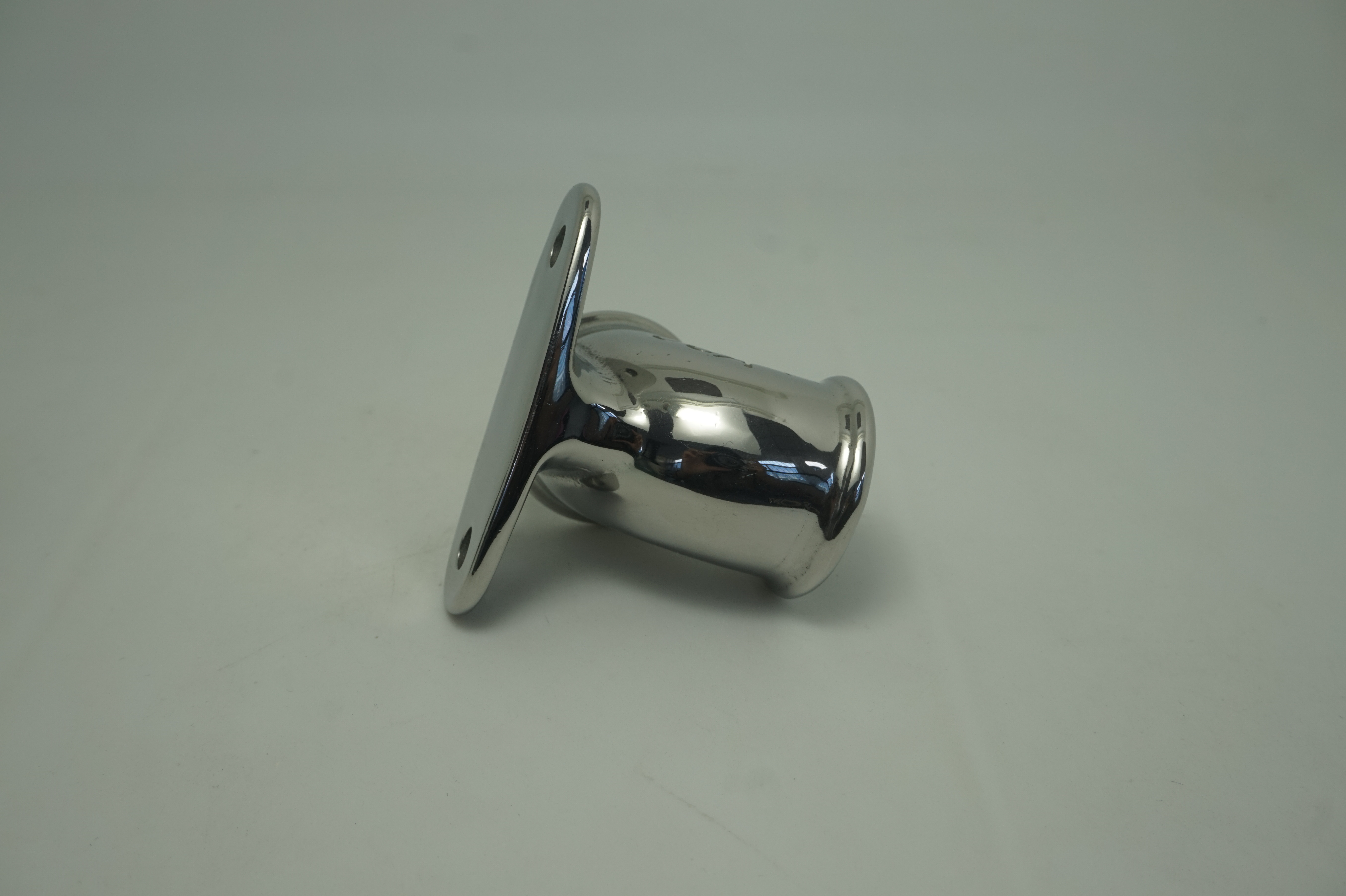
The buyer needs a consistent light edge break across the batch without rounding the pivot hole or blunting the serrations.
Send the material, dimensions, approximate weight, batch quantity, the incoming condition and photographs of the difficult features. Mark which features must not be contacted by media and state how the result will be inspected. This form carries source reference PSEO-0370; quote it if you prefer an additional manual reference.
Open the SurfacePolish enquiry form Email a prepared enquiry
No price, lead time, certification or result is promised here. Confirm whether a sample trial is available for the specific part and what the trial can and cannot show.
Page PSEO-0370 · revised 2026-09-29 · cross-border equipment, media and scoped sample review. City context is sourced and cited above.
Use this local checker to identify missing part and inspection information. It prepares a technical-review brief; it does not approve a machine, process recipe or production result.
Complete the part details to prepare a review brief.
Email : info@surface-polish.com


 IPv6 network supported


 +86-592-2381506