A welding and metalwork fabricator in Hobart, Australia working in robotics and automation has welded stainless pedestal brackets whose fillet welds and laser-cut edges need dressing while the machined base face stays flat. SurfacePolish supplies finishing machines, media and compounds across borders and runs a free sample trial, sending representative weldments to Xiamen and returning them with observed results and a proposed route for the buyer's review. This brief is written for a buyer in Hobart working on robotics and automation; it describes equipment, media and a scoped sample review, not a local polishing service.
What is the smallest hole, slot, keyway or cross-drilling the charge must not enter or plug, and how will a lodged medium be detected and removed?
How much of the incoming contamination, cutting oil, machining chip and handling damage is expected to be removed by finishing rather than by an earlier operation?
Which surfaces on the part are functional, such as bearing bores, dowel holes, seal lands, ground mounting faces and threads, and which are only cosmetic?
The mechanism that raised the burr matters more than its size. Milling a pocket leaves a rolled edge that folds over the top of a wall; turning leaves a fine feather on a bore lip; EDM leaves a recast layer that is hard, brittle and behaves differently under impact media; cross-drilling leaves a burr inside the intersection of two passages that no external media stream reaches; laser cutting leaves dross on a bracket edge; a weld leaves spatter and a heat-affected zone. Each of those responds to a different combination of energy, media shape and time. Ask for the routing that produced the part and not only the drawing, because a cycle written for a milled edge will under-work a recast layer while rounding a turned bore lip long before the recast layer has gone.
Compound carries debris away, keeps the media from loading and buffers the chemistry against the metal. Alkaline and neutral families are common for general deburring and cleaning; acidic families may be chosen where a descale or brightening effect is wanted; silicate-bearing products can leave a tenacious film that is hard to remove from a bore or a sealing land. On aluminium an effective corrosion inhibitor usually matters, because the wrong chemistry darkens the surface during or after the cycle. Concentration, flow and temperature shift the result, so dosing should be metered rather than judged by eye, and rinse water hardness, chloride content and suspended solids all affect foaming and what remains behind. Where an anodise or paint step follows, the film and smut left by the cycle become the buyer's problem, so define how the surface will be checked.
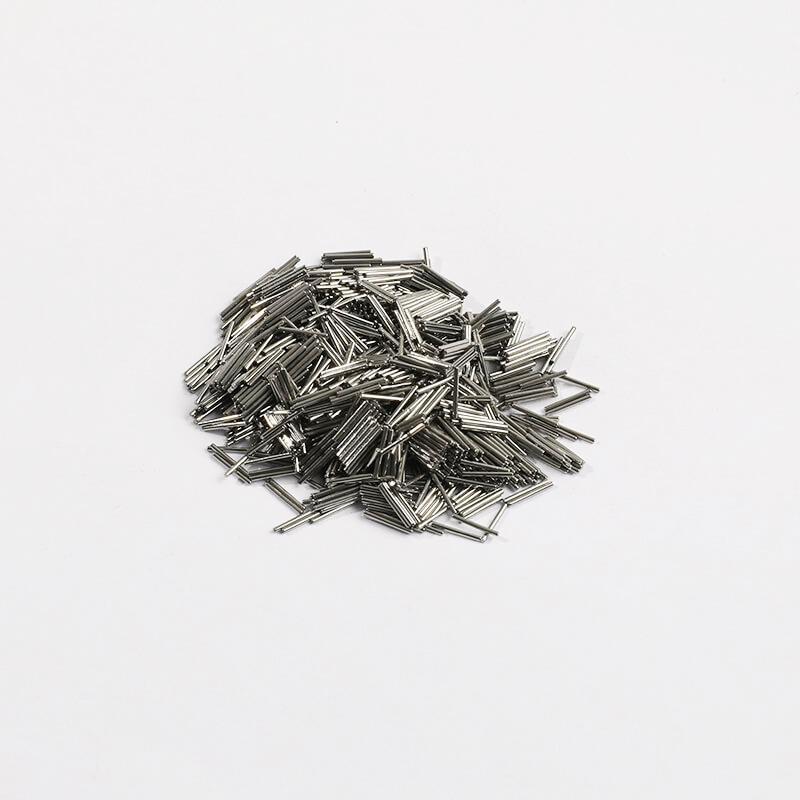
| Media | Best fit | Watch out for |
|---|---|---|
| Dry media such as walnut shell and corn cob | Drying assistance and light surface polish after a wet cycle, particularly on parts with pockets and threads that must not stay wet | Does not deburr or refine metal significantly, generates dust, and must not be treated as a cleanliness step |
| Aluminium oxide grinding media in a dense ceramic bond | Heavier stock removal or a more consistent cut on robust steel and stainless parts with thick edges and a defined layer to remove | High removal energy rounds functional edges quickly and is a poor match for thin aluminium plates, cast housings and bore lips |
| Magnetic finishing pins and fine magnetic media | Small precise items such as spools, orifice plates, small valve parts and fine slot arrays where tumbling media cannot reach the feature | Limited working envelope, pins lodge in the same fine features they are chosen to reach, and the surface signature differs from tumbling |
| Steel media, including balls and shaped pins | Bright finishing and edge blending on stainless automation components where appearance and a burnished surface matter | Transfers iron to aluminium and carbon steel, needs a corrosion-inhibiting compound, and must be separated magnetically or by screen at unload |
Inside any machine, the way parts are carried decides whether the finish is even and the geometry survives. Parts left loose together nibble each other along contact lines and produce bright impact marks on visible faces. Cradles that follow a casting, compartments, dividers and clip-on carriers present the same face to the media on every part and protect machined lands. Load ratio matters as much: too many parts in the charge reduces circulation and leaves shielded pockets unworked, while too few allows parts to be thrown against the chamber wall. Build the arrangement around the most delicate and the heaviest part in the family rather than an average one. Where a buyer plans automated loading or transfer between operations, the fixture interface, the orientation and the pick points belong to the buyer's own engineering scope and are defined and verified on that side.
| Machine route | Where it fits | What it will not do |
|---|---|---|
| Tub vibrator | Long parts such as linear-axis beams, manifolds and welded frames that cannot rotate in a bowl | Lower energy per unit area so heavy burrs take longer, and large tubs need floor space and a reliable part support method |
| Barrel finishing machine, rotary barrel tumbling | Gentle deburring of small fragile parts and mixed batches of screw-machine components with a generous compound flow | Long cycles, no visibility while running, and internal features can collect media and compound that must be retrieved at unload |
| Disc finishing machine | Fast, high-energy edge breaking and surface refinement on small robust parts and uniform batches of gripper jaws, blocks and fittings | High impingement and edge-loss risk on thin, soft or aluminium parts, and the geometry must suit the disc working gap |
| Vibratory finishing machine, bowl type | General deburring and refinement of machined housings, plates and brackets that fit and can tumble without racking, with easy mid-cycle inspection | Continuous part-on-part contact and no access to deep internal passages; thin plates and finished mounting faces need separation |
Parts can pass a finish check and still fail because something moved. Thin machined webs, long beams and unsupported walls relax or distort under tumbling loads, so a housing that measured flat before the cycle fails a flatness or position check afterwards, and a soft aluminium part can pick up a bow that only shows on a surface plate. At the same time, media that cannot reach deep pockets, internal corners or the shielded side of a flange leave the original machining marks intact while the exposed faces are fully refined, and the difference becomes obvious once the part is assembled against a mating surface. Both outcomes are caught by measurement rather than by looking harder at the finish: record flatness, wall thickness and critical dimensions at the same points before and after, inspect at defined locations, and treat the batch record as the first place to look for the cause.
| Failure mode | Likely cause | How to catch it |
|---|---|---|
| Compound film, smut or tenacious residue left on a face or in a bore | A film-forming or silicate-bearing compound, insufficient rinse volume, or drying a part before it is genuinely clean | Magnify the suspect surface, wipe a defined area with solvent against a clean reference, and confirm with the buyer's own cleanliness method |
| Burr remaining inside a cross-drilled intersection or an internal corner | Media too large to enter the intersection, part orientation that shields the feature, or a cycle stopped before that feature was reached | Borescope the intersection at a fixed angle, compare with a first-article reference, and use a pin or probe to feel for a lip on sampled parts |
| Uneven finish with unrefined pockets, internal corners or the shielded side of a flange | Media cannot reach the feature at the chosen size or orientation, charge circulation is blocked, or the part was never repositioned during the cycle | Inspect at defined locations rather than judging the whole part, photograph the same feature before and after, and measure roughness only at the surfaces the drawing controls |
| Water spotting, mineral rings or haze left after wet processing and drying | Hard or high-chloride rinse water, slow or uneven drying, or parts stacked wet so moisture is trapped in pockets and threads | Inspect dried parts under angled light for rings and haze, check the rinse water source and the drying method, and confirm that pockets and tapped holes drain before packing |
Hobart's manufacturing base is smaller than the mainland capitals but unusually specialised, with world-scale capability in a few niches rather than broad heavy industry. The clearest example is shipbuilding: Incat has built high-speed aluminium catamarans at its Hobart shipyard for more than four decades, has built around 100 vessels for operators in 24 countries, employs more than 500 people, and is now building large battery-electric ferries, having been named Tasmanian Exporter of the Year 2026. The city is also the port and service centre for Tasmanian industry: TasPorts, the state-owned ports company, operates the Port of Hobart and reports that across its ports it has facilitated the movement of over 145 million tonnes of freight in the past decade, serving mining, manufacturing, timber and dairy. Hydro Tasmania, based in Hobart, is Australia's largest generator of clean renewable energy, and the state's hydro-industrial base has historically supported energy-intensive processing. Hobart Airport is Australia's southernmost airport and describes itself as curfew free.
The nearest part of that base to this brief is energy: Hydro Tasmania states 'We're Australia's largest generator of clean, renewable energy, and champions for a sustainable future', and the TasPorts project list includes the Bass Strait Renewable Energy Terminal, indicating an emerging renewable energy sector based in and shipped through Tasmania.
Aluminium shipbuilding is the defining finishing challenge in Hobart: welded aluminium structures in high-speed ferries require weld dressing, oxide removal and controlled surface preparation before painting or coating, and surface defects matter for fatigue performance and corrosion resistance in a marine environment. Stainless and aluminium components used in marine fit-out, in Hydro Tasmania's generation and water infrastructure, and in food and dairy processing equipment all need burr-free edges and contamination-free surfaces for hygiene, sealing and corrosion reasons. Because volumes are low and parts are large or awkward, finishing method selection is typically driven by part size and geometry rather than throughput.
A Hobart buyer should first establish whether the surface being finished is structural aluminium that will be welded and painted, or a stainless product-contact surface in food, dairy or marine service, because the acceptable media, the cleanliness requirement and the evidence of a correct finish are entirely different in each case.
Freight context: Port of Hobart (Macquarie Wharf and Princes Wharf berths, operated by TasPorts), Hobart Airport (Australia's southernmost airport, curfew free, at Cambridge), Bell Bay (TasPorts' northern deep-water port serving Bass Strait trades). TasPorts reports that over the past decade its ports and people have facilitated the movement of over 145 million tonnes of freight, covering mining, manufacturing, timber and dairy, and it publishes quarterly trade reports by port and commodity. The Port of Hobart handles the state's southern trades through the Macquarie Wharf berths, and Incat's Hobart shipyard relies on heavy-lift vessels calling at Hobart to collect completed hulls for delivery overseas, as shown by its Hull 096 shipment. Hobart Airport is curfew free, which matters for time-critical air freight, while Bass Strait sea freight between Tasmania and the mainland is the principal route for inbound machinery.
The national standards body is Standards Australia, which publishes Australian Standards (AS) and joint Australian/New Zealand Standards (AS/NZS); on their own, standards are voluntary and there is no general requirement for the public to comply, but state and Commonwealth governments often refer to AS or AS/NZS standards in legislation and they can then become mandatory. For finishing and machinery work, the applicable documents are the ones cited in the buyer's own contract, purchase specification, licence condition or safety management system, together with the marking rules in AS/NZS 4417.1 and AS/NZS 4417.2 for in-scope electrical equipment sold under the EESS.
Australia and China are parties to the China-Australia Free Trade Agreement (ChAFTA), signed on 17 June 2015 and in force since 20 December 2015; the Australian Border Force maintains a dedicated ChAFTA page and working tariff schedule, and FTAs give importers a route to preferential rates of duty where the rules of origin are met. China was Australia's largest source of imports in 2025 at $130.2b, up 12.5% on 2024, and 56% (69,567) of Australian business importers traded at least once with China in 2020-21. A Chinese supplier of finishing machines, media or compounds is therefore shipping into Australia's single largest import stream, and preferential duty depends on origin documentation rather than on a blanket zero-tariff guarantee for every product line.
SurfacePolish supplies from Xiamen, China. The buyer's own destination rules, conformity marking, tariff classification and documentation responsibilities stay with the buyer; confirm them against the authorities named above before ordering.
Acceptance has to exist before a trial, in the drawing and the purchase specification, not as a verbal understanding afterwards. Name each controlled surface separately, because a bearing bore, a mounting land and an external cover will not respond to one media charge in the same way. State the parameter, the cut-off length, the measurement direction and the number of readings at each location. Where an edge limit applies, express it as a maximum radius or a required chamfer at a named feature rather than as a word such as deburred. Add the cleanliness requirement the part must meet and the method by which it will be judged, and say which faces are exempt. Settling those points early avoids the common dispute in which a supplier reports a surface and a buyer rejects on a feature that was never written down.
A trial can only be read against a documented starting point, so record the incoming condition before shipping. Photograph each critical feature at a fixed scale, measure roughness at marked locations with the instrument, cut-off and direction noted, check edge condition with a radius gauge or comparator, and record mass and critical dimensions. Note the as-received burr, existing scratches, cutting oil or coolant and the condition of any tapped hole. Keep one piece unprocessed as the baseline. When the parts come back, compare them against those records rather than against memory or photographs taken on a different day under different light. That pairing is also how the buyer distinguishes a change produced by the process from a feature the material already carried.
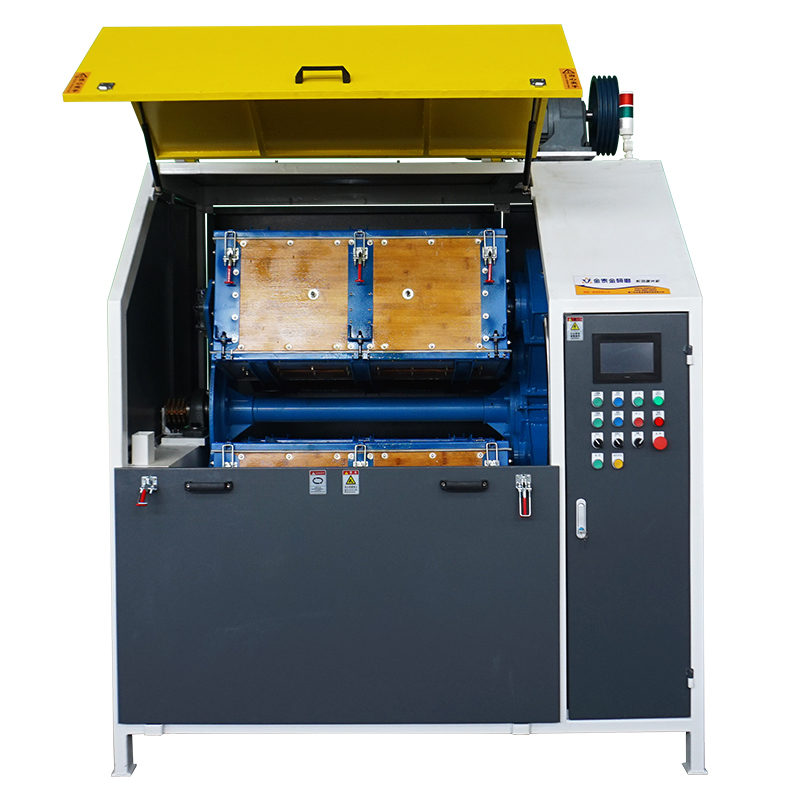

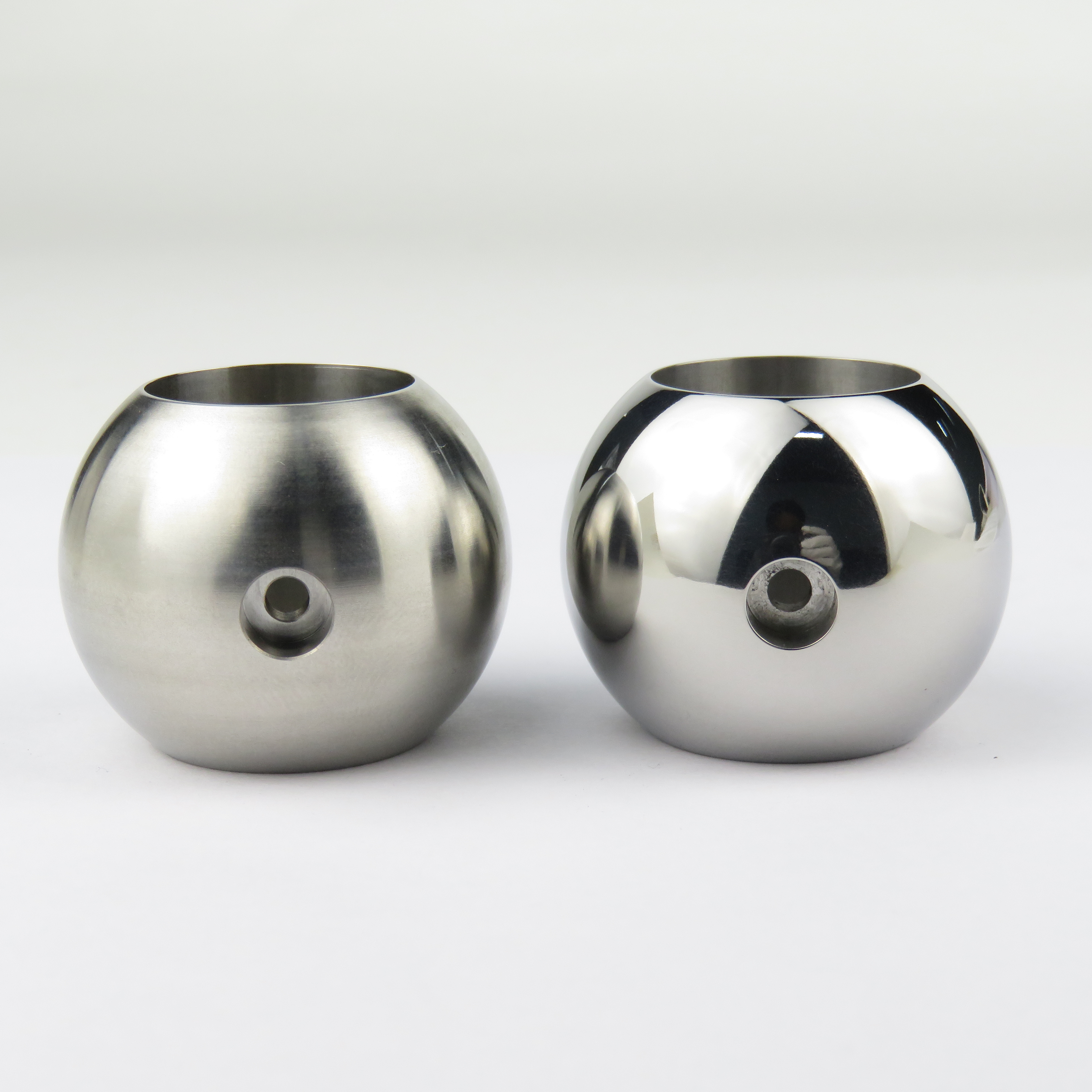
No. SurfacePolish supplies finishing machines, media and compounds across borders and runs a free sample trial on parts shipped to the factory in Xiamen. We do not design, integrate, program or commission robotic cells or automated handling lines, and no robotic polishing cell is offered here. What can be discussed is the part itself, the features that must be protected and the finishing step, and which loose-part machine and media route is worth testing. How parts are presented, loaded, unloaded and transferred is engineering scope you define and verify, and any machine or medium suggestion remains a starting point for your evaluation in Hobart.
SurfacePolish does not coat, anodise or paint parts, and no finishing cycle here should be treated as a coating preparation specification. A coating or anodising step usually makes residue, smut and embedded debris more visible rather than less, and a compound film left in a bore becomes your problem at the next operation. Define what your own coating process requires and how you will verify it, then ask for the parts to be checked against that requirement. A trial can report what was observed on the tested surfaces and the settings used, but the fitness of a surface for a downstream coating step is your own process decision.
Cycle time depends on the starting burr, the alloy and temper, the media size class, the compound and how much edge refinement is wanted, so no figure can be quoted in advance. A part that needs only a light edge break runs very differently from one that must shed a milled burr or a recast layer before refinement, and a two-stage route has to count both stages. The useful approach is to test one or two defined stop points on representative parts and record what changed at each. SurfacePolish does not promise cycle times or capacity; treat any timing on returned parts as an observation from that run rather than a production commitment.
Use Hobart, Australia as the destination on the enquiry and state whether the deliverable is equipment, media and compound, a representative sample review or a line concept. A destination does not imply local stock, a local service point or a local delivery time.
Hobart manufacturers work to Australian Standards administered by Standards Australia, and Tasmanian marine work additionally references Australian and international maritime classification and survey requirements for vessel construction and repair. Electrically powered machinery must comply with the EESS and carry the Regulatory Compliance Mark under AS/NZS 4417.1 and AS/NZS 4417.2 where in scope.
Sources were retrieved on 2026-09-29 and describe the local industrial and trade context only. They do not evidence any SurfacePolish project, shipment, installation or service in Hobart.
The buyer wants the weld spatter and cut edges dressed and the visible faces blended without cutting into the machined mounting face.
Send the material, dimensions, approximate weight, batch quantity, the incoming condition and photographs of the difficult features. Mark which features must not be contacted by media and state how the result will be inspected. This form carries source reference PSEO-0800; quote it if you prefer an additional manual reference.
Open the SurfacePolish enquiry form Email a prepared enquiry
No price, lead time, certification or result is promised here. Confirm whether a sample trial is available for the specific part and what the trial can and cannot show.
Page PSEO-0800 · revised 2026-09-29 · cross-border equipment, media and scoped sample review. City context is sourced and cited above.
Use this local checker to identify missing part and inspection information. It prepares a technical-review brief; it does not approve a machine, process recipe or production result.
Complete the part details to prepare a review brief.
Email : info@surface-polish.com


 IPv6 network supported


 +86-592-2381506