A linear motion component supplier in Sheffield, United Kingdom in robotics and automation has a hardened steel carriage block whose ground ways and mounting face must be left as they are while its edges are broken. SurfacePolish supplies finishing machines, media and compounds across borders and offers a free sample trial: representative blocks travel to Xiamen and return with observations plus a proposed media, compound and cycle direction for the buyer's own evaluation. This brief is written for a buyer in Sheffield working on robotics and automation; it describes equipment, media and a scoped sample review, not a local polishing service.
What is the size and mass spread inside one part family, and does one machine have to cover both a heavy casting and a small gripper jaw?
What is the smallest hole, slot, keyway or cross-drilling the charge must not enter or plug, and how will a lodged medium be detected and removed?
How much of the incoming contamination, cutting oil, machining chip and handling damage is expected to be removed by finishing rather than by an earlier operation?
Batch composition is a process variable. Mixing aluminium and stainless parts in one charge spreads aluminium fines onto the stainless and leaves a dull grey film; leaving small steel fasteners loose among aluminium housings produces impact marks and ferrous contamination. Decide the mix, the maximum mass per batch and whether delicate parts need compartments. Decide as well how a batch is identified, with a traveller carrying part numbers, alloy, machine, media charge, compound, cycle time and inspection result, so a finished lot can be traced back to the settings that produced it. Then record honestly what the parts arrived with, because cutting oil, coolant, machining chips, a previous blasting residue or a handling scratch all change what one cycle can achieve and are easy to attribute to the wrong cause later.
Inside any machine, the way parts are carried decides whether the finish is even and the geometry survives. Parts left loose together nibble each other along contact lines and produce bright impact marks on visible faces. Cradles that follow a casting, compartments, dividers and clip-on carriers present the same face to the media on every part and protect machined lands. Load ratio matters as much: too many parts in the charge reduces circulation and leaves shielded pockets unworked, while too few allows parts to be thrown against the chamber wall. Build the arrangement around the most delicate and the heaviest part in the family rather than an average one. Where a buyer plans automated loading or transfer between operations, the fixture interface, the orientation and the pick points belong to the buyer's own engineering scope and are defined and verified on that side.
| Machine route | Where it fits | What it will not do |
|---|---|---|
| Grinding finishing machine | Taking off a heavy machining burr, dross or a defined stock layer before a refinement pass on robust steel and stainless work | High removal energy cuts functional edges fast and demands a tighter assessment of what may be removed and how much |
| Disc finishing machine | Fast, high-energy edge breaking and surface refinement on small robust parts and uniform batches of gripper jaws, blocks and fittings | High impingement and edge-loss risk on thin, soft or aluminium parts, and the geometry must suit the disc working gap |
| Barrel finishing machine, rotary barrel tumbling | Gentle deburring of small fragile parts and mixed batches of screw-machine components with a generous compound flow | Long cycles, no visibility while running, and internal features can collect media and compound that must be retrieved at unload |
| Dry polishing machine and dryer | Removing residual moisture after a wet cycle and reducing water spotting on aluminium and stainless surfaces with pockets and threads | A finishing step only; a dry part can still carry compound film, fines and media dust, so it is not a cleanliness release |
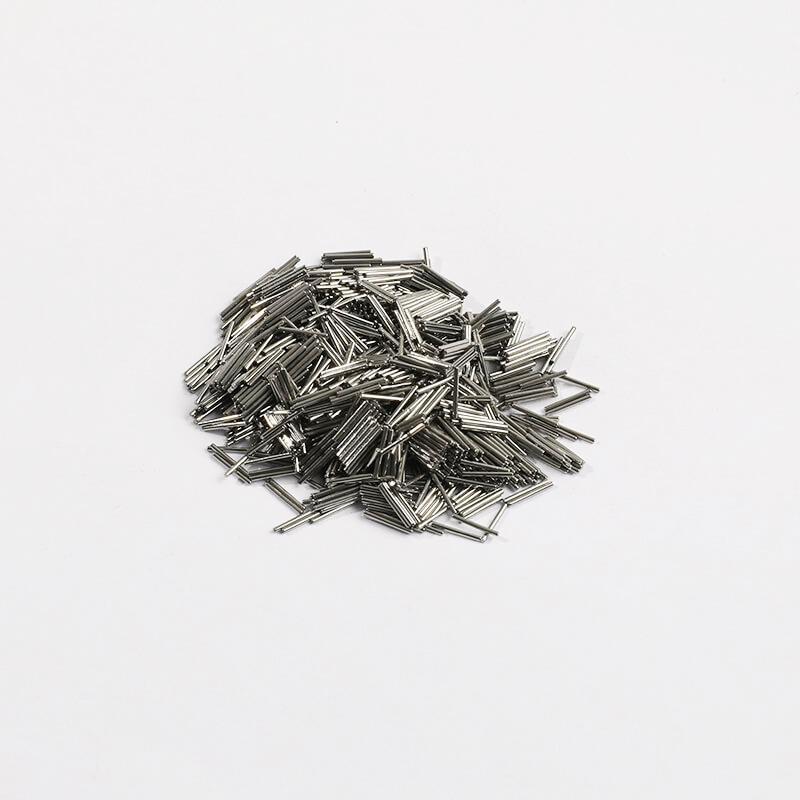
Steel media produces the brightest appearance of the common charges and the highest contact pressure, and it brings a contamination question with it. On aluminium it can embed iron-bearing fragments that show up later as rust spots or as particles in a wiped sample, so a shop that runs both materials needs a changeover discipline, dedicated charges or a different route for the aluminium work. Separation at unload matters as much as the choice: steel media is dense, retains in blind holes and slots, and can only be recovered magnetically if the equipment and the procedure are set up for it. The compound has to keep the charge clean and inhibit corrosion on the parts. A bright result from a steel charge is an observation about a surface, not evidence about cleanliness or fitness for a downstream process.
| Media | Best fit | Watch out for |
|---|---|---|
| Fine ceramic or porcelain shapes in a small size class | Edge blending and surface refinement after a cutting stage, and reaching tighter external geometry on machined housings and brackets | Small sizes enter and retain in tapped holes and fine slots, and media wear shrinks the charge so the finish drifts over its life |
| Plastic triangles, cones and pyramids in a soft to medium grade | Deburring aluminium housings, gripper plates and other soft alloy parts where surface marking and edge rounding must be kept to a minimum | Slow cut rate, media deforms and wears, and a worn charge behaves noticeably differently from a fresh one |
| Magnetic finishing pins and fine magnetic media | Small precise items such as spools, orifice plates, small valve parts and fine slot arrays where tumbling media cannot reach the feature | Limited working envelope, pins lodge in the same fine features they are chosen to reach, and the surface signature differs from tumbling |
| Steel media, including balls and shaped pins | Bright finishing and edge blending on stainless automation components where appearance and a burnished surface matter | Transfers iron to aluminium and carbon steel, needs a corrosion-inhibiting compound, and must be separated magnetically or by screen at unload |
Edge rounding beyond limit is the failure that most often turns a finished automation part into scrap, because the features that round first are the ones that set position. A bearing bore lip, a dowel hole edge, a seal groove corner or the edge of a ground mounting land can lose a fraction of its geometry under a high-energy charge and still look uniform and polished. Coarse or dense media, an over-long cycle and a heavy load ratio all accelerate it, and aluminium rounds faster than stainless under the same conditions. Because the damage is invisible to a casual look, checking has to be deliberate: measure the feature before and after with an optical comparator, a radius gauge or a moulded replica, and compare the result with the limit on the drawing. Masking, a shielding fixture or a gentler medium are the usual mitigations to test.
| Failure mode | Likely cause | How to catch it |
|---|---|---|
| Thin plate, cover or housing distorted, bowed or dimensionally drifted after the cycle | Tumbling load on an unsupported thin section, part-on-part contact, or heat and pressure from a high-energy route | Measure flatness, wall thickness and critical dimensions at the same marked points as the pre-process baseline, on a surface plate or CMM |
| Bearing bore, bore lip or dowel hole edge rounded past the drawing limit | High-energy route, over-long cycle, dense or coarse media, or a functional edge run without masking or a shielding fixture | Measure the defined edge feature before and after with an optical comparator, radius gauge or moulded replica, and compare it with the maximum radius on the drawing |
| Threads rounded, galled or opened out by edge finishing | Media working the thread crest during a long or high-energy cycle, with no plugging or masking on the hole | Run go and no-go thread gauges on every sampled hole, inspect the crest at magnification, and confirm that plugs or masks were fitted and removed |
| Grey aluminium smear transferred onto stainless parts in a shared batch | Aluminium fines retained in media, compound or the machine sump after an aluminium lot, with no purge before the stainless lot | Check stainless surfaces under angled light for a dull grey film, review the changeover record, and inspect the charge and sump for retained fines |
Sheffield is the lead city of the South Yorkshire Mayoral Combined Authority, which describes its vision as building on the region's strengths in innovation and advanced manufacturing and brings together Barnsley, Doncaster, Rotherham and Sheffield. Invest South Yorkshire presents the region as the UK's first Investment Zone, notes that stainless steel was founded there over 90 years ago, and lists aerospace, automotive, energy, logistics, nuclear and rail among its distinctive capabilities alongside the Advanced Manufacturing Research Centre and the iPort Doncaster intermodal site. The University of Sheffield AMRC works across aerospace, defence and nuclear and clean energy, with capabilities that include subtractive manufacturing, castings, fabrication and automation.
For this brief the relevant part of that base is automation: The AMRC lists Automation among its core capabilities, and Invest South Yorkshire states the region has a growing reputation for industrial digitisation to meet Industry 4.0.
South Yorkshire's advanced manufacturing base combines hard-metal machining, castings and fabricated assemblies, all of which produce burrs and edge conditions that are controlled before assembly, inspection or coating. Because AMRC's aerospace, defence and nuclear programmes are located in the region, edge and surface requirements on that work stream are usually written as measurable acceptance criteria rather than left to visual judgement.
A Sheffield buyer should fix the edge-quality acceptance criterion - for example a defined edge-break size or a surface-texture parameter - before choosing between vibratory, barrel or disc finishing, because the region's aerospace and nuclear workflows will not accept an undefined 'deburred' requirement.
Freight context: iPort Doncaster (intermodal rail freight site listed by Invest South Yorkshire as a strategic asset), Doncaster Sheffield Airport (held within the South Yorkshire MCA's business portfolio). Invest South Yorkshire lists logistics and rail among the region's distinctive capabilities and publishes an investment portfolio of strategic assets including the iPort Doncaster intermodal site; transport in the region is coordinated by the MCA's Travel South Yorkshire arm, and the MCA holds the Doncaster Sheffield Airport portfolio.
China does not appear in the alphabetical list of trade agreements in effect published by the Department for Business and Trade, so Chinese-origin machinery imported into the UK cannot claim a preferential agreement rate. Duty is instead determined by the commodity code declared on the import declaration, and the UK's customs authority is HM Revenue and Customs (HMRC), which ONS also names as the largest single data source behind UK trade-in-goods statistics. Because a GB-prefixed EORI number is a precondition for importing into England, Scotland or Wales, a Chinese seller's UK buyer must already hold that registration before any machine ships.
BSI is the UK's National Standards Body, and British Standards (BS, including adopted BS EN ISO texts) are the documents a UK buyer's surface-finish, edge and cleanliness specifications are normally written against and purchased through. On the plant side, HSE maintains the work equipment and machinery topic covering the safe supply and use of machinery, and the COSHH regime, which requires employers to identify, assess and control risks from hazardous substances - the regime that applies to finishing compounds, abrasive media and the dust and effluent they generate.
SurfacePolish supplies from Xiamen, China. The buyer's own destination rules, conformity marking, tariff classification and documentation responsibilities stay with the buyer; confirm them against the authorities named above before ordering.
Acceptance has to exist before a trial, in the drawing and the purchase specification, not as a verbal understanding afterwards. Name each controlled surface separately, because a bearing bore, a mounting land and an external cover will not respond to one media charge in the same way. State the parameter, the cut-off length, the measurement direction and the number of readings at each location. Where an edge limit applies, express it as a maximum radius or a required chamfer at a named feature rather than as a word such as deburred. Add the cleanliness requirement the part must meet and the method by which it will be judged, and say which faces are exempt. Settling those points early avoids the common dispute in which a supplier reports a surface and a buyer rejects on a feature that was never written down.
Scale-up is mostly about holding what produced the trial result. In production that means a media charge kept at a target mass, screened on a schedule with undersize and broken pieces removed and fresh media added to a recorded level. Compound should be metered to a concentration rather than poured by eye, and rinse water quality should be known and stable. Every lot needs an identity: part numbers, quantity, machine, media charge, compound, cycle time, operator, inspection result and disposition. Where the same machine handles aluminium and stainless, define the changeover, including media purge, machine cleaning and compound replacement, and record when it happened. Cycle counting is a simple control that is often skipped: a charge that has run a known number of hours can be scheduled for replacement before wear starts producing lodged media or a drifting finish.

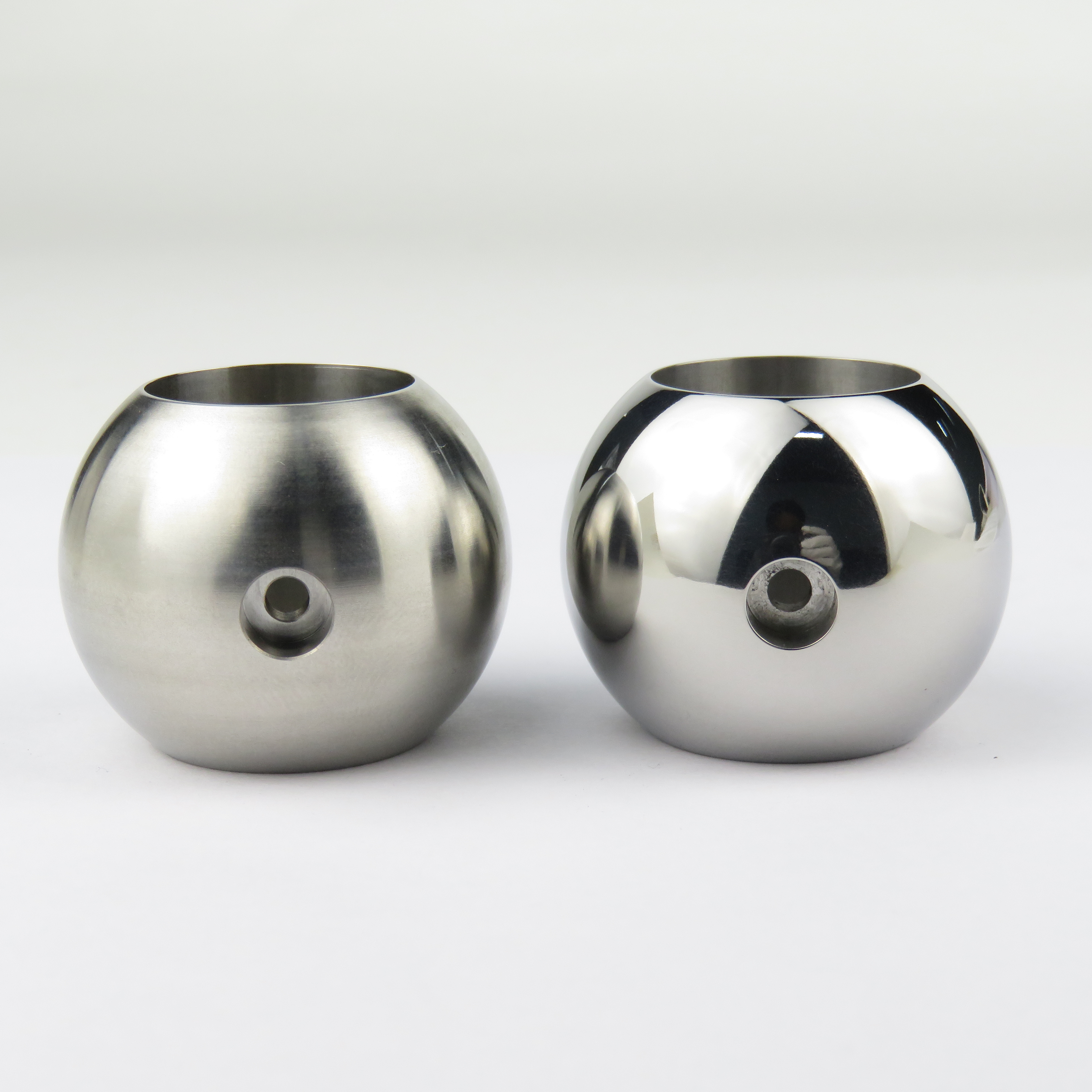
A bore cannot be protected by the cycle alone; it is protected by what is decided before the cycle. Masking or plugging the bore, keeping the part out of contact with heavy neighbours, choosing a lighter route and shortening the cycle all reduce the load the bore sees, but none of them guarantees a dimension. That is why the bore must be measured before and after at the same points, with a bore gauge or CMM, and compared with the drawing limit. SurfacePolish does not promise a tolerance or a result; the trial reports what was observed on the parts tested, and the dimensional acceptance decision stays with your own metrology and quality functions.
Size the medium well below the smallest opening the charge could enter, and treat every passage as a retrieval point rather than assuming it stays clear. Map the tightest tapped hole, keyway or cross-drilling first, then choose a size class against that geometry instead of an average part. Add a defined check such as a pin or thread gauge on holes, a borescope at an agreed angle and a rinse collected through a filter. For a trial, send the part with the smallest opening so the media choice is tested on the real feature. SurfacePolish reports what was observed on the tested parts; the release decision remains with your own quality function in United Kingdom.
A trial shows what a given machine, charge and setting did to the parts tested, which is useful evidence but not a sizing study. Machine size depends on the largest envelope and mass in the family, the smallest part that must meet the same appearance, the load ratio you intend to run, and how many stages the part needs. Those are planning questions that belong in a line-concept discussion alongside the trial result. A part tested on a small machine may behave differently in a larger chamber, and a part run in a full production load may come out differently from one run in a light trial batch. Record both the settings and the load.
Use Sheffield, United Kingdom as the destination on the enquiry and state whether the deliverable is equipment, media and compound, a representative sample review or a line concept. A destination does not imply local stock, a local service point or a local delivery time.
Equipment placed on the Great Britain market needs UKCA or CE marking with a Declaration of Conformity, and HSE's work equipment and machinery and COSHH regimes apply on site. For aerospace and nuclear work in the region, buyers generally flow down the prime contractor's quality and assurance requirements rather than relying on general machining tolerances alone.
Sources were retrieved on 2026-09-29 and describe the local industrial and trade context only. They do not evidence any SurfacePolish project, shipment, installation or service in Sheffield.
The buyer needs the milled and tapped edges broken lightly without removing material from the ground ways or softening the mounting face condition.
Send the material, dimensions, approximate weight, batch quantity, the incoming condition and photographs of the difficult features. Mark which features must not be contacted by media and state how the result will be inspected. This form carries source reference PSEO-0240; quote it if you prefer an additional manual reference.
Open the SurfacePolish enquiry form Email a prepared enquiry
No price, lead time, certification or result is promised here. Confirm whether a sample trial is available for the specific part and what the trial can and cannot show.
Page PSEO-0240 · revised 2026-09-29 · cross-border equipment, media and scoped sample review. City context is sourced and cited above.
Use this local checker to identify missing part and inspection information. It prepares a technical-review brief; it does not approve a machine, process recipe or production result.
Complete the part details to prepare a review brief.
Email : info@surface-polish.com


 IPv6 network supported


 +86-592-2381506