


Wet or Dry Tumbling Route Selection for Acetate Frames
Use this page to see which tumbling route the published guide associates with the need your line actually has, and which questions the source says to answer first. It reproduces the guide text rather than ranking the routes: the source states that neither method is universally better, and it states no cycle time, rotational speed, media-to-parts ratio, compound dosage, temperature limit or gloss value.
See what the guide associates with your need
Select the need that matches your line, then read what the guide says each route is evaluated for.
What each route is evaluated for
| Route | Evaluated for | Source paragraphs |
|---|---|---|
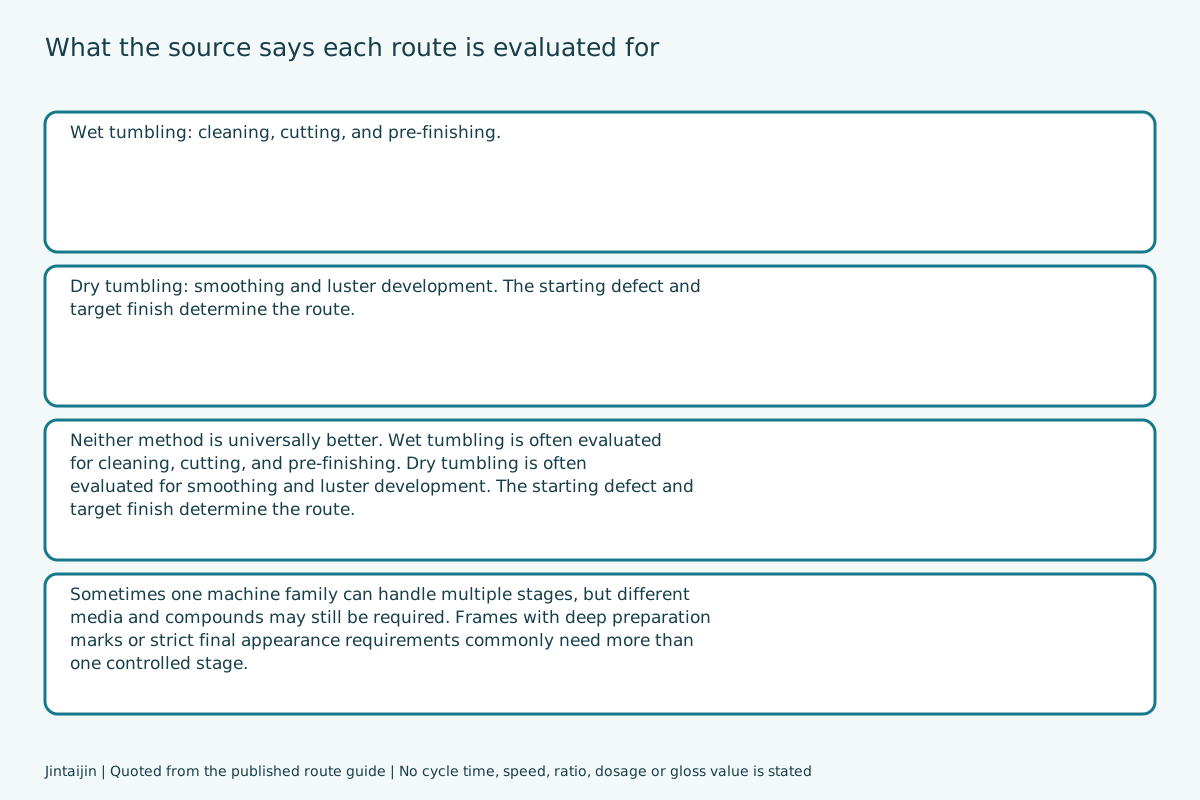
| Wet tumbling | cleaning, cutting, and pre-finishing. | 41 |
| Dry tumbling | smoothing and luster development. The starting defect and target finish determine the route. | 41 |
Neither method is universally better. Wet tumbling is often evaluated for cleaning, cutting, and pre-finishing. Dry tumbling is often evaluated for smoothing and luster development. The starting defect and target finish determine the route.
Sometimes one machine family can handle multiple stages, but different media and compounds may still be required. Frames with deep preparation marks or strict final appearance requirements commonly need more than one controlled stage.
The result comes from the complete recipe and the starting surface. Wet processing may prepare a consistent surface for a later dry polishing stage. A carefully developed dry process may deliver the final luster. The correct sequence must be selected from the defect that needs to be removed and the finish that must be protected.
The selection conditions, as quoted
| Where it appears | Quoted text |
|---|---|
| Source paragraph 7 | when the process needs rinsing, controlled cutting, cleaning, or heat removal. Use |
| Source paragraph 8 | when the target is a smooth, clear, polished appearance without a water-based finishing stage. Many production routes use both, but the order and recipe must be proven with representative frames. |
Each line is one source paragraph. Nothing is reworded or joined.
Quality risks the guide names
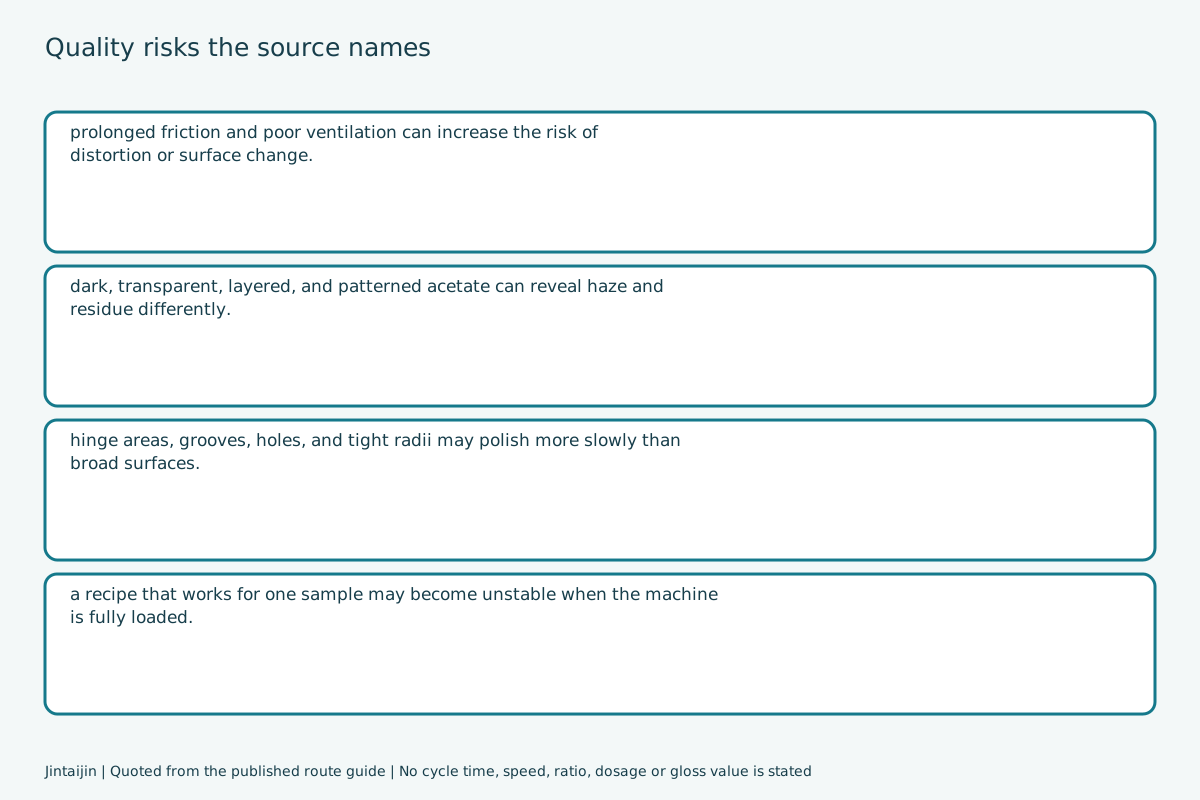
- prolonged friction and poor ventilation can increase the risk of distortion or surface change.
- dark, transparent, layered, and patterned acetate can reveal haze and residue differently.
- hinge areas, grooves, holes, and tight radii may polish more slowly than broad surfaces.
- a recipe that works for one sample may become unstable when the machine is fully loaded.
- Measure holes, grooves, hinge recesses, rim channels, and the spacing between frame features. Media that can enter a feature but cannot move freely may lodge or leave an uneven finish. Media that is too large may polish only broad surfaces and miss tight areas.
- Use enough media to cushion the frames, reduce the number of parts per batch, keep the media clean, remove trapped debris, and confirm that the machine motion does not cause frames to stack or interlock.
- There is no reliable universal time. Inspect at short, documented intervals during development. Stop when the target defect is removed or the required appearance is reached, before edges, dimensions, or temperature move outside the acceptance limit.
How the guide says to handle defects
- Separate cutting marks, gate marks, scratches, haze, residue, and geometry defects. Do not expect one tumbling stage to correct every condition.
- Severe gate marks, deep defects, and critical edges may require controlled machining, filing, sanding, or another preparation step before mass finishing.
What a trial should produce
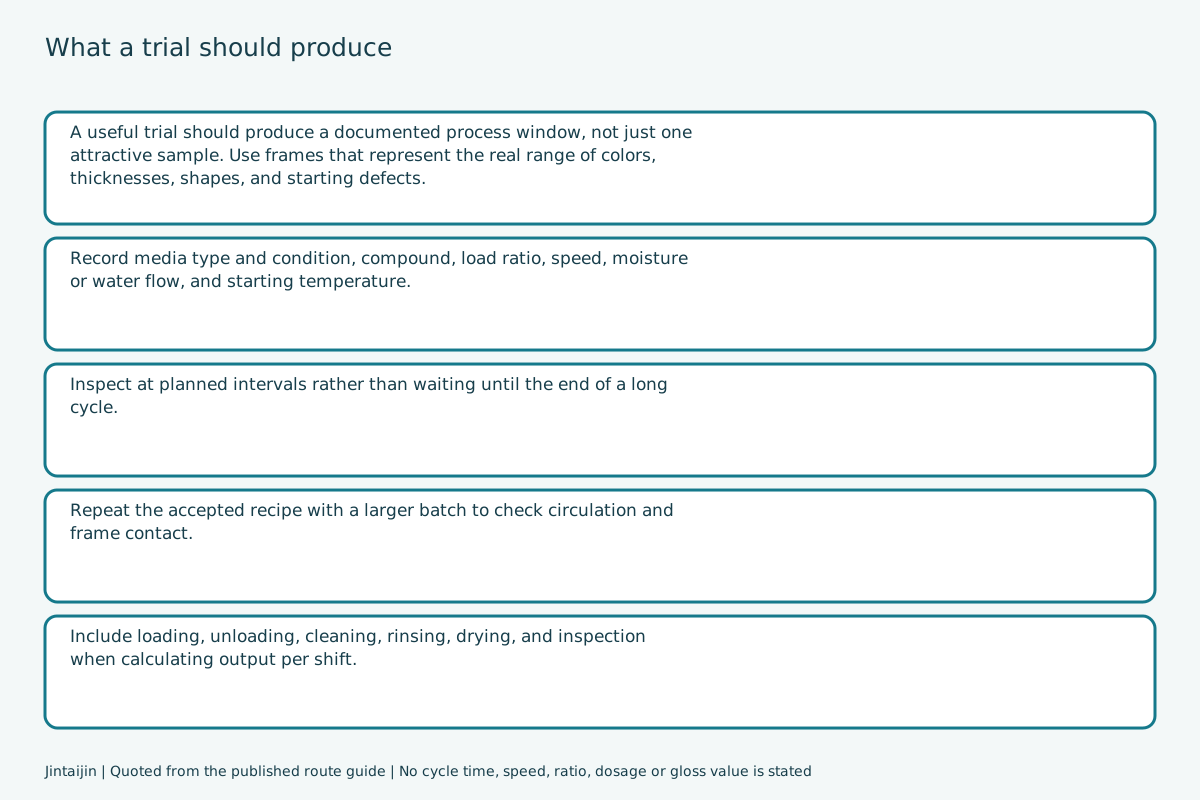
- A useful trial should produce a documented process window, not just one attractive sample. Use frames that represent the real range of colors, thicknesses, shapes, and starting defects.
- Record media type and condition, compound, load ratio, speed, moisture or water flow, and starting temperature.
- Inspect at planned intervals rather than waiting until the end of a long cycle.
- Repeat the accepted recipe with a larger batch to check circulation and frame contact.
- Include loading, unloading, cleaning, rinsing, drying, and inspection when calculating output per shift.
Source and its limits
Published acetate route guide; captured 5 October 2026. SHA256: 17529d7e1a69a37c503a69a7d1f79d67bfdf55ffa0aefcd2e74b760c0deb3f49.
- No cycle time, rotational speed, media-to-parts ratio, compound dosage, temperature limit, gloss value or throughput is stated or implied.
- This page does not select a route. It reproduces the conditions the source names and the questions to answer first.
- The source states there is no reliable universal time and that final selection should follow a sample test.
Every quoted line is a single source paragraph. The route labels are the source's own; this page does not rank them.
Frequently asked questions
Does this page tell me which route to use?
No. It reproduces the conditions the guide names for each route and the questions to answer first. The guide itself states that neither method is universally better and that final selection should follow a sample test.
What cycle time or compound dosage does it give?
None. No cycle time, rotational speed, media-to-parts ratio, compound dosage, temperature limit, gloss value or throughput is stated or implied anywhere on this page or in its download.
Why are some lines only fragments?
The source splits a condition across two paragraphs in the original page. Each paragraph is quoted as it appears rather than being joined into a new sentence.
What does the guide say about wet and dry together?
It states that many production routes use both, that wet processing may prepare a consistent surface for a later dry polishing stage, and that one machine family can handle multiple stages while still needing different media and compounds.
Can I use this to approve a recipe?
No. The guide states there is no reliable universal time, that cycle time, speed, ratio and dosage cannot be copied from another factory, and that selection should follow a sample test on representative frames.
 +86-592-2381506

 IPv6 network supported