A column-cover fabricator in Atlanta, United States for architectural metalwork handles 6 m lengths of 168 mm stainless tube at 3 mm wall and needs an even finish on the visible half without losing roundness or denting the wall in handling. SurfacePolish supplies finishing machines, media and compounds across borders and runs a free sample trial on cut sections and one full length shipped to Xiamen. This brief is written for a buyer in Atlanta working on architectural metalwork; it describes equipment, media and a scoped sample review, not a local polishing service.
Will the finish be judged by a roughness number, by a physical reference panel, or by both, and who views the parts before they are accepted?
Which wall thickness and section shape in the order is most likely to distort, and what fixture, cradle or support will protect it?
What is the longest length in the order, and how will it be supported, carried and packed at every stage between finishing, fabrication and installation?
Not every face of a profile deserves the same effort. On a wall-mounted handrail the top and the outward face are read from standing height and from an angle, while the underside and the face against the wall are largely out of view. On a cladding mullion the sun-facing plane carries the reflection and the returns do not. Build a simple exposure map: which face, viewed from where, under what light, at what distance. That map settles where the tighter finish is specified and where a coarser one is honest. It also prevents over-finishing hidden faces, which costs cycle time and raises the risk of distortion on thin sections, and it tells the finishing supplier which face must be protected in every rack and stillage.
Inside whichever machine is chosen, the fixture or the load arrangement decides whether thin sections survive. A thin-wall rectangular profile will flatten under its own weight in a deep bed, and two loose lengths finished together will nibble each other along the contact line. Practical measures are cradles that follow the profile, dividers or compartments that keep parts apart, end caps or plugs for open tube ends, and clip-on carriers that present the visible face to the media evenly. The fixture also fixes the finish: a part that rotates freely receives an inconsistent texture, while a part held at a controlled orientation receives a directional one. Build the fixture around the longest and thinnest part in the order, not the average one.
| Machine route | Where it fits | What it will not do |
|---|---|---|
| Grinding finishing machine | Higher material removal where a mill seam, a joint weld or a deep scratch has to be cut back before surface refinement. | Removal is aggressive, so depth control and wall thickness limits have to be set before the cycle is run. |
| Magnetic finishing machine | Small precise parts and localised areas that are difficult to reach with loose media in a conventional chamber. | Size and mass limits keep it away from architectural lengths and large diameter profiles. |
| Barrel finishing machine, rotary barrel tumbling | Gentle, precise batch processing of small parts, finials, sleeves and short connector pieces. | Part length and part-on-part contact restrict it to short fittings rather than long architectural runs. |
| Disc finishing machine | Fast, high-energy cycles for small to medium fittings and hardware where a short cycle is the priority. | The high energy that makes it fast will distort, mark or bend thin and long parts. |
Ceramic media cuts harder, holds its shape longer and is the usual choice when a previous scratch or a weld seam has to be removed from stainless. Plastic media is gentler, lighter and less likely to mark a thin or soft section, at the cost of a slower cut and a shorter texture. Steel media produces a bright appearance and strongly linear marks, but it is heavy, it needs well-controlled compound to keep it clean and separated, and it raises a question about whether any iron-bearing debris is acceptable in the buyer's own cleanliness or contamination control. That last point is a requirement for the buyer to define and verify, and it is not something a supplier can decide on their behalf.
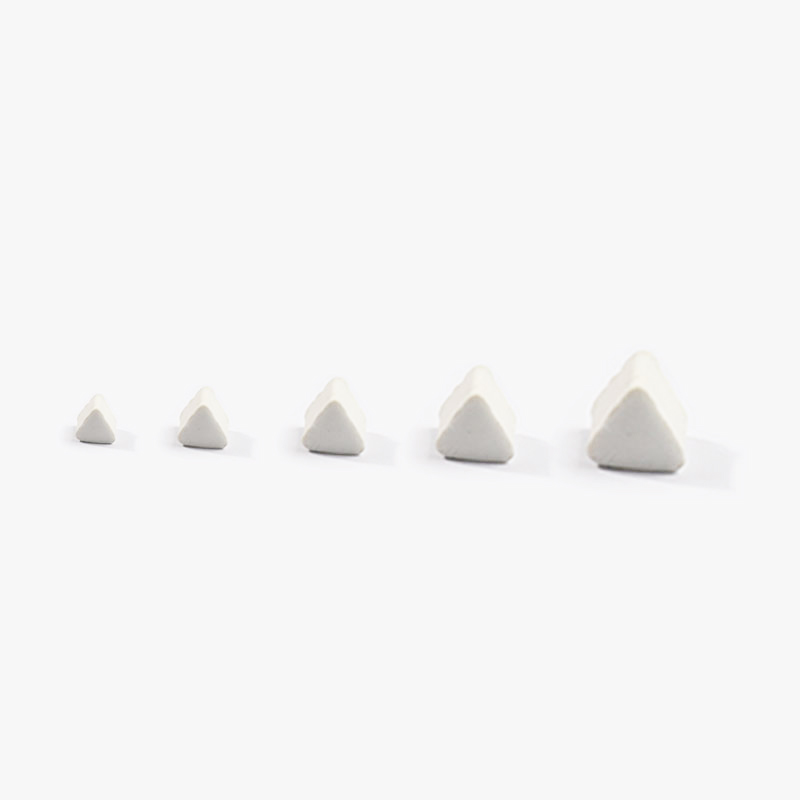
| Media | Best fit | Watch out for |
|---|---|---|
| Ceramic media, spheres and balls | General deburring and edge work on cut ends, brackets and small fittings in the same order as the long runs. | Produces overlapping crater-like marks that work against a linear brushed appearance and can peen a thin wall. |
| Plastic media, cylindrical | Light surface refinement on thin rectangular sections where holding the shape matters more than cutting power. | Little cut power, and the size class changes quickly as the media wears, which shifts the texture pitch over a run. |
| Grinding media, alumina-based | Higher material removal where a mill seam, a joint weld or a deep transit scratch has to be cut back before refining. | Aggressive on thin wall, can over-round edges and change cross-section geometry, and needs tight depth control. |
| Ceramic media, cylinders and other elongated shapes | Linear, directional refinement of the visible faces of round and rectangular profiles after the seam has been cut back. | Flat sides and ends mark differently, and the length-to-diameter ratio limits how far the media reaches into a shallow cove. |
Open tube ends, slotted channels and drilled fixings all collect media, swarf and compound. The failure is rarely visible at the end of the cycle; it shows up after the part is installed, when compound weeps from a bore onto a visible face or when a trapped particle works loose during handling and scratches an adjacent length. Treat removal as a designed step rather than a rinse: plug or cap what should never see media, count media in and out of each batch, and agree how the interior of a sample length will be checked, using an endoscope or an internal swab where the bore matters. Ask what the drying step after a wet process does for a closed section, because a hollow part that stays wet inside is a delayed defect.
| Failure mode | Likely cause | How to catch it |
|---|---|---|
| Bow along the length | Unsupported part in the bed, resting on hard supports, or lengths stacked while still wet. | Place on a surface plate or straight reference and measure the gap with a feeler gauge at several stations, against the incoming straightness record. |
| Loss of ovality or out-of-round section | A load applied across the wall during the cycle or while the part sits in a rack. | Measure the diameter across two axes at several stations along the length with a caliper or micrometer. |
| Hazy or milky patch with a dull reflection | Uneven cut, worn media in part of the chamber, or weak compound flow at the far end of a long tub. | Compare the near end and the far end of the same length, and check compound concentration and fluid flow at both ends of the chamber. |
| Shade change or discolouration at a welded area | The heat-affected zone responds differently to the same media and compound cycle than the parent metal. | Compare the area with adjacent metal under the agreed light and distance, and photograph it with a scale alongside the retained reference. |
Atlanta's industrial base combines transportation and logistics head offices with aerospace, defence and specialty metal fabrication, plus food and beverage production and a large academic medical centre. The Federal Reserve's Sixth District Beige Book, which covers Georgia, reports manufacturing activity growing at a moderate pace, with a fabricator of specialty metal products seeing particularly strong demand for aerospace and defence-related goods and a military shipbuilder expecting a decade of defence-driven demand. Hartsfield/Jackson Atlanta International tops the FAA's final CY2025 enplanement table, and CBP lists Atlanta, Georgia (port 1704) as a port of entry with its field office in the city. The Coca-Cola Company's own history page records the drink's first serving in downtown Atlanta in 1886, Norfolk Southern's corporate address is 650 W. Peachtree Street NW in Atlanta, and Emory University, based in the city, presents health and medical research as central to its mission.
The nearest part of that base to this brief is machinery: The same Beige Book reports manufacturing growing at a moderate pace in the Sixth District, with advanced manufacturers reporting consistent volumes and sustained pricing power.
Aerospace, defence and general machinery fabrication in the Atlanta region produces machined and formed metal parts whose burrs and edge condition affect fatigue life, coating adhesion and assembly fit, so edge blending and surface preparation before priming, anodising or plating are routine process steps. Fabricated sheet-metal and tube assemblies typically need weld dressing and edge radiusing, while food and beverage equipment adds a hygiene requirement: stainless product-contact parts are usually finished to a cleanable, pit-free surface with controlled roughness rather than to a decorative polish.
The first decision is whether the part is governed by an aerospace or defence special-process requirement (for example NADCAP-approved passivation, anodising or painting) or by a general industrial finish, because that sets the acceptable media, compound chemistry and documentation package. Confirming the inspection method for edge radius, Ra and burr limits before any media trial avoids qualifying a finish against the wrong criterion.
Freight context: Hartsfield/Jackson Atlanta International Airport (ATL), Atlanta, Georgia (CBP port of entry 1704 with the Atlanta field office), Norfolk Southern rail network, corporate headquarters at 650 W. Peachtree Street NW, Atlanta. FAA final CY2025 enplanement data rank Hartsfield/Jackson Atlanta International first in the country with 51,459,786 boardings, and CBP's Georgia table lists Atlanta, Georgia (1704) with the field office in the city; Norfolk Southern's published corporate address is 650 W. Peachtree Street NW, Atlanta, Georgia 30308. Metro Atlanta has no seaport, so containerised machines from China normally land at a US East or Gulf coast port and reach Atlanta by rail or truck, with air consignments and sample parts clearing at the Atlanta port of entry.
The United States has no free-trade agreement with China, so Chinese industrial machinery enters under normal-trade-relations (MFN) duty rates in the Harmonized Tariff Schedule of the United States plus any Section 301 duty that applies to the specific HTSUS subheading. USTR's four-year-review modification of the Section 301 China technology-transfer investigation imposed additional Section 301 duties or increased existing rates on certain Chinese products in strategic sectors, and created a temporary exclusion process for machinery used in domestic manufacturing: chapters 84 and 85 of the HTSUS, which cover most machinery used in manufacturing processes, are the chapters that were made eligible for exclusion requests. CBP still administers Section 301 China duties, the four-year-review increases and product exclusions. The IEEPA-based additional ad valorem duties of 2025 - including the reciprocal-tariff actions and the China synthetic-opioid supply-chain duties imposed under Executive Orders 14195 and 14257 - were ordered terminated by Executive Order 14389 of 20 February 2026 and, as soon as practicable, are no longer collected. A buyer should therefore price the MFN rate plus any applicable Section 301 rate and check whether the machine's exact subheading is covered by a current exclusion, rather than assuming either the 2025 IEEPA tariffs or a blanket China rate still applies.
Business is conducted in US English. Units matter: US drawings and purchase orders frequently use inches, microinch Ra and US gallons, and a supplier that quotes only metric can be asked to reissue documentation. Buyers are US legal entities with an EIN and expect an identifiable contracting entity, a correct HTSUS classification, a commercial invoice, packing list and bill of lading, country-of-origin marking, and an importer of record for customs. Procurement is normally evidence-driven: process selection is expected to be justified by a trial run on the buyer's own sample parts with measured results (burr height, edge radius, Ra, cleanliness) and by media and compound data sheets, rather than by a capability claim. Payment terms in general US industrial practice are open account with net-30 to net-60 terms for established buyers, with letters of credit or advance payment more common for a first order from a new overseas supplier; no US buyer assumes Incoterms, warranty terms or spare-parts lead times unless they are stated in the quotation.
SurfacePolish supplies from Xiamen, China. The buyer's own destination rules, conformity marking, tariff classification and documentation responsibilities stay with the buyer; confirm them against the authorities named above before ordering.
A roughness reading on tube has to be taken with the same care as one on a flat coupon, and usually more. State the location by distance from a reference end, the traverse direction relative to the grain, and the cut-off and evaluation length, and keep them the same for the first article and for production checks. Along the grain and across the grain give different values on the same surface, so a reading that does not say which direction it was taken in cannot be compared with anything. Curvature limits how a skid or a shoe can sit on the surface, particularly on small-diameter tube, and a reading taken with a poorly seated pickup is not evidence. Repeat the measurement at several stations along the length, because the ends of a part often differ from the middle.
The trial result is only meaningful against a documented starting point. Photograph each sample under fixed lighting with a scale in frame, note the direction of the incoming texture, and take roughness readings at marked stations with the traverse direction recorded. Note the incoming straightness with the sample on a reference surface, the edge condition at cut ends, and any existing weld, scratch or discolouration. Keep one piece unprocessed as the baseline. When the trial parts come back, the comparison is between the returned parts and these records, not against memory. This is also how a buyer distinguishes a change made by the process from a feature that was present in the material when it arrived.
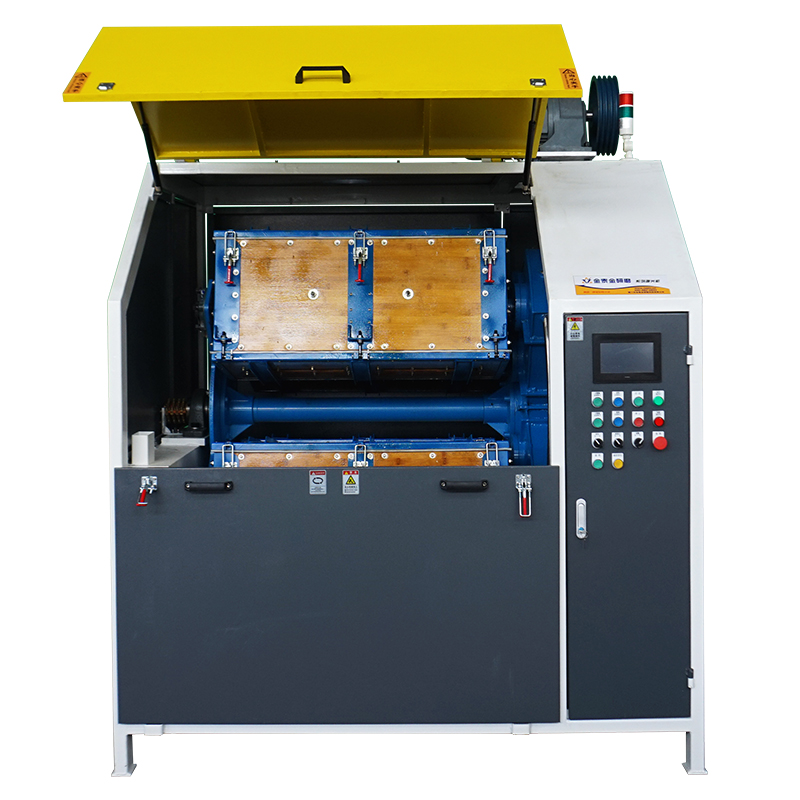

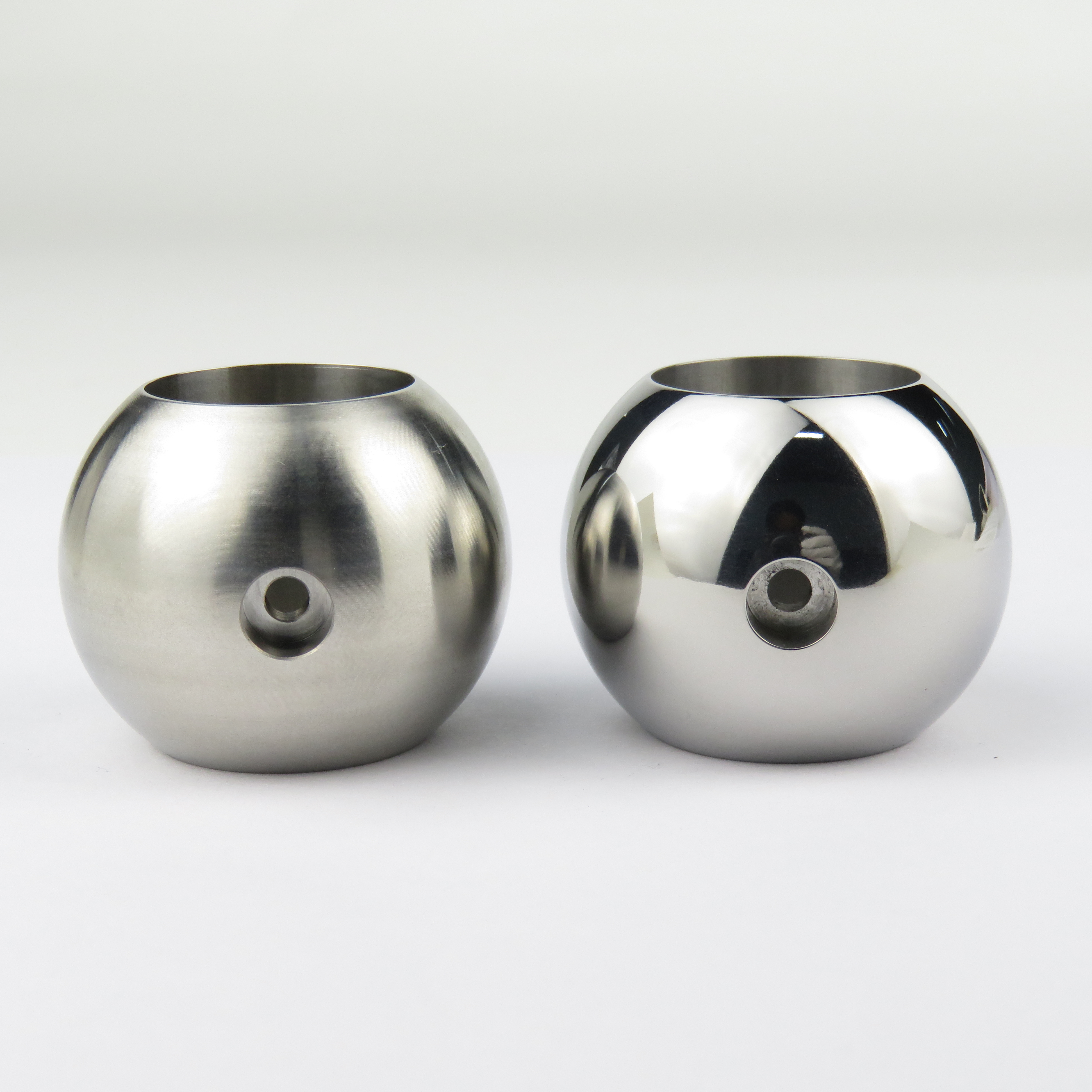
Length is a handling question before it is a finishing question. Long architectural sections are run in a tub or on a dedicated longitudinal arrangement rather than a round bowl, and the practical limit depends on the chamber length, the supports available and how the length is packed for shipping. For a trial, send cut sections from the production material and one full-length piece where bend or end effects could matter, so the arrangement is chosen against the real part rather than an average. Parts travel to our factory in Xiamen, and we do not process anything in United States or Atlanta.
No. A sample trial produces observations on the parts that were tested under the settings used; it is not a guarantee of a roughness value, a surface class, an appearance or a repeatable production result. Media wear, compound concentration and the condition of incoming material all move the finish over a run. What we can do is show what a given media, compound and cycle direction did to your part, and describe what would need to be controlled to hold that result. Acceptance criteria and any promise made to a client or specifier remain your own.
No. SurfacePolish is a cross-border supplier of finishing machines, media and compounds, and runs a free sample trial on parts the buyer sends. The tube, pipe and profiles remain the buyer's own material from their own mill or stockholder, and we do not verify its grade, mill certificate or corrosion performance. Keeping those roles separate matters, because the appearance a finishing line can reach is limited by the incoming material: its alloy, its hardness, its existing grain and the condition it arrives in. Send material from the actual delivery rather than a hand-picked offcut.
Use Atlanta, United States as the destination on the enquiry and state whether the deliverable is equipment, media and compound, a representative sample review or a line concept. A destination does not imply local stock, a local service point or a local delivery time.
Buyers in this supply chain commonly reference AS9100 and NADCAP-approved special processes for aerospace work, with SAE AMS process specifications such as AMS 2700 for passivation named on the certificate, while general industrial and food-equipment parts are specified to ASME B46.1 or ISO 4287 for texture with the customer's chosen salt-spray, adhesion or cleanliness test for coatings and hygiene.
Sources were retrieved on 2026-09-29 and describe the local industrial and trade context only. They do not evidence any SurfacePolish project, shipment, installation or service in Atlanta.
The visible half needs an even finish while the roundness and the wall are held through every handling step.
Send the material, dimensions, approximate weight, batch quantity, the incoming condition and photographs of the difficult features. Mark which features must not be contacted by media and state how the result will be inspected. This form carries source reference PSEO-0077; quote it if you prefer an additional manual reference.
Open the SurfacePolish enquiry form Email a prepared enquiry
No price, lead time, certification or result is promised here. Confirm whether a sample trial is available for the specific part and what the trial can and cannot show.
Page PSEO-0077 · revised 2026-09-29 · cross-border equipment, media and scoped sample review. City context is sourced and cited above.
Use this local checker to identify missing part and inspection information. It prepares a technical-review brief; it does not approve a machine, process recipe or production result.
Complete the part details to prepare a review brief.
Email : info@surface-polish.com


 IPv6 network supported


 +86-592-2381506
