A fabricator in Boston, United States working on architectural metalwork needs an even satin grain along 5.8 m of 316 stainless handrail tube, 42.4 mm diameter at 2.0 mm wall, without bowing the thin wall or marking the face seen from above. SurfacePolish supplies finishing machines, media and compounds across borders and runs a free sample trial on parts shipped to Xiamen. This brief is written for a buyer in Boston working on architectural metalwork; it describes equipment, media and a scoped sample review, not a local polishing service.
What is the longest length in the order, and how will it be supported, carried and packed at every stage between finishing, fabrication and installation?
Which faces of each profile are actually seen when installed, from what distance and under what light, and which faces can be finished to a coarser standard without it showing?
Will the finish be judged by a roughness number, by a physical reference panel, or by both, and who views the parts before they are accepted?
The surface you receive already carries a direction of texture from the mill, from a prior brush line or from a fabricator's earlier pass. Finishing can change the amplitude and the scale of that texture and can impose a new direction, but erasing a deep existing grain means removing real wall thickness, which is rarely acceptable on a visible architectural profile. Note the direction of the incoming texture along the length, its pitch, and whether the tube is bright annealed, pickled or mill finish. A pickled or matte mill surface hides small process variation that a bright surface reveals immediately. Send the worst-looking incoming length rather than the best one, because the finish a line has to hold is set by the roughest material that regularly arrives, not by the sample kept aside as a reference.
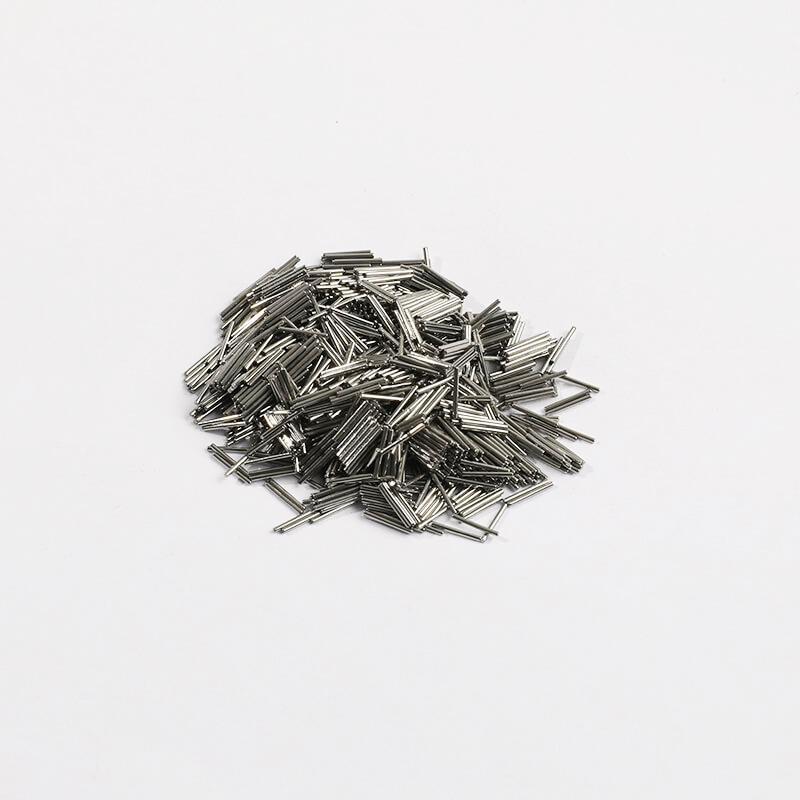
Ceramic media cuts harder, holds its shape longer and is the usual choice when a previous scratch or a weld seam has to be removed from stainless. Plastic media is gentler, lighter and less likely to mark a thin or soft section, at the cost of a slower cut and a shorter texture. Steel media produces a bright appearance and strongly linear marks, but it is heavy, it needs well-controlled compound to keep it clean and separated, and it raises a question about whether any iron-bearing debris is acceptable in the buyer's own cleanliness or contamination control. That last point is a requirement for the buyer to define and verify, and it is not something a supplier can decide on their behalf.
| Media | Best fit | Watch out for |
|---|---|---|
| Ceramic media, spheres and balls | General deburring and edge work on cut ends, brackets and small fittings in the same order as the long runs. | Produces overlapping crater-like marks that work against a linear brushed appearance and can peen a thin wall. |
| Ceramic media, cylinders and other elongated shapes | Linear, directional refinement of the visible faces of round and rectangular profiles after the seam has been cut back. | Flat sides and ends mark differently, and the length-to-diameter ratio limits how far the media reaches into a shallow cove. |
| Steel media, pins and balls | Bright, strongly linear appearance on stainless where a higher-lustre finish is wanted on accessible faces. | Heavy, needs tight compound control to stay clean and separated, and any iron-bearing debris is a contamination question the buyer has to define and verify. |
| Dry media, walnut shell and corn cob | Dry polishing and support for post-wet drying, particularly where a hollow section must not stay wet or carry residue inside. | Low cutting power, and dust generation and media separation need managing in the surrounding area. |
A balustrade or handrail job is never only long runs. It also contains cut-to-length spindles, elbows, brackets, base plates, ball finials and short connector sleeves, often in the same alloy and finish. Those parts are a poor fit for a longitudinal arrangement and a good fit for batch equipment, where a large number of small identical parts can be processed together with controlled part-on-part contact. Treating the two populations as one route is a common planning error: the runs are under-processed because the settings were chosen for the fittings, or the fittings are over-worked and lose their edges. Screen the order into long runs and small fittings, then specify the media class separately for each, even where the final appearance has to read the same.
| Machine route | Where it fits | What it will not do |
|---|---|---|
| Magnetic finishing machine | Small precise parts and localised areas that are difficult to reach with loose media in a conventional chamber. | Size and mass limits keep it away from architectural lengths and large diameter profiles. |
| Barrel finishing machine, rotary barrel tumbling | Gentle, precise batch processing of small parts, finials, sleeves and short connector pieces. | Part length and part-on-part contact restrict it to short fittings rather than long architectural runs. |
| Dry polishing machine and dryer | Post-wet drying and dry luster work, particularly where a hollow section must come out clean and dry inside. | Dry routes cut less than wet media, and dust control and media separation need planning. |
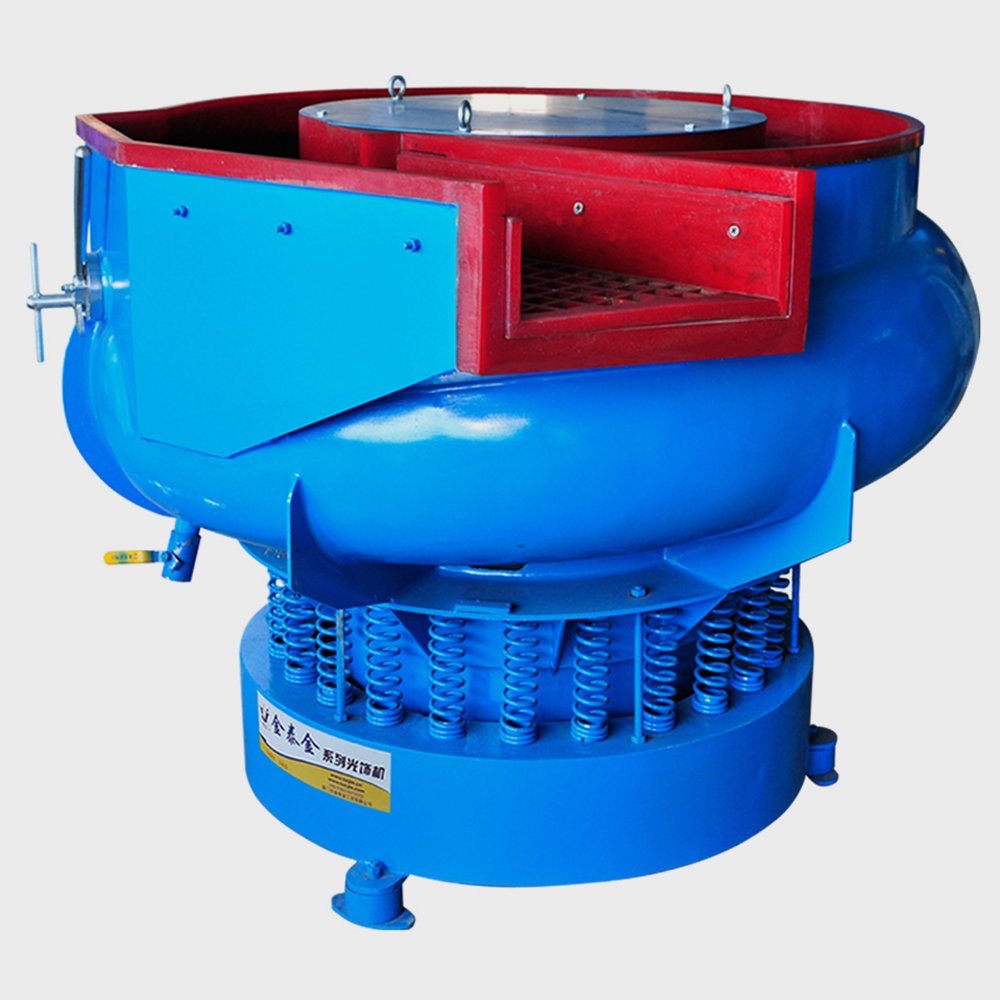
| Tub vibrator | Long and large parts such as architectural tube and profiles, where the process length has to extend along the part. | Bed depth and fixture design decide whether thin sections survive, and fluid flow has to be checked at the far end of the chamber. |
Two welds matter on architectural tube: the longitudinal mill seam left by the tube maker, and the circumferential weld a fabricator makes when a length is joined to a fitting or to another length. Dressing either one means removing metal, and the risk is always the same. Too little leaves a visible band that reads as a line down the elevation; too much thins the wall and can leave a flat spot or a heat-affected zone that later shows as a different shade. The workable approach is to establish how much of the seam crown is to be removed, check it on a sectioned sample or with a depth gauge, and confirm that the wall at the dressed area still meets the buyer's requirement. Dressing is not a polishing step; it is a controlled removal step.
| Failure mode | Likely cause | How to catch it |
|---|---|---|
| Bow along the length | Unsupported part in the bed, resting on hard supports, or lengths stacked while still wet. | Place on a surface plate or straight reference and measure the gap with a feeler gauge at several stations, against the incoming straightness record. |
| Loss of ovality or out-of-round section | A load applied across the wall during the cycle or while the part sits in a rack. | Measure the diameter across two axes at several stations along the length with a caliper or micrometer. |
| Orange peel mottling on the visible face | Over-working with a coarse medium, or excessive pressure on a soft or thin section, which deforms the surface rather than cutting it. | Reflect a straight edge or a linear light source in the surface, and take a roughness reading at the same spot to show the divergence between number and appearance. |
| Dents and part-on-part nibbling | Parts running loose together in the load, or a finished part contacting a bare support or another length. | Inspect the contact line between parts with side lighting, and run a straightedge over the damaged area to judge depth. |
Greater Boston's industrial base is weighted towards life sciences and advanced research and development rather than heavy manufacturing. MassBio, the Massachusetts Biotechnology Council, puts Massachusetts biopharma employment at 113,503 in 2025, a 3.1% contraction and the first annual decline in more than two decades of tracking, while biomanufacturing added 238 jobs. The Federal Reserve Bank of Boston documents scientific R&D as one of the state's fastest-growing activities up to mid-2023, with employment in scientific R&D establishments up 31% between January 2020 and July 2023, close to 50% faster than the national rate. The Federal Reserve's First District Beige Book reports manufacturing activity and revenues up slightly in recent months, with at least one manufacturer raising capital spending on automation because of labour scarcity. Boston is also a federal port of entry: CBP's Massachusetts table lists Boston (0401) and Logan Airport (0417) in the same field office district.
The nearest part of that base to this brief is automation: The same Beige Book reports capital expenditures rising slightly overall, with one contact noting higher spending on automation in response to labour scarcity.
Biomanufacturing and medical-device production around Boston drives demand for burr-free, cleanable stainless and alloy parts: machined manifolds, pump and valve bodies, fittings, instrument housings and surgical-instrument components are usually specified with controlled edge radii and a defined surface finish before passivation or other customer-qualified final cleaning. Because much of the local base is R&D and pilot-scale rather than long-run production, the recurring need is a repeatable finish on small and medium lots, not a dedicated high-volume line, and the acceptance test is often a cleanliness or residue check rather than a visual one.
A Boston-area buyer should settle the cleanliness and residue specification first (which extraction, particle or TOC test the customer will run) together with the edge-break callouts, because those decide whether mass finishing is acceptable at all or whether the part has to stay with a controlled hand or disc process. For pilot and clinical lots the practical question is whether the supplier can reproduce the validated finish on a few hundred parts, not just demonstrate it on a sample.
Freight context: Boston, Massachusetts (CBP port of entry 0401), Logan International Airport / Logan Airport (CBP port of entry 0417; airport code BOS). FAA final CY2025 enplanement data list Boston's General Edward Lawrence Logan International with 21,021,153 boardings, and CBP's Massachusetts table lists Boston (0401) and Logan Airport (0417) under a Boston field office, so both the seaport district and the airport can process customs entries. Containerised finishing machines from China would normally arrive at a large East Coast container port and move inland by truck or rail, while air consignments such as sample parts clear at Logan (0417) or another East Coast gateway.
The United States has no single mandatory national finishing standard. The national standards system is voluntary and consensus-based, coordinated at national level by the American National Standards Institute (ANSI): ANSI published the United States Standards Strategy (USSS) 2025 on 6 January 2026, a strategy that 'guides how the U.S. develops standards and participates in international standardization', while the National Institute of Standards and Technology (NIST) is the federal measurement and standards agency and states that 'Technical standards keep us safe, enable technology to advance, and help businesses succeed.' In practice a buyer specifies surface finish, deburring, cleaning and coating requirements on the drawing or in the purchase order using the voluntary consensus standards maintained by bodies such as ASME and ASTM International and their ISO equivalents, and the acceptance criterion is the buyer's own specification rather than a government-issued finishing standard. Where a part is destined for a regulated product - pressure equipment, food-contact equipment, aerospace or medical devices - the relevant industry code or the customer's qualification requirement governs instead.
Business is conducted in US English. Units matter: US drawings and purchase orders frequently use inches, microinch Ra and US gallons, and a supplier that quotes only metric can be asked to reissue documentation. Buyers are US legal entities with an EIN and expect an identifiable contracting entity, a correct HTSUS classification, a commercial invoice, packing list and bill of lading, country-of-origin marking, and an importer of record for customs. Procurement is normally evidence-driven: process selection is expected to be justified by a trial run on the buyer's own sample parts with measured results (burr height, edge radius, Ra, cleanliness) and by media and compound data sheets, rather than by a capability claim. Payment terms in general US industrial practice are open account with net-30 to net-60 terms for established buyers, with letters of credit or advance payment more common for a first order from a new overseas supplier; no US buyer assumes Incoterms, warranty terms or spare-parts lead times unless they are stated in the quotation.
SurfacePolish supplies from Xiamen, China. The buyer's own destination rules, conformity marking, tariff classification and documentation responsibilities stay with the buyer; confirm them against the authorities named above before ordering.
Grain direction is the most common reason a set of individually acceptable lengths is rejected as an assembly. Where two lengths butt at a joint, their texture direction has to run the same way, and the pitch and brightness have to be close enough that the joint does not read as a line. That is a planning decision made before the lengths are run, not a sorting decision made afterwards: define the grain direction on the drawing, mark the direction on every length, and keep the orientation through fabrication and despatch. Then inspect the lengths laid end to end as they will be installed, under the agreed light, rather than one at a time on a bench. A direction reversal that is obvious in an assembly can be invisible in a single part.
If two media classes or two cycle settings are being compared, run them on adjacent cut sections from the same original length so the only difference is the variable under test. Keep the position in the load and the cycle length the same where possible, label the pieces before they are run, and have the returned parts judged together in one session under the agreed light rather than one at a time as they arrive. Where several people are judging, ask each to rank the pieces before discussing them, so the strongest opinion does not set the answer. A handful of sections can compare two settings; what cannot be compared is one section from a trial run one week against another run later under different conditions.

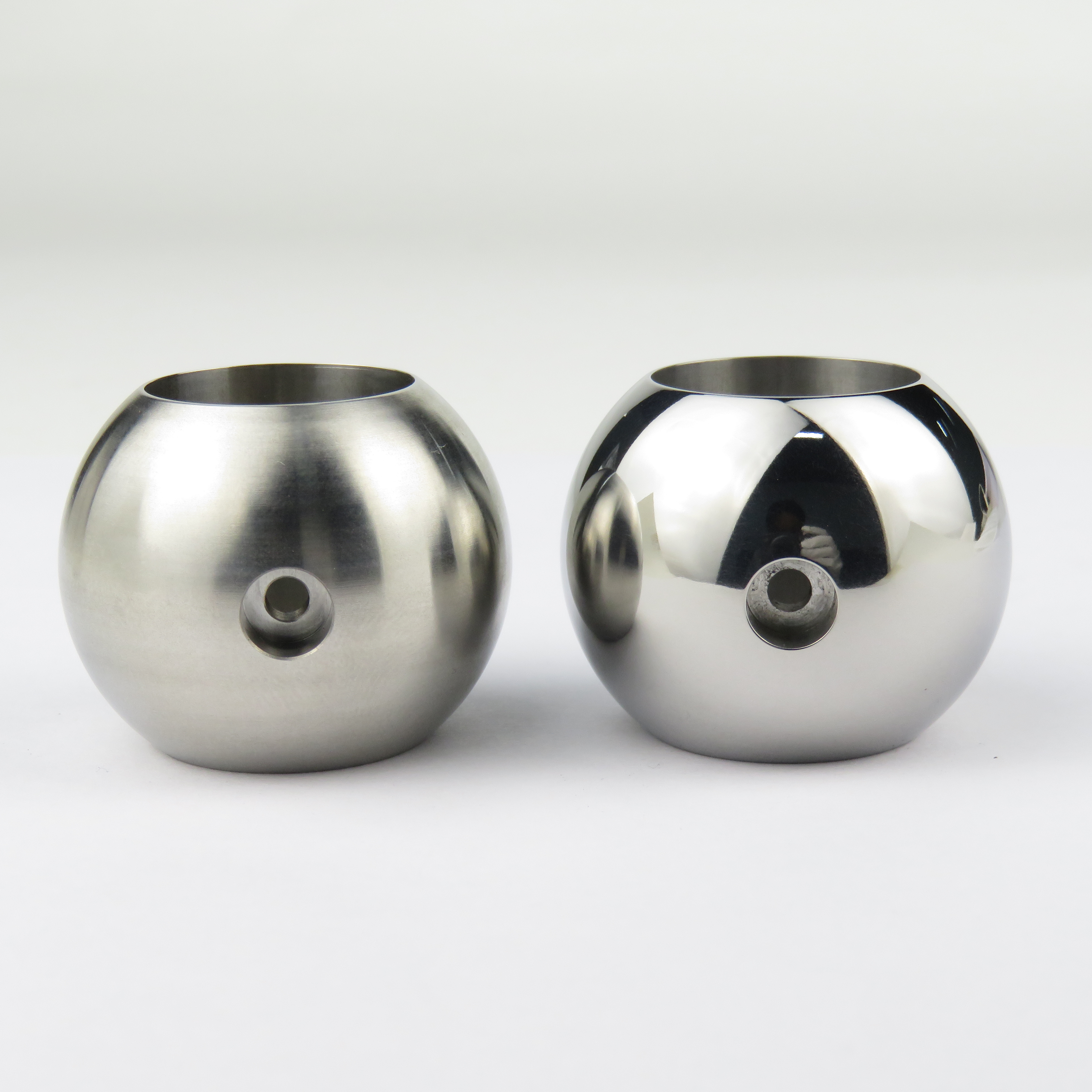
No. SurfacePolish does not supply or carry out electropolishing. Where electrochemical treatment is part of the buyer's requirement, we treat it as a comparison point and as a reason to look at what a mechanical route can achieve on the same part, and we can discuss media, compound and machine options for that mechanical route. A mechanical finish should not be presented as equivalent to an electropolished surface, and the choice between the two, together with any specification that depends on it, belongs to the buyer's own engineering decision.
No. SurfacePolish is a cross-border supplier of finishing machines, media and compounds, and runs a free sample trial on parts the buyer sends. The tube, pipe and profiles remain the buyer's own material from their own mill or stockholder, and we do not verify its grade, mill certificate or corrosion performance. Keeping those roles separate matters, because the appearance a finishing line can reach is limited by the incoming material: its alloy, its hardness, its existing grain and the condition it arrives in. Send material from the actual delivery rather than a hand-picked offcut.
Lay the lengths end to end as they will be installed, under the light and at the distance agreed for acceptance, and look along the run rather than at each piece separately. A direction reversal or a change in texture pitch that is invisible on a single length usually shows immediately at the joint. The planning side matters more than the inspection: mark the grain direction on every length and keep the orientation through fabrication, packing and despatch. Where the finished parts come from different batches, compare each against the retained reference panel under the same conditions.
Use Boston, United States as the destination on the enquiry and state whether the deliverable is equipment, media and compound, a representative sample review or a line concept. A destination does not imply local stock, a local service point or a local delivery time.
Medical-device and biopharma buyers in Massachusetts typically reference FDA quality-system expectations (21 CFR 820) and ISO 13485, and bioprocessing hardware is commonly specified to ASME BPE surface-finish and roughness requirements; machined-part surface texture is called out to ASME B46.1 or ISO 4287, and residue or particle limits are normally defined by the customer's own cleaning-validation protocol rather than by a general finishing standard.
Sources were retrieved on 2026-09-29 and describe the local industrial and trade context only. They do not evidence any SurfacePolish project, shipment, installation or service in Boston.
The buyer needs an even satin grain along the whole length without bowing the thin wall or marking the face that will be seen from above.
Send the material, dimensions, approximate weight, batch quantity, the incoming condition and photographs of the difficult features. Mark which features must not be contacted by media and state how the result will be inspected. This form carries source reference PSEO-0067; quote it if you prefer an additional manual reference.
Open the SurfacePolish enquiry form Email a prepared enquiry
No price, lead time, certification or result is promised here. Confirm whether a sample trial is available for the specific part and what the trial can and cannot show.
Page PSEO-0067 · revised 2026-09-29 · cross-border equipment, media and scoped sample review. City context is sourced and cited above.
Use this local checker to identify missing part and inspection information. It prepares a technical-review brief; it does not approve a machine, process recipe or production result.
Complete the part details to prepare a review brief.
Email : info@surface-polish.com


 IPv6 network supported


 +86-592-2381506