A refurbishment contractor in Chennai, India adding to an architectural metalwork installation has new stainless handrail lengths that must sit beside tube already in service, where the original grain has weathered and dulled unevenly. SurfacePolish supplies finishing machines, media and compounds across borders and runs a free sample trial on removed sample sections shipped to Xiamen. This brief is written for a buyer in Chennai working on architectural metalwork; it describes equipment, media and a scoped sample review, not a local polishing service.
What texture direction is required, and how will that direction be preserved and compared across lengths that are finished in different lots?
Which faces of each profile are actually seen when installed, from what distance and under what light, and which faces can be finished to a coarser standard without it showing?
What is the longest length in the order, and how will it be supported, carried and packed at every stage between finishing, fabrication and installation?
Not every face of a profile deserves the same effort. On a wall-mounted handrail the top and the outward face are read from standing height and from an angle, while the underside and the face against the wall are largely out of view. On a cladding mullion the sun-facing plane carries the reflection and the returns do not. Build a simple exposure map: which face, viewed from where, under what light, at what distance. That map settles where the tighter finish is specified and where a coarser one is honest. It also prevents over-finishing hidden faces, which costs cycle time and raises the risk of distortion on thin sections, and it tells the finishing supplier which face must be protected in every rack and stillage.
When an order repeats the same profile in volume, an arrangement that moves either the part or the working heads along the length can hold direction better than any batch chamber. A roller or belt conveyor carrying the length past fixed heads, or a carriage moving heads along a stationary length, produces a texture whose direction is set by the machine axis rather than by media motion. That is what makes the grain on adjacent lengths line up. The trade-offs are floor space, changeover when the profile or the length changes, and the need for reliable support of thin sections over the full travel. It is a line concept to be scoped against a real order book rather than a catalogue item.
| Machine route | Where it fits | What it will not do |
|---|---|---|
| Barrel finishing machine, rotary barrel tumbling | Gentle, precise batch processing of small parts, finials, sleeves and short connector pieces. | Part length and part-on-part contact restrict it to short fittings rather than long architectural runs. |
| Dry polishing machine and dryer | Post-wet drying and dry luster work, particularly where a hollow section must come out clean and dry inside. | Dry routes cut less than wet media, and dust control and media separation need planning. |
| Magnetic finishing machine | Small precise parts and localised areas that are difficult to reach with loose media in a conventional chamber. | Size and mass limits keep it away from architectural lengths and large diameter profiles. |
| Disc finishing machine | Fast, high-energy cycles for small to medium fittings and hardware where a short cycle is the priority. | The high energy that makes it fast will distort, mark or bend thin and long parts. |
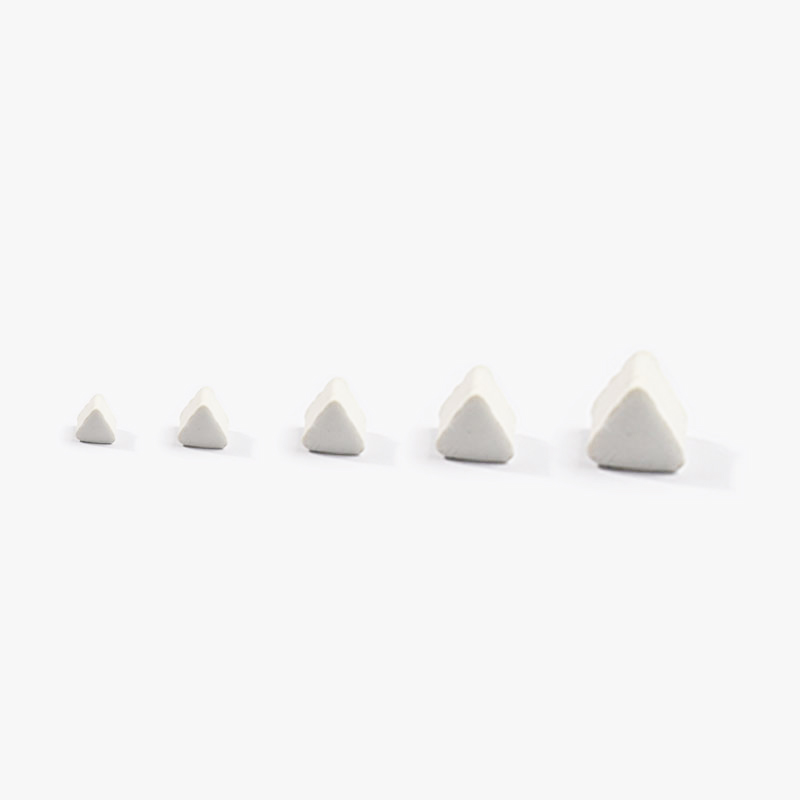
The shape of the working media sets the character of the surface as much as its size does. Spheres and other rounded shapes produce overlapping craters, which read as a soft, slightly dimpled surface and work against a linear brushed appearance. Angle-cut triangles, cylinders, cones and other elongated shapes strike along their axis and leave a more linear pattern, which is what architectural tube usually needs. Where a weld seam or a deep longitudinal scratch must be cut back, the aggressiveness comes from the contact geometry and the media mass rather than from extra speed. For a run that has to show a consistent direction, choose a shape class whose marks align with the intended grain direction, and then keep that class stable as the media wears.
| Media | Best fit | Watch out for |
|---|---|---|
| Dry media, walnut shell and corn cob | Dry polishing and support for post-wet drying, particularly where a hollow section must not stay wet or carry residue inside. | Low cutting power, and dust generation and media separation need managing in the surrounding area. |
| Ceramic media, angle-cut triangles | Heavier cutting and seam removal on stainless tube and profiles, where a directional linear texture on the visible face is wanted. | Wears down and changes effective size class, generates sludge, and can over-round thin sections or chip on sharp edges. |
| Grinding media, alumina-based | Higher material removal where a mill seam, a joint weld or a deep transit scratch has to be cut back before refining. | Aggressive on thin wall, can over-round edges and change cross-section geometry, and needs tight depth control. |
| Plastic media, cylindrical | Light surface refinement on thin rectangular sections where holding the shape matters more than cutting power. | Little cut power, and the size class changes quickly as the media wears, which shifts the texture pitch over a run. |
Straight scratches running along the length are the signature defect of tube finishing. They come from three places: the incoming coil or straightener, media or swarf dragged along the surface during the cycle, and the handling between operations, when a finished length slides over a steel support. The first cannot be removed without cutting back real wall, so it has to be identified before the cycle is set. The second is controlled by media cleanliness, compound filtration and keeping the bed free of tramp metal. The third is controlled by padded cradles and a rule that nothing finished ever touches bare metal. Detection is by raking light along the axis at a low angle; a scratch invisible under diffuse light can be the first thing an occupier sees on a sunlit elevation.
| Failure mode | Likely cause | How to catch it |
|---|---|---|
| Flat spot or thinning at a dressed weld | Too much material removed in one place while chasing the weld toe, usually with too coarse a medium or too much pressure. | Measure wall thickness with an ultrasonic gauge across the dressed area, and lay a straightedge over the joint to reveal a flat. |
| Loss of ovality or out-of-round section | A load applied across the wall during the cycle or while the part sits in a rack. | Measure the diameter across two axes at several stations along the length with a caliper or micrometer. |
| Longitudinal scratch running along the part axis | Incoming coil or straightener marks, media or swarf dragged along the surface during the cycle, or a finished length sliding over a bare support between operations. | View the surface under raking light at a low angle along the axis, compare the same station on several parts, and compare against the retained reference panel. |
| Hazy or milky patch with a dull reflection | Uneven cut, worn media in part of the chamber, or weak compound flow at the far end of a long tub. | Compare the near end and the far end of the same length, and check compound concentration and fluid flow at both ends of the chamber. |
Chennai is the industrial core of Tamil Nadu, a state that houses 110 industrial parks and estates, 45 Domestic Tariff Zones and over 42 operational Special Economic Zones, and is served by 4 international airports and 2 domestic airports (s1). The metropolitan belt is an automotive cluster: Tamil Nadu accounts for 35% of India's auto component production with more than 1,500 auto component factories, and Chennai appears as a named auto cluster alongside Thoothukudi, Madurai and Coimbatore (s2). Chennai is also a shipbuilding and marine hub, with Chennai, Thoothukudi and Cuddalore fostering shipyard clusters, dry docks and marine fabrication facilities anchored by Chennai Port and Kamarajar Port (s3). Heavy engineering value chains spanning pumps, valves, motors, fasteners and industrial machinery are concentrated in the Chennai-Tiruvallur cluster (s4), and life sciences manufacturing is anchored in a Chennai cluster including TICEL Biotech Park and Bioville park (s5).
The nearest part of that base to this brief is machinery: The Chennai-Tiruvallur cluster is one of the heavy engineering clusters that anchor value chains spanning pumps, valves, motors, fasteners and industrial machinery (s4).
Chennai's automotive and auto-component base runs high-volume machined and cast parts whose burrs, edge condition and surface roughness are inspected by OEM and tier-one customers, which makes deburring and consistent finish a throughput and quality problem rather than a craft operation. The shipbuilding, pumps/valves and biotech equipment segments add stainless and marine-alloy work where passivation, contamination control and cleanliness of product-contact surfaces matter as much as the cosmetic finish.
A Chennai buyer should settle the process window against the customer's drawing - required roughness and burr tolerance, alloy and heat-treatment condition, and whether the part is safety- or appearance-critical - because in an automotive or medical supply chain the finishing step has to hold a documented, repeatable result rather than merely look acceptable.
Freight context: Chennai Port, Kamarajar Port (Ennore), Chennai International Airport, Sriperumbudur / Oragadam industrial corridor. Chennai Port and Kamarajar Port at Ennore are the two port gateways inside the Chennai shipbuilding and industrial cluster, and the state's network includes 4 international airports and 2 domestic airports (s1, s3). Machines and sample parts therefore move by sea through Chennai/Ennore or by air through Chennai International Airport, with the automotive corridor at Sriperumbudur and Oragadam as the inland destination.
An Importer-Exporter Code (IEC) issued by DGFT is a key business identification number which is mandatory for exports or imports, and since the introduction of GST the IEC number is the same as the PAN of the firm (c6). The post-incorporation clearance list published by Invest India includes the IEC, a Customs- Special Valuation Branch reference and the grant of a Bureau of Indian Standards (BIS) licence, and it names the Central Board of Excise and Customs among the agencies in the framework (c10). The Foreign Trade Policy fixes the mandatory import documents as a bill of lading / airway bill / lorry receipt / railway receipt, a commercial invoice cum packing list and a bill of entry, with additional documents or NOCs possible for goods subject to product-specific compliance (c3); it also states that domestic laws, rules, orders, technical specifications and environmental, safety and health norms applicable to domestically produced goods apply mutatis mutandis to imports unless specifically exempted (c2), which is the basis on which a BIS quality-control order can bite on imported machinery. A landed-cost plan therefore needs the correct ITC(HS) classification and the basic customs duty and IGST that follow from it, plus the IEC, the bill of entry documentation and any BIS licence or registration obligation, and a related-party import can additionally be pulled into special customs valuation.
The Bureau of Indian Standards (BIS) describes itself as the National Standards Body of India and runs the country's product certification system, including products under compulsory certification, a foreign manufacturers certification scheme with nomination of an authorised Indian representative, and a registration scheme for manufacturers (c8, c9). Indian Standards (IS) issued by BIS are the reference texts Indian buyers write surface, coating and material specifications against, and BIS-recognised or BIS-empanelled laboratories are the test facilities used for certification work. Where a machine, media or compound falls under a BIS quality-control order, the licence or registration duty attaches to the product placed on the Indian market, so an overseas supplier should settle the applicable IS standard and the certification route before quoting.
SurfacePolish supplies from Xiamen, China. The buyer's own destination rules, conformity marking, tariff classification and documentation responsibilities stay with the buyer; confirm them against the authorities named above before ordering.
A six-metre length cannot be examined in every square millimetre, so the acceptance plan has to say where the checked zones are and how often they are checked. Define stations along the length, for example near each end and at one or two intermediate points, decide whether the visible face of every length is checked or only a percentage of the batch, and set the reaction when a station fails: quarantine the lot, measure the rest of the lot, and record the finding. Keep the first accepted length as a physical reference and re-photograph it under the agreed light whenever the lighting setup changes. Photographs taken on different days with different cameras are a poor substitute for the retained part, though they are useful supporting evidence when the setup is fixed.
The first production batch is usually the best one, because the media charge is fresh and the fluid is at its set point. What changes over a run is media wear, which reduces cut and shifts the surface toward a finer and dimmer appearance; the build-up of swarf and fines in the fluid; and the arrival of material from a different heat or mill finish. Plan for it: a media top-up and screening routine with a defined interval, a fluid change criterion based on measurement rather than appearance, and a check length kept from each lot for comparison. Agree in advance what will be done if a later lot does not match the retained reference, so the decision is procedural rather than improvised.
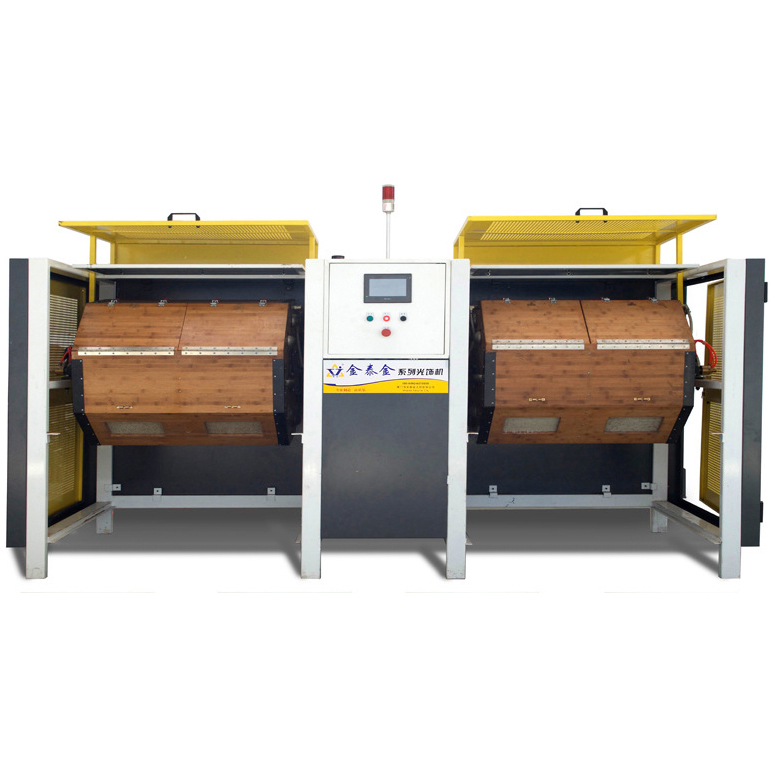
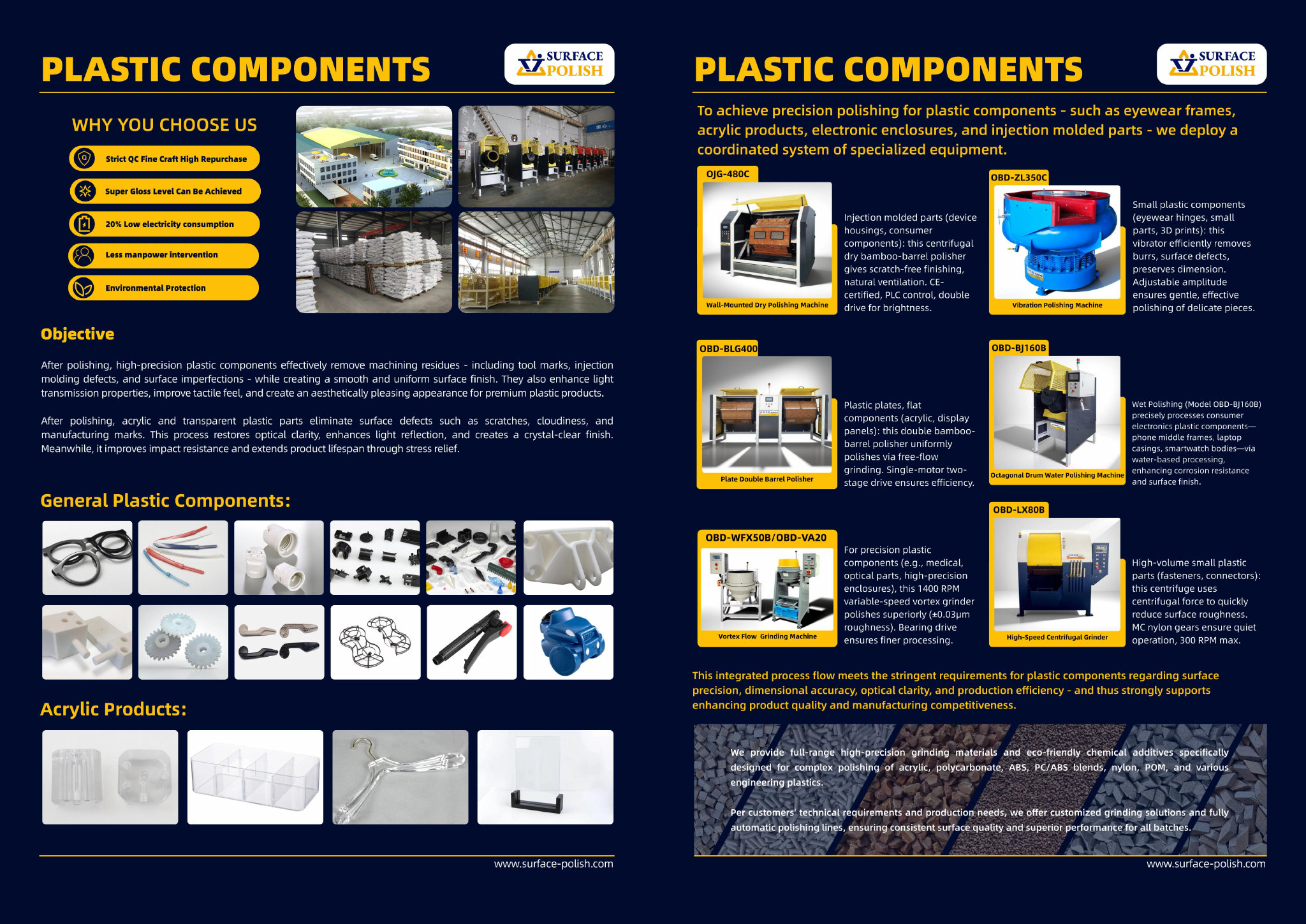
Support the profile rather than letting it lie loose. Cradles shaped to the section, dividers or compartments that keep lengths apart, end plugs that hold the open section, and controlled orientation in the bed all reduce the load a flat face sees. Rectangular sections are more exposed than round ones because a flat face has no hoop stiffness across its width, so the thinnest wall in the order should set the fixture design. Send the thinnest and widest section you use, not an average one, so the trial is run against the part most likely to distort.
A round bowl moves its load on a circular path in a chamber whose diameter caps the part length, and extending that chamber to take a six-metre length stops being practical. The deeper issue is the bed: a long tube occupies too much of the load for the media to circulate around it, so the part is dragged and struck instead of worked evenly. Long sections are better run in a tub, where the process length can be extended along one axis, or on a dedicated arrangement that moves the part or the heads along the length.
Length is a handling question before it is a finishing question. Long architectural sections are run in a tub or on a dedicated longitudinal arrangement rather than a round bowl, and the practical limit depends on the chamber length, the supports available and how the length is packed for shipping. For a trial, send cut sections from the production material and one full-length piece where bend or end effects could matter, so the arrangement is chosen against the real part rather than an average. Parts travel to our factory in Xiamen, and we do not process anything in India or Chennai.
Use Chennai, India as the destination on the enquiry and state whether the deliverable is equipment, media and compound, a representative sample review or a line concept. A destination does not imply local stock, a local service point or a local delivery time.
A Chennai buyer's surface, edge and cleanliness specifications are written against Indian Standards (IS) published by the Bureau of Indian Standards, and automotive and life-sciences customers normally layer their own drawing tolerances and cleanliness requirements on top of the IS reference (s1). Where a product falls under a BIS quality-control order, the licence or registration requirement attaches to the item placed on the Indian market.
Sources were retrieved on 2026-09-29 and describe the local industrial and trade context only. They do not evidence any SurfacePolish project, shipment, installation or service in Chennai.
The new lengths have to sit acceptably beside existing tube whose grain has weathered and dulled unevenly over time.
Send the material, dimensions, approximate weight, batch quantity, the incoming condition and photographs of the difficult features. Mark which features must not be contacted by media and state how the result will be inspected. This form carries source reference PSEO-0937; quote it if you prefer an additional manual reference.
Open the SurfacePolish enquiry form Email a prepared enquiry
No price, lead time, certification or result is promised here. Confirm whether a sample trial is available for the specific part and what the trial can and cannot show.
Page PSEO-0937 · revised 2026-09-29 · cross-border equipment, media and scoped sample review. City context is sourced and cited above.
Use this local checker to identify missing part and inspection information. It prepares a technical-review brief; it does not approve a machine, process recipe or production result.
Complete the part details to prepare a review brief.
Email : info@surface-polish.com


 IPv6 network supported


 +86-592-2381506