A balustrade maker in Hobart, Australia sends architectural metalwork work in the form of 40 x 40 x 1.5 mm stainless posts, 1.1 m long and welded to base plates, and needs those welds blended into the brushed grain without a flat spot on the corner. SurfacePolish supplies finishing machines, media and compounds across borders and runs a free sample trial on parts shipped to Xiamen. This brief is written for a buyer in Hobart working on architectural metalwork; it describes equipment, media and a scoped sample review, not a local polishing service.
Will the finish be judged by a roughness number, by a physical reference panel, or by both, and who views the parts before they are accepted?
Which wall thickness and section shape in the order is most likely to distort, and what fixture, cradle or support will protect it?
Which faces of each profile are actually seen when installed, from what distance and under what light, and which faces can be finished to a coarser standard without it showing?
An elevation is normally assembled from lengths made and finished at different times, so the lot definition matters as much as the finish itself. Decide how parts are grouped into finishing lots: by profile, by wall thickness, by alloy heat, by incoming mill finish, or by the date the material arrived. Then decide how lot identity is preserved through finishing, fabrication and despatch, because a length that cannot be traced back to a lot cannot be compared with another length in a dispute. Where an order will be produced over several weeks, keep an unprocessed reference length from the first delivery in store, and keep a finished reference panel from the first accepted lot. Both are needed before anyone can argue about whether a later length matches.
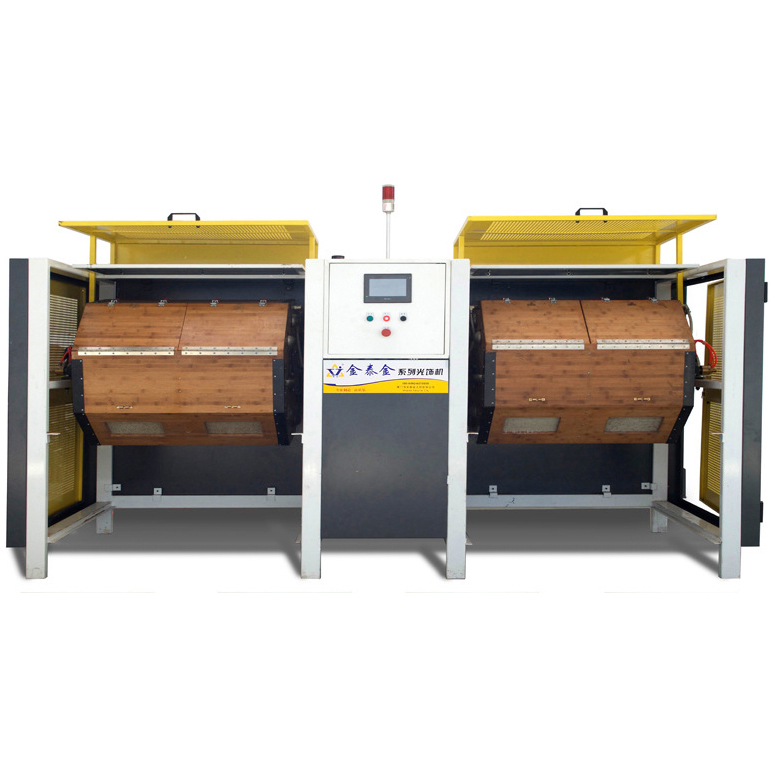
A balustrade or handrail job is never only long runs. It also contains cut-to-length spindles, elbows, brackets, base plates, ball finials and short connector sleeves, often in the same alloy and finish. Those parts are a poor fit for a longitudinal arrangement and a good fit for batch equipment, where a large number of small identical parts can be processed together with controlled part-on-part contact. Treating the two populations as one route is a common planning error: the runs are under-processed because the settings were chosen for the fittings, or the fittings are over-worked and lose their edges. Screen the order into long runs and small fittings, then specify the media class separately for each, even where the final appearance has to read the same.
| Machine route | Where it fits | What it will not do |
|---|---|---|
| Vibratory finishing machine, bowl type | General edge blending and surface refinement on brackets, base plates, cut spindles and other small fittings. | Chamber diameter caps the part length, and a long tube cannot be worked evenly in the circular bed. |
| Dry polishing machine and dryer | Post-wet drying and dry luster work, particularly where a hollow section must come out clean and dry inside. | Dry routes cut less than wet media, and dust control and media separation need planning. |
| Grinding finishing machine | Higher material removal where a mill seam, a joint weld or a deep scratch has to be cut back before surface refinement. | Removal is aggressive, so depth control and wall thickness limits have to be set before the cycle is run. |
| Tub vibrator | Long and large parts such as architectural tube and profiles, where the process length has to extend along the part. | Bed depth and fixture design decide whether thin sections survive, and fluid flow has to be checked at the far end of the chamber. |
Ceramic media cuts harder, holds its shape longer and is the usual choice when a previous scratch or a weld seam has to be removed from stainless. Plastic media is gentler, lighter and less likely to mark a thin or soft section, at the cost of a slower cut and a shorter texture. Steel media produces a bright appearance and strongly linear marks, but it is heavy, it needs well-controlled compound to keep it clean and separated, and it raises a question about whether any iron-bearing debris is acceptable in the buyer's own cleanliness or contamination control. That last point is a requirement for the buyer to define and verify, and it is not something a supplier can decide on their behalf.
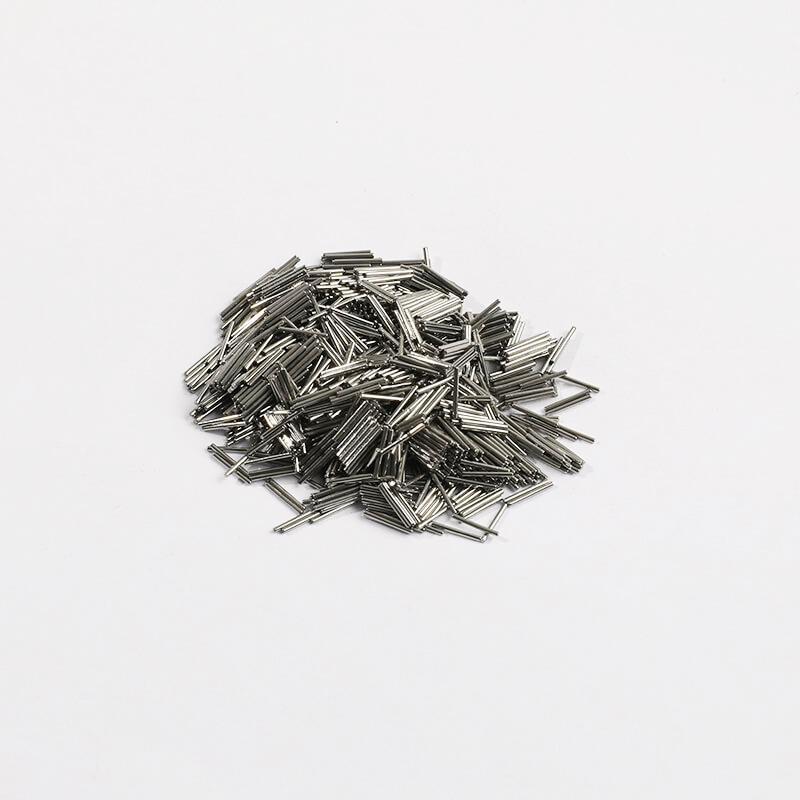
| Media | Best fit | Watch out for |
|---|---|---|
| Steel media, pins and balls | Bright, strongly linear appearance on stainless where a higher-lustre finish is wanted on accessible faces. | Heavy, needs tight compound control to stay clean and separated, and any iron-bearing debris is a contamination question the buyer has to define and verify. |
| Plastic media, cones and triangles | Gentle work on thin-wall sections and softer alloys, and where marking or distortion is the main risk to be managed. | Slower cut and shorter media life, with limited effect on a deep scratch or a heavy seam. |
| Grinding media, alumina-based | Higher material removal where a mill seam, a joint weld or a deep transit scratch has to be cut back before refining. | Aggressive on thin wall, can over-round edges and change cross-section geometry, and needs tight depth control. |
| Ceramic media, cylinders and other elongated shapes | Linear, directional refinement of the visible faces of round and rectangular profiles after the seam has been cut back. | Flat sides and ends mark differently, and the length-to-diameter ratio limits how far the media reaches into a shallow cove. |
Two welds matter on architectural tube: the longitudinal mill seam left by the tube maker, and the circumferential weld a fabricator makes when a length is joined to a fitting or to another length. Dressing either one means removing metal, and the risk is always the same. Too little leaves a visible band that reads as a line down the elevation; too much thins the wall and can leave a flat spot or a heat-affected zone that later shows as a different shade. The workable approach is to establish how much of the seam crown is to be removed, check it on a sectioned sample or with a depth gauge, and confirm that the wall at the dressed area still meets the buyer's requirement. Dressing is not a polishing step; it is a controlled removal step.
| Failure mode | Likely cause | How to catch it |
|---|---|---|
| Hazy or milky patch with a dull reflection | Uneven cut, worn media in part of the chamber, or weak compound flow at the far end of a long tub. | Compare the near end and the far end of the same length, and check compound concentration and fluid flow at both ends of the chamber. |
| Visible band or line along the mill seam | The seam crown was not cut back evenly, or the media class was too small to reach the seam root without over-working the surrounding surface. | Look along the seam line under raking light from both sides, and measure the remaining crown with a depth gauge on a sectioned sample. |
| Twist along the length | Differential working of opposite faces, or clamping and stacking that loads the section unevenly. | Rest the length on a reference surface and compare the angular orientation of the two end sections with a square. |
| Bow along the length | Unsupported part in the bed, resting on hard supports, or lengths stacked while still wet. | Place on a surface plate or straight reference and measure the gap with a feeler gauge at several stations, against the incoming straightness record. |
Hobart's manufacturing base is smaller than the mainland capitals but unusually specialised, with world-scale capability in a few niches rather than broad heavy industry. The clearest example is shipbuilding: Incat has built high-speed aluminium catamarans at its Hobart shipyard for more than four decades, has built around 100 vessels for operators in 24 countries, employs more than 500 people, and is now building large battery-electric ferries, having been named Tasmanian Exporter of the Year 2026. The city is also the port and service centre for Tasmanian industry: TasPorts, the state-owned ports company, operates the Port of Hobart and reports that across its ports it has facilitated the movement of over 145 million tonnes of freight in the past decade, serving mining, manufacturing, timber and dairy. Hydro Tasmania, based in Hobart, is Australia's largest generator of clean renewable energy, and the state's hydro-industrial base has historically supported energy-intensive processing. Hobart Airport is Australia's southernmost airport and describes itself as curfew free.
The nearest part of that base to this brief is food: TasPorts states its trade covers 'mining and manufacturing to timber and dairy products', and the Port of Hobart is the state's principal port with berths at Macquarie Wharf and Princes Wharf handling the island's export trades; no Hobart-specific food processing cluster source was reachable, so this is evidenced at the Tasmanian trade level rather than as a mapped Hobart cluster.
Aluminium shipbuilding is the defining finishing challenge in Hobart: welded aluminium structures in high-speed ferries require weld dressing, oxide removal and controlled surface preparation before painting or coating, and surface defects matter for fatigue performance and corrosion resistance in a marine environment. Stainless and aluminium components used in marine fit-out, in Hydro Tasmania's generation and water infrastructure, and in food and dairy processing equipment all need burr-free edges and contamination-free surfaces for hygiene, sealing and corrosion reasons. Because volumes are low and parts are large or awkward, finishing method selection is typically driven by part size and geometry rather than throughput.
A Hobart buyer should first establish whether the surface being finished is structural aluminium that will be welded and painted, or a stainless product-contact surface in food, dairy or marine service, because the acceptable media, the cleanliness requirement and the evidence of a correct finish are entirely different in each case.
Freight context: Port of Hobart (Macquarie Wharf and Princes Wharf berths, operated by TasPorts), Hobart Airport (Australia's southernmost airport, curfew free, at Cambridge), Bell Bay (TasPorts' northern deep-water port serving Bass Strait trades). TasPorts reports that over the past decade its ports and people have facilitated the movement of over 145 million tonnes of freight, covering mining, manufacturing, timber and dairy, and it publishes quarterly trade reports by port and commodity. The Port of Hobart handles the state's southern trades through the Macquarie Wharf berths, and Incat's Hobart shipyard relies on heavy-lift vessels calling at Hobart to collect completed hulls for delivery overseas, as shown by its Hull 096 shipment. Hobart Airport is curfew free, which matters for time-critical air freight, while Bass Strait sea freight between Tasmania and the mainland is the principal route for inbound machinery.
Australia and China are parties to the China-Australia Free Trade Agreement (ChAFTA), signed on 17 June 2015 and in force since 20 December 2015; the Australian Border Force maintains a dedicated ChAFTA page and working tariff schedule, and FTAs give importers a route to preferential rates of duty where the rules of origin are met. China was Australia's largest source of imports in 2025 at $130.2b, up 12.5% on 2024, and 56% (69,567) of Australian business importers traded at least once with China in 2020-21. A Chinese supplier of finishing machines, media or compounds is therefore shipping into Australia's single largest import stream, and preferential duty depends on origin documentation rather than on a blanket zero-tariff guarantee for every product line.
Business is conducted in English and Australian industrial buyers are normally registered companies with an ABN that contract through a local importer or a licensed customs broker rather than directly with an overseas manufacturer. Because the first Australian supplier of in-scope electrical equipment becomes the legally responsible supplier, Chinese manufacturers are typically asked to provide test evidence, a compliance folder and a declaration so that their Australian importer can register and mark the product. Quotation and contracting expectations centre on a clear commercial entity, correct HS/tariff classification, documented country of origin for preferential duty, and an explicit statement of what is included in the delivered price and what is not.
SurfacePolish supplies from Xiamen, China. The buyer's own destination rules, conformity marking, tariff classification and documentation responsibilities stay with the buyer; confirm them against the authorities named above before ordering.
A six-metre length cannot be examined in every square millimetre, so the acceptance plan has to say where the checked zones are and how often they are checked. Define stations along the length, for example near each end and at one or two intermediate points, decide whether the visible face of every length is checked or only a percentage of the batch, and set the reaction when a station fails: quarantine the lot, measure the rest of the lot, and record the finding. Keep the first accepted length as a physical reference and re-photograph it under the agreed light whenever the lighting setup changes. Photographs taken on different days with different cameras are a poor substitute for the retained part, though they are useful supporting evidence when the setup is fixed.
The trial result is only meaningful against a documented starting point. Photograph each sample under fixed lighting with a scale in frame, note the direction of the incoming texture, and take roughness readings at marked stations with the traverse direction recorded. Note the incoming straightness with the sample on a reference surface, the edge condition at cut ends, and any existing weld, scratch or discolouration. Keep one piece unprocessed as the baseline. When the trial parts come back, the comparison is between the returned parts and these records, not against memory. This is also how a buyer distinguishes a change made by the process from a feature that was present in the material when it arrived.
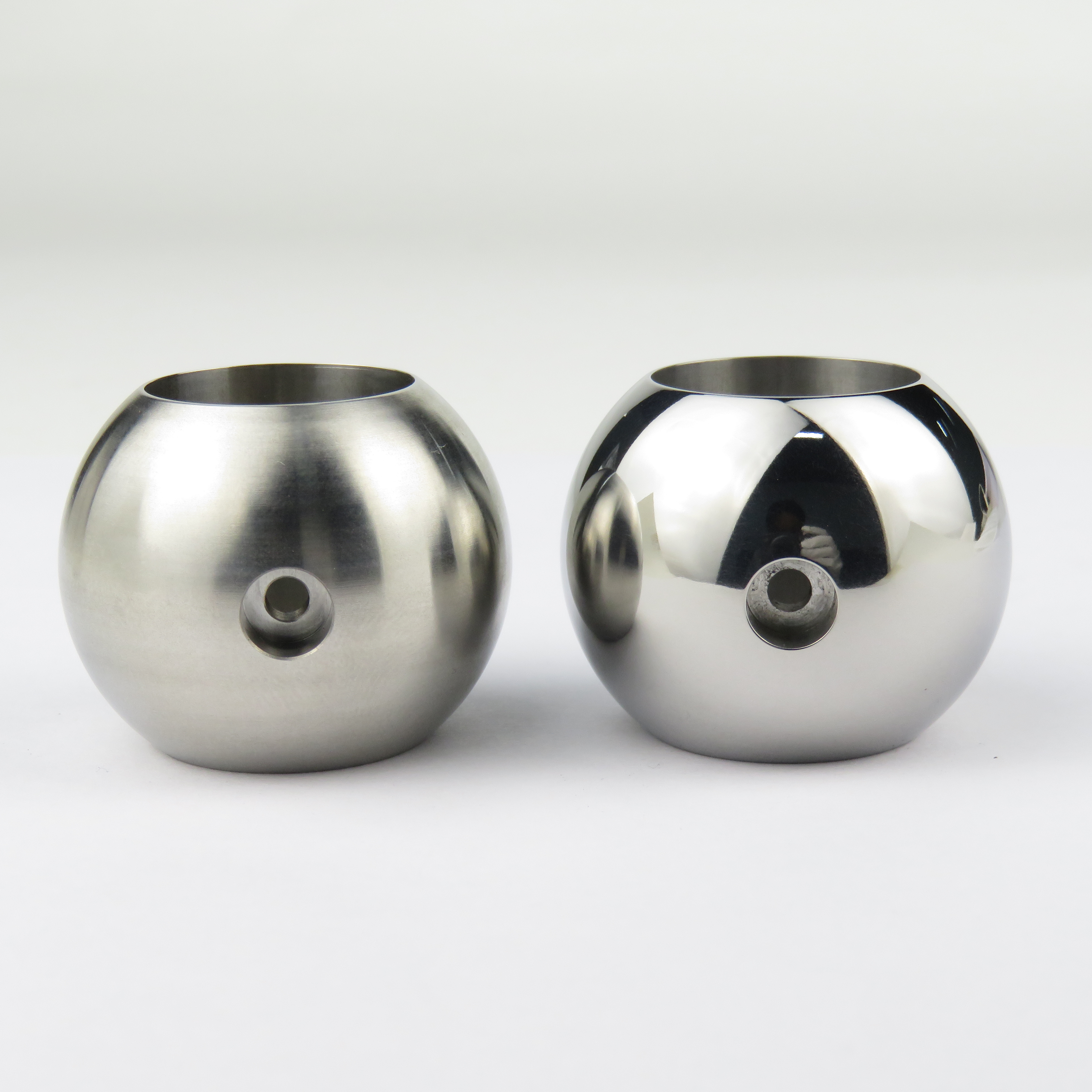
No. SurfacePolish does not supply or carry out electropolishing. Where electrochemical treatment is part of the buyer's requirement, we treat it as a comparison point and as a reason to look at what a mechanical route can achieve on the same part, and we can discuss media, compound and machine options for that mechanical route. A mechanical finish should not be presented as equivalent to an electropolished surface, and the choice between the two, together with any specification that depends on it, belongs to the buyer's own engineering decision.
No. SurfacePolish is a cross-border supplier of finishing machines, media and compounds, and runs a free sample trial on parts the buyer sends. The tube, pipe and profiles remain the buyer's own material from their own mill or stockholder, and we do not verify its grade, mill certificate or corrosion performance. Keeping those roles separate matters, because the appearance a finishing line can reach is limited by the incoming material: its alloy, its hardness, its existing grain and the condition it arrives in. Send material from the actual delivery rather than a hand-picked offcut.
No. A sample trial produces observations on the parts that were tested under the settings used; it is not a guarantee of a roughness value, a surface class, an appearance or a repeatable production result. Media wear, compound concentration and the condition of incoming material all move the finish over a run. What we can do is show what a given media, compound and cycle direction did to your part, and describe what would need to be controlled to hold that result. Acceptance criteria and any promise made to a client or specifier remain your own.
Use Hobart, Australia as the destination on the enquiry and state whether the deliverable is equipment, media and compound, a representative sample review or a line concept. A destination does not imply local stock, a local service point or a local delivery time.
Hobart manufacturers work to Australian Standards administered by Standards Australia, and Tasmanian marine work additionally references Australian and international maritime classification and survey requirements for vessel construction and repair. Electrically powered machinery must comply with the EESS and carry the Regulatory Compliance Mark under AS/NZS 4417.1 and AS/NZS 4417.2 where in scope.
Sources were retrieved on 2026-09-29 and describe the local industrial and trade context only. They do not evidence any SurfacePolish project, shipment, installation or service in Hobart.
The circumferential weld at the base and the mill seam have to be blended without leaving a flat spot on the corner or a colour change.
Send the material, dimensions, approximate weight, batch quantity, the incoming condition and photographs of the difficult features. Mark which features must not be contacted by media and state how the result will be inspected. This form carries source reference PSEO-0797; quote it if you prefer an additional manual reference.
Open the SurfacePolish enquiry form Email a prepared enquiry
No price, lead time, certification or result is promised here. Confirm whether a sample trial is available for the specific part and what the trial can and cannot show.
Page PSEO-0797 · revised 2026-09-29 · cross-border equipment, media and scoped sample review. City context is sourced and cited above.
Use this local checker to identify missing part and inspection information. It prepares a technical-review brief; it does not approve a machine, process recipe or production result.
Complete the part details to prepare a review brief.
Email : info@surface-polish.com


 IPv6 network supported


 +86-592-2381506