A metalwork shop in Lille, France building architectural metalwork assemblies joins 1.5 m stainless tube to a cast elbow with a circumferential weld, and the joint has to disappear into the grain rather than read as a band. SurfacePolish supplies finishing machines, media and compounds across borders and runs a free sample trial on welded samples shipped to Xiamen. This brief is written for a buyer in Lille working on architectural metalwork; it describes equipment, media and a scoped sample review, not a local polishing service.
Which faces of each profile are actually seen when installed, from what distance and under what light, and which faces can be finished to a coarser standard without it showing?
Will the finish be judged by a roughness number, by a physical reference panel, or by both, and who views the parts before they are accepted?
Which wall thickness and section shape in the order is most likely to distort, and what fixture, cradle or support will protect it?
Once a length runs past roughly a metre and a half, handling stops being a detail and becomes the deciding constraint. A six-metre handrail cannot be turned in a chamber, cannot be stacked with its finished face against another part, and cannot be lifted by two people without risk of a bow. The screening questions are: what is the longest length in the order, how is it moved to and from finishing, is it cut to final size before or after finishing, and what supports it at every stage. Answering these sets the machine class, the cradle design and the inspection points. A buyer who fixes the finish specification first and the handling plan later usually discovers the finish cannot be held on the long lengths that matter most.
A balustrade or handrail job is never only long runs. It also contains cut-to-length spindles, elbows, brackets, base plates, ball finials and short connector sleeves, often in the same alloy and finish. Those parts are a poor fit for a longitudinal arrangement and a good fit for batch equipment, where a large number of small identical parts can be processed together with controlled part-on-part contact. Treating the two populations as one route is a common planning error: the runs are under-processed because the settings were chosen for the fittings, or the fittings are over-worked and lose their edges. Screen the order into long runs and small fittings, then specify the media class separately for each, even where the final appearance has to read the same.
| Machine route | Where it fits | What it will not do |
|---|---|---|
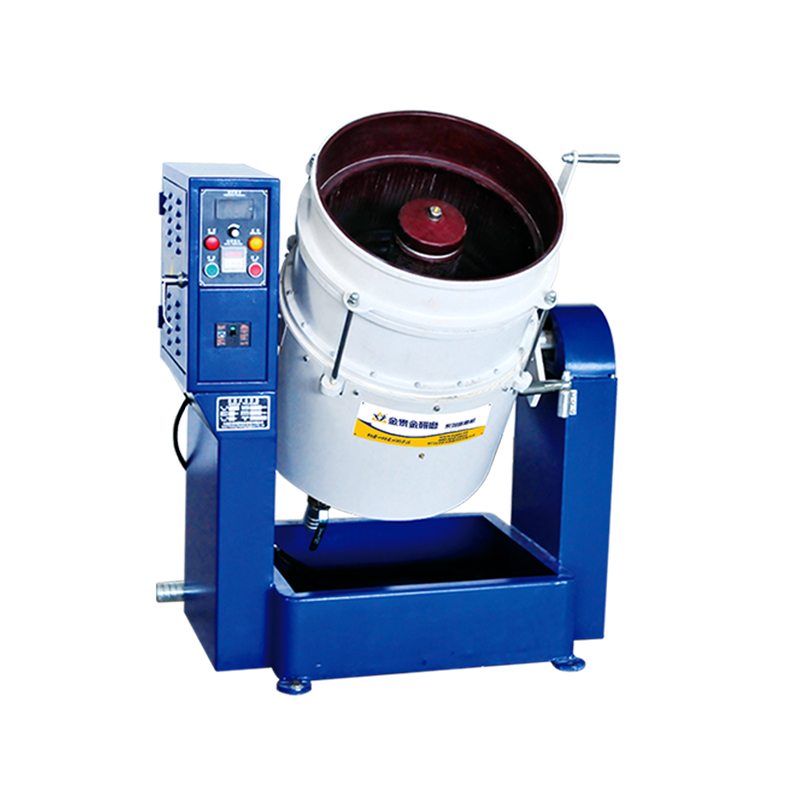
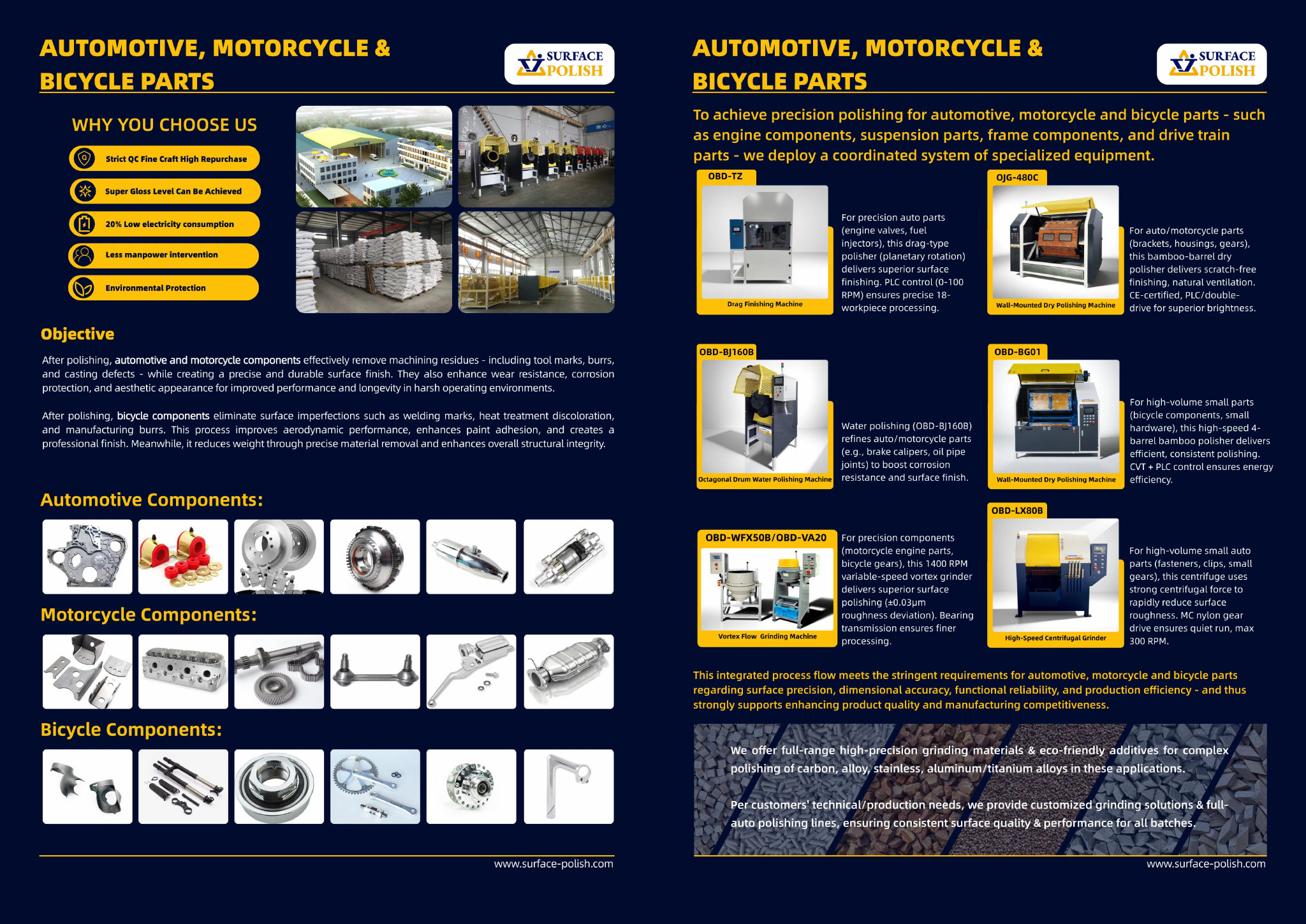
| Tub vibrator | Long and large parts such as architectural tube and profiles, where the process length has to extend along the part. | Bed depth and fixture design decide whether thin sections survive, and fluid flow has to be checked at the far end of the chamber. |
| Vibratory finishing machine, bowl type | General edge blending and surface refinement on brackets, base plates, cut spindles and other small fittings. | Chamber diameter caps the part length, and a long tube cannot be worked evenly in the circular bed. |
| Grinding finishing machine | Higher material removal where a mill seam, a joint weld or a deep scratch has to be cut back before surface refinement. | Removal is aggressive, so depth control and wall thickness limits have to be set before the cycle is run. |
| Dry polishing machine and dryer | Post-wet drying and dry luster work, particularly where a hollow section must come out clean and dry inside. | Dry routes cut less than wet media, and dust control and media separation need planning. |
Media must be small enough to reach the root of a seam or into the concave corner of a rectangular profile, and large enough not to lodge in the bore, in a drilled fixing hole or in a slotted channel. On small sections those two conditions conflict, and the resolution is usually to plug or cap the openings rather than to compromise the media. Where the visible face has a shallow cove, a smaller media class gives better access but wears faster and produces a shorter texture pitch. Where the profile is open, a larger class cuts more evenly and separates more easily. Decide the size against the tightest feature that must be finished and the smallest opening that must stay clear, and state both in the trial request.
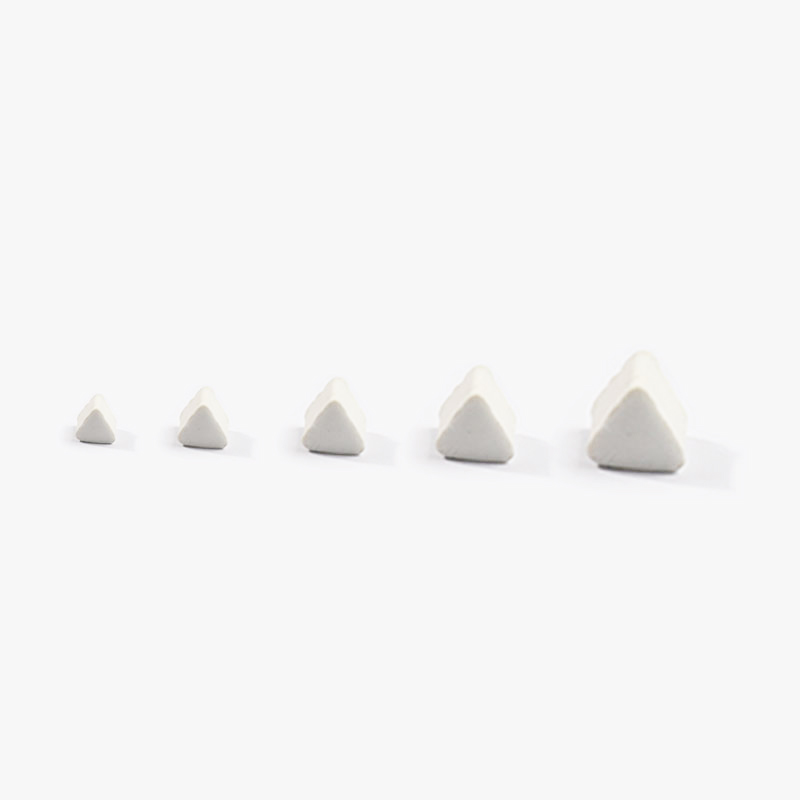
| Media | Best fit | Watch out for |
|---|---|---|
| Ceramic media, angle-cut triangles | Heavier cutting and seam removal on stainless tube and profiles, where a directional linear texture on the visible face is wanted. | Wears down and changes effective size class, generates sludge, and can over-round thin sections or chip on sharp edges. |
| Plastic media, cones and triangles | Gentle work on thin-wall sections and softer alloys, and where marking or distortion is the main risk to be managed. | Slower cut and shorter media life, with limited effect on a deep scratch or a heavy seam. |
| Dry media, walnut shell and corn cob | Dry polishing and support for post-wet drying, particularly where a hollow section must not stay wet or carry residue inside. | Low cutting power, and dust generation and media separation need managing in the surrounding area. |
| Ceramic media, spheres and balls | General deburring and edge work on cut ends, brackets and small fittings in the same order as the long runs. | Produces overlapping crater-like marks that work against a linear brushed appearance and can peen a thin wall. |
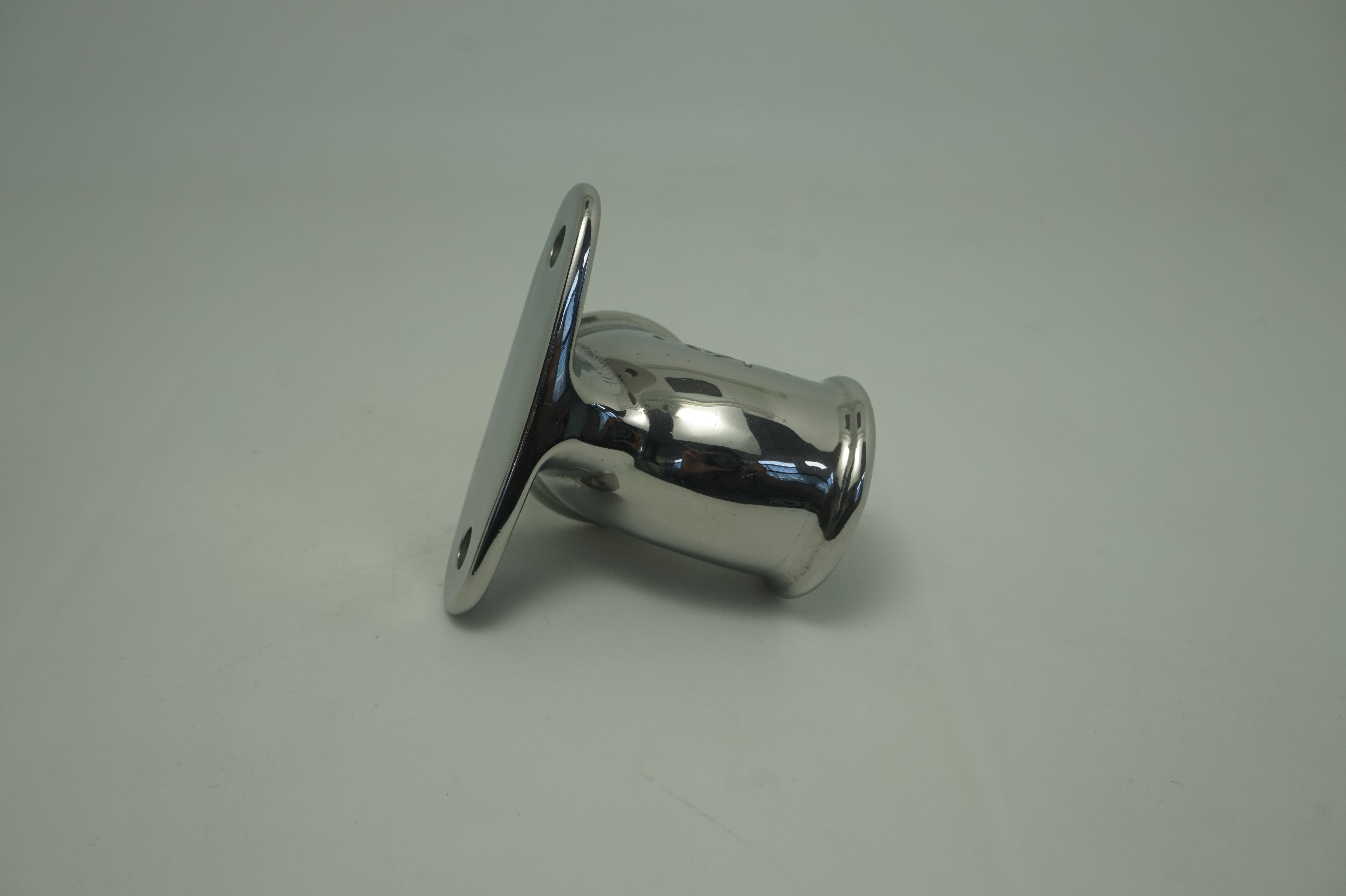
Two welds matter on architectural tube: the longitudinal mill seam left by the tube maker, and the circumferential weld a fabricator makes when a length is joined to a fitting or to another length. Dressing either one means removing metal, and the risk is always the same. Too little leaves a visible band that reads as a line down the elevation; too much thins the wall and can leave a flat spot or a heat-affected zone that later shows as a different shade. The workable approach is to establish how much of the seam crown is to be removed, check it on a sectioned sample or with a depth gauge, and confirm that the wall at the dressed area still meets the buyer's requirement. Dressing is not a polishing step; it is a controlled removal step.
| Failure mode | Likely cause | How to catch it |
|---|---|---|
| Hazy or milky patch with a dull reflection | Uneven cut, worn media in part of the chamber, or weak compound flow at the far end of a long tub. | Compare the near end and the far end of the same length, and check compound concentration and fluid flow at both ends of the chamber. |
| Shade change or discolouration at a welded area | The heat-affected zone responds differently to the same media and compound cycle than the parent metal. | Compare the area with adjacent metal under the agreed light and distance, and photograph it with a scale alongside the retained reference. |
| Longitudinal scratch running along the part axis | Incoming coil or straightener marks, media or swarf dragged along the surface during the cycle, or a finished length sliding over a bare support between operations. | View the surface under raking light at a low angle along the axis, compare the same station on several parts, and compare against the retained reference panel. |
| Media or swarf trapped in a bore or channel | Open ends left unplugged, a media class smaller than the opening, or no defined retrieval step at the end of the cycle. | Endoscope or internally swab every sample length, and count media into and out of the batch as a routine check. |
Lille is the administrative and engineering centre of the Hauts-de-France manufacturing belt; the commune itself recorded 10 645 establishments at the end of 2024, 2,6 % of them industrial, and 183 864 jobs at the place of work in 2023, while the automotive plants and logistics parks of the region sit within commuting distance in the Douai, Valenciennes and Hordain corridors. The decisive industrial fact for a finishing buyer is that the Lille hinterland is served by France's third-ranking North Sea port: Dunkerque-Port, whose Port Ouest concentrates most of the port's recent development and which publishes a 2025-2029 environmental report and an annual press conference on its traffic. Lille is also a health-industry and digital-services centre, with the Eurasanté biomedical cluster and EuraTechnologies in the metropolitan area.
The nearest part of that base to this brief is automotive: The Lille metropolitan economy is the service, engineering and administrative centre of the Hauts-de-France manufacturing belt: INSEE records 183 864 jobs at the place of work in Lille in 2023 and 2,6 % of establishments in industry, with the region's automotive and equipment plants in the surrounding Douai-Valenciennes-Hordain corridors.
The Hauts-de-France automotive and equipment-supplier chain is a high-volume, tolerance-driven environment: transmission and brake parts, stampings, fasteners and machined housings where burrs cause function and warranty problems and edge condition affects fatigue and coating adherence. Suppliers here work to customer-specific edge and cleanliness specifications, so deburring is a controlled process step with defined acceptance criteria rather than a manual clean-up. The health-industry and instrumentation side of the Lille economy adds stainless and clean-surface requirements where residue and surface roughness are functional.
A Lille buyer should settle the cleanliness specification together with the edge specification, because in this supply chain a part that passes a visual deburring check can still fail the customer's particulate or film residue limit if media, compound and rinsing are not controlled as one process.
Freight context: Grand Port Maritime de Dunkerque (Port Ouest), Lille-Lesquin Airport, Lille / Dourges combined transport terminals. Dunkerque-Port is the North Sea deep-sea entry for the Lille hinterland and its Port Ouest concentrates most recent port development, with the port publishing a 2025-2029 environmental programme; Lille also has its own airport and dense rail/road links to Belgium and the Channel ports. Containerised finishing machines and media drums typically arrive through Dunkerque or Antwerp/Rotterdam and move by road or rail, while sample parts are sent by courier.
France applies the EU common commercial policy, so industrial machinery arriving from China enters under the Union Customs Code and the Common Customs Tariff rather than under any bilateral French regime; the EU has no free-trade agreement with China, so no preferential duty rate applies and normal third-country duties are due on the customs value. Importers classify the machine in the tariff nomenclature and lodge a customs declaration; French Customs publishes the common and national tariff through its RITA online service and states that three notions are fundamental: the tariff classification of the product, its origin or destination, and the value of the goods.
The working language of French industrial procurement is French: tenders, drawings, inspection plans and technical dossiers are normally issued and answered in French, and quotations that omit French documentation slow down qualification. Buyers qualify a machine against a written specification and expect traceable material certificates, machine safety documentation and, where applicable, a CE declaration of conformity and a risk assessment; acceptance is often staged (documentary review, factory acceptance test, then commissioning). Payment and documentation norms are conventional EU practice: euro invoicing, SEPA or SWIFT bank transfer, Incoterms agreed in writing, and customs paperwork (commercial invoice, packing list, transport document, proof of origin where a preference is claimed) prepared for the declarant or customs representative. Because customs and tax authorisations are handled jointly through SOPRANO, non-EU sellers are normally advised to sell to an established French/EU importing entity rather than to act as importer of record themselves.
SurfacePolish supplies from Xiamen, China. The buyer's own destination rules, conformity marking, tariff classification and documentation responsibilities stay with the buyer; confirm them against the authorities named above before ordering.
Brushed stainless is not a specification, and a finish described only in words cannot be accepted or rejected consistently. The callout on the drawing or the purchase order should say what the texture direction is, which faces carry it, the roughness limit and the measurement conditions if a number is used, the reference panel and the viewing distance, and which faces are exempt. It should also say what is protected: threads, fixing holes, cut ends, machined lands. Where the buyer cannot express the finish numerically, a physical reference sample with a written description of its texture direction and appearance is still far better than an adjective. Sorting this out before a trial is what allows the trial result to be compared against a real requirement.
Send cut sections from the actual production material, roughly 300 to 500 mm long, taken from at least three places along the delivery rather than from one offcut, and cover every wall thickness and profile in the order. Add one full-length piece where bend, twist or end effects could matter, because a short coupon does not reproduce how a long, unsupported length behaves in a bed. Include one length in the condition that most often arrives: a mill seam, a fabricator's weld, a transit scratch. If the buyer has an existing part whose appearance is acceptable, send that as a reference too, with a note on where it was viewed from. Label every piece with profile, alloy, wall, provenance and what should be observed on it.
No. SurfacePolish is a cross-border supplier of finishing machines, media and compounds, and runs a free sample trial on parts the buyer sends. The tube, pipe and profiles remain the buyer's own material from their own mill or stockholder, and we do not verify its grade, mill certificate or corrosion performance. Keeping those roles separate matters, because the appearance a finishing line can reach is limited by the incoming material: its alloy, its hardness, its existing grain and the condition it arrives in. Send material from the actual delivery rather than a hand-picked offcut.
No. A sample trial produces observations on the parts that were tested under the settings used; it is not a guarantee of a roughness value, a surface class, an appearance or a repeatable production result. Media wear, compound concentration and the condition of incoming material all move the finish over a run. What we can do is show what a given media, compound and cycle direction did to your part, and describe what would need to be controlled to hold that result. Acceptance criteria and any promise made to a client or specifier remain your own.
Lay the lengths end to end as they will be installed, under the light and at the distance agreed for acceptance, and look along the run rather than at each piece separately. A direction reversal or a change in texture pitch that is invisible on a single length usually shows immediately at the joint. The planning side matters more than the inspection: mark the grain direction on every length and keep the orientation through fabrication, packing and despatch. Where the finished parts come from different batches, compare each against the retained reference panel under the same conditions.
Use Lille, France as the destination on the enquiry and state whether the deliverable is equipment, media and compound, a representative sample review or a line concept. A destination does not imply local stock, a local service point or a local delivery time.
A Lille automotive supplier would work to IATF 16949 with customer-specific requirements layered on top, and would specify surface texture using ISO/NF EN surface-texture standards and cleanliness (residual particle and film limits) per the vehicle-maker's specification; ISO 9001 applies to the non-automotive machinery and health-sector suppliers. AFNOR publishes the NF/NF EN versions of the relevant ISO standards that appear on drawings here.
Sources were retrieved on 2026-09-29 and describe the local industrial and trade context only. They do not evidence any SurfacePolish project, shipment, installation or service in Lille.
The joint weld has to disappear into the grain so the joint does not read as a dark or bright band in the finished run.
Send the material, dimensions, approximate weight, batch quantity, the incoming condition and photographs of the difficult features. Mark which features must not be contacted by media and state how the result will be inspected. This form carries source reference PSEO-0547; quote it if you prefer an additional manual reference.
Open the SurfacePolish enquiry form Email a prepared enquiry
No price, lead time, certification or result is promised here. Confirm whether a sample trial is available for the specific part and what the trial can and cannot show.
Page PSEO-0547 · revised 2026-09-29 · cross-border equipment, media and scoped sample review. City context is sourced and cited above.
Use this local checker to identify missing part and inspection information. It prepares a technical-review brief; it does not approve a machine, process recipe or production result.
Complete the part details to prepare a review brief.
Email : info@surface-polish.com


 IPv6 network supported


 +86-592-2381506
