A facade contractor in Manchester, United Kingdom on an architectural metalwork project needs twelve 6 m rectangular mullions, 100 x 50 x 2 mm, to read as one brushed surface when they are fixed side by side on a single elevation. SurfacePolish supplies finishing machines, media and compounds across borders and runs a free sample trial on sections and one full length shipped to Xiamen. This brief is written for a buyer in Manchester working on architectural metalwork; it describes equipment, media and a scoped sample review, not a local polishing service.
How much of the incoming mill seam, joint weld or transit scratch must be removed, and what minimum wall thickness has to remain after that removal?
Will the finish be judged by a roughness number, by a physical reference panel, or by both, and who views the parts before they are accepted?
Which faces of each profile are actually seen when installed, from what distance and under what light, and which faces can be finished to a coarser standard without it showing?
The surface you receive already carries a direction of texture from the mill, from a prior brush line or from a fabricator's earlier pass. Finishing can change the amplitude and the scale of that texture and can impose a new direction, but erasing a deep existing grain means removing real wall thickness, which is rarely acceptable on a visible architectural profile. Note the direction of the incoming texture along the length, its pitch, and whether the tube is bright annealed, pickled or mill finish. A pickled or matte mill surface hides small process variation that a bright surface reveals immediately. Send the worst-looking incoming length rather than the best one, because the finish a line has to hold is set by the roughest material that regularly arrives, not by the sample kept aside as a reference.
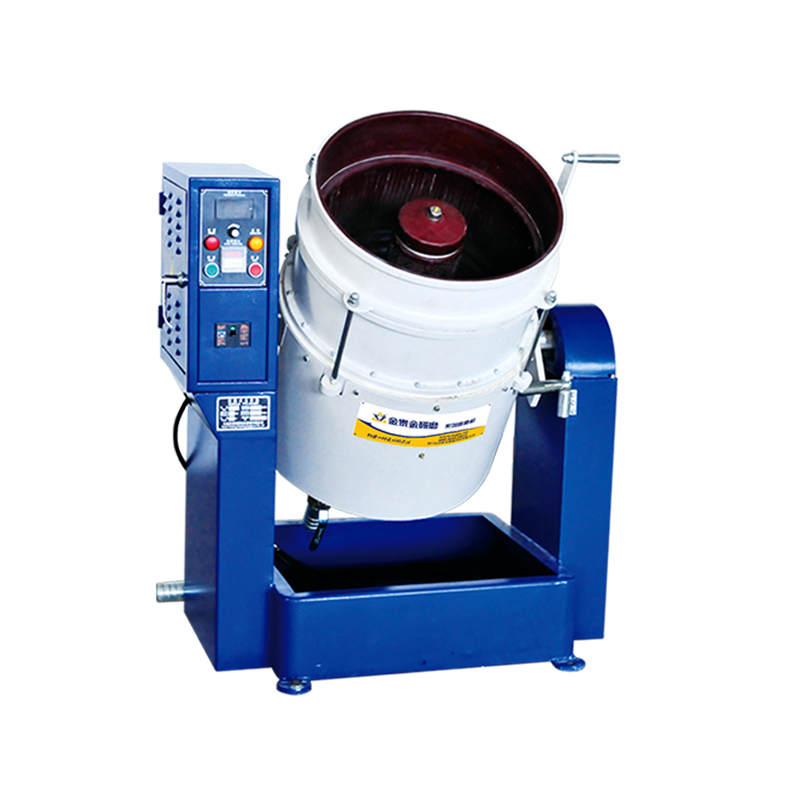
A conventional vibratory bowl moves its load around a circular path in a chamber whose diameter sets the maximum part length. Extending that chamber to take a six-metre length stops being practical, because the volume grows far faster than the usable length. The deeper problem is the bed. A long tube lying in a bowl is either too large a fraction of the load, in which case the media cannot circulate around it, or it is dragged and struck by the rest of the load in a way that produces local marking rather than an even longitudinal texture. The geometry, not the power, is the limitation. This is the practical reason long architectural sections are run in a tub or on a dedicated longitudinal arrangement rather than in a general-purpose bowl.
| Machine route | Where it fits | What it will not do |
|---|---|---|
| Tub vibrator | Long and large parts such as architectural tube and profiles, where the process length has to extend along the part. | Bed depth and fixture design decide whether thin sections survive, and fluid flow has to be checked at the far end of the chamber. |
| Disc finishing machine | Fast, high-energy cycles for small to medium fittings and hardware where a short cycle is the priority. | The high energy that makes it fast will distort, mark or bend thin and long parts. |
| Vibratory finishing machine, bowl type | General edge blending and surface refinement on brackets, base plates, cut spindles and other small fittings. | Chamber diameter caps the part length, and a long tube cannot be worked evenly in the circular bed. |
| Dry polishing machine and dryer | Post-wet drying and dry luster work, particularly where a hollow section must come out clean and dry inside. | Dry routes cut less than wet media, and dust control and media separation need planning. |
The compound carries cut debris away, keeps the media from loading, and buffers the chemistry against the metal. For stainless work the choice sits between mildly acidic, neutral and alkaline families, with the selection driven by the alloy, the incoming surface and the buyer's own residue limits rather than by a fixed rule. The behaviour that matters most on tube is rinsing. A compound that clings inside a six-metre bore will bleed out later onto a visible face and read as a stain or a patch. Pick a family that rinses cleanly, specify the rinse stages and the drying step, and agree how the interior of a sample length will be checked after the trial rather than assuming it is clean.
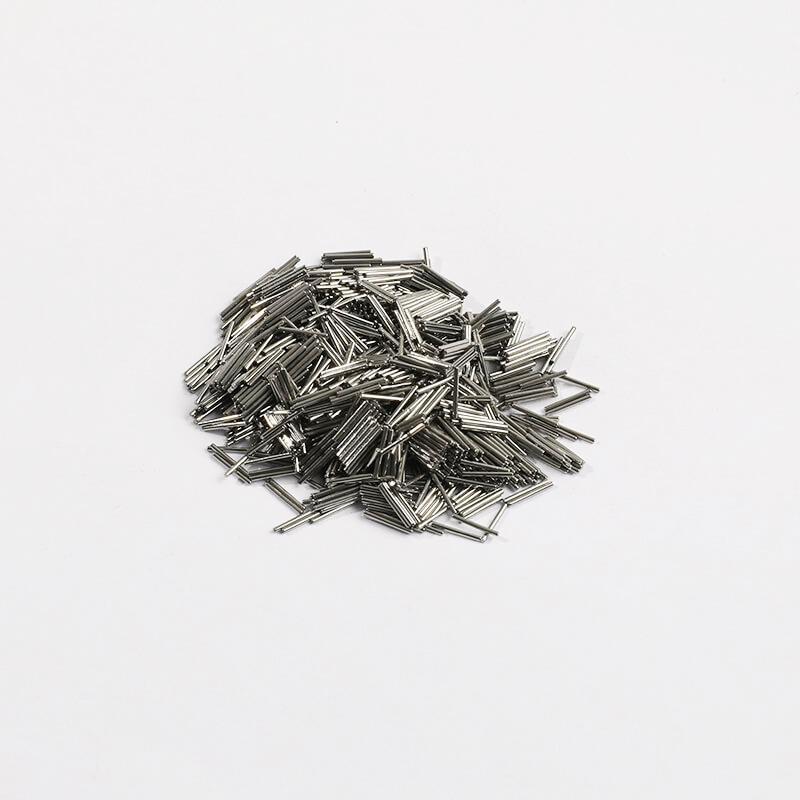
| Media | Best fit | Watch out for |
|---|---|---|
| Ceramic media, spheres and balls | General deburring and edge work on cut ends, brackets and small fittings in the same order as the long runs. | Produces overlapping crater-like marks that work against a linear brushed appearance and can peen a thin wall. |
| Ceramic media, cylinders and other elongated shapes | Linear, directional refinement of the visible faces of round and rectangular profiles after the seam has been cut back. | Flat sides and ends mark differently, and the length-to-diameter ratio limits how far the media reaches into a shallow cove. |
| Plastic media, cylindrical | Light surface refinement on thin rectangular sections where holding the shape matters more than cutting power. | Little cut power, and the size class changes quickly as the media wears, which shifts the texture pitch over a run. |
| Steel media, pins and balls | Bright, strongly linear appearance on stainless where a higher-lustre finish is wanted on accessible faces. | Heavy, needs tight compound control to stay clean and separated, and any iron-bearing debris is a contamination question the buyer has to define and verify. |
Two welds matter on architectural tube: the longitudinal mill seam left by the tube maker, and the circumferential weld a fabricator makes when a length is joined to a fitting or to another length. Dressing either one means removing metal, and the risk is always the same. Too little leaves a visible band that reads as a line down the elevation; too much thins the wall and can leave a flat spot or a heat-affected zone that later shows as a different shade. The workable approach is to establish how much of the seam crown is to be removed, check it on a sectioned sample or with a depth gauge, and confirm that the wall at the dressed area still meets the buyer's requirement. Dressing is not a polishing step; it is a controlled removal step.
| Failure mode | Likely cause | How to catch it |
|---|---|---|
| Compound residue weeping from a hollow section | Incomplete rinsing of the interior, or a drying step that does not reach inside a closed section. | Stand the length on end over a clean cloth for a set period, then inspect the bore interior for residue after drying. |
| Flat spot or thinning at a dressed weld | Too much material removed in one place while chasing the weld toe, usually with too coarse a medium or too much pressure. | Measure wall thickness with an ultrasonic gauge across the dressed area, and lay a straightedge over the joint to reveal a flat. |
| Media or swarf trapped in a bore or channel | Open ends left unplugged, a media class smaller than the opening, or no defined retrieval step at the end of the cycle. | Endoscope or internally swab every sample length, and count media into and out of the batch as a routine check. |
| Orange peel mottling on the visible face | Over-working with a coarse medium, or excessive pressure on a soft or thin section, which deforms the surface rather than cutting it. | Reflect a straight edge or a linear light source in the surface, and take a roughness reading at the same spot to show the divergence between number and appearance. |
Greater Manchester is the largest city-region economy outside London, generating £100 billion in GVA according to Invest Manchester, the city region's inward investment service, whose sector offer leads on advanced materials and manufacturing, life sciences and health innovation, and low carbon. The Manchester Ship Canal runs from the Mersey estuary into the heart of Manchester as a 36-mile inland seaway whose five terminals handle 7.5 million tonnes of cargo a year. Make UK classes the North West as the strongest-performing English region and the UK region with the highest total manufacturing output, and describes the North West as the industrial heartland of Britain.
The nearest part of that base to this brief is machinery: Invest Manchester lists advanced materials and manufacturing as one of the city region's sector strengths, and its navigation of sector expertise leads with that sector.
A city region combining precision manufacturing, life-sciences hardware and low-carbon equipment produces parts that often carry both a surface-finish specification and a cleanliness requirement, and the cleaning step after mass finishing is usually where those two specifications interact. Because media and machines can be routed to Port Salford, Runcorn Docks or Ellesmere Port through the same inland waterway that carries the region's bulk and project cargo, inbound equipment and outbound sample parts can be planned on one freight chain rather than a coastal port.
A Manchester buyer should settle the required cleanliness level first - for example whether a life-sciences or low-carbon component needs a validated post-finishing cleaning step - because that decision drives both the media choice and the effluent and waste handling the plant must provide for.
Freight context: Manchester Ship Canal terminals: QEII Dock, Ellesmere Port, Runcorn Docks, Port Warrington and Port Salford, Port of Liverpool (Royal Seaforth Container Terminal and Liverpool2), linked to the canal. Peel Ports states that the five Manchester Ship Canal terminals handle 7.5 million tonnes of cargo and that the canal runs 36 miles from the Mersey estuary into the heart of Manchester; Port Salford sits next to the M60 and M62 and provides direct vessel access from the Liverpool2 deep-water terminal, while Ellesmere Port is described as fully multimodal with road, rail and sea connectivity.
Importers need a GB-prefixed Economic Operators Registration and Identification (EORI) number, an import declaration carrying the correct commodity code, and retained commercial invoices plus the Import VAT Certificate (C79) so import VAT can be reclaimed. Machinery placed on the Great Britain market must be marked UKCA or CE: the manufacturer must draw up and retain technical documentation including a Declaration of Conformity, apply the correct marking with identification details, and cooperate with market surveillance; an authorised representative must be established in the UK. Under the Product Safety and Metrology (Amendment) Regulations 2024 the UK continues to recognise CE marking alongside or in place of UKCA for the Great Britain market, so either route can be used for most product types. Duty and import VAT are calculated from the customs value declared, and the commodity code also determines whether an import licence is needed.
China does not appear in the alphabetical list of trade agreements in effect published by the Department for Business and Trade, so Chinese-origin machinery imported into the UK cannot claim a preferential agreement rate. Duty is instead determined by the commodity code declared on the import declaration, and the UK's customs authority is HM Revenue and Customs (HMRC), which ONS also names as the largest single data source behind UK trade-in-goods statistics. Because a GB-prefixed EORI number is a precondition for importing into England, Scotland or Wales, a Chinese seller's UK buyer must already hold that registration before any machine ships.
SurfacePolish supplies from Xiamen, China. The buyer's own destination rules, conformity marking, tariff classification and documentation responsibilities stay with the buyer; confirm them against the authorities named above before ordering.
Grain direction is the most common reason a set of individually acceptable lengths is rejected as an assembly. Where two lengths butt at a joint, their texture direction has to run the same way, and the pitch and brightness have to be close enough that the joint does not read as a line. That is a planning decision made before the lengths are run, not a sorting decision made afterwards: define the grain direction on the drawing, mark the direction on every length, and keep the orientation through fabrication and despatch. Then inspect the lengths laid end to end as they will be installed, under the agreed light, rather than one at a time on a bench. A direction reversal that is obvious in an assembly can be invisible in a single part.
Send cut sections from the actual production material, roughly 300 to 500 mm long, taken from at least three places along the delivery rather than from one offcut, and cover every wall thickness and profile in the order. Add one full-length piece where bend, twist or end effects could matter, because a short coupon does not reproduce how a long, unsupported length behaves in a bed. Include one length in the condition that most often arrives: a mill seam, a fabricator's weld, a transit scratch. If the buyer has an existing part whose appearance is acceptable, send that as a reference too, with a note on where it was viewed from. Label every piece with profile, alloy, wall, provenance and what should be observed on it.
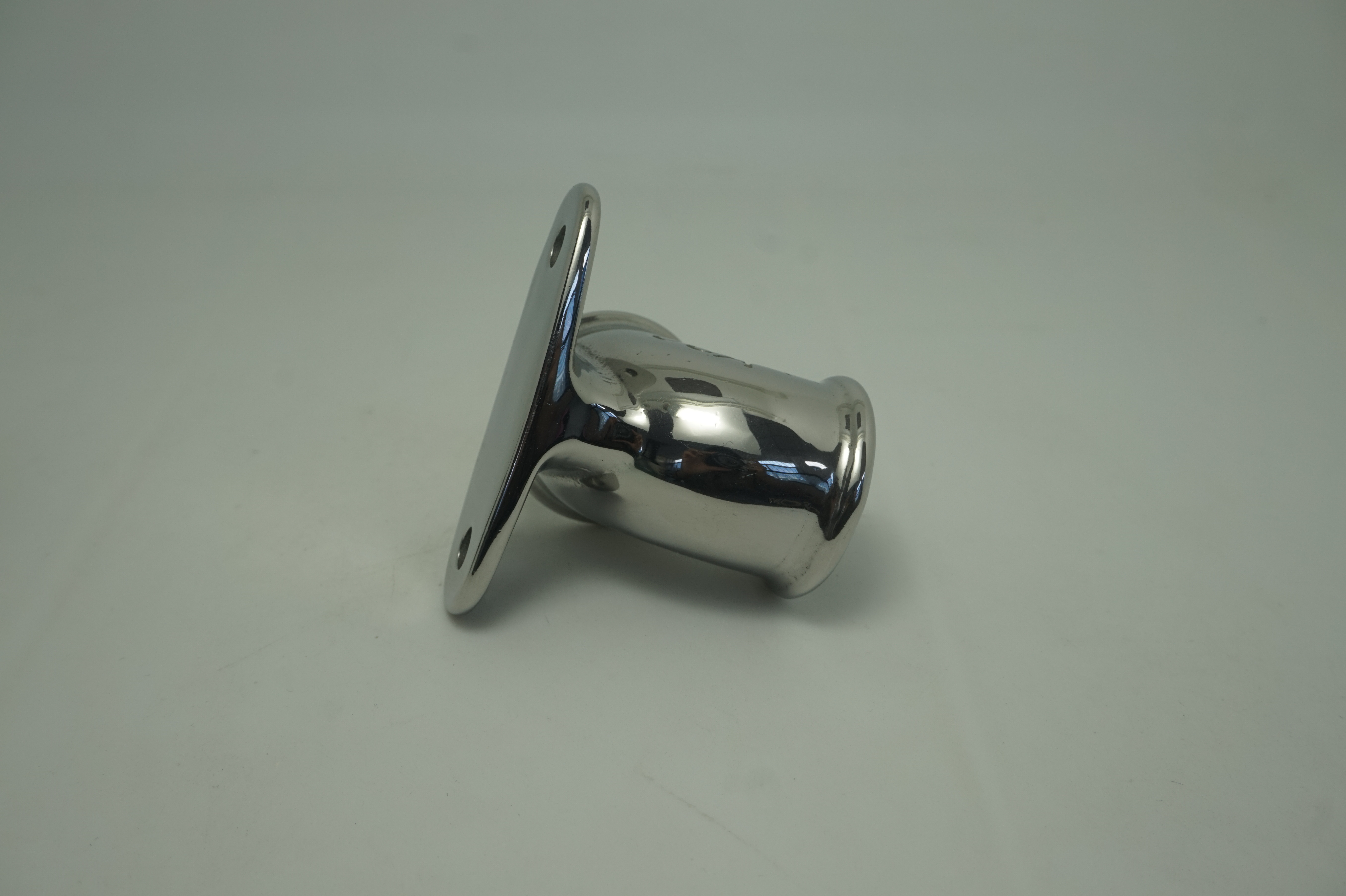
Ra is a two-dimensional amplitude average taken along one traverse, and it says nothing about the pitch of the texture, its direction, or whether the surface reflects light evenly. Two surfaces with the same Ra can look quite different: one can carry a directional brushed grain and the other a mottled, hazy appearance with a broken reflection. That is why an architectural callout normally needs both a numeric limit with its measurement conditions and a physical reference viewed at an agreed distance under agreed light. The number controls the process, and the panel settles the argument.
Start with a physical sample: if a short section can be removed without damage, send it, together with the retained reference panel from the original order if one exists. An installed surface has aged, been cleaned and possibly scratched, so a new length will not reproduce it exactly, and the visible difference is usually easier to manage by finishing a group of adjacent lengths than by matching one piece in isolation. A trial reports what the tested settings produced on the sample you sent; deciding how close is close enough remains with your own acceptance process and the people who will look at it daily.
Lay the lengths end to end as they will be installed, under the light and at the distance agreed for acceptance, and look along the run rather than at each piece separately. A direction reversal or a change in texture pitch that is invisible on a single length usually shows immediately at the joint. The planning side matters more than the inspection: mark the grain direction on every length and keep the orientation through fabrication, packing and despatch. Where the finished parts come from different batches, compare each against the retained reference panel under the same conditions.
Use Manchester, United Kingdom as the destination on the enquiry and state whether the deliverable is equipment, media and compound, a representative sample review or a line concept. A destination does not imply local stock, a local service point or a local delivery time.
UKCA or CE marking with a Declaration of Conformity is required for equipment placed on the Great Britain market, HSE's work equipment and machinery topic covers guarding and safe use, and COSHH governs the media, compounds and dust from vibratory, centrifugal or barrel finishing.
Sources were retrieved on 2026-09-29 and describe the local industrial and trade context only. They do not evidence any SurfacePolish project, shipment, installation or service in Manchester.
The twelve lengths have to read as one continuous brushed surface, with no visible change of grain pitch or direction where they meet.
Send the material, dimensions, approximate weight, batch quantity, the incoming condition and photographs of the difficult features. Mark which features must not be contacted by media and state how the result will be inspected. This form carries source reference PSEO-0217; quote it if you prefer an additional manual reference.
Open the SurfacePolish enquiry form Email a prepared enquiry
No price, lead time, certification or result is promised here. Confirm whether a sample trial is available for the specific part and what the trial can and cannot show.
Page PSEO-0217 · revised 2026-09-29 · cross-border equipment, media and scoped sample review. City context is sourced and cited above.
Use this local checker to identify missing part and inspection information. It prepares a technical-review brief; it does not approve a machine, process recipe or production result.
Complete the part details to prepare a review brief.
Email : info@surface-polish.com


 IPv6 network supported


 +86-592-2381506