A balustrade maker in Quebec City, Canada sends architectural metalwork work in the form of 40 x 40 x 1.5 mm stainless posts, 1.1 m long and welded to base plates, and needs those welds blended into the brushed grain without a flat spot on the corner. SurfacePolish supplies finishing machines, media and compounds across borders and runs a free sample trial on parts shipped to Xiamen. This brief is written for a buyer in Quebec City working on architectural metalwork; it describes equipment, media and a scoped sample review, not a local polishing service.
Which wall thickness and section shape in the order is most likely to distort, and what fixture, cradle or support will protect it?
How much of the incoming mill seam, joint weld or transit scratch must be removed, and what minimum wall thickness has to remain after that removal?
Will the finish be judged by a roughness number, by a physical reference panel, or by both, and who views the parts before they are accepted?
For architectural tube the first screening number is the ratio of wall thickness to outside diameter or to width across the flat. A 60 mm round tube at 1.5 mm wall and the same tube at 3 mm wall are not the same finishing problem: the thin one will show ovality, bow and dents long before the finish is acceptable, and the media that works on the heavy wall will mark the light one. Ask for the mill's nominal wall plus the tolerance band, confirm the actual wall at three places with an ultrasonic gauge or a sectioned offcut, and note any thinning at bends or swaged ends. Record the as-received straightness as well, because a bowed length will read as a finish fault when it is really a handling fault.
Inside whichever machine is chosen, the fixture or the load arrangement decides whether thin sections survive. A thin-wall rectangular profile will flatten under its own weight in a deep bed, and two loose lengths finished together will nibble each other along the contact line. Practical measures are cradles that follow the profile, dividers or compartments that keep parts apart, end caps or plugs for open tube ends, and clip-on carriers that present the visible face to the media evenly. The fixture also fixes the finish: a part that rotates freely receives an inconsistent texture, while a part held at a controlled orientation receives a directional one. Build the fixture around the longest and thinnest part in the order, not the average one.
| Machine route | Where it fits | What it will not do |
|---|---|---|
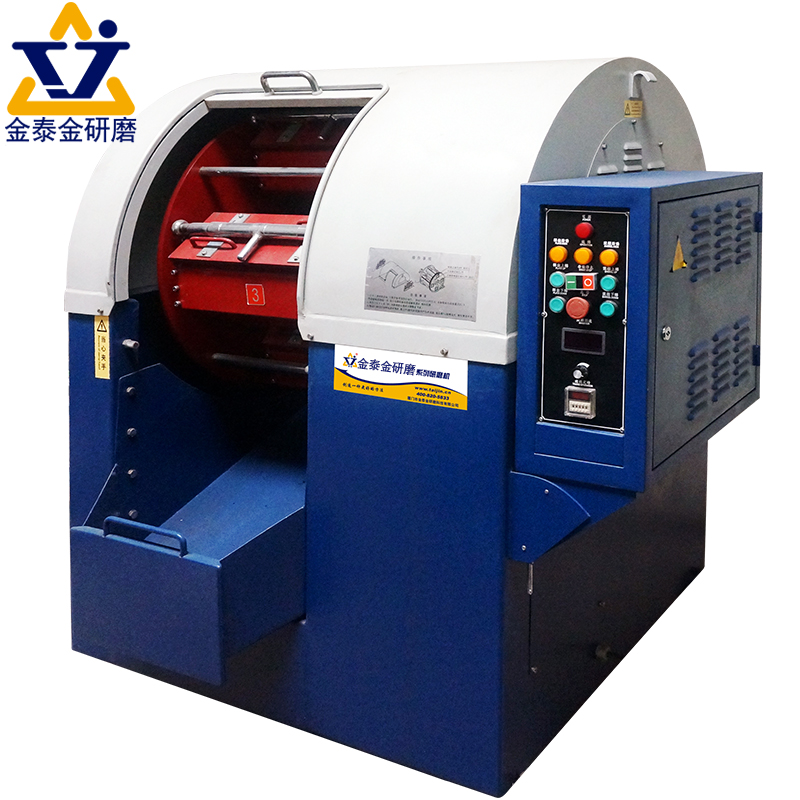
| Tub vibrator | Long and large parts such as architectural tube and profiles, where the process length has to extend along the part. | Bed depth and fixture design decide whether thin sections survive, and fluid flow has to be checked at the far end of the chamber. |
| Centrifugal barrel finishing machine | High-speed finishing of small precise parts, including where a bright appearance is required on a compact geometry. | Chamber geometry and high contact forces rule it out for long, thin-wall or easily marked sections. |
| Disc finishing machine | Fast, high-energy cycles for small to medium fittings and hardware where a short cycle is the priority. | The high energy that makes it fast will distort, mark or bend thin and long parts. |
| Dry polishing machine and dryer | Post-wet drying and dry luster work, particularly where a hollow section must come out clean and dry inside. | Dry routes cut less than wet media, and dust control and media separation need planning. |
Compound concentration, flow rate and water quality need managing along the whole chamber, not just at the inlet. In a long tub the fluid front can arrive weaker at the far end, so media there cuts differently and the finish drifts from one end of a part to the other. Hard water leaves scale and spotting; very soft water may foam differently with the same compound. Foam is a real constraint in a tub because it cushions the media and reduces cut, and it overflows into the surrounding area. Set concentration by measurement rather than by appearance, check flow at both ends of the chamber, and plan drag-out and rinse-water handling before the first production run.
| Media | Best fit | Watch out for |
|---|---|---|
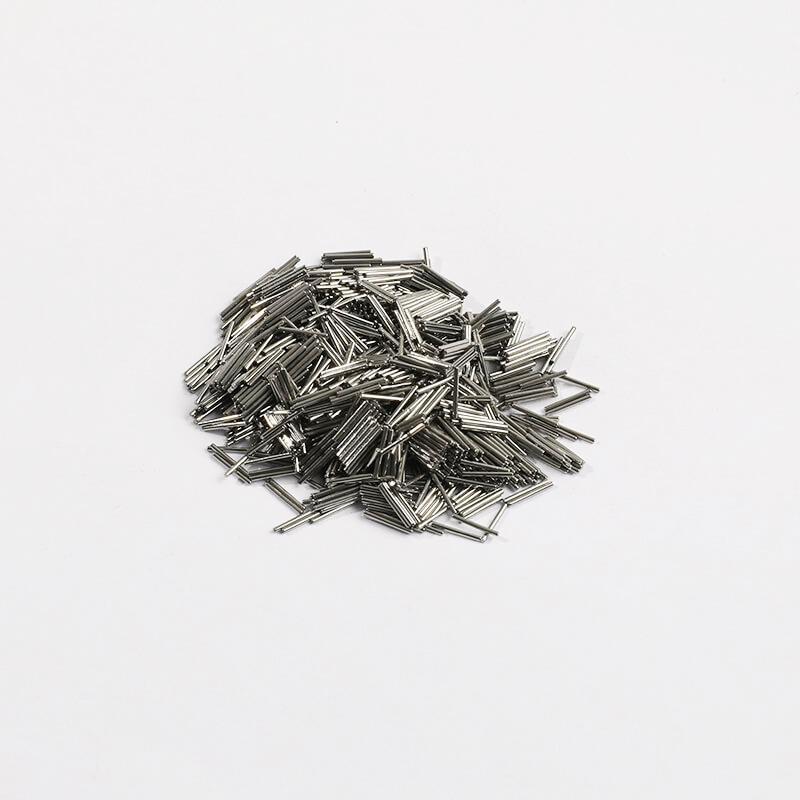
| Dry media, walnut shell and corn cob | Dry polishing and support for post-wet drying, particularly where a hollow section must not stay wet or carry residue inside. | Low cutting power, and dust generation and media separation need managing in the surrounding area. |
| Ceramic media, angle-cut triangles | Heavier cutting and seam removal on stainless tube and profiles, where a directional linear texture on the visible face is wanted. | Wears down and changes effective size class, generates sludge, and can over-round thin sections or chip on sharp edges. |
| Plastic media, cylindrical | Light surface refinement on thin rectangular sections where holding the shape matters more than cutting power. | Little cut power, and the size class changes quickly as the media wears, which shifts the texture pitch over a run. |
| Ceramic media, cylinders and other elongated shapes | Linear, directional refinement of the visible faces of round and rectangular profiles after the seam has been cut back. | Flat sides and ends mark differently, and the length-to-diameter ratio limits how far the media reaches into a shallow cove. |
Thin-wall and rectangular profiles change shape during finishing more often than they change appearance. A length can bow along its axis, twist, lose its ovality, or take a local dent where it rested on a hard support or struck another part. Rectangular sections are the more vulnerable because the flat faces have no hoop stiffness to resist a load applied across the width. Check geometry the same way on every sample: place the length on a surface plate or a straight reference and measure the gap with a feeler gauge, measure the width across the flat at several stations, and compare the ends with a square. Record the incoming straightness first, otherwise a pre-existing bow is attributed to the finishing line and the argument cannot be settled.
| Failure mode | Likely cause | How to catch it |
|---|---|---|
| Visible band or line along the mill seam | The seam crown was not cut back evenly, or the media class was too small to reach the seam root without over-working the surrounding surface. | Look along the seam line under raking light from both sides, and measure the remaining crown with a depth gauge on a sectioned sample. |
| Loss of ovality or out-of-round section | A load applied across the wall during the cycle or while the part sits in a rack. | Measure the diameter across two axes at several stations along the length with a caliper or micrometer. |
| Media or swarf trapped in a bore or channel | Open ends left unplugged, a media class smaller than the opening, or no defined retrieval step at the end of the cycle. | Endoscope or internally swab every sample length, and count media into and out of the batch as a routine check. |
| Shade change or discolouration at a welded area | The heat-affected zone responds differently to the same media and compound cycle than the parent metal. | Compare the area with adjacent metal under the agreed light and distance, and photograph it with a scale alongside the retained reference. |
Quebec City's manufacturing base is diverse and mid-sized rather than dominated by a single sector: the regional development agency reports 32,000 manufacturing jobs, about 1,350 manufacturing companies and 7.8 per cent of total regional GDP from manufacturing, and it names Canam, Kerry Food, Garant, Dupont, Manac, Bimbo, Bibby Ste-Croix, Montel, Suspension Simard and Ressorts Liberté among the manufacturers established in the region. The agency positions the region on a combination of qualified labour, government funding programmes, a multimodal logistics platform connected by land, rail, sea and air, and low-cost hydroelectric power provided through Hydro-Québec. Life sciences and health technologies is a second measurable cluster, with the region reporting 9,200 jobs in the sector (6,750 direct), 121 companies, CAD 1.3 billion in sales and 84 R&D centres, chairs and research laboratories. The region also runs formal industrial clusters, and the provincial aerospace cluster Aéro Montréal operates at scale across Quebec with federal funding announced at its 2026 International Aerospace Innovation Forum.
For this brief the relevant part of that base is architectural: The region's industrial cluster programme includes QUÉBEC BVI, a green and smart buildings cluster whose members work in building design and construction and in the development and manufacturing of architectural products and innovative building technologies.
Québec City's manufacturing mix produces three distinct finishing drivers: transport-equipment and metal fabrication work at firms such as Manac and Canam, where cut, punched and welded steel and aluminium components need de-burring and edge conditioning before assembly or coating; food manufacturing at plants such as Kerry and Bimbo, where stainless process and packaging equipment must be cleanable and weld-dressed; and medical technology and life sciences manufacturing, where smaller precision components require controlled surface condition and cleanliness. Because the region's manufacturing is broad and batch-oriented, the recurring requirement is flexibility across part families rather than a single high-volume dedicated process.
A Québec City buyer should settle language and documentation requirements at the quotation stage, because machine labelling, manuals, training material and safety signage normally have to be usable in French in a Quebec plant and retrofitting that after delivery is both slow and expensive. The second question is which part family the equipment will actually run most often, since the region's manufacturers are typically high-mix: media selection, fixture design and changeover time should be decided against the real product mix rather than against a demonstration part.
Freight context: Port of Québec (Québec Port Authority), Québec City Jean Lesage International Airport, CN rail corridor, Multimodal logistics platform connected by land, rail, sea and air. The regional development agency describes Québec City as having an efficient logistics platform connected by land, rail, sea and air, positioned as a gateway to the North American market, and notes that the region's free trade agreements including CETA and CUSMA open access to a market of over one billion consumers. In practice, machinery from Asia arrives through a coastal or St. Lawrence container port with onward rail or truck movement, while the airport handles urgent parts and sample shipments.
Canada's national standards system is coordinated by the Standards Council of Canada (SCC), which accredits standards-development organizations, certification bodies and testing laboratories; the SCC and CSA Group websites could not be retrieved for citation during this research, so this entry rests on the accessible Government of Canada and CCOHS material below. The Canadian Centre for Occupational Health and Safety describes standards as documents that "establish specifications and procedures to ensure the reliability of the products, methods, and services people use every day on the job", and Innovation, Science and Economic Development Canada (ISED) maintains the federal entry point for "[t]he different types of standards and certifying bodies that can be used by your business". In practice a Canadian buyer of finishing equipment references (a) the Canadian electrical safety certification of the machine and its control panel, (b) provincial occupational health and safety regulation for machine guarding, lockout and dust/ventilation control, which in Canada is enforced by the provinces rather than by a single federal inspectorate, and (c) the buyer's own customer-specific surface finish, edge-condition and cleanliness specifications, which are contractual rather than national standards. Finishing-process standards in the ISO 25.080 machine-tool and ISO 8500-series surface-preparation families are the usual technical reference points, but product-level standards sold by CSA Group were not retrievable for verification here.
China is one of Canada's ten principal merchandise trading partners and the second-largest single-country source of Canadian imports after the United States: Statistics Canada reported CAD 5,369 million of balance-of-payments imports from China in January 2025, against a CAD 2,299 million bilateral merchandise deficit that month. Canada has no free trade agreement with China, so Chinese-origin industrial machinery enters under the Most-Favoured-Nation (MFN) tariff column of the Canadian Customs Tariff; the preferential treatments listed in the tariff (CUSMA/UST and MXT, CETA/CEUT, CPTPP/CPTPT, UKT, KRT and others) do not include China, and preferential rates require proof of origin plus the applicable shipping rules, so a China-origin machine cannot claim them. Tariff classification is mandatory work, not a formality: vibratory, barrel, centrifugal and disc finishing machines are classified in Chapter 84 ("Nuclear reactors, boilers, machinery and mechanical appliances; parts thereof") according to the function of the machine, and the ten-digit Canadian tariff item drives both the duty rate and the statistics. A further landed-cost risk sits outside the tariff schedule: under the Special Import Measures Act (SIMA), the CBSA and the Canadian International Trade Tribunal may apply anti-dumping and countervailing duties to named goods, so a buyer should check the measures-in-force list for the specific product before assuming the MFN rate is the final duty.
SurfacePolish supplies from Xiamen, China. The buyer's own destination rules, conformity marking, tariff classification and documentation responsibilities stay with the buyer; confirm them against the authorities named above before ordering.
Brushed stainless is not a specification, and a finish described only in words cannot be accepted or rejected consistently. The callout on the drawing or the purchase order should say what the texture direction is, which faces carry it, the roughness limit and the measurement conditions if a number is used, the reference panel and the viewing distance, and which faces are exempt. It should also say what is protected: threads, fixing holes, cut ends, machined lands. Where the buyer cannot express the finish numerically, a physical reference sample with a written description of its texture direction and appearance is still far better than an adjective. Sorting this out before a trial is what allows the trial result to be compared against a real requirement.
If two media classes or two cycle settings are being compared, run them on adjacent cut sections from the same original length so the only difference is the variable under test. Keep the position in the load and the cycle length the same where possible, label the pieces before they are run, and have the returned parts judged together in one session under the agreed light rather than one at a time as they arrive. Where several people are judging, ask each to rank the pieces before discussing them, so the strongest opinion does not set the answer. A handful of sections can compare two settings; what cannot be compared is one section from a trial run one week against another run later under different conditions.
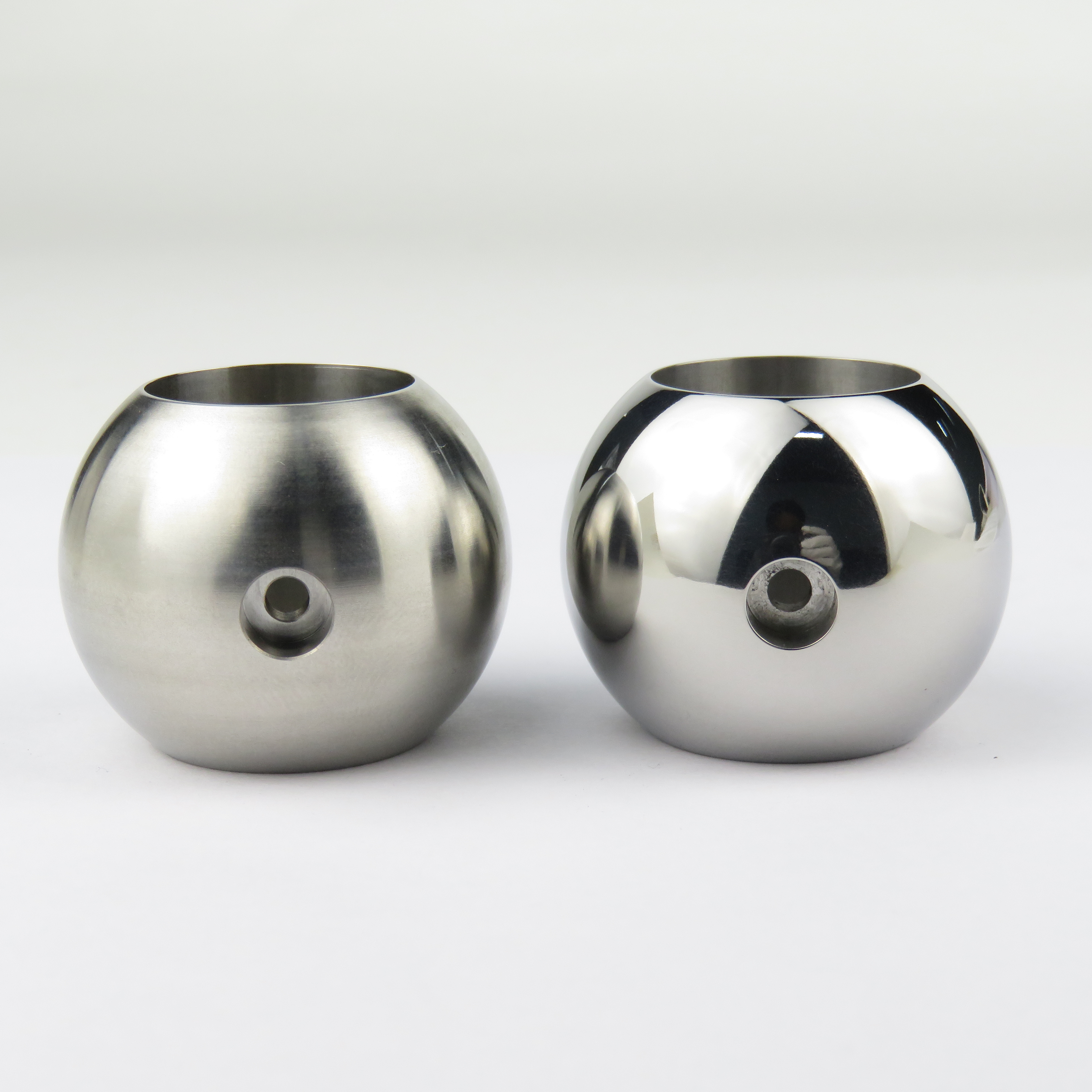
Directional satin textures usually come from elongated or angular media rather than spheres. Angle-cut triangles and cylinders strike along their axis and leave a linear pattern, while rounded shapes produce overlapping craters that read soft and slightly dimpled. The size class then has to reach the root of a mill seam or the cove of a rectangular profile without lodging in the bore or a fixing hole. Media selection is confirmed against the actual part in a trial, because the incoming grain, the wall thickness and the visible face all shift the answer. Send sections from the production delivery and say which face must carry the grain.
Support the profile rather than letting it lie loose. Cradles shaped to the section, dividers or compartments that keep lengths apart, end plugs that hold the open section, and controlled orientation in the bed all reduce the load a flat face sees. Rectangular sections are more exposed than round ones because a flat face has no hoop stiffness across its width, so the thinnest wall in the order should set the fixture design. Send the thinnest and widest section you use, not an average one, so the trial is run against the part most likely to distort.
Lay the lengths end to end as they will be installed, under the light and at the distance agreed for acceptance, and look along the run rather than at each piece separately. A direction reversal or a change in texture pitch that is invisible on a single length usually shows immediately at the joint. The planning side matters more than the inspection: mark the grain direction on every length and keep the orientation through fabrication, packing and despatch. Where the finished parts come from different batches, compare each against the retained reference panel under the same conditions.
Use Quebec City, Canada as the destination on the enquiry and state whether the deliverable is equipment, media and compound, a representative sample review or a line concept. A destination does not imply local stock, a local service point or a local delivery time.
A Québec City buyer works in French for technical documentation and under Quebec's own occupational health and safety regime, alongside Canadian electrical safety certification of the equipment. The Charter of the French Language makes French the default language for commercial documentation in Quebec, and where the buyer serves life sciences or food customers, the applicable health-product or food-safety requirements govern product-contact surfaces and cleaning.
Sources were retrieved on 2026-09-29 and describe the local industrial and trade context only. They do not evidence any SurfacePolish project, shipment, installation or service in Quebec City.
The circumferential weld at the base and the mill seam have to be blended without leaving a flat spot on the corner or a colour change.
Send the material, dimensions, approximate weight, batch quantity, the incoming condition and photographs of the difficult features. Mark which features must not be contacted by media and state how the result will be inspected. This form carries source reference PSEO-0197; quote it if you prefer an additional manual reference.
Open the SurfacePolish enquiry form Email a prepared enquiry
No price, lead time, certification or result is promised here. Confirm whether a sample trial is available for the specific part and what the trial can and cannot show.
Page PSEO-0197 · revised 2026-09-29 · cross-border equipment, media and scoped sample review. City context is sourced and cited above.
Use this local checker to identify missing part and inspection information. It prepares a technical-review brief; it does not approve a machine, process recipe or production result.
Complete the part details to prepare a review brief.
Email : info@surface-polish.com


 IPv6 network supported


 +86-592-2381506