A buyer in Florence, Italy working on semiconductor equipment has a slotted stainless distribution plate where edge burrs must go and the sealing face must stay flat and media-free. SurfacePolish supplies finishing machines, media and compounds across borders and runs a free sample trial: the plate travels to Xiamen and comes back with observed results and a proposed media, compound and cycle direction for the buyer's own checks. This brief is written for a buyer in Florence working on semiconductor equipment; it describes equipment, media and a scoped sample review, not a local polishing service.
Can the required finish be reached in one mechanical route, or does the part need a cut stage followed by a refinement stage?
How will a production batch be identified, segregated by material family and documented so a result can be traced to its settings?
Which surfaces on this part are functional, such as seal lands, gas passage walls and locating bores, and which are only cosmetic?
Start every assessment with a marked-up drawing, not a part family name. On a vacuum-chamber component the surfaces that matter are usually small: an O-ring groove floor, a knife-edge seal land, a gas inlet bore, a tapped hole pattern and a locating dowel bore. Each needs a decision before any medium is chosen, whether it is masked, plugged, finished to a roughness band or deliberately left untouched. A chamber lid and a roughing-line elbow can come off the same machining cell and still need different screening because one carries a knife edge and the other carries a welded flange. Ask which surface an elastomer or metal seal actually seats on, and treat that as a datum for acceptance. The feature list also drives handling rules: where parts may be stacked, which faces may touch, and how they are separated between operations.
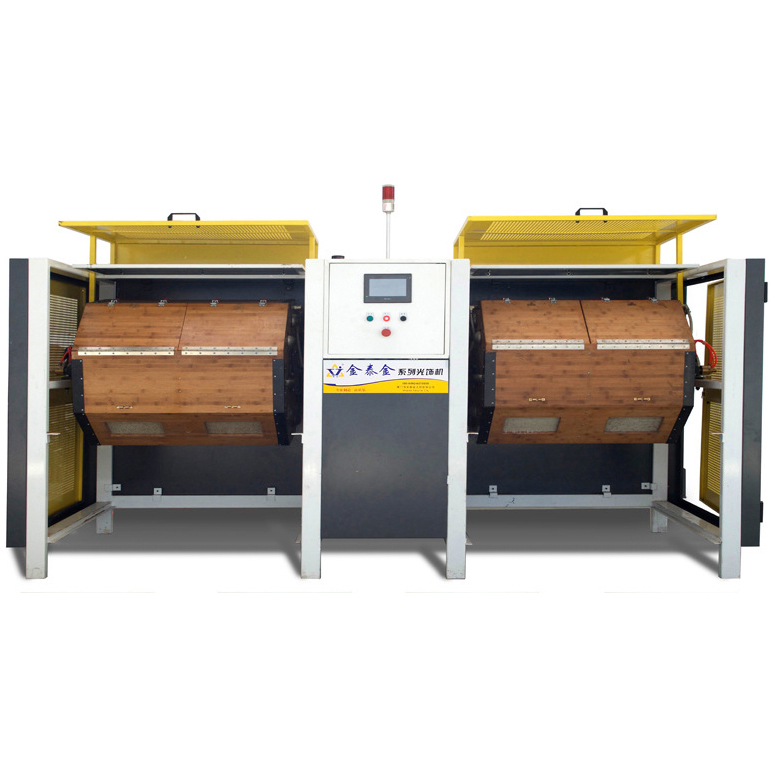
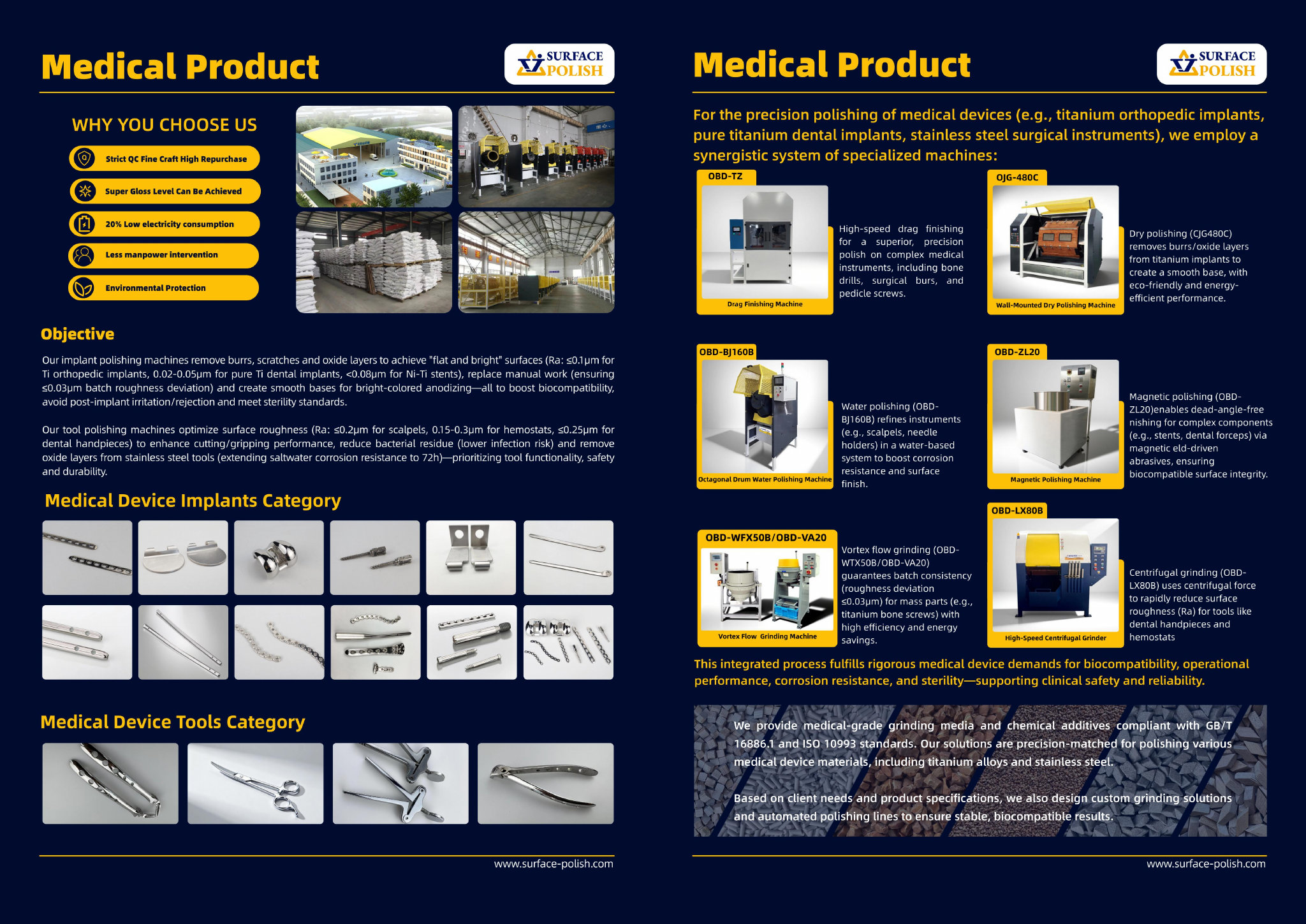
Magnetic finishing uses a small charge of pin-shaped or fine media driven by a moving magnetic field, which lets it reach narrow gaps, small bores and fine internal radii that tumbling media cannot enter. For semiconductor equipment parts it is most relevant on small precise items: gas nozzles, orifice plates, small machined inserts and fine slot arrays where the requirement is deburring and light refinement rather than bulk stock removal. The working envelope is small, so chamber bodies and long gas lines are out of scope. The media pins themselves are a lodging risk in the same features they are chosen to reach, and they are difficult to see inside a closed passage. Magnetic finishing also leaves a different surface signature from tumbling, so a roughness figure obtained on one route cannot be assumed to transfer to another.
| Machine route | Where it fits | What it will not do |
|---|---|---|
| Rotary barrel finishing machine | Gentle deburring of small fragile components and mixed fitting batches with a generous compound flow | Long cycles, no visibility while running, and internal passages can collect media and compound that must be retrieved at unload |
| Disc finishing machine | Fast, high-energy edge breaking and surface refinement on small robust parts and uniform batches of fittings | High impingement and edge-loss risk on thin or soft parts, and geometry must suit the disc working gap |
| Dry polishing machine and dryer | Removing residual moisture after a wet cycle and reducing water spotting on aluminium and stainless surfaces | A finishing step only; a dry part can still carry compound film, fines and media dust, so it is not a cleanliness release |
| Centrifugal barrel finishing machine | Small precise parts and short cycles with high contact pressure, such as inserts, small valve bodies and distribution components | Rounds edges and can distort thin unsupported sections quickly; results are sensitive to charge weight, speed and stop time |
Steel media produces a bright, burnished appearance and high contact pressure, and it is usually paired with a corrosion-inhibiting compound. On semiconductor equipment parts it belongs mainly on stainless items where appearance and edge blending matter, and it should be treated with caution on aluminium, where steel can transfer iron and leave rust spotting or embedded fragments that later appear as particles or staining. Separation at unload is critical: steel media is dense, is easily retained in blind holes and slots, and can be recovered magnetically only if the equipment is set up for that. Steel charges also need their own containment and cleaning discipline to keep ferrous contamination out of aluminium work. A bright result from a steel charge is an observation about a surface, not evidence about cleanliness or suitability for a process environment.
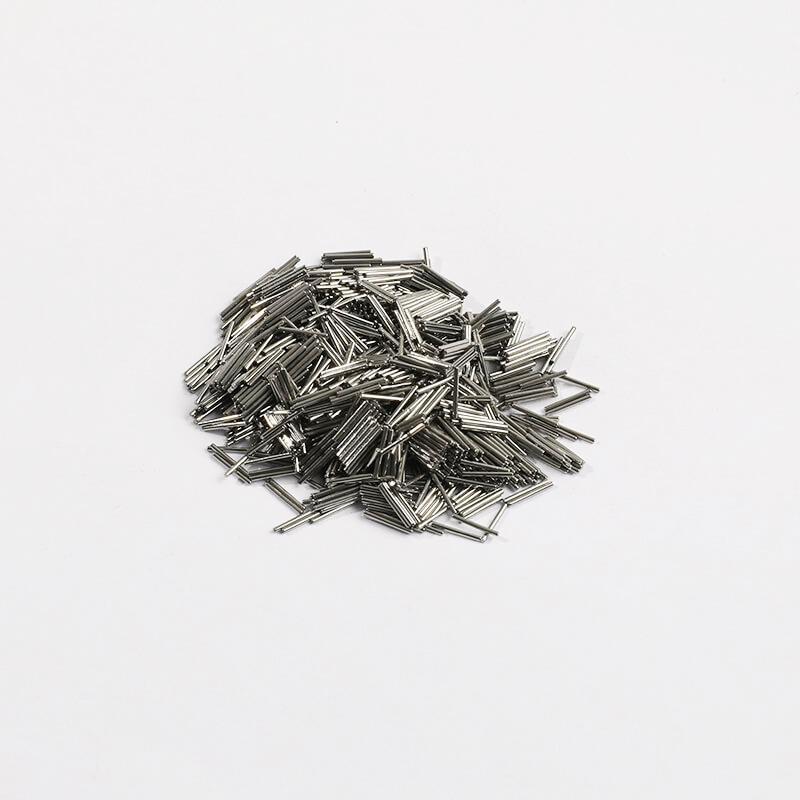
| Media | Best fit | Watch out for |
|---|---|---|
| Aluminium oxide grinding media in a dense ceramic bond | Where a heavier stock removal or a more consistent cut is needed on robust stainless parts with thick edges | High removal energy rounds functional edges quickly and is a poor match for thin aluminium plates or knife-edge seal lands |
| Plastic cylinders and cones in a harder, denser grade | Longer cycles on mixed batches of small fittings where a repeatable light edge break is wanted without ceramic impact | Can float or segregate by shape in a bowl, and cylindrical forms can wedge in slots and cross-drillings |
| Fine ceramic or porcelain spheres in a small size class | Refinement and light edge blending after a cutting stage, and reaching tighter external geometry on chamber bodies and plates | Small sizes enter and retain in gas passages and fine slots; media wear shrinks the charge and changes the finish over its life |
| Dry media such as walnut shell and corn cob | Drying assistance, light surface drying polish and removal of superficial soil after a wet cycle | Does not deburr or refine metal significantly, generates dust, and must not be treated as a cleanliness step |
Cross-contamination and staining are quiet failures. Aluminium worked in a charge previously used on stainless can leave a grey smear; stainless run with steel media, or in a machine that has held carbon steel, can show rust spots that appear days later; hard water and slow drying leave mineral spotting; and a compound that is too aggressive darkens aluminium. Dimensional drift is the other quiet failure, where thin plates, long tubes and unsupported walls relax or distort under tumbling loads, so a part that passed the edge check fails a flatness or position check afterwards. Both categories are caught by discipline rather than by looking harder at the finish: segregate material families and dedicate or purge media, control rinse water and drying, measure defined dimensions and flatness at the same points before and after, and keep that data with the batch record.
| Failure mode | Likely cause | How to catch it |
|---|---|---|
| Fine media fragments or aluminium smear embedded in a soft surface | Impingement from too much energy or charge mass, media that has fractured, or cross-contamination from a previous material family | Inspect at magnification under angled light, use a wipe or tape lift on the suspect area, and check the charge for broken media and fines |
| Thin plate or liner distorted, bowed or dimensionally drifted after the cycle | Tumbling load on an unsupported thin section, part-on-part contact, or heat and pressure from a high-energy route | Measure flatness, wall thickness and critical dimensions at the same marked points as the pre-process baseline, using a CMM or surface plate and gauge |
| Bright impact marks, dents or flattened corners from part-on-part contact | Dense charge, high load ratio, thin or light parts left loose among heavy neighbours, or a cycle run longer than the edge condition required | Look for repeating mark patterns on exposed faces and edges, compare an unsupported part with a racked or compartmentalised one, and review the batch mix and load recorded for the lot |
| Grey aluminium smear transferred onto stainless parts in a shared batch | Aluminium fines retained in media, compound or the machine after an aluminium lot, with no purge before the stainless lot | Check stainless surfaces under angled light for a dull grey film, review the changeover record, and inspect the charge and machine sump for retained fines |
Florence's provincial economy is dominated on the export side by pharmaceuticals: the Chamber of Commerce reports that intra-group logistics and processing traffic in the pharmaceutical sector now weighs more than half of total provincial exports (s1), and that sector turnover grew +5.4% in the first quarter of 2026 and +8.5% in the second (s2). Manufacturing production rose +1.6% year on year at the start of 2026 and moderated to +0.4% at mid-year, with the pharmaceutical component carrying the aggregate (s2). Provincial exports reached EUR 16.4 billion in the first half of 2026, +3.3% year on year, and EUR 35.1 billion on a rolling-year basis, after 2025 growth of +41.4% and more than EUR 34 billion that the chamber attributes partly to pharmaceutical flows and to US-bound frontloading (s1, s3). Away from pharmaceuticals the chamber describes traditional manufacturing sectors as showing weaker dynamics and the fashion system as being in reorganisation (s1). The Florence metropolitan area also carries a documented electronics, radar, optronics and space-navigation manufacturing base, and the local Confindustria association is promoting a Tuscan aerospace district (s4). The Chianti Classico wine zone has its two capital cities in Florence and Siena (s5).
The nearest part of that base to this brief is aerospace: Confindustria Toscana Centro e Costa states that the Florence metropolitan area has manufacturing competence in electronic security, radar, optronic sensors and space navigation systems, and that a Tuscan aerospace district is being constituted.
For the pharmaceutical-side base the finishing question is cleaning and residue control rather than cosmetic finish: burr-free stainless and alloy parts, media that will not leave contamination, and a documented cleanliness result per part number. For the electronics, radar and optronics manufacturing that the local Confindustria association describes, edge quality and surface condition on machined housings, waveguide and antenna components affect both assembly fit and electrical performance. Because pharmaceutical output here is export-driven and audit-heavy, surface and cleanliness results normally have to be recorded against a specification the customer already holds, not demonstrated on a sample alone.
The first question is whether the part is destined for the pharmaceutical or electronics base, because that decides whether the controlling requirement is a cleanliness and residue limit or an edge and surface-texture tolerance. For the pharmaceutical side it is worth establishing up front which cleanliness specification and which sampling method will be used for acceptance, since that choice constrains both the process and the media.
Freight context: Porto di Livorno, Aeroporto di Firenze-Peretola (FLR). The freight evidence available for Florence in this session is trade value rather than hub throughput: EUR 16.4 billion of exports in the first half of 2026 and EUR 35.1 billion on a rolling-year basis, with the pharmaceutical component distorting the provincial averages (s3). The Tuscan port and airport gateways named above are regional geography and were not verified against an authority page here, because the Livorno port authority site served a JavaScript challenge and the Toscana Aeroporti site returned HTTP 403 to every request made from this session.
The national standards body is UNI - Ente Italiano di Normazione, a private non-profit association founded over a century ago, which develops, publishes and disseminates voluntary technical standards and adopts the European and international standards as Italian editions. For finishing work the operative references are the surface-texture series UNI EN ISO 21920-1:2022, which fixes how the surface state (roughness, waviness, primary profile) is indicated on technical product documentation, and UNI EN ISO 21920-2:2022, which defines the terms, definitions and parameters used with profile methods. Machinery safety requirements come from the EU machinery legislation rather than from UNI alone: Machinery Directive 2006/42/EC applies to machinery placed on the EU market before 20 January 2027, after which Machinery Regulation (EU) 2023/1230 takes over.
Italy applies the EU's common commercial policy to imports from China, so Chinese industrial machinery enters under the EU Common Customs Tariff, where the duty rate depends on the type and origin of the goods and the working tariff is TARIC. Istat's August 2026 extra-EU trade release records a 16.0% year-on-year increase in Italian purchases from China, alongside strong growth from India, OPEC and Mercosur, so China remains one of the fastest-growing sources of Italian imports. Anti-dumping and other trade-defence measures apply case by case to specific product categories rather than to finishing machinery in general, so the applicable rate must be checked against the specific commodity code before a quotation is finalised.
SurfacePolish supplies from Xiamen, China. The buyer's own destination rules, conformity marking, tariff classification and documentation responsibilities stay with the buyer; confirm them against the authorities named above before ordering.
A first-article part, finished under the intended production settings, is the reference every later batch is compared against. Keep it identified, protected and available, together with the measurement record and the settings that produced it. Production acceptance then relies on a sampling plan rather than on inspecting every part: define the sample size, the sampling frequency, which features are measured and which are only visually checked. For a low-volume semiconductor equipment build, sampling by part may be workable; for a batch of small fittings, sampling by position in the charge is more useful, because the media path means parts at different points in the bowl see different conditions. Record where each sampled part sat in the charge. If a sample fails, the batch disposition rule has to be agreed in advance, including whether rework is allowed.
Send parts that represent the real range, not a single convenient sample. The set should include the part with the tightest internal passage, the thinnest unsupported section, the surface that must not be touched, and at least one part in the true as-received condition with its normal burr and soil. Add a coupon of the same material, ideally with a known starting roughness, so a measurement can be compared before and after. Supply a marked-up drawing identifying critical surfaces, edge limits and any cleanliness requirement, plus a short statement of what the part does in service. Quantity matters: several pieces allow a stop-and-look at more than one cycle time. Pack them so they arrive undamaged, label each one, and state the material and heat treatment, since an unlabelled mixed lot cannot be assessed.
Size the medium well below the smallest opening the charge could enter, and treat every passage as a retrieval point rather than assuming it stays clear. Map the tightest hole, slot or cross-drilling first, then choose a size class against that geometry instead of an average part. Add a defined check such as a borescope at an agreed angle, a pin gauge on holes, and a rinse collected through a filter. For Italy buyers preparing a trial, send the part with the smallest passage so the media choice is tested on the real feature. SurfacePolish reports what was observed on tested parts; the cleanliness release remains the buyer's decision.
Change one variable at a time. Hold the machine, load, compound, cycle time and part mix constant, and change only the medium; if the question is cycle time, hold the charge constant and stop at two or three defined intervals. Evaluate the returned parts at the same marked measurement points, and if several people judge appearance, use coded labels so the assessment is blind. Where a cut stage is followed by a refinement stage, score the stages separately, because a good final figure can hide a coarse first stage. A clear comparison needs the returned parts, the record and your own inspectors.
Cycle time depends on the starting burr, the material, the media size class, the compound and how much edge refinement is wanted, so no figure can be quoted in advance. A part that only needs a light edge break may run very differently from one that must shed a machining burr before refinement, and a two-stage route needs both stages counted. The useful approach is to test a defined stop point or two on representative parts and record what changed. SurfacePolish does not promise cycle times or capacity; treat the timing on returned parts as an observation from that run, not a production commitment.
Use Florence, Italy as the destination on the enquiry and state whether the deliverable is equipment, media and compound, a representative sample review or a line concept. A destination does not imply local stock, a local service point or a local delivery time.
A Florence buyer would set surface and edge requirements against ISO/UNI surface-texture standards and, for the pharmaceutical-side base, against the cleanliness and residue limits held in the customer's own device or plant specification rather than in a finishing-specific standard. Finishing operations are normally qualified as a process step inside the customer's quality system, and the Tuscan manufacturing associations run technical and standardisation desks for members.
Sources were retrieved on 2026-09-29 and describe the local industrial and trade context only. They do not evidence any SurfacePolish project, shipment, installation or service in Florence.
The buyer needs the slot edges deburred and the sealing face kept flat, with no media left in the slot array.
Send the material, dimensions, approximate weight, batch quantity, the incoming condition and photographs of the difficult features. Mark which features must not be contacted by media and state how the result will be inspected. This form carries source reference PSEO-0475; quote it if you prefer an additional manual reference.
Open the SurfacePolish enquiry form Email a prepared enquiry
No price, lead time, certification or result is promised here. Confirm whether a sample trial is available for the specific part and what the trial can and cannot show.
Page PSEO-0475 · revised 2026-09-29 · cross-border equipment, media and scoped sample review. City context is sourced and cited above.
Use this local checker to identify missing part and inspection information. It prepares a technical-review brief; it does not approve a machine, process recipe or production result.
Complete the part details to prepare a review brief.
Email : info@surface-polish.com


 IPv6 network supported


 +86-592-2381506